 Add to Chrome
 Add to Firefox
 Add to Edge
One-Shot Strategically Deconflicted Route and Operational Volume Generation for Urban Air Mobility Operations
May 25, 2023
In the UAM space, strategic deconfliction provides an all-essential layer to airspace automation by providing safe, preemptive deconfliction or assignment of airspace resources to airspace users pre-flight. Strategic deconfliction approaches provide an elegant solution to pre-flight deconfliction operations. This overall creates safer and more efficient airspace and reduces the workload on controllers. In this research, we propose a method that constructs routes between start and end nodes in airspace, assigns a contract of operational volumes (OVs) and ensures that these OVs are sufficiently deconflicted against static no-fly zones and OVs of other airspace users. Our approach uses the A* optimal cost path algorithm to generate the shortest routes between the origin and destination. We present a method for generating OVs based on the distribution of aircraft positions from simulated flights; volumes are constructed such that this distribution is conservatively described.

Embodied Concept Learner: Self-supervised Learning of Concepts and Mapping through Instruction Following
Apr 07, 2023Humans, even at a very early age, can learn visual concepts and understand geometry and layout through active interaction with the environment, and generalize their compositions to complete tasks described by natural languages in novel scenes. To mimic such capability, we propose Embodied Concept Learner (ECL) in an interactive 3D environment. Specifically, a robot agent can ground visual concepts, build semantic maps and plan actions to complete tasks by learning purely from human demonstrations and language instructions, without access to ground-truth semantic and depth supervisions from simulations. ECL consists of: (i) an instruction parser that translates the natural languages into executable programs; (ii) an embodied concept learner that grounds visual concepts based on language descriptions; (iii) a map constructor that estimates depth and constructs semantic maps by leveraging the learned concepts; and (iv) a program executor with deterministic policies to execute each program. ECL has several appealing benefits thanks to its modularized design. Firstly, it enables the robotic agent to learn semantics and depth unsupervisedly acting like babies, e.g., ground concepts through active interaction and perceive depth by disparities when moving forward. Secondly, ECL is fully transparent and step-by-step interpretable in long-term planning. Thirdly, ECL could be beneficial for the embodied instruction following (EIF), outperforming previous works on the ALFRED benchmark when the semantic label is not provided. Also, the learned concept can be reused for other downstream tasks, such as reasoning of object states. Project page: http://ecl.csail.mit.edu/
A Multitask, Multilingual, Multimodal Evaluation of ChatGPT on Reasoning, Hallucination, and Interactivity
Feb 28, 2023



This paper proposes a framework for quantitatively evaluating interactive LLMs such as ChatGPT using publicly available data sets. We carry out an extensive technical evaluation of ChatGPT using 23 data sets covering 8 different common NLP application tasks. We evaluate the multitask, multilingual and multi-modal aspects of ChatGPT based on these data sets and a newly designed multimodal dataset. We find that ChatGPT outperforms LLMs with zero-shot learning on most tasks and even outperforms fine-tuned models on some tasks. We find that it is better at understanding non-Latin script languages than generating them. It is able to generate multimodal content from textual prompts, via an intermediate code generation step. Moreover, we find that ChatGPT is 63.41% accurate on average in 10 different reasoning categories under logical reasoning, non-textual reasoning, and commonsense reasoning, hence making it an unreliable reasoner. It is, for example, better at deductive than inductive reasoning. ChatGPT suffers from hallucination problems like other LLMs and it generates more extrinsic hallucinations from its parametric memory as it does not have access to an external knowledge base. Finally, the interactive feature of ChatGPT enables human collaboration with the underlying LLM to improve its performance, i.e, 8% ROUGE-1 on summarization and 2% ChrF++ on machine translation, in a multi-turn "prompt engineering" fashion. We also release codebase for evaluation set extraction.
KILM: Knowledge Injection into Encoder-Decoder Language Models
Feb 17, 2023

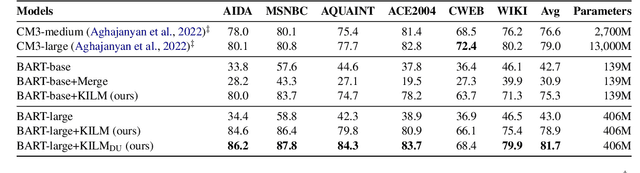

Large pre-trained language models (PLMs) have been shown to retain implicit knowledge within their parameters. To enhance this implicit knowledge, we propose Knowledge Injection into Language Models (KILM), a novel approach that injects entity-related knowledge into encoder-decoder PLMs, via a generative knowledge infilling objective through continued pre-training. This is done without architectural modifications to the PLMs or adding additional parameters. Experimental results over a suite of knowledge-intensive tasks spanning numerous datasets show that KILM enables models to retain more knowledge and hallucinate less, while preserving their original performance on general NLU and NLG tasks. KILM also demonstrates improved zero-shot performances on tasks such as entity disambiguation, outperforming state-of-the-art models having 30x more parameters.
Optimization of Topology-Aware Job Allocation on a High-Performance Computing Cluster by Neural Simulated Annealing
Feb 06, 2023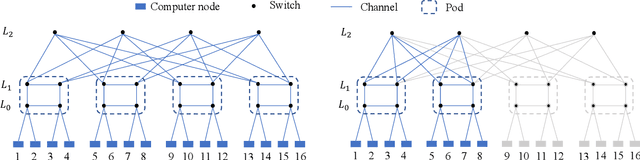


Jobs on high-performance computing (HPC) clusters can suffer significant performance degradation due to inter-job network interference. Topology-aware job allocation problem (TJAP) is such a problem that decides how to dedicate nodes to specific applications to mitigate inter-job network interference. In this paper, we study the window-based TJAP on a fat-tree network aiming at minimizing the cost of communication hop, a defined inter-job interference metric. The window-based approach for scheduling repeats periodically taking the jobs in the queue and solving an assignment problem that maps jobs to the available nodes. Two special allocation strategies are considered, i.e., static continuity assignment strategy (SCAS) and dynamic continuity assignment strategy (DCAS). For the SCAS, a 0-1 integer programming is developed. For the DCAS, an approach called neural simulated algorithm (NSA), which is an extension to simulated algorithm (SA) that learns a repair operator and employs them in a guided heuristic search, is proposed. The efficacy of NSA is demonstrated with a computational study against SA and SCIP. The results of numerical experiments indicate that both the model and algorithm proposed in this paper are effective.
Weakly-Supervised 3D Medical Image Segmentation using Geometric Prior and Contrastive Similarity
Feb 04, 2023Medical image segmentation is almost the most important pre-processing procedure in computer-aided diagnosis but is also a very challenging task due to the complex shapes of segments and various artifacts caused by medical imaging, (i.e., low-contrast tissues, and non-homogenous textures). In this paper, we propose a simple yet effective segmentation framework that incorporates the geometric prior and contrastive similarity into the weakly-supervised segmentation framework in a loss-based fashion. The proposed geometric prior built on point cloud provides meticulous geometry to the weakly-supervised segmentation proposal, which serves as better supervision than the inherent property of the bounding-box annotation (i.e., height and width). Furthermore, we propose contrastive similarity to encourage organ pixels to gather around in the contrastive embedding space, which helps better distinguish low-contrast tissues. The proposed contrastive embedding space can make up for the poor representation of the conventionally-used gray space. Extensive experiments are conducted to verify the effectiveness and the robustness of the proposed weakly-supervised segmentation framework. The proposed framework is superior to state-of-the-art weakly-supervised methods on the following publicly accessible datasets: LiTS 2017 Challenge, KiTS 2021 Challenge, and LPBA40. We also dissect our method and evaluate the performance of each component.
Exploring Semantic Perturbations on Grover
Feb 01, 2023With news and information being as easy to access as they currently are, it is more important than ever to ensure that people are not mislead by what they read. Recently, the rise of neural fake news (AI-generated fake news) and its demonstrated effectiveness at fooling humans has prompted the development of models to detect it. One such model is the Grover model, which can both detect neural fake news to prevent it, and generate it to demonstrate how a model could be misused to fool human readers. In this work we explore the Grover model's fake news detection capabilities by performing targeted attacks through perturbations on input news articles. Through this we test Grover's resilience to these adversarial attacks and expose some potential vulnerabilities which should be addressed in further iterations to ensure it can detect all types of fake news accurately.
NusaCrowd: Open Source Initiative for Indonesian NLP Resources
Dec 20, 2022We present NusaCrowd, a collaborative initiative to collect and unite existing resources for Indonesian languages, including opening access to previously non-public resources. Through this initiative, we have has brought together 137 datasets and 117 standardized data loaders. The quality of the datasets has been assessed manually and automatically, and their effectiveness has been demonstrated in multiple experiments. NusaCrowd's data collection enables the creation of the first zero-shot benchmarks for natural language understanding and generation in Indonesian and its local languages. Furthermore, NusaCrowd brings the creation of the first multilingual automatic speech recognition benchmark in Indonesian and its local languages. Our work is intended to help advance natural language processing research in under-represented languages.
Lightweight Facial Attractiveness Prediction Using Dual Label Distribution
Dec 04, 2022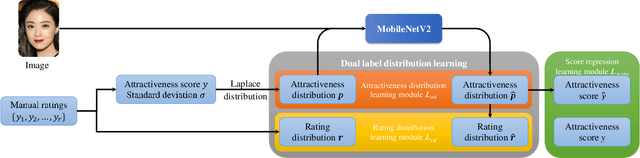
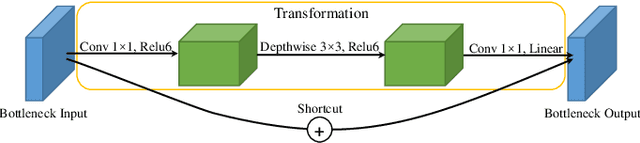
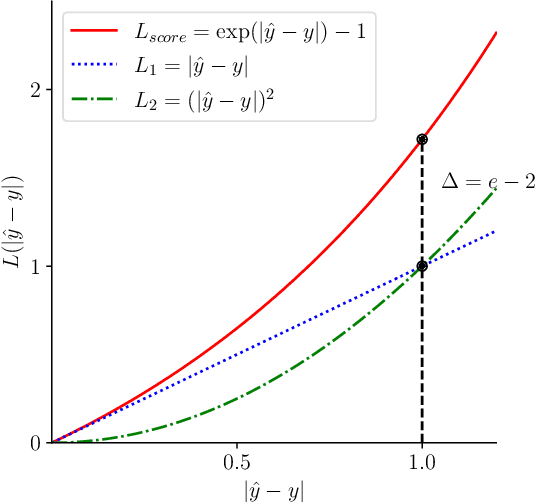
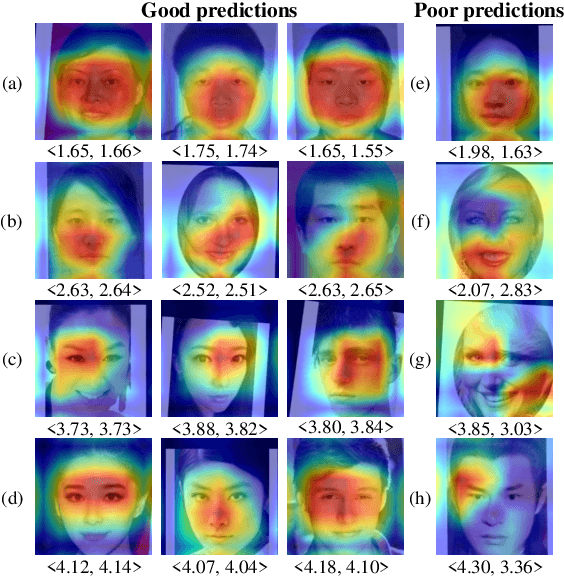
Facial attractiveness prediction (FAP) aims to assess the facial attractiveness automatically based on human aesthetic perception. Previous methods using deep convolutional neural networks have boosted the performance, but their giant models lead to a deficiency in flexibility. Besides, most of them fail to take full advantage of the dataset. In this paper, we present a novel end-to-end FAP approach integrating dual label distribution and lightweight design. To make the best use of the dataset, the manual ratings, attractiveness score, and standard deviation are aggregated explicitly to construct a dual label distribution, including the attractiveness distribution and the rating distribution. Such distributions, as well as the attractiveness score, are optimized under a joint learning framework based on the label distribution learning (LDL) paradigm. As for the lightweight design, the data processing is simplified to minimum, and MobileNetV2 is selected as our backbone. Extensive experiments are conducted on two benchmark datasets, where our approach achieves promising results and succeeds in striking a balance between performance and efficiency. Ablation studies demonstrate that our delicately designed learning modules are indispensable and correlated. Additionally, the visualization indicates that our approach is capable of perceiving facial attractiveness and capturing attractive facial regions to facilitate semantic predictions.
An interpretable imbalanced semi-supervised deep learning framework for improving differential diagnosis of skin diseases
Nov 20, 2022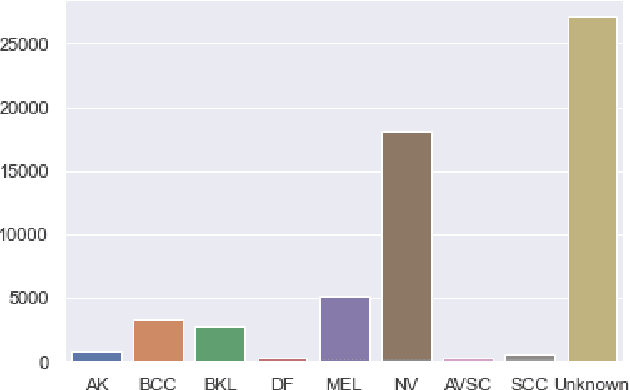
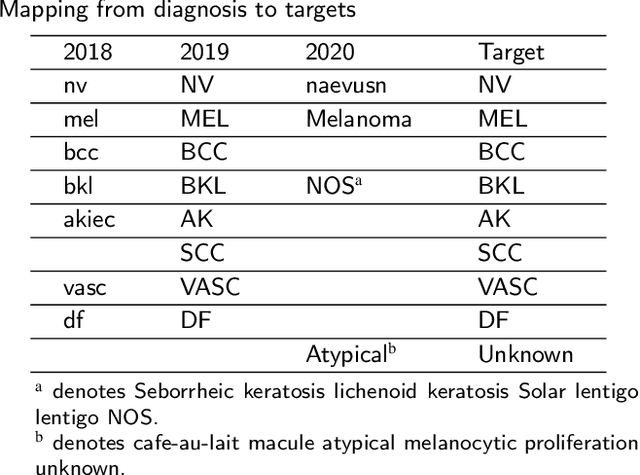
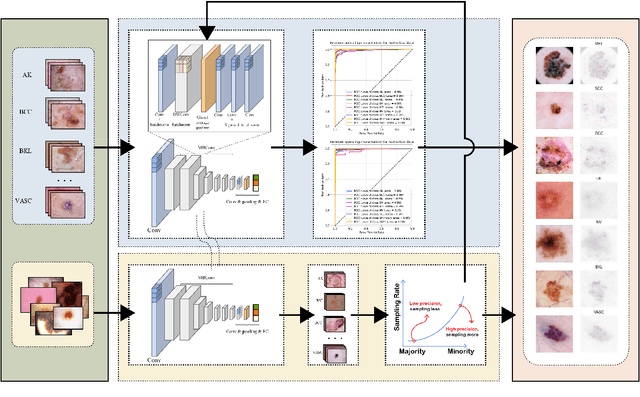
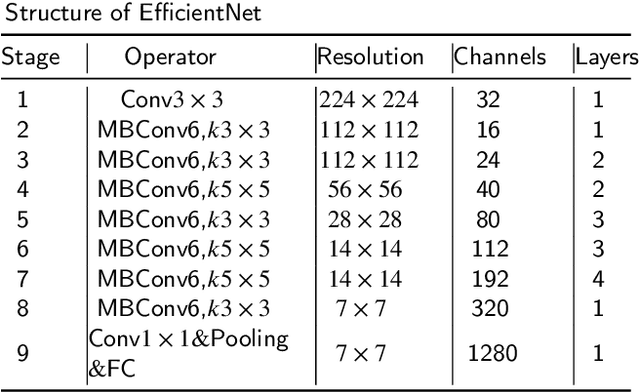
Dermatological diseases are among the most common disorders worldwide. This paper presents the first study of the interpretability and imbalanced semi-supervised learning of the multiclass intelligent skin diagnosis framework (ISDL) using 58,457 skin images with 10,857 unlabeled samples. Pseudo-labelled samples from minority classes have a higher probability at each iteration of class-rebalancing self-training, thereby promoting the utilization of unlabeled samples to solve the class imbalance problem. Our ISDL achieved a promising performance with an accuracy of 0.979, sensitivity of 0.975, specificity of 0.973, macro-F1 score of 0.974 and area under the receiver operating characteristic curve (AUC) of 0.999 for multi-label skin disease classification. The Shapley Additive explanation (SHAP) method is combined with our ISDL to explain how the deep learning model makes predictions. This finding is consistent with the clinical diagnosis. We also proposed a sampling distribution optimisation strategy to select pseudo-labelled samples in a more effective manner using ISDLplus. Furthermore, it has the potential to relieve the pressure placed on professional doctors, as well as help with practical issues associated with a shortage of such doctors in rural areas.