 Add to Chrome
 Add to Firefox
 Add to Edge
Power Optimization and Deep Learning for Channel Estimation of Active IRS-Aided IoT
Jul 12, 2024
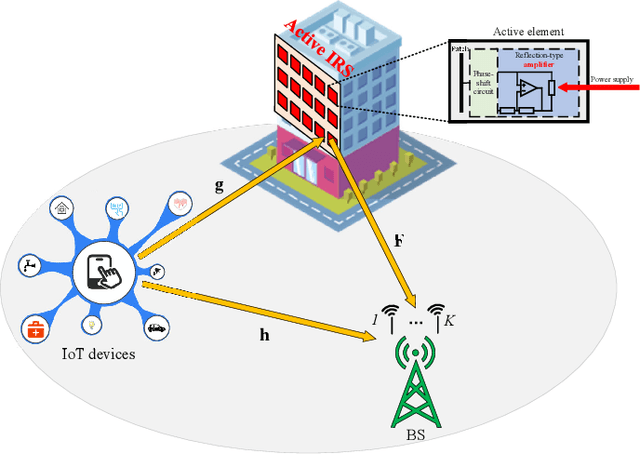
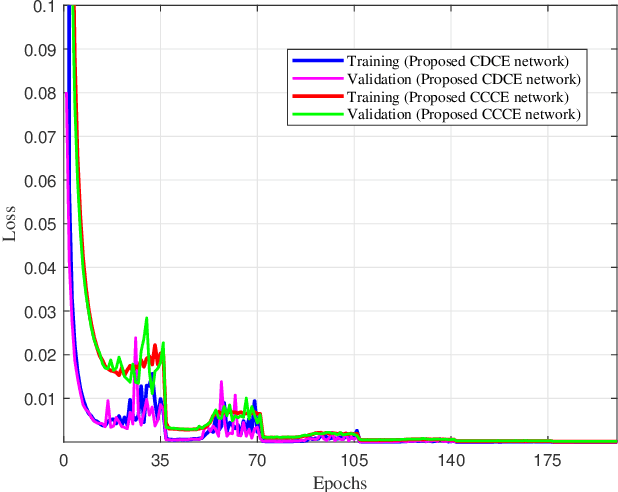
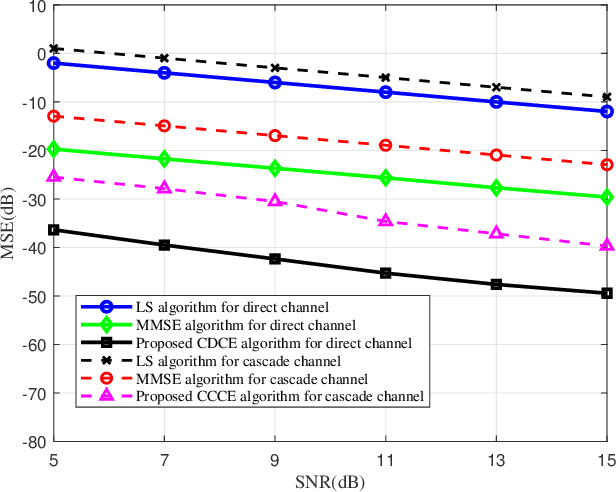
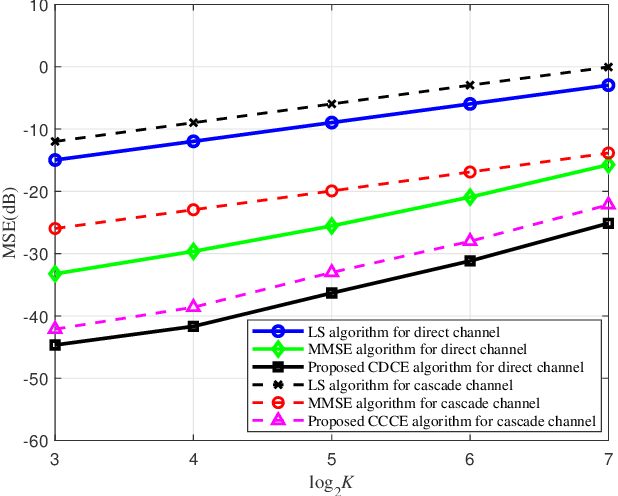
In this paper, channel estimation of an active intelligent reflecting surface (IRS) aided uplink Internet of Things (IoT) network is investigated. Firstly, the least square (LS) estimators for the direct channel and the cascaded channel are presented, respectively. The corresponding mean square errors (MSE) of channel estimators are derived. Subsequently, in order to evaluate the influence of adjusting the transmit power at the IoT devices or the reflected power at the active IRS on Sum-MSE performance, two situations are considered. In the first case, under the total power sum constraint of the IoT devices and active IRS, the closed-form expression of the optimal power allocation factor is derived. In the second case, when the transmit power at the IoT devices is fixed, there exists an optimal reflective power at active IRS. To further improve the estimation performance, the convolutional neural network (CNN)-based direct channel estimation (CDCE) algorithm and the CNN-based cascaded channel estimation (CCCE) algorithm are designed. Finally, simulation results demonstrate the existence of an optimal power allocation strategy that minimizes the Sum-MSE, and further validate the superiority of the proposed CDCE / CCCE algorithms over their respective traditional LS and minimum mean square error (MMSE) baselines.

Spatially-Variant Degradation Model for Dataset-free Super-resolution
Jul 11, 2024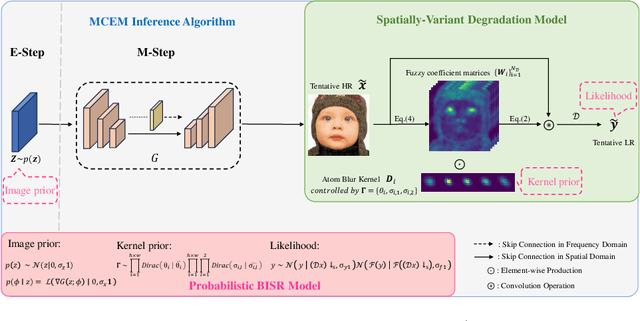
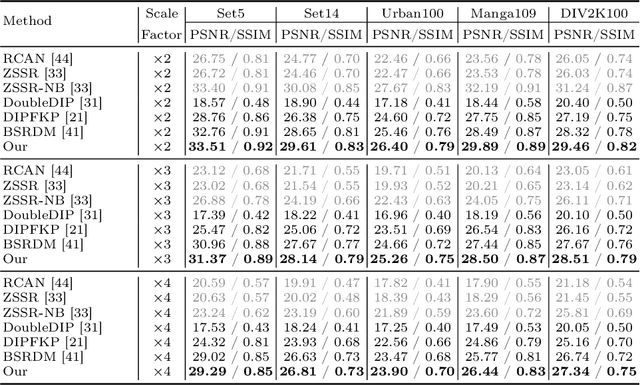
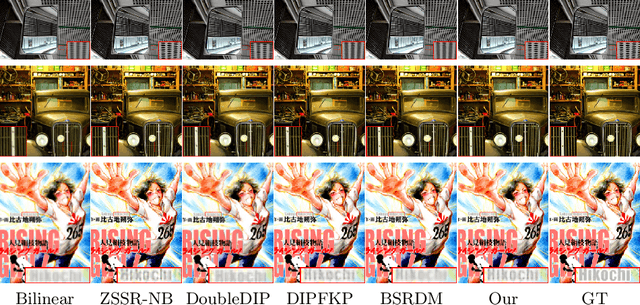

This paper focuses on the dataset-free Blind Image Super-Resolution (BISR). Unlike existing dataset-free BISR methods that focus on obtaining a degradation kernel for the entire image, we are the first to explicitly design a spatially-variant degradation model for each pixel. Our method also benefits from having a significantly smaller number of learnable parameters compared to data-driven spatially-variant BISR methods. Concretely, each pixel's degradation kernel is expressed as a linear combination of a learnable dictionary composed of a small number of spatially-variant atom kernels. The coefficient matrices of the atom degradation kernels are derived using membership functions of fuzzy set theory. We construct a novel Probabilistic BISR model with tailored likelihood function and prior terms. Subsequently, we employ the Monte Carlo EM algorithm to infer the degradation kernels for each pixel. Our method achieves a significant improvement over other state-of-the-art BISR methods, with an average improvement of 1 dB (2x).Code will be released at https://github.com/shaojieguoECNU/SVDSR.
Revisiting Sparse Rewards for Goal-Reaching Reinforcement Learning
Jul 08, 2024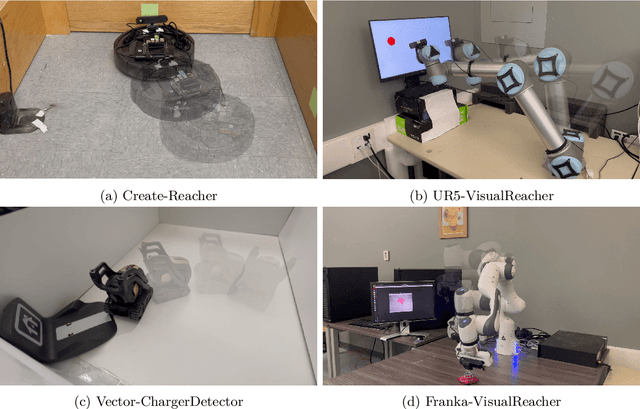

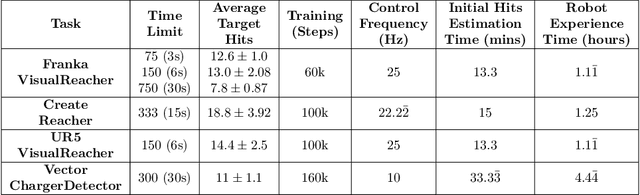
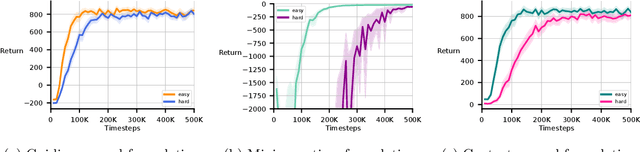
Many real-world robot learning problems, such as pick-and-place or arriving at a destination, can be seen as a problem of reaching a goal state as soon as possible. These problems, when formulated as episodic reinforcement learning tasks, can easily be specified to align well with our intended goal: -1 reward every time step with termination upon reaching the goal state, called minimum-time tasks. Despite this simplicity, such formulations are often overlooked in favor of dense rewards due to their perceived difficulty and lack of informativeness. Our studies contrast the two reward paradigms, revealing that the minimum-time task specification not only facilitates learning higher-quality policies but can also surpass dense-reward-based policies on their own performance metrics. Crucially, we also identify the goal-hit rate of the initial policy as a robust early indicator for learning success in such sparse feedback settings. Finally, using four distinct real-robotic platforms, we show that it is possible to learn pixel-based policies from scratch within two to three hours using constant negative rewards.
Learning with Alignments: Tackling the Inter- and Intra-domain Shifts for Cross-multidomain Facial Expression Recognition
Jul 08, 2024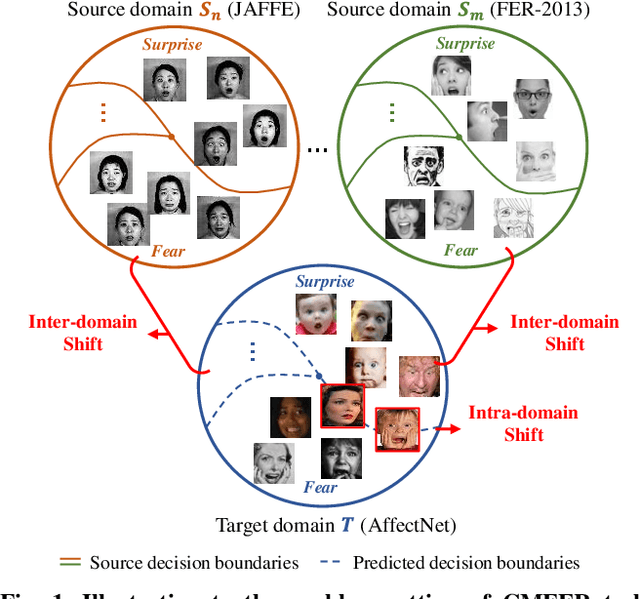
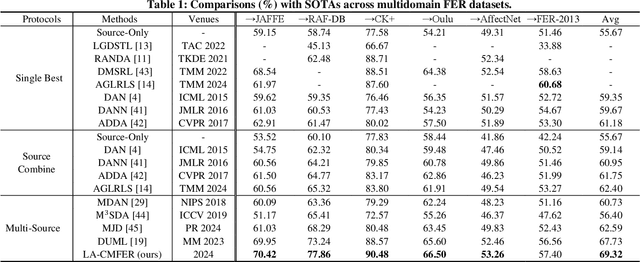
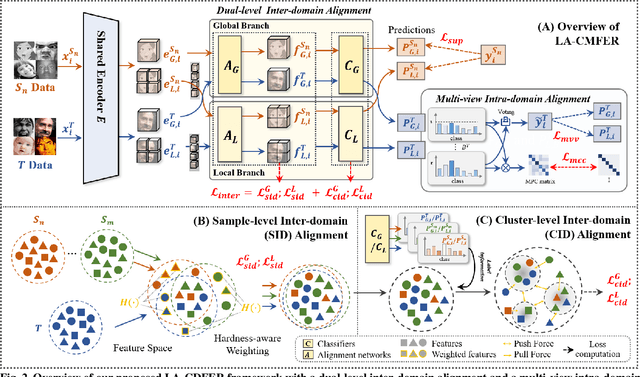
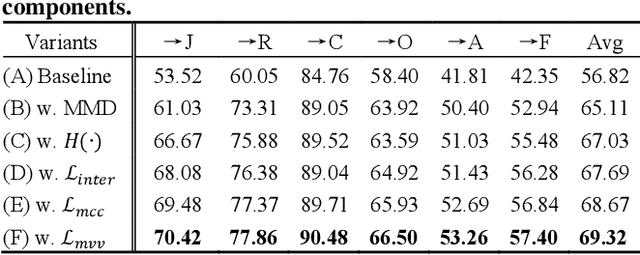
Facial Expression Recognition (FER) holds significant importance in human-computer interactions. Existing cross-domain FER methods often transfer knowledge solely from a single labeled source domain to an unlabeled target domain, neglecting the comprehensive information across multiple sources. Nevertheless, cross-multidomain FER (CMFER) is very challenging for (i) the inherent inter-domain shifts across multiple domains and (ii) the intra-domain shifts stemming from the ambiguous expressions and low inter-class distinctions. In this paper, we propose a novel Learning with Alignments CMFER framework, named LA-CMFER, to handle both inter- and intra-domain shifts. Specifically, LA-CMFER is constructed with a global branch and a local branch to extract features from the full images and local subtle expressions, respectively. Based on this, LA-CMFER presents a dual-level inter-domain alignment method to force the model to prioritize hard-to-align samples in knowledge transfer at a sample level while gradually generating a well-clustered feature space with the guidance of class attributes at a cluster level, thus narrowing the inter-domain shifts. To address the intra-domain shifts, LA-CMFER introduces a multi-view intra-domain alignment method with a multi-view clustering consistency constraint where a prediction similarity matrix is built to pursue consistency between the global and local views, thus refining pseudo labels and eliminating latent noise. Extensive experiments on six benchmark datasets have validated the superiority of our LA-CMFER.
VideoCoT: A Video Chain-of-Thought Dataset with Active Annotation Tool
Jul 07, 2024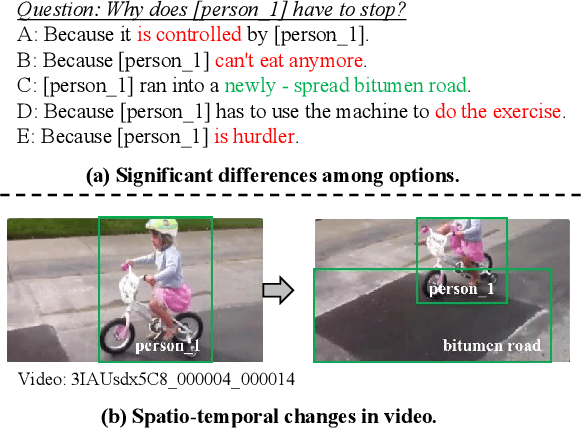
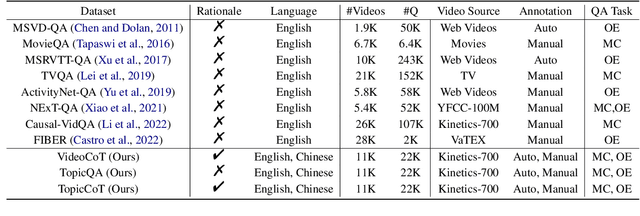
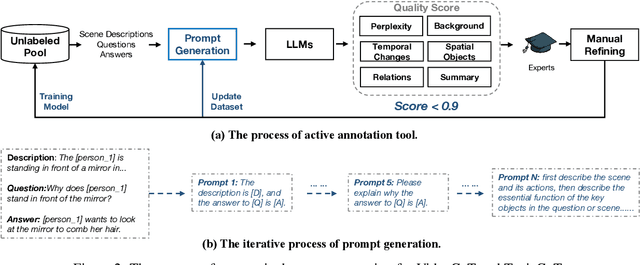
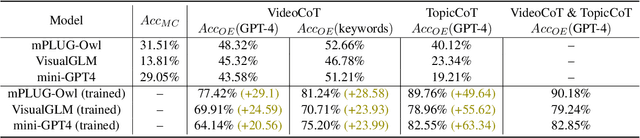
Multimodal large language models (MLLMs) are flourishing, but mainly focus on images with less attention than videos, especially in sub-fields such as prompt engineering, video chain-of-thought (CoT), and instruction tuning on videos. Therefore, we try to explore the collection of CoT datasets in videos to lead to video OpenQA and improve the reasoning ability of MLLMs. Unfortunately, making such video CoT datasets is not an easy task. Given that human annotation is too cumbersome and expensive, while machine-generated is not reliable due to the hallucination issue, we develop an automatic annotation tool that combines machine and human experts, under the active learning paradigm. Active learning is an interactive strategy between the model and human experts, in this way, the workload of human labeling can be reduced and the quality of the dataset can be guaranteed. With the help of the automatic annotation tool, we strive to contribute three datasets, namely VideoCoT, TopicQA, TopicCoT. Furthermore, we propose a simple but effective benchmark based on the collected datasets, which exploits CoT to maximize the complex reasoning capabilities of MLLMs. Extensive experiments demonstrate the effectiveness our solution.
xLSTM-UNet can be an Effective 2D & 3D Medical Image Segmentation Backbone with Vision-LSTM (ViL) better than its Mamba Counterpart
Jul 02, 2024Convolutional Neural Networks (CNNs) and Vision Transformers (ViT) have been pivotal in biomedical image segmentation, yet their ability to manage long-range dependencies remains constrained by inherent locality and computational overhead. To overcome these challenges, in this technical report, we first propose xLSTM-UNet, a UNet structured deep learning neural network that leverages Vision-LSTM (xLSTM) as its backbone for medical image segmentation. xLSTM is a recently proposed as the successor of Long Short-Term Memory (LSTM) networks and have demonstrated superior performance compared to Transformers and State Space Models (SSMs) like Mamba in Neural Language Processing (NLP) and image classification (as demonstrated in Vision-LSTM, or ViL implementation). Here, xLSTM-UNet we designed extend the success in biomedical image segmentation domain. By integrating the local feature extraction strengths of convolutional layers with the long-range dependency capturing abilities of xLSTM, xLSTM-UNet offers a robust solution for comprehensive image analysis. We validate the efficacy of xLSTM-UNet through experiments. Our findings demonstrate that xLSTM-UNet consistently surpasses the performance of leading CNN-based, Transformer-based, and Mamba-based segmentation networks in multiple datasets in biomedical segmentation including organs in abdomen MRI, instruments in endoscopic images, and cells in microscopic images. With comprehensive experiments performed, this technical report highlights the potential of xLSTM-based architectures in advancing biomedical image analysis in both 2D and 3D. The code, models, and datasets are publicly available at http://tianrun-chen.github.io/xLSTM-UNet/
Revisiting Constant Negative Rewards for Goal-Reaching Tasks in Robot Learning
Jun 29, 2024Many real-world robot learning problems, such as pick-and-place or arriving at a destination, can be seen as a problem of reaching a goal state as soon as possible. These problems, when formulated as episodic reinforcement learning tasks, can easily be specified to align well with our intended goal: -1 reward every time step with termination upon reaching the goal state, called minimum-time tasks. Despite this simplicity, such formulations are often overlooked in favor of dense rewards due to their perceived difficulty and lack of informativeness. Our studies contrast the two reward paradigms, revealing that the minimum-time task specification not only facilitates learning higher-quality policies but can also surpass dense-reward-based policies on their own performance metrics. Crucially, we also identify the goal-hit rate of the initial policy as a robust early indicator for learning success in such sparse feedback settings. Finally, using four distinct real-robotic platforms, we show that it is possible to learn pixel-based policies from scratch within two to three hours using constant negative rewards.
From Efficient Multimodal Models to World Models: A Survey
Jun 27, 2024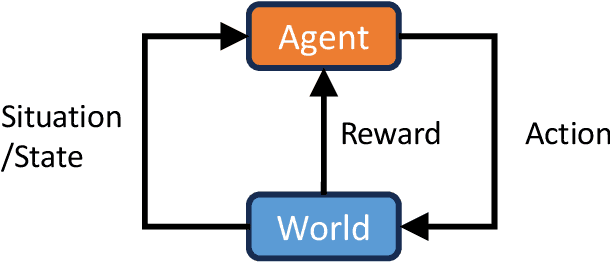

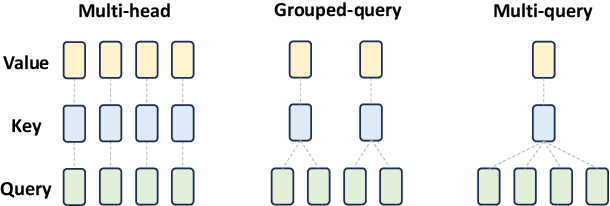

Multimodal Large Models (MLMs) are becoming a significant research focus, combining powerful large language models with multimodal learning to perform complex tasks across different data modalities. This review explores the latest developments and challenges in MLMs, emphasizing their potential in achieving artificial general intelligence and as a pathway to world models. We provide an overview of key techniques such as Multimodal Chain of Thought (M-COT), Multimodal Instruction Tuning (M-IT), and Multimodal In-Context Learning (M-ICL). Additionally, we discuss both the fundamental and specific technologies of multimodal models, highlighting their applications, input/output modalities, and design characteristics. Despite significant advancements, the development of a unified multimodal model remains elusive. We discuss the integration of 3D generation and embodied intelligence to enhance world simulation capabilities and propose incorporating external rule systems for improved reasoning and decision-making. Finally, we outline future research directions to address these challenges and advance the field.
Suppressing Uncertainties in Degradation Estimation for Blind Super-Resolution
Jun 24, 2024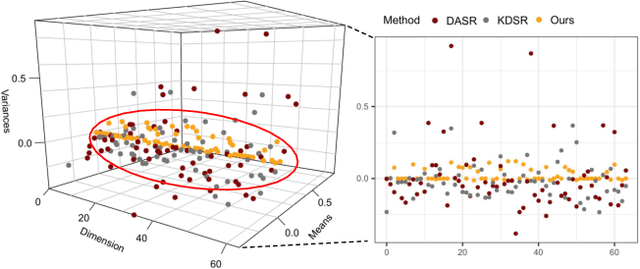
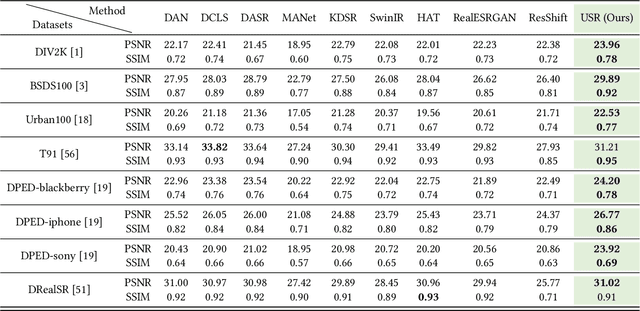
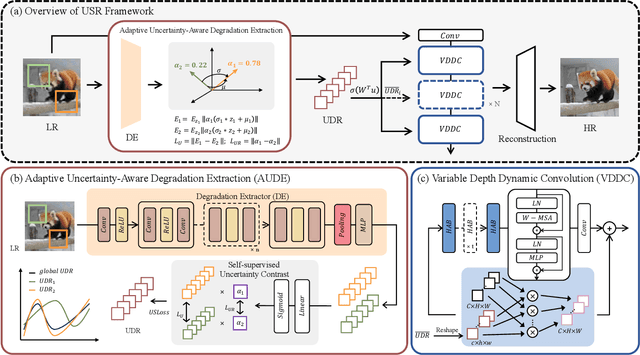
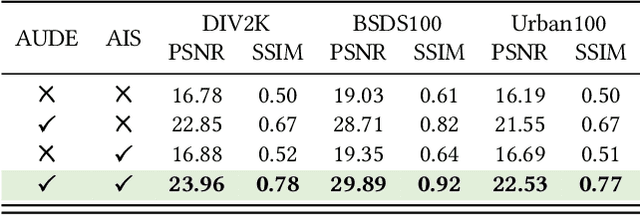
The problem of blind image super-resolution aims to recover high-resolution (HR) images from low-resolution (LR) images with unknown degradation modes. Most existing methods model the image degradation process using blur kernels. However, this explicit modeling approach struggles to cover the complex and varied degradation processes encountered in the real world, such as high-order combinations of JPEG compression, blur, and noise. Implicit modeling for the degradation process can effectively overcome this issue, but a key challenge of implicit modeling is the lack of accurate ground truth labels for the degradation process to conduct supervised training. To overcome this limitations inherent in implicit modeling, we propose an \textbf{U}ncertainty-based degradation representation for blind \textbf{S}uper-\textbf{R}esolution framework (\textbf{USR}). By suppressing the uncertainty of local degradation representations in images, USR facilitated self-supervised learning of degradation representations. The USR consists of two components: Adaptive Uncertainty-Aware Degradation Extraction (AUDE) and a feature extraction network composed of Variable Depth Dynamic Convolution (VDDC) blocks. To extract Uncertainty-based Degradation Representation from LR images, the AUDE utilizes the Self-supervised Uncertainty Contrast module with Uncertainty Suppression Loss to suppress the inherent model uncertainty of the Degradation Extractor. Furthermore, VDDC block integrates degradation information through dynamic convolution. Rhe VDDC also employs an Adaptive Intensity Scaling operation that adaptively adjusts the degradation representation according to the network hierarchy, thereby facilitating the effective integration of degradation information. Quantitative and qualitative experiments affirm the superiority of our approach.
On the Transformations across Reward Model, Parameter Update, and In-Context Prompt
Jun 24, 2024Despite the general capabilities of pre-trained large language models (LLMs), they still need further adaptation to better serve practical applications. In this paper, we demonstrate the interchangeability of three popular and distinct adaptation tools: parameter updating, reward modeling, and in-context prompting. This interchangeability establishes a triangular framework with six transformation directions, each of which facilitates a variety of applications. Our work offers a holistic view that unifies numerous existing studies and suggests potential research directions. We envision our work as a useful roadmap for future research on LLMs.