 Add to Chrome
 Add to Firefox
 Add to Edge
Customizing Video Portraits via Identity-ActionDecoupling
Jun 21, 2026
Identity-Preserving Text-to-Video Generation (IPT2V) seeks to synthesize a temporally coherent video from a reference image and a textual description, while simultaneously preserving the subject's identity and allowing fine-grained control over facial dynamics. Although recent methods such as ID-Animator and ConsisID inject identity features only at inference time, they ignored the ID-irrelevant information contained in Facial embedding, leading to monotonous or inaccurate facial movements that poorly follow the prompt. We introduce Identity-Action Decoupling (IaD) framework as well as two loss function Identity Decoupling Loss and Text Alignment Loss to solve this problem. Without any subject-specific fine-tuning, IaD yields videos that (1) maintain cross-temporal identity consistency and (2) exhibit rich, controllable expressions and scene variations that closely match the input text.

Interest Entanglement: The Hidden Barrier to Blind Super-Resolution Optimization
Jun 21, 2026Fidelity and perceptual quality are two inherently competing and conflicting objectives in the image super-resolution (SR) task. Different loss functions focus on these objectives to varying extents. Regression losses enhance the model's fidelity but lack sufficient attention to high-frequency details, resulting in a loss of fine details. In contrast, perception losses improve the model's visual quality but may introduce undesirable artifacts. Balancing these two optimization goals can be viewed as a Multi-Objective Optimization problem. Existing methods are limited to cautiously adjusting weight parameters between these losses, overlooking the underlying Interest Entanglement problem. To address this problem, we explore the inherent frequency-domain conflict between the regression objective and the perceptual objective, and analyze the causes of Interest Entanglement in SR tasks. According to our findings, we propose the Shared-Feature-Representation based Super-Resolution framework (SFR), which decouples the learning process of different optimization objectives, allowing the model to explore a common optimization direction for both goals and achieve an effective balance between them. To better leverage shared features, we also proposed the InfoSqueeze module, which filters redundant information through a dimensionality reduction and expansion process, effectively transforming features into a consistent space. Quantitative and qualitative experiments across five representative datasets affirm the superiority of SFR.
Video Generation Models as World Models: Efficient Paradigms, Architectures and Algorithms
Mar 30, 2026The rapid evolution of video generation has enabled models to simulate complex physical dynamics and long-horizon causalities, positioning them as potential world simulators. However, a critical gap still remains between the theoretical capacity for world simulation and the heavy computational costs of spatiotemporal modeling. To address this, we comprehensively and systematically review video generation frameworks and techniques that consider efficiency as a crucial requirement for practical world modeling. We introduce a novel taxonomy in three dimensions: efficient modeling paradigms, efficient network architectures, and efficient inference algorithms. We further show that bridging this efficiency gap directly empowers interactive applications such as autonomous driving, embodied AI, and game simulation. Finally, we identify emerging research frontiers in efficient video-based world modeling, arguing that efficiency is a fundamental prerequisite for evolving video generators into general-purpose, real-time, and robust world simulators.
Fact-R1: Towards Explainable Video Misinformation Detection with Deep Reasoning
May 22, 2025The rapid spread of multimodal misinformation on social media has raised growing concerns, while research on video misinformation detection remains limited due to the lack of large-scale, diverse datasets. Existing methods often overfit to rigid templates and lack deep reasoning over deceptive content. To address these challenges, we introduce FakeVV, a large-scale benchmark comprising over 100,000 video-text pairs with fine-grained, interpretable annotations. In addition, we further propose Fact-R1, a novel framework that integrates deep reasoning with collaborative rule-based reinforcement learning. Fact-R1 is trained through a three-stage process: (1) misinformation long-Chain-of-Thought (CoT) instruction tuning, (2) preference alignment via Direct Preference Optimization (DPO), and (3) Group Relative Policy Optimization (GRPO) using a novel verifiable reward function. This enables Fact-R1 to exhibit emergent reasoning behaviors comparable to those observed in advanced text-based reinforcement learning systems, but in the more complex multimodal misinformation setting. Our work establishes a new paradigm for misinformation detection, bridging large-scale video understanding, reasoning-guided alignment, and interpretable verification.
Component-aware Unsupervised Logical Anomaly Generation for Industrial Anomaly Detection
Feb 17, 2025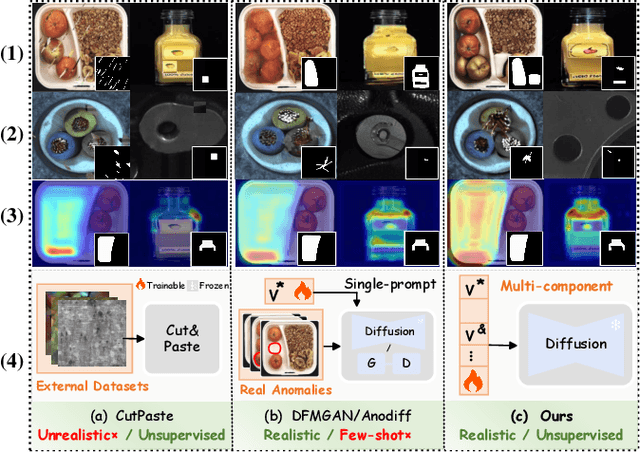
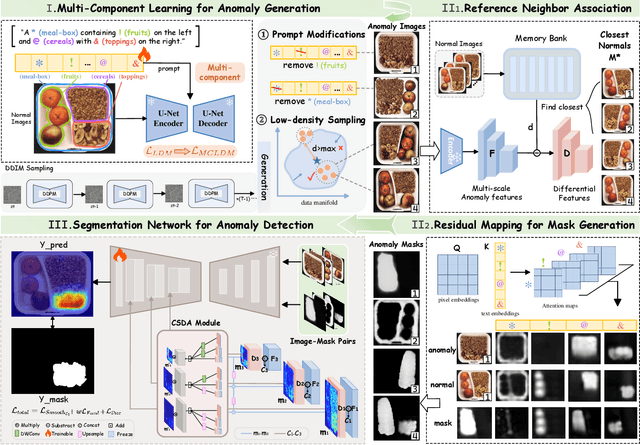
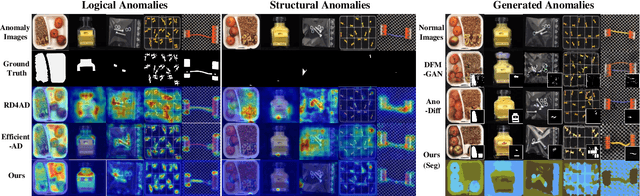
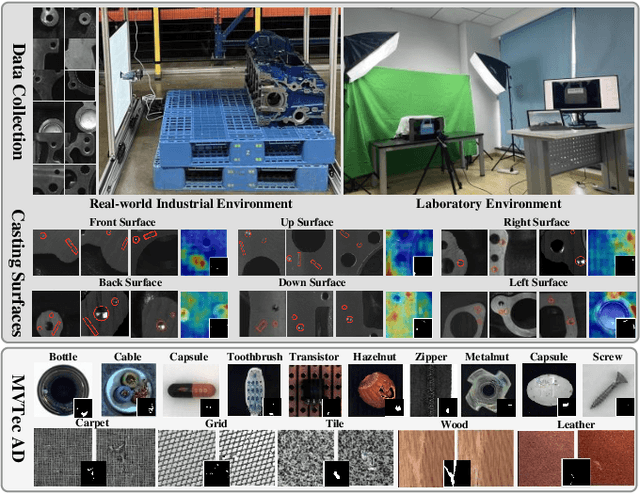
Anomaly detection is critical in industrial manufacturing for ensuring product quality and improving efficiency in automated processes. The scarcity of anomalous samples limits traditional detection methods, making anomaly generation essential for expanding the data repository. However, recent generative models often produce unrealistic anomalies increasing false positives, or require real-world anomaly samples for training. In this work, we treat anomaly generation as a compositional problem and propose ComGEN, a component-aware and unsupervised framework that addresses the gap in logical anomaly generation. Our method comprises a multi-component learning strategy to disentangle visual components, followed by subsequent generation editing procedures. Disentangled text-to-component pairs, revealing intrinsic logical constraints, conduct attention-guided residual mapping and model training with iteratively matched references across multiple scales. Experiments on the MVTecLOCO dataset confirm the efficacy of ComGEN, achieving the best AUROC score of 91.2%. Additional experiments on the real-world scenario of Diesel Engine and widely-used MVTecAD dataset demonstrate significant performance improvements when integrating simulated anomalies generated by ComGEN into automated production workflows.
All rivers run into the sea: Unified Modality Brain-like Emotional Central Mechanism
Jul 22, 2024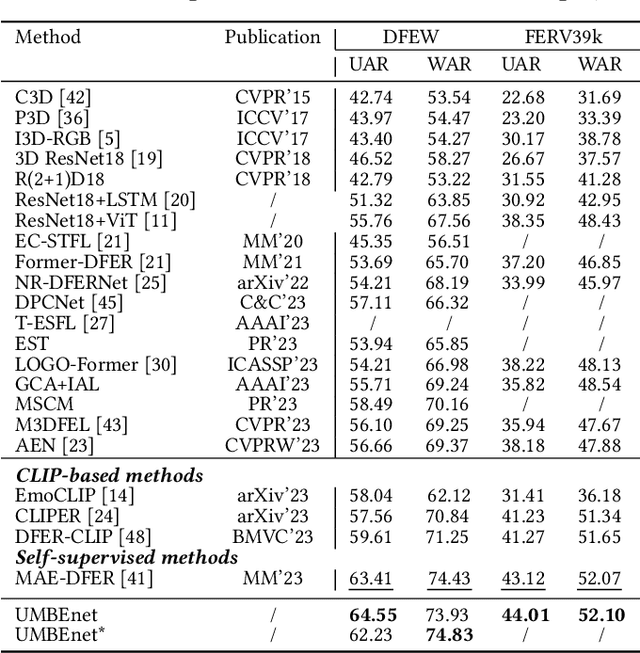
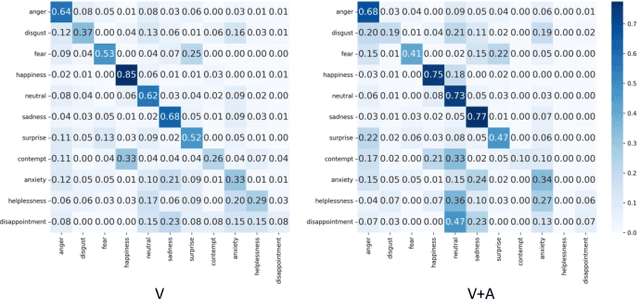
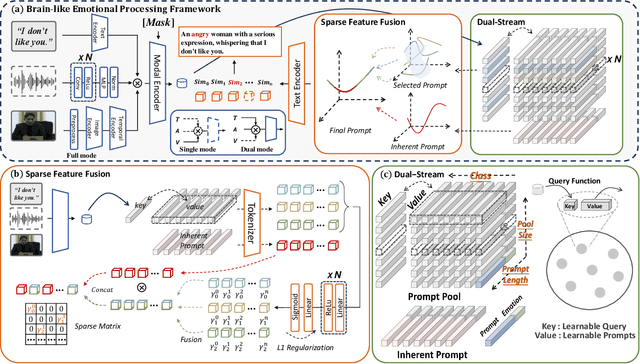
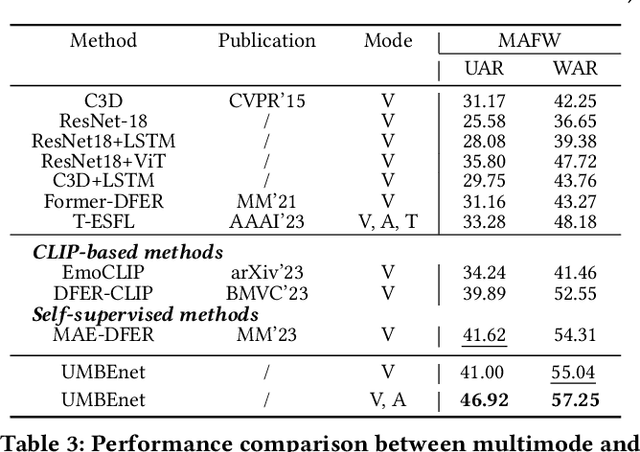
In the field of affective computing, fully leveraging information from a variety of sensory modalities is essential for the comprehensive understanding and processing of human emotions. Inspired by the process through which the human brain handles emotions and the theory of cross-modal plasticity, we propose UMBEnet, a brain-like unified modal affective processing network. The primary design of UMBEnet includes a Dual-Stream (DS) structure that fuses inherent prompts with a Prompt Pool and a Sparse Feature Fusion (SFF) module. The design of the Prompt Pool is aimed at integrating information from different modalities, while inherent prompts are intended to enhance the system's predictive guidance capabilities and effectively manage knowledge related to emotion classification. Moreover, considering the sparsity of effective information across different modalities, the SSF module aims to make full use of all available sensory data through the sparse integration of modality fusion prompts and inherent prompts, maintaining high adaptability and sensitivity to complex emotional states. Extensive experiments on the largest benchmark datasets in the Dynamic Facial Expression Recognition (DFER) field, including DFEW, FERV39k, and MAFW, have proven that UMBEnet consistently outperforms the current state-of-the-art methods. Notably, in scenarios of Modality Missingness and multimodal contexts, UMBEnet significantly surpasses the leading current methods, demonstrating outstanding performance and adaptability in tasks that involve complex emotional understanding with rich multimodal information.
From Efficient Multimodal Models to World Models: A Survey
Jun 27, 2024


Multimodal Large Models (MLMs) are becoming a significant research focus, combining powerful large language models with multimodal learning to perform complex tasks across different data modalities. This review explores the latest developments and challenges in MLMs, emphasizing their potential in achieving artificial general intelligence and as a pathway to world models. We provide an overview of key techniques such as Multimodal Chain of Thought (M-COT), Multimodal Instruction Tuning (M-IT), and Multimodal In-Context Learning (M-ICL). Additionally, we discuss both the fundamental and specific technologies of multimodal models, highlighting their applications, input/output modalities, and design characteristics. Despite significant advancements, the development of a unified multimodal model remains elusive. We discuss the integration of 3D generation and embodied intelligence to enhance world simulation capabilities and propose incorporating external rule systems for improved reasoning and decision-making. Finally, we outline future research directions to address these challenges and advance the field.
Suppressing Uncertainties in Degradation Estimation for Blind Super-Resolution
Jun 24, 2024
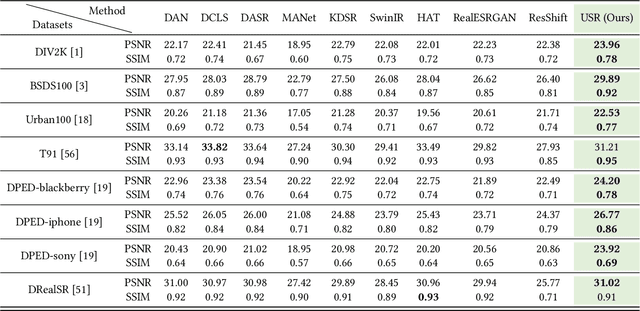
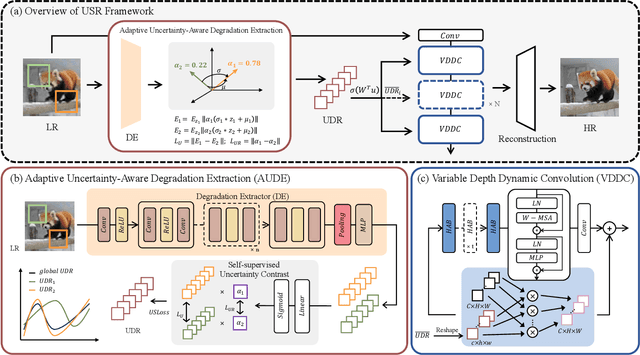
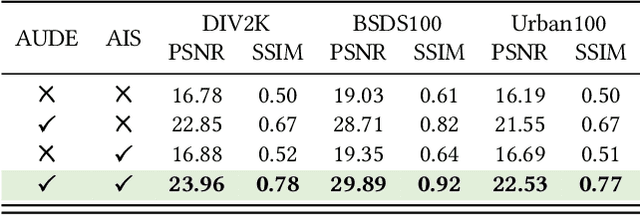
The problem of blind image super-resolution aims to recover high-resolution (HR) images from low-resolution (LR) images with unknown degradation modes. Most existing methods model the image degradation process using blur kernels. However, this explicit modeling approach struggles to cover the complex and varied degradation processes encountered in the real world, such as high-order combinations of JPEG compression, blur, and noise. Implicit modeling for the degradation process can effectively overcome this issue, but a key challenge of implicit modeling is the lack of accurate ground truth labels for the degradation process to conduct supervised training. To overcome this limitations inherent in implicit modeling, we propose an \textbf{U}ncertainty-based degradation representation for blind \textbf{S}uper-\textbf{R}esolution framework (\textbf{USR}). By suppressing the uncertainty of local degradation representations in images, USR facilitated self-supervised learning of degradation representations. The USR consists of two components: Adaptive Uncertainty-Aware Degradation Extraction (AUDE) and a feature extraction network composed of Variable Depth Dynamic Convolution (VDDC) blocks. To extract Uncertainty-based Degradation Representation from LR images, the AUDE utilizes the Self-supervised Uncertainty Contrast module with Uncertainty Suppression Loss to suppress the inherent model uncertainty of the Degradation Extractor. Furthermore, VDDC block integrates degradation information through dynamic convolution. Rhe VDDC also employs an Adaptive Intensity Scaling operation that adaptively adjusts the degradation representation according to the network hierarchy, thereby facilitating the effective integration of degradation information. Quantitative and qualitative experiments affirm the superiority of our approach.
Seeking Certainty In Uncertainty: Dual-Stage Unified Framework Solving Uncertainty in Dynamic Facial Expression Recognition
Jun 24, 2024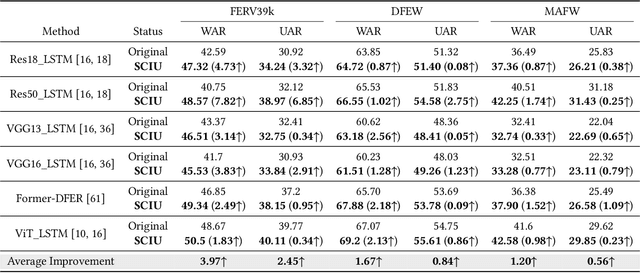


The contemporary state-of-the-art of Dynamic Facial Expression Recognition (DFER) technology facilitates remarkable progress by deriving emotional mappings of facial expressions from video content, underpinned by training on voluminous datasets. Yet, the DFER datasets encompass a substantial volume of noise data. Noise arises from low-quality captures that defy logical labeling, and instances that suffer from mislabeling due to annotation bias, engendering two principal types of uncertainty: the uncertainty regarding data usability and the uncertainty concerning label reliability. Addressing the two types of uncertainty, we have meticulously crafted a two-stage framework aiming at \textbf{S}eeking \textbf{C}ertain data \textbf{I}n extensive \textbf{U}ncertain data (SCIU). This initiative aims to purge the DFER datasets of these uncertainties, thereby ensuring that only clean, verified data is employed in training processes. To mitigate the issue of low-quality samples, we introduce the Coarse-Grained Pruning (CGP) stage, which assesses sample weights and prunes those deemed unusable due to their low weight. For samples with incorrect annotations, the Fine-Grained Correction (FGC) stage evaluates prediction stability to rectify mislabeled data. Moreover, SCIU is conceived as a universally compatible, plug-and-play framework, tailored to integrate seamlessly with prevailing DFER methodologies. Rigorous experiments across prevalent DFER datasets and against numerous benchmark methods substantiates SCIU's capacity to markedly elevate performance metrics.
OUS: Scene-Guided Dynamic Facial Expression Recognition
May 29, 2024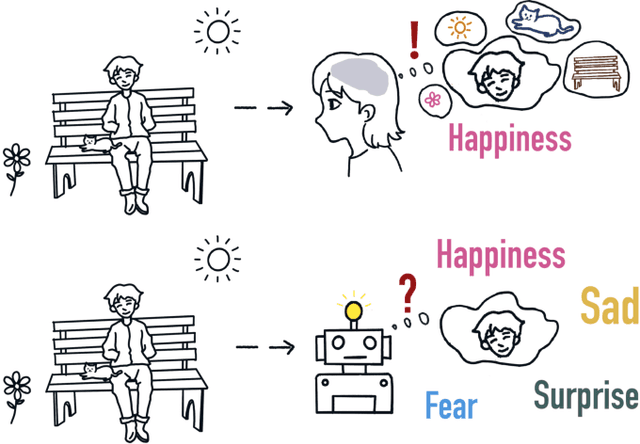

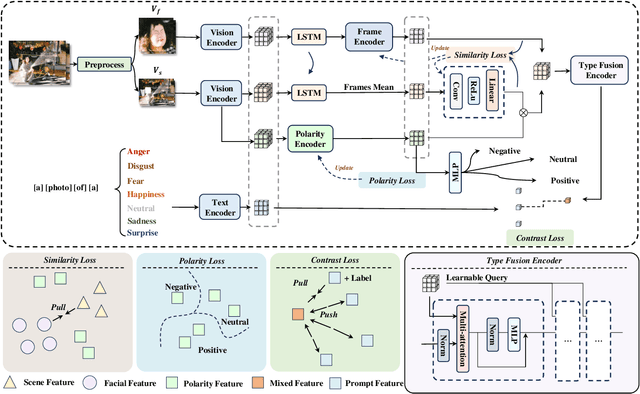
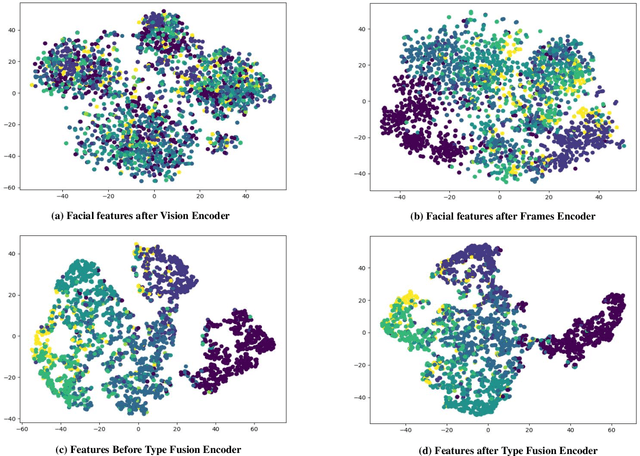
Dynamic Facial Expression Recognition (DFER) is crucial for affective computing but often overlooks the impact of scene context. We have identified a significant issue in current DFER tasks: human annotators typically integrate emotions from various angles, including environmental cues and body language, whereas existing DFER methods tend to consider the scene as noise that needs to be filtered out, focusing solely on facial information. We refer to this as the Rigid Cognitive Problem. The Rigid Cognitive Problem can lead to discrepancies between the cognition of annotators and models in some samples. To align more closely with the human cognitive paradigm of emotions, we propose an Overall Understanding of the Scene DFER method (OUS). OUS effectively integrates scene and facial features, combining scene-specific emotional knowledge for DFER. Extensive experiments on the two largest datasets in the DFER field, DFEW and FERV39k, demonstrate that OUS significantly outperforms existing methods. By analyzing the Rigid Cognitive Problem, OUS successfully understands the complex relationship between scene context and emotional expression, closely aligning with human emotional understanding in real-world scenarios.