 Add to Chrome
 Add to Firefox
 Add to Edge
Alleviating Class Imbalance in Semi-supervised Multi-organ Segmentation via Balanced Subclass Regularization
Aug 26, 2024
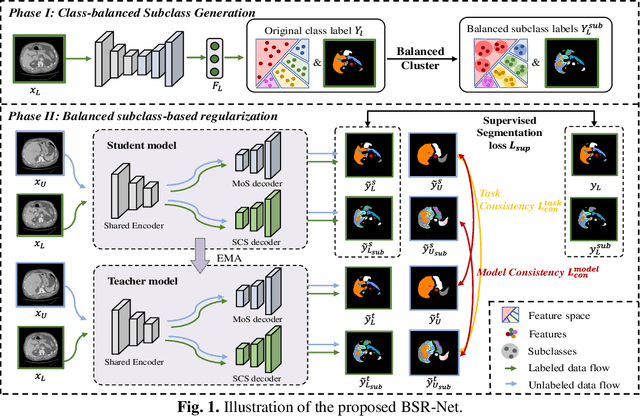
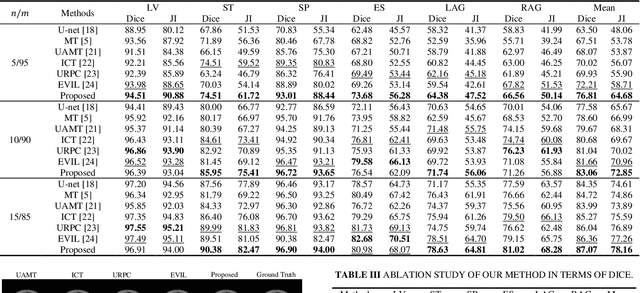
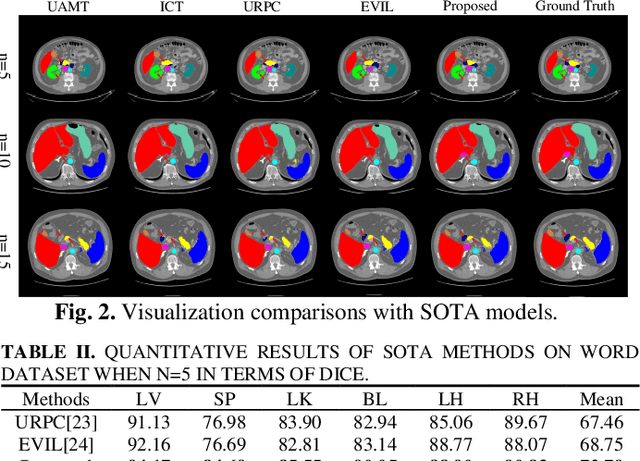
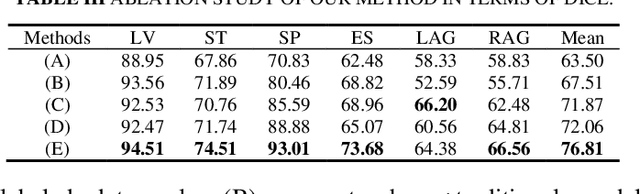
Semi-supervised learning (SSL) has shown notable potential in relieving the heavy demand of dense prediction tasks on large-scale well-annotated datasets, especially for the challenging multi-organ segmentation (MoS). However, the prevailing class-imbalance problem in MoS, caused by the substantial variations in organ size, exacerbates the learning difficulty of the SSL network. To alleviate this issue, we present a two-phase semi-supervised network (BSR-Net) with balanced subclass regularization for MoS. Concretely, in Phase I, we introduce a class-balanced subclass generation strategy based on balanced clustering to effectively generate multiple balanced subclasses from original biased ones according to their pixel proportions. Then, in Phase II, we design an auxiliary subclass segmentation (SCS) task within the multi-task framework of the main MoS task. The SCS task contributes a balanced subclass regularization to the main MoS task and transfers unbiased knowledge to the MoS network, thus alleviating the influence of the class-imbalance problem. Extensive experiments conducted on two publicly available datasets, i.e., the MICCAI FLARE 2022 dataset and the WORD dataset, verify the superior performance of our method compared with other methods.

ARANet: Attention-based Residual Adversarial Network with Deep Supervision for Radiotherapy Dose Prediction of Cervical Cancer
Aug 26, 2024Radiation therapy is the mainstay treatment for cervical cancer, and its ultimate goal is to ensure the planning target volume (PTV) reaches the prescribed dose while reducing dose deposition of organs-at-risk (OARs) as much as possible. To achieve these clinical requirements, the medical physicist needs to manually tweak the radiotherapy plan repeatedly in a trial-anderror manner until finding the optimal one in the clinic. However, such trial-and-error processes are quite time-consuming, and the quality of plans highly depends on the experience of the medical physicist. In this paper, we propose an end-to-end Attentionbased Residual Adversarial Network with deep supervision, namely ARANet, to automatically predict the 3D dose distribution of cervical cancer. Specifically, given the computer tomography (CT) images and their corresponding segmentation masks of PTV and OARs, ARANet employs a prediction network to generate the dose maps. We also utilize a multi-scale residual attention module and deep supervision mechanism to enforce the prediction network to extract more valuable dose features while suppressing irrelevant information. Our proposed method is validated on an in-house dataset including 54 cervical cancer patients, and experimental results have demonstrated its obvious superiority compared to other state-of-the-art methods.
Boosting Open-Domain Continual Learning via Leveraging Intra-domain Category-aware Prototype
Aug 19, 2024Despite recent progress in enhancing the efficacy of Open-Domain Continual Learning (ODCL) in Vision-Language Models (VLM), failing to (1) correctly identify the Task-ID of a test image and (2) use only the category set corresponding to the Task-ID, while preserving the knowledge related to each domain, cannot address the two primary challenges of ODCL: forgetting old knowledge and maintaining zero-shot capabilities, as well as the confusions caused by category-relatedness between domains. In this paper, we propose a simple yet effective solution: leveraging intra-domain category-aware prototypes for ODCL in CLIP (DPeCLIP), where the prototype is the key to bridging the above two processes. Concretely, we propose a training-free Task-ID discriminator method, by utilizing prototypes as classifiers for identifying Task-IDs. Furthermore, to maintain the knowledge corresponding to each domain, we incorporate intra-domain category-aware prototypes as domain prior prompts into the training process. Extensive experiments conducted on 11 different datasets demonstrate the effectiveness of our approach, achieving 2.37% and 1.14% average improvement in class-incremental and task-incremental settings, respectively.
MR-ULINS: A Tightly-Coupled UWB-LiDAR-Inertial Estimator with Multi-Epoch Outlier Rejection
Aug 11, 2024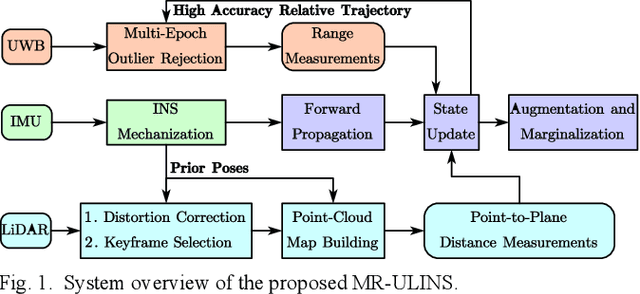
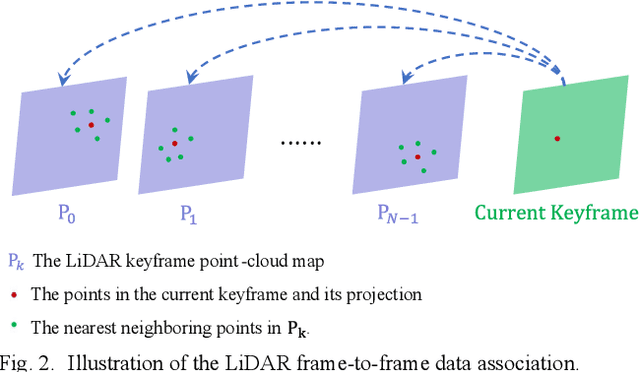
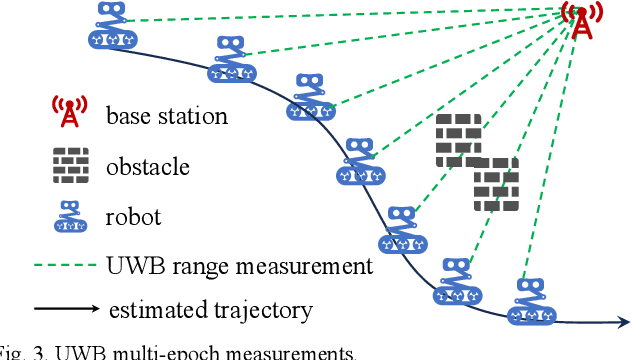
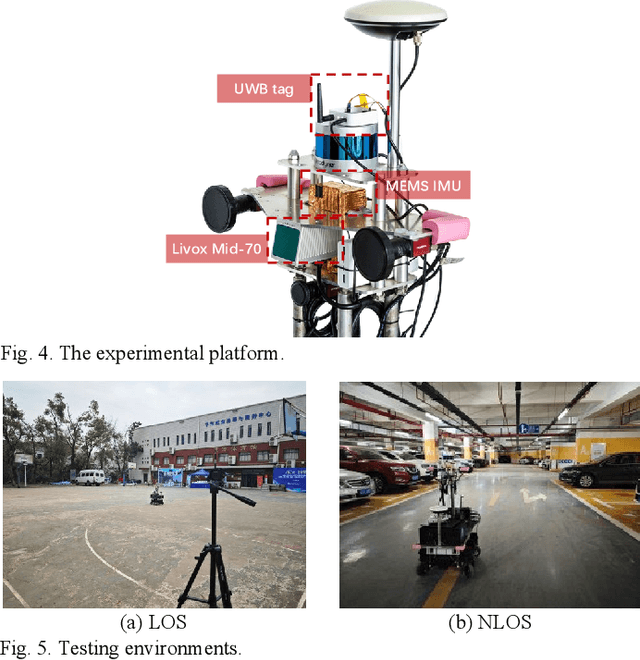
The LiDAR-inertial odometry (LIO) and the ultra-wideband (UWB) have been integrated together to achieve driftless positioning in global navigation satellite system (GNSS)-denied environments. However, the UWB may be affected by systematic range errors (such as the clock drift and the antenna phase center offset) and non-line-of-sight (NLOS) signals, resulting in reduced robustness. In this study, we propose a UWB-LiDAR-inertial estimator (MR-ULINS) that tightly integrates the UWB range, LiDAR frame-to-frame, and IMU measurements within the multi-state constraint Kalman filter (MSCKF) framework. The systematic range errors are precisely modeled to be estimated and compensated online. Besides, we propose a multi-epoch outlier rejection algorithm for UWB NLOS by utilizing the relative accuracy of the LIO. Specifically, the relative trajectory of the LIO is employed to verify the consistency of all range measurements within the sliding window. Extensive experiment results demonstrate that MR-ULINS achieves a positioning accuracy of around 0.1 m in complex indoor environments with severe NLOS interference. Ablation experiments show that the online estimation and multi-epoch outlier rejection can effectively improve the positioning accuracy. Besides, MR-ULINS maintains high accuracy and robustness in LiDAR-degenerated scenes and UWB-challenging conditions with spare base stations.
S3PET: Semi-supervised Standard-dose PET Image Reconstruction via Dose-aware Token Swap
Jul 30, 2024
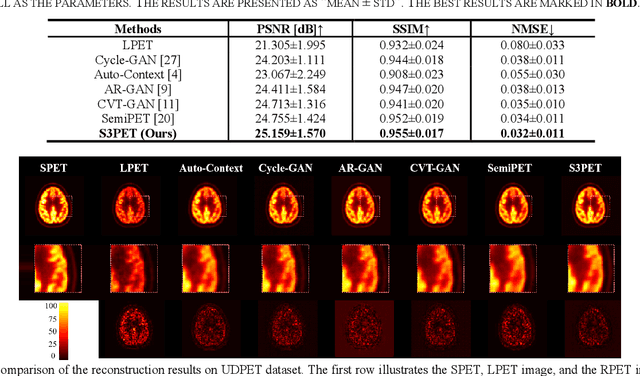


To acquire high-quality positron emission tomography (PET) images while reducing the radiation tracer dose, numerous efforts have been devoted to reconstructing standard-dose PET (SPET) images from low-dose PET (LPET). However, the success of current fully-supervised approaches relies on abundant paired LPET and SPET images, which are often unavailable in clinic. Moreover, these methods often mix the dose-invariant content with dose level-related dose-specific details during reconstruction, resulting in distorted images. To alleviate these problems, in this paper, we propose a two-stage Semi-Supervised SPET reconstruction framework, namely S3PET, to accommodate the training of abundant unpaired and limited paired SPET and LPET images. Our S3PET involves an un-supervised pre-training stage (Stage I) to extract representations from unpaired images, and a supervised dose-aware reconstruction stage (Stage II) to achieve LPET-to-SPET reconstruction by transferring the dose-specific knowledge between paired images. Specifically, in stage I, two independent dose-specific masked autoencoders (DsMAEs) are adopted to comprehensively understand the unpaired SPET and LPET images. Then, in Stage II, the pre-trained DsMAEs are further finetuned using paired images. To prevent distortions in both content and details, we introduce two elaborate modules, i.e., a dose knowledge decouple module to disentangle the respective dose-specific and dose-invariant knowledge of LPET and SPET, and a dose-specific knowledge learning module to transfer the dose-specific information from SPET to LPET, thereby achieving high-quality SPET reconstruction from LPET images. Experiments on two datasets demonstrate that our S3PET achieves state-of-the-art performance quantitatively and qualitatively.
$VILA^2$: VILA Augmented VILA
Jul 24, 2024Visual language models (VLMs) have rapidly progressed, driven by the success of large language models (LLMs). While model architectures and training infrastructures advance rapidly, data curation remains under-explored. When data quantity and quality become a bottleneck, existing work either directly crawls more raw data from the Internet that does not have a guarantee of data quality or distills from black-box commercial models (e.g., GPT-4V / Gemini) causing the performance upper bounded by that model. In this work, we introduce a novel approach that includes a self-augment step and a specialist-augment step to iteratively improve data quality and model performance. In the self-augment step, a VLM recaptions its own pretraining data to enhance data quality, and then retrains from scratch using this refined dataset to improve model performance. This process can iterate for several rounds. Once self-augmentation saturates, we employ several specialist VLMs finetuned from the self-augmented VLM with domain-specific expertise, to further infuse specialist knowledge into the generalist VLM through task-oriented recaptioning and retraining. With the combined self-augmented and specialist-augmented training, we introduce $VILA^2$ (VILA-augmented-VILA), a VLM family that consistently improves the accuracy on a wide range of tasks over prior art, and achieves new state-of-the-art results on MMMU leaderboard among open-sourced models.
LoFormer: Local Frequency Transformer for Image Deblurring
Jul 24, 2024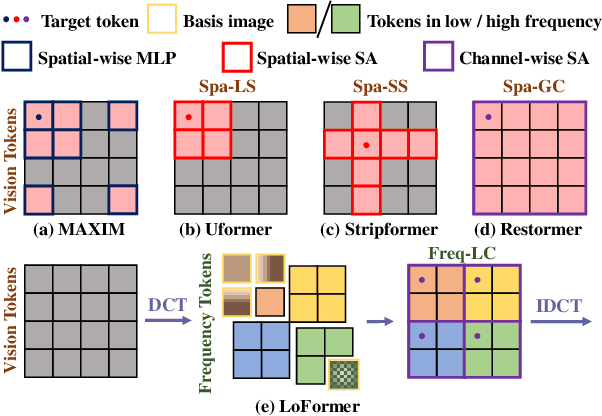
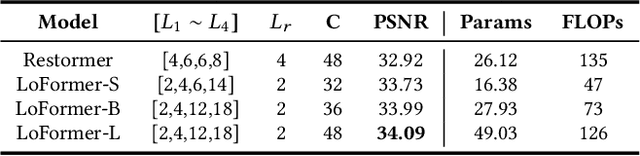
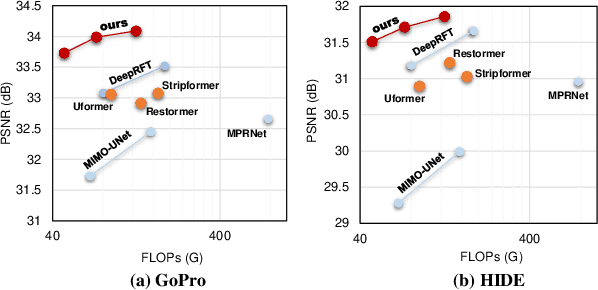

Due to the computational complexity of self-attention (SA), prevalent techniques for image deblurring often resort to either adopting localized SA or employing coarse-grained global SA methods, both of which exhibit drawbacks such as compromising global modeling or lacking fine-grained correlation. In order to address this issue by effectively modeling long-range dependencies without sacrificing fine-grained details, we introduce a novel approach termed Local Frequency Transformer (LoFormer). Within each unit of LoFormer, we incorporate a Local Channel-wise SA in the frequency domain (Freq-LC) to simultaneously capture cross-covariance within low- and high-frequency local windows. These operations offer the advantage of (1) ensuring equitable learning opportunities for both coarse-grained structures and fine-grained details, and (2) exploring a broader range of representational properties compared to coarse-grained global SA methods. Additionally, we introduce an MLP Gating mechanism complementary to Freq-LC, which serves to filter out irrelevant features while enhancing global learning capabilities. Our experiments demonstrate that LoFormer significantly improves performance in the image deblurring task, achieving a PSNR of 34.09 dB on the GoPro dataset with 126G FLOPs. https://github.com/DeepMed-Lab-ECNU/Single-Image-Deblur
Hi-EF: Benchmarking Emotion Forecasting in Human-interaction
Jul 23, 2024
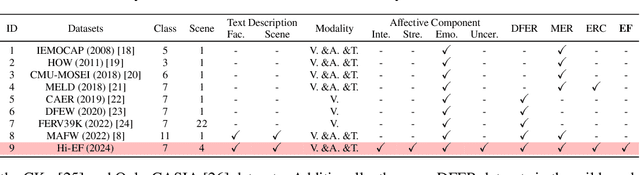
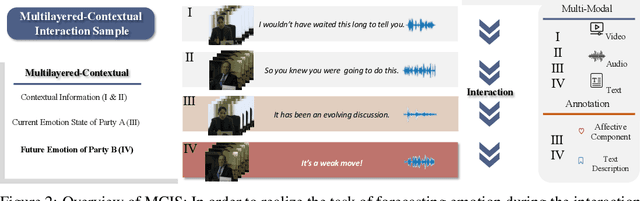
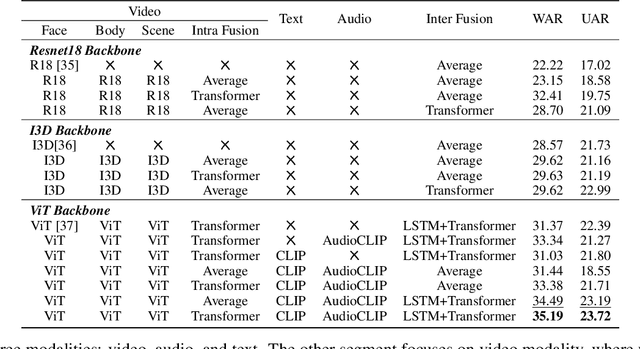
Affective Forecasting, a research direction in psychology that predicts individuals future emotions, is often constrained by numerous external factors like social influence and temporal distance. To address this, we transform Affective Forecasting into a Deep Learning problem by designing an Emotion Forecasting paradigm based on two-party interactions. We propose a novel Emotion Forecasting (EF) task grounded in the theory that an individuals emotions are easily influenced by the emotions or other information conveyed during interactions with another person. To tackle this task, we have developed a specialized dataset, Human-interaction-based Emotion Forecasting (Hi-EF), which contains 3069 two-party Multilayered-Contextual Interaction Samples (MCIS) with abundant affective-relevant labels and three modalities. Hi-EF not only demonstrates the feasibility of the EF task but also highlights its potential. Additionally, we propose a methodology that establishes a foundational and referential baseline model for the EF task and extensive experiments are provided. The dataset and code is available at https://github.com/Anonymize-Author/Hi-EF.
All rivers run into the sea: Unified Modality Brain-like Emotional Central Mechanism
Jul 22, 2024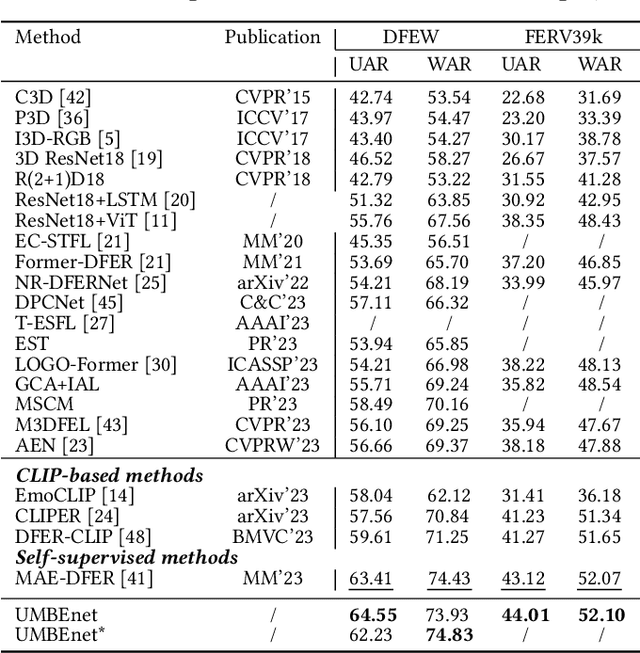
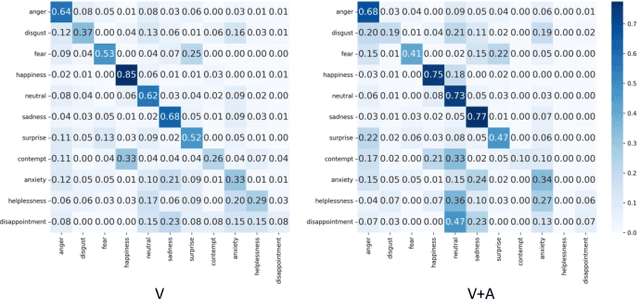
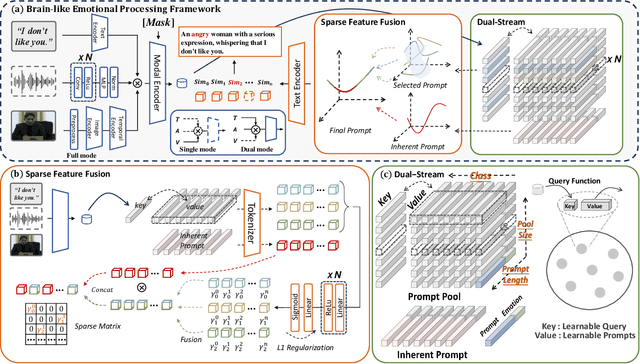
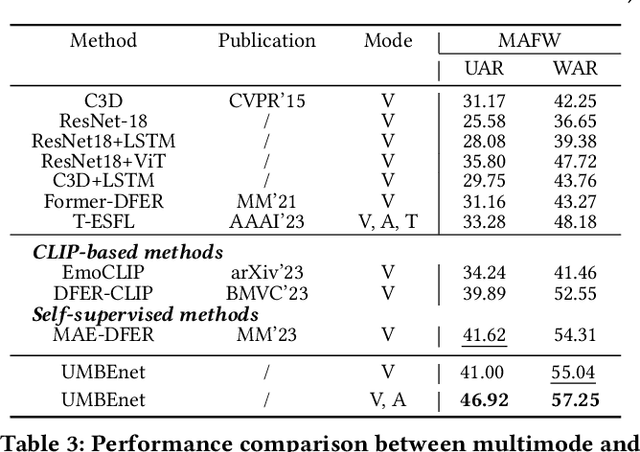
In the field of affective computing, fully leveraging information from a variety of sensory modalities is essential for the comprehensive understanding and processing of human emotions. Inspired by the process through which the human brain handles emotions and the theory of cross-modal plasticity, we propose UMBEnet, a brain-like unified modal affective processing network. The primary design of UMBEnet includes a Dual-Stream (DS) structure that fuses inherent prompts with a Prompt Pool and a Sparse Feature Fusion (SFF) module. The design of the Prompt Pool is aimed at integrating information from different modalities, while inherent prompts are intended to enhance the system's predictive guidance capabilities and effectively manage knowledge related to emotion classification. Moreover, considering the sparsity of effective information across different modalities, the SSF module aims to make full use of all available sensory data through the sparse integration of modality fusion prompts and inherent prompts, maintaining high adaptability and sensitivity to complex emotional states. Extensive experiments on the largest benchmark datasets in the Dynamic Facial Expression Recognition (DFER) field, including DFEW, FERV39k, and MAFW, have proven that UMBEnet consistently outperforms the current state-of-the-art methods. Notably, in scenarios of Modality Missingness and multimodal contexts, UMBEnet significantly surpasses the leading current methods, demonstrating outstanding performance and adaptability in tasks that involve complex emotional understanding with rich multimodal information.
LaMI-DETR: Open-Vocabulary Detection with Language Model Instruction
Jul 16, 2024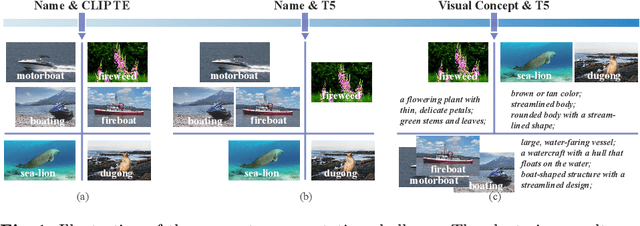
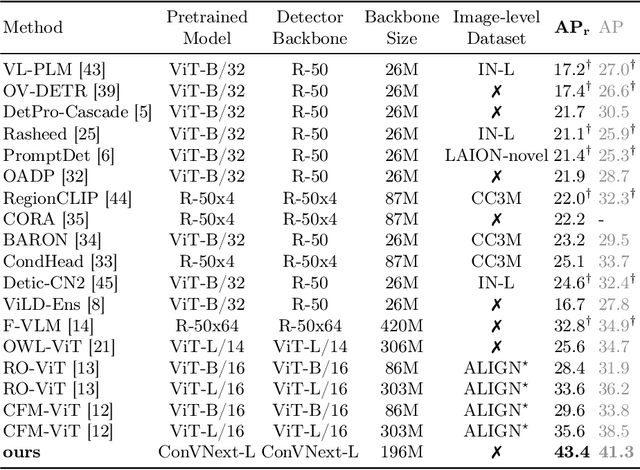

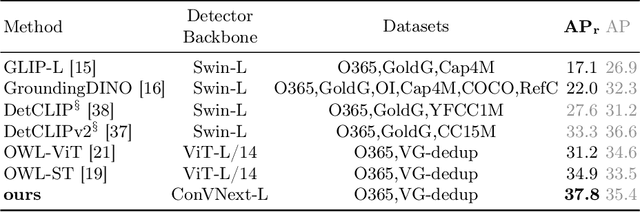
Existing methods enhance open-vocabulary object detection by leveraging the robust open-vocabulary recognition capabilities of Vision-Language Models (VLMs), such as CLIP.However, two main challenges emerge:(1) A deficiency in concept representation, where the category names in CLIP's text space lack textual and visual knowledge.(2) An overfitting tendency towards base categories, with the open vocabulary knowledge biased towards base categories during the transfer from VLMs to detectors.To address these challenges, we propose the Language Model Instruction (LaMI) strategy, which leverages the relationships between visual concepts and applies them within a simple yet effective DETR-like detector, termed LaMI-DETR.LaMI utilizes GPT to construct visual concepts and employs T5 to investigate visual similarities across categories.These inter-category relationships refine concept representation and avoid overfitting to base categories.Comprehensive experiments validate our approach's superior performance over existing methods in the same rigorous setting without reliance on external training resources.LaMI-DETR achieves a rare box AP of 43.4 on OV-LVIS, surpassing the previous best by 7.8 rare box AP.