 Add to Chrome
 Add to Firefox
 Add to Edge
GS-Phong: Meta-Learned 3D Gaussians for Relightable Novel View Synthesis
May 31, 2024
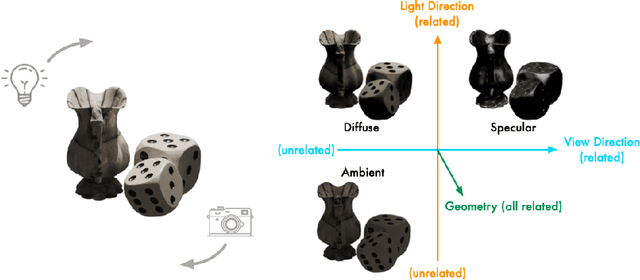
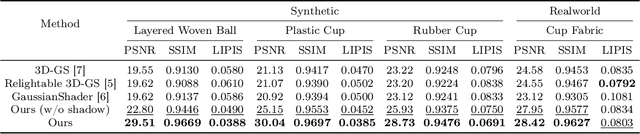
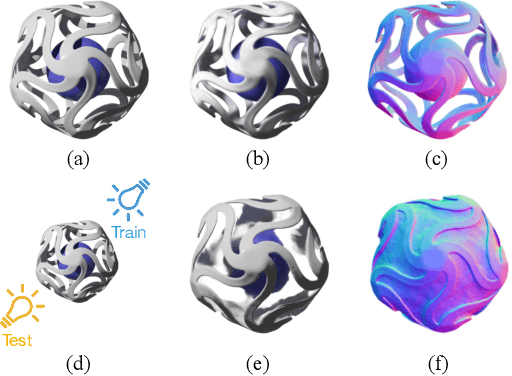
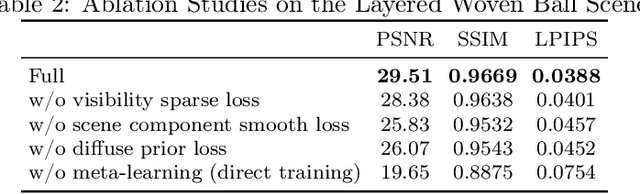
Decoupling the illumination in 3D scenes is crucial for novel view synthesis and relighting. In this paper, we propose a novel method for representing a scene illuminated by a point light using a set of relightable 3D Gaussian points. Inspired by the Blinn-Phong model, our approach decomposes the scene into ambient, diffuse, and specular components, enabling the synthesis of realistic lighting effects. To facilitate the decomposition of geometric information independent of lighting conditions, we introduce a novel bilevel optimization-based meta-learning framework. The fundamental idea is to view the rendering tasks under various lighting positions as a multi-task learning problem, which our meta-learning approach effectively addresses by generalizing the learned Gaussian geometries not only across different viewpoints but also across diverse light positions. Experimental results demonstrate the effectiveness of our approach in terms of training efficiency and rendering quality compared to existing methods for free-viewpoint relighting.

$E^{3}$Gen: Efficient, Expressive and Editable Avatars Generation
May 29, 2024
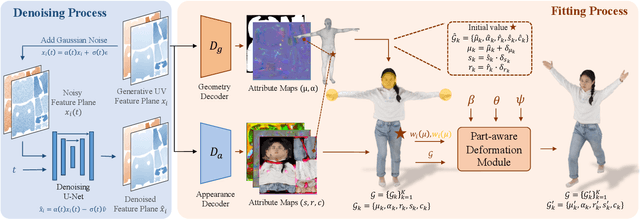

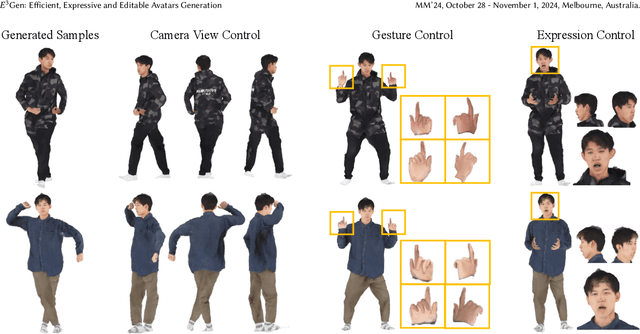
This paper aims to introduce 3D Gaussian for efficient, expressive, and editable digital avatar generation. This task faces two major challenges: (1) The unstructured nature of 3D Gaussian makes it incompatible with current generation pipelines; (2) the expressive animation of 3D Gaussian in a generative setting that involves training with multiple subjects remains unexplored. In this paper, we propose a novel avatar generation method named $E^3$Gen, to effectively address these challenges. First, we propose a novel generative UV features plane representation that encodes unstructured 3D Gaussian onto a structured 2D UV space defined by the SMPL-X parametric model. This novel representation not only preserves the representation ability of the original 3D Gaussian but also introduces a shared structure among subjects to enable generative learning of the diffusion model. To tackle the second challenge, we propose a part-aware deformation module to achieve robust and accurate full-body expressive pose control. Extensive experiments demonstrate that our method achieves superior performance in avatar generation and enables expressive full-body pose control and editing.
HDR-GS: Efficient High Dynamic Range Novel View Synthesis at 1000x Speed via Gaussian Splatting
May 27, 2024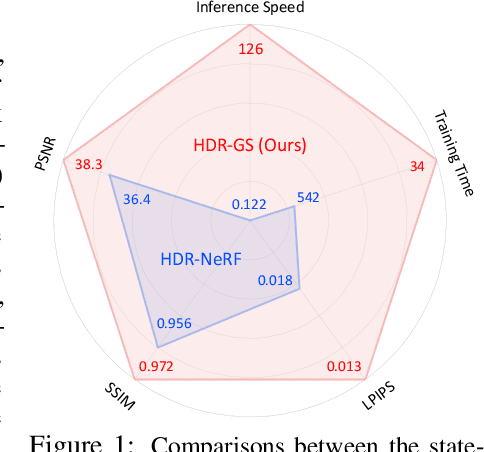
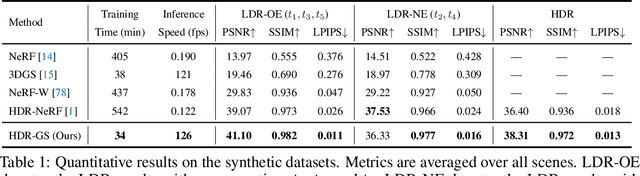
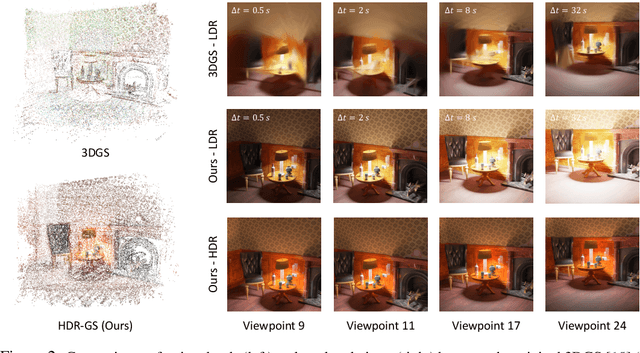
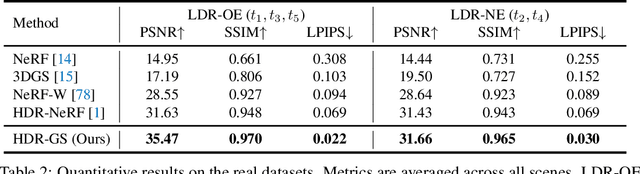
High dynamic range (HDR) novel view synthesis (NVS) aims to create photorealistic images from novel viewpoints using HDR imaging techniques. The rendered HDR images capture a wider range of brightness levels containing more details of the scene than normal low dynamic range (LDR) images. Existing HDR NVS methods are mainly based on NeRF. They suffer from long training time and slow inference speed. In this paper, we propose a new framework, High Dynamic Range Gaussian Splatting (HDR-GS), which can efficiently render novel HDR views and reconstruct LDR images with a user input exposure time. Specifically, we design a Dual Dynamic Range (DDR) Gaussian point cloud model that uses spherical harmonics to fit HDR color and employs an MLP-based tone-mapper to render LDR color. The HDR and LDR colors are then fed into two Parallel Differentiable Rasterization (PDR) processes to reconstruct HDR and LDR views. To establish the data foundation for the research of 3D Gaussian splatting-based methods in HDR NVS, we recalibrate the camera parameters and compute the initial positions for Gaussian point clouds. Experiments demonstrate that our HDR-GS surpasses the state-of-the-art NeRF-based method by 3.84 and 1.91 dB on LDR and HDR NVS while enjoying 1000x inference speed and only requiring 6.3% training time. Code, models, and recalibrated data will be publicly available at https://github.com/caiyuanhao1998/HDR-GS
FLoRA: Low-Rank Core Space for N-dimension
May 23, 2024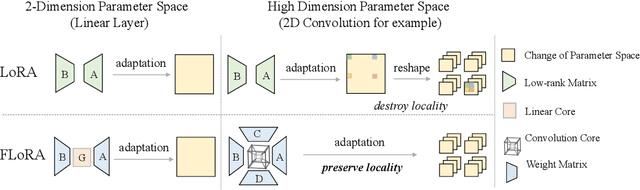
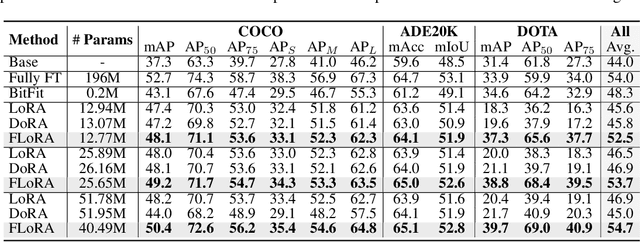
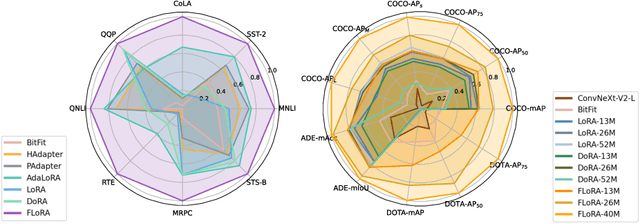

Adapting pre-trained foundation models for various downstream tasks has been prevalent in artificial intelligence. Due to the vast number of tasks and high costs, adjusting all parameters becomes unfeasible. To mitigate this, several fine-tuning techniques have been developed to update the pre-trained model weights in a more resource-efficient manner, such as through low-rank adjustments. Yet, almost all of these methods focus on linear weights, neglecting the intricacies of parameter spaces in higher dimensions like 4D. Alternatively, some methods can be adapted for high-dimensional parameter space by compressing changes in the original space into two dimensions and then employing low-rank matrix decomposition. However, these approaches destructs the structural integrity of the involved high-dimensional spaces. To tackle the diversity of dimensional spaces across different foundation models and provide a more precise representation of the changes within these spaces, this paper introduces a generalized parameter-efficient fine-tuning framework, FLoRA, designed for various dimensional parameter space. Specifically, utilizing Tucker decomposition, FLoRA asserts that changes in each dimensional parameter space are based on a low-rank core space which maintains the consistent topological structure with the original space. It then models the changes through this core space alongside corresponding weights to reconstruct alterations in the original space. FLoRA effectively preserves the structural integrity of the change of original N-dimensional parameter space, meanwhile decomposes it via low-rank tensor decomposition. Extensive experiments on computer vision, natural language processing and multi-modal tasks validate FLoRA's effectiveness. Codes are available at https://github.com/SJTU-DeepVisionLab/FLoRA.
Promoting AI Equity in Science: Generalized Domain Prompt Learning for Accessible VLM Research
May 14, 2024
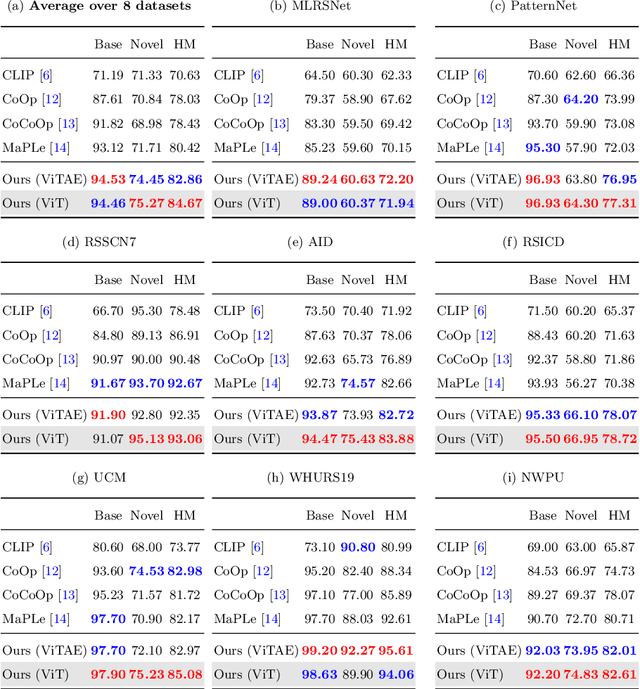
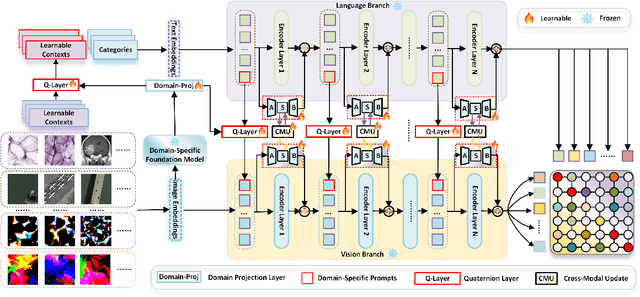
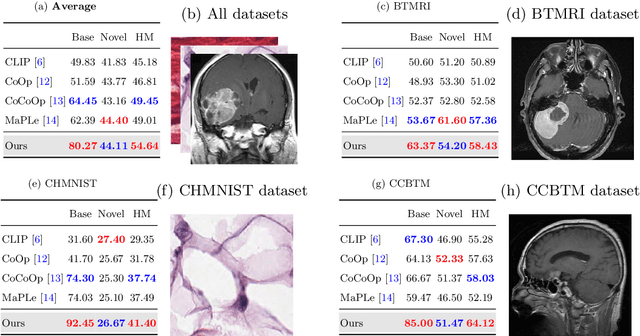
Large-scale Vision-Language Models (VLMs) have demonstrated exceptional performance in natural vision tasks, motivating researchers across domains to explore domain-specific VLMs. However, the construction of powerful domain-specific VLMs demands vast amounts of annotated data, substantial electrical energy, and computing resources, primarily accessible to industry, yet hindering VLM research in academia. To address this challenge and foster sustainable and equitable VLM research, we present the Generalized Domain Prompt Learning (GDPL) framework. GDPL facilitates the transfer of VLMs' robust recognition capabilities from natural vision to specialized domains, without the need for extensive data or resources. By leveraging small-scale domain-specific foundation models and minimal prompt samples, GDPL empowers the language branch with domain knowledge through quaternion networks, uncovering cross-modal relationships between domain-specific vision features and natural vision-based contextual embeddings. Simultaneously, GDPL guides the vision branch into specific domains through hierarchical propagation of generated vision prompt features, grounded in well-matched vision-language relations. Furthermore, to fully harness the domain adaptation potential of VLMs, we introduce a novel low-rank adaptation approach. Extensive experiments across diverse domains like remote sensing, medical imaging, geology, Synthetic Aperture Radar, and fluid dynamics, validate the efficacy of GDPL, demonstrating its ability to achieve state-of-the-art domain recognition performance in a prompt learning paradigm. Our framework paves the way for sustainable and inclusive VLM research, transcending the barriers between academia and industry.
IPAD: Industrial Process Anomaly Detection Dataset
Apr 23, 2024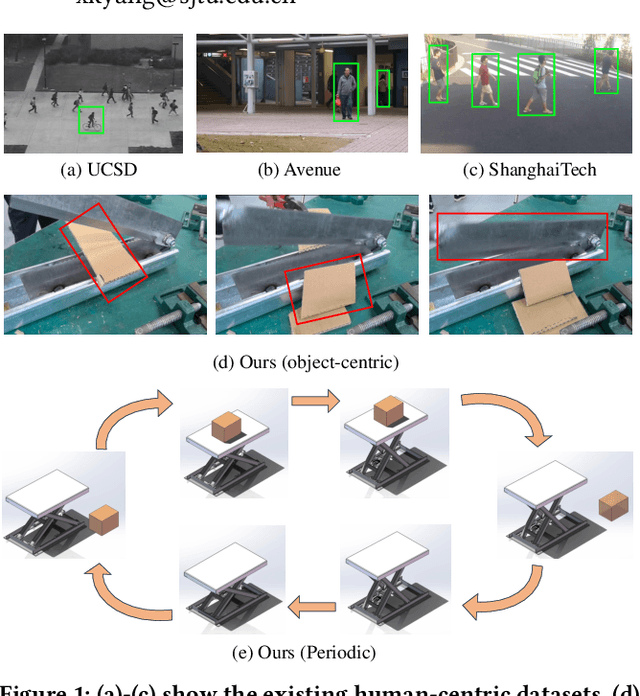
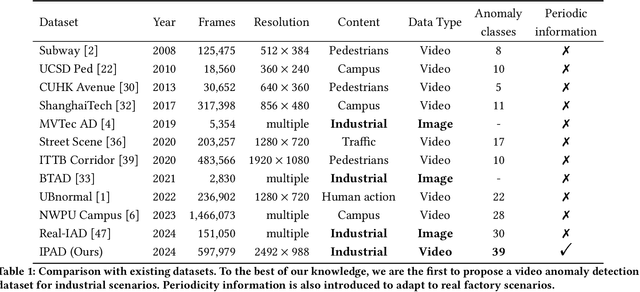
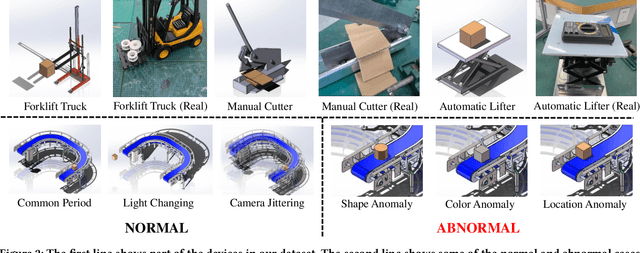
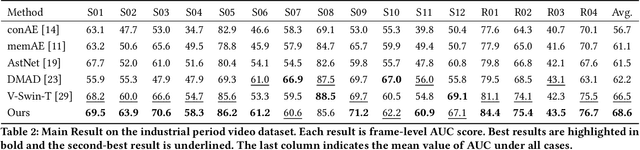
Video anomaly detection (VAD) is a challenging task aiming to recognize anomalies in video frames, and existing large-scale VAD researches primarily focus on road traffic and human activity scenes. In industrial scenes, there are often a variety of unpredictable anomalies, and the VAD method can play a significant role in these scenarios. However, there is a lack of applicable datasets and methods specifically tailored for industrial production scenarios due to concerns regarding privacy and security. To bridge this gap, we propose a new dataset, IPAD, specifically designed for VAD in industrial scenarios. The industrial processes in our dataset are chosen through on-site factory research and discussions with engineers. This dataset covers 16 different industrial devices and contains over 6 hours of both synthetic and real-world video footage. Moreover, we annotate the key feature of the industrial process, ie, periodicity. Based on the proposed dataset, we introduce a period memory module and a sliding window inspection mechanism to effectively investigate the periodic information in a basic reconstruction model. Our framework leverages LoRA adapter to explore the effective migration of pretrained models, which are initially trained using synthetic data, into real-world scenarios. Our proposed dataset and method will fill the gap in the field of industrial video anomaly detection and drive the process of video understanding tasks as well as smart factory deployment.
Infusion: Preventing Customized Text-to-Image Diffusion from Overfitting
Apr 22, 2024Text-to-image (T2I) customization aims to create images that embody specific visual concepts delineated in textual descriptions. However, existing works still face a main challenge, concept overfitting. To tackle this challenge, we first analyze overfitting, categorizing it into concept-agnostic overfitting, which undermines non-customized concept knowledge, and concept-specific overfitting, which is confined to customize on limited modalities, i.e, backgrounds, layouts, styles. To evaluate the overfitting degree, we further introduce two metrics, i.e, Latent Fisher divergence and Wasserstein metric to measure the distribution changes of non-customized and customized concept respectively. Drawing from the analysis, we propose Infusion, a T2I customization method that enables the learning of target concepts to avoid being constrained by limited training modalities, while preserving non-customized knowledge. Remarkably, Infusion achieves this feat with remarkable efficiency, requiring a mere 11KB of trained parameters. Extensive experiments also demonstrate that our approach outperforms state-of-the-art methods in both single and multi-concept customized generation.
Tendency-driven Mutual Exclusivity for Weakly Supervised Incremental Semantic Segmentation
Apr 19, 2024Weakly Incremental Learning for Semantic Segmentation (WILSS) leverages a pre-trained segmentation model to segment new classes using cost-effective and readily available image-level labels. A prevailing way to solve WILSS is the generation of seed areas for each new class, serving as a form of pixel-level supervision. However, a scenario usually arises where a pixel is concurrently predicted as an old class by the pre-trained segmentation model and a new class by the seed areas. Such a scenario becomes particularly problematic in WILSS, as the lack of pixel-level annotations on new classes makes it intractable to ascertain whether the pixel pertains to the new class or not. To surmount this issue, we propose an innovative, tendency-driven relationship of mutual exclusivity, meticulously tailored to govern the behavior of the seed areas and the predictions generated by the pre-trained segmentation model. This relationship stipulates that predictions for the new and old classes must not conflict whilst prioritizing the preservation of predictions for the old classes, which not only addresses the conflicting prediction issue but also effectively mitigates the inherent challenge of incremental learning - catastrophic forgetting. Furthermore, under the auspices of this tendency-driven mutual exclusivity relationship, we generate pseudo masks for the new classes, allowing for concurrent execution with model parameter updating via the resolution of a bi-level optimization problem. Extensive experiments substantiate the effectiveness of our framework, resulting in the establishment of new benchmarks and paving the way for further research in this field.
Rethinking Clothes Changing Person ReID: Conflicts, Synthesis, and Optimization
Apr 19, 2024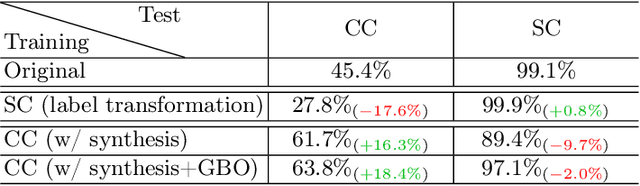
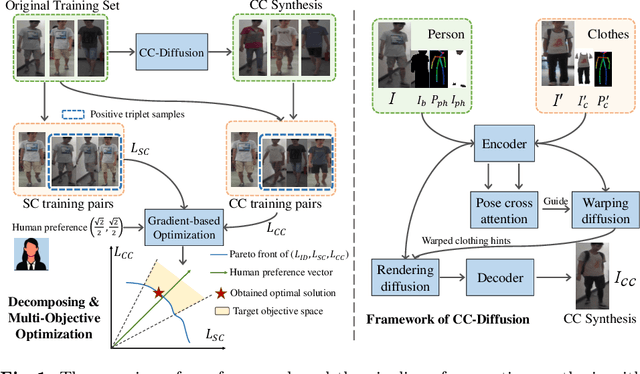
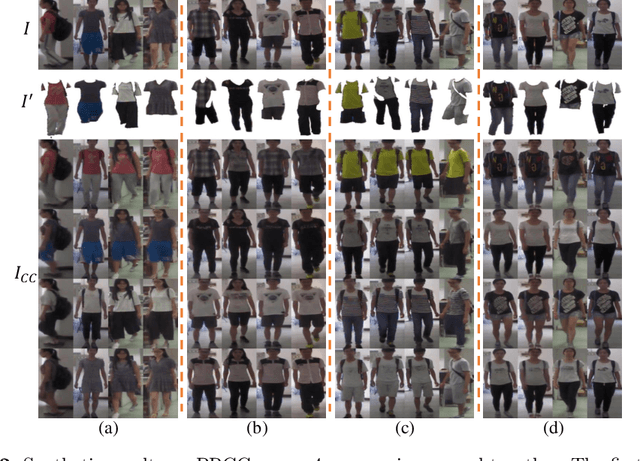
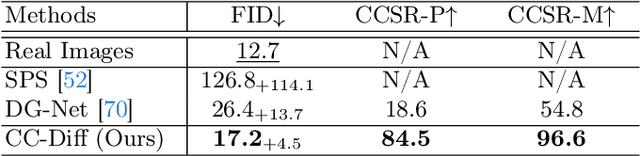
Clothes-changing person re-identification (CC-ReID) aims to retrieve images of the same person wearing different outfits. Mainstream researches focus on designing advanced model structures and strategies to capture identity information independent of clothing. However, the same-clothes discrimination as the standard ReID learning objective in CC-ReID is persistently ignored in previous researches. In this study, we dive into the relationship between standard and clothes-changing~(CC) learning objectives, and bring the inner conflicts between these two objectives to the fore. We try to magnify the proportion of CC training pairs by supplementing high-fidelity clothes-varying synthesis, produced by our proposed Clothes-Changing Diffusion model. By incorporating the synthetic images into CC-ReID model training, we observe a significant improvement under CC protocol. However, such improvement sacrifices the performance under the standard protocol, caused by the inner conflict between standard and CC. For conflict mitigation, we decouple these objectives and re-formulate CC-ReID learning as a multi-objective optimization (MOO) problem. By effectively regularizing the gradient curvature across multiple objectives and introducing preference restrictions, our MOO solution surpasses the single-task training paradigm. Our framework is model-agnostic, and demonstrates superior performance under both CC and standard ReID protocols.
NTIRE 2024 Challenge on Image Super-Resolution ($\times$4): Methods and Results
Apr 15, 2024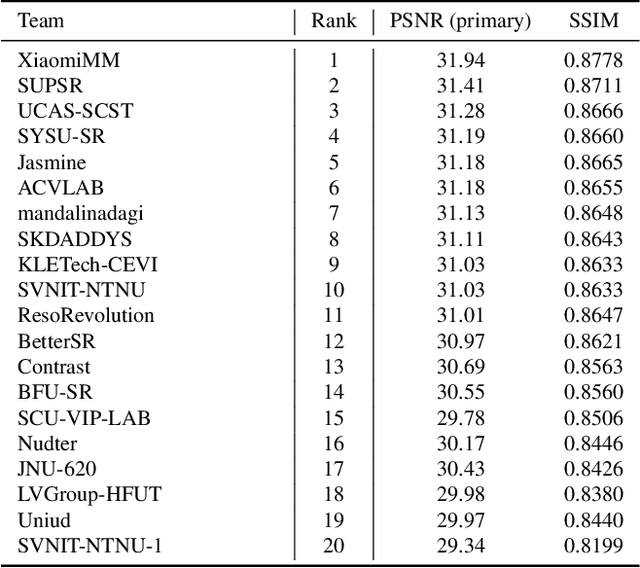


This paper reviews the NTIRE 2024 challenge on image super-resolution ($\times$4), highlighting the solutions proposed and the outcomes obtained. The challenge involves generating corresponding high-resolution (HR) images, magnified by a factor of four, from low-resolution (LR) inputs using prior information. The LR images originate from bicubic downsampling degradation. The aim of the challenge is to obtain designs/solutions with the most advanced SR performance, with no constraints on computational resources (e.g., model size and FLOPs) or training data. The track of this challenge assesses performance with the PSNR metric on the DIV2K testing dataset. The competition attracted 199 registrants, with 20 teams submitting valid entries. This collective endeavour not only pushes the boundaries of performance in single-image SR but also offers a comprehensive overview of current trends in this field.