 Add to Chrome
 Add to Firefox
 Add to Edge
Timely Parameter Updating in Over-the-Air Federated Learning
Dec 22, 2025
Incorporating over-the-air computations (OAC) into the model training process of federated learning (FL) is an effective approach to alleviating the communication bottleneck in FL systems. Under OAC-FL, every client modulates its intermediate parameters, such as gradient, onto the same set of orthogonal waveforms and simultaneously transmits the radio signal to the edge server. By exploiting the superposition property of multiple-access channels, the edge server can obtain an automatically aggregated global gradient from the received signal. However, the limited number of orthogonal waveforms available in practical systems is fundamentally mismatched with the high dimensionality of modern deep learning models. To address this issue, we propose Freshness Freshness-mAgnItude awaRe top-k (FAIR-k), an algorithm that selects, in each communication round, the most impactful subset of gradients to be updated over the air. In essence, FAIR-k combines the complementary strengths of the Round-Robin and Top-k algorithms, striking a delicate balance between timeliness (freshness of parameter updates) and importance (gradient magnitude). Leveraging tools from Markov analysis, we characterize the distribution of parameter staleness under FAIR-k. Building on this, we establish the convergence rate of OAC-FL with FAIR-k, which discloses the joint effect of data heterogeneity, channel noise, and parameter staleness on the training efficiency. Notably, as opposed to conventional analyses that assume a universal Lipschitz constant across all the clients, our framework adopts a finer-grained model of the data heterogeneity. The analysis demonstrates that since FAIR-k promotes fresh (and fair) parameter updates, it not only accelerates convergence but also enhances communication efficiency by enabling an extended period of local training without significantly affecting overall training efficiency.

A Systematic Study of Code Obfuscation Against LLM-based Vulnerability Detection
Dec 18, 2025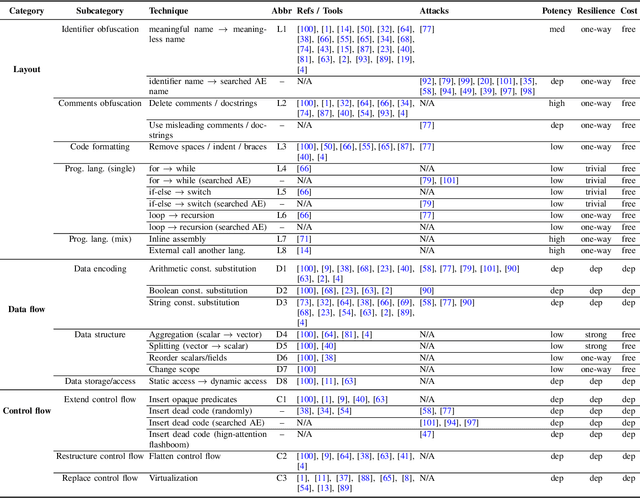
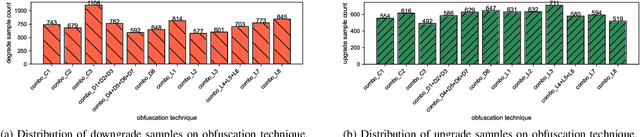
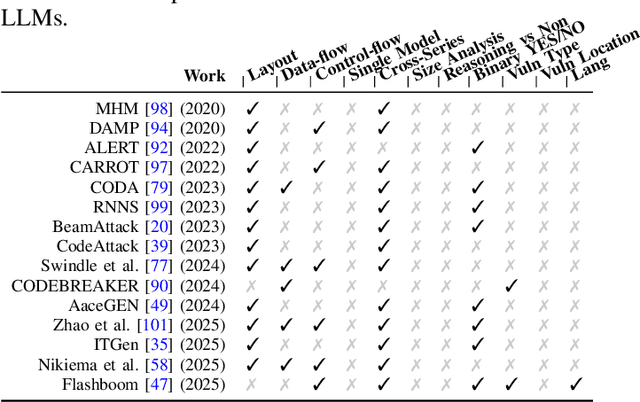
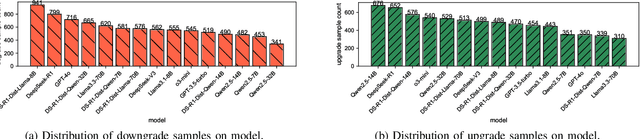
As large language models (LLMs) are increasingly adopted for code vulnerability detection, their reliability and robustness across diverse vulnerability types have become a pressing concern. In traditional adversarial settings, code obfuscation has long been used as a general strategy to bypass auditing tools, preserving exploitability without tampering with the tools themselves. Numerous efforts have explored obfuscation methods and tools, yet their capabilities differ in terms of supported techniques, granularity, and programming languages, making it difficult to systematically assess their impact on LLM-based vulnerability detection. To address this gap, we provide a structured systematization of obfuscation techniques and evaluate them under a unified framework. Specifically, we categorize existing obfuscation methods into three major classes (layout, data flow, and control flow) covering 11 subcategories and 19 concrete techniques. We implement these techniques across four programming languages (Solidity, C, C++, and Python) using a consistent LLM-driven approach, and evaluate their effects on 15 LLMs spanning four model families (DeepSeek, OpenAI, Qwen, and LLaMA), as well as on two coding agents (GitHub Copilot and Codex). Our findings reveal both positive and negative impacts of code obfuscation on LLM-based vulnerability detection, highlighting conditions under which obfuscation leads to performance improvements or degradations. We further analyze these outcomes with respect to vulnerability characteristics, code properties, and model attributes. Finally, we outline several open problems and propose future directions to enhance the robustness of LLMs for real-world vulnerability detection.
Power Consumption and Energy Efficiency of Mid-Band XL-MIMO: Modeling, Scaling Laws, and Performance Insights
Dec 14, 2025Mid-band extra-large-scale multiple-input multiple-output (XL-MIMO), emerging as a critical enabler for future communication systems, is expected to deliver significantly higher throughput by leveraging the extended bandwidth and enlarged antenna aperture. However, power consumption remains a significant concern due to the enlarged system dimension, underscoring the need for thorough investigations into efficient system design and deployment. To this end, an in-depth study is conducted on mid-band XL-MIMO systems. Specifically, a comprehensive power consumption model is proposed, encompassing the power consumption of major hardware components and signal processing procedures, while capturing the influence of key system parameters. Considering typical near-field propagation characteristics, closed-form approximations of throughput are derived, providing an analytical framework for assessing energy efficiency (EE). Based on the proposed framework, the scaling law of EE with respect to key system configurations is derived, offering valuable insights for system design. Subsequently, extensions and comparisons are conducted among representative multi-antenna technologies, demonstrating the superiority of mid-band XL-MIMO in EE. Extensive numerical results not only verify the tightness of the throughput analysis but also validate the EE evaluations, unveiling the potential of energy-efficient mid-band XL-MIMO systems.
Multi-Rigid-Body Approximation of Human Hands with Application to Digital Twin
Dec 08, 2025Human hand simulation plays a critical role in digital twin applications, requiring models that balance anatomical fidelity with computational efficiency. We present a complete pipeline for constructing multi-rigid-body approximations of human hands that preserve realistic appearance while enabling real-time physics simulation. Starting from optical motion capture of a specific human hand, we construct a personalized MANO (Multi-Abstracted hand model with Neural Operations) model and convert it to a URDF (Unified Robot Description Format) representation with anatomically consistent joint axes. The key technical challenge is projecting MANO's unconstrained SO(3) joint rotations onto the kinematically constrained joints of the rigid-body model. We derive closed-form solutions for single degree-of-freedom joints and introduce a Baker-Campbell-Hausdorff (BCH)-corrected iterative method for two degree-of-freedom joints that properly handles the non-commutativity of rotations. We validate our approach through digital twin experiments where reinforcement learning policies control the multi-rigid-body hand to replay captured human demonstrations. Quantitative evaluation shows sub-centimeter reconstruction error and successful grasp execution across diverse manipulation tasks.
Online SFT for LLM Reasoning: Surprising Effectiveness of Self-Tuning without Rewards
Oct 21, 2025We present a simple, self-help online supervised finetuning (OSFT) paradigm for LLM reasoning. In this paradigm, the model generates its own responses and is immediately finetuned on this self-generated data. OSFT is a highly efficient training strategy for LLM reasoning, as it is reward-free and uses just one rollout by default. Experiment results show that OSFT achieves downstream performance on challenging mathematical reasoning tasks comparable to strong reinforcement learning with verifiable rewards (RLVR) methods such as GRPO. Our ablation study further demonstrates the efficiency and robustness of OSFT. The major mechanism of OSFT lies in facilitating the model's own existing preference (latent knowledge) learned from pretraining, which leads to reasoning ability improvement. We believe that OSFT offers an efficient and promising alternative to more complex, reward-based training paradigms. Our code is available at https://github.com/ElementQi/OnlineSFT.
Bitrate-Controlled Diffusion for Disentangling Motion and Content in Video
Sep 10, 2025We propose a novel and general framework to disentangle video data into its dynamic motion and static content components. Our proposed method is a self-supervised pipeline with less assumptions and inductive biases than previous works: it utilizes a transformer-based architecture to jointly generate flexible implicit features for frame-wise motion and clip-wise content, and incorporates a low-bitrate vector quantization as an information bottleneck to promote disentanglement and form a meaningful discrete motion space. The bitrate-controlled latent motion and content are used as conditional inputs to a denoising diffusion model to facilitate self-supervised representation learning. We validate our disentangled representation learning framework on real-world talking head videos with motion transfer and auto-regressive motion generation tasks. Furthermore, we also show that our method can generalize to other types of video data, such as pixel sprites of 2D cartoon characters. Our work presents a new perspective on self-supervised learning of disentangled video representations, contributing to the broader field of video analysis and generation.
Fine-Tuning Vision-Language Models for Visual Navigation Assistance
Sep 09, 2025We address vision-language-driven indoor navigation to assist visually impaired individuals in reaching a target location using images and natural language guidance. Traditional navigation systems are ineffective indoors due to the lack of precise location data. Our approach integrates vision and language models to generate step-by-step navigational instructions, enhancing accessibility and independence. We fine-tune the BLIP-2 model with Low Rank Adaptation (LoRA) on a manually annotated indoor navigation dataset. We propose an evaluation metric that refines the BERT F1 score by emphasizing directional and sequential variables, providing a more comprehensive measure of navigational performance. After applying LoRA, the model significantly improved in generating directional instructions, overcoming limitations in the original BLIP-2 model.
Bridging Minds and Machines: Toward an Integration of AI and Cognitive Science
Aug 28, 2025Cognitive Science has profoundly shaped disciplines such as Artificial Intelligence (AI), Philosophy, Psychology, Neuroscience, Linguistics, and Culture. Many breakthroughs in AI trace their roots to cognitive theories, while AI itself has become an indispensable tool for advancing cognitive research. This reciprocal relationship motivates a comprehensive review of the intersections between AI and Cognitive Science. By synthesizing key contributions from both perspectives, we observe that AI progress has largely emphasized practical task performance, whereas its cognitive foundations remain conceptually fragmented. We argue that the future of AI within Cognitive Science lies not only in improving performance but also in constructing systems that deepen our understanding of the human mind. Promising directions include aligning AI behaviors with cognitive frameworks, situating AI in embodiment and culture, developing personalized cognitive models, and rethinking AI ethics through cognitive co-evaluation.
Integrating LLM-Derived Multi-Semantic Intent into Graph Model for Session-based Recommendation
Jul 27, 2025Session-based recommendation (SBR) is mainly based on anonymous user interaction sequences to recommend the items that the next user is most likely to click. Currently, the most popular and high-performing SBR methods primarily leverage graph neural networks (GNNs), which model session sequences as graph-structured data to effectively capture user intent. However, most GNNs-based SBR methods primarily focus on modeling the ID sequence information of session sequences, while neglecting the rich semantic information embedded within them. This limitation significantly hampers model's ability to accurately infer users' true intention. To address above challenge, this paper proposes a novel SBR approach called Integrating LLM-Derived Multi-Semantic Intent into Graph Model for Session-based Recommendation (LLM-DMsRec). The method utilizes a pre-trained GNN model to select the top-k items as candidate item sets and designs prompts along with a large language model (LLM) to infer multi-semantic intents from these candidate items. Specifically, we propose an alignment mechanism that effectively integrates the semantic intent inferred by the LLM with the structural intent captured by GNNs. Extensive experiments conducted on the Beauty and ML-1M datasets demonstrate that the proposed method can be seamlessly integrated into GNNs framework, significantly enhancing its recommendation performance.
Deep Learning-based Position-domain Channel Extrapolation for Cell-Free Massive MIMO
Jul 23, 2025To reduce channel acquisition overhead, spatial, time, and frequency-domain channel extrapolation techniques have been widely studied. In this paper, we propose a novel deep learning-based Position-domain Channel Extrapolation framework (named PCEnet) for cell-free massive multiple-input multiple-output (MIMO) systems. The user's position, which contains significant channel characteristic information, can greatly enhance the efficiency of channel acquisition. In cell-free massive MIMO, while the propagation environments between different base stations and a specific user vary and their respective channels are uncorrelated, the user's position remains constant and unique across all channels. Building on this, the proposed PCEnet framework leverages the position as a bridge between channels to establish a mapping between the characteristics of different channels, thereby using one acquired channel to assist in the estimation and feedback of others. Specifically, this approach first utilizes neural networks (NNs) to infer the user's position from the obtained channel. {The estimated position, shared among BSs through a central processing unit (CPU)}, is then fed into an NN to design pilot symbols and concatenated with the feedback information to the channel reconstruction NN to reconstruct other channels, thereby significantly enhancing channel acquisition performance. Additionally, we propose a simplified strategy where only the estimated position is used in the reconstruction process without modifying the pilot design, thereby reducing latency. Furthermore, we introduce a position label-free approach that infers the relative user position instead of the absolute position, eliminating the need for ground truth position labels during the localization NN training. Simulation results demonstrate that the proposed PCEnet framework reduces pilot and feedback overheads by up to 50%.