 Add to Chrome
 Add to Firefox
 Add to Edge
Personalizing Causal Audio-Driven Facial Motion via Dynamic Multi-modal Retrieval
Apr 26, 2026
Audio-driven facial animation is essential for immersive digital interaction, yet existing frameworks fail to reconcile real-time streaming with high-fidelity personalization. Current methods often rely on latency-inducing audio look-ahead, or require high user compliance to pre-encode static embeddings that fails to capture dynamic idiosyncrasies. We present an end-to-end causal framework for personalizing causal facial motion generation via dynamic multi-modal style retrieval, enabling ultra-low latency while uniquely leveraging unstructured style references. We introduce two key innovations: (1) a temporal hierarchical motion representation that captures global temporal context and high-frequency details while maintaining decoding causality, and (2) a multi-modal style retriever that jointly queries audio and motion to dynamically extract stylistic priors without breaking causality. This mechanism allows for scalable personalization with total flexibility regarding the number and contents of templates. By integrating these components into a causal autoregressive architecture, our method significantly outperforms state-of-the-art approaches in lip-sync accuracy, identity consistency, and perceived realism, supported by extensive quantitative evaluations and user studies.

Multimodal-NF: A Wireless Dataset for Near-Field Low-Altitude Sensing and Communications
Mar 30, 2026Environment-aware 6G wireless networks demand the deep integration of multimodal and wireless data. However, most existing datasets are confined to 2D terrestrial far-field scenarios, lacking the 3D spatial context and near-field characteristics crucial for low-altitude extremely large-scale multiple-input multiple-output (XL-MIMO) systems. To bridge this gap, this letter introduces Multimodal-NF, a large-scale dataset and specialized generation framework. Operating in the upper midband, it synchronizes high-fidelity near-field channel state information (CSI) and precise wireless labels (e.g., Top-5 beam indices, LoS/NLoS) with comprehensive sensory modalities (RGB images, LiDAR point clouds, and GPS). Crucially, these multimodal priors provide spatial semantics that help reduce the near-field search space and thereby lower the overhead of wireless sensing and communication tasks. Finally, we validate the dataset through representative case studies, demonstrating its utility and effectiveness. The open-source generator and dataset are available at https://lmyxxn.github.io/6GXLMIMODatasets/.
Structure-Aware Multimodal LLM Framework for Trustworthy Near-Field Beam Prediction
Mar 17, 2026In near-field extremely large-scale multiple-input multiple-output (XL-MIMO) systems, spherical wavefront propagation expands the traditional beam codebook into the joint angular-distance domain, rendering conventional beam training prohibitively inefficient, especially in complex 3-dimensional (3D) low-altitude environments. Furthermore, since near-field beam variations are deeply coupled not only with user positions but also with the physical surroundings, precise beam alignment demands profound environmental understanding capabilities. To address this, we propose a large language model (LLM)-driven multimodal framework that fuses historical GPS data, RGB image, LiDAR data, and strategically designed task-specific textual prompts. By utilizing the powerful emergent reasoning and generalization capabilities of the LLM, our approach learns complex spatial dynamics to achieve superior environmental comprehension...
The Swarm Intelligence Freeway-Urban Trajectories (SWIFTraj) Dataset - Part II: A Graph-Based Approach for Trajectory Connection
Feb 25, 2026In Part I of this companion paper series, we introduced SWIFTraj, a new open-source vehicle trajectory dataset collected using a unmanned aerial vehicle (UAV) swarm. The dataset has two distinctive features. First, by connecting trajectories across consecutive UAV videos, it provides long-distance continuous trajectories, with the longest exceeding 4.5 km. Second, it covers an integrated traffic network consisting of both freeways and their connected urban roads. Obtaining such long-distance continuous trajectories from a UAV swarm is challenging, due to the need for accurate time alignment across multiple videos and the irregular spatial distribution of UAVs. To address these challenges, this paper proposes a novel graph-based approach for connecting vehicle trajectories captured by a UAV swarm. An undirected graph is constructed to represent flexible UAV layouts, and an automatic time alignment method based on trajectory matching cost minimization is developed to estimate optimal time offsets across videos. To associate trajectories of the same vehicle observed in different videos, a vehicle matching table is established using the Hungarian algorithm. The proposed approach is evaluated using both simulated and real-world data. Results from real-world experiments show that the time alignment error is within three video frames, corresponding to approximately 0.1 s, and that the vehicle matching achieves an F1-score of about 0.99. These results demonstrate the effectiveness of the proposed method in addressing key challenges in UAV-based trajectory connection and highlight its potential for large-scale vehicle trajectory collection.
How vehicles change lanes after encountering crashes: Empirical analysis and modeling
Jan 13, 2026When a traffic crash occurs, following vehicles need to change lanes to bypass the obstruction. We define these maneuvers as post crash lane changes. In such scenarios, vehicles in the target lane may refuse to yield even after the lane change has already begun, increasing the complexity and crash risk of post crash LCs. However, the behavioral characteristics and motion patterns of post crash LCs remain unknown. To address this gap, we construct a post crash LC dataset by extracting vehicle trajectories from drone videos captured after crashes. Our empirical analysis reveals that, compared to mandatory LCs (MLCs) and discretionary LCs (DLCs), post crash LCs exhibit longer durations, lower insertion speeds, and higher crash risks. Notably, 79.4% of post crash LCs involve at least one instance of non yielding behavior from the new follower, compared to 21.7% for DLCs and 28.6% for MLCs. Building on these findings, we develop a novel trajectory prediction framework for post crash LCs. At its core is a graph based attention module that explicitly models yielding behavior as an auxiliary interaction aware task. This module is designed to guide both a conditional variational autoencoder and a Transformer based decoder to predict the lane changer's trajectory. By incorporating the interaction aware module, our model outperforms existing baselines in trajectory prediction performance by more than 10% in both average displacement error and final displacement error across different prediction horizons. Moreover, our model provides more reliable crash risk analysis by reducing false crash rates and improving conflict prediction accuracy. Finally, we validate the model's transferability using additional post crash LC datasets collected from different sites.
Power Consumption and Energy Efficiency of Mid-Band XL-MIMO: Modeling, Scaling Laws, and Performance Insights
Dec 14, 2025Mid-band extra-large-scale multiple-input multiple-output (XL-MIMO), emerging as a critical enabler for future communication systems, is expected to deliver significantly higher throughput by leveraging the extended bandwidth and enlarged antenna aperture. However, power consumption remains a significant concern due to the enlarged system dimension, underscoring the need for thorough investigations into efficient system design and deployment. To this end, an in-depth study is conducted on mid-band XL-MIMO systems. Specifically, a comprehensive power consumption model is proposed, encompassing the power consumption of major hardware components and signal processing procedures, while capturing the influence of key system parameters. Considering typical near-field propagation characteristics, closed-form approximations of throughput are derived, providing an analytical framework for assessing energy efficiency (EE). Based on the proposed framework, the scaling law of EE with respect to key system configurations is derived, offering valuable insights for system design. Subsequently, extensions and comparisons are conducted among representative multi-antenna technologies, demonstrating the superiority of mid-band XL-MIMO in EE. Extensive numerical results not only verify the tightness of the throughput analysis but also validate the EE evaluations, unveiling the potential of energy-efficient mid-band XL-MIMO systems.
A Trajectory-free Crash Detection Framework with Generative Approach and Segment Map Diffusion
Nov 17, 2025Real-time crash detection is essential for developing proactive safety management strategy and enhancing overall traffic efficiency. To address the limitations associated with trajectory acquisition and vehicle tracking, road segment maps recording the individual-level traffic dynamic data were directly served in crash detection. A novel two-stage trajectory-free crash detection framework, was present to generate the rational future road segment map and identify crashes. The first-stage diffusion-based segment map generation model, Mapfusion, conducts a noisy-to-normal process that progressively adds noise to the road segment map until the map is corrupted to pure Gaussian noise. The denoising process is guided by sequential embedding components capturing the temporal dynamics of segment map sequences. Furthermore, the generation model is designed to incorporate background context through ControlNet to enhance generation control. Crash detection is achieved by comparing the monitored segment map with the generations from diffusion model in second stage. Trained on non-crash vehicle motion data, Mapfusion successfully generates realistic road segment evolution maps based on learned motion patterns and remains robust across different sampling intervals. Experiments on real-world crashes indicate the effectiveness of the proposed two-stage method in accurately detecting crashes.
AI for Regulatory Affairs: Balancing Accuracy, Interpretability, and Computational Cost in Medical Device Classification
May 24, 2025Regulatory affairs, which sits at the intersection of medicine and law, can benefit significantly from AI-enabled automation. Classification task is the initial step in which manufacturers position their products to regulatory authorities, and it plays a critical role in determining market access, regulatory scrutiny, and ultimately, patient safety. In this study, we investigate a broad range of AI models -- including traditional machine learning (ML) algorithms, deep learning architectures, and large language models -- using a regulatory dataset of medical device descriptions. We evaluate each model along three key dimensions: accuracy, interpretability, and computational cost.
Extract the Best, Discard the Rest: CSI Feedback with Offline Large AI Models
May 13, 2025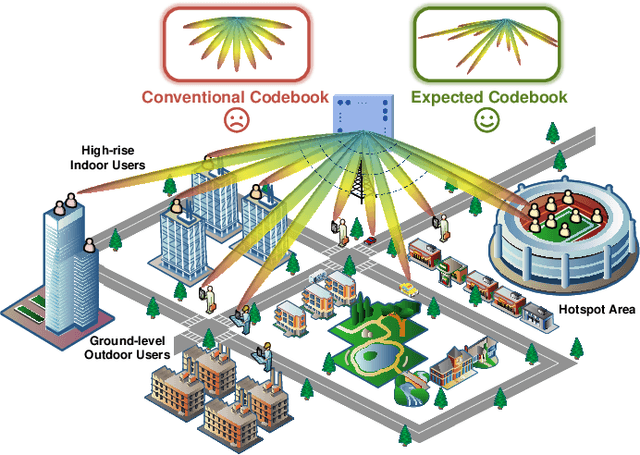
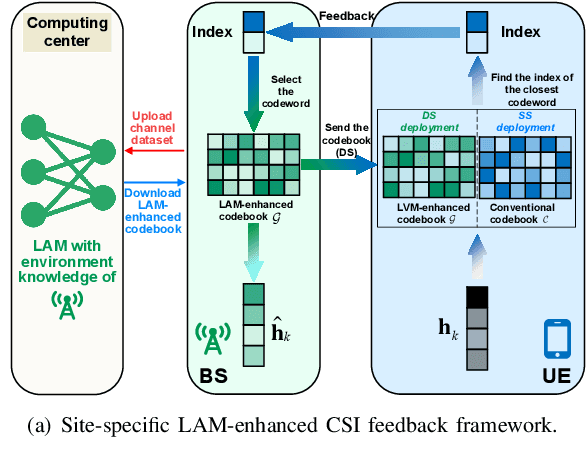
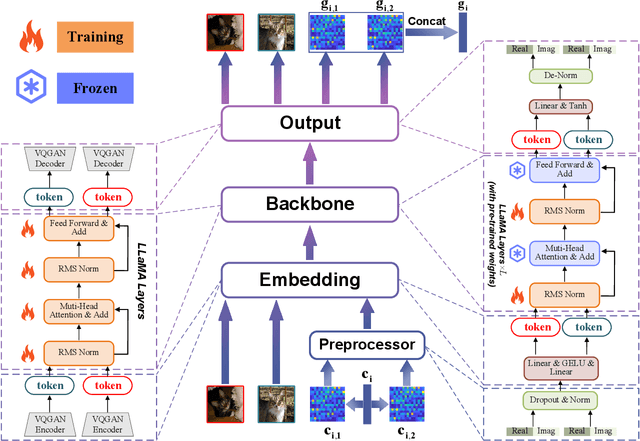
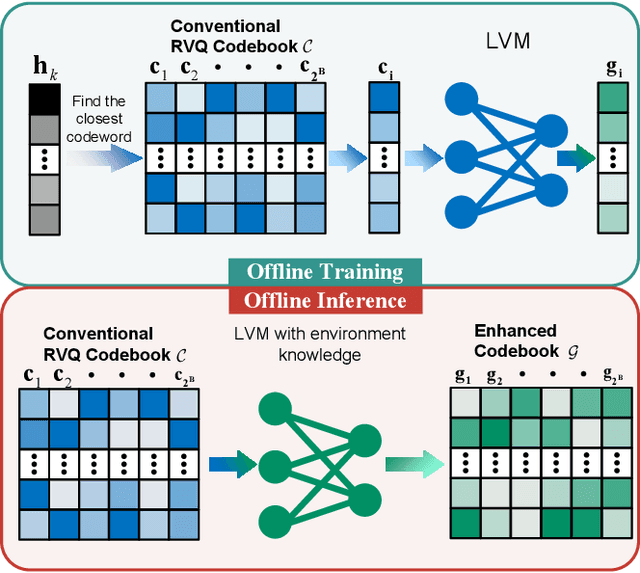
Large AI models (LAMs) have shown strong potential in wireless communication tasks, but their practical deployment remains hindered by latency and computational constraints. In this work, we focus on the challenge of integrating LAMs into channel state information (CSI) feedback for frequency-division duplex (FDD) massive multiple-intput multiple-output (MIMO) systems. To this end, we propose two offline frameworks, namely site-specific LAM-enhanced CSI feedback (SSLCF) and multi-scenario LAM-enhanced CSI feedback (MSLCF), that incorporate LAMs into the codebook-based CSI feedback paradigm without requiring real-time inference. Specifically, SSLCF generates a site-specific enhanced codebook through fine-tuning on locally collected CSI data, while MSLCF improves generalization by pre-generating a set of environment-aware codebooks. Both of these frameworks build upon the LAM with vision-based backbone, which is pre-trained on large-scale image datasets and fine-tuned with CSI data to generate customized codebooks. This resulting network named LVM4CF captures the structural similarity between CSI and image, allowing the LAM to refine codewords tailored to the specific environments. To optimize the codebook refinement capability of LVM4CF under both single- and dual-side deployment modes, we further propose corresponding training and inference algorithms. Simulation results show that our frameworks significantly outperform existing schemes in both reconstruction accuracy and system throughput, without introducing additional inference latency or computational overhead. These results also support the core design methodology of our proposed frameworks, extracting the best and discarding the rest, as a promising pathway for integrating LAMs into future wireless systems.
Toward Automated Regulatory Decision-Making: Trustworthy Medical Device Risk Classification with Multimodal Transformers and Self-Training
May 01, 2025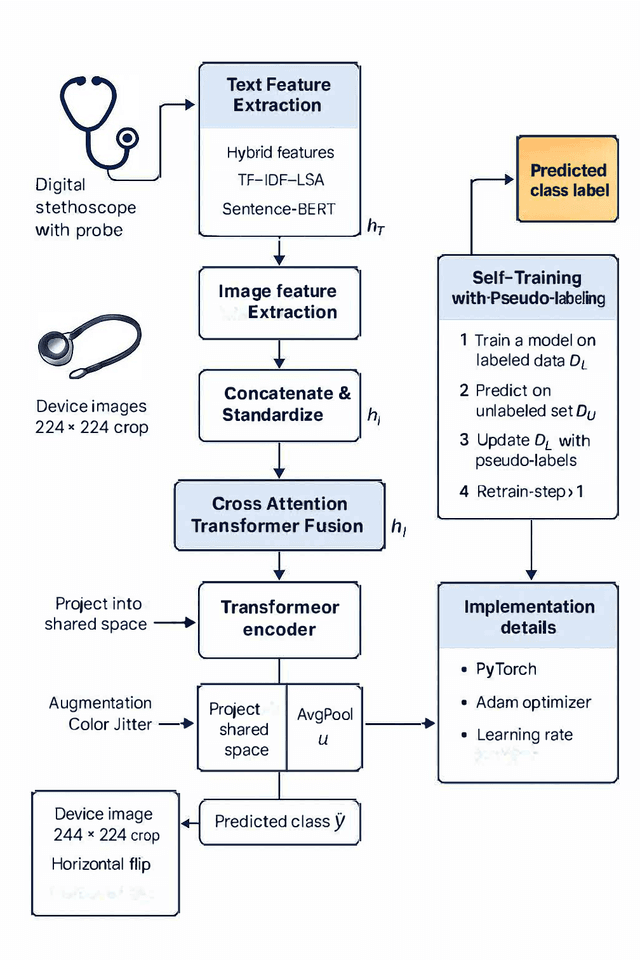
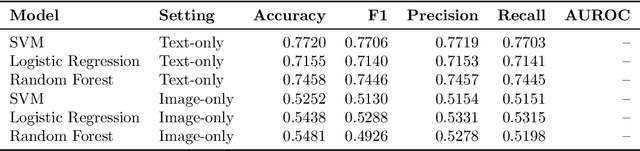
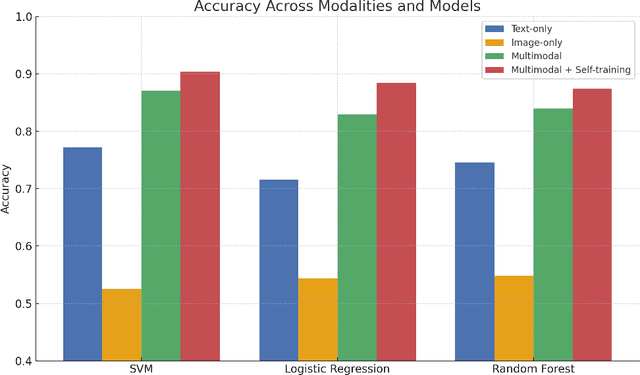
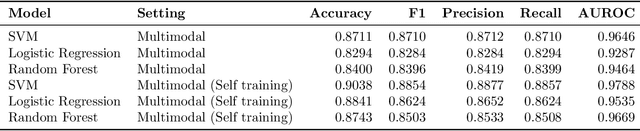
Accurate classification of medical device risk levels is essential for regulatory oversight and clinical safety. We present a Transformer-based multimodal framework that integrates textual descriptions and visual information to predict device regulatory classification. The model incorporates a cross-attention mechanism to capture intermodal dependencies and employs a self-training strategy for improved generalization under limited supervision. Experiments on a real-world regulatory dataset demonstrate that our approach achieves up to 90.4% accuracy and 97.9% AUROC, significantly outperforming text-only (77.2%) and image-only (54.8%) baselines. Compared to standard multimodal fusion, the self-training mechanism improved SVM performance by 3.3 percentage points in accuracy (from 87.1% to 90.4%) and 1.4 points in macro-F1, suggesting that pseudo-labeling can effectively enhance generalization under limited supervision. Ablation studies further confirm the complementary benefits of both cross-modal attention and self-training.