 Add to Chrome
 Add to Firefox
 Add to Edge
ChatDiT: A Training-Free Baseline for Task-Agnostic Free-Form Chatting with Diffusion Transformers
Dec 17, 2024
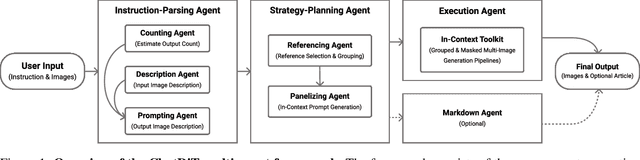


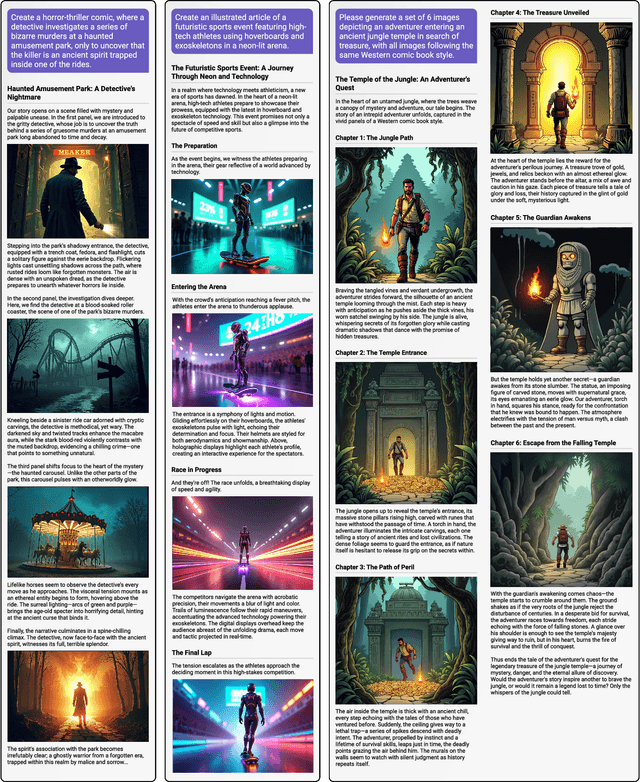
Recent research arXiv:2410.15027 arXiv:2410.23775 has highlighted the inherent in-context generation capabilities of pretrained diffusion transformers (DiTs), enabling them to seamlessly adapt to diverse visual tasks with minimal or no architectural modifications. These capabilities are unlocked by concatenating self-attention tokens across multiple input and target images, combined with grouped and masked generation pipelines. Building upon this foundation, we present ChatDiT, a zero-shot, general-purpose, and interactive visual generation framework that leverages pretrained diffusion transformers in their original form, requiring no additional tuning, adapters, or modifications. Users can interact with ChatDiT to create interleaved text-image articles, multi-page picture books, edit images, design IP derivatives, or develop character design settings, all through free-form natural language across one or more conversational rounds. At its core, ChatDiT employs a multi-agent system comprising three key components: an Instruction-Parsing agent that interprets user-uploaded images and instructions, a Strategy-Planning agent that devises single-step or multi-step generation actions, and an Execution agent that performs these actions using an in-context toolkit of diffusion transformers. We thoroughly evaluate ChatDiT on IDEA-Bench arXiv:2412.11767, comprising 100 real-world design tasks and 275 cases with diverse instructions and varying numbers of input and target images. Despite its simplicity and training-free approach, ChatDiT surpasses all competitors, including those specifically designed and trained on extensive multi-task datasets. We further identify key limitations of pretrained DiTs in zero-shot adapting to tasks. We release all code, agents, results, and intermediate outputs to facilitate further research at https://github.com/ali-vilab/ChatDiT

Unsupervised Region-Based Image Editing of Denoising Diffusion Models
Dec 17, 2024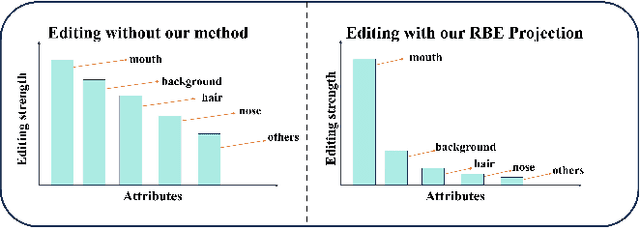
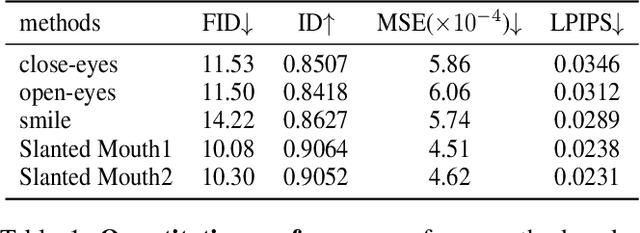
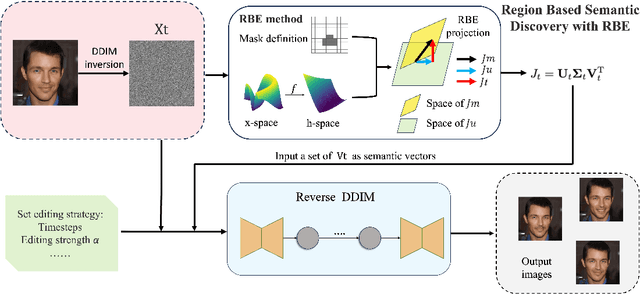
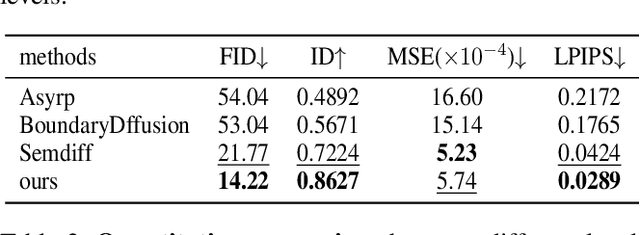
Although diffusion models have achieved remarkable success in the field of image generation, their latent space remains under-explored. Current methods for identifying semantics within latent space often rely on external supervision, such as textual information and segmentation masks. In this paper, we propose a method to identify semantic attributes in the latent space of pre-trained diffusion models without any further training. By projecting the Jacobian of the targeted semantic region into a low-dimensional subspace which is orthogonal to the non-masked regions, our approach facilitates precise semantic discovery and control over local masked areas, eliminating the need for annotations. We conducted extensive experiments across multiple datasets and various architectures of diffusion models, achieving state-of-the-art performance. In particular, for some specific face attributes, the performance of our proposed method even surpasses that of supervised approaches, demonstrating its superior ability in editing local image properties.
IDEA-Bench: How Far are Generative Models from Professional Designing?
Dec 16, 2024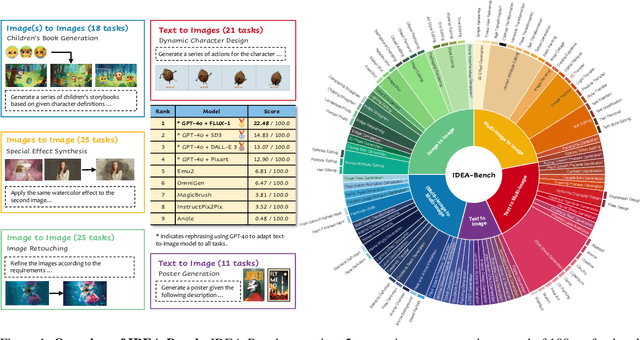
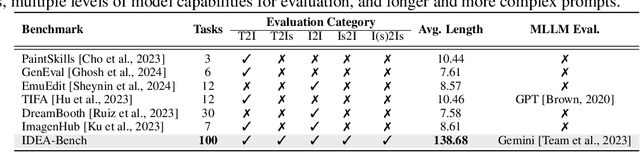
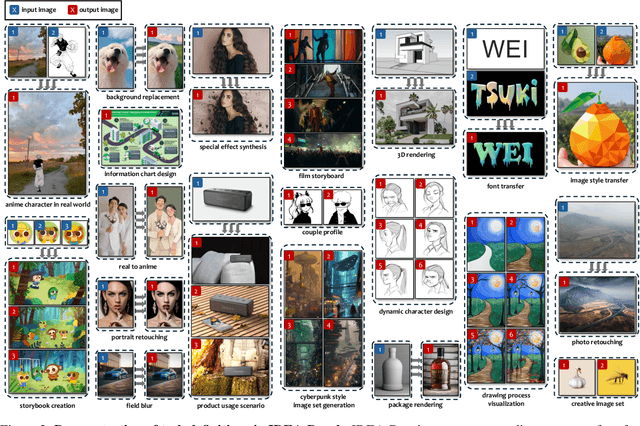
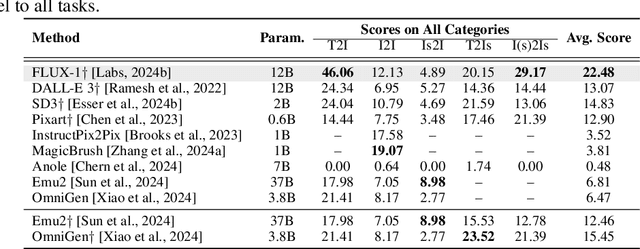
Real-world design tasks - such as picture book creation, film storyboard development using character sets, photo retouching, visual effects, and font transfer - are highly diverse and complex, requiring deep interpretation and extraction of various elements from instructions, descriptions, and reference images. The resulting images often implicitly capture key features from references or user inputs, making it challenging to develop models that can effectively address such varied tasks. While existing visual generative models can produce high-quality images based on prompts, they face significant limitations in professional design scenarios that involve varied forms and multiple inputs and outputs, even when enhanced with adapters like ControlNets and LoRAs. To address this, we introduce IDEA-Bench, a comprehensive benchmark encompassing 100 real-world design tasks, including rendering, visual effects, storyboarding, picture books, fonts, style-based, and identity-preserving generation, with 275 test cases to thoroughly evaluate a model's general-purpose generation capabilities. Notably, even the best-performing model only achieves 22.48 on IDEA-Bench, while the best general-purpose model only achieves 6.81. We provide a detailed analysis of these results, highlighting the inherent challenges and providing actionable directions for improvement. Additionally, we provide a subset of 18 representative tasks equipped with multimodal large language model (MLLM)-based auto-evaluation techniques to facilitate rapid model development and comparison. We releases the benchmark data, evaluation toolkits, and an online leaderboard at https://github.com/ali-vilab/IDEA-Bench, aiming to drive the advancement of generative models toward more versatile and applicable intelligent design systems.
Proposing and solving olympiad geometry with guided tree search
Dec 14, 2024Mathematics olympiads are prestigious competitions, with problem proposing and solving highly honored. Building artificial intelligence that proposes and solves olympiads presents an unresolved challenge in automated theorem discovery and proving, especially in geometry for its combination of numerical and spatial elements. We introduce TongGeometry, a Euclidean geometry system supporting tree-search-based guided problem proposing and solving. The efficient geometry system establishes the most extensive repository of geometry theorems to date: within the same computational budget as the existing state-of-the-art, TongGeometry discovers 6.7 billion geometry theorems requiring auxiliary constructions, including 4.1 billion exhibiting geometric symmetry. Among them, 10 theorems were proposed to regional mathematical olympiads with 3 of TongGeometry's proposals selected in real competitions, earning spots in a national team qualifying exam or a top civil olympiad in China and the US. Guided by fine-tuned large language models, TongGeometry solved all International Mathematical Olympiad geometry in IMO-AG-30, outperforming gold medalists for the first time. It also surpasses the existing state-of-the-art across a broader spectrum of olympiad-level problems. The full capabilities of the system can be utilized on a consumer-grade machine, making the model more accessible and fostering widespread democratization of its use. By analogy, unlike existing systems that merely solve problems like students, TongGeometry acts like a geometry coach, discovering, presenting, and proving theorems.
ScaleOT: Privacy-utility-scalable Offsite-tuning with Dynamic LayerReplace and Selective Rank Compression
Dec 13, 2024Offsite-tuning is a privacy-preserving method for tuning large language models (LLMs) by sharing a lossy compressed emulator from the LLM owners with data owners for downstream task tuning. This approach protects the privacy of both the model and data owners. However, current offsite tuning methods often suffer from adaptation degradation, high computational costs, and limited protection strength due to uniformly dropping LLM layers or relying on expensive knowledge distillation. To address these issues, we propose ScaleOT, a novel privacy-utility-scalable offsite-tuning framework that effectively balances privacy and utility. ScaleOT introduces a novel layerwise lossy compression algorithm that uses reinforcement learning to obtain the importance of each layer. It employs lightweight networks, termed harmonizers, to replace the raw LLM layers. By combining important original LLM layers and harmonizers in different ratios, ScaleOT generates emulators tailored for optimal performance with various model scales for enhanced privacy protection. Additionally, we present a rank reduction method to further compress the original LLM layers, significantly enhancing privacy with negligible impact on utility. Comprehensive experiments show that ScaleOT can achieve nearly lossless offsite tuning performance compared with full fine-tuning while obtaining better model privacy.
Arbitrary Reading Order Scene Text Spotter with Local Semantics Guidance
Dec 13, 2024Scene text spotting has attracted the enthusiasm of relative researchers in recent years. Most existing scene text spotters follow the detection-then-recognition paradigm, where the vanilla detection module hardly determines the reading order and leads to failure recognition. After rethinking the auto-regressive scene text recognition method, we find that a well-trained recognizer can implicitly perceive the local semantics of all characters in a complete word or a sentence without a character-level detection module. Local semantic knowledge not only includes text content but also spatial information in the right reading order. Motivated by the above analysis, we propose the Local Semantics Guided scene text Spotter (LSGSpotter), which auto-regressively decodes the position and content of characters guided by the local semantics. Specifically, two effective modules are proposed in LSGSpotter. On the one hand, we design a Start Point Localization Module (SPLM) for locating text start points to determine the right reading order. On the other hand, a Multi-scale Adaptive Attention Module (MAAM) is proposed to adaptively aggregate text features in a local area. In conclusion, LSGSpotter achieves the arbitrary reading order spotting task without the limitation of sophisticated detection, while alleviating the cost of computational resources with the grid sampling strategy. Extensive experiment results show LSGSpotter achieves state-of-the-art performance on the InverseText benchmark. Moreover, our spotter demonstrates superior performance on English benchmarks for arbitrary-shaped text, achieving improvements of 0.7\% and 2.5\% on Total-Text and SCUT-CTW1500, respectively. These results validate our text spotter is effective for scene texts in arbitrary reading order and shape.
Protecting Confidentiality, Privacy and Integrity in Collaborative Learning
Dec 11, 2024


A collaboration between dataset owners and model owners is needed to facilitate effective machine learning (ML) training. During this collaboration, however, dataset owners and model owners want to protect the confidentiality of their respective assets (i.e., datasets, models and training code), with the dataset owners also caring about the privacy of individual users whose data is in their datasets. Existing solutions either provide limited confidentiality for models and training code, or suffer from privacy issues due to collusion. We present Citadel++, a scalable collaborative ML training system designed to simultaneously protect the confidentiality of datasets, models and training code, as well as the privacy of individual users. Citadel++ enhances differential privacy techniques to safeguard the privacy of individual user data while maintaining model utility. By employing Virtual Machine-level Trusted Execution Environments (TEEs) and improved integrity protection techniques through various OS-level mechanisms, Citadel++ effectively preserves the confidentiality of datasets, models and training code, and enforces our privacy mechanisms even when the models and training code have been maliciously designed. Our experiments show that Citadel++ provides privacy, model utility and performance while adhering to confidentiality and privacy requirements of dataset owners and model owners, outperforming the state-of-the-art privacy-preserving training systems by up to 543x on CPU and 113x on GPU TEEs.
Detecting Conversational Mental Manipulation with Intent-Aware Prompting
Dec 11, 2024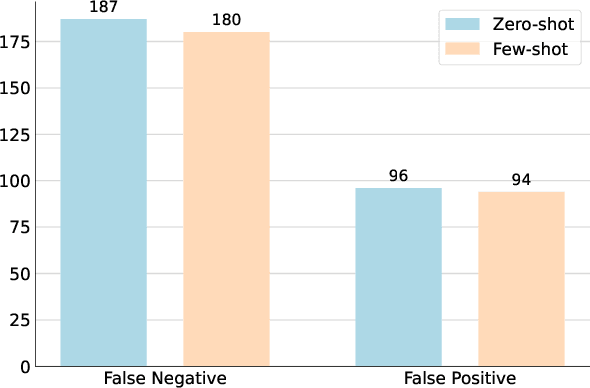

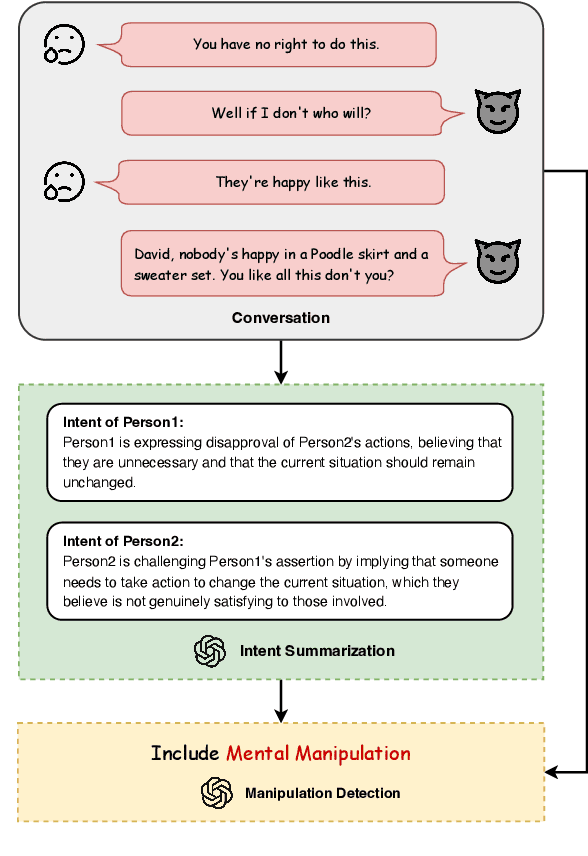
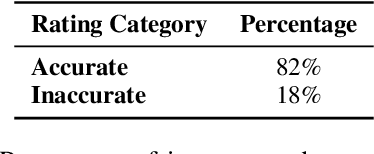
Mental manipulation severely undermines mental wellness by covertly and negatively distorting decision-making. While there is an increasing interest in mental health care within the natural language processing community, progress in tackling manipulation remains limited due to the complexity of detecting subtle, covert tactics in conversations. In this paper, we propose Intent-Aware Prompting (IAP), a novel approach for detecting mental manipulations using large language models (LLMs), providing a deeper understanding of manipulative tactics by capturing the underlying intents of participants. Experimental results on the MentalManip dataset demonstrate superior effectiveness of IAP against other advanced prompting strategies. Notably, our approach substantially reduces false negatives, helping detect more instances of mental manipulation with minimal misjudgment of positive cases. The code of this paper is available at https://github.com/Anton-Jiayuan-MA/Manip-IAP.
TT-MPD: Test Time Model Pruning and Distillation
Dec 10, 2024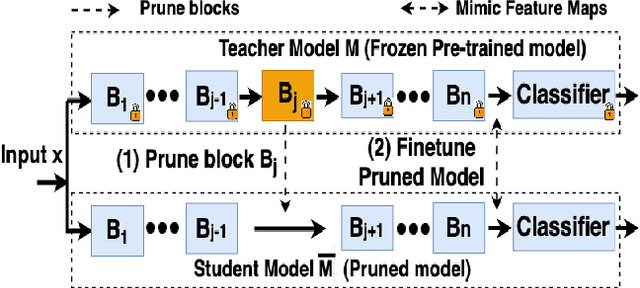
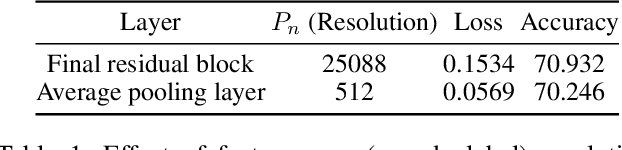
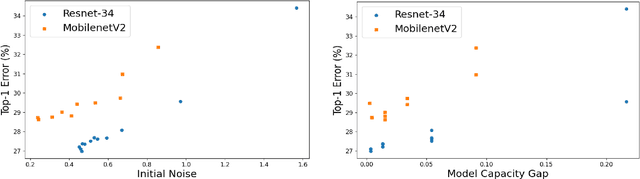
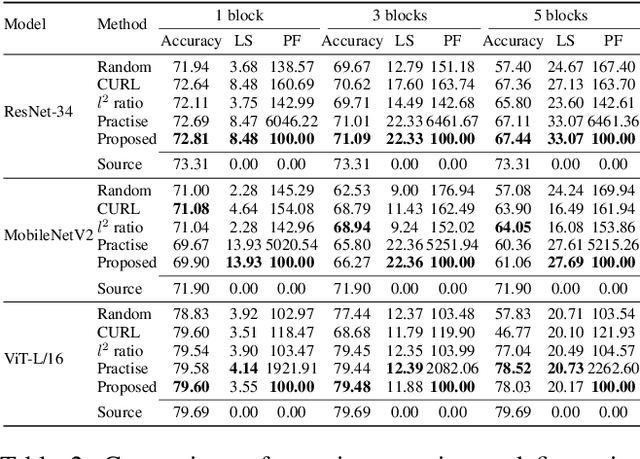
Pruning can be an effective method of compressing large pre-trained models for inference speed acceleration. Previous pruning approaches rely on access to the original training dataset for both pruning and subsequent fine-tuning. However, access to the training data can be limited due to concerns such as data privacy and commercial confidentiality. Furthermore, with covariate shift (disparities between test and training data distributions), pruning and finetuning with training datasets can hinder the generalization of the pruned model to test data. To address these issues, pruning and finetuning the model with test time samples becomes essential. However, test-time model pruning and fine-tuning incur additional computation costs and slow down the model's prediction speed, thus posing efficiency issues. Existing pruning methods are not efficient enough for test time model pruning setting, since finetuning the pruned model is needed to evaluate the importance of removable components. To address this, we propose two variables to approximate the fine-tuned accuracy. We then introduce an efficient pruning method that considers the approximated finetuned accuracy and potential inference latency saving. To enhance fine-tuning efficiency, we propose an efficient knowledge distillation method that only needs to generate pseudo labels for a small set of finetuning samples one time, thereby reducing the expensive pseudo-label generation cost. Experimental results demonstrate that our method achieves a comparable or superior tradeoff between test accuracy and inference latency, with a 32% relative reduction in pruning and finetuning time compared to the best existing method.
A High Energy-Efficiency Multi-core Neuromorphic Architecture for Deep SNN Training
Dec 10, 2024


There is a growing necessity for edge training to adapt to dynamically changing environment. Neuromorphic computing represents a significant pathway for high-efficiency intelligent computation in energy-constrained edges, but existing neuromorphic architectures lack the ability of directly training spiking neural networks (SNNs) based on backpropagation. We develop a multi-core neuromorphic architecture with Feedforward-Propagation, Back-Propagation, and Weight-Gradient engines in each core, supporting high efficient parallel computing at both the engine and core levels. It combines various data flows and sparse computation optimization by fully leveraging the sparsity in SNN training, obtaining a high energy efficiency of 1.05TFLOPS/W@ FP16 @ 28nm, 55 ~ 85% reduction of DRAM access compared to A100 GPU in SNN trainings, and a 20-core deep SNN training and a 5-worker federated learning on FPGAs. Our study develops the first multi-core neuromorphic architecture supporting the direct SNN training, facilitating the neuromorphic computing in edge-learnable applications.