 Add to Chrome
 Add to Firefox
 Add to Edge
Unifying Causal Reinforcement Learning: Survey, Taxonomy, Algorithms and Applications
Dec 19, 2025
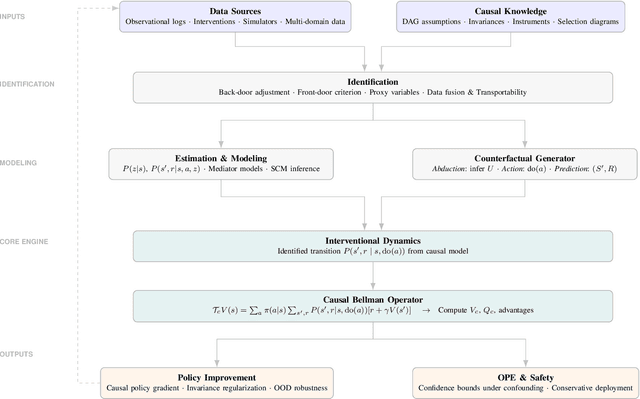
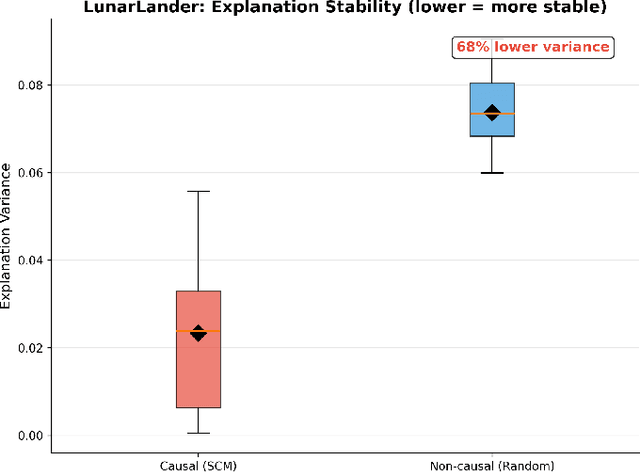
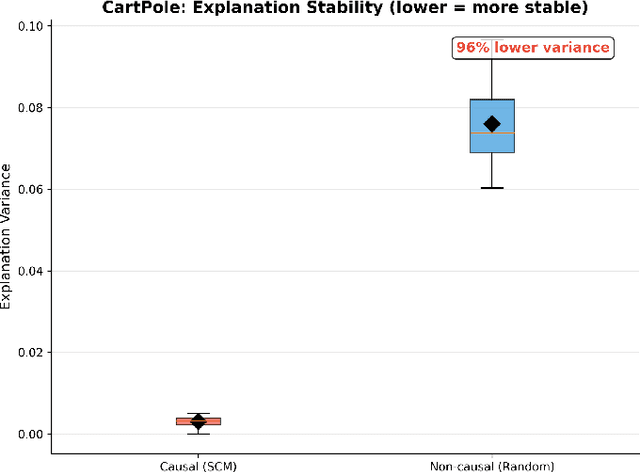
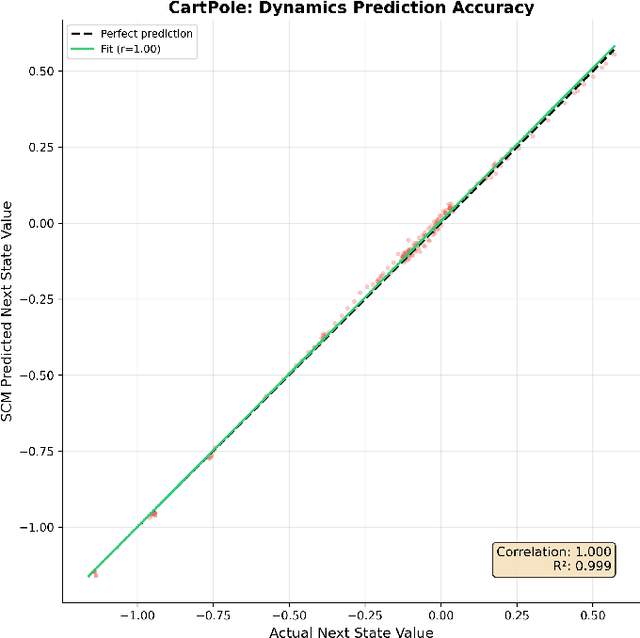
Integrating causal inference (CI) with reinforcement learning (RL) has emerged as a powerful paradigm to address critical limitations in classical RL, including low explainability, lack of robustness and generalization failures. Traditional RL techniques, which typically rely on correlation-driven decision-making, struggle when faced with distribution shifts, confounding variables, and dynamic environments. Causal reinforcement learning (CRL), leveraging the foundational principles of causal inference, offers promising solutions to these challenges by explicitly modeling cause-and-effect relationships. In this survey, we systematically review recent advancements at the intersection of causal inference and RL. We categorize existing approaches into causal representation learning, counterfactual policy optimization, offline causal RL, causal transfer learning, and causal explainability. Through this structured analysis, we identify prevailing challenges, highlight empirical successes in practical applications, and discuss open problems. Finally, we provide future research directions, underscoring the potential of CRL for developing robust, generalizable, and interpretable artificial intelligence systems.

Video Reality Test: Can AI-Generated ASMR Videos fool VLMs and Humans?
Dec 18, 2025Recent advances in video generation have produced vivid content that are often indistinguishable from real videos, making AI-generated video detection an emerging societal challenge. Prior AIGC detection benchmarks mostly evaluate video without audio, target broad narrative domains, and focus on classification solely. Yet it remains unclear whether state-of-the-art video generation models can produce immersive, audio-paired videos that reliably deceive humans and VLMs. To this end, we introduce Video Reality Test, an ASMR-sourced video benchmark suite for testing perceptual realism under tight audio-visual coupling, featuring the following dimensions: (i) Immersive ASMR video-audio sources. Built on carefully curated real ASMR videos, the benchmark targets fine-grained action-object interactions with diversity across objects, actions, and backgrounds. (ii) Peer-Review evaluation. An adversarial creator-reviewer protocol where video generation models act as creators aiming to fool reviewers, while VLMs serve as reviewers seeking to identify fakeness. Our experimental findings show: The best creator Veo3.1-Fast even fools most VLMs: the strongest reviewer (Gemini 2.5-Pro) achieves only 56% accuracy (random 50%), far below that of human experts (81.25%). Adding audio improves real-fake discrimination, yet superficial cues such as watermarks can still significantly mislead models. These findings delineate the current boundary of video generation realism and expose limitations of VLMs in perceptual fidelity and audio-visual consistency. Our code is available at https://github.com/video-reality-test/video-reality-test.
ARMFlow: AutoRegressive MeanFlow for Online 3D Human Reaction Generation
Dec 18, 2025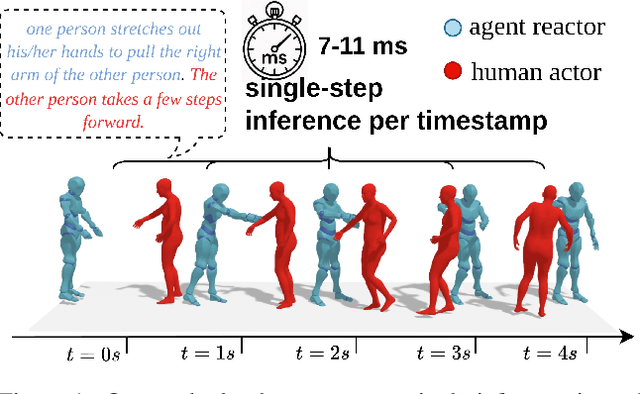

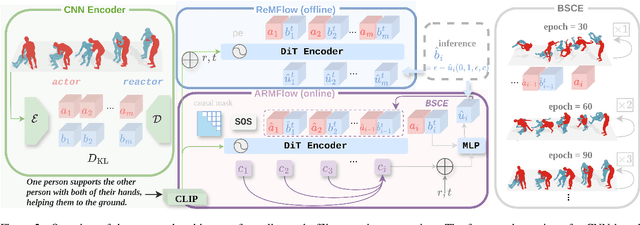

3D human reaction generation faces three main challenges:(1) high motion fidelity, (2) real-time inference, and (3) autoregressive adaptability for online scenarios. Existing methods fail to meet all three simultaneously. We propose ARMFlow, a MeanFlow-based autoregressive framework that models temporal dependencies between actor and reactor motions. It consists of a causal context encoder and an MLP-based velocity predictor. We introduce Bootstrap Contextual Encoding (BSCE) in training, encoding generated history instead of the ground-truth ones, to alleviate error accumulation in autoregressive generation. We further introduce the offline variant ReMFlow, achieving state-of-the-art performance with the fastest inference among offline methods. Our ARMFlow addresses key limitations of online settings by: (1) enhancing semantic alignment via a global contextual encoder; (2) achieving high accuracy and low latency in a single-step inference; and (3) reducing accumulated errors through BSCE. Our single-step online generation surpasses existing online methods on InterHuman and InterX by over 40% in FID, while matching offline state-of-the-art performance despite using only partial sequence conditions.
Intrinsic-Motivation Multi-Robot Social Formation Navigation with Coordinated Exploration
Dec 16, 2025This paper investigates the application of reinforcement learning (RL) to multi-robot social formation navigation, a critical capability for enabling seamless human-robot coexistence. While RL offers a promising paradigm, the inherent unpredictability and often uncooperative dynamics of pedestrian behavior pose substantial challenges, particularly concerning the efficiency of coordinated exploration among robots. To address this, we propose a novel coordinated-exploration multi-robot RL algorithm introducing an intrinsic motivation exploration. Its core component is a self-learning intrinsic reward mechanism designed to collectively alleviate policy conservatism. Moreover, this algorithm incorporates a dual-sampling mode within the centralized training and decentralized execution framework to enhance the representation of both the navigation policy and the intrinsic reward, leveraging a two-time-scale update rule to decouple parameter updates. Empirical results on social formation navigation benchmarks demonstrate the proposed algorithm's superior performance over existing state-of-the-art methods across crucial metrics. Our code and video demos are available at: https://github.com/czxhunzi/CEMRRL.
Maritime object classification with SAR imagery using quantum kernel methods
Dec 12, 2025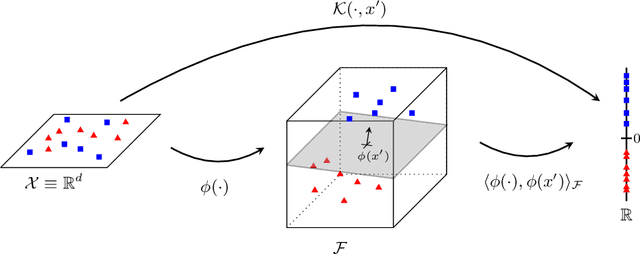
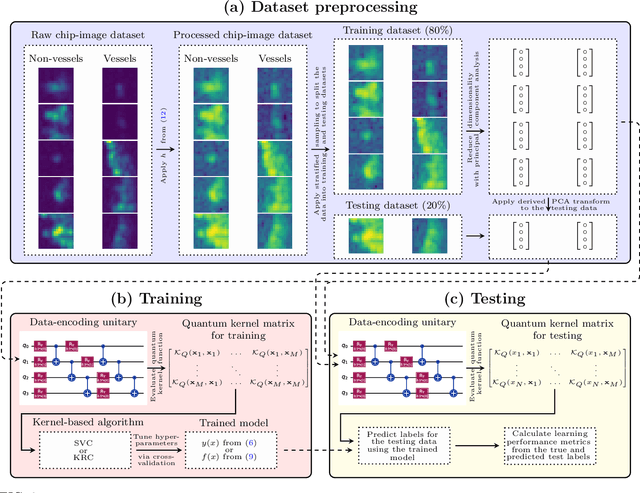
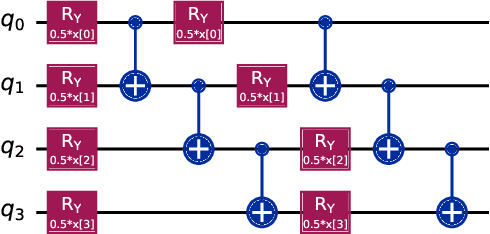
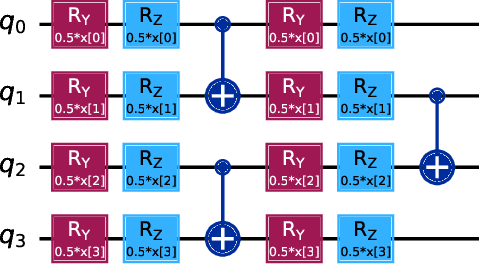
Illegal, unreported, and unregulated (IUU) fishing causes global economic losses of \$10-25 billion annually and undermines marine sustainability and governance. Synthetic Aperture Radar (SAR) provides reliable maritime surveillance under all weather and lighting conditions, but classifying small maritime objects in SAR imagery remains challenging. We investigate quantum machine learning for this task, focusing on Quantum Kernel Methods (QKMs) applied to real and complex SAR chips extracted from the SARFish dataset. We tackle two binary classification problems, the first for distinguishing vessels from non-vessels, and the second for distinguishing fishing vessels from other types of vessels. We compare QKMs applied to real and complex SAR chips against classical Laplacian, RBF, and linear kernels applied to real SAR chips. Using noiseless numerical simulations of the quantum kernels, we find that QKMs are capable of obtaining equal or better performance than the classical kernel on these tasks in the best case, but do not demonstrate a clear advantage for the complex SAR data. This work presents the first application of QKMs to maritime classification in SAR imagery and offers insight into the potential and current limitations of quantum-enhanced learning for maritime surveillance.
LiePrune: Lie Group and Quantum Geometric Dual Representation for One-Shot Structured Pruning of Quantum Neural Networks
Dec 10, 2025Quantum neural networks (QNNs) and parameterized quantum circuits (PQCs) are key building blocks for near-term quantum machine learning. However, their scalability is constrained by excessive parameters, barren plateaus, and hardware limitations. We propose LiePrune, the first mathematically grounded one-shot structured pruning framework for QNNs that leverages Lie group structure and quantum geometric information. Each gate is jointly represented in a Lie group--Lie algebra dual space and a quantum geometric feature space, enabling principled redundancy detection and aggressive compression. Experiments on quantum classification (MNIST, FashionMNIST), quantum generative modeling (Bars-and-Stripes), and quantum chemistry (LiH VQE) show that LiePrune achieves over $10\times$ compression with negligible or even improved task performance, while providing provable guarantees on redundancy detection, functional approximation, and computational complexity.
TTA: Transcribe, Translate and Alignment for Cross-lingual Speech Representation
Nov 18, 2025Speech-LLM models have demonstrated great performance in multi-modal and multi-task speech understanding. A typical speech-LLM paradigm is integrating speech modality with a large language model (LLM). While the Whisper encoder was frequently adopted in previous studies for speech input, it shows limitations regarding input format, model scale, and semantic performance. To this end, we propose a lightweight TTA model specialized in speech semantics for more effective LLM integration. With large-scale training of 358k hours of speech data on multilingual speech recognition (ASR), speech translation (ST) and speech-text alignment tasks, TTA is capable of producing robust cross-lingual speech representations. Extensive evaluations across diverse benchmarks, including ASR/ST, speech retrieval, and ASR-LLM performance assessments, demonstrate TTA's superiority over Whisper. Furthermore, we rigorously validate the interplay between cross-lingual capabilities and ASR/ST performance. The model weights and training recipes of TTA will be released as part of an audio understanding toolkit Auden.
STEP: Success-Rate-Aware Trajectory-Efficient Policy Optimization
Nov 17, 2025Multi-turn interaction remains challenging for online reinforcement learning. A common solution is trajectory-level optimization, which treats each trajectory as a single training sample. However, this approach can be inefficient and yield misleading learning signals: it applies uniform sampling across tasks regardless of difficulty, penalizes correct intermediate actions in failed trajectories, and incurs high sample-collection costs. To address these issues, we propose STEP (Success-rate-aware Trajectory-Efficient Policy optimization), a framework that dynamically allocates sampling based on per-task success rates and performs step-level optimization. STEP maintains a smoothed success-rate record to guide adaptive trajectory resampling, allocating more effort to harder tasks. It then computes success-rate-weighted advantages and decomposes trajectories into step-level samples. Finally, it applies a step-level GRPO augmentation to refine updates for low-success tasks. Experiments on OSWorld and AndroidWorld show that STEP substantially improves sample efficiency and training stability over trajectory-level GRPO, converging faster and generalizing better under the same sampling budget.
ICLR: Inter-Chrominance and Luminance Interaction for Natural Color Restoration in Low-Light Image Enhancement
Nov 17, 2025Low-Light Image Enhancement (LLIE) task aims at improving contrast while restoring details and textures for images captured in low-light conditions. HVI color space has made significant progress in this task by enabling precise decoupling of chrominance and luminance. However, for the interaction of chrominance and luminance branches, substantial distributional differences between the two branches prevalent in natural images limit complementary feature extraction, and luminance errors are propagated to chrominance channels through the nonlinear parameter. Furthermore, for interaction between different chrominance branches, images with large homogeneous-color regions usually exhibit weak correlation between chrominance branches due to concentrated distributions. Traditional pixel-wise losses exploit strong inter-branch correlations for co-optimization, causing gradient conflicts in weakly correlated regions. Therefore, we propose an Inter-Chrominance and Luminance Interaction (ICLR) framework including a Dual-stream Interaction Enhancement Module (DIEM) and a Covariance Correction Loss (CCL). The DIEM improves the extraction of complementary information from two dimensions, fusion and enhancement, respectively. The CCL utilizes luminance residual statistics to penalize chrominance errors and balances gradient conflicts by constraining chrominance branches covariance. Experimental results on multiple datasets show that the proposed ICLR framework outperforms state-of-the-art methods.
Mixture of States: Routing Token-Level Dynamics for Multimodal Generation
Nov 15, 2025We introduce MoS (Mixture of States), a novel fusion paradigm for multimodal diffusion models that merges modalities using flexible, state-based interactions. The core of MoS is a learnable, token-wise router that creates denoising timestep- and input-dependent interactions between modalities' hidden states, precisely aligning token-level features with the diffusion trajectory. This router sparsely selects the top-$k$ hidden states and is trained with an $ε$-greedy strategy, efficiently selecting contextual features with minimal learnable parameters and negligible computational overhead. We validate our design with text-to-image generation (MoS-Image) and editing (MoS-Editing), which achieve state-of-the-art results. With only 3B to 5B parameters, our models match or surpass counterparts up to $4\times$ larger. These findings establish MoS as a flexible and compute-efficient paradigm for scaling multimodal diffusion models.