 Add to Chrome
 Add to Firefox
 Add to Edge
Learning Versatile Humanoid Manipulation with Touch Dreaming
Apr 14, 2026
Humanoid robots promise general-purpose assistance, yet real-world humanoid loco-manipulation remains challenging because it requires whole-body stability, dexterous hands, and contact-aware perception under frequent contact changes. In this work, we study dexterous, contact-rich humanoid loco-manipulation. We first develop an RL-based whole-body controller that provides stable lower-body and torso execution during complex manipulation. Built on this controller, we develop a whole-body humanoid data collection system that combines VR-based teleoperation with human-to-humanoid motion mapping, enabling efficient collection of real-world demonstrations. We then propose Humanoid Transformer with Touch Dreaming (HTD), a multimodal encoder--decoder Transformer that models touch as a core modality alongside multi-view vision and proprioception. HTD is trained in a single stage with behavioral cloning augmented by touch dreaming: in addition to predicting action chunks, the policy predicts future hand-joint forces and future tactile latents, encouraging the shared Transformer trunk to learn contact-aware representations for dexterous interaction. Across five contact-rich tasks, Insert-T, Book Organization, Towel Folding, Cat Litter Scooping, and Tea Serving, HTD achieves a 90.9% relative improvement in average success rate over the stronger baseline. Ablation results further show that latent-space tactile prediction is more effective than raw tactile prediction, yielding a 30% relative gain in success rate. These results demonstrate that combining robust whole-body execution, scalable humanoid data collection, and predictive touch-centered learning enables versatile, high-dexterity humanoid manipulation in the real world. Project webpage: humanoid-touch-dream.github.io.

Osmosis Distillation: Model Hijacking with the Fewest Samples
Mar 05, 2026Transfer learning is devised to leverage knowledge from pre-trained models to solve new tasks with limited data and computational resources. Meanwhile, dataset distillation has emerged to synthesize a compact dataset that preserves critical information from the original large dataset. Therefore, a combination of transfer learning and dataset distillation offers promising performance in evaluations. However, a non-negligible security threat remains undiscovered in transfer learning using synthetic datasets generated by dataset distillation methods, where an adversary can perform a model hijacking attack with only a few poisoned samples in the synthetic dataset. To reveal this threat, we propose Osmosis Distillation (OD) attack, a novel model hijacking strategy that targets deep learning models using the fewest samples. Comprehensive evaluations on various datasets demonstrate that the OD attack attains high attack success rates in hidden tasks while preserving high model utility in original tasks. Furthermore, the distilled osmosis set enables model hijacking across diverse model architectures, allowing model hijacking in transfer learning with considerable attack performance and model utility. We argue that awareness of using third-party synthetic datasets in transfer learning must be raised.
Cross-Modal Alignment and Fusion for RGB-D Transmission-Line Defect Detection
Feb 03, 2026Transmission line defect detection remains challenging for automated UAV inspection due to the dominance of small-scale defects, complex backgrounds, and illumination variations. Existing RGB-based detectors, despite recent progress, struggle to distinguish geometrically subtle defects from visually similar background structures under limited chromatic contrast. This paper proposes CMAFNet, a Cross-Modal Alignment and Fusion Network that integrates RGB appearance and depth geometry through a principled purify-then-fuse paradigm. CMAFNet consists of a Semantic Recomposition Module that performs dictionary-based feature purification via a learned codebook to suppress modality-specific noise while preserving defect-discriminative information, and a Contextual Semantic Integration Framework that captures global spatial dependencies using partial-channel attention to enhance structural semantic reasoning. Position-wise normalization within the purification stage enforces explicit reconstruction-driven cross-modal alignment, ensuring statistical compatibility between heterogeneous features prior to fusion. Extensive experiments on the TLRGBD benchmark, where 94.5% of instances are small objects, demonstrate that CMAFNet achieves 32.2% mAP@50 and 12.5% APs, outperforming the strongest baseline by 9.8 and 4.0 percentage points, respectively. A lightweight variant reaches 24.8% mAP50 at 228 FPS with only 4.9M parameters, surpassing all YOLO-based detectors while matching transformer-based methods at substantially lower computational cost.
A Pragmatic VLA Foundation Model
Jan 26, 2026Offering great potential in robotic manipulation, a capable Vision-Language-Action (VLA) foundation model is expected to faithfully generalize across tasks and platforms while ensuring cost efficiency (e.g., data and GPU hours required for adaptation). To this end, we develop LingBot-VLA with around 20,000 hours of real-world data from 9 popular dual-arm robot configurations. Through a systematic assessment on 3 robotic platforms, each completing 100 tasks with 130 post-training episodes per task, our model achieves clear superiority over competitors, showcasing its strong performance and broad generalizability. We have also built an efficient codebase, which delivers a throughput of 261 samples per second per GPU with an 8-GPU training setup, representing a 1.5~2.8$\times$ (depending on the relied VLM base model) speedup over existing VLA-oriented codebases. The above features ensure that our model is well-suited for real-world deployment. To advance the field of robot learning, we provide open access to the code, base model, and benchmark data, with a focus on enabling more challenging tasks and promoting sound evaluation standards.
Doc2AHP: Inferring Structured Multi-Criteria Decision Models via Semantic Trees with LLMs
Jan 23, 2026While Large Language Models (LLMs) demonstrate remarkable proficiency in semantic understanding, they often struggle to ensure structural consistency and reasoning reliability in complex decision-making tasks that demand rigorous logic. Although classical decision theories, such as the Analytic Hierarchy Process (AHP), offer systematic rational frameworks, their construction relies heavily on labor-intensive domain expertise, creating an "expert bottleneck" that hinders scalability in general scenarios. To bridge the gap between the generalization capabilities of LLMs and the rigor of decision theory, we propose Doc2AHP, a novel structured inference framework guided by AHP principles. Eliminating the need for extensive annotated data or manual intervention, our approach leverages the structural principles of AHP as constraints to direct the LLM in a constrained search within the unstructured document space, thereby enforcing the logical entailment between parent and child nodes. Furthermore, we introduce a multi-agent weighting mechanism coupled with an adaptive consistency optimization strategy to ensure the numerical consistency of weight allocation. Empirical results demonstrate that Doc2AHP not only empowers non-expert users to construct high-quality decision models from scratch but also significantly outperforms direct generative baselines in both logical completeness and downstream task accuracy.
Enhanced 3D Gravity Inversion Using ResU-Net with Density Logging Constraints: A Dual-Phase Training Approach
Jan 06, 2026Gravity exploration has become an important geophysical method due to its low cost and high efficiency. With the rise of artificial intelligence, data-driven gravity inversion methods based on deep learning (DL) possess physical property recovery capabilities that conventional regularization methods lack. However, existing DL methods suffer from insufficient prior information constraints, which leads to inversion models with large data fitting errors and unreliable results. Moreover, the inversion results lack constraints and matching from other exploration methods, leading to results that may contradict known geological conditions. In this study, we propose a novel approach that integrates prior density well logging information to address the above issues. First, we introduce a depth weighting function to the neural network (NN) and train it in the weighted density parameter domain. The NN, under the constraint of the weighted forward operator, demonstrates improved inversion performance, with the resulting inversion model exhibiting smaller data fitting errors. Next, we divide the entire network training into two phases: first training a large pre-trained network Net-I, and then using the density logging information as the constraint to get the optimized fine-tuning network Net-II. Through testing and comparison in synthetic models and Bishop Model, the inversion quality of our method has significantly improved compared to the unconstrained data-driven DL inversion method. Additionally, we also conduct a comparison and discussion between our method and both the conventional focusing inversion (FI) method and its well logging constrained variant. Finally, we apply this method to the measured data from the San Nicolas mining area in Mexico, comparing and analyzing it with two recent gravity inversion methods based on DL.
Intrinsic-Motivation Multi-Robot Social Formation Navigation with Coordinated Exploration
Dec 16, 2025This paper investigates the application of reinforcement learning (RL) to multi-robot social formation navigation, a critical capability for enabling seamless human-robot coexistence. While RL offers a promising paradigm, the inherent unpredictability and often uncooperative dynamics of pedestrian behavior pose substantial challenges, particularly concerning the efficiency of coordinated exploration among robots. To address this, we propose a novel coordinated-exploration multi-robot RL algorithm introducing an intrinsic motivation exploration. Its core component is a self-learning intrinsic reward mechanism designed to collectively alleviate policy conservatism. Moreover, this algorithm incorporates a dual-sampling mode within the centralized training and decentralized execution framework to enhance the representation of both the navigation policy and the intrinsic reward, leveraging a two-time-scale update rule to decouple parameter updates. Empirical results on social formation navigation benchmarks demonstrate the proposed algorithm's superior performance over existing state-of-the-art methods across crucial metrics. Our code and video demos are available at: https://github.com/czxhunzi/CEMRRL.
Integrating Offline Pre-Training with Online Fine-Tuning: A Reinforcement Learning Approach for Robot Social Navigation
Oct 01, 2025Offline reinforcement learning (RL) has emerged as a promising framework for addressing robot social navigation challenges. However, inherent uncertainties in pedestrian behavior and limited environmental interaction during training often lead to suboptimal exploration and distributional shifts between offline training and online deployment. To overcome these limitations, this paper proposes a novel offline-to-online fine-tuning RL algorithm for robot social navigation by integrating Return-to-Go (RTG) prediction into a causal Transformer architecture. Our algorithm features a spatiotem-poral fusion model designed to precisely estimate RTG values in real-time by jointly encoding temporal pedestrian motion patterns and spatial crowd dynamics. This RTG prediction framework mitigates distribution shift by aligning offline policy training with online environmental interactions. Furthermore, a hybrid offline-online experience sampling mechanism is built to stabilize policy updates during fine-tuning, ensuring balanced integration of pre-trained knowledge and real-time adaptation. Extensive experiments in simulated social navigation environments demonstrate that our method achieves a higher success rate and lower collision rate compared to state-of-the-art baselines. These results underscore the efficacy of our algorithm in enhancing navigation policy robustness and adaptability. This work paves the way for more reliable and adaptive robotic navigation systems in real-world applications.
Unleashing the Power of Pre-trained Encoders for Universal Adversarial Attack Detection
Apr 01, 2025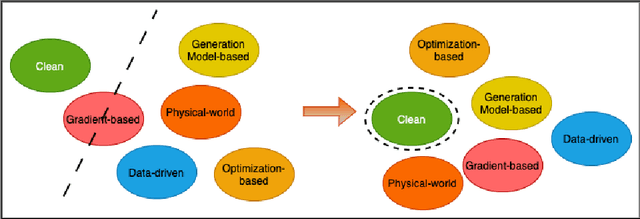
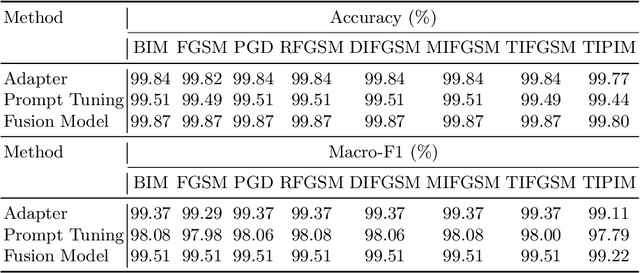
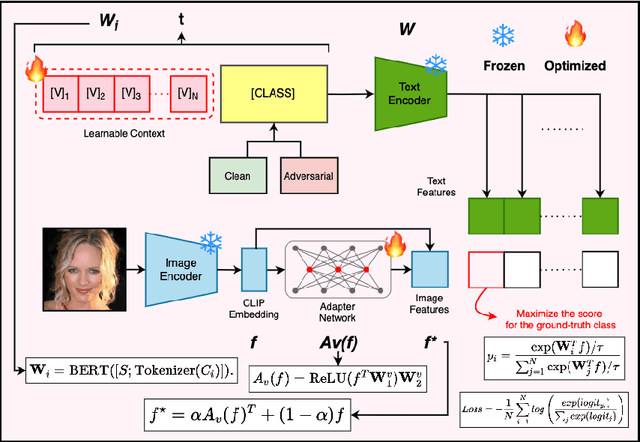
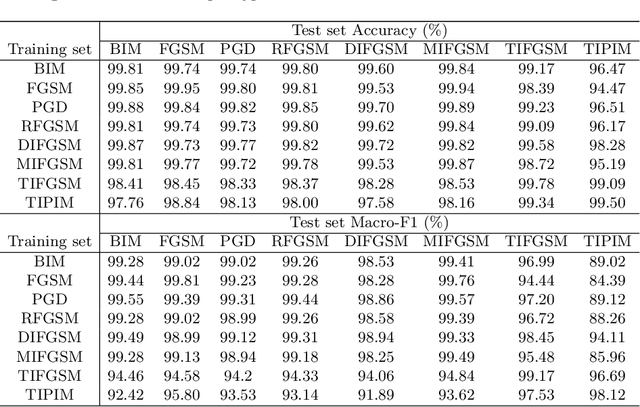
Adversarial attacks pose a critical security threat to real-world AI systems by injecting human-imperceptible perturbations into benign samples to induce misclassification in deep learning models. While existing detection methods, such as Bayesian uncertainty estimation and activation pattern analysis, have achieved progress through feature engineering, their reliance on handcrafted feature design and prior knowledge of attack patterns limits generalization capabilities and incurs high engineering costs. To address these limitations, this paper proposes a lightweight adversarial detection framework based on the large-scale pre-trained vision-language model CLIP. Departing from conventional adversarial feature characterization paradigms, we innovatively adopt an anomaly detection perspective. By jointly fine-tuning CLIP's dual visual-text encoders with trainable adapter networks and learnable prompts, we construct a compact representation space tailored for natural images. Notably, our detection architecture achieves substantial improvements in generalization capability across both known and unknown attack patterns compared to traditional methods, while significantly reducing training overhead. This study provides a novel technical pathway for establishing a parameter-efficient and attack-agnostic defense paradigm, markedly enhancing the robustness of vision systems against evolving adversarial threats.
Loosely Synchronized Rule-Based Planning for Multi-Agent Path Finding with Asynchronous Actions
Dec 16, 2024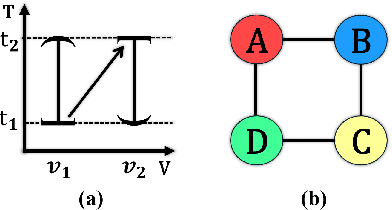
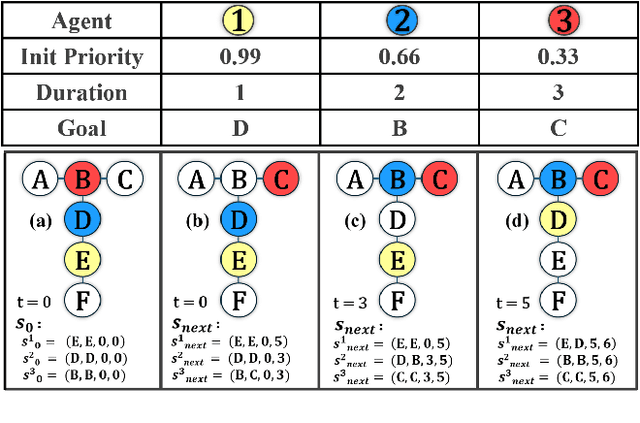
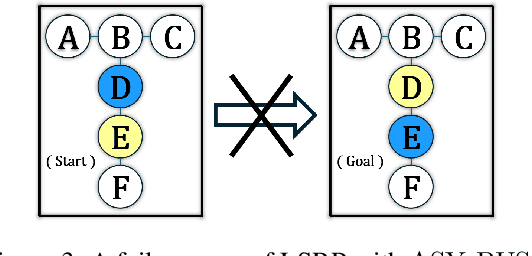
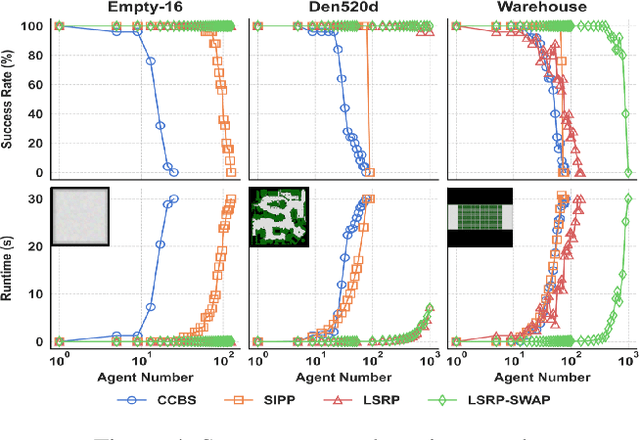
Multi-Agent Path Finding (MAPF) seeks collision-free paths for multiple agents from their respective starting locations to their respective goal locations while minimizing path costs. Although many MAPF algorithms were developed and can handle up to thousands of agents, they usually rely on the assumption that each action of the agent takes a time unit, and the actions of all agents are synchronized in a sense that the actions of agents start at the same discrete time step, which may limit their use in practice. Only a few algorithms were developed to address asynchronous actions, and they all lie on one end of the spectrum, focusing on finding optimal solutions with limited scalability. This paper develops new planners that lie on the other end of the spectrum, trading off solution quality for scalability, by finding an unbounded sub-optimal solution for many agents. Our method leverages both search methods (LSS) in handling asynchronous actions and rule-based planning methods (PIBT) for MAPF. We analyze the properties of our method and test it against several baselines with up to 1000 agents in various maps. Given a runtime limit, our method can handle an order of magnitude more agents than the baselines with about 25% longer makespan.