 Add to Chrome
 Add to Firefox
 Add to Edge
FLARE: Diffusion for Hybrid Language Model
Jun 01, 2026
Autoregressive (AR) large language models (LLMs) have achieved broad practical success, but sequential decoding remains a key bottleneck for low-latency deployment. Recent efficient-inference work has progressed along two axes: reducing the cost of each model invocation through efficient architectures, and reducing serial decoding steps through parallel generation. Hybrid attention backbones address the former, while diffusion language models (dLLMs) pursue the latter via iterative parallel denoising. Combining these advantages remains challenging: AR-to-dLLM conversion often fails to preserve seed-checkpoint capability, and hybrid-attention recurrent states and masking constraints make diffusion training and serving nontrivial. We present FLARE, a systematic conversion framework for hybrid-attention LLMs. Our analysis identifies transfer data quality as the primary determinant of capability preservation, outweighing loss formulation and attention-mask design. The resulting framework combines a token-equal AR-and-diffusion objective, hardware-aware kernels, and unified inference, enabling one checkpoint to support both AR-style verified decoding and diffusion-style parallel denoising. Starting from strong AR checkpoints with limited post-training data, FLARE is competitive with leading open-source dLLMs across model scales and delivers consistent throughput gains over open-source dLLM baselines in single-GPU concurrent serving. Our results further suggest that practical dLLMs are limited not only by decoding algorithms, but also by transfer data quality and the training inefficiency of current block-diffusion objectives, motivating joint design of data, objectives, architectures, and inference systems.

Conformalized Percentile Interval: Finite Sample Validity and Improved Conditional Performance
May 04, 2026Conformal prediction provides distribution-free predictive intervals with finite-sample marginal coverage. However, achieving conditional validity and interval efficiency (in terms of short interval length) remains challenging, particularly in complex settings with heteroskedasticity, skewed responses, or estimation errors. We propose a conformal-style calibration method for responses obtained by the probability integral transform (PIT) of the conditional cumulative distribution function (CDF) estimated via neural networks to construct a finite-sample-adjusted percentile interval with the shortest length determined by the estimated conditional CDF. Calibrating in PIT space is effective because PIT values are asymptotically feature-independent when the CDF estimator is accurate, which mitigates feature-dependent miscoverage and improves conditional calibration. On the other hand, our percentile calibration adapts to the empirical PIT distribution, which is robust against a possibly imperfect estimation of the conditional CDF. We prove the finite-sample marginal coverage property of the proposed method and show its asymptotic conditional coverage under mild consistency conditions. Experiments on diverse synthetic and real-world benchmarks demonstrate better conditional calibration and substantially shorter intervals than existing methods.
Refining Covariance Matrix Estimation in Stochastic Gradient Descent Through Bias Reduction
Apr 23, 2026We study online inference and asymptotic covariance estimation for the stochastic gradient descent (SGD) algorithm. While classical methods (such as plug-in and batch-means estimators) are available, they either require inaccessible second-order (Hessian) information or suffer from slow convergence. To address these challenges, we propose a novel, fully online de-biased covariance estimator that eliminates the need for second-order derivatives while significantly improving estimation accuracy. Our method employs a bias-reduction technique to achieve a convergence rate of $n^{(α-1)/2} \sqrt{\log n}$, outperforming existing Hessian-free alternatives.
AnyDoc: Enhancing Document Generation via Large-Scale HTML/CSS Data Synthesis and Height-Aware Reinforcement Optimization
Mar 26, 2026Document generation has gained growing attention in the field of AI-driven content creation. In this work, we push its boundaries by introducing AnyDoc, a framework capable of handling multiple generation tasks across a wide spectrum of document categories, all represented in a unified HTML/CSS format. To overcome the limited coverage and scale of existing human-crafted document datasets, AnyDoc first establishes a scalable data synthesis pipeline to automatically generate documents in HTML/CSS form. This pipeline yields DocHTML, a large-scale dataset containing 265,206 document samples, while spanning 111 categories and 32 distinct styles. Additionally, all documents are equipped with comprehensive metadata, including design intentions, HTML/CSS source code, visual assets, and rendered screenshots. Building on the curated dataset, AnyDoc fine-tunes multi-modal large language models (MLLMs) to achieve three practical document generation tasks: intention-to-document, document derendering, and element-to-document. To address the content overflow issue observed during fine-tuning, AnyDoc further incorporates a height-aware reinforcement learning (HARL) post-training procedure. By defining a reward function based on the difference between predicted and target document heights, overflow is penalized and gradually mitigated during HARL, thereby enhancing overall performance. Qualitative and quantitative experiments demonstrate that AnyDoc outperforms both general-purpose MLLMs and task-specific baselines across all three tasks.
MiLDEdit: Reasoning-Based Multi-Layer Design Document Editing
Jan 08, 2026Real-world design documents (e.g., posters) are inherently multi-layered, combining decoration, text, and images. Editing them from natural-language instructions requires fine-grained, layer-aware reasoning to identify relevant layers and coordinate modifications. Prior work largely overlooks multi-layer design document editing, focusing instead on single-layer image editing or multi-layer generation, which assume a flat canvas and lack the reasoning needed to determine what and where to modify. To address this gap, we introduce the Multi-Layer Document Editing Agent (MiLDEAgent), a reasoning-based framework that combines an RL-trained multimodal reasoner for layer-wise understanding with an image editor for targeted modifications. To systematically benchmark this setting, we introduce the MiLDEBench, a human-in-the-loop corpus of over 20K design documents paired with diverse editing instructions. The benchmark is complemented by a task-specific evaluation protocol, MiLDEEval, which spans four dimensions including instruction following, layout consistency, aesthetics, and text rendering. Extensive experiments on 14 open-source and 2 closed-source models reveal that existing approaches fail to generalize: open-source models often cannot complete multi-layer document editing tasks, while closed-source models suffer from format violations. In contrast, MiLDEAgent achieves strong layer-aware reasoning and precise editing, significantly outperforming all open-source baselines and attaining performance comparable to closed-source models, thereby establishing the first strong baseline for multi-layer document editing.
Text-Conditioned Background Generation for Editable Multi-Layer Documents
Dec 19, 2025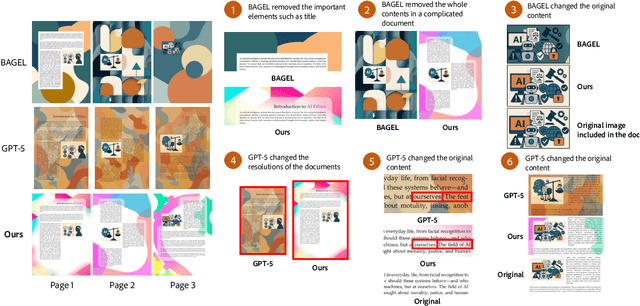

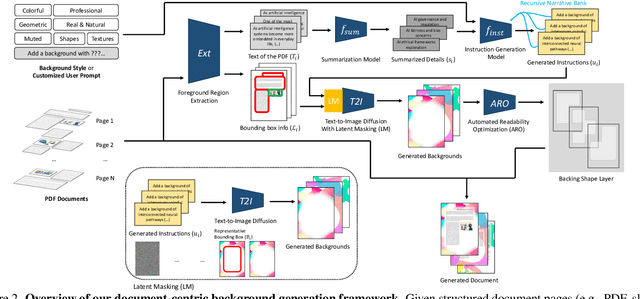
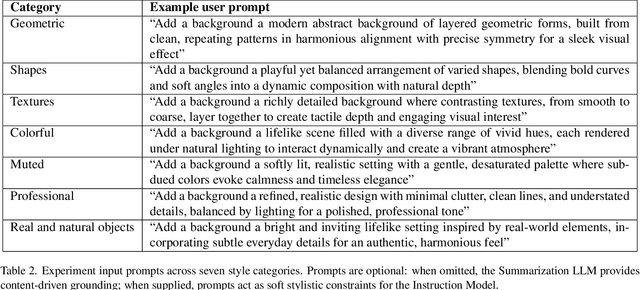
We present a framework for document-centric background generation with multi-page editing and thematic continuity. To ensure text regions remain readable, we employ a \emph{latent masking} formulation that softly attenuates updates in the diffusion space, inspired by smooth barrier functions in physics and numerical optimization. In addition, we introduce \emph{Automated Readability Optimization (ARO)}, which automatically places semi-transparent, rounded backing shapes behind text regions. ARO determines the minimal opacity needed to satisfy perceptual contrast standards (WCAG 2.2) relative to the underlying background, ensuring readability while maintaining aesthetic harmony without human intervention. Multi-page consistency is maintained through a summarization-and-instruction process, where each page is distilled into a compact representation that recursively guides subsequent generations. This design reflects how humans build continuity by retaining prior context, ensuring that visual motifs evolve coherently across an entire document. Our method further treats a document as a structured composition in which text, figures, and backgrounds are preserved or regenerated as separate layers, allowing targeted background editing without compromising readability. Finally, user-provided prompts allow stylistic adjustments in color and texture, balancing automated consistency with flexible customization. Our training-free framework produces visually coherent, text-preserving, and thematically aligned documents, bridging generative modeling with natural design workflows.
OIDA-QA: A Multimodal Benchmark for Analyzing the Opioid Industry Documents Archive
Nov 14, 2025The opioid crisis represents a significant moment in public health that reveals systemic shortcomings across regulatory systems, healthcare practices, corporate governance, and public policy. Analyzing how these interconnected systems simultaneously failed to protect public health requires innovative analytic approaches for exploring the vast amounts of data and documents disclosed in the UCSF-JHU Opioid Industry Documents Archive (OIDA). The complexity, multimodal nature, and specialized characteristics of these healthcare-related legal and corporate documents necessitate more advanced methods and models tailored to specific data types and detailed annotations, ensuring the precision and professionalism in the analysis. In this paper, we tackle this challenge by organizing the original dataset according to document attributes and constructing a benchmark with 400k training documents and 10k for testing. From each document, we extract rich multimodal information-including textual content, visual elements, and layout structures-to capture a comprehensive range of features. Using multiple AI models, we then generate a large-scale dataset comprising 360k training QA pairs and 10k testing QA pairs. Building on this foundation, we develop domain-specific multimodal Large Language Models (LLMs) and explore the impact of multimodal inputs on task performance. To further enhance response accuracy, we incorporate historical QA pairs as contextual grounding for answering current queries. Additionally, we incorporate page references within the answers and introduce an importance-based page classifier, further improving the precision and relevance of the information provided. Preliminary results indicate the improvements with our AI assistant in document information extraction and question-answering tasks. The dataset is available at: https://huggingface.co/datasets/opioidarchive/oida-qa
Online Statistical Inference of Constrained Stochastic Optimization via Random Scaling
May 23, 2025Constrained stochastic nonlinear optimization problems have attracted significant attention for their ability to model complex real-world scenarios in physics, economics, and biology. As datasets continue to grow, online inference methods have become crucial for enabling real-time decision-making without the need to store historical data. In this work, we develop an online inference procedure for constrained stochastic optimization by leveraging a method called Sketched Stochastic Sequential Quadratic Programming (SSQP). As a direct generalization of sketched Newton methods, SSQP approximates the objective with a quadratic model and the constraints with a linear model at each step, then applies a sketching solver to inexactly solve the resulting subproblem. Building on this design, we propose a new online inference procedure called random scaling. In particular, we construct a test statistic based on SSQP iterates whose limiting distribution is free of any unknown parameters. Compared to existing online inference procedures, our approach offers two key advantages: (i) it enables the construction of asymptotically valid confidence intervals; and (ii) it is matrix-free, i.e. the computation involves only primal-dual SSQP iterates $(\boldsymbol{x}_t, \boldsymbol{\lambda}_t)$ without requiring any matrix inversions. We validate our theory through numerical experiments on nonlinearly constrained regression problems and demonstrate the superior performance of our random scaling method over existing inference procedures.
Towards Visual Text Grounding of Multimodal Large Language Model
Apr 07, 2025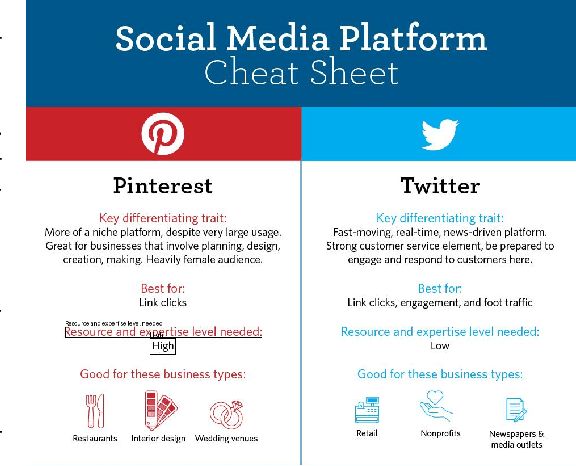
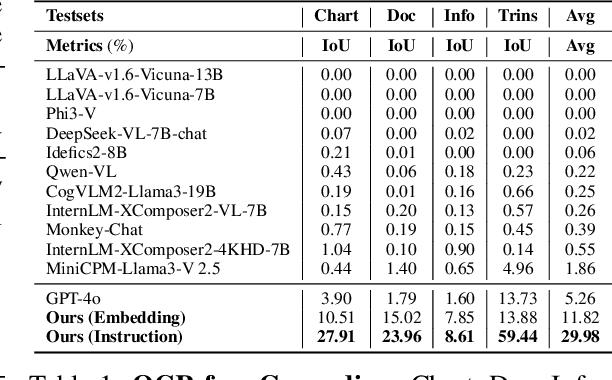
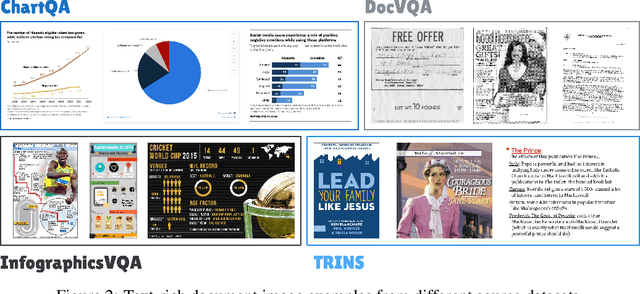
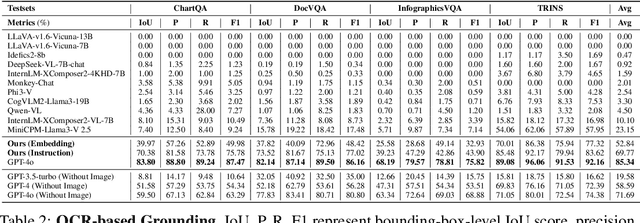
Despite the existing evolution of Multimodal Large Language Models (MLLMs), a non-neglectable limitation remains in their struggle with visual text grounding, especially in text-rich images of documents. Document images, such as scanned forms and infographics, highlight critical challenges due to their complex layouts and textual content. However, current benchmarks do not fully address these challenges, as they mostly focus on visual grounding on natural images, rather than text-rich document images. Thus, to bridge this gap, we introduce TRIG, a novel task with a newly designed instruction dataset for benchmarking and improving the Text-Rich Image Grounding capabilities of MLLMs in document question-answering. Specifically, we propose an OCR-LLM-human interaction pipeline to create 800 manually annotated question-answer pairs as a benchmark and a large-scale training set of 90$ synthetic data based on four diverse datasets. A comprehensive evaluation of various MLLMs on our proposed benchmark exposes substantial limitations in their grounding capability on text-rich images. In addition, we propose two simple and effective TRIG methods based on general instruction tuning and plug-and-play efficient embedding, respectively. By finetuning MLLMs on our synthetic dataset, they promisingly improve spatial reasoning and grounding capabilities.
MMSci: A Multimodal Multi-Discipline Dataset for PhD-Level Scientific Comprehension
Jul 06, 2024The rapid advancement of Large Language Models (LLMs) and Large Multimodal Models (LMMs) has heightened the demand for AI-based scientific assistants capable of understanding scientific articles and figures. Despite progress, there remains a significant gap in evaluating models' comprehension of professional, graduate-level, and even PhD-level scientific content. Current datasets and benchmarks primarily focus on relatively simple scientific tasks and figures, lacking comprehensive assessments across diverse advanced scientific disciplines. To bridge this gap, we collected a multimodal, multidisciplinary dataset from open-access scientific articles published in Nature Communications journals. This dataset spans 72 scientific disciplines, ensuring both diversity and quality. We created benchmarks with various tasks and settings to comprehensively evaluate LMMs' capabilities in understanding scientific figures and content. Our evaluation revealed that these tasks are highly challenging: many open-source models struggled significantly, and even GPT-4V and GPT-4o faced difficulties. We also explored using our dataset as training resources by constructing visual instruction-following data, enabling the 7B LLaVA model to achieve performance comparable to GPT-4V/o on our benchmark. Additionally, we investigated the use of our interleaved article texts and figure images for pre-training LMMs, resulting in improvements on the material generation task. The source dataset, including articles, figures, constructed benchmarks, and visual instruction-following data, is open-sourced.