 Add to Chrome
 Add to Firefox
 Add to Edge
Explore Synergistic Interaction Across Frames for Interactive Video Object Segmentation
Feb 04, 2024

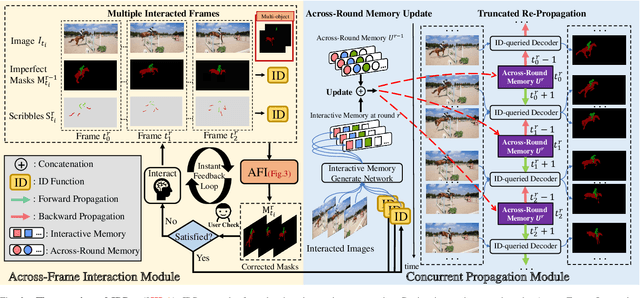
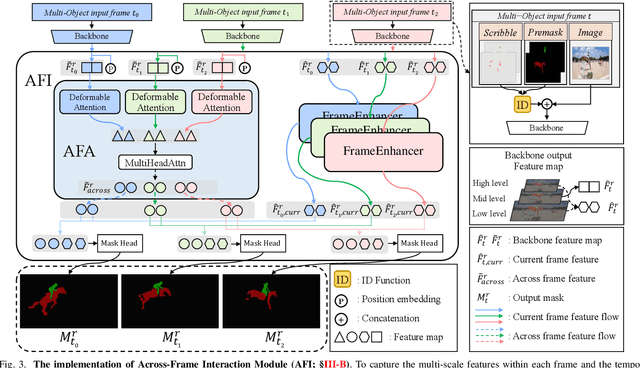
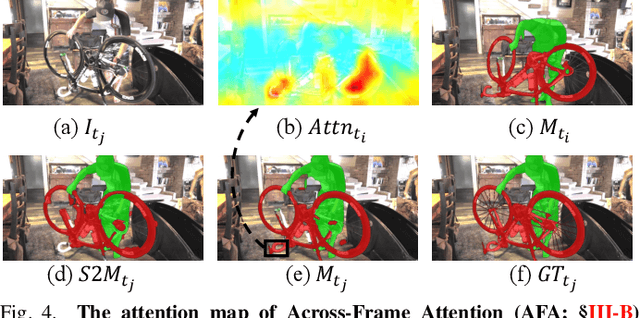
Interactive Video Object Segmentation (iVOS) is a challenging task that requires real-time human-computer interaction. To improve the user experience, it is important to consider the user's input habits, segmentation quality, running time and memory consumption.However, existing methods compromise user experience with single input mode and slow running speed. Specifically, these methods only allow the user to interact with one single frame, which limits the expression of the user's intent.To overcome these limitations and better align with people's usage habits, we propose a framework that can accept multiple frames simultaneously and explore synergistic interaction across frames (SIAF). Concretely, we designed the Across-Frame Interaction Module that enables users to annotate different objects freely on multiple frames. The AFI module will migrate scribble information among multiple interactive frames and generate multi-frame masks. Additionally, we employ the id-queried mechanism to process multiple objects in batches. Furthermore, for a more efficient propagation and lightweight model, we design a truncated re-propagation strategy to replace the previous multi-round fusion module, which employs an across-round memory that stores important interaction information. Our SwinB-SIAF achieves new state-of-the-art performance on DAVIS 2017 (89.6%, J&F@60). Moreover, our R50-SIAF is more than 3 faster than the state-of-the-art competitor under challenging multi-object scenarios.

Localization of Dummy Data Injection Attacks in Power Systems Considering Incomplete Topological Information: A Spatio-Temporal Graph Wavelet Convolutional Neural Network Approach
Jan 27, 2024The emergence of novel the dummy data injection attack (DDIA) poses a severe threat to the secure and stable operation of power systems. These attacks are particularly perilous due to the minimal Euclidean spatial separation between the injected malicious data and legitimate data, rendering their precise detection challenging using conventional distance-based methods. Furthermore, existing research predominantly focuses on various machine learning techniques, often analyzing the temporal data sequences post-attack or relying solely on Euclidean spatial characteristics. Unfortunately, this approach tends to overlook the inherent topological correlations within the non-Euclidean spatial attributes of power grid data, consequently leading to diminished accuracy in attack localization. To address this issue, this study takes a comprehensive approach. Initially, it examines the underlying principles of these new DDIAs on power systems. Here, an intricate mathematical model of the DDIA is designed, accounting for incomplete topological knowledge and alternating current (AC) state estimation from an attacker's perspective. Subsequently, by integrating a priori knowledge of grid topology and considering the temporal correlations within measurement data and the topology-dependent attributes of the power grid, this study introduces temporal and spatial attention matrices. These matrices adaptively capture the spatio-temporal correlations within the attacks. Leveraging gated stacked causal convolution and graph wavelet sparse convolution, the study jointly extracts spatio-temporal DDIA features. Finally, the research proposes a DDIA localization method based on spatio-temporal graph neural networks. The accuracy and effectiveness of the DDIA model are rigorously demonstrated through comprehensive analytical cases.
SCNet: Sparse Compression Network for Music Source Separation
Jan 24, 2024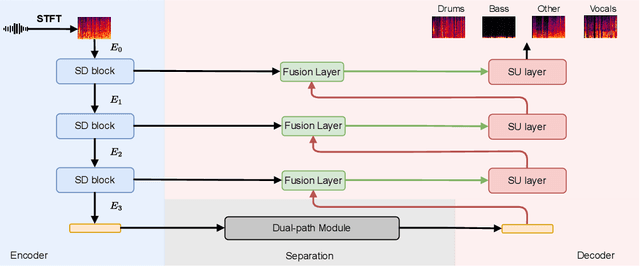

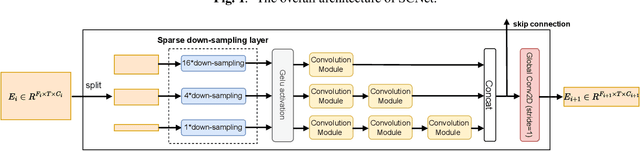

Deep learning-based methods have made significant achievements in music source separation. However, obtaining good results while maintaining a low model complexity remains challenging in super wide-band music source separation. Previous works either overlook the differences in subbands or inadequately address the problem of information loss when generating subband features. In this paper, we propose SCNet, a novel frequency-domain network to explicitly split the spectrogram of the mixture into several subbands and introduce a sparsity-based encoder to model different frequency bands. We use a higher compression ratio on subbands with less information to improve the information density and focus on modeling subbands with more information. In this way, the separation performance can be significantly improved using lower computational consumption. Experiment results show that the proposed model achieves a signal to distortion ratio (SDR) of 9.0 dB on the MUSDB18-HQ dataset without using extra data, which outperforms state-of-the-art methods. Specifically, SCNet's CPU inference time is only 48% of HT Demucs, one of the previous state-of-the-art models.
Synthetic Data in AI: Challenges, Applications, and Ethical Implications
Jan 03, 2024In the rapidly evolving field of artificial intelligence, the creation and utilization of synthetic datasets have become increasingly significant. This report delves into the multifaceted aspects of synthetic data, particularly emphasizing the challenges and potential biases these datasets may harbor. It explores the methodologies behind synthetic data generation, spanning traditional statistical models to advanced deep learning techniques, and examines their applications across diverse domains. The report also critically addresses the ethical considerations and legal implications associated with synthetic datasets, highlighting the urgent need for mechanisms to ensure fairness, mitigate biases, and uphold ethical standards in AI development.
Localization with Reconfigurable Intelligent Surface: An Active Sensing Approach
Dec 15, 2023This paper addresses an uplink localization problem in which a base station (BS) aims to locate a remote user with the help of reconfigurable intelligent surfaces (RISs). We propose a strategy in which the user transmits pilots sequentially and the BS adaptively adjusts the sensing vectors, including the BS beamforming vector and multiple RIS reflection coefficients based on the observations already made, to eventually produce an estimated user position. This is a challenging active sensing problem for which finding an optimal solution involves searching through a complicated functional space whose dimension increases with the number of measurements. We show that the long short-term memory (LSTM) network can be used to exploit the latent temporal correlation between measurements to automatically construct scalable state vectors. Subsequently, the state vector is mapped to the sensing vectors for the next time frame via a deep neural network (DNN). A final DNN is used to map the state vector to the estimated user position. Numerical result illustrates the advantage of the active sensing design as compared to non-active sensing methods. The proposed solution produces interpretable results and is generalizable in the number of sensing stages. Remarkably, we show that a network with one BS and multiple RISs can outperform a comparable setting with multiple BSs.
RTMO: Towards High-Performance One-Stage Real-Time Multi-Person Pose Estimation
Dec 12, 2023Real-time multi-person pose estimation presents significant challenges in balancing speed and precision. While two-stage top-down methods slow down as the number of people in the image increases, existing one-stage methods often fail to simultaneously deliver high accuracy and real-time performance. This paper introduces RTMO, a one-stage pose estimation framework that seamlessly integrates coordinate classification by representing keypoints using dual 1-D heatmaps within the YOLO architecture, achieving accuracy comparable to top-down methods while maintaining high speed. We propose a dynamic coordinate classifier and a tailored loss function for heatmap learning, specifically designed to address the incompatibilities between coordinate classification and dense prediction models. RTMO outperforms state-of-the-art one-stage pose estimators, achieving 1.1% higher AP on COCO while operating about 9 times faster with the same backbone. Our largest model, RTMO-l, attains 74.8% AP on COCO val2017 and 141 FPS on a single V100 GPU, demonstrating its efficiency and accuracy. The code and models are available at https://github.com/open-mmlab/mmpose/tree/dev-1.x/projects/rtmo.
FreeKD: Knowledge Distillation via Semantic Frequency Prompt
Nov 20, 2023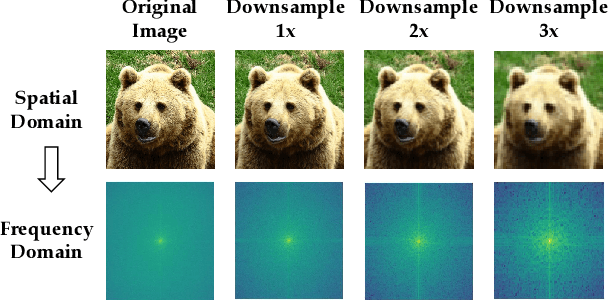
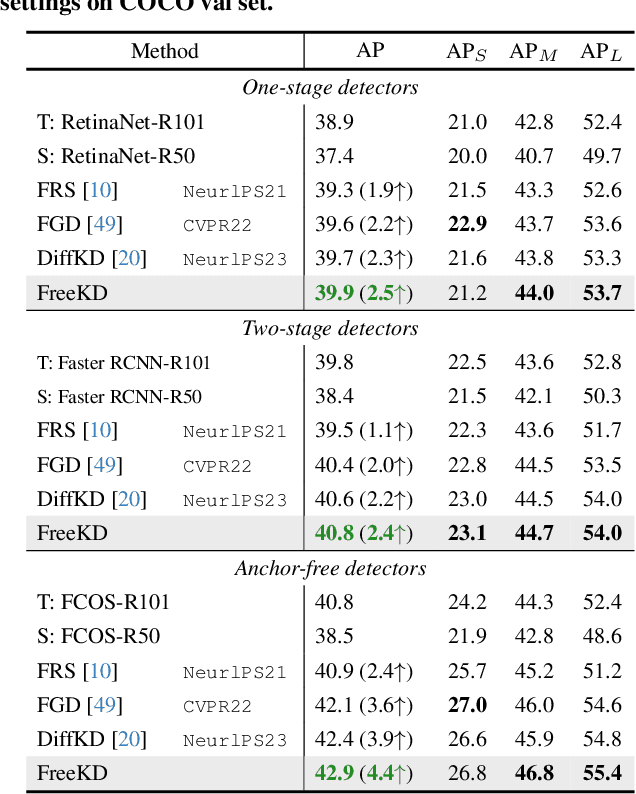
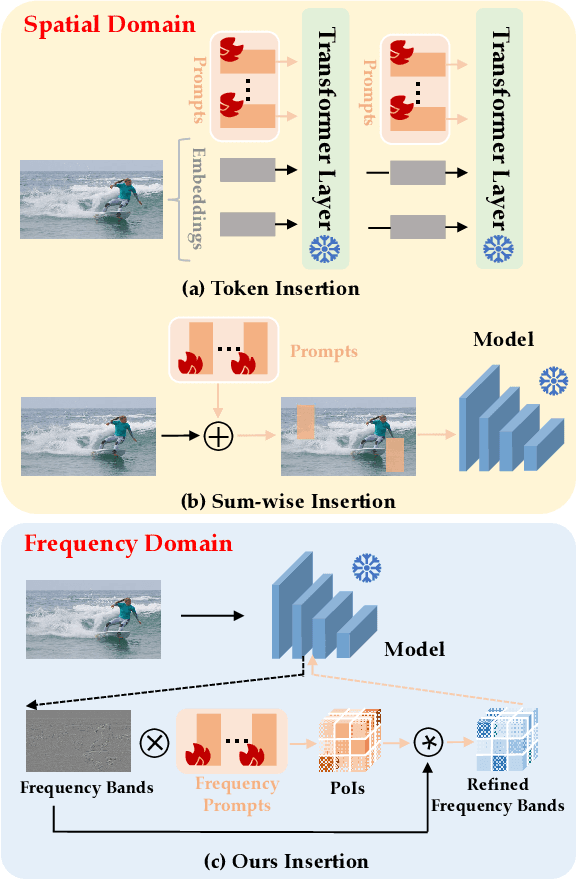
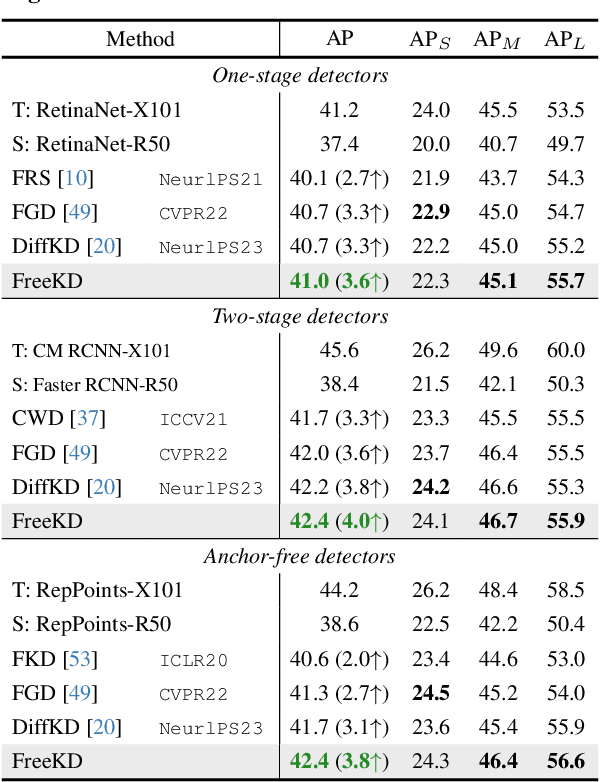
Knowledge distillation (KD) has been applied to various tasks successfully, and mainstream methods typically boost the student model via spatial imitation losses. However, the consecutive downsamplings induced in the spatial domain of teacher model is a type of corruption, hindering the student from analyzing what specific information needs to be imitated, which results in accuracy degradation. To better understand the underlying pattern of corrupted feature maps, we shift our attention to the frequency domain. During frequency distillation, we encounter a new challenge: the low-frequency bands convey general but minimal context, while the high are more informative but also introduce noise. Not each pixel within the frequency bands contributes equally to the performance. To address the above problem: (1) We propose the Frequency Prompt plugged into the teacher model, absorbing the semantic frequency context during finetuning. (2) During the distillation period, a pixel-wise frequency mask is generated via Frequency Prompt, to localize those pixel of interests (PoIs) in various frequency bands. Additionally, we employ a position-aware relational frequency loss for dense prediction tasks, delivering a high-order spatial enhancement to the student model. We dub our Frequency Knowledge Distillation method as FreeKD, which determines the optimal localization and extent for the frequency distillation. Extensive experiments demonstrate that FreeKD not only outperforms spatial-based distillation methods consistently on dense prediction tasks (e.g., FreeKD brings 3.8 AP gains for RepPoints-R50 on COCO2017 and 4.55 mIoU gains for PSPNet-R18 on Cityscapes), but also conveys more robustness to the student. Notably, we also validate the generalization of our approach on large-scale vision models (e.g., DINO and SAM).
Practical Membership Inference Attacks against Fine-tuned Large Language Models via Self-prompt Calibration
Nov 10, 2023Membership Inference Attacks (MIA) aim to infer whether a target data record has been utilized for model training or not. Prior attempts have quantified the privacy risks of language models (LMs) via MIAs, but there is still no consensus on whether existing MIA algorithms can cause remarkable privacy leakage on practical Large Language Models (LLMs). Existing MIAs designed for LMs can be classified into two categories: reference-free and reference-based attacks. They are both based on the hypothesis that training records consistently strike a higher probability of being sampled. Nevertheless, this hypothesis heavily relies on the overfitting of target models, which will be mitigated by multiple regularization methods and the generalization of LLMs. The reference-based attack seems to achieve promising effectiveness in LLMs, which measures a more reliable membership signal by comparing the probability discrepancy between the target model and the reference model. However, the performance of reference-based attack is highly dependent on a reference dataset that closely resembles the training dataset, which is usually inaccessible in the practical scenario. Overall, existing MIAs are unable to effectively unveil privacy leakage over practical fine-tuned LLMs that are overfitting-free and private. We propose a Membership Inference Attack based on Self-calibrated Probabilistic Variation (SPV-MIA). Specifically, since memorization in LLMs is inevitable during the training process and occurs before overfitting, we introduce a more reliable membership signal, probabilistic variation, which is based on memorization rather than overfitting. Furthermore, we introduce a self-prompt approach, which constructs the dataset to fine-tune the reference model by prompting the target LLM itself. In this manner, the adversary can collect a dataset with a similar distribution from public APIs.
How to Extend 3D GBSM to Integrated Sensing and Communication Channel with Sharing Feature?
Oct 25, 2023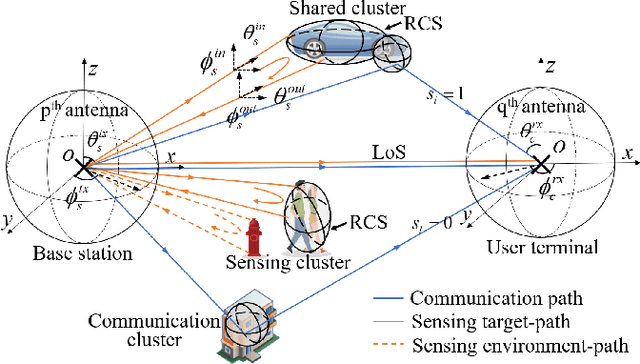
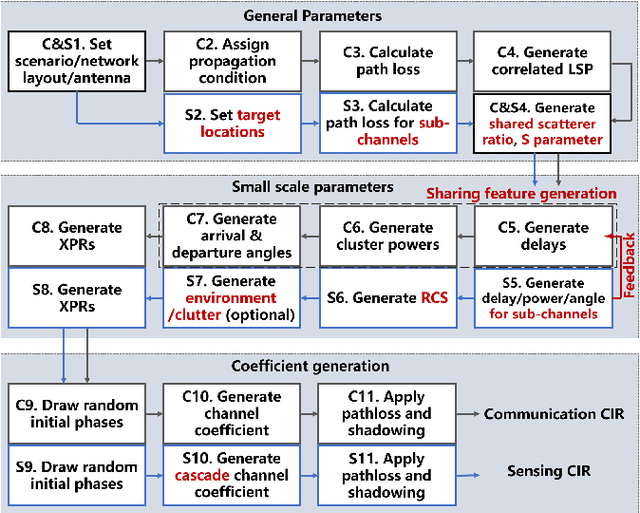
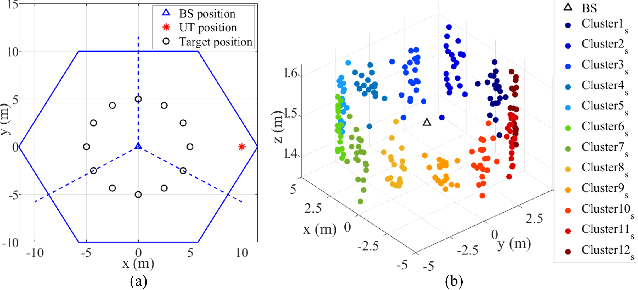
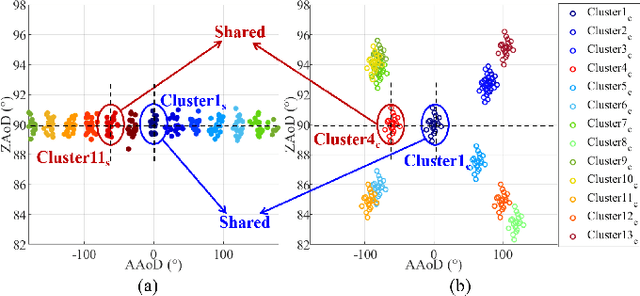
Integrated Sensing and Communication (ISAC) is a promising technology in 6G systems. The existing 3D Geometry-Based Stochastic Model (GBSM), as standardized for 5G systems, addresses solely communication channels and lacks consideration of the integration with sensing channel. Therefore, this letter extends 3D GBSM to support ISAC research, with a particular focus on capturing the sharing feature of both channels, including shared scatterers, clusters, paths, and similar propagation param-eters, which have been experimentally verified in the literature. The proposed approach can be summarized as follows: Firstly, an ISAC channel model is proposed, where shared and non-shared components are superimposed for both communication and sensing. Secondly, sensing channel is characterized as a cascade of TX-target, radar cross section, and target-RX, with the introduction of a novel parameter S for shared target extraction. Finally, an ISAC channel implementation framework is proposed, allowing flexible configuration of sharing feature and the joint generation of communication and sensing channels. The proposed ISAC channel model can be compatible with the 3GPP standards and offers promising support for ISAC technology evaluation.
Active Sensing for Localization with Reconfigurable Intelligent Surface
Oct 19, 2023This paper addresses an uplink localization problem in which the base station (BS) aims to locate a remote user with the aid of reconfigurable intelligent surface (RIS). This paper proposes a strategy in which the user transmits pilots over multiple time frames, and the BS adaptively adjusts the RIS reflection coefficients based on the observations already received so far in order to produce an accurate estimate of the user location at the end. This is a challenging active sensing problem for which finding an optimal solution involves a search through a complicated functional space whose dimension increases with the number of measurements. In this paper, we show that the long short-term memory (LSTM) network can be used to exploit the latent temporal correlation between measurements to automatically construct scalable information vectors (called hidden state) based on the measurements. Subsequently, the state vector can be mapped to the RIS configuration for the next time frame in a codebook-free fashion via a deep neural network (DNN). After all the measurements have been received, a final DNN can be used to map the LSTM cell state to the estimated user equipment (UE) position. Numerical result shows that the proposed active RIS design results in lower localization error as compared to existing active and nonactive methods. The proposed solution produces interpretable results and is generalizable to early stopping in the sequence of sensing stages.