 Add to Chrome
 Add to Firefox
 Add to Edge
Revisiting Zeroth-Order Optimization for Memory-Efficient LLM Fine-Tuning: A Benchmark
Feb 26, 2024


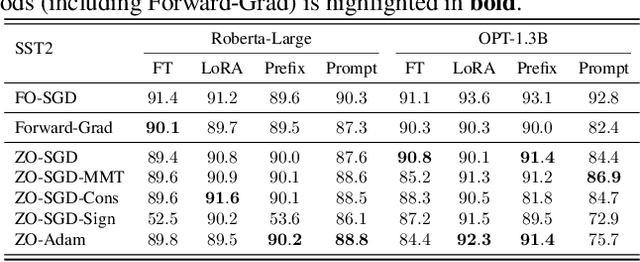
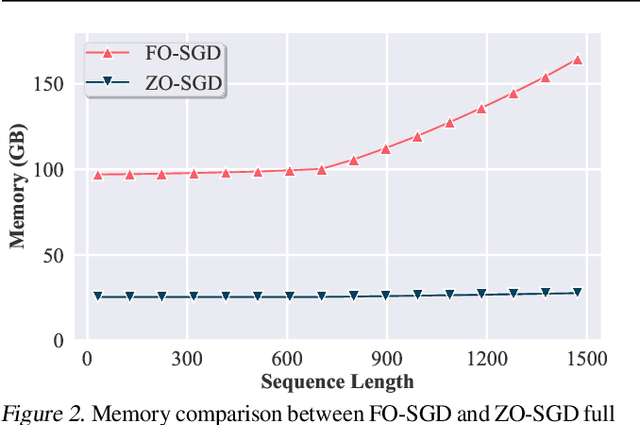
In the evolving landscape of natural language processing (NLP), fine-tuning pre-trained Large Language Models (LLMs) with first-order (FO) optimizers like SGD and Adam has become standard. Yet, as LLMs grow {in size}, the substantial memory overhead from back-propagation (BP) for FO gradient computation presents a significant challenge. Addressing this issue is crucial, especially for applications like on-device training where memory efficiency is paramount. This paper proposes a shift towards BP-free, zeroth-order (ZO) optimization as a solution for reducing memory costs during LLM fine-tuning, building on the initial concept introduced by MeZO. Unlike traditional ZO-SGD methods, our work expands the exploration to a wider array of ZO optimization techniques, through a comprehensive, first-of-its-kind benchmarking study across five LLM families (Roberta, OPT, LLaMA, Vicuna, Mistral), three task complexities, and five fine-tuning schemes. Our study unveils previously overlooked optimization principles, highlighting the importance of task alignment, the role of the forward gradient method, and the balance between algorithm complexity and fine-tuning performance. We further introduce novel enhancements to ZO optimization, including block-wise descent, hybrid training, and gradient sparsity. Our study offers a promising direction for achieving further memory-efficient LLM fine-tuning. Codes to reproduce all our experiments are at https://github.com/ZO-Bench/ZO-LLM .

Rethinking Machine Unlearning for Large Language Models
Feb 15, 2024We explore machine unlearning (MU) in the domain of large language models (LLMs), referred to as LLM unlearning. This initiative aims to eliminate undesirable data influence (e.g., sensitive or illegal information) and the associated model capabilities, while maintaining the integrity of essential knowledge generation and not affecting causally unrelated information. We envision LLM unlearning becoming a pivotal element in the life-cycle management of LLMs, potentially standing as an essential foundation for developing generative AI that is not only safe, secure, and trustworthy, but also resource-efficient without the need of full retraining. We navigate the unlearning landscape in LLMs from conceptual formulation, methodologies, metrics, and applications. In particular, we highlight the often-overlooked aspects of existing LLM unlearning research, e.g., unlearning scope, data-model interaction, and multifaceted efficacy assessment. We also draw connections between LLM unlearning and related areas such as model editing, influence functions, model explanation, adversarial training, and reinforcement learning. Furthermore, we outline an effective assessment framework for LLM unlearning and explore its applications in copyright and privacy safeguards and sociotechnical harm reduction.
Robust MRI Reconstruction by Smoothed Unrolling (SMUG)
Dec 12, 2023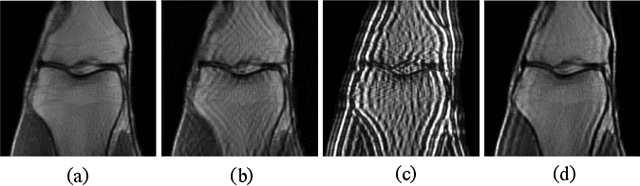
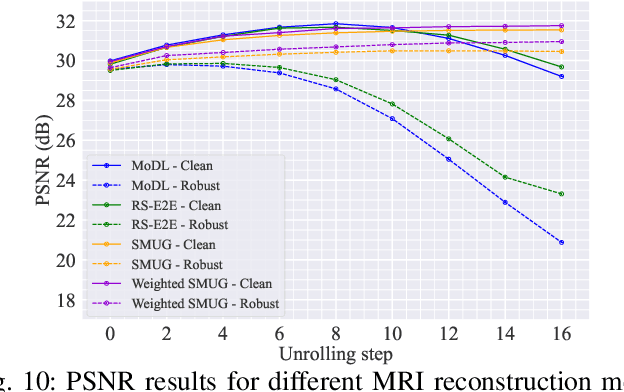
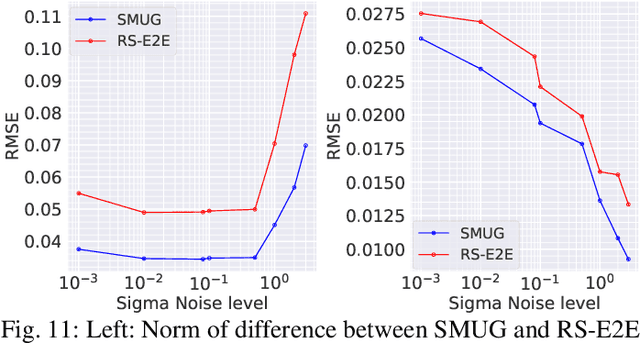
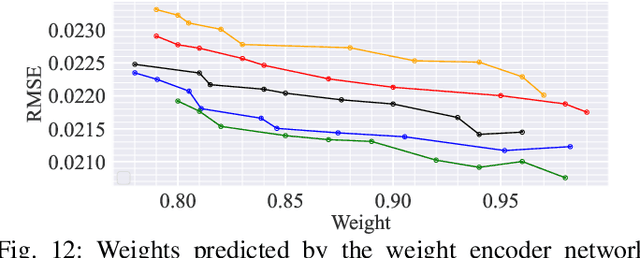
As the popularity of deep learning (DL) in the field of magnetic resonance imaging (MRI) continues to rise, recent research has indicated that DL-based MRI reconstruction models might be excessively sensitive to minor input disturbances, including worst-case additive perturbations. This sensitivity often leads to unstable, aliased images. This raises the question of how to devise DL techniques for MRI reconstruction that can be robust to train-test variations. To address this problem, we propose a novel image reconstruction framework, termed Smoothed Unrolling (SMUG), which advances a deep unrolling-based MRI reconstruction model using a randomized smoothing (RS)-based robust learning approach. RS, which improves the tolerance of a model against input noises, has been widely used in the design of adversarial defense approaches for image classification tasks. Yet, we find that the conventional design that applies RS to the entire DL-based MRI model is ineffective. In this paper, we show that SMUG and its variants address the above issue by customizing the RS process based on the unrolling architecture of a DL-based MRI reconstruction model. Compared to the vanilla RS approach, we show that SMUG improves the robustness of MRI reconstruction with respect to a diverse set of instability sources, including worst-case and random noise perturbations to input measurements, varying measurement sampling rates, and different numbers of unrolling steps. Furthermore, we theoretically analyze the robustness of our method in the presence of perturbations.
Visual Prompting Upgrades Neural Network Sparsification: A Data-Model Perspective
Dec 03, 2023


The rapid development of large-scale deep learning models questions the affordability of hardware platforms, which necessitates the pruning to reduce their computational and memory footprints. Sparse neural networks as the product, have demonstrated numerous favorable benefits like low complexity, undamaged generalization, etc. Most of the prominent pruning strategies are invented from a model-centric perspective, focusing on searching and preserving crucial weights by analyzing network topologies. However, the role of data and its interplay with model-centric pruning has remained relatively unexplored. In this research, we introduce a novel data-model co-design perspective: to promote superior weight sparsity by learning important model topology and adequate input data in a synergetic manner. Specifically, customized Visual Prompts are mounted to upgrade neural Network sparsification in our proposed VPNs framework. As a pioneering effort, this paper conducts systematic investigations about the impact of different visual prompts on model pruning and suggests an effective joint optimization approach. Extensive experiments with 3 network architectures and 8 datasets evidence the substantial performance improvements from VPNs over existing start-of-the-art pruning algorithms. Furthermore, we find that subnetworks discovered by VPNs from pre-trained models enjoy better transferability across diverse downstream scenarios. These insights shed light on new promising possibilities of data-model co-designs for vision model sparsification.
Tracing Hyperparameter Dependencies for Model Parsing via Learnable Graph Pooling Network
Dec 03, 2023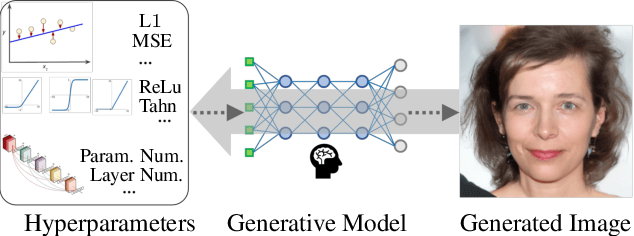

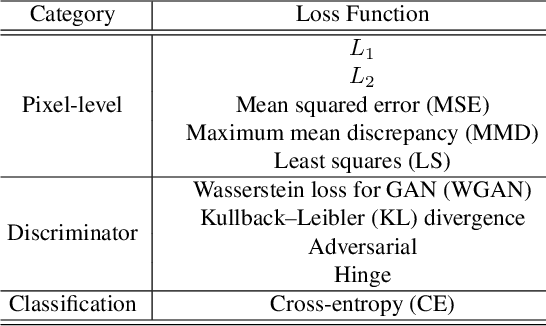
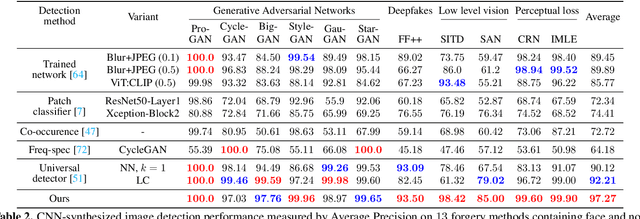
Model Parsing defines the research task of predicting hyperparameters of the generative model (GM), given a generated image as input. Since a diverse set of hyperparameters is jointly employed by the generative model, and dependencies often exist among them, it is crucial to learn these hyperparameter dependencies for the improved model parsing performance. To explore such important dependencies, we propose a novel model parsing method called Learnable Graph Pooling Network (LGPN). Specifically, we transform model parsing into a graph node classification task, using graph nodes and edges to represent hyperparameters and their dependencies, respectively. Furthermore, LGPN incorporates a learnable pooling-unpooling mechanism tailored to model parsing, which adaptively learns hyperparameter dependencies of GMs used to generate the input image. We also extend our proposed method to CNN-generated image detection and coordinate attacks detection. Empirically, we achieve state-of-the-art results in model parsing and its extended applications, showing the effectiveness of our method. Our source code are available.
More Samples or More Prompt Inputs? Exploring Effective In-Context Sampling for LLM Few-Shot Prompt Engineering
Nov 16, 2023


While most existing works on LLM prompt-engineering focus only on how to select a better set of data samples inside one single prompt input (In-Context Learning or ICL), why can't we design and leverage multiple prompt inputs together to further improve the LLM performance? In this work, we propose In-Context Sampling (ICS), a low-resource LLM prompt-engineering technique to produce the most confident prediction results by optimizing the construction of multiple ICL prompt inputs. Extensive experiments with two SOTA LLMs (FlanT5-XL and Mistral-7B) on three NLI datasets (e-SNLI, Multi-NLI, and ANLI) illustrate that ICS can consistently enhance LLM's prediction performance and confidence. An ablation study suggests that a diversity-based ICS strategy may further improve LLM's performance, which sheds light on a new yet promising future research direction.
From Trojan Horses to Castle Walls: Unveiling Bilateral Backdoor Effects in Diffusion Models
Nov 04, 2023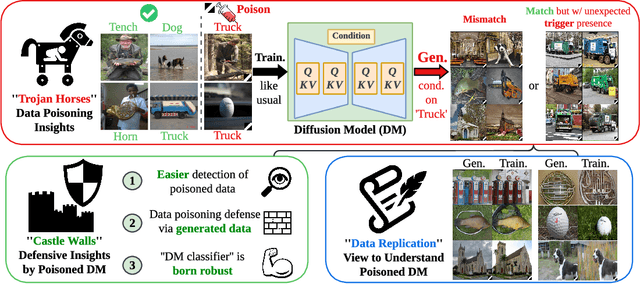
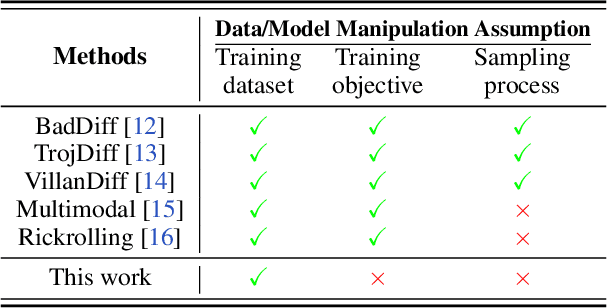
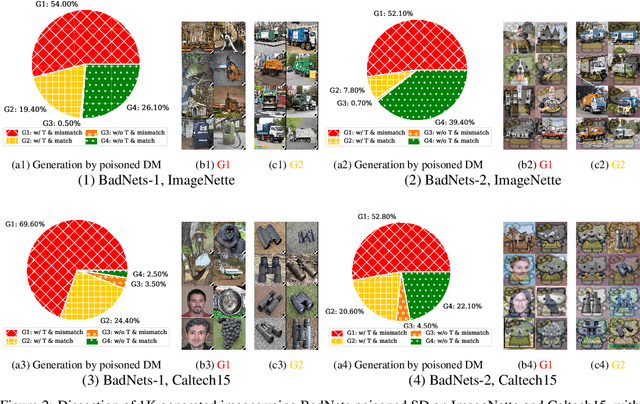
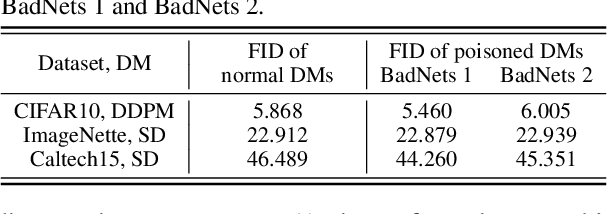
While state-of-the-art diffusion models (DMs) excel in image generation, concerns regarding their security persist. Earlier research highlighted DMs' vulnerability to backdoor attacks, but these studies placed stricter requirements than conventional methods like 'BadNets' in image classification. This is because the former necessitates modifications to the diffusion sampling and training procedures. Unlike the prior work, we investigate whether generating backdoor attacks in DMs can be as simple as BadNets, i.e., by only contaminating the training dataset without tampering the original diffusion process. In this more realistic backdoor setting, we uncover bilateral backdoor effects that not only serve an adversarial purpose (compromising the functionality of DMs) but also offer a defensive advantage (which can be leveraged for backdoor defense). Specifically, we find that a BadNets-like backdoor attack remains effective in DMs for producing incorrect images (misaligned with the intended text conditions), and thereby yielding incorrect predictions when DMs are used as classifiers. Meanwhile, backdoored DMs exhibit an increased ratio of backdoor triggers, a phenomenon we refer to as `trigger amplification', among the generated images. We show that this latter insight can be used to enhance the detection of backdoor-poisoned training data. Even under a low backdoor poisoning ratio, studying the backdoor effects of DMs is also valuable for designing anti-backdoor image classifiers. Last but not least, we establish a meaningful linkage between backdoor attacks and the phenomenon of data replications by exploring DMs' inherent data memorization tendencies. The codes of our work are available at https://github.com/OPTML-Group/BiBadDiff.
On the Convergence and Sample Complexity Analysis of Deep Q-Networks with $ε$-Greedy Exploration
Oct 24, 2023This paper provides a theoretical understanding of Deep Q-Network (DQN) with the $\varepsilon$-greedy exploration in deep reinforcement learning. Despite the tremendous empirical achievement of the DQN, its theoretical characterization remains underexplored. First, the exploration strategy is either impractical or ignored in the existing analysis. Second, in contrast to conventional Q-learning algorithms, the DQN employs the target network and experience replay to acquire an unbiased estimation of the mean-square Bellman error (MSBE) utilized in training the Q-network. However, the existing theoretical analysis of DQNs lacks convergence analysis or bypasses the technical challenges by deploying a significantly overparameterized neural network, which is not computationally efficient. This paper provides the first theoretical convergence and sample complexity analysis of the practical setting of DQNs with $\epsilon$-greedy policy. We prove an iterative procedure with decaying $\epsilon$ converges to the optimal Q-value function geometrically. Moreover, a higher level of $\epsilon$ values enlarges the region of convergence but slows down the convergence, while the opposite holds for a lower level of $\epsilon$ values. Experiments justify our established theoretical insights on DQNs.
SalUn: Empowering Machine Unlearning via Gradient-based Weight Saliency in Both Image Classification and Generation
Oct 19, 2023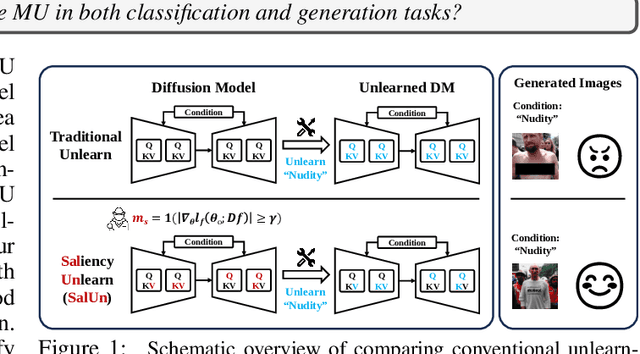
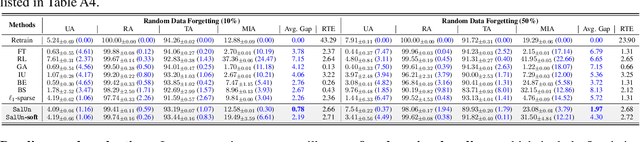
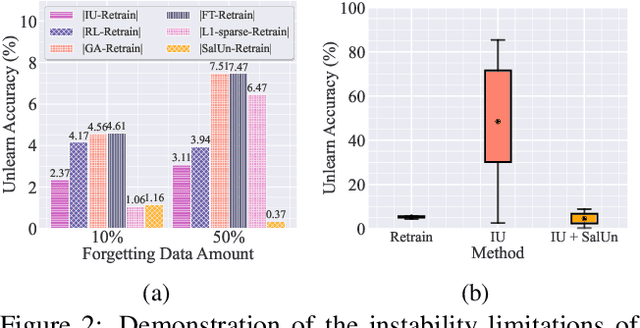
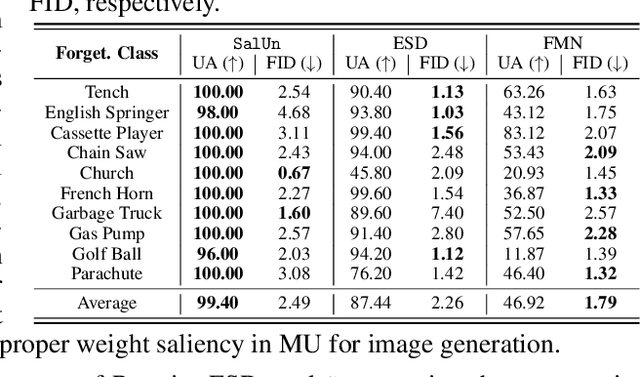
With evolving data regulations, machine unlearning (MU) has become an important tool for fostering trust and safety in today's AI models. However, existing MU methods focusing on data and/or weight perspectives often grapple with limitations in unlearning accuracy, stability, and cross-domain applicability. To address these challenges, we introduce the concept of 'weight saliency' in MU, drawing parallels with input saliency in model explanation. This innovation directs MU's attention toward specific model weights rather than the entire model, improving effectiveness and efficiency. The resultant method that we call saliency unlearning (SalUn) narrows the performance gap with 'exact' unlearning (model retraining from scratch after removing the forgetting dataset). To the best of our knowledge, SalUn is the first principled MU approach adaptable enough to effectively erase the influence of forgetting data, classes, or concepts in both image classification and generation. For example, SalUn yields a stability advantage in high-variance random data forgetting, e.g., with a 0.2% gap compared to exact unlearning on the CIFAR-10 dataset. Moreover, in preventing conditional diffusion models from generating harmful images, SalUn achieves nearly 100% unlearning accuracy, outperforming current state-of-the-art baselines like Erased Stable Diffusion and Forget-Me-Not.
To Generate or Not? Safety-Driven Unlearned Diffusion Models Are Still Easy To Generate Unsafe Images For Now
Oct 18, 2023The recent advances in diffusion models (DMs) have revolutionized the generation of complex and diverse images. However, these models also introduce potential safety hazards, such as the production of harmful content and infringement of data copyrights. Although there have been efforts to create safety-driven unlearning methods to counteract these challenges, doubts remain about their capabilities. To bridge this uncertainty, we propose an evaluation framework built upon adversarial attacks (also referred to as adversarial prompts), in order to discern the trustworthiness of these safety-driven unlearned DMs. Specifically, our research explores the (worst-case) robustness of unlearned DMs in eradicating unwanted concepts, styles, and objects, assessed by the generation of adversarial prompts. We develop a novel adversarial learning approach called UnlearnDiff that leverages the inherent classification capabilities of DMs to streamline the generation of adversarial prompts, making it as simple for DMs as it is for image classification attacks. This technique streamlines the creation of adversarial prompts, making the process as intuitive for generative modeling as it is for image classification assaults. Through comprehensive benchmarking, we assess the unlearning robustness of five prevalent unlearned DMs across multiple tasks. Our results underscore the effectiveness and efficiency of UnlearnDiff when compared to state-of-the-art adversarial prompting methods. Codes are available at https://github.com/OPTML-Group/Diffusion-MU-Attack. WARNING: This paper contains model outputs that may be offensive in nature.