 Add to Chrome
 Add to Firefox
 Add to Edge
Behavior Tokens Speak Louder: Disentangled Explainable Recommendation with Behavior Vocabulary
Dec 17, 2025
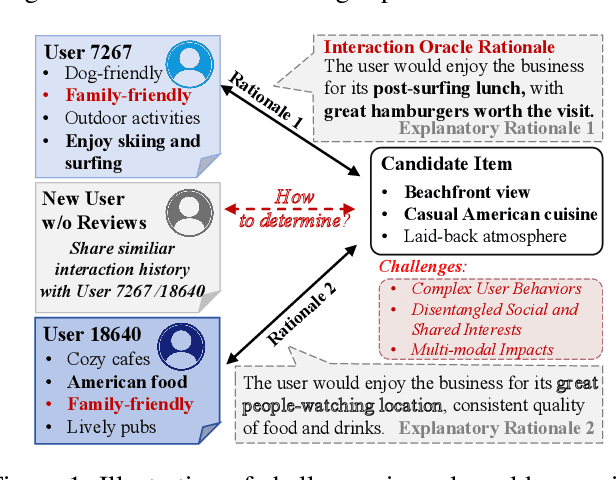
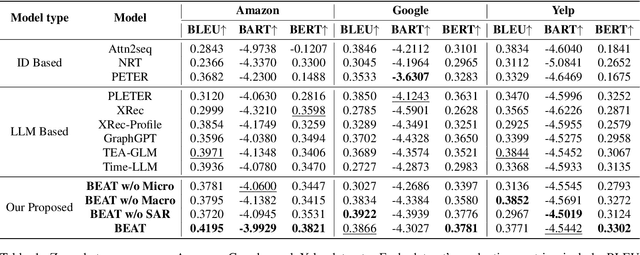
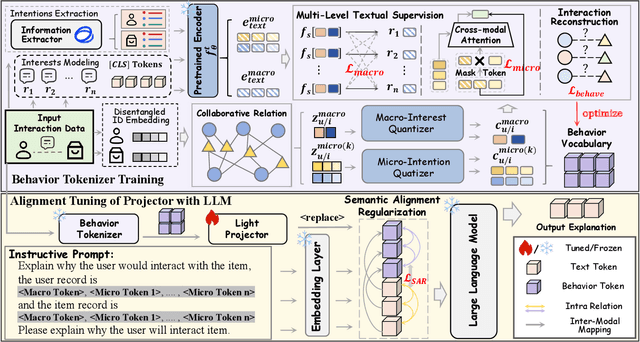
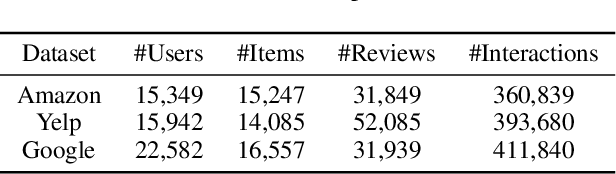
Recent advances in explainable recommendations have explored the integration of language models to analyze natural language rationales for user-item interactions. Despite their potential, existing methods often rely on ID-based representations that obscure semantic meaning and impose structural constraints on language models, thereby limiting their applicability in open-ended scenarios. These challenges are intensified by the complex nature of real-world interactions, where diverse user intents are entangled and collaborative signals rarely align with linguistic semantics. To overcome these limitations, we propose BEAT, a unified and transferable framework that tokenizes user and item behaviors into discrete, interpretable sequences. We construct a behavior vocabulary via a vector-quantized autoencoding process that disentangles macro-level interests and micro-level intentions from graph-based representations. We then introduce multi-level semantic supervision to bridge the gap between behavioral signals and language space. A semantic alignment regularization mechanism is designed to embed behavior tokens directly into the input space of frozen language models. Experiments on three public datasets show that BEAT improves zero-shot recommendation performance while generating coherent and informative explanations. Further analysis demonstrates that our behavior tokens capture fine-grained semantics and offer a plug-and-play interface for integrating complex behavior patterns into large language models.

Diffusion Language Model Inference with Monte Carlo Tree Search
Dec 13, 2025Diffusion language models (DLMs) have recently emerged as a compelling alternative to autoregressive generation, offering parallel generation and improved global coherence. During inference, DLMs generate text by iteratively denoising masked sequences in parallel; however, determining which positions to unmask and which tokens to commit forms a large combinatorial search problem. Existing inference methods approximate this search using heuristics, which often yield suboptimal decoding paths; other approaches instead rely on additional training to guide token selection. To introduce a principled search mechanism for DLMs inference, we introduce MEDAL, a framework that integrates Monte Carlo Tree SEarch initialization for Diffusion LAnguage Model inference. We employ Monte Carlo Tree Search at the initialization stage to explore promising unmasking trajectories, providing a robust starting point for subsequent refinement. This integration is enabled by restricting the search space to high-confidence actions and prioritizing token choices that improve model confidence over remaining masked positions. Across multiple benchmarks, MEDAL achieves up to 22.0% improvement over existing inference strategies, establishing a new paradigm for search-based inference in diffusion language models.
Exploring Spatial-Temporal Representation via Star Graph for mmWave Radar-based Human Activity Recognition
Dec 12, 2025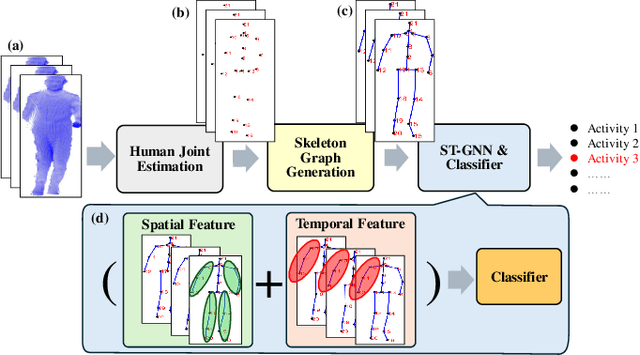
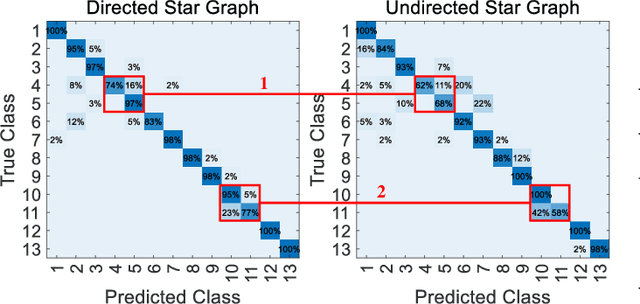
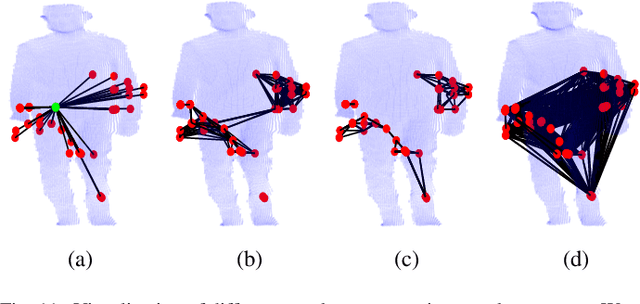
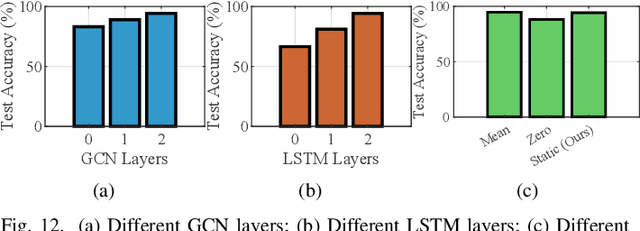
Human activity recognition (HAR) requires extracting accurate spatial-temporal features with human movements. A mmWave radar point cloud-based HAR system suffers from sparsity and variable-size problems due to the physical features of the mmWave signal. Existing works usually borrow the preprocessing algorithms for the vision-based systems with dense point clouds, which may not be optimal for mmWave radar systems. In this work, we proposed a graph representation with a discrete dynamic graph neural network (DDGNN) to explore the spatial-temporal representation of human movement-related features. Specifically, we designed a star graph to describe the high-dimensional relative relationship between a manually added static center point and the dynamic mmWave radar points in the same and consecutive frames. We then adopted DDGNN to learn the features residing in the star graph with variable sizes. Experimental results demonstrated that our approach outperformed other baseline methods using real-world HAR datasets. Our system achieved an overall classification accuracy of 94.27\%, which gets the near-optimal performance with a vision-based skeleton data accuracy of 97.25\%. We also conducted an inference test on Raspberry Pi~4 to demonstrate its effectiveness on resource-constraint platforms. \sh{ We provided a comprehensive ablation study for variable DDGNN structures to validate our model design. Our system also outperformed three recent radar-specific methods without requiring resampling or frame aggregators.
Taxonomy, Evaluation and Exploitation of IPI-Centric LLM Agent Defense Frameworks
Nov 19, 2025Large Language Model (LLM)-based agents with function-calling capabilities are increasingly deployed, but remain vulnerable to Indirect Prompt Injection (IPI) attacks that hijack their tool calls. In response, numerous IPI-centric defense frameworks have emerged. However, these defenses are fragmented, lacking a unified taxonomy and comprehensive evaluation. In this Systematization of Knowledge (SoK), we present the first comprehensive analysis of IPI-centric defense frameworks. We introduce a comprehensive taxonomy of these defenses, classifying them along five dimensions. We then thoroughly assess the security and usability of representative defense frameworks. Through analysis of defensive failures in the assessment, we identify six root causes of defense circumvention. Based on these findings, we design three novel adaptive attacks that significantly improve attack success rates targeting specific frameworks, demonstrating the severity of the flaws in these defenses. Our paper provides a foundation and critical insights for the future development of more secure and usable IPI-centric agent defense frameworks.
Learning Representation and Synergy Invariances: A Povable Framework for Generalized Multimodal Face Anti-Spoofing
Nov 18, 2025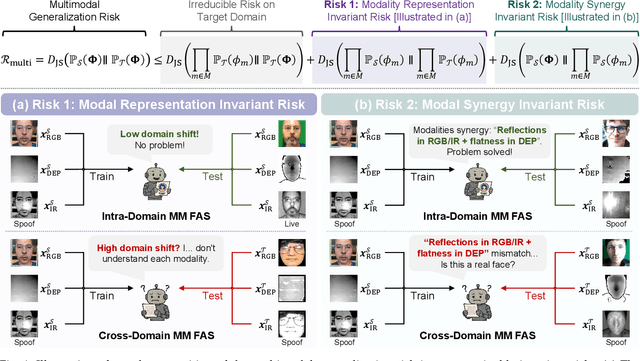
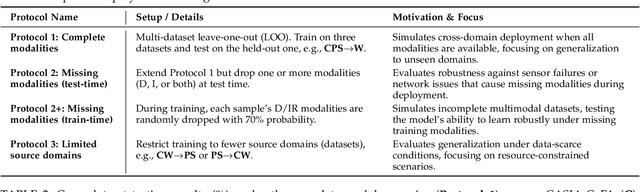
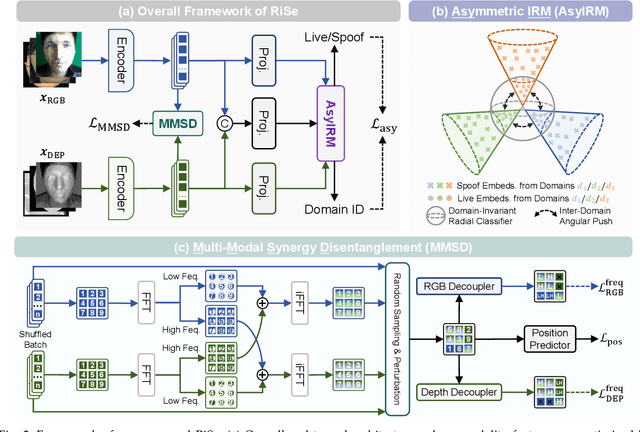
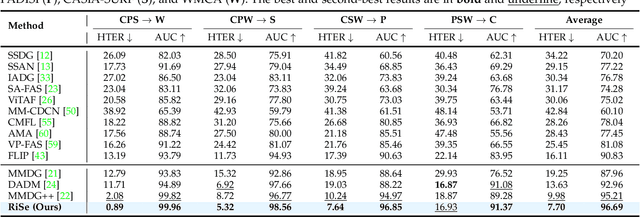
Multimodal Face Anti-Spoofing (FAS) methods, which integrate multiple visual modalities, often suffer even more severe performance degradation than unimodal FAS when deployed in unseen domains. This is mainly due to two overlooked risks that affect cross-domain multimodal generalization. The first is the modal representation invariant risk, i.e., whether representations remain generalizable under domain shift. We theoretically show that the inherent class asymmetry in FAS (diverse spoofs vs. compact reals) enlarges the upper bound of generalization error, and this effect is further amplified in multimodal settings. The second is the modal synergy invariant risk, where models overfit to domain-specific inter-modal correlations. Such spurious synergy cannot generalize to unseen attacks in target domains, leading to performance drops. To solve these issues, we propose a provable framework, namely Multimodal Representation and Synergy Invariance Learning (RiSe). For representation risk, RiSe introduces Asymmetric Invariant Risk Minimization (AsyIRM), which learns an invariant spherical decision boundary in radial space to fit asymmetric distributions, while preserving domain cues in angular space. For synergy risk, RiSe employs Multimodal Synergy Disentanglement (MMSD), a self-supervised task enhancing intrinsic, generalizable modal features via cross-sample mixing and disentanglement. Theoretical analysis and experiments verify RiSe, which achieves state-of-the-art cross-domain performance.
BSO: Binary Spiking Online Optimization Algorithm
Nov 16, 2025Binary Spiking Neural Networks (BSNNs) offer promising efficiency advantages for resource-constrained computing. However, their training algorithms often require substantial memory overhead due to latent weights storage and temporal processing requirements. To address this issue, we propose Binary Spiking Online (BSO) optimization algorithm, a novel online training algorithm that significantly reduces training memory. BSO directly updates weights through flip signals under the online training framework. These signals are triggered when the product of gradient momentum and weights exceeds a threshold, eliminating the need for latent weights during training. To enhance performance, we propose T-BSO, a temporal-aware variant that leverages the inherent temporal dynamics of BSNNs by capturing gradient information across time steps for adaptive threshold adjustment. Theoretical analysis establishes convergence guarantees for both BSO and T-BSO, with formal regret bounds characterizing their convergence rates. Extensive experiments demonstrate that both BSO and T-BSO achieve superior optimization performance compared to existing training methods for BSNNs. The codes are available at https://github.com/hamings1/BSO.
Scaling Law Analysis in Federated Learning: How to Select the Optimal Model Size?
Nov 15, 2025The recent success of large language models (LLMs) has sparked a growing interest in training large-scale models. As the model size continues to scale, concerns are growing about the depletion of high-quality, well-curated training data. This has led practitioners to explore training approaches like Federated Learning (FL), which can leverage the abundant data on edge devices while maintaining privacy. However, the decentralization of training datasets in FL introduces challenges to scaling large models, a topic that remains under-explored. This paper fills this gap and provides qualitative insights on generalizing the previous model scaling experience to federated learning scenarios. Specifically, we derive a PAC-Bayes (Probably Approximately Correct Bayesian) upper bound for the generalization error of models trained with stochastic algorithms in federated settings and quantify the impact of distributed training data on the optimal model size by finding the analytic solution of model size that minimizes this bound. Our theoretical results demonstrate that the optimal model size has a negative power law relationship with the number of clients if the total training compute is unchanged. Besides, we also find that switching to FL with the same training compute will inevitably reduce the upper bound of generalization performance that the model can achieve through training, and that estimating the optimal model size in federated scenarios should depend on the average training compute across clients. Furthermore, we also empirically validate the correctness of our results with extensive training runs on different models, network settings, and datasets.
Time-Layer Adaptive Alignment for Speaker Similarity in Flow-Matching Based Zero-Shot TTS
Nov 13, 2025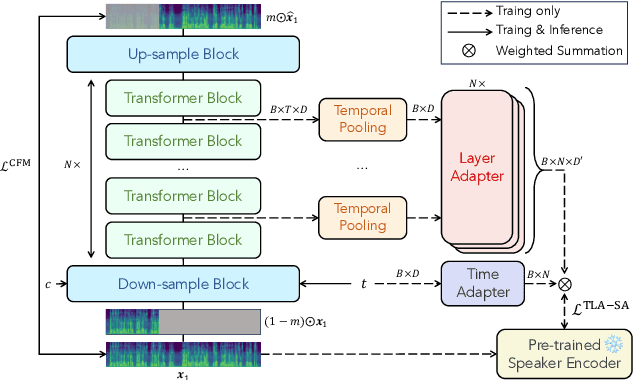

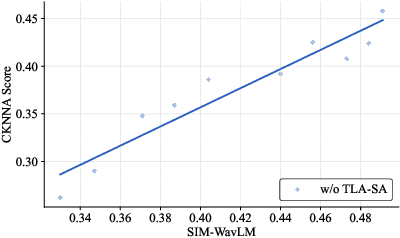
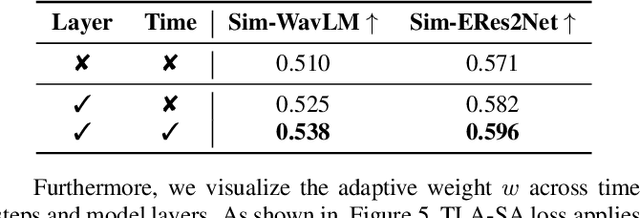
Flow-Matching (FM)-based zero-shot text-to-speech (TTS) systems exhibit high-quality speech synthesis and robust generalization capabilities. However, the speaker representation ability of such systems remains underexplored, primarily due to the lack of explicit speaker-specific supervision in the FM framework. To this end, we conduct an empirical analysis of speaker information distribution and reveal its non-uniform allocation across time steps and network layers, underscoring the need for adaptive speaker alignment. Accordingly, we propose Time-Layer Adaptive Speaker Alignment (TLA-SA), a loss that enhances speaker consistency by jointly leveraging temporal and hierarchical variations in speaker information. Experimental results show that TLA-SA significantly improves speaker similarity compared to baseline systems on both research- and industrial-scale datasets and generalizes effectively across diverse model architectures, including decoder-only language models (LM) and FM-based TTS systems free of LM.
ELEGANCE: Efficient LLM Guidance for Audio-Visual Target Speech Extraction
Nov 09, 2025Audio-visual target speaker extraction (AV-TSE) models primarily rely on visual cues from the target speaker. However, humans also leverage linguistic knowledge, such as syntactic constraints, next word prediction, and prior knowledge of conversation, to extract target speech. Inspired by this observation, we propose ELEGANCE, a novel framework that incorporates linguistic knowledge from large language models (LLMs) into AV-TSE models through three distinct guidance strategies: output linguistic constraints, intermediate linguistic prediction, and input linguistic prior. Comprehensive experiments with RoBERTa, Qwen3-0.6B, and Qwen3-4B on two AV-TSE backbones demonstrate the effectiveness of our approach. Significant improvements are observed in challenging scenarios, including visual cue impaired, unseen languages, target speaker switches, increased interfering speakers, and out-of-domain test set. Demo page: https://alexwxwu.github.io/ELEGANCE/.
Planning Oriented Integrated Sensing and Communication
Oct 27, 2025Integrated sensing and communication (ISAC) enables simultaneous localization, environment perception, and data exchange for connected autonomous vehicles. However, most existing ISAC designs prioritize sensing accuracy and communication throughput, treating all targets uniformly and overlooking the impact of critical obstacles on motion efficiency. To overcome this limitation, we propose a planning-oriented ISAC (PISAC) framework that reduces the sensing uncertainty of planning-bottleneck obstacles and expands the safe navigable path for the ego-vehicle, thereby bridging the gap between physical-layer optimization and motion-level planning. The core of PISAC lies in deriving a closed-form safety bound that explicitly links ISAC transmit power to sensing uncertainty, based on the Cram\'er-Rao Bound and occupancy inflation principles. Using this model, we formulate a bilevel power allocation and motion planning (PAMP) problem, where the inner layer optimizes the ISAC beam power distribution and the outer layer computes a collision-free trajectory under uncertainty-aware safety constraints. Comprehensive simulations in high-fidelity urban driving environments demonstrate that PISAC achieves up to 40% higher success rates and over 5% shorter traversal times than existing ISAC-based and communication-oriented benchmarks, validating its effectiveness in enhancing both safety and efficiency.