 Add to Chrome
 Add to Firefox
 Add to Edge
Exploring Forgetting in Large Language Model Pre-Training
Oct 22, 2024
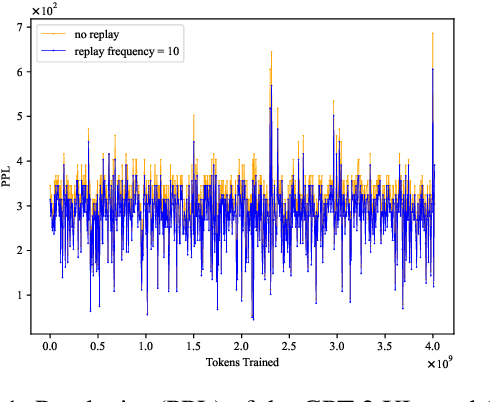
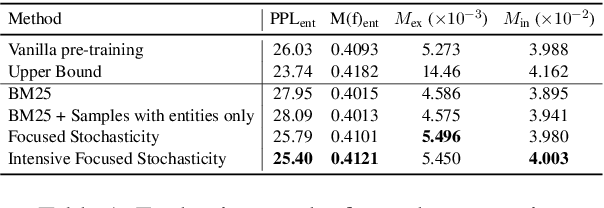
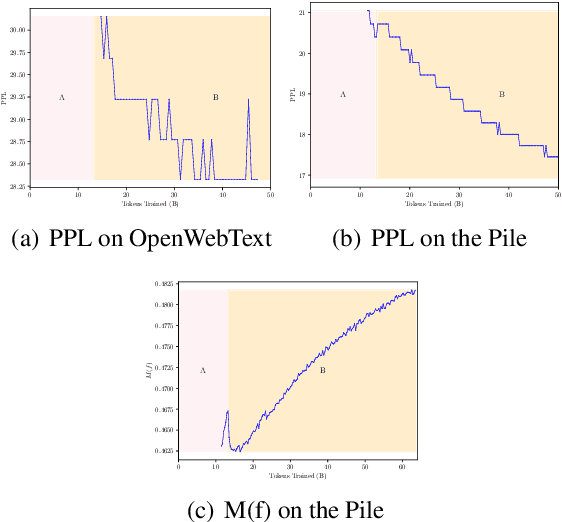
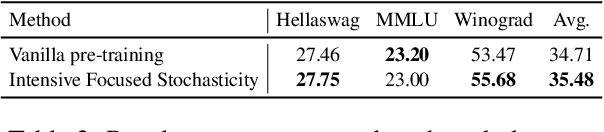
Catastrophic forgetting remains a formidable obstacle to building an omniscient model in large language models (LLMs). Despite the pioneering research on task-level forgetting in LLM fine-tuning, there is scant focus on forgetting during pre-training. We systematically explored the existence and measurement of forgetting in pre-training, questioning traditional metrics such as perplexity (PPL) and introducing new metrics to better detect entity memory retention. Based on our revised assessment of forgetting metrics, we explored low-cost, straightforward methods to mitigate forgetting during the pre-training phase. Further, we carefully analyzed the learning curves, offering insights into the dynamics of forgetting. Extensive evaluations and analyses on forgetting of pre-training could facilitate future research on LLMs.

Lossless KV Cache Compression to 2%
Oct 20, 2024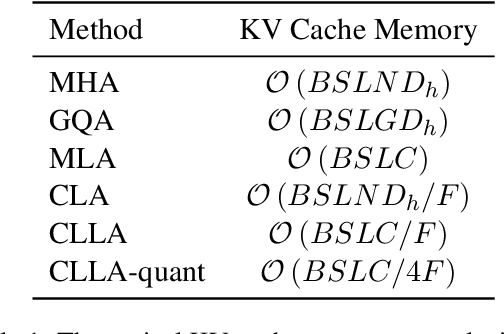
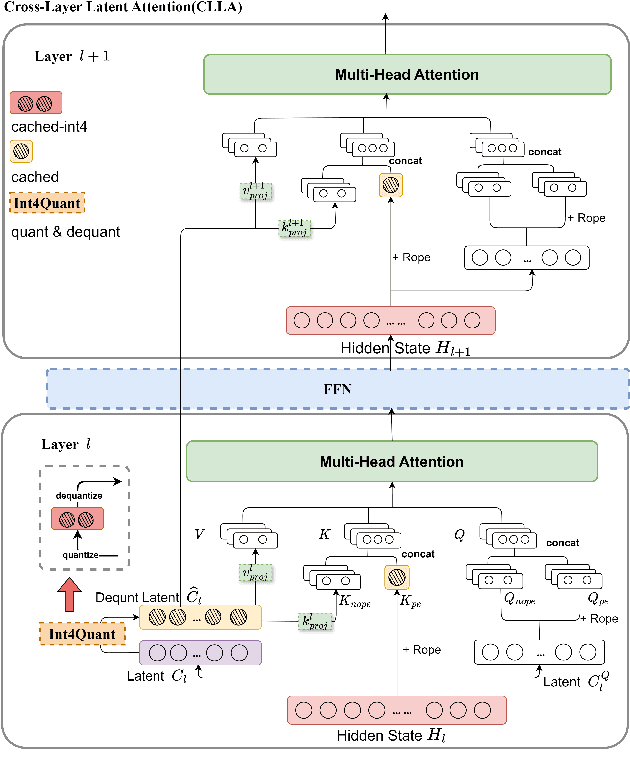
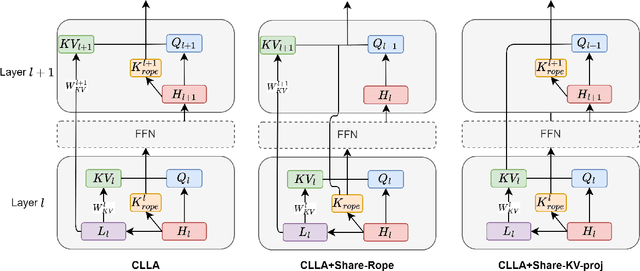
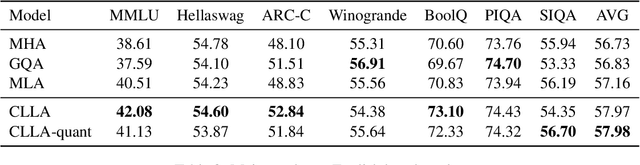
Large language models have revolutionized data processing in numerous domains, with their ability to handle extended context reasoning receiving notable recognition. To speed up inference, maintaining a key-value (KV) cache memory is essential. Nonetheless, the growing demands for KV cache memory create significant hurdles for efficient implementation. This work introduces a novel architecture, Cross-Layer Latent Attention (CLLA), aimed at compressing the KV cache to less than 2% of its original size while maintaining comparable performance levels. CLLA integrates multiple aspects of KV cache compression, including attention head/dimension reduction, layer sharing, and quantization techniques, into a cohesive framework. Our extensive experiments demonstrate that CLLA achieves lossless performance on most tasks while utilizing minimal KV cache, marking a significant advancement in practical KV cache compression.
RosePO: Aligning LLM-based Recommenders with Human Values
Oct 16, 2024
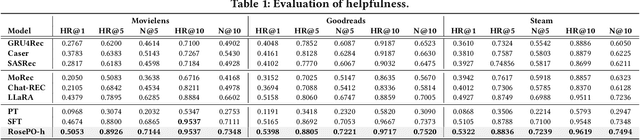
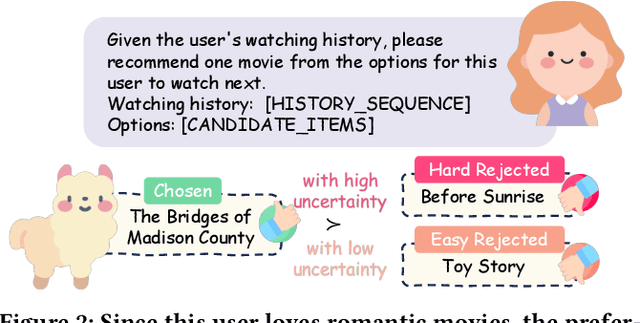
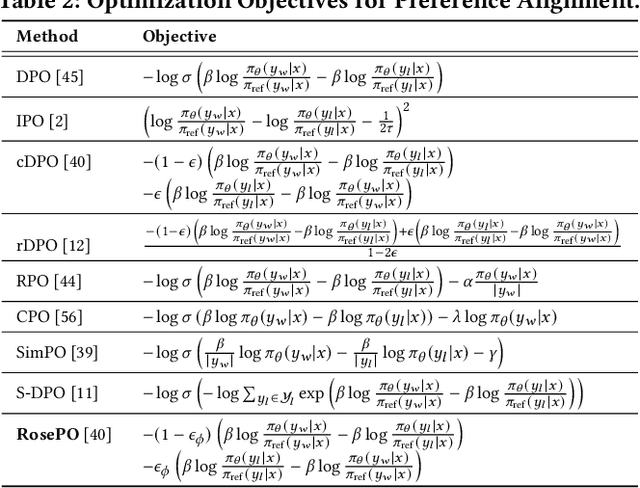
Recently, there has been a growing interest in leveraging Large Language Models (LLMs) for recommendation systems, which usually adapt a pre-trained LLM to the recommendation scenario through supervised fine-tuning (SFT). However, both the pre-training and SFT stages fail to explicitly model the comparative relationships of a user's preferences on different items. To construct a "helpful and harmless" LLM-based recommender, we propose a general framework -- Recommendation with smoothing personalized Preference Optimization (RosePO), which better aligns with customized human values during the post-training stage. Specifically, in addition to the input and chosen response that naturally align with SFT data, we design a rejected sampling strategy tailored for enhancing helpfulness, along with two strategies aimed at mitigating biases to promote harmlessness. To ensure robustness against uncertain labels present in automatically constructed preference data, we introduce a personalized smoothing factor predicted by a preference oracle into the optimization objective. Evaluation on three real-world datasets demonstrates the effectiveness of our method, showcasing not only improved recommendation performance but also mitigation of semantic hallucination and popularity bias.
Magnifier Prompt: Tackling Multimodal Hallucination via Extremely Simple Instructions
Oct 15, 2024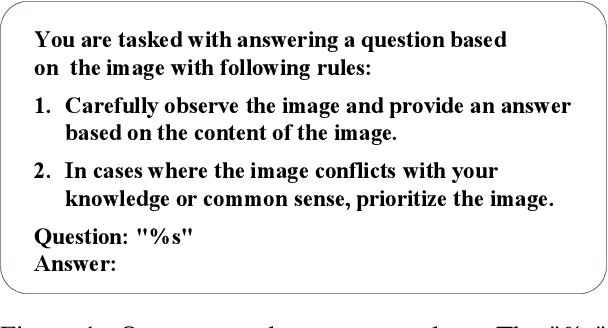
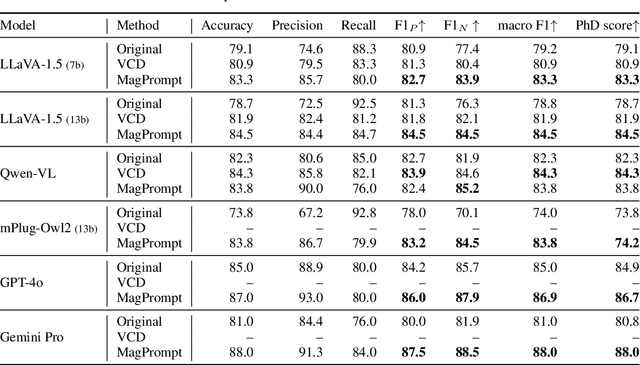
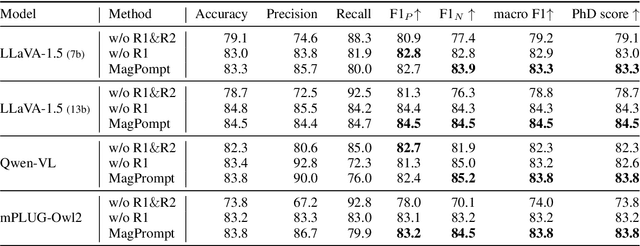
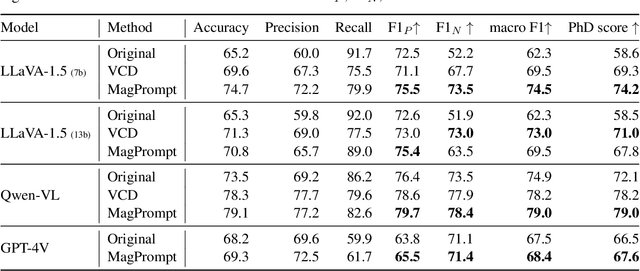
Hallucinations in multimodal large language models (MLLMs) hinder their practical applications. To address this, we propose a Magnifier Prompt (MagPrompt), a simple yet effective method to tackle hallucinations in MLLMs via extremely simple instructions. MagPrompt is based on the following two key principles, which guide the design of various effective prompts, demonstrating robustness: (1) MLLMs should focus more on the image. (2) When there are conflicts between the image and the model's inner knowledge, MLLMs should prioritize the image. MagPrompt is training-free and can be applied to open-source and closed-source models, such as GPT-4o and Gemini-pro. It performs well across many datasets and its effectiveness is comparable or even better than more complex methods like VCD. Furthermore, our prompt design principles and experimental analyses provide valuable insights into multimodal hallucination.
Multimodal Clickbait Detection by De-confounding Biases Using Causal Representation Inference
Oct 10, 2024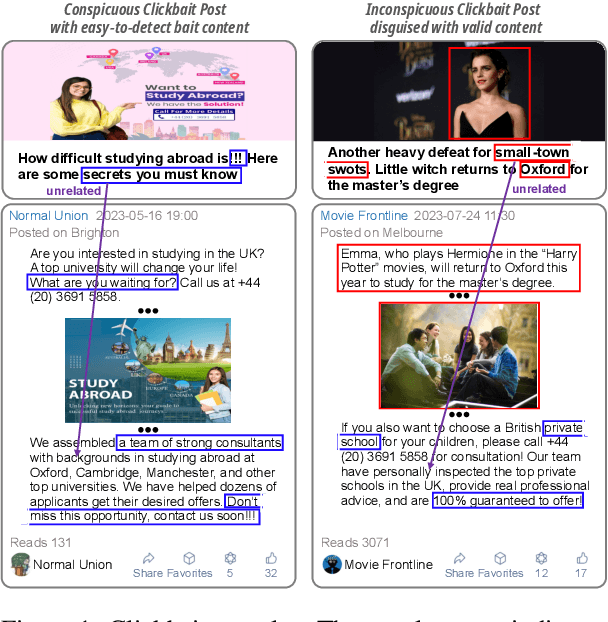
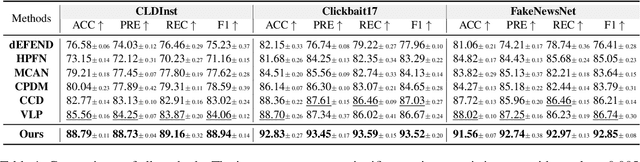
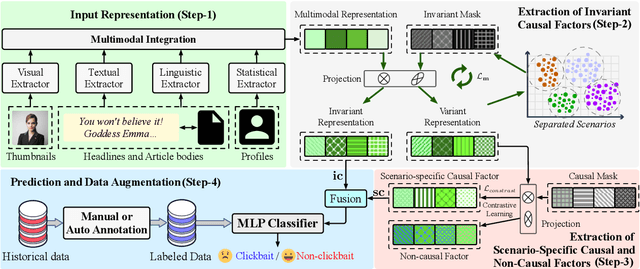

This paper focuses on detecting clickbait posts on the Web. These posts often use eye-catching disinformation in mixed modalities to mislead users to click for profit. That affects the user experience and thus would be blocked by content provider. To escape detection, malicious creators use tricks to add some irrelevant non-bait content into bait posts, dressing them up as legal to fool the detector. This content often has biased relations with non-bait labels, yet traditional detectors tend to make predictions based on simple co-occurrence rather than grasping inherent factors that lead to malicious behavior. This spurious bias would easily cause misjudgments. To address this problem, we propose a new debiased method based on causal inference. We first employ a set of features in multiple modalities to characterize the posts. Considering these features are often mixed up with unknown biases, we then disentangle three kinds of latent factors from them, including the invariant factor that indicates intrinsic bait intention; the causal factor which reflects deceptive patterns in a certain scenario, and non-causal noise. By eliminating the noise that causes bias, we can use invariant and causal factors to build a robust model with good generalization ability. Experiments on three popular datasets show the effectiveness of our approach.
Exploring the Benefit of Activation Sparsity in Pre-training
Oct 04, 2024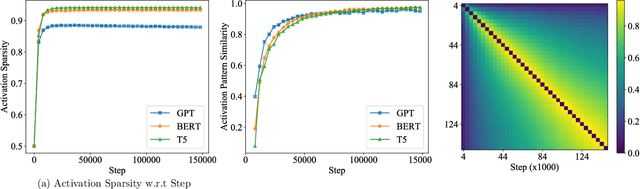
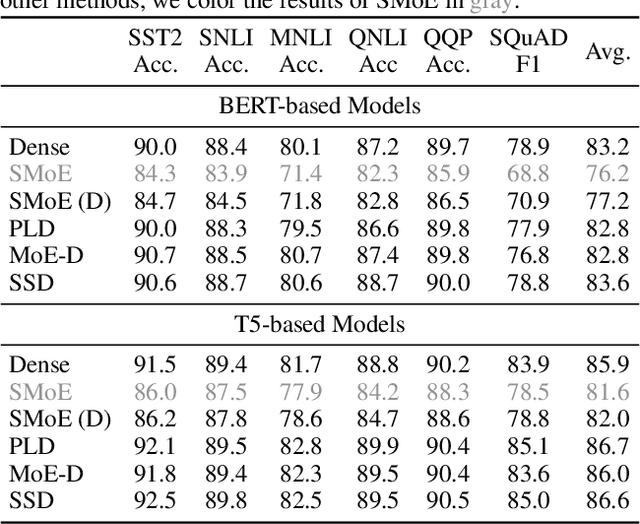
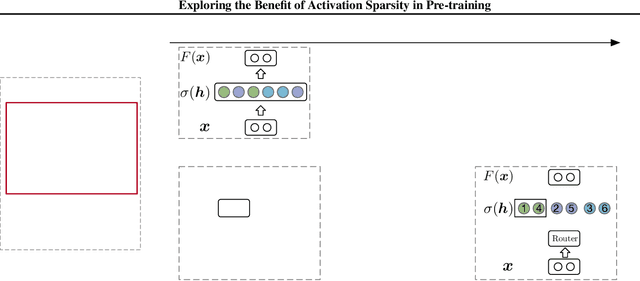
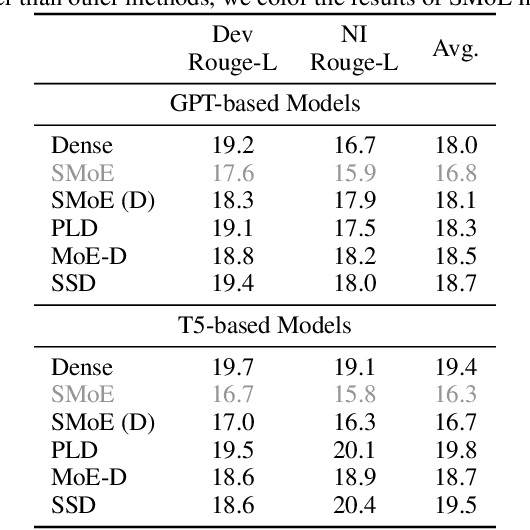
Pre-trained Transformers inherently possess the characteristic of sparse activation, where only a small fraction of the neurons are activated for each token. While sparse activation has been explored through post-training methods, its potential in pre-training remains untapped. In this work, we first study how activation properties change during pre-training. Our examination reveals that Transformers exhibit sparse activation throughout the majority of the pre-training process while the activation correlation keeps evolving as training progresses. Leveraging this observation, we propose Switchable Sparse-Dense Learning (SSD). SSD adaptively switches between the Mixtures-of-Experts (MoE) based sparse training and the conventional dense training during the pre-training process, leveraging the efficiency of sparse training and avoiding the static activation correlation of sparse training. Compared to dense training, SSD achieves comparable performance with identical model size and reduces pre-training costs. Moreover, the models trained with SSD can be directly used as MoE models for sparse inference and achieve the same performance as dense models with up to $2\times$ faster inference speed. Codes are available at https://github.com/thunlp/moefication.
Language Models "Grok" to Copy
Sep 14, 2024We examine the pre-training dynamics of language models, focusing on their ability to copy text from preceding context--a fundamental skill for various LLM applications, including in-context learning (ICL) and retrieval-augmented generation (RAG). We propose a novel perspective that Transformer-based language models develop copying abilities similarly to grokking, which refers to sudden generalization on test set long after the model fit to the training set. Our experiments yield three arguments: (1) The pre-training loss decreases rapidly, while the context copying ability of models initially lags and then abruptly saturates. (2) The speed of developing copying ability is independent of the number of tokens trained, similarly to how grokking speed is unaffected by dataset size as long as the data distribution is preserved. (3) Induction heads, the attention heads responsible for copying, form from shallow to deep layers during training, mirroring the development of circuits in deeper layers during grokking. We contend that the connection between grokking and context copying can provide valuable insights for more effective language model training, ultimately improving in-context performance. For example, we demonstrated that techniques that enhance grokking, such as regularization, either accelerate or enhance the development of context copying.
Negative Sampling in Recommendation: A Survey and Future Directions
Sep 11, 2024

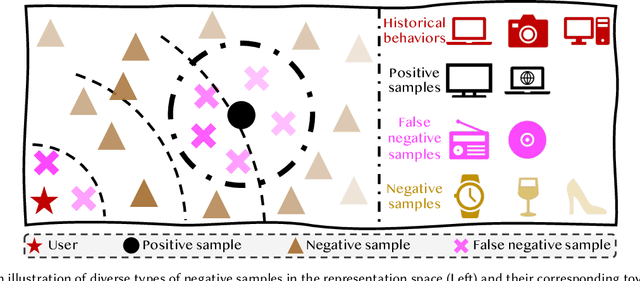

Recommender systems aim to capture users' personalized preferences from the cast amount of user behaviors, making them pivotal in the era of information explosion. However, the presence of the dynamic preference, the "information cocoons", and the inherent feedback loops in recommendation make users interact with a limited number of items. Conventional recommendation algorithms typically focus on the positive historical behaviors, while neglecting the essential role of negative feedback in user interest understanding. As a promising but easy-to-ignored area, negative sampling is proficients in revealing the genuine negative aspect inherent in user behaviors, emerging as an inescapable procedure in recommendation. In this survey, we first discuss the role of negative sampling in recommendation and thoroughly analyze challenges that consistently impede its progress. Then, we conduct an extensive literature review on the existing negative sampling strategies in recommendation and classify them into five categories with their discrepant techniques. Finally, we detail the insights of the tailored negative sampling strategies in diverse recommendation scenarios and outline an overview of the prospective research directions toward which the community may engage and benefit.
PIP: Detecting Adversarial Examples in Large Vision-Language Models via Attention Patterns of Irrelevant Probe Questions
Sep 08, 2024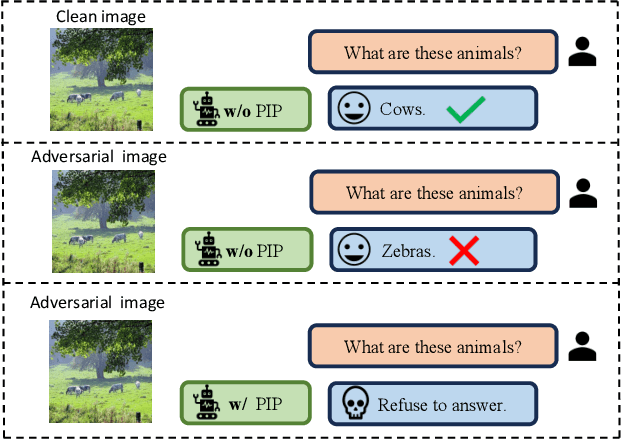
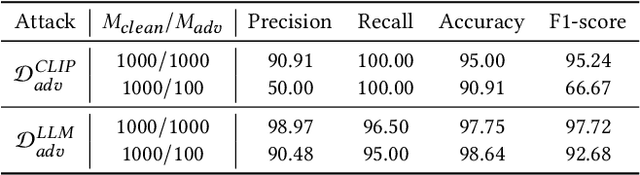
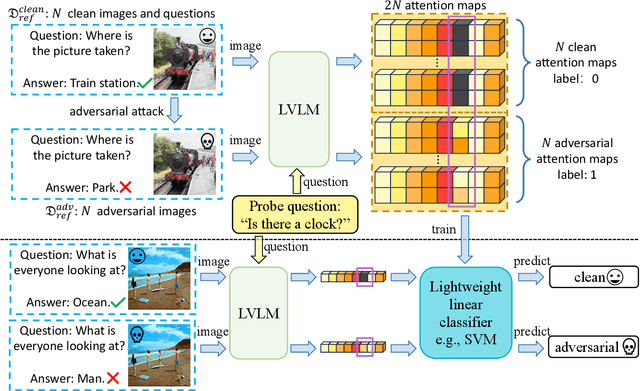

Large Vision-Language Models (LVLMs) have demonstrated their powerful multimodal capabilities. However, they also face serious safety problems, as adversaries can induce robustness issues in LVLMs through the use of well-designed adversarial examples. Therefore, LVLMs are in urgent need of detection tools for adversarial examples to prevent incorrect responses. In this work, we first discover that LVLMs exhibit regular attention patterns for clean images when presented with probe questions. We propose an unconventional method named PIP, which utilizes the attention patterns of one randomly selected irrelevant probe question (e.g., "Is there a clock?") to distinguish adversarial examples from clean examples. Regardless of the image to be tested and its corresponding question, PIP only needs to perform one additional inference of the image to be tested and the probe question, and then achieves successful detection of adversarial examples. Even under black-box attacks and open dataset scenarios, our PIP, coupled with a simple SVM, still achieves more than 98% recall and a precision of over 90%. Our PIP is the first attempt to detect adversarial attacks on LVLMs via simple irrelevant probe questions, shedding light on deeper understanding and introspection within LVLMs. The code is available at https://github.com/btzyd/pip.
HMoE: Heterogeneous Mixture of Experts for Language Modeling
Aug 20, 2024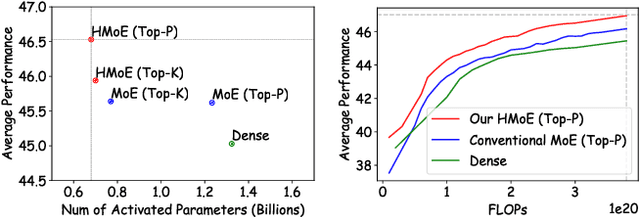
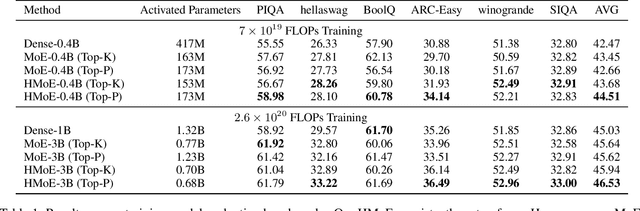

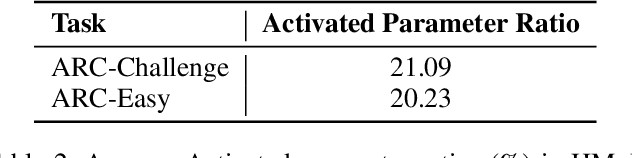
Mixture of Experts (MoE) offers remarkable performance and computational efficiency by selectively activating subsets of model parameters. Traditionally, MoE models use homogeneous experts, each with identical capacity. However, varying complexity in input data necessitates experts with diverse capabilities, while homogeneous MoE hinders effective expert specialization and efficient parameter utilization. In this study, we propose a novel Heterogeneous Mixture of Experts (HMoE), where experts differ in size and thus possess diverse capacities. This heterogeneity allows for more specialized experts to handle varying token complexities more effectively. To address the imbalance in expert activation, we propose a novel training objective that encourages the frequent activation of smaller experts, enhancing computational efficiency and parameter utilization. Extensive experiments demonstrate that HMoE achieves lower loss with fewer activated parameters and outperforms conventional homogeneous MoE models on various pre-training evaluation benchmarks. Codes will be released upon acceptance.