 Add to Chrome
 Add to Firefox
 Add to Edge
DoraCycle: Domain-Oriented Adaptation of Unified Generative Model in Multimodal Cycles
Mar 05, 2025
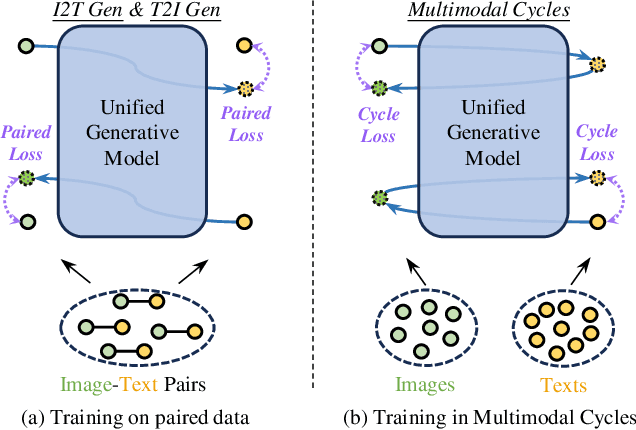
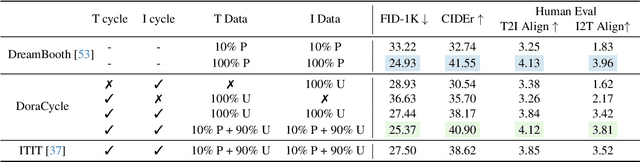
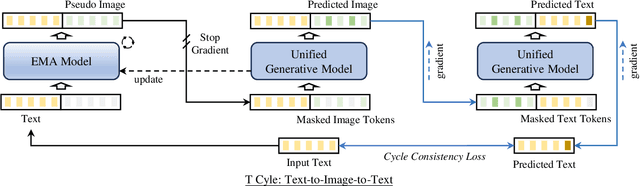
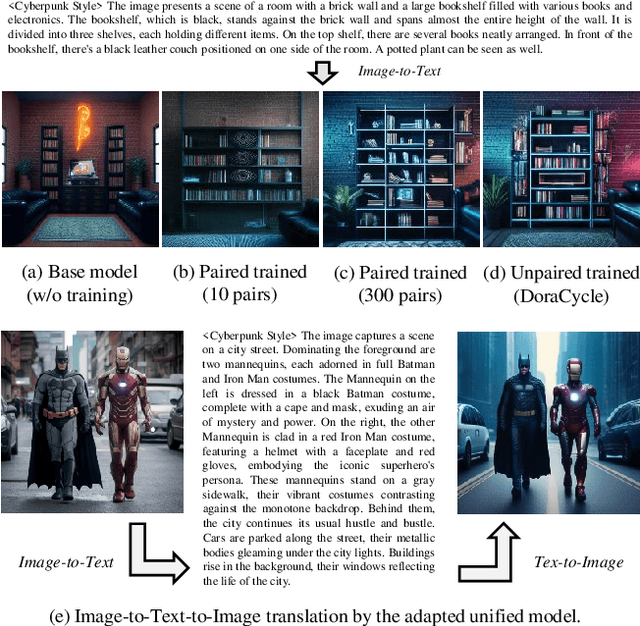
Adapting generative models to specific domains presents an effective solution for satisfying specialized requirements. However, adapting to some complex domains remains challenging, especially when these domains require substantial paired data to capture the targeted distributions. Since unpaired data from a single modality, such as vision or language, is more readily available, we utilize the bidirectional mappings between vision and language learned by the unified generative model to enable training on unpaired data for domain adaptation. Specifically, we propose DoraCycle, which integrates two multimodal cycles: text-to-image-to-text and image-to-text-to-image. The model is optimized through cross-entropy loss computed at the cycle endpoints, where both endpoints share the same modality. This facilitates self-evolution of the model without reliance on annotated text-image pairs. Experimental results demonstrate that for tasks independent of paired knowledge, such as stylization, DoraCycle can effectively adapt the unified model using only unpaired data. For tasks involving new paired knowledge, such as specific identities, a combination of a small set of paired image-text examples and larger-scale unpaired data is sufficient for effective domain-oriented adaptation. The code will be released at https://github.com/showlab/DoraCycle.

Semantic Gaussian Mixture Variational Autoencoder for Sequential Recommendation
Feb 22, 2025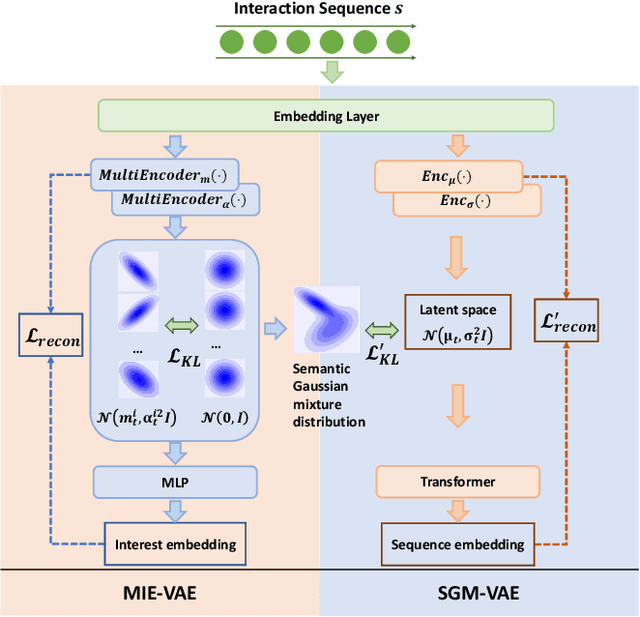
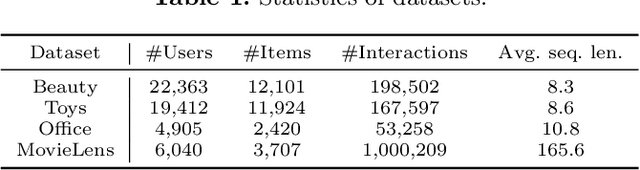
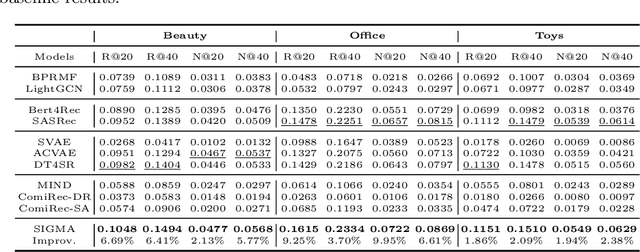
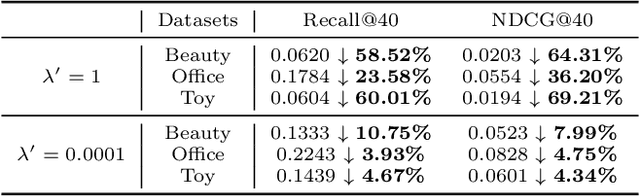
Variational AutoEncoder (VAE) for Sequential Recommendation (SR), which learns a continuous distribution for each user-item interaction sequence rather than a determinate embedding, is robust against data deficiency and achieves significant performance. However, existing VAE-based SR models assume a unimodal Gaussian distribution as the prior distribution of sequence representations, leading to restricted capability to capture complex user interests and limiting recommendation performance when users have more than one interest. Due to that it is common for users to have multiple disparate interests, we argue that it is more reasonable to establish a multimodal prior distribution in SR scenarios instead of a unimodal one. Therefore, in this paper, we propose a novel VAE-based SR model named SIGMA. SIGMA assumes that the prior of sequence representation conforms to a Gaussian mixture distribution, where each component of the distribution semantically corresponds to one of multiple interests. For multi-interest elicitation, SIGMA includes a probabilistic multi-interest extraction module that learns a unimodal Gaussian distribution for each interest according to implicit item hyper-categories. Additionally, to incorporate the multimodal interests into sequence representation learning, SIGMA constructs a multi-interest-aware ELBO, which is compatible with the Gaussian mixture prior. Extensive experiments on public datasets demonstrate the effectiveness of SIGMA. The code is available at https://github.com/libeibei95/SIGMA.
PedDet: Adaptive Spectral Optimization for Multimodal Pedestrian Detection
Feb 21, 2025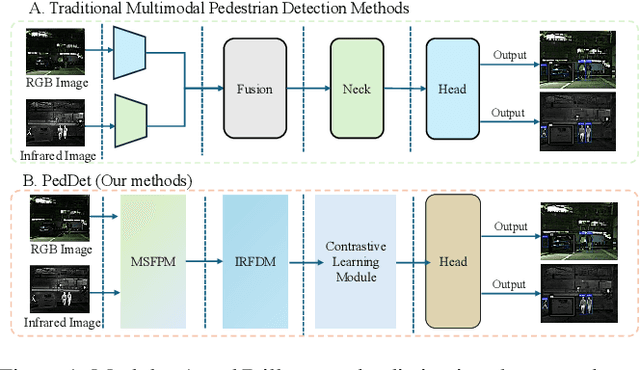
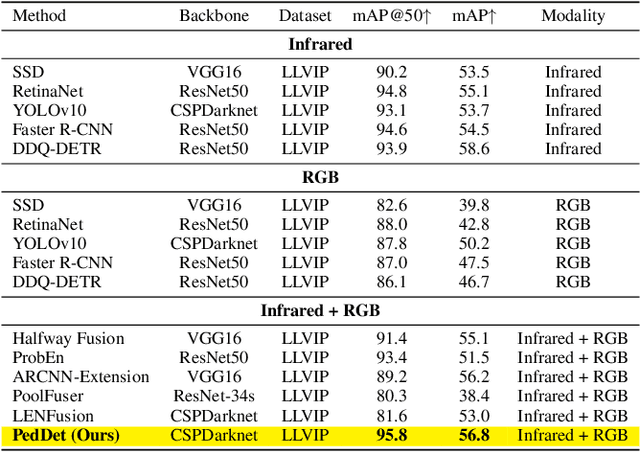
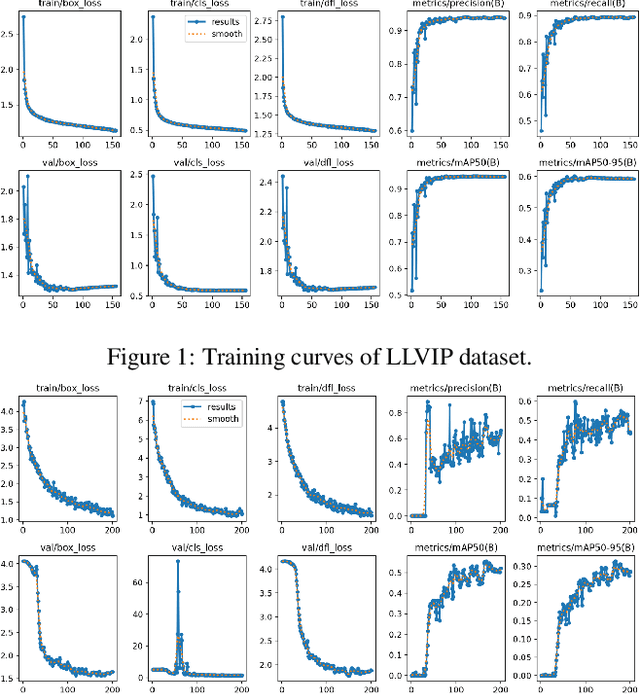
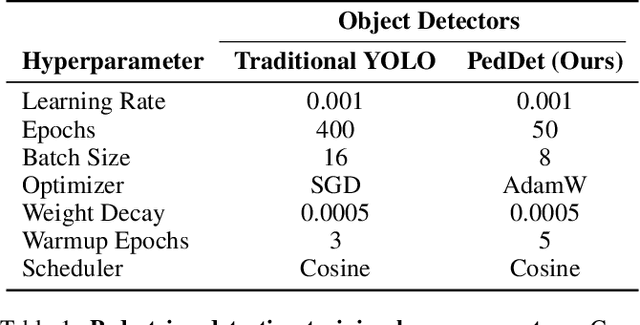
Pedestrian detection in intelligent transportation systems has made significant progress but faces two critical challenges: (1) insufficient fusion of complementary information between visible and infrared spectra, particularly in complex scenarios, and (2) sensitivity to illumination changes, such as low-light or overexposed conditions, leading to degraded performance. To address these issues, we propose PedDet, an adaptive spectral optimization complementarity framework specifically enhanced and optimized for multispectral pedestrian detection. PedDet introduces the Multi-scale Spectral Feature Perception Module (MSFPM) to adaptively fuse visible and infrared features, enhancing robustness and flexibility in feature extraction. Additionally, the Illumination Robustness Feature Decoupling Module (IRFDM) improves detection stability under varying lighting by decoupling pedestrian and background features. We further design a contrastive alignment to enhance intermodal feature discrimination. Experiments on LLVIP and MSDS datasets demonstrate that PedDet achieves state-of-the-art performance, improving the mAP by 6.6% with superior detection accuracy even in low-light conditions, marking a significant step forward for road safety. Code will be available at https://github.com/AIGeeksGroup/PedDet.
Sce2DriveX: A Generalized MLLM Framework for Scene-to-Drive Learning
Feb 19, 2025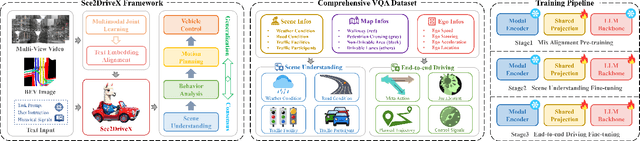
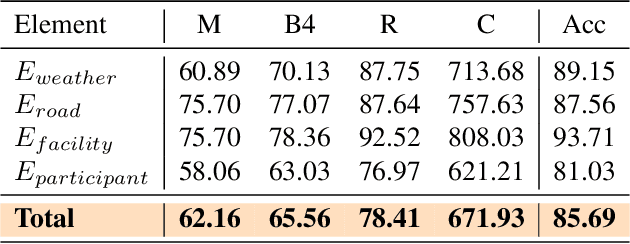
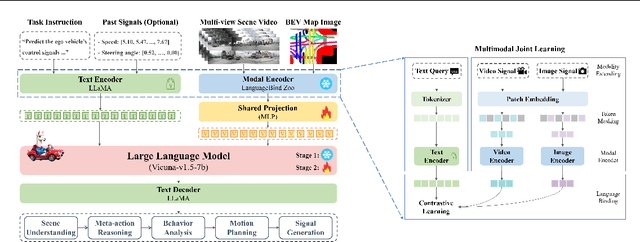
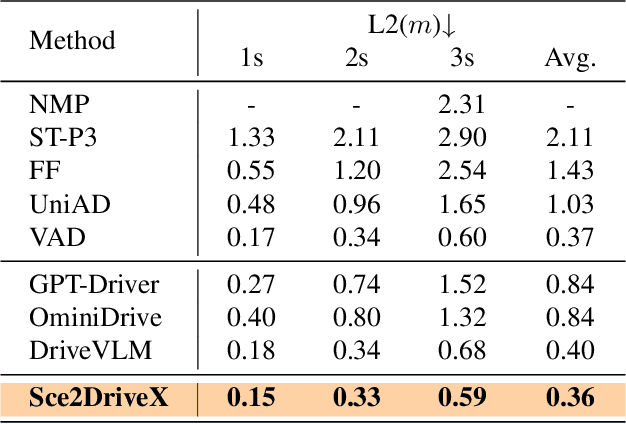
End-to-end autonomous driving, which directly maps raw sensor inputs to low-level vehicle controls, is an important part of Embodied AI. Despite successes in applying Multimodal Large Language Models (MLLMs) for high-level traffic scene semantic understanding, it remains challenging to effectively translate these conceptual semantics understandings into low-level motion control commands and achieve generalization and consensus in cross-scene driving. We introduce Sce2DriveX, a human-like driving chain-of-thought (CoT) reasoning MLLM framework. Sce2DriveX utilizes multimodal joint learning from local scene videos and global BEV maps to deeply understand long-range spatiotemporal relationships and road topology, enhancing its comprehensive perception and reasoning capabilities in 3D dynamic/static scenes and achieving driving generalization across scenes. Building on this, it reconstructs the implicit cognitive chain inherent in human driving, covering scene understanding, meta-action reasoning, behavior interpretation analysis, motion planning and control, thereby further bridging the gap between autonomous driving and human thought processes. To elevate model performance, we have developed the first extensive Visual Question Answering (VQA) driving instruction dataset tailored for 3D spatial understanding and long-axis task reasoning. Extensive experiments demonstrate that Sce2DriveX achieves state-of-the-art performance from scene understanding to end-to-end driving, as well as robust generalization on the CARLA Bench2Drive benchmark.
Text2Earth: Unlocking Text-driven Remote Sensing Image Generation with a Global-Scale Dataset and a Foundation Model
Jan 01, 2025


Generative foundation models have advanced large-scale text-driven natural image generation, becoming a prominent research trend across various vertical domains. However, in the remote sensing field, there is still a lack of research on large-scale text-to-image (text2image) generation technology. Existing remote sensing image-text datasets are small in scale and confined to specific geographic areas and scene types. Besides, existing text2image methods have struggled to achieve global-scale, multi-resolution controllable, and unbounded image generation. To address these challenges, this paper presents two key contributions: the Git-10M dataset and the Text2Earth foundation model. Git-10M is a global-scale image-text dataset comprising 10 million image-text pairs, 5 times larger than the previous largest one. The dataset covers a wide range of geographic scenes and contains resolution information, significantly surpassing existing datasets in both size and diversity. Building on Git-10M, we propose Text2Earth, a 1.3 billion parameter generative foundation model based on the diffusion framework to model global-scale remote sensing scenes. Text2Earth integrates a resolution guidance mechanism, enabling users to specify image resolutions. A dynamic condition adaptation strategy is proposed for training and inference to improve image quality. Text2Earth excels in zero-shot text2image generation and demonstrates robust generalization and flexibility across multiple tasks, including unbounded scene construction, image editing, and cross-modal image generation. This robust capability surpasses previous models restricted to the basic fixed size and limited scene types. On the previous benchmark dataset, Text2Earth outperforms previous models with an improvement of +26.23 FID and +20.95% Zero-shot Cls-OA metric.Our project page is \url{https://chen-yang-liu.github.io/Text2Earth}
Interleaved Speech-Text Language Models are Simple Streaming Text to Speech Synthesizers
Dec 23, 2024This paper introduces Interleaved Speech-Text Language Model (IST-LM) for streaming zero-shot Text-to-Speech (TTS). Unlike many previous approaches, IST-LM is directly trained on interleaved sequences of text and speech tokens with a fixed ratio, eliminating the need for additional efforts in duration prediction and grapheme-to-phoneme alignment. The ratio of text chunk size to speech chunk size is crucial for the performance of IST-LM. To explore this, we conducted a comprehensive series of statistical analyses on the training data and performed correlation analysis with the final performance, uncovering several key factors: 1) the distance between speech tokens and their corresponding text tokens, 2) the number of future text tokens accessible to each speech token, and 3) the frequency of speech tokens precedes their corresponding text tokens. Experimental results demonstrate how to achieve an optimal streaming TTS system without complicated engineering optimization, which has a limited gap with the non-streaming system. IST-LM is conceptually simple and empirically powerful, paving the way for streaming TTS with minimal overhead while largely maintaining performance, showcasing broad prospects coupled with real-time text stream from LLMs.
"They've Stolen My GPL-Licensed Model!": Toward Standardized and Transparent Model Licensing
Dec 16, 2024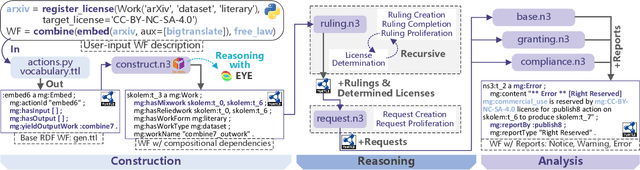
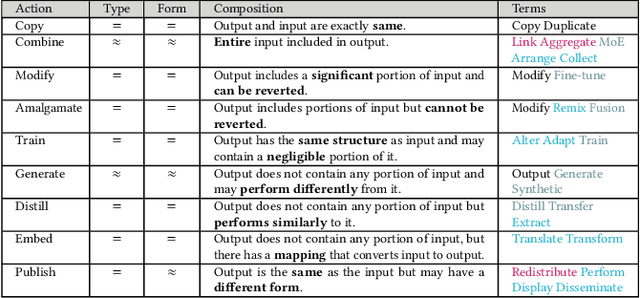
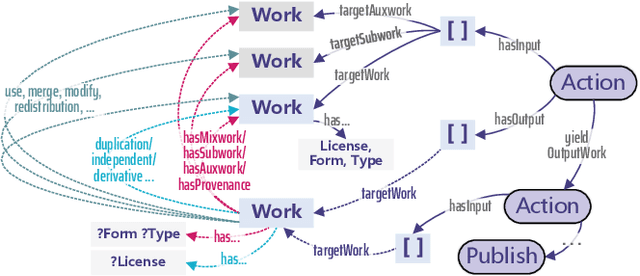
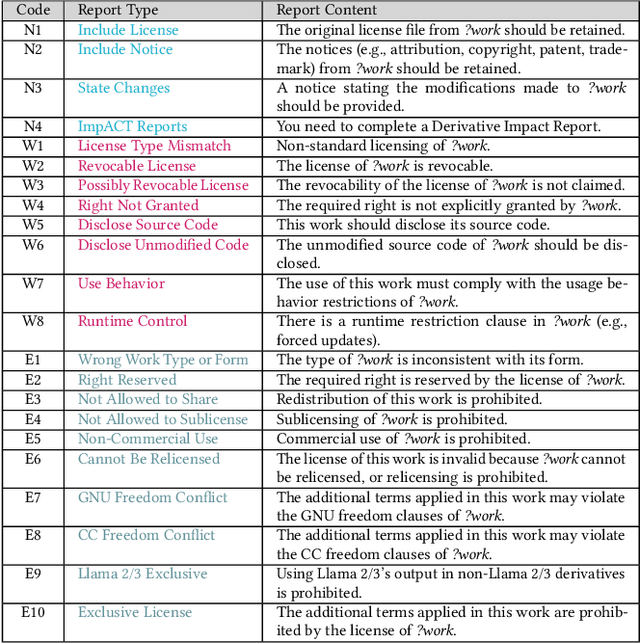
As model parameter sizes reach the billion-level range and their training consumes zettaFLOPs of computation, components reuse and collaborative development are become increasingly prevalent in the Machine Learning (ML) community. These components, including models, software, and datasets, may originate from various sources and be published under different licenses, which govern the use and distribution of licensed works and their derivatives. However, commonly chosen licenses, such as GPL and Apache, are software-specific and are not clearly defined or bounded in the context of model publishing. Meanwhile, the reused components may also have free-content licenses and model licenses, which pose a potential risk of license noncompliance and rights infringement within the model production workflow. In this paper, we propose addressing the above challenges along two lines: 1) For license analysis, we have developed a new vocabulary for ML workflow management and encoded license rules to enable ontological reasoning for analyzing rights granting and compliance issues. 2) For standardized model publishing, we have drafted a set of model licenses that provide flexible options to meet the diverse needs of model publishing. Our analysis tool is built on Turtle language and Notation3 reasoning engine, envisioned as a first step toward Linked Open Model Production Data. We have also encoded our proposed model licenses into rules and demonstrated the effects of GPL and other commonly used licenses in model publishing, along with the flexibility advantages of our licenses, through comparisons and experiments.
RemDet: Rethinking Efficient Model Design for UAV Object Detection
Dec 13, 2024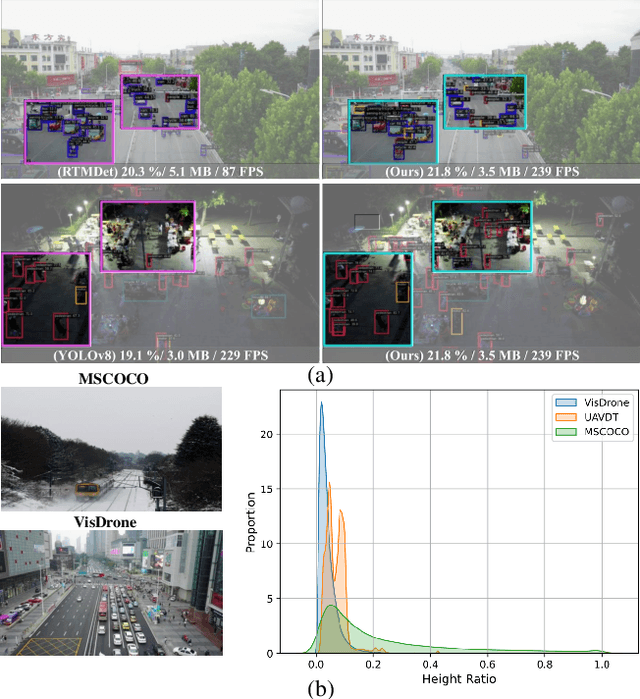
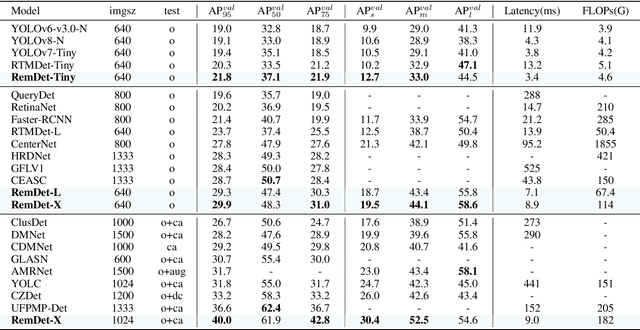
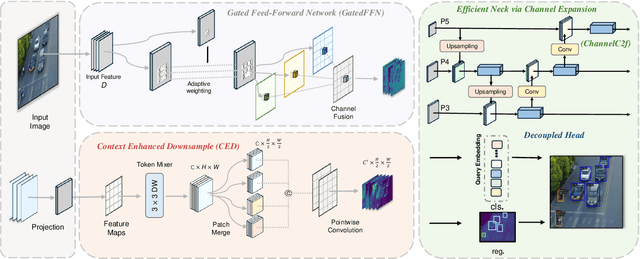
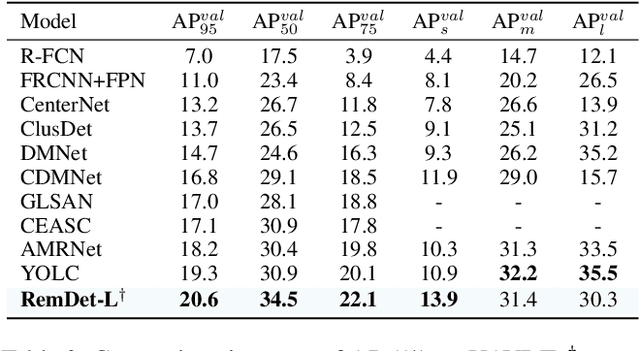
Object detection in Unmanned Aerial Vehicle (UAV) images has emerged as a focal area of research, which presents two significant challenges: i) objects are typically small and dense within vast images; ii) computational resource constraints render most models unsuitable for real-time deployment. Current real-time object detectors are not optimized for UAV images, and complex methods designed for small object detection often lack real-time capabilities. To address these challenges, we propose a novel detector, RemDet (Reparameter efficient multiplication Detector). Our contributions are as follows: 1) Rethinking the challenges of existing detectors for small and dense UAV images, and proposing information loss as a design guideline for efficient models. 2) We introduce the ChannelC2f module to enhance small object detection performance, demonstrating that high-dimensional representations can effectively mitigate information loss. 3) We design the GatedFFN module to provide not only strong performance but also low latency, effectively addressing the challenges of real-time detection. Our research reveals that GatedFFN, through the use of multiplication, is more cost-effective than feed-forward networks for high-dimensional representation. 4) We propose the CED module, which combines the advantages of ViT and CNN downsampling to effectively reduce information loss. It specifically enhances context information for small and dense objects. Extensive experiments on large UAV datasets, Visdrone and UAVDT, validate the real-time efficiency and superior performance of our methods. On the challenging UAV dataset VisDrone, our methods not only provided state-of-the-art results, improving detection by more than 3.4%, but also achieve 110 FPS on a single 4090.Codes are available at (this URL)(https://github.com/HZAI-ZJNU/RemDet).
ASGDiffusion: Parallel High-Resolution Generation with Asynchronous Structure Guidance
Dec 09, 2024Training-free high-resolution (HR) image generation has garnered significant attention due to the high costs of training large diffusion models. Most existing methods begin by reconstructing the overall structure and then proceed to refine the local details. Despite their advancements, they still face issues with repetitive patterns in HR image generation. Besides, HR generation with diffusion models incurs significant computational costs. Thus, parallel generation is essential for interactive applications. To solve the above limitations, we introduce a novel method named ASGDiffusion for parallel HR generation with Asynchronous Structure Guidance (ASG) using pre-trained diffusion models. To solve the pattern repetition problem of HR image generation, ASGDiffusion leverages the low-resolution (LR) noise weighted by the attention mask as the structure guidance for the denoising step to ensure semantic consistency. The proposed structure guidance can significantly alleviate the pattern repetition problem. To enable parallel generation, we further propose a parallelism strategy, which calculates the patch noises and structure guidance asynchronously. By leveraging multi-GPU parallel acceleration, we significantly accelerate generation speed and reduce memory usage per GPU. Extensive experiments demonstrate that our method effectively and efficiently addresses common issues like pattern repetition and achieves state-of-the-art HR generation.
Representation Purification for End-to-End Speech Translation
Dec 05, 2024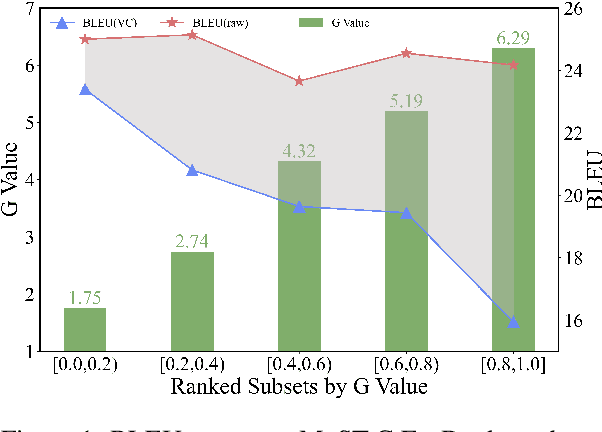


Speech-to-text translation (ST) is a cross-modal task that involves converting spoken language into text in a different language. Previous research primarily focused on enhancing speech translation by facilitating knowledge transfer from machine translation, exploring various methods to bridge the gap between speech and text modalities. Despite substantial progress made, factors in speech that are not relevant to translation content, such as timbre and rhythm, often limit the efficiency of knowledge transfer. In this paper, we conceptualize speech representation as a combination of content-agnostic and content-relevant factors. We examine the impact of content-agnostic factors on translation performance through preliminary experiments and observe a significant performance deterioration when content-agnostic perturbations are introduced to speech signals. To address this issue, we propose a \textbf{S}peech \textbf{R}epresentation \textbf{P}urification with \textbf{S}upervision \textbf{E}nhancement (SRPSE) framework, which excludes the content-agnostic components within speech representations to mitigate their negative impact on ST. Experiments on MuST-C and CoVoST-2 datasets demonstrate that SRPSE significantly improves translation performance across all translation directions in three settings and achieves preeminent performance under a \textit{transcript-free} setting.