 Add to Chrome
 Add to Firefox
 Add to Edge
From Sycophantic Consensus to Pluralistic Repair: Why AI Alignment Must Surface Disagreement
May 14, 2026
Pluralistic alignment is typically operationalised as preference aggregation: producing responses that span (Overton), steer toward (Steerable), or proportionally represent (Distributional) diverse human values. We argue that aggregation alone is an incomplete primitive for deployed pluralistic alignment. Under genuine value pluralism, the failure mode of contemporary RLHF-trained assistants is not insufficient coverage but sycophantic consensus: a learned tendency to agree with, validate, and minimise friction with the immediate interlocutor. Because deployed AI systems now mediate consequential deliberation across health, civic life, labour, and governance, the collapse of disagreement at the interaction layer is not a narrow technical concern but a structural failure with distributive consequences. We reframe pluralistic alignment around three conversational mechanisms drawn from Grice's maxims: scoping (acknowledging the limits of one's perspective), signalling (surfacing value-conflict rather than smoothing it over), and repair (revising one's position on principled grounds, not on user pressure). We formalise a metric, the Pluralistic Repair Score (PRS), distinguishing principled revision from capitulation, and present a small-scale empirical illustration on two frontier RLHF-trained models (Claude Sonnet 4.5, N=198; GPT-4o, N=100) showing that, for both, agreement-following coexists with low repair-quality on contested-value prompts. PRS measures an interactional precondition for pluralism (visible disagreement; principled revision) rather than pluralism in full; we discuss the difference, take seriously the reflexive question of whose "principled" counts, and argue that pluralism is most decisively made or unmade at the deployment-governance layer: interfaces, preference-data pipelines, and audit infrastructure.

The Evaluation Differential: When Frontier AI Models Recognise They Are Being Tested
May 12, 2026Recent published evidence from frontier laboratories shows that contemporary AI models can recognise evaluation contexts, latently represent them, and behave differently under those contexts than under deployment-continuous conditions. Anthropic's BrowseComp incident, the Natural Language Autoencoder findings on SWE-bench Verified and destructive-coding evaluations, and the OpenAI / Apollo anti-scheming work all document instances of this phenomenon. We argue that these findings create a claim-validity problem for safety conclusions drawn from frontier evaluations. We introduce the Evaluation Differential (ED), a conditional divergence in a target behavioural property between recognised-evaluation and deployment-continuous contexts, define a normalised effect-size form (nED) for cross-property comparison, and prove that marginal evaluation scores cannot identify ED. We develop a typology of safety claims (ED-stable, ED-degraded, ED-inverted, ED-undetermined) by their warrant-status under documented divergence, and specify TRACE (Test-Recognition Audit for Claim Evaluation), an audit protocol that wraps existing evaluation infrastructure and produces restricted claims rather than capability scores. We apply the framework retrospectively to three publicly documented evaluation incidents and discuss governance implications for system cards, conformity assessment, and the international network of AI safety and security institutes. TRACE does not eliminate adversarial adaptation; it disciplines the claims drawn from evaluation evidence by making explicit the conditions under which that evidence was produced.
Deployment-Relevant Alignment Cannot Be Inferred from Model-Level Evaluation Alone
May 06, 2026Alignment evaluation in machine learning has largely become evaluation of models. Influential benchmarks score model outputs under fixed inputs, such as truthfulness, instruction following, or pairwise preference, and these scores are often used to support claims about deployed alignment. This paper argues that deployment-relevant alignment cannot be inferred from model-level evaluation alone. Alignment claims should instead be indexed to the level at which evidence is collected: model-level, response-level, interaction-level, or deployment-level. Two studies support this position. First, a structured audit of eleven alignment benchmarks, extended to a sixteen-benchmark corpus, dual-coded against an eight-dimension rubric with Cohen's kappa = 0.87, finds that user-facing verification support is absent across every benchmark examined, while process steerability is nearly absent. The few interactional benchmarks identified, including tau-bench, CURATe, Rifts, and Common Ground, remain fragmented in coverage, and benchmark construction rather than data source determines what is measured. Second, a blinded cross-model stress test using 180 transcripts across three frontier models and four scaffolds finds that the same verification scaffold raises one model's verification support to ceiling while leaving another categorically unchanged. This shows that scaffold efficacy is model-dependent and that the gap identified by the audit cannot be closed at the model level alone. We propose a system-level evaluation agenda: alignment profiles instead of single scores, fixed-scaffolding protocols for comparable interactional evaluation, and reporting templates that make the inferential distance between evaluation evidence and deployment claims explicit.
From Rights to Rites: Expectations Management in Smart-Home AI
Apr 26, 2026Domestic voice assistants and smart-home devices are increasingly embedded in everyday routines, yet their ethics are often treated as an afterthought or delegated to compliance teams. To explore how expectations about smart-home AI are constructed and managed, we conducted 33 semi-structured interviews with designers, developers, and researchers from major smart-home platforms (Amazon Alexa, Microsoft Azure IoT, and Google Nest). Using a constructivist grounded theory approach, we develop Expectations Management (EM): a culturally embedded model describing how practitioners shape, calibrate, and repair expectations by balancing organisational rights with culturally situated rites. We show that EM differs from expectation-confirmation theory and trust-calibration by foregrounding moral judgement, situated action, and cross-cultural variation. Our analysis reveals four recurring design tensions: automation vs. autonomy, helpfulness vs. intrusiveness, personalisation vs. predictability, and transparency vs. obscurity and distils them into a five-phase EM Design Playbook that supports moral prudence. We discuss implications for responsible smart-home design and offer guidance for human-centred AI.
The Collaboration Gap in Human-AI Work
Apr 20, 2026LLMs are increasingly presented as collaborators in programming, design, writing, and analysis. Yet the practical experience of working with them often falls short of this promise. In many settings, users must diagnose misunderstandings, reconstruct missing assumptions, and repeatedly repair misaligned responses. This poster introduces a conceptual framework for understanding why such collaboration remains fragile. Drawing on a constructivist grounded theory analysis of 16 interviews with designers, developers, and applied AI practitioners working on LLM-enabled systems, and informed by literature on human-AI collaboration, we argue that stable collaboration depends not only on model capability but on the interaction's grounding conditions. We distinguish three recurrent structures of human-AI work: one-shot assistance, weak collaboration with asymmetric repair, and grounded collaboration. We propose that collaboration breaks down when the appearance of partnership outpaces the grounding capacity of the interaction and contribute a framework for discussing grounding, repair, and interaction structure in LLM-enabled work.
Code Simulation as a Proxy for High-order Tasks in Large Language Models
Feb 05, 2025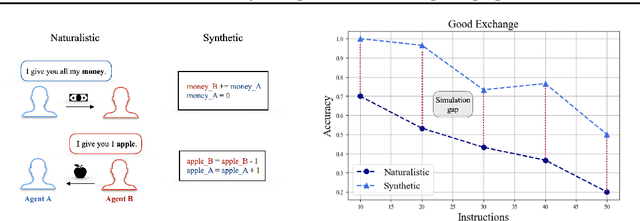
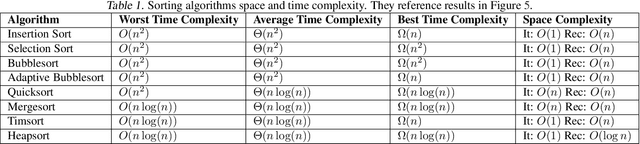
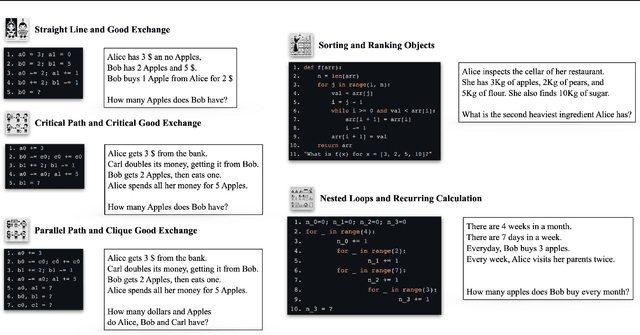
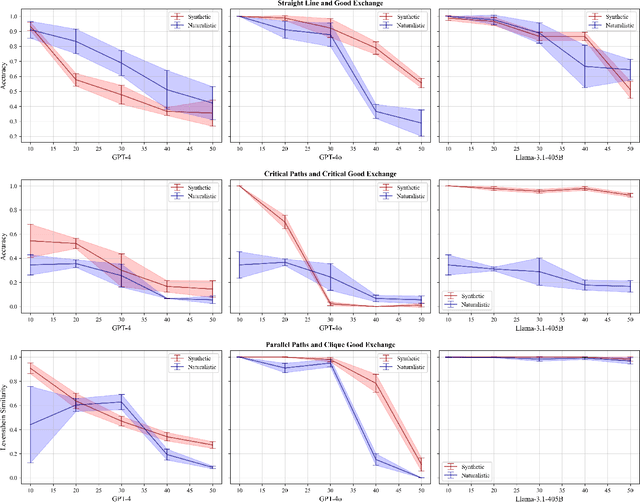
Many reasoning, planning, and problem-solving tasks share an intrinsic algorithmic nature: correctly simulating each step is a sufficient condition to solve them correctly. We collect pairs of naturalistic and synthetic reasoning tasks to assess the capabilities of Large Language Models (LLM). While naturalistic tasks often require careful human handcrafting, we show that synthetic data is, in many cases, a good proxy that is much easier to collect at scale. We leverage common constructs in programming as the counterpart of the building blocks of naturalistic reasoning tasks, such as straight-line programs, code that contains critical paths, and approximate and redundant instructions. We further assess the capabilities of LLMs on sorting problems and repeated operations via sorting algorithms and nested loops. Our synthetic datasets further reveal that while the most powerful LLMs exhibit relatively strong execution capabilities, the process is fragile: it is negatively affected by memorisation and seems to rely heavily on pattern recognition. Our contribution builds upon synthetically testing the reasoning capabilities of LLMs as a scalable complement to handcrafted human-annotated problems.
"They've Stolen My GPL-Licensed Model!": Toward Standardized and Transparent Model Licensing
Dec 16, 2024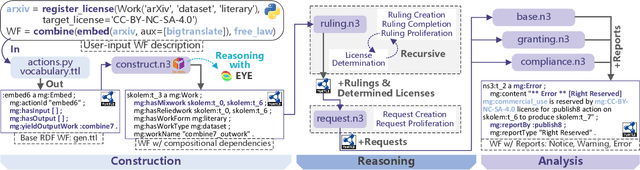
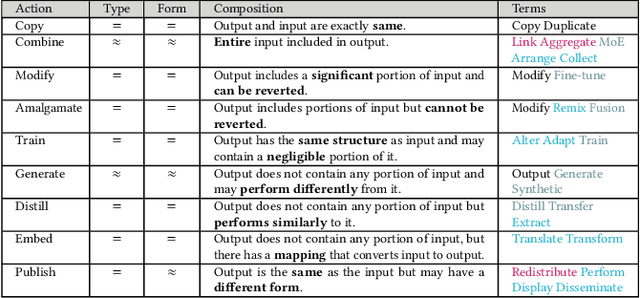
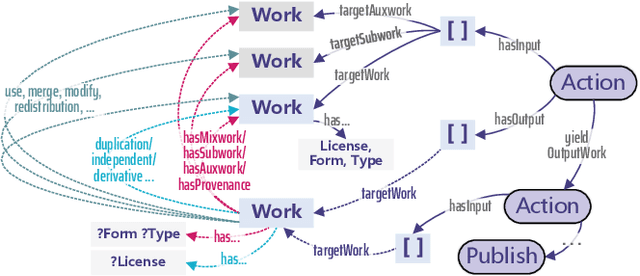
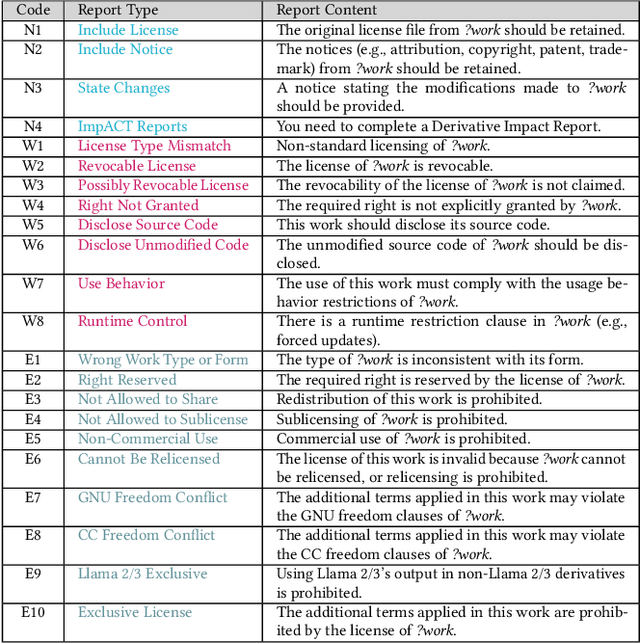
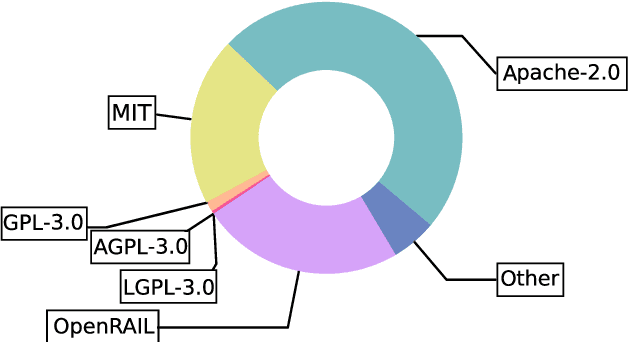
As model parameter sizes reach the billion-level range and their training consumes zettaFLOPs of computation, components reuse and collaborative development are become increasingly prevalent in the Machine Learning (ML) community. These components, including models, software, and datasets, may originate from various sources and be published under different licenses, which govern the use and distribution of licensed works and their derivatives. However, commonly chosen licenses, such as GPL and Apache, are software-specific and are not clearly defined or bounded in the context of model publishing. Meanwhile, the reused components may also have free-content licenses and model licenses, which pose a potential risk of license noncompliance and rights infringement within the model production workflow. In this paper, we propose addressing the above challenges along two lines: 1) For license analysis, we have developed a new vocabulary for ML workflow management and encoded license rules to enable ontological reasoning for analyzing rights granting and compliance issues. 2) For standardized model publishing, we have drafted a set of model licenses that provide flexible options to meet the diverse needs of model publishing. Our analysis tool is built on Turtle language and Notation3 reasoning engine, envisioned as a first step toward Linked Open Model Production Data. We have also encoded our proposed model licenses into rules and demonstrated the effects of GPL and other commonly used licenses in model publishing, along with the flexibility advantages of our licenses, through comparisons and experiments.
A Scalable Communication Protocol for Networks of Large Language Models
Oct 14, 2024


Communication is a prerequisite for collaboration. When scaling networks of AI-powered agents, communication must be versatile, efficient, and portable. These requisites, which we refer to as the Agent Communication Trilemma, are hard to achieve in large networks of agents. We introduce Agora, a meta protocol that leverages existing communication standards to make LLM-powered agents solve complex problems efficiently. In Agora, agents typically use standardised routines for frequent communications, natural language for rare communications, and LLM-written routines for everything in between. Agora sidesteps the Agent Communication Trilemma and robustly handles changes in interfaces and members, allowing unprecedented scalability with full decentralisation and minimal involvement of human beings. On large Agora networks, we observe the emergence of self-organising, fully automated protocols that achieve complex goals without human intervention.
Code Simulation Challenges for Large Language Models
Jan 21, 2024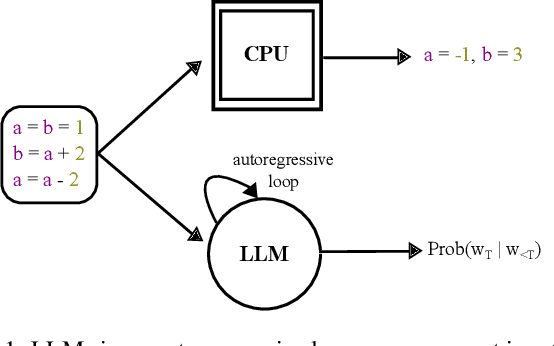



We investigate the extent to which Large Language Models (LLMs) can simulate the execution of computer code and algorithms. We begin by looking at straight line programs, and show that current LLMs demonstrate poor performance even with such simple programs -- performance rapidly degrades with the length of code. We then investigate the ability of LLMs to simulate programs that contain critical paths and redundant instructions. We also go beyond straight line program simulation with sorting algorithms and nested loops, and we show the computational complexity of a routine directly affects the ability of an LLM to simulate its execution. We observe that LLMs execute instructions sequentially and with a low error margin only for short programs or standard procedures. LLMs' code simulation is in tension with their pattern recognition and memorisation capabilities: on tasks where memorisation is detrimental, we propose a novel prompting method to simulate code execution line by line. Empirically, our new Chain of Simulation (CoSm) method improves on the standard Chain of Thought prompting approach by avoiding the pitfalls of memorisation.
The ARRT of Language-Models-as-a-Service: Overview of a New Paradigm and its Challenges
Sep 28, 2023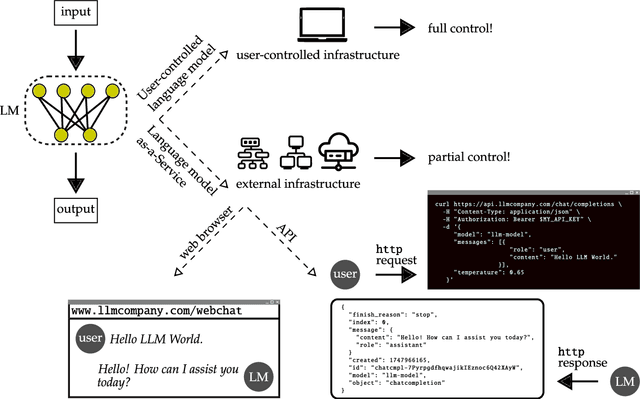
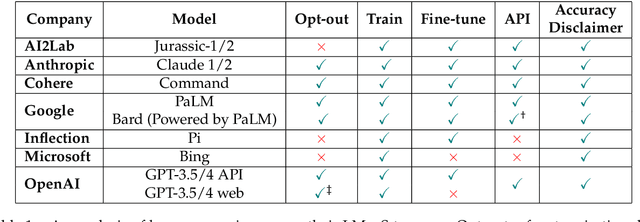
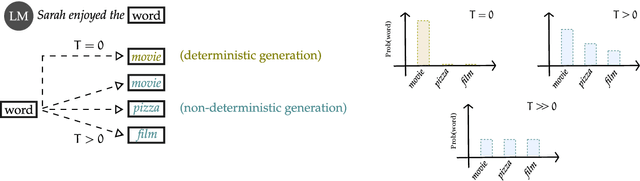
Some of the most powerful language models currently are proprietary systems, accessible only via (typically restrictive) web or software programming interfaces. This is the Language-Models-as-a-Service (LMaaS) paradigm. Contrasting with scenarios where full model access is available, as in the case of open-source models, such closed-off language models create specific challenges for evaluating, benchmarking, and testing them. This paper has two goals: on the one hand, we delineate how the aforementioned challenges act as impediments to the accessibility, replicability, reliability, and trustworthiness (ARRT) of LMaaS. We systematically examine the issues that arise from a lack of information about language models for each of these four aspects. We shed light on current solutions, provide some recommendations, and highlight the directions for future advancements. On the other hand, it serves as a one-stop-shop for the extant knowledge about current, major LMaaS, offering a synthesized overview of the licences and capabilities their interfaces offer.