 Add to Chrome
 Add to Firefox
 Add to Edge
Knowledge Graph Context-Enhanced Diversified Recommendation
Oct 20, 2023
The field of Recommender Systems (RecSys) has been extensively studied to enhance accuracy by leveraging users' historical interactions. Nonetheless, this persistent pursuit of accuracy frequently engenders diminished diversity, culminating in the well-recognized "echo chamber" phenomenon. Diversified RecSys has emerged as a countermeasure, placing diversity on par with accuracy and garnering noteworthy attention from academic circles and industry practitioners. This research explores the realm of diversified RecSys within the intricate context of knowledge graphs (KG). These KGs act as repositories of interconnected information concerning entities and items, offering a propitious avenue to amplify recommendation diversity through the incorporation of insightful contextual information. Our contributions include introducing an innovative metric, Entity Coverage, and Relation Coverage, which effectively quantifies diversity within the KG domain. Additionally, we introduce the Diversified Embedding Learning (DEL) module, meticulously designed to formulate user representations that possess an innate awareness of diversity. In tandem with this, we introduce a novel technique named Conditional Alignment and Uniformity (CAU). It adeptly encodes KG item embeddings while preserving contextual integrity. Collectively, our contributions signify a substantial stride towards augmenting the panorama of recommendation diversity within the realm of KG-informed RecSys paradigms.

Unified Pretraining for Recommendation via Task Hypergraphs
Oct 20, 2023Although pretraining has garnered significant attention and popularity in recent years, its application in graph-based recommender systems is relatively limited. It is challenging to exploit prior knowledge by pretraining in widely used ID-dependent datasets. On one hand, user-item interaction history in one dataset can hardly be transferred to other datasets through pretraining, where IDs are different. On the other hand, pretraining and finetuning on the same dataset leads to a high risk of overfitting. In this paper, we propose a novel multitask pretraining framework named Unified Pretraining for Recommendation via Task Hypergraphs. For a unified learning pattern to handle diverse requirements and nuances of various pretext tasks, we design task hypergraphs to generalize pretext tasks to hyperedge prediction. A novel transitional attention layer is devised to discriminatively learn the relevance between each pretext task and recommendation. Experimental results on three benchmark datasets verify the superiority of UPRTH. Additional detailed investigations are conducted to demonstrate the effectiveness of the proposed framework.
Towards Graph Foundation Models: A Survey and Beyond
Oct 18, 2023Emerging as fundamental building blocks for diverse artificial intelligence applications, foundation models have achieved notable success across natural language processing and many other domains. Parallelly, graph machine learning has witnessed a transformative shift, with shallow methods giving way to deep learning approaches. The emergence and homogenization capabilities of foundation models have piqued the interest of graph machine learning researchers, sparking discussions about developing the next graph learning paradigm that is pre-trained on broad graph data and can be adapted to a wide range of downstream graph tasks. However, there is currently no clear definition and systematic analysis for this type of work. In this article, we propose the concept of graph foundation models (GFMs), and provide the first comprehensive elucidation on their key characteristics and technologies. Following that, we categorize existing works towards GFMs into three categories based on their reliance on graph neural networks and large language models. Beyond providing a comprehensive overview of the current landscape of graph foundation models, this article also discusses potential research directions for this evolving field.
Collaborative Contextualization: Bridging the Gap between Collaborative Filtering and Pre-trained Language Model
Oct 13, 2023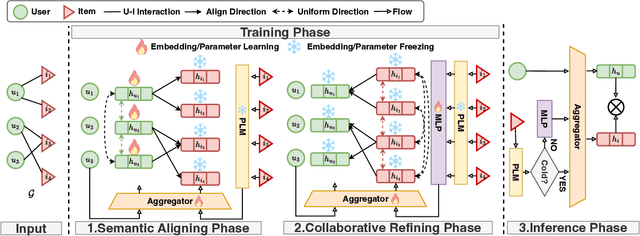
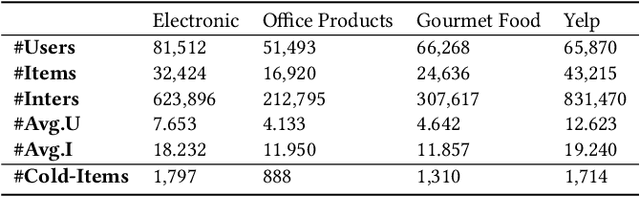
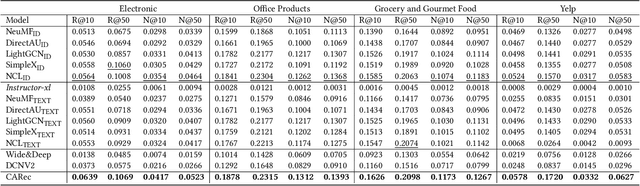
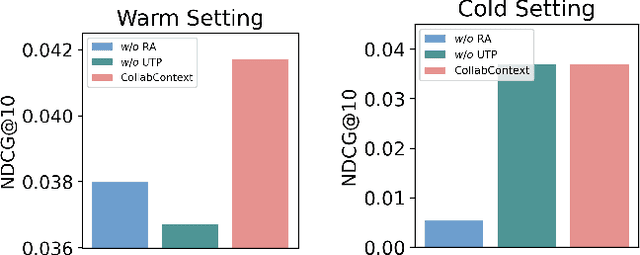
Traditional recommender systems have heavily relied on identity representations (IDs) to model users and items, while the ascendancy of pre-trained language model (PLM) encoders has enriched the modeling of contextual item descriptions. However, PLMs, although effective in addressing few-shot, zero-shot, or unified modeling scenarios, often neglect the crucial collaborative filtering signal. This neglect gives rise to two pressing challenges: (1) Collaborative Contextualization, the seamless integration of collaborative signals with contextual representations. (2) the imperative to bridge the representation gap between ID-based representations and contextual representations while preserving their contextual semantics. In this paper, we propose CollabContext, a novel model that adeptly combines collaborative filtering signals with contextual representations and aligns these representations within the contextual space, preserving essential contextual semantics. Experimental results across three real-world datasets demonstrate substantial improvements. Leveraging collaborative contextualization, CollabContext can also be effectively applied to cold-start scenarios, achieving remarkable enhancements in recommendation performance. The code is available after the conference accepts the paper.
AE-smnsMLC: Multi-Label Classification with Semantic Matching and Negative Label Sampling for Product Attribute Value Extraction
Oct 11, 2023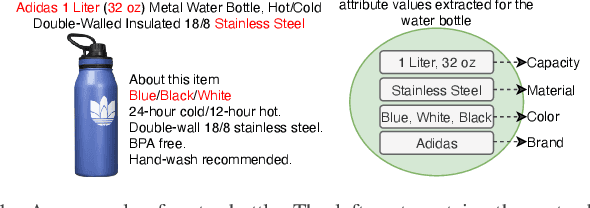
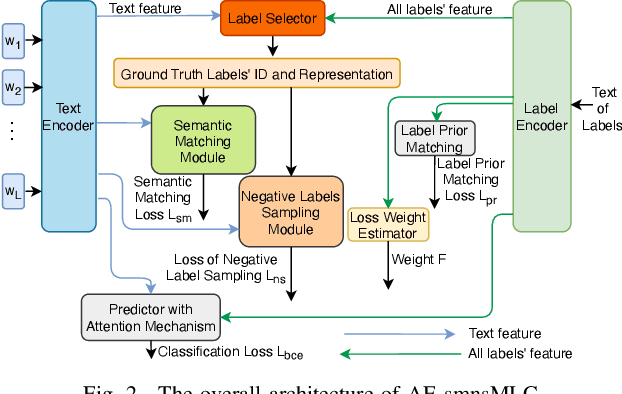
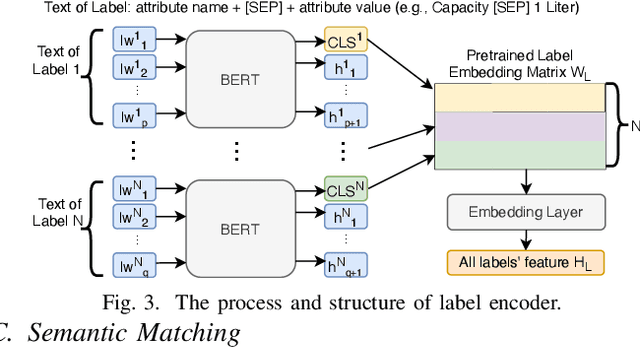
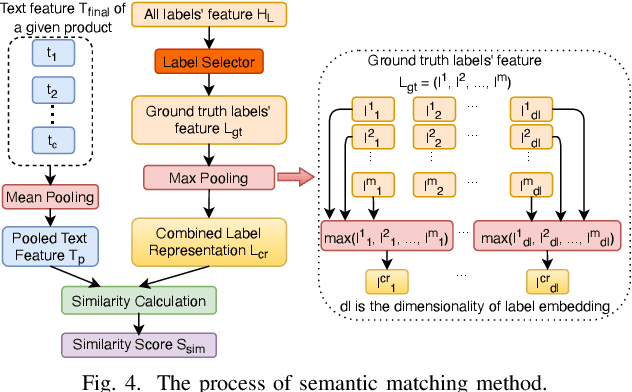
Product attribute value extraction plays an important role for many real-world applications in e-Commerce such as product search and recommendation. Previous methods treat it as a sequence labeling task that needs more annotation for position of values in the product text. This limits their application to real-world scenario in which only attribute values are weakly-annotated for each product without their position. Moreover, these methods only use product text (i.e., product title and description) and do not consider the semantic connection between the multiple attribute values of a given product and its text, which can help attribute value extraction. In this paper, we reformulate this task as a multi-label classification task that can be applied for real-world scenario in which only annotation of attribute values is available to train models (i.e., annotation of positional information of attribute values is not available). We propose a classification model with semantic matching and negative label sampling for attribute value extraction. Semantic matching aims to capture semantic interactions between attribute values of a given product and its text. Negative label sampling aims to enhance the model's ability of distinguishing similar values belonging to the same attribute. Experimental results on three subsets of a large real-world e-Commerce dataset demonstrate the effectiveness and superiority of our proposed model.
Do Large Language Models Know about Facts?
Oct 08, 2023Large language models (LLMs) have recently driven striking performance improvements across a range of natural language processing tasks. The factual knowledge acquired during pretraining and instruction tuning can be useful in various downstream tasks, such as question answering, and language generation. Unlike conventional Knowledge Bases (KBs) that explicitly store factual knowledge, LLMs implicitly store facts in their parameters. Content generated by the LLMs can often exhibit inaccuracies or deviations from the truth, due to facts that can be incorrectly induced or become obsolete over time. To this end, we aim to comprehensively evaluate the extent and scope of factual knowledge within LLMs by designing the benchmark Pinocchio. Pinocchio contains 20K diverse factual questions that span different sources, timelines, domains, regions, and languages. Furthermore, we investigate whether LLMs are able to compose multiple facts, update factual knowledge temporally, reason over multiple pieces of facts, identify subtle factual differences, and resist adversarial examples. Extensive experiments on different sizes and types of LLMs show that existing LLMs still lack factual knowledge and suffer from various spurious correlations. We believe this is a critical bottleneck for realizing trustworthy artificial intelligence. The dataset Pinocchio and our codes will be publicly available.
Discovering Utility-driven Interval Rules
Sep 28, 2023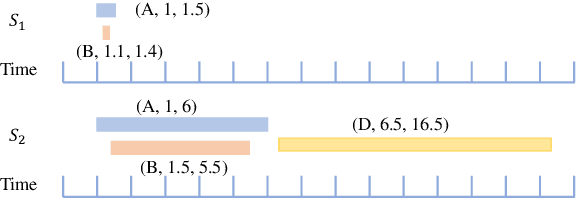
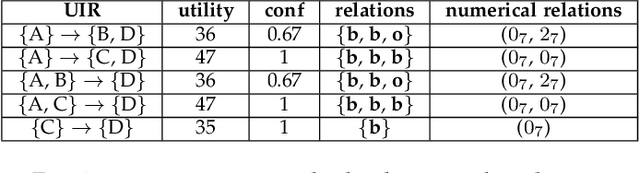
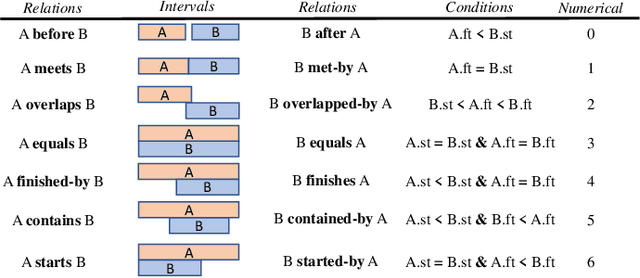
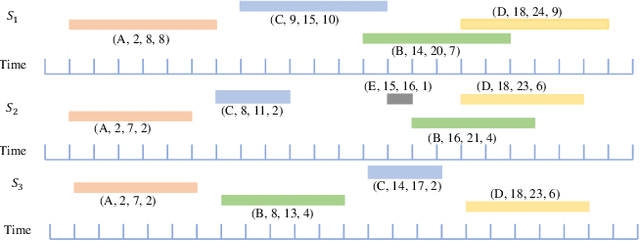
For artificial intelligence, high-utility sequential rule mining (HUSRM) is a knowledge discovery method that can reveal the associations between events in the sequences. Recently, abundant methods have been proposed to discover high-utility sequence rules. However, the existing methods are all related to point-based sequences. Interval events that persist for some time are common. Traditional interval-event sequence knowledge discovery tasks mainly focus on pattern discovery, but patterns cannot reveal the correlation between interval events well. Moreover, the existing HUSRM algorithms cannot be directly applied to interval-event sequences since the relation in interval-event sequences is much more intricate than those in point-based sequences. In this work, we propose a utility-driven interval rule mining (UIRMiner) algorithm that can extract all utility-driven interval rules (UIRs) from the interval-event sequence database to solve the problem. In UIRMiner, we first introduce a numeric encoding relation representation, which can save much time on relation computation and storage on relation representation. Furthermore, to shrink the search space, we also propose a complement pruning strategy, which incorporates the utility upper bound with the relation. Finally, plentiful experiments implemented on both real-world and synthetic datasets verify that UIRMiner is an effective and efficient algorithm.
From Cluster Assumption to Graph Convolution: Graph-based Semi-Supervised Learning Revisited
Sep 24, 2023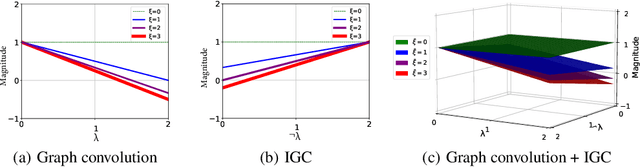
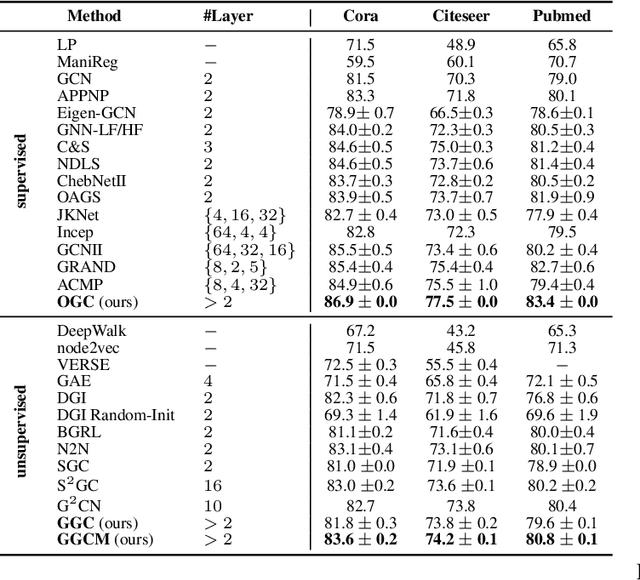
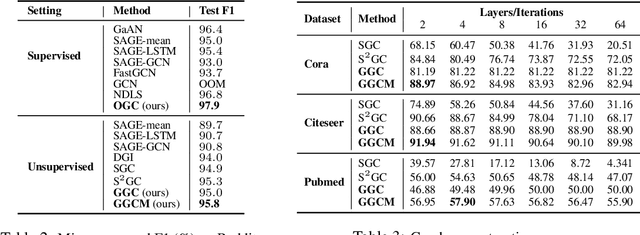
Graph-based semi-supervised learning (GSSL) has long been a hot research topic. Traditional methods are generally shallow learners, based on the cluster assumption. Recently, graph convolutional networks (GCNs) have become the predominant techniques for their promising performance. In this paper, we theoretically discuss the relationship between these two types of methods in a unified optimization framework. One of the most intriguing findings is that, unlike traditional ones, typical GCNs may not jointly consider the graph structure and label information at each layer. Motivated by this, we further propose three simple but powerful graph convolution methods. The first is a supervised method OGC which guides the graph convolution process with labels. The others are two unsupervised methods: GGC and its multi-scale version GGCM, both aiming to preserve the graph structure information during the convolution process. Finally, we conduct extensive experiments to show the effectiveness of our methods.
Localize, Retrieve and Fuse: A Generalized Framework for Free-Form Question Answering over Tables
Sep 21, 2023Question answering on tabular data (a.k.a TableQA), which aims at generating answers to questions grounded on a provided table, has gained significant attention recently. Prior work primarily produces concise factual responses through information extraction from individual or limited table cells, lacking the ability to reason across diverse table cells. Yet, the realm of free-form TableQA, which demands intricate strategies for selecting relevant table cells and the sophisticated integration and inference of discrete data fragments, remains mostly unexplored. To this end, this paper proposes a generalized three-stage approach: Table-to- Graph conversion and cell localizing, external knowledge retrieval, and the fusion of table and text (called TAG-QA), to address the challenge of inferring long free-form answers in generative TableQA. In particular, TAG-QA (1) locates relevant table cells using a graph neural network to gather intersecting cells between relevant rows and columns, (2) leverages external knowledge from Wikipedia, and (3) generates answers by integrating both tabular data and natural linguistic information. Experiments showcase the superior capabilities of TAG-QA in generating sentences that are both faithful and coherent, particularly when compared to several state-of-the-art baselines. Notably, TAG-QA surpasses the robust pipeline-based baseline TAPAS by 17% and 14% in terms of BLEU-4 and PARENT F-score, respectively. Furthermore, TAG-QA outperforms the end-to-end model T5 by 16% and 12% on BLEU-4 and PARENT F-score, respectively.
Named Entity Recognition via Machine Reading Comprehension: A Multi-Task Learning Approach
Sep 20, 2023


Named Entity Recognition (NER) aims to extract and classify entity mentions in the text into pre-defined types (e.g., organization or person name). Recently, many works have been proposed to shape the NER as a machine reading comprehension problem (also termed MRC-based NER), in which entity recognition is achieved by answering the formulated questions related to pre-defined entity types through MRC, based on the contexts. However, these works ignore the label dependencies among entity types, which are critical for precisely recognizing named entities. In this paper, we propose to incorporate the label dependencies among entity types into a multi-task learning framework for better MRC-based NER. We decompose MRC-based NER into multiple tasks and use a self-attention module to capture label dependencies. Comprehensive experiments on both nested NER and flat NER datasets are conducted to validate the effectiveness of the proposed Multi-NER. Experimental results show that Multi-NER can achieve better performance on all datasets.