 Add to Chrome
 Add to Firefox
 Add to Edge
X-WebAgentBench: A Multilingual Interactive Web Benchmark for Evaluating Global Agentic System
May 21, 2025
Recently, large language model (LLM)-based agents have achieved significant success in interactive environments, attracting significant academic and industrial attention. Despite these advancements, current research predominantly focuses on English scenarios. In reality, there are over 7,000 languages worldwide, all of which demand access to comparable agentic services. Nevertheless, the development of language agents remains inadequate for meeting the diverse requirements of multilingual agentic applications. To fill this gap, we introduce X-WebAgentBench, a novel multilingual agent benchmark in an interactive web environment, which evaluates the planning and interaction performance of language agents across multiple languages, thereby contributing to the advancement of global agent intelligence. Additionally, we assess the performance of various LLMs and cross-lingual alignment methods, examining their effectiveness in enhancing agents. Our findings reveal that even advanced models like GPT-4o, when combined with cross-lingual techniques, fail to achieve satisfactory results. We hope that X-WebAgentBench can serve as a valuable benchmark for multilingual agent scenario in real-world applications.

Qwen3 Technical Report
May 14, 2025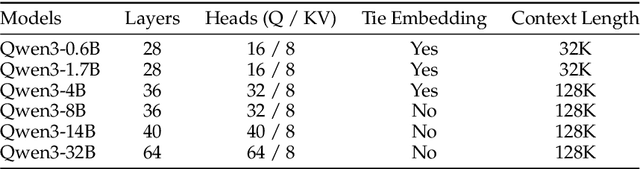
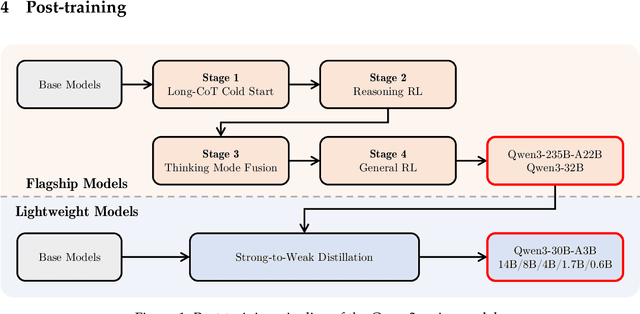

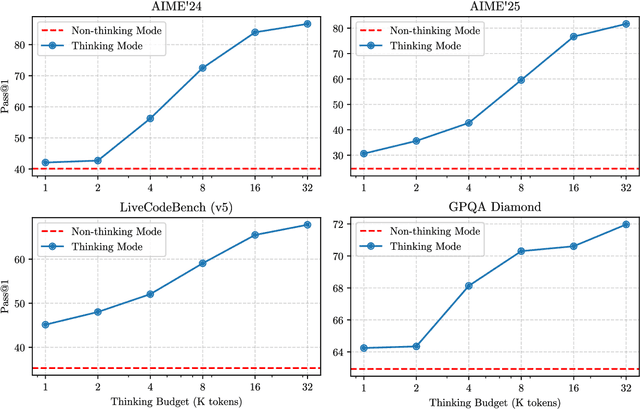
In this work, we present Qwen3, the latest version of the Qwen model family. Qwen3 comprises a series of large language models (LLMs) designed to advance performance, efficiency, and multilingual capabilities. The Qwen3 series includes models of both dense and Mixture-of-Expert (MoE) architectures, with parameter scales ranging from 0.6 to 235 billion. A key innovation in Qwen3 is the integration of thinking mode (for complex, multi-step reasoning) and non-thinking mode (for rapid, context-driven responses) into a unified framework. This eliminates the need to switch between different models--such as chat-optimized models (e.g., GPT-4o) and dedicated reasoning models (e.g., QwQ-32B)--and enables dynamic mode switching based on user queries or chat templates. Meanwhile, Qwen3 introduces a thinking budget mechanism, allowing users to allocate computational resources adaptively during inference, thereby balancing latency and performance based on task complexity. Moreover, by leveraging the knowledge from the flagship models, we significantly reduce the computational resources required to build smaller-scale models, while ensuring their highly competitive performance. Empirical evaluations demonstrate that Qwen3 achieves state-of-the-art results across diverse benchmarks, including tasks in code generation, mathematical reasoning, agent tasks, etc., competitive against larger MoE models and proprietary models. Compared to its predecessor Qwen2.5, Qwen3 expands multilingual support from 29 to 119 languages and dialects, enhancing global accessibility through improved cross-lingual understanding and generation capabilities. To facilitate reproducibility and community-driven research and development, all Qwen3 models are publicly accessible under Apache 2.0.
MiMo: Unlocking the Reasoning Potential of Language Model -- From Pretraining to Posttraining
May 12, 2025We present MiMo-7B, a large language model born for reasoning tasks, with optimization across both pre-training and post-training stages. During pre-training, we enhance the data preprocessing pipeline and employ a three-stage data mixing strategy to strengthen the base model's reasoning potential. MiMo-7B-Base is pre-trained on 25 trillion tokens, with additional Multi-Token Prediction objective for enhanced performance and accelerated inference speed. During post-training, we curate a dataset of 130K verifiable mathematics and programming problems for reinforcement learning, integrating a test-difficulty-driven code-reward scheme to alleviate sparse-reward issues and employing strategic data resampling to stabilize training. Extensive evaluations show that MiMo-7B-Base possesses exceptional reasoning potential, outperforming even much larger 32B models. The final RL-tuned model, MiMo-7B-RL, achieves superior performance on mathematics, code and general reasoning tasks, surpassing the performance of OpenAI o1-mini. The model checkpoints are available at https://github.com/xiaomimimo/MiMo.
A Multi-Dimensional Constraint Framework for Evaluating and Improving Instruction Following in Large Language Models
May 12, 2025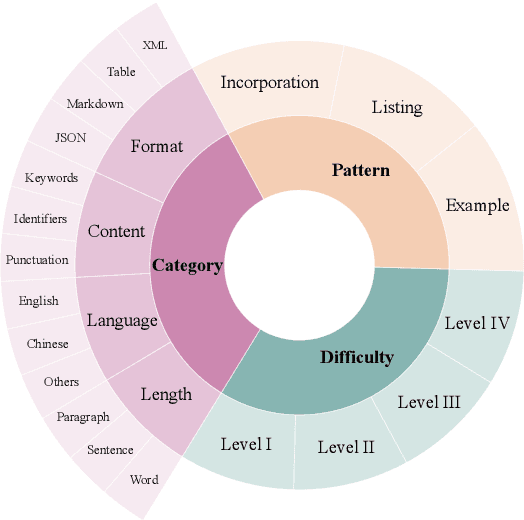

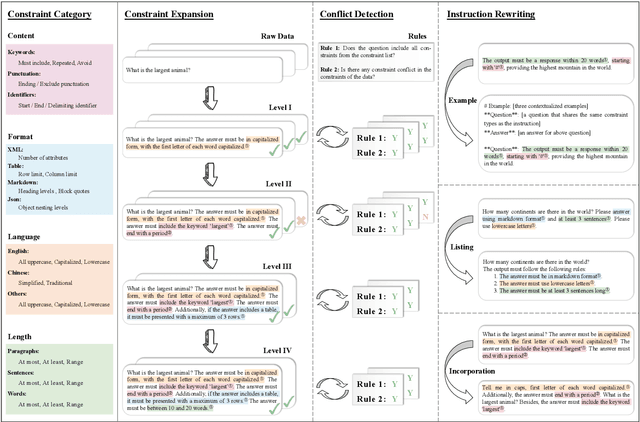
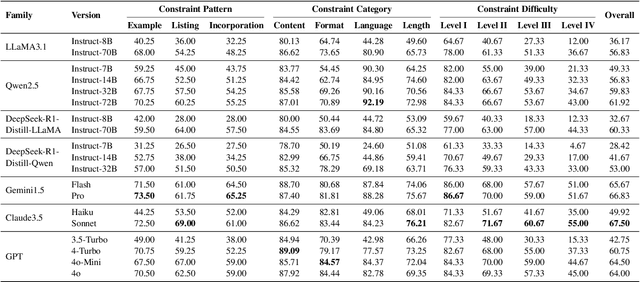
Instruction following evaluates large language models (LLMs) on their ability to generate outputs that adhere to user-defined constraints. However, existing benchmarks often rely on templated constraint prompts, which lack the diversity of real-world usage and limit fine-grained performance assessment. To fill this gap, we propose a multi-dimensional constraint framework encompassing three constraint patterns, four constraint categories, and four difficulty levels. Building on this framework, we develop an automated instruction generation pipeline that performs constraint expansion, conflict detection, and instruction rewriting, yielding 1,200 code-verifiable instruction-following test samples. We evaluate 19 LLMs across seven model families and uncover substantial variation in performance across constraint forms. For instance, average performance drops from 77.67% at Level I to 32.96% at Level IV. Furthermore, we demonstrate the utility of our approach by using it to generate data for reinforcement learning, achieving substantial gains in instruction following without degrading general performance. In-depth analysis indicates that these gains stem primarily from modifications in the model's attention modules parameters, which enhance constraint recognition and adherence. Code and data are available in https://github.com/Junjie-Ye/MulDimIF.
PRIME: Physics-Related Intelligent Mixture of Experts for Transistor Characteristics Prediction
May 10, 2025In recent years, machine learning has been extensively applied to data prediction during process ramp-up, with a particular focus on transistor characteristics for circuit design and manufacture. However, capturing the nonlinear current response across multiple operating regions remains a challenge for neural networks. To address such challenge, a novel machine learning framework, PRIME (Physics-Related Intelligent Mixture of Experts), is proposed to capture and integrate complex regional characteristics. In essence, our framework incorporates physics-based knowledge with data-driven intelligence. By leveraging a dynamic weighting mechanism in its gating network, PRIME adaptively activates the suitable expert model based on distinct input data features. Extensive evaluations are conducted on various gate-all-around (GAA) structures to examine the effectiveness of PRIME and considerable improvements (60\%-84\%) in prediction accuracy are shown over state-of-the-art models.
Drug classification based on X-ray spectroscopy combined with machine learning
May 04, 2025The proliferation of new types of drugs necessitates the urgent development of faster and more accurate detection methods. Traditional detection methods have high requirements for instruments and environments, making the operation complex. X-ray absorption spectroscopy, a non-destructive detection technique, offers advantages such as ease of operation, penetrative observation, and strong substance differentiation capabilities, making it well-suited for application in the field of drug detection and identification. In this study, we constructed a classification model using Convolutional Neural Networks (CNN), Support Vector Machines (SVM), and Particle Swarm Optimization (PSO) to classify and identify drugs based on their X-ray spectral profiles. In the experiments, we selected 14 chemical reagents with chemical formulas similar to drugs as samples. We utilized CNN to extract features from the spectral data of these 14 chemical reagents and used the extracted features to train an SVM model. We also utilized PSO to optimize two critical initial parameters of the SVM. The experimental results demonstrate that this model achieved higher classification accuracy compared to two other common methods, with a prediction accuracy of 99.14%. Additionally, the model exhibited fast execution speed, mitigating the drawback of a drastic increase in running time and efficiency reduction that may result from the direct fusion of PSO and SVM. Therefore, the combined approach of X-ray absorption spectroscopy with CNN, PSO, and SVM provides a rapid, highly accurate, and reliable classification and identification method for the field of drug detection, holding promising prospects for widespread application.
RayZer: A Self-supervised Large View Synthesis Model
May 01, 2025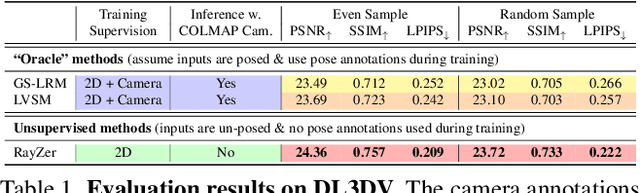
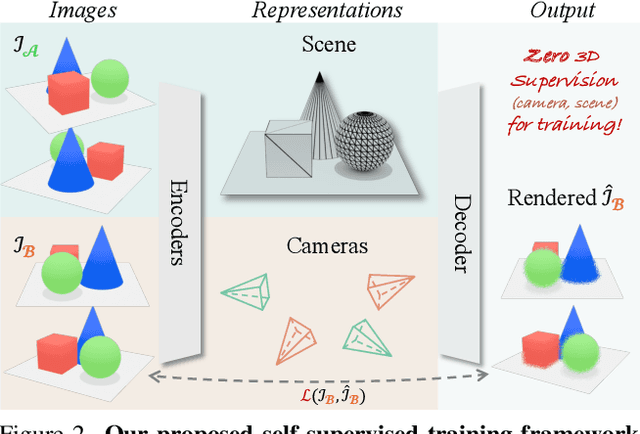
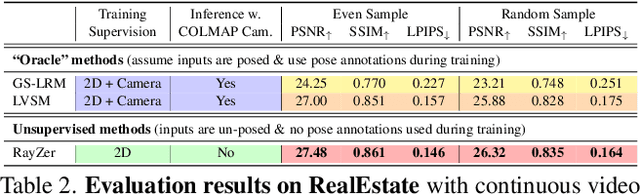
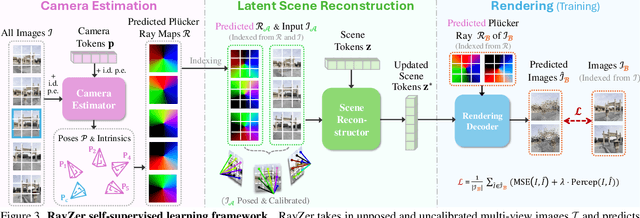
We present RayZer, a self-supervised multi-view 3D Vision model trained without any 3D supervision, i.e., camera poses and scene geometry, while exhibiting emerging 3D awareness. Concretely, RayZer takes unposed and uncalibrated images as input, recovers camera parameters, reconstructs a scene representation, and synthesizes novel views. During training, RayZer relies solely on its self-predicted camera poses to render target views, eliminating the need for any ground-truth camera annotations and allowing RayZer to be trained with 2D image supervision. The emerging 3D awareness of RayZer is attributed to two key factors. First, we design a self-supervised framework, which achieves 3D-aware auto-encoding of input images by disentangling camera and scene representations. Second, we design a transformer-based model in which the only 3D prior is the ray structure, connecting camera, pixel, and scene simultaneously. RayZer demonstrates comparable or even superior novel view synthesis performance than ``oracle'' methods that rely on pose annotations in both training and testing. Project: https://hwjiang1510.github.io/RayZer/
Channel-Adaptive Robust Resource Allocation for Highly Reliable IRS-Assisted V2X Communications
Apr 16, 2025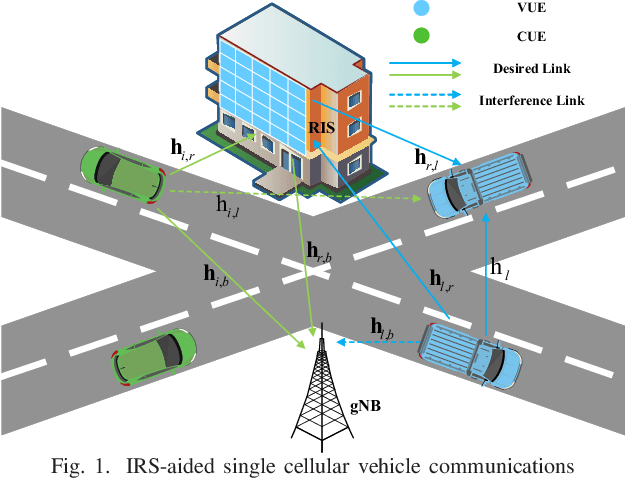
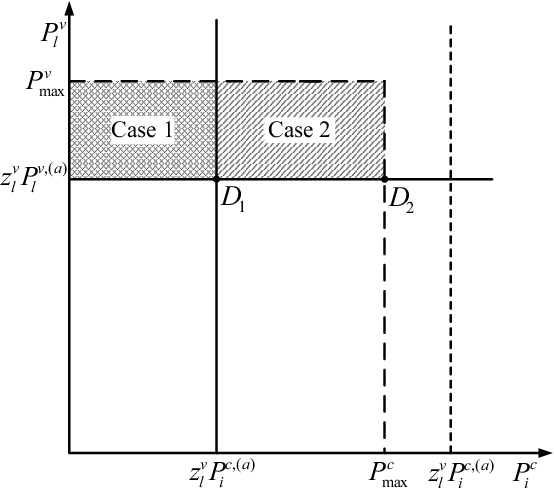
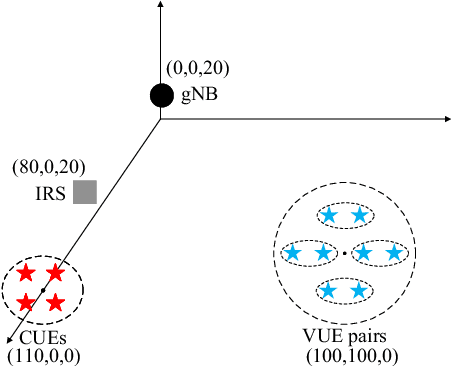
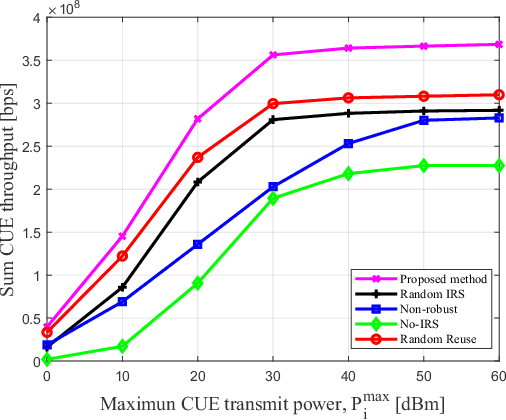
This paper addresses the challenges of resource allocation in vehicular networks enhanced by Intelligent Reflecting Surfaces (IRS), considering the uncertain Channel State Information (CSI) typical of vehicular environments due to the Doppler shift. Leveraging the 3GPP's Mode 1 cellular V2X architecture, our system model facilitates efficient subcarrier usage and interference reduction through coordinated V2I and V2V communications. Each Cellular User Equipment (CUE) shares its spectrum with at most one Vehicular User Equipment (VUE) in a one-to-one reuse pattern. We formulate a joint optimization problem for vehicular transmit power, Multi-User Detection (MUD) matrices, V2V link spectrum reuse, and IRS reflection coefficients in IRS-aided V2X communication with imperfect CSI. To tackle this, a novel robust resource allocation algorithm is developed by first decomposing the problem into manageable sub-problems such as power allocation, MUD matrices optimization and IRS phase shifts, and then using the Block Coordinate Descent (BCD) method to alternately optimize these subproblems for optimal resource allocation. Our contributions include efficient approaches for self-learning based power allocation and phase shift optimization that adapt to CSI uncertainties, significantly enhancing the reliability and efficiency of vehicular communications. Simulation results validate the effectiveness of the proposed solutions in improving the Quality of Service (QoS) and managing the complex interference inherent in dense vehicular networks.
Seedream 3.0 Technical Report
Apr 16, 2025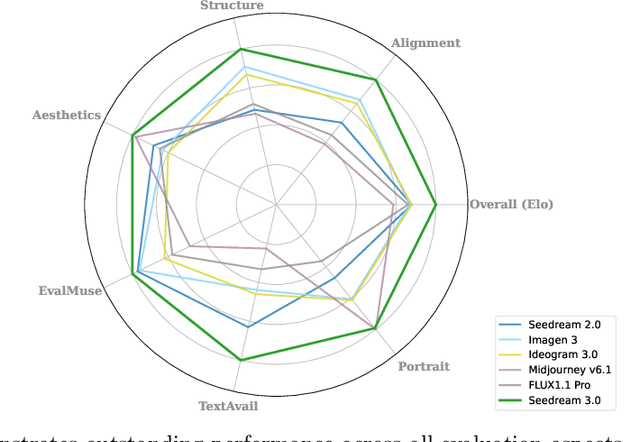


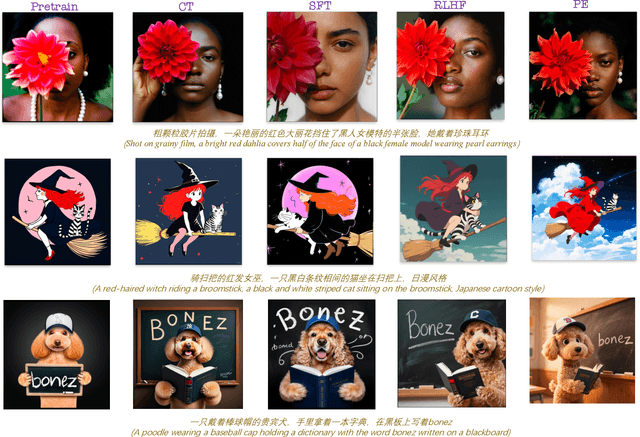
We present Seedream 3.0, a high-performance Chinese-English bilingual image generation foundation model. We develop several technical improvements to address existing challenges in Seedream 2.0, including alignment with complicated prompts, fine-grained typography generation, suboptimal visual aesthetics and fidelity, and limited image resolutions. Specifically, the advancements of Seedream 3.0 stem from improvements across the entire pipeline, from data construction to model deployment. At the data stratum, we double the dataset using a defect-aware training paradigm and a dual-axis collaborative data-sampling framework. Furthermore, we adopt several effective techniques such as mixed-resolution training, cross-modality RoPE, representation alignment loss, and resolution-aware timestep sampling in the pre-training phase. During the post-training stage, we utilize diversified aesthetic captions in SFT, and a VLM-based reward model with scaling, thereby achieving outputs that well align with human preferences. Furthermore, Seedream 3.0 pioneers a novel acceleration paradigm. By employing consistent noise expectation and importance-aware timestep sampling, we achieve a 4 to 8 times speedup while maintaining image quality. Seedream 3.0 demonstrates significant improvements over Seedream 2.0: it enhances overall capabilities, in particular for text-rendering in complicated Chinese characters which is important to professional typography generation. In addition, it provides native high-resolution output (up to 2K), allowing it to generate images with high visual quality.
Cross-Frequency Collaborative Training Network and Dataset for Semi-supervised First Molar Root Canal Segmentation
Apr 16, 2025Root canal (RC) treatment is a highly delicate and technically complex procedure in clinical practice, heavily influenced by the clinicians' experience and subjective judgment. Deep learning has made significant advancements in the field of computer-aided diagnosis (CAD) because it can provide more objective and accurate diagnostic results. However, its application in RC treatment is still relatively rare, mainly due to the lack of public datasets in this field. To address this issue, in this paper, we established a First Molar Root Canal segmentation dataset called FMRC-2025. Additionally, to alleviate the workload of manual annotation for dentists and fully leverage the unlabeled data, we designed a Cross-Frequency Collaborative training semi-supervised learning (SSL) Network called CFC-Net. It consists of two components: (1) Cross-Frequency Collaborative Mean Teacher (CFC-MT), which introduces two specialized students (SS) and one comprehensive teacher (CT) for collaborative multi-frequency training. The CT and SS are trained on different frequency components while fully integrating multi-frequency knowledge through cross and full frequency consistency supervisions. (2) Uncertainty-guided Cross-Frequency Mix (UCF-Mix) mechanism enables the network to generate high-confidence pseudo-labels while learning to integrate multi-frequency information and maintaining the structural integrity of the targets. Extensive experiments on FMRC-2025 and three public dental datasets demonstrate that CFC-MT is effective for RC segmentation and can also exhibit strong generalizability on other dental segmentation tasks, outperforming state-of-the-art SSL medical image segmentation methods. Codes and dataset will be released.