 Add to Chrome
 Add to Firefox
 Add to Edge
Beyond the Black Box: Theory and Mechanism of Large Language Models
Jan 06, 2026
The rapid emergence of Large Language Models (LLMs) has precipitated a profound paradigm shift in Artificial Intelligence, delivering monumental engineering successes that increasingly impact modern society. However, a critical paradox persists within the current field: despite the empirical efficacy, our theoretical understanding of LLMs remains disproportionately nascent, forcing these systems to be treated largely as ``black boxes''. To address this theoretical fragmentation, this survey proposes a unified lifecycle-based taxonomy that organizes the research landscape into six distinct stages: Data Preparation, Model Preparation, Training, Alignment, Inference, and Evaluation. Within this framework, we provide a systematic review of the foundational theories and internal mechanisms driving LLM performance. Specifically, we analyze core theoretical issues such as the mathematical justification for data mixtures, the representational limits of various architectures, and the optimization dynamics of alignment algorithms. Moving beyond current best practices, we identify critical frontier challenges, including the theoretical limits of synthetic data self-improvement, the mathematical bounds of safety guarantees, and the mechanistic origins of emergent intelligence. By connecting empirical observations with rigorous scientific inquiry, this work provides a structured roadmap for transitioning LLM development from engineering heuristics toward a principled scientific discipline.

A more efficient method for large-sample model-free feature screening via multi-armed bandits
Sep 19, 2025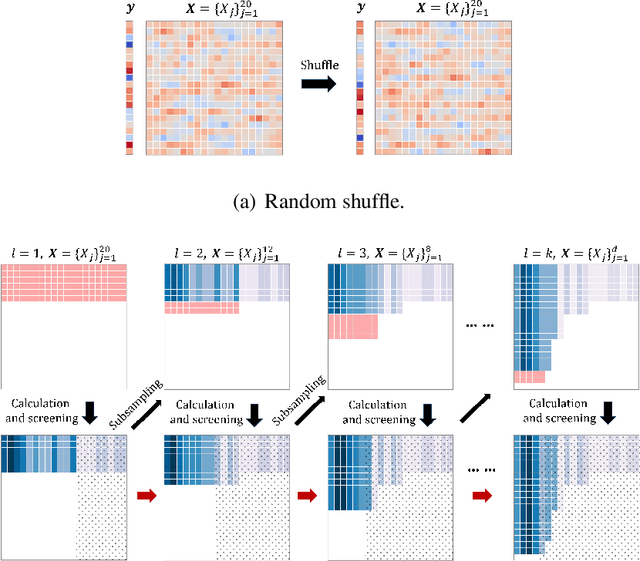
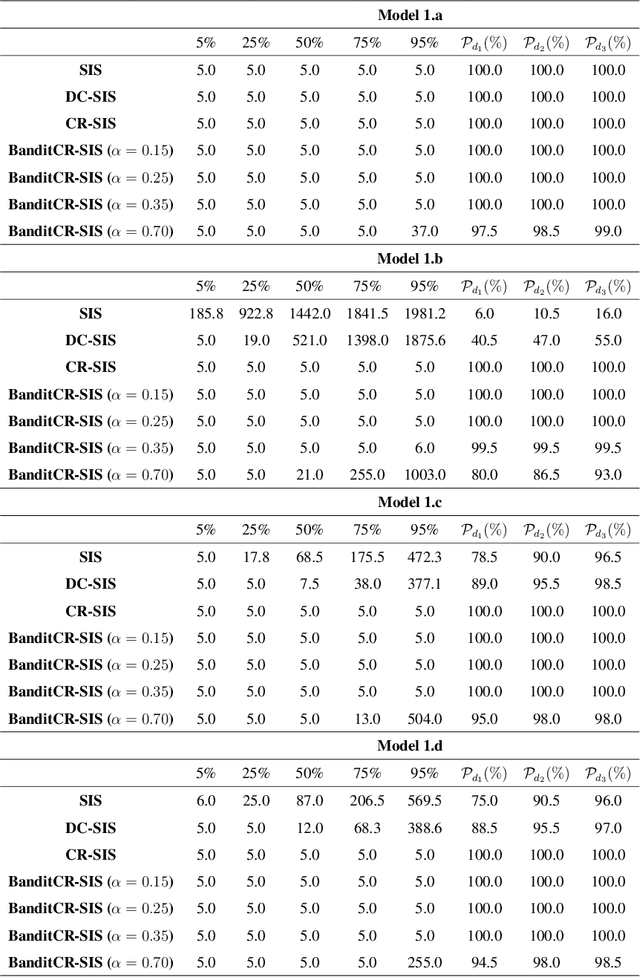
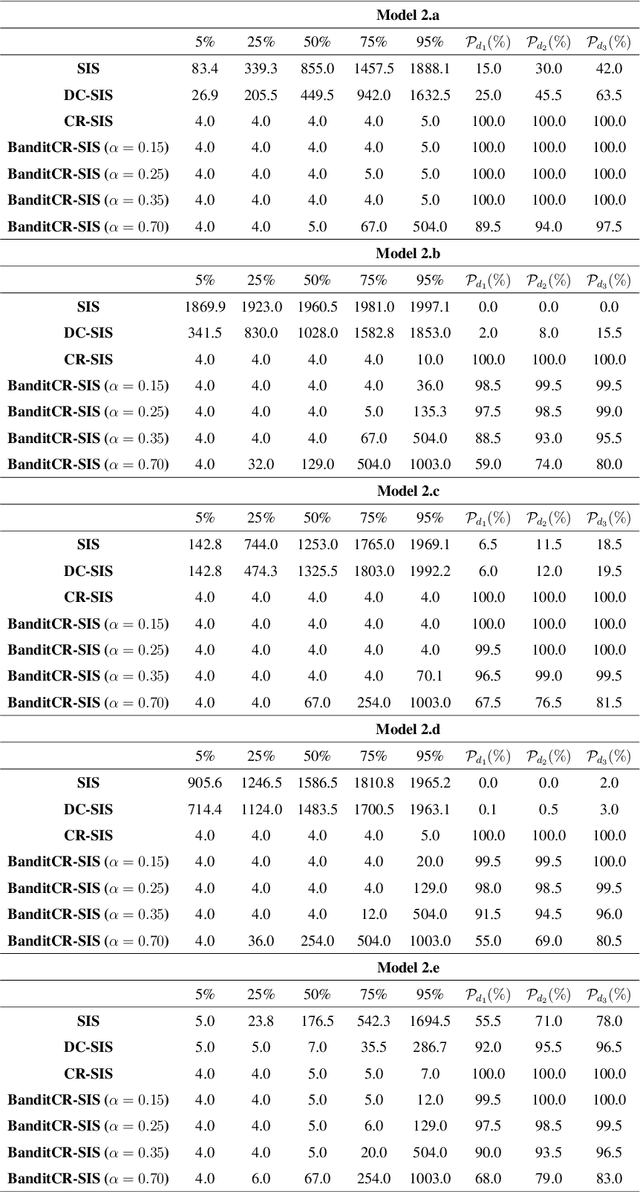
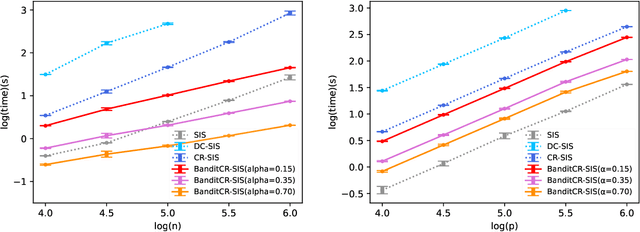
We consider the model-free feature screening in large-scale ultrahigh-dimensional data analysis. Existing feature screening methods often face substantial computational challenges when dealing with large sample sizes. To alleviate the computational burden, we propose a rank-based model-free sure independence screening method (CR-SIS) and its efficient variant, BanditCR-SIS. The CR-SIS method, based on Chatterjee's rank correlation, is as straightforward to implement as the sure independence screening (SIS) method based on Pearson correlation introduced by Fan and Lv(2008), but it is significantly more powerful in detecting nonlinear relationships between variables. Motivated by the multi-armed bandit (MAB) problem, we reformulate the feature screening procedure to significantly reduce the computational complexity of CR-SIS. For a predictor matrix of size n \times p, the computational cost of CR-SIS is O(nlog(n)p), while BanditCR-SIS reduces this to O(\sqrt(n)log(n)p + nlog(n)). Theoretically, we establish the sure screening property for both CR-SIS and BanditCR-SIS under mild regularity conditions. Furthermore, we demonstrate the effectiveness of our methods through extensive experimental studies on both synthetic and real-world datasets. The results highlight their superior performance compared to classical screening methods, requiring significantly less computational time.
PRIME: Physics-Related Intelligent Mixture of Experts for Transistor Characteristics Prediction
May 10, 2025In recent years, machine learning has been extensively applied to data prediction during process ramp-up, with a particular focus on transistor characteristics for circuit design and manufacture. However, capturing the nonlinear current response across multiple operating regions remains a challenge for neural networks. To address such challenge, a novel machine learning framework, PRIME (Physics-Related Intelligent Mixture of Experts), is proposed to capture and integrate complex regional characteristics. In essence, our framework incorporates physics-based knowledge with data-driven intelligence. By leveraging a dynamic weighting mechanism in its gating network, PRIME adaptively activates the suitable expert model based on distinct input data features. Extensive evaluations are conducted on various gate-all-around (GAA) structures to examine the effectiveness of PRIME and considerable improvements (60\%-84\%) in prediction accuracy are shown over state-of-the-art models.