 Add to Chrome
 Add to Firefox
 Add to Edge
Air Quality Prediction with Physics-Informed Dual Neural ODEs in Open Systems
Oct 25, 2024


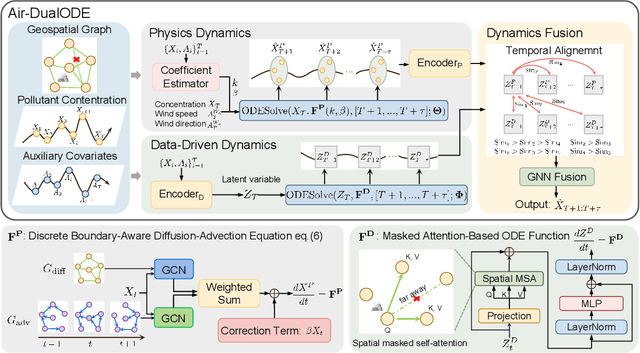

Air pollution significantly threatens human health and ecosystems, necessitating effective air quality prediction to inform public policy. Traditional approaches are generally categorized into physics-based and data-driven models. Physics-based models usually struggle with high computational demands and closed-system assumptions, while data-driven models may overlook essential physical dynamics, confusing the capturing of spatiotemporal correlations. Although some physics-informed approaches combine the strengths of both models, they often face a mismatch between explicit physical equations and implicit learned representations. To address these challenges, we propose Air-DualODE, a novel physics-informed approach that integrates dual branches of Neural ODEs for air quality prediction. The first branch applies open-system physical equations to capture spatiotemporal dependencies for learning physics dynamics, while the second branch identifies the dependencies not addressed by the first in a fully data-driven way. These dual representations are temporally aligned and fused to enhance prediction accuracy. Our experimental results demonstrate that Air-DualODE achieves state-of-the-art performance in predicting pollutant concentrations across various spatial scales, thereby offering a promising solution for real-world air quality challenges.

PlantCamo: Plant Camouflage Detection
Oct 23, 2024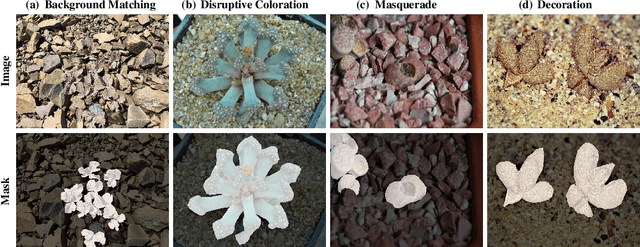
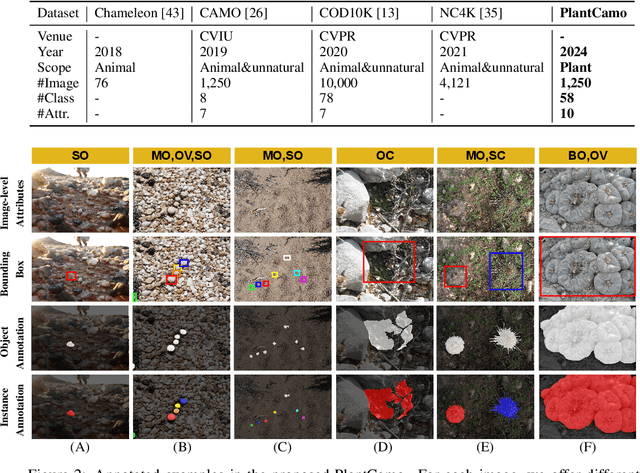
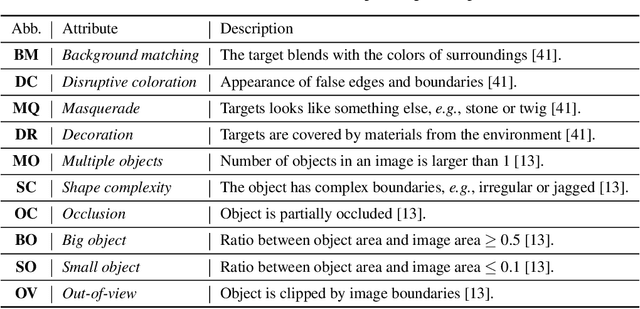
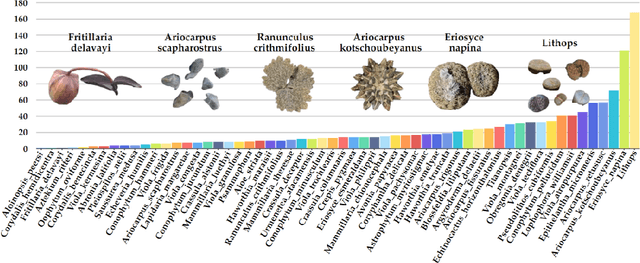
Camouflaged Object Detection (COD) aims to detect objects with camouflaged properties. Although previous studies have focused on natural (animals and insects) and unnatural (artistic and synthetic) camouflage detection, plant camouflage has been neglected. However, plant camouflage plays a vital role in natural camouflage. Therefore, this paper introduces a new challenging problem of Plant Camouflage Detection (PCD). To address this problem, we introduce the PlantCamo dataset, which comprises 1,250 images with camouflaged plants representing 58 object categories in various natural scenes. To investigate the current status of plant camouflage detection, we conduct a large-scale benchmark study using 20+ cutting-edge COD models on the proposed dataset. Due to the unique characteristics of plant camouflage, including holes and irregular borders, we developed a new framework, named PCNet, dedicated to PCD. Our PCNet surpasses performance thanks to its multi-scale global feature enhancement and refinement. Finally, we discuss the potential applications and insights, hoping this work fills the gap in fine-grained COD research and facilitates further intelligent ecology research. All resources will be available on https://github.com/yjybuaa/PlantCamo.
Learning-Augmented Algorithms for the Bahncard Problem
Oct 20, 2024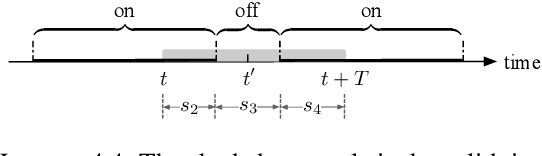


In this paper, we study learning-augmented algorithms for the Bahncard problem. The Bahncard problem is a generalization of the ski-rental problem, where a traveler needs to irrevocably and repeatedly decide between a cheap short-term solution and an expensive long-term one with an unknown future. Even though the problem is canonical, only a primal-dual-based learning-augmented algorithm was explicitly designed for it. We develop a new learning-augmented algorithm, named PFSUM, that incorporates both history and short-term future to improve online decision making. We derive the competitive ratio of PFSUM as a function of the prediction error and conduct extensive experiments to show that PFSUM outperforms the primal-dual-based algorithm.
GeSubNet: Gene Interaction Inference for Disease Subtype Network Generation
Oct 17, 2024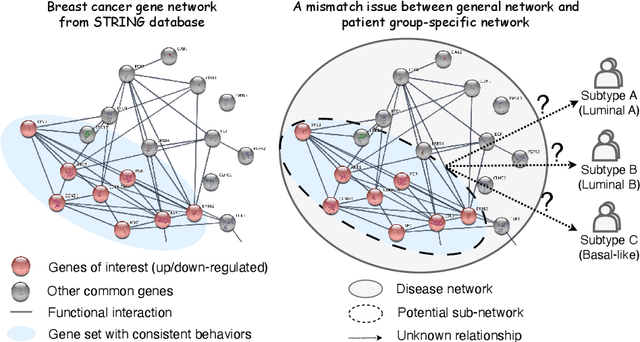

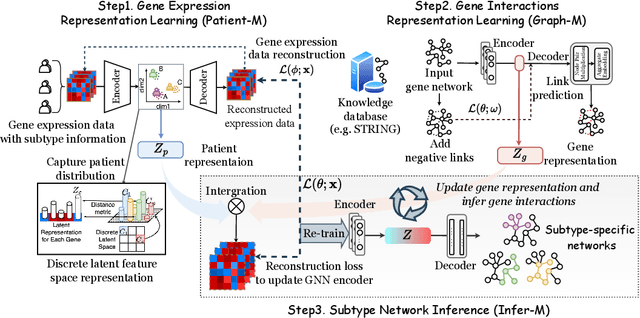

Retrieving gene functional networks from knowledge databases presents a challenge due to the mismatch between disease networks and subtype-specific variations. Current solutions, including statistical and deep learning methods, often fail to effectively integrate gene interaction knowledge from databases or explicitly learn subtype-specific interactions. To address this mismatch, we propose GeSubNet, which learns a unified representation capable of predicting gene interactions while distinguishing between different disease subtypes. Graphs generated by such representations can be considered subtype-specific networks. GeSubNet is a multi-step representation learning framework with three modules: First, a deep generative model learns distinct disease subtypes from patient gene expression profiles. Second, a graph neural network captures representations of prior gene networks from knowledge databases, ensuring accurate physical gene interactions. Finally, we integrate these two representations using an inference loss that leverages graph generation capabilities, conditioned on the patient separation loss, to refine subtype-specific information in the learned representation. GeSubNet consistently outperforms traditional methods, with average improvements of 30.6%, 21.0%, 20.1%, and 56.6% across four graph evaluation metrics, averaged over four cancer datasets. Particularly, we conduct a biological simulation experiment to assess how the behavior of selected genes from over 11,000 candidates affects subtypes or patient distributions. The results show that the generated network has the potential to identify subtype-specific genes with an 83% likelihood of impacting patient distribution shifts. The GeSubNet resource is available: https://anonymous.4open.science/r/GeSubNet/
Backdoor Attack on Vertical Federated Graph Neural Network Learning
Oct 15, 2024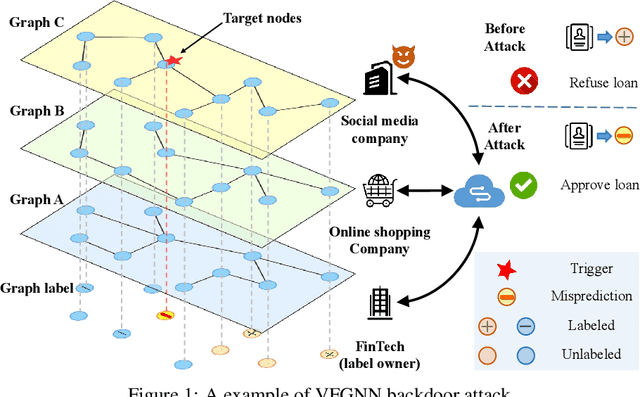
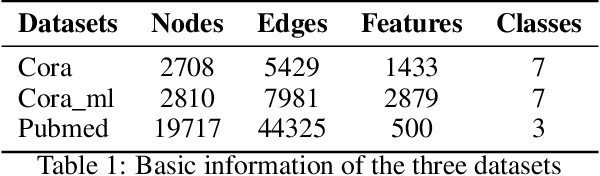
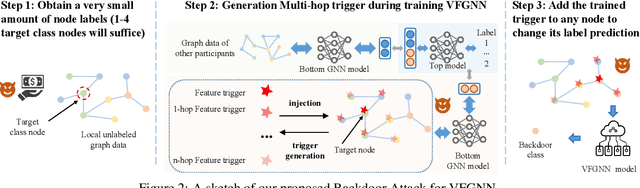
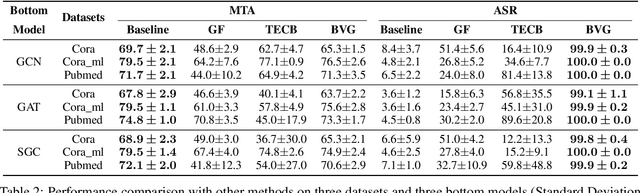
Federated Graph Neural Network (FedGNN) is a privacy-preserving machine learning technology that combines federated learning (FL) and graph neural networks (GNNs). It offers a privacy-preserving solution for training GNNs using isolated graph data. Vertical Federated Graph Neural Network (VFGNN) is an important branch of FedGNN, where data features and labels are distributed among participants, and each participant has the same sample space. Due to the difficulty of accessing and modifying distributed data and labels, the vulnerability of VFGNN to backdoor attacks remains largely unexplored. In this context, we propose BVG, the first method for backdoor attacks in VFGNN. Without accessing or modifying labels, BVG uses multi-hop triggers and requires only four target class nodes for an effective backdoor attack. Experiments show that BVG achieves high attack success rates (ASR) across three datasets and three different GNN models, with minimal impact on main task accuracy (MTA). We also evaluate several defense methods, further validating the robustness and effectiveness of BVG. This finding also highlights the need for advanced defense mechanisms to counter sophisticated backdoor attacks in practical VFGNN applications.
FoundTS: Comprehensive and Unified Benchmarking of Foundation Models for Time Series Forecasting
Oct 15, 2024

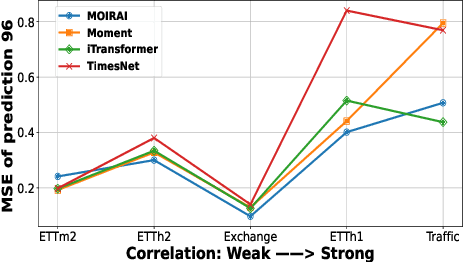

Time Series Forecasting (TSF) is key functionality in numerous fields, including in finance, weather services, and energy management. While TSF methods are emerging these days, many of them require domain-specific data collection and model training and struggle with poor generalization performance on new domains. Foundation models aim to overcome this limitation. Pre-trained on large-scale language or time series data, they exhibit promising inferencing capabilities in new or unseen data. This has spurred a surge in new TSF foundation models. We propose a new benchmark, FoundTS, to enable thorough and fair evaluation and comparison of such models. FoundTS covers a variety of TSF foundation models, including those based on large language models and those pretrained on time series. Next, FoundTS supports different forecasting strategies, including zero-shot, few-shot, and full-shot, thereby facilitating more thorough evaluations. Finally, FoundTS offers a pipeline that standardizes evaluation processes such as dataset splitting, loading, normalization, and few-shot sampling, thereby facilitating fair evaluations. Building on this, we report on an extensive evaluation of TSF foundation models on a broad range of datasets from diverse domains and with different statistical characteristics. Specifically, we identify pros and cons and inherent limitations of existing foundation models, and we identify directions for future model design. We make our code and datasets available at https://anonymous.4open.science/r/FoundTS-C2B0.
LiDAR-GS:Real-time LiDAR Re-Simulation using Gaussian Splatting
Oct 07, 2024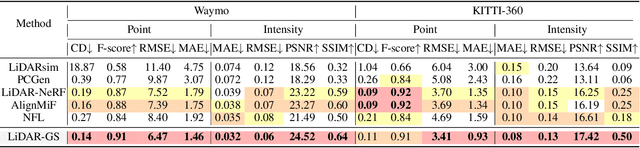
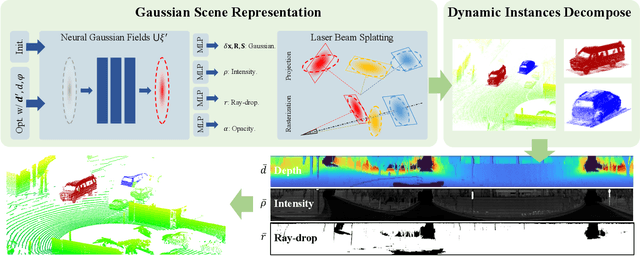
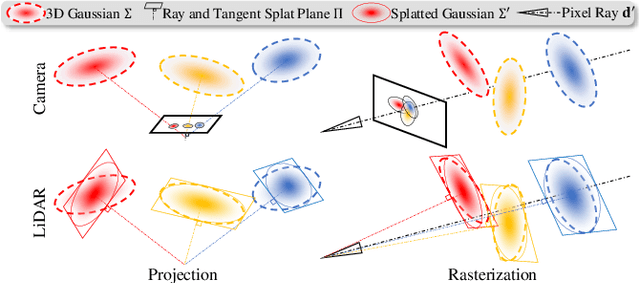
LiDAR simulation plays a crucial role in closed-loop simulation for autonomous driving. Although recent advancements, such as the use of reconstructed mesh and Neural Radiance Fields (NeRF), have made progress in simulating the physical properties of LiDAR, these methods have struggled to achieve satisfactory frame rates and rendering quality. To address these limitations, we present LiDAR-GS, the first LiDAR Gaussian Splatting method, for real-time high-fidelity re-simulation of LiDAR sensor scans in public urban road scenes. The vanilla Gaussian Splatting, designed for camera models, cannot be directly applied to LiDAR re-simulation. To bridge the gap between passive camera and active LiDAR, our LiDAR-GS designs a differentiable laser beam splatting, grounded in the LiDAR range view model. This innovation allows for precise surface splatting by projecting lasers onto micro cross-sections, effectively eliminating artifacts associated with local affine approximations. Additionally, LiDAR-GS leverages Neural Gaussian Fields, which further integrate view-dependent clues, to represent key LiDAR properties that are influenced by the incident angle and external factors. Combining these practices with some essential adaptations, e.g., dynamic instances decomposition, our approach succeeds in simultaneously re-simulating depth, intensity, and ray-drop channels, achieving state-of-the-art results in both rendering frame rate and quality on publically available large scene datasets. Our source code will be made publicly available.
Compressed Sensing based Detection Schemes for Differential Spatial Modulation in Visible Light Communication Systems
Sep 10, 2024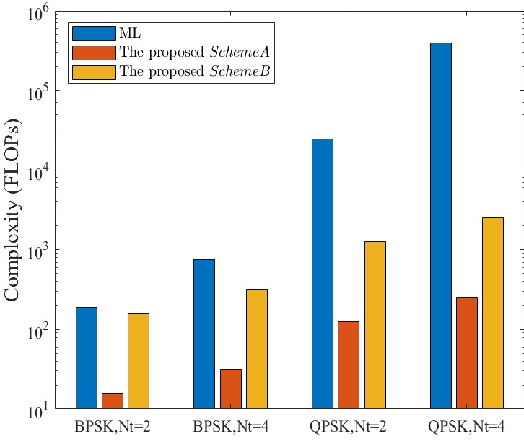
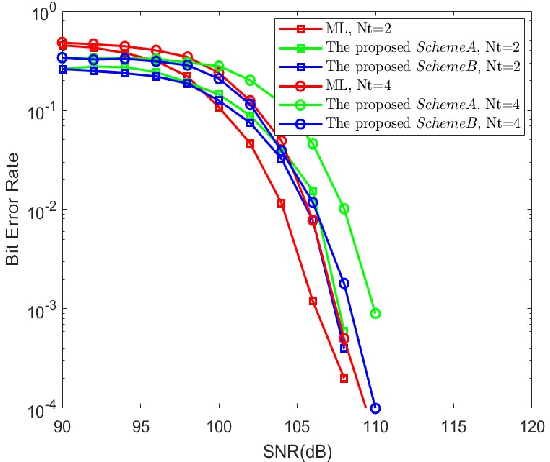
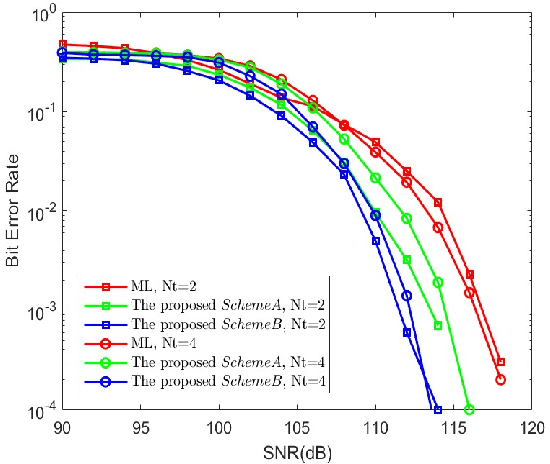
Differential spatial modulation (DSM) exploits the time dimension to facilitate the differential modulation, which can perfectly avoid the challenge in acquiring of heavily entangled channel state information of visible light communication (VLC) system. However, it has huge search space and high complexity for large number of transmitters. In this paper, a novel vector correction (VC)-based orthogonal matching pursuit (OMP) detection algorithm is proposed to reduce the complexity, which exploits the sparsity and relativity of all transmitters, and then employs a novel correction criterion by correcting the index vectors of the error estimation for improving the demodulation performance. To overcome the local optimum dilemma in the atoms searching, an OMP-assisted genetic algorithm is also proposed to further improve the bit error rate (BER) performance of the VLC-DSM system. Simulation results demonstrate that the proposed schemes can significantly reduce the computational complexity at least by 62.5% while achieving an excellent BER performance as compared with traditional maximum likelihood based receiver.
Learning to Discover Forgery Cues for Face Forgery Detection
Sep 02, 2024


Locating manipulation maps, i.e., pixel-level annotation of forgery cues, is crucial for providing interpretable detection results in face forgery detection. Related learning objects have also been widely adopted as auxiliary tasks to improve the classification performance of detectors whereas they require comparisons between paired real and forged faces to obtain manipulation maps as supervision. This requirement restricts their applicability to unpaired faces and contradicts real-world scenarios. Moreover, the used comparison methods annotate all changed pixels, including noise introduced by compression and upsampling. Using such maps as supervision hinders the learning of exploitable cues and makes models prone to overfitting. To address these issues, we introduce a weakly supervised model in this paper, named Forgery Cue Discovery (FoCus), to locate forgery cues in unpaired faces. Unlike some detectors that claim to locate forged regions in attention maps, FoCus is designed to sidestep their shortcomings of capturing partial and inaccurate forgery cues. Specifically, we propose a classification attentive regions proposal module to locate forgery cues during classification and a complementary learning module to facilitate the learning of richer cues. The produced manipulation maps can serve as better supervision to enhance face forgery detectors. Visualization of the manipulation maps of the proposed FoCus exhibits superior interpretability and robustness compared to existing methods. Experiments on five datasets and four multi-task models demonstrate the effectiveness of FoCus in both in-dataset and cross-dataset evaluations.
Latent-EnSF: A Latent Ensemble Score Filter for High-Dimensional Data Assimilation with Sparse Observation Data
Aug 29, 2024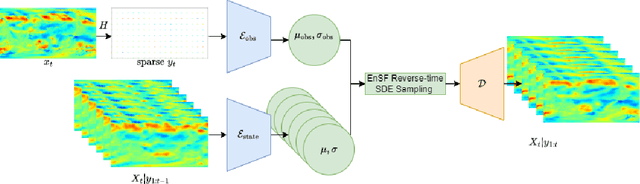

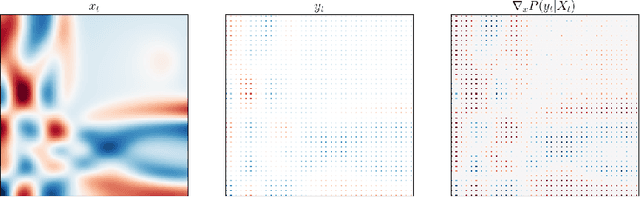
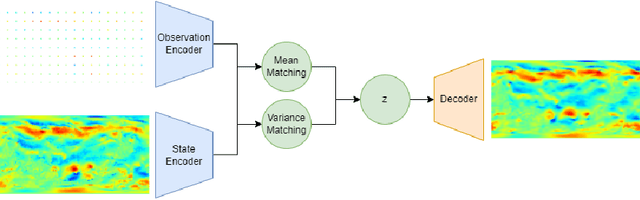
Accurate modeling and prediction of complex physical systems often rely on data assimilation techniques to correct errors inherent in model simulations. Traditional methods like the Ensemble Kalman Filter (EnKF) and its variants as well as the recently developed Ensemble Score Filters (EnSF) face significant challenges when dealing with high-dimensional and nonlinear Bayesian filtering problems with sparse observations, which are ubiquitous in real-world applications. In this paper, we propose a novel data assimilation method, Latent-EnSF, which leverages EnSF with efficient and consistent latent representations of the full states and sparse observations to address the joint challenges of high dimensionlity in states and high sparsity in observations for nonlinear Bayesian filtering. We introduce a coupled Variational Autoencoder (VAE) with two encoders to encode the full states and sparse observations in a consistent way guaranteed by a latent distribution matching and regularization as well as a consistent state reconstruction. With comparison to several methods, we demonstrate the higher accuracy, faster convergence, and higher efficiency of Latent-EnSF for two challenging applications with complex models in shallow water wave propagation and medium-range weather forecasting, for highly sparse observations in both space and time.