 Add to Chrome
 Add to Firefox
 Add to Edge
Cell-Free MIMO-ISAC: Joint Location and Velocity Estimation and Fundamental CRLB Analysis
Mar 09, 2025
This paper investigates joint location and velocity estimation, along with their fundamental performance bounds analysis, in a cell-free multi-input multi-output (MIMO) integrated sensing and communication (ISAC) system. First, unlike existing studies that derive likelihood functions for target parameter estimation using continuous received signals, we formulate the maximum likelihood estimation (MLE) for radar sensing based on discrete received signals at a given sampling rate. Second, leveraging the proposed MLEs, we derive closed-form Cramer-Rao lower bounds (CRLBs) for joint location and velocity estimation in both single-target and multiple-target scenarios. Third, to enhance computational efficiency, we propose approximate CRLBs and conduct an in-depth accuracy analysis. Additionally, we thoroughly examine the impact of sampling rate, squared effective bandwidth, and time width on CRLB performance. For multiple-target scenarios, the concepts of safety distance and safety velocity are introduced to characterize conditions under which the CRLBs for multiple targets converge to their single target counterparts. Finally, extensive simulations are conducted to verify the accuracy of the proposed CRLBs and the theoretical results using state-of-the-art waveforms, namely orthogonal frequency division multiplexing (OFDM) and orthogonal chirp division multiplexing (OCDM).

Joint Beamforming and Compressed Sensing for Uplink Grant-Free Access
Mar 09, 2025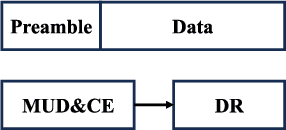
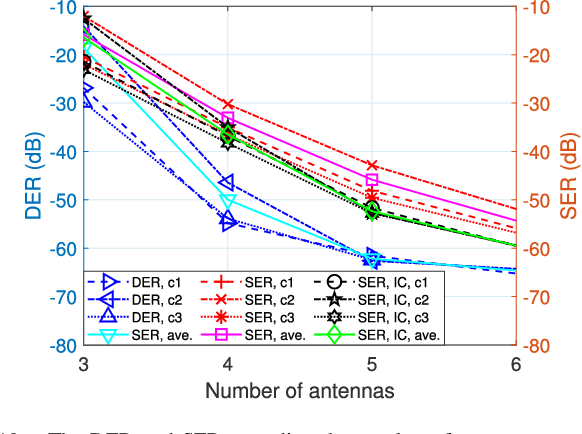
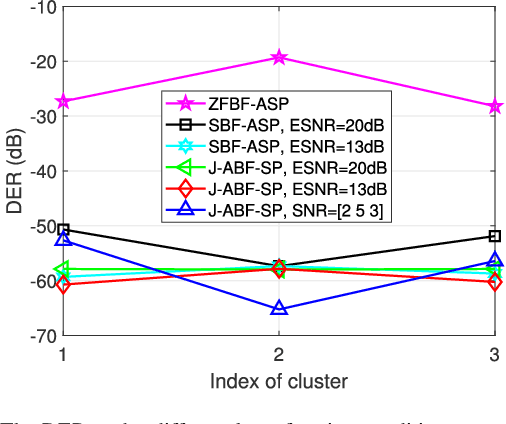
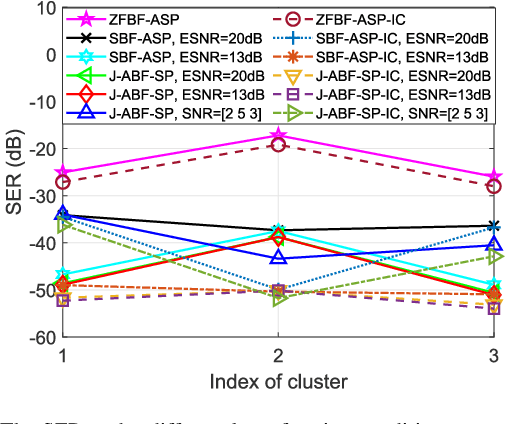
Compressed sensing (CS)-based techniques have been widely applied in the grant-free non-orthogonal multiple access (NOMA) to a single-antenna base station (BS). In this paper, we consider the multi-antenna reception at the BS for uplink grant-free access for the massive machine type communication (mMTC) with limited channel resources. To enhance the overloading performance of the BS, we develop a general framework for the synergistic amalgamation of the spatial division multiple access (SDMA) technique with the CS-based grant-free NOMA. We derive a closed-form statistical beamforming and a dynamic beamforming scheme for the inter-cluster interference suppression when applying SDMA. Based on this, we further develop a joint adaptive beamforming and subspace pursuit (JABF-SP) algorithm for the multiuser detection and data recovery, with a novel sparsity level decision method without the accurate knowledge of the noise level. To further improve the data recovery performance, we propose an interference cancellation based J-ABF-SP scheme (J-ABF-SP-IC) by using the initial signal estimates generated from the J-ABF-SP algorithm. Illustrative simulations verify the superior user detection and signal recovery performance of our proposed algorithms in comparison with existing CS-based grant-free NOMA techniques.
Pilot and Data Power Control for Uplink Cell-free massive MIMO
Feb 26, 2025This paper introduces a novel iterative algorithm for optimizing pilot and data power control (PC) in cell-free massive multiple-input multiple-output (CF-mMIMO) systems, aiming to enhance system performance under real-time channel conditions. The approach begins by deriving the signal-to-interference-plus-noise ratio (SINR) using a matched filtering receiver and formulating a min-max optimization problem to minimize the normalized mean square error (NMSE). Utilizing McCormick relaxation, the algorithm adjusts pilot power dynamically, ensuring efficient channel estimation. A subsequent max-min optimization problem allocates data power, balancing fairness and efficiency. The iterative process refines pilot and data power allocations based on updated channel state information (CSI) and NMSE results, optimizing spectral efficiency. By leveraging geometric programming (GP) for data power allocation, the proposed method achieves a robust trade-off between simplicity and performance, significantly improving system capacity and fairness. The simulation results demonstrate that dynamic adjustment of both pilot and data PC substantially enhances overall spectral efficiency and fairness, outperforming the existing schemes in the literature.
Latency-Aware Resource Allocation for Integrated Communications, Computation, and Sensing in Cell-Free mMIMO Systems
Feb 24, 2025


In this paper, we investigate a cell-free massive multiple-input and multiple-output (MIMO)-enabled integration communication, computation, and sensing (ICCS) system, aiming to minimize the maximum computation latency to guarantee the stringent sensing requirements. We consider a two-tier offloading framework, where each multi-antenna terminal can optionally offload its local tasks to either multiple mobile-edge servers for distributed computation or the cloud server for centralized computation while satisfying the sensing requirements and power constraint. The above offloading problem is formulated as a mixed-integer programming and non-convex problem, which can be decomposed into three sub-problems, namely, distributed offloading decision, beamforming design, and execution scheduling mechanism. First, the continuous relaxation and penalty-based techniques are applied to tackle the distributed offloading strategy. Then, the weighted minimum mean square error (WMMSE) and successive convex approximation (SCA)-based lower bound are utilized to design the integrated communication and sensing (ISAC) beamforming. Finally, the other resources can be judiciously scheduled to minimize the maximum latency. A rigorous convergence analysis and numerical results substantiate the effectiveness of our method. Furthermore, simulation results demonstrate that multi-point cooperation in cell-free massive MIMO-enabled ICCS significantly reduces overall computation latency, in comparison to the benchmark schemes.
Affine Frequency Division Multiplexing: Extending OFDM for Scenario-Flexibility and Resilience
Feb 07, 2025


Next-generation wireless networks are conceived to provide reliable and high-data-rate communication services for diverse scenarios, such as vehicle-to-vehicle, unmanned aerial vehicles, and satellite networks. The severe Doppler spreads in the underlying time-varying channels induce destructive inter-carrier interference (ICI) in the extensively adopted orthogonal frequency division multiplexing (OFDM) waveform, leading to severe performance degradation. This calls for a new air interface design that can accommodate the severe delay-Doppler spreads in highly dynamic channels while possessing sufficient flexibility to cater to various applications. This article provides a comprehensive overview of a promising chirp-based waveform named affine frequency division multiplexing (AFDM). It is featured with two tunable parameters and achieves optimal diversity order in doubly dispersive channels (DDC). We study the fundamental principle of AFDM, illustrating its intrinsic suitability for DDC. Based on that, several potential applications of AFDM are explored. Furthermore, the major challenges and the corresponding solutions of AFDM are presented, followed by several future research directions. Finally, we draw some instructive conclusions about AFDM, hoping to provide useful inspiration for its development.
Deep Learning-Based Traffic-Aware Base Station Sleep Mode and Cell Zooming Strategy in RIS-Aided Multi-Cell Networks
Dec 25, 2024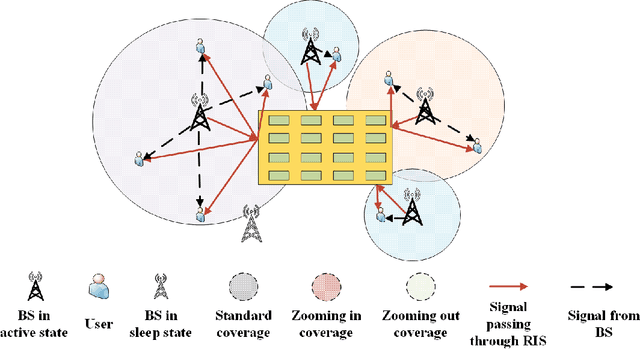
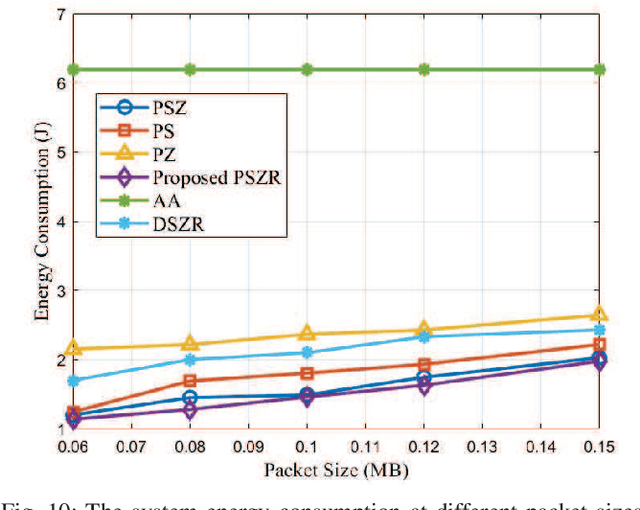
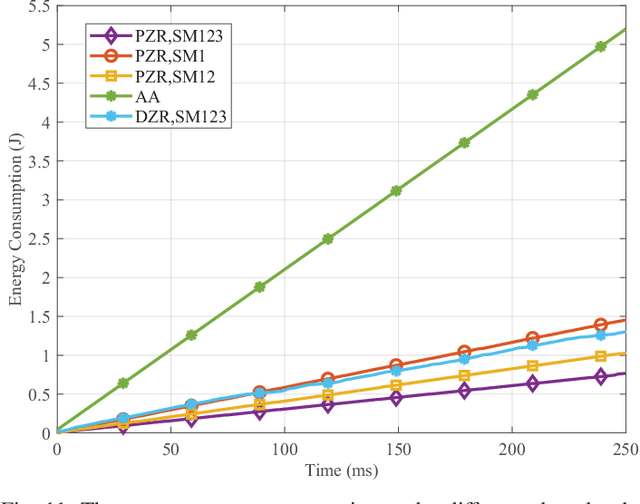
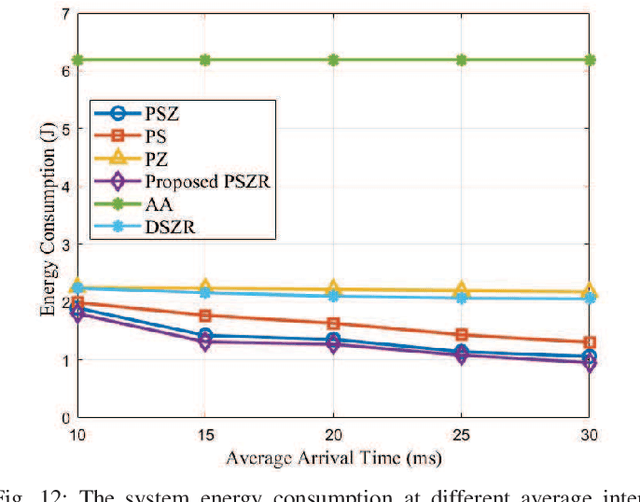
Advances in wireless technology have significantly increased the number of wireless connections, leading to higher energy consumption in networks. Among these, base stations (BSs) in radio access networks (RANs) account for over half of the total energy usage. To address this, we propose a multi-cell sleep strategy combined with adaptive cell zooming, user association, and reconfigurable intelligent surface (RIS) to minimize BS energy consumption. This approach allows BSs to enter sleep during low traffic, while adaptive cell zooming and user association dynamically adjust coverage to balance traffic load and enhance data rates through RIS, minimizing the number of active BSs. However, it is important to note that the proposed method may achieve energy-savings at the cost of increased delay, requiring a trade-off between these two factors. Moreover, minimizing BS energy consumption under the delay constraint is a complicated non-convex problem. To address this issue, we model the RIS-aided multi-cell network as a Markov decision process (MDP) and use the proximal policy optimization (PPO) algorithm to optimize sleep mode (SM), cell zooming, and user association. Besides, we utilize a double cascade correlation network (DCCN) algorithm to optimize the RIS reflection coefficients. Simulation results demonstrate that PPO balances energy-savings and delay, while DCCN-optimized RIS enhances BS energy-savings. Compared to systems optimised by the benchmark DQN algorithm, energy consumption is reduced by 49.61%
Advanced Nonlinear SCMA Codebook Design Based on Lattice Constellations
Nov 13, 2024The design of efficient sparse codebooks in sparse code multiple access (SCMA) system have attracted tremendous research attention in the past few years. This paper proposes a novel nonlinear SCMA (NL-SCMA) that can subsume the conventional SCMA system which is referred to as linear SCMA, as special cases for downlink channels. This innovative approach allows a direct mapping of users' messages to a superimposed codeword for transmission, eliminating the need of a codebook for each user. This mapping is referred to as nonlinear mapping (codebook) in this paper. Hence, the primary objective is to design the nonlinear mapping, rather than the linear codebook for each user. We leverage the Lattice constellation to design the superimposed constellation due to its advantages such as the minimum Euclidean distance (MED), constellation volume, design flexibility and shape gain. Then, by analyzing the error patterns of the Lattice-designed superimposed codewords with the aid of the pair-wise error probability, it is found that the MED of the proposed nonlinear codebook is lower bounded by the ``single error pattern''. To this end, an error pattern-inspired codebook design is proposed, which can achieve large MEDs of the nonlinear codebooks. Numerical results show that the proposed codebooks can achieve lower error rate performance over both Gaussian and Rayleigh fading channels than the-state-of-the-art linear codebooks.
RuAG: Learned-rule-augmented Generation for Large Language Models
Nov 04, 2024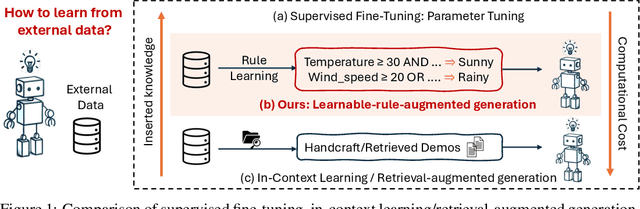
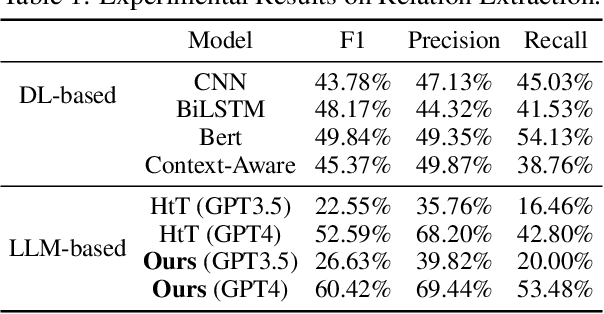
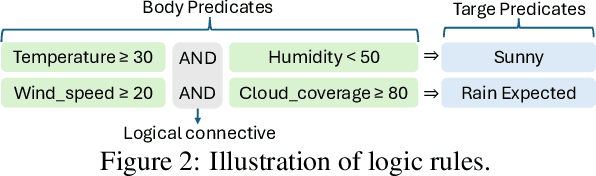
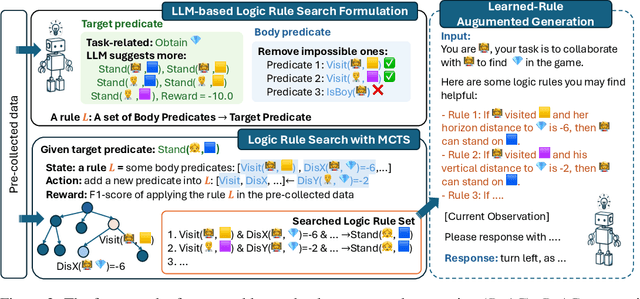
In-context learning (ICL) and Retrieval-Augmented Generation (RAG) have gained attention for their ability to enhance LLMs' reasoning by incorporating external knowledge but suffer from limited contextual window size, leading to insufficient information injection. To this end, we propose a novel framework, RuAG, to automatically distill large volumes of offline data into interpretable first-order logic rules, which are injected into LLMs to boost their reasoning capabilities. Our method begins by formulating the search process relying on LLMs' commonsense, where LLMs automatically define head and body predicates. Then, RuAG applies Monte Carlo Tree Search (MCTS) to address the combinational searching space and efficiently discover logic rules from data. The resulting logic rules are translated into natural language, allowing targeted knowledge injection and seamless integration into LLM prompts for LLM's downstream task reasoning. We evaluate our framework on public and private industrial tasks, including natural language processing, time-series, decision-making, and industrial tasks, demonstrating its effectiveness in enhancing LLM's capability over diverse tasks.
Fair Resource Allocation For Hierarchical Federated Edge Learning in Space-Air-Ground Integrated Networks via Deep Reinforcement Learning with Hybrid Control
Aug 05, 2024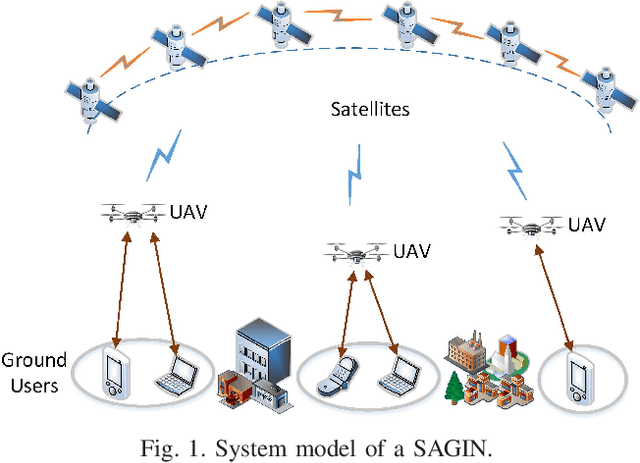
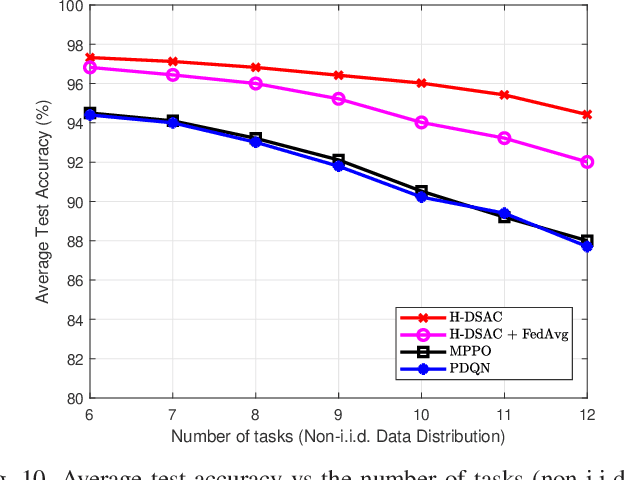
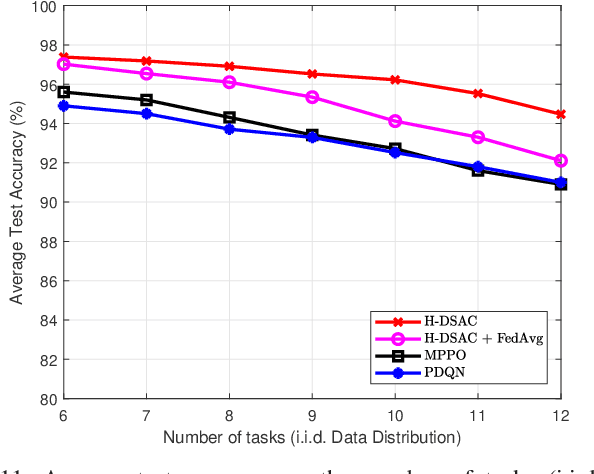
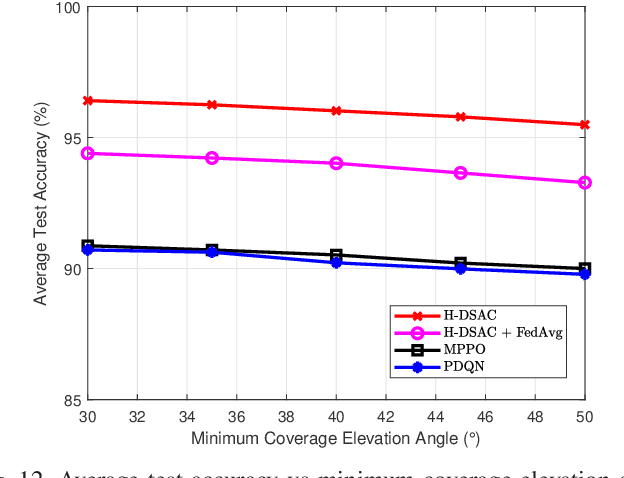
The space-air-ground integrated network (SAGIN) has become a crucial research direction in future wireless communications due to its ubiquitous coverage, rapid and flexible deployment, and multi-layer cooperation capabilities. However, integrating hierarchical federated learning (HFL) with edge computing and SAGINs remains a complex open issue to be resolved. This paper proposes a novel framework for applying HFL in SAGINs, utilizing aerial platforms and low Earth orbit (LEO) satellites as edge servers and cloud servers, respectively, to provide multi-layer aggregation capabilities for HFL. The proposed system also considers the presence of inter-satellite links (ISLs), enabling satellites to exchange federated learning models with each other. Furthermore, we consider multiple different computational tasks that need to be completed within a limited satellite service time. To maximize the convergence performance of all tasks while ensuring fairness, we propose the use of the distributional soft-actor-critic (DSAC) algorithm to optimize resource allocation in the SAGIN and aggregation weights in HFL. Moreover, we address the efficiency issue of hybrid action spaces in deep reinforcement learning (DRL) through a decoupling and recoupling approach, and design a new dynamic adjusting reward function to ensure fairness among multiple tasks in federated learning. Simulation results demonstrate the superiority of our proposed algorithm, consistently outperforming baseline approaches and offering a promising solution for addressing highly complex optimization problems in SAGINs.
Latency-Aware Generative Semantic Communications with Pre-Trained Diffusion Models
Mar 25, 2024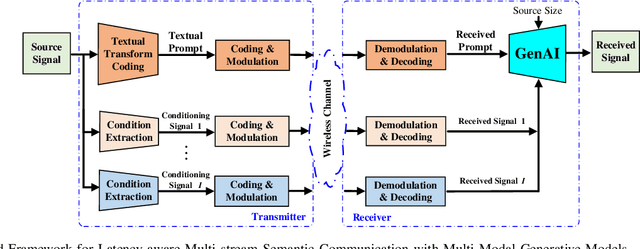

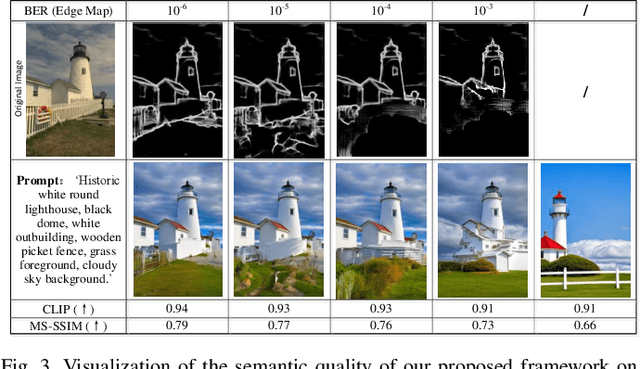

Generative foundation AI models have recently shown great success in synthesizing natural signals with high perceptual quality using only textual prompts and conditioning signals to guide the generation process. This enables semantic communications at extremely low data rates in future wireless networks. In this paper, we develop a latency-aware semantic communications framework with pre-trained generative models. The transmitter performs multi-modal semantic decomposition on the input signal and transmits each semantic stream with the appropriate coding and communication schemes based on the intent. For the prompt, we adopt a re-transmission-based scheme to ensure reliable transmission, and for the other semantic modalities we use an adaptive modulation/coding scheme to achieve robustness to the changing wireless channel. Furthermore, we design a semantic and latency-aware scheme to allocate transmission power to different semantic modalities based on their importance subjected to semantic quality constraints. At the receiver, a pre-trained generative model synthesizes a high fidelity signal using the received multi-stream semantics. Simulation results demonstrate ultra-low-rate, low-latency, and channel-adaptive semantic communications.