 Add to Chrome
 Add to Firefox
 Add to Edge
Stable Neighbor Denoising for Source-free Domain Adaptive Segmentation
Jun 10, 2024

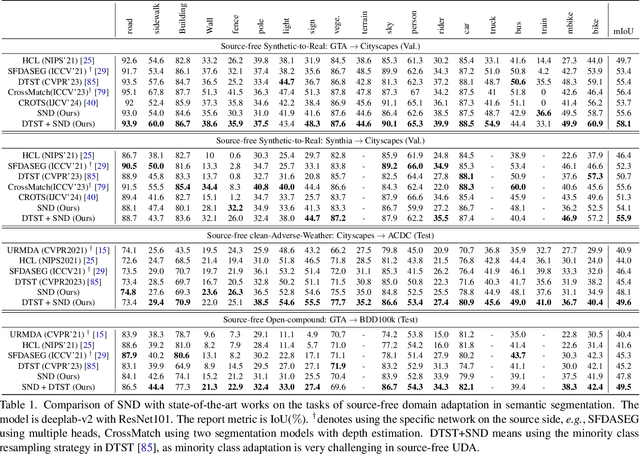
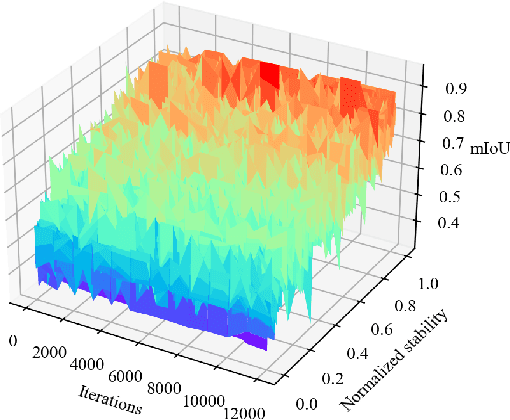
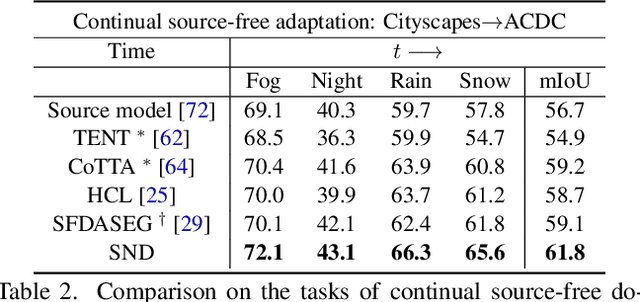
We study source-free unsupervised domain adaptation (SFUDA) for semantic segmentation, which aims to adapt a source-trained model to the target domain without accessing the source data. Many works have been proposed to address this challenging problem, among which uncertainty-based self-training is a predominant approach. However, without comprehensive denoising mechanisms, they still largely fall into biased estimates when dealing with different domains and confirmation bias. In this paper, we observe that pseudo-label noise is mainly contained in unstable samples in which the predictions of most pixels undergo significant variations during self-training. Inspired by this, we propose a novel mechanism to denoise unstable samples with stable ones. Specifically, we introduce the Stable Neighbor Denoising (SND) approach, which effectively discovers highly correlated stable and unstable samples by nearest neighbor retrieval and guides the reliable optimization of unstable samples by bi-level learning. Moreover, we compensate for the stable set by object-level object paste, which can further eliminate the bias caused by less learned classes. Our SND enjoys two advantages. First, SND does not require a specific segmentor structure, endowing its universality. Second, SND simultaneously addresses the issues of class, domain, and confirmation biases during adaptation, ensuring its effectiveness. Extensive experiments show that SND consistently outperforms state-of-the-art methods in various SFUDA semantic segmentation settings. In addition, SND can be easily integrated with other approaches, obtaining further improvements.
* 2024 Conference on Computer Vision and Pattern Recognition

Sharing Key Semantics in Transformer Makes Efficient Image Restoration
May 30, 2024


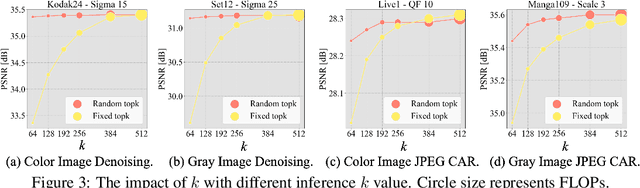
Image Restoration (IR), a classic low-level vision task, has witnessed significant advancements through deep models that effectively model global information. Notably, the Vision Transformers (ViTs) emergence has further propelled these advancements. When computing, the self-attention mechanism, a cornerstone of ViTs, tends to encompass all global cues, even those from semantically unrelated objects or regions. This inclusivity introduces computational inefficiencies, particularly noticeable with high input resolution, as it requires processing irrelevant information, thereby impeding efficiency. Additionally, for IR, it is commonly noted that small segments of a degraded image, particularly those closely aligned semantically, provide particularly relevant information to aid in the restoration process, as they contribute essential contextual cues crucial for accurate reconstruction. To address these challenges, we propose boosting IR's performance by sharing the key semantics via Transformer for IR (i.e., SemanIR) in this paper. Specifically, SemanIR initially constructs a sparse yet comprehensive key-semantic dictionary within each transformer stage by establishing essential semantic connections for every degraded patch. Subsequently, this dictionary is shared across all subsequent transformer blocks within the same stage. This strategy optimizes attention calculation within each block by focusing exclusively on semantically related components stored in the key-semantic dictionary. As a result, attention calculation achieves linear computational complexity within each window. Extensive experiments across 6 IR tasks confirm the proposed SemanIR's state-of-the-art performance, quantitatively and qualitatively showcasing advancements.
Curriculum Direct Preference Optimization for Diffusion and Consistency Models
May 22, 2024


Direct Preference Optimization (DPO) has been proposed as an effective and efficient alternative to reinforcement learning from human feedback (RLHF). In this paper, we propose a novel and enhanced version of DPO based on curriculum learning for text-to-image generation. Our method is divided into two training stages. First, a ranking of the examples generated for each prompt is obtained by employing a reward model. Then, increasingly difficult pairs of examples are sampled and provided to a text-to-image generative (diffusion or consistency) model. Generated samples that are far apart in the ranking are considered to form easy pairs, while those that are close in the ranking form hard pairs. In other words, we use the rank difference between samples as a measure of difficulty. The sampled pairs are split into batches according to their difficulty levels, which are gradually used to train the generative model. Our approach, Curriculum DPO, is compared against state-of-the-art fine-tuning approaches on three benchmarks, outperforming the competing methods in terms of text alignment, aesthetics and human preference. Our code is available at https://anonymous.4open.science/r/Curriculum-DPO-EE14.
Deep Learning-Based Object Pose Estimation: A Comprehensive Survey
May 13, 2024Object pose estimation is a fundamental computer vision problem with broad applications in augmented reality and robotics. Over the past decade, deep learning models, due to their superior accuracy and robustness, have increasingly supplanted conventional algorithms reliant on engineered point pair features. Nevertheless, several challenges persist in contemporary methods, including their dependency on labeled training data, model compactness, robustness under challenging conditions, and their ability to generalize to novel unseen objects. A recent survey discussing the progress made on different aspects of this area, outstanding challenges, and promising future directions, is missing. To fill this gap, we discuss the recent advances in deep learning-based object pose estimation, covering all three formulations of the problem, i.e., instance-level, category-level, and unseen object pose estimation. Our survey also covers multiple input data modalities, degrees-of-freedom of output poses, object properties, and downstream tasks, providing readers with a holistic understanding of this field. Additionally, it discusses training paradigms of different domains, inference modes, application areas, evaluation metrics, and benchmark datasets, as well as reports the performance of current state-of-the-art methods on these benchmarks, thereby facilitating readers in selecting the most suitable method for their application. Finally, the survey identifies key challenges, reviews prevailing trends along with their pros and cons, and identifies promising directions for future research. We also keep tracing the latest works at https://github.com/CNJianLiu/Awesome-Object-Pose-Estimation.
UVMap-ID: A Controllable and Personalized UV Map Generative Model
Apr 22, 2024


Recently, diffusion models have made significant strides in synthesizing realistic 2D human images based on provided text prompts. Building upon this, researchers have extended 2D text-to-image diffusion models into the 3D domain for generating human textures (UV Maps). However, some important problems about UV Map Generative models are still not solved, i.e., how to generate personalized texture maps for any given face image, and how to define and evaluate the quality of these generated texture maps. To solve the above problems, we introduce a novel method, UVMap-ID, which is a controllable and personalized UV Map generative model. Unlike traditional large-scale training methods in 2D, we propose to fine-tune a pre-trained text-to-image diffusion model which is integrated with a face fusion module for achieving ID-driven customized generation. To support the finetuning strategy, we introduce a small-scale attribute-balanced training dataset, including high-quality textures with labeled text and Face ID. Additionally, we introduce some metrics to evaluate the multiple aspects of the textures. Finally, both quantitative and qualitative analyses demonstrate the effectiveness of our method in controllable and personalized UV Map generation. Code is publicly available via https://github.com/twowwj/UVMap-ID.
OpenBias: Open-set Bias Detection in Text-to-Image Generative Models
Apr 11, 2024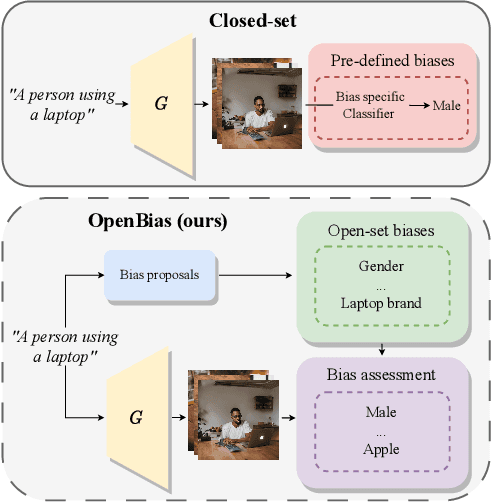
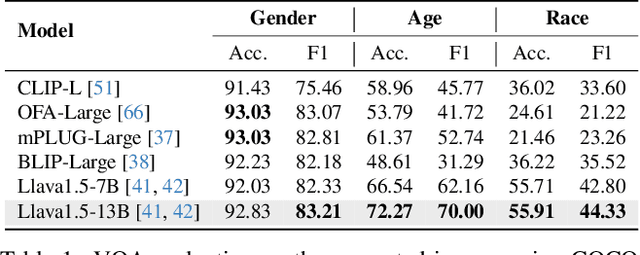
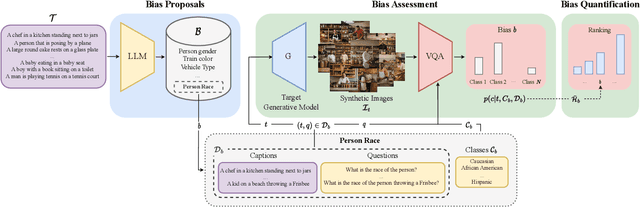
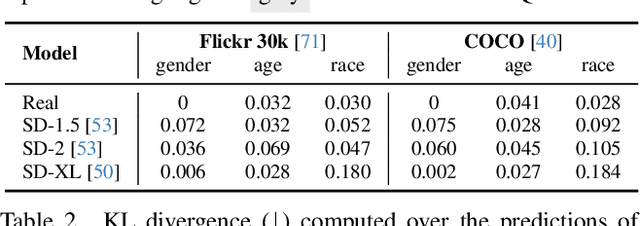
Text-to-image generative models are becoming increasingly popular and accessible to the general public. As these models see large-scale deployments, it is necessary to deeply investigate their safety and fairness to not disseminate and perpetuate any kind of biases. However, existing works focus on detecting closed sets of biases defined a priori, limiting the studies to well-known concepts. In this paper, we tackle the challenge of open-set bias detection in text-to-image generative models presenting OpenBias, a new pipeline that identifies and quantifies the severity of biases agnostically, without access to any precompiled set. OpenBias has three stages. In the first phase, we leverage a Large Language Model (LLM) to propose biases given a set of captions. Secondly, the target generative model produces images using the same set of captions. Lastly, a Vision Question Answering model recognizes the presence and extent of the previously proposed biases. We study the behavior of Stable Diffusion 1.5, 2, and XL emphasizing new biases, never investigated before. Via quantitative experiments, we demonstrate that OpenBias agrees with current closed-set bias detection methods and human judgement.
Socially Pertinent Robots in Gerontological Healthcare
Apr 11, 2024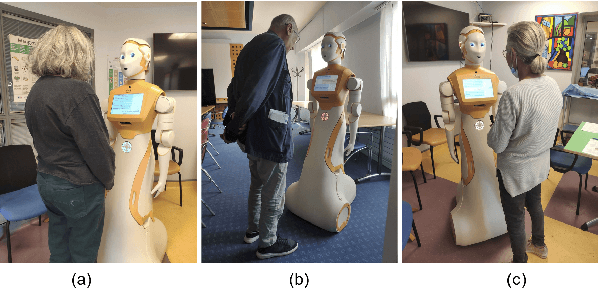
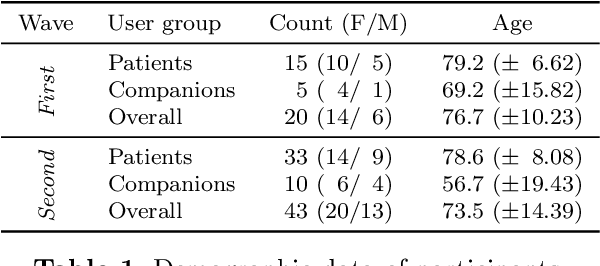
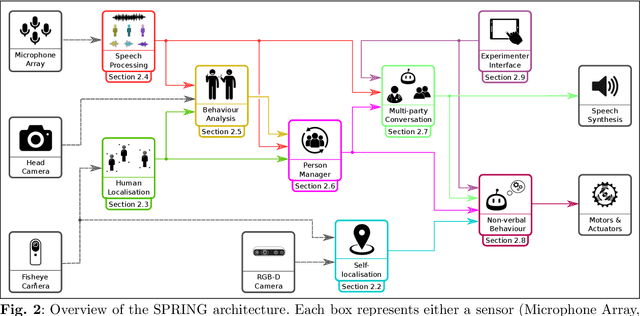
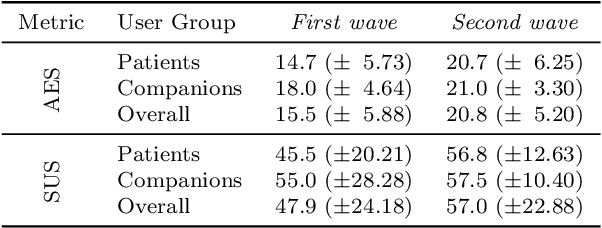
Despite the many recent achievements in developing and deploying social robotics, there are still many underexplored environments and applications for which systematic evaluation of such systems by end-users is necessary. While several robotic platforms have been used in gerontological healthcare, the question of whether or not a social interactive robot with multi-modal conversational capabilities will be useful and accepted in real-life facilities is yet to be answered. This paper is an attempt to partially answer this question, via two waves of experiments with patients and companions in a day-care gerontological facility in Paris with a full-sized humanoid robot endowed with social and conversational interaction capabilities. The software architecture, developed during the H2020 SPRING project, together with the experimental protocol, allowed us to evaluate the acceptability (AES) and usability (SUS) with more than 60 end-users. Overall, the users are receptive to this technology, especially when the robot perception and action skills are robust to environmental clutter and flexible to handle a plethora of different interactions.
A Lie Group Approach to Riemannian Batch Normalization
Mar 17, 2024Manifold-valued measurements exist in numerous applications within computer vision and machine learning. Recent studies have extended Deep Neural Networks (DNNs) to manifolds, and concomitantly, normalization techniques have also been adapted to several manifolds, referred to as Riemannian normalization. Nonetheless, most of the existing Riemannian normalization methods have been derived in an ad hoc manner and only apply to specific manifolds. This paper establishes a unified framework for Riemannian Batch Normalization (RBN) techniques on Lie groups. Our framework offers the theoretical guarantee of controlling both the Riemannian mean and variance. Empirically, we focus on Symmetric Positive Definite (SPD) manifolds, which possess three distinct types of Lie group structures. Using the deformation concept, we generalize the existing Lie groups on SPD manifolds into three families of parameterized Lie groups. Specific normalization layers induced by these Lie groups are then proposed for SPD neural networks. We demonstrate the effectiveness of our approach through three sets of experiments: radar recognition, human action recognition, and electroencephalography (EEG) classification. The code is available at https://github.com/GitZH-Chen/LieBN.git.
Textual Knowledge Matters: Cross-Modality Co-Teaching for Generalized Visual Class Discovery
Mar 12, 2024In this paper, we study the problem of Generalized Category Discovery (GCD), which aims to cluster unlabeled data from both known and unknown categories using the knowledge of labeled data from known categories. Current GCD methods rely on only visual cues, which however neglect the multi-modality perceptive nature of human cognitive processes in discovering novel visual categories. To address this, we propose a two-phase TextGCD framework to accomplish multi-modality GCD by exploiting powerful Visual-Language Models. TextGCD mainly includes a retrieval-based text generation (RTG) phase and a cross-modality co-teaching (CCT) phase. First, RTG constructs a visual lexicon using category tags from diverse datasets and attributes from Large Language Models, generating descriptive texts for images in a retrieval manner. Second, CCT leverages disparities between textual and visual modalities to foster mutual learning, thereby enhancing visual GCD. In addition, we design an adaptive class aligning strategy to ensure the alignment of category perceptions between modalities as well as a soft-voting mechanism to integrate multi-modality cues. Experiments on eight datasets show the large superiority of our approach over state-of-the-art methods. Notably, our approach outperforms the best competitor, by 7.7% and 10.8% in All accuracy on ImageNet-1k and CUB, respectively.
An Efficient Learning-based Solver Comparable to Metaheuristics for the Capacitated Arc Routing Problem
Mar 11, 2024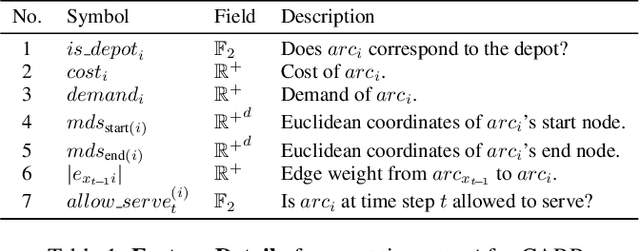
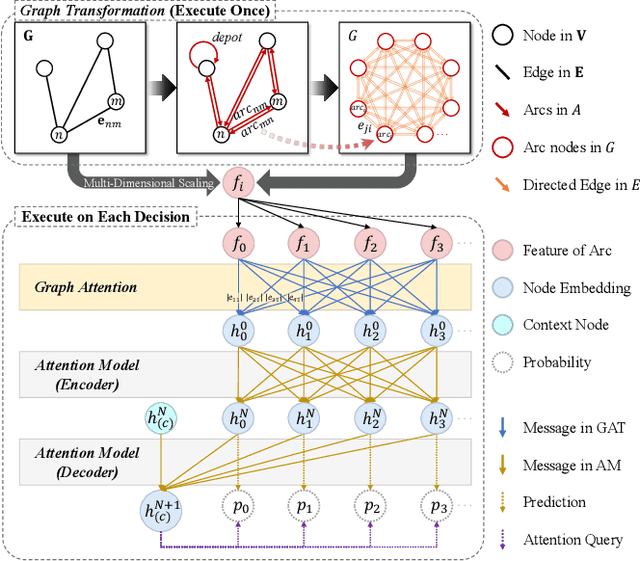
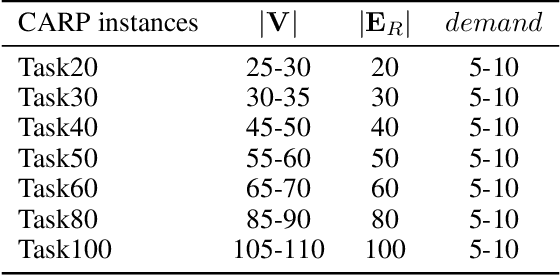
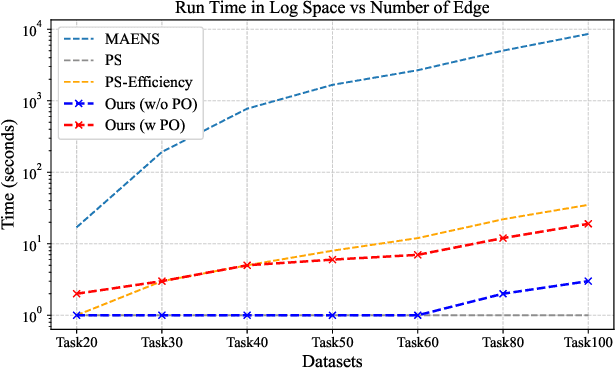
Recently, neural networks (NN) have made great strides in combinatorial optimization. However, they face challenges when solving the capacitated arc routing problem (CARP) which is to find the minimum-cost tour covering all required edges on a graph, while within capacity constraints. In tackling CARP, NN-based approaches tend to lag behind advanced metaheuristics, since they lack directed arc modeling and efficient learning methods tailored for complex CARP. In this paper, we introduce an NN-based solver to significantly narrow the gap with advanced metaheuristics while exhibiting superior efficiency. First, we propose the direction-aware attention model (DaAM) to incorporate directionality into the embedding process, facilitating more effective one-stage decision-making. Second, we design a supervised reinforcement learning scheme that involves supervised pre-training to establish a robust initial policy for subsequent reinforcement fine-tuning. It proves particularly valuable for solving CARP that has a higher complexity than the node routing problems (NRPs). Finally, a path optimization method is proposed to adjust the depot return positions within the path generated by DaAM. Experiments illustrate that our approach surpasses heuristics and achieves decision quality comparable to state-of-the-art metaheuristics for the first time while maintaining superior efficiency.