 Add to Chrome
 Add to Firefox
 Add to Edge
MUSEG: Reinforcing Video Temporal Understanding via Timestamp-Aware Multi-Segment Grounding
May 27, 2025
Video temporal understanding is crucial for multimodal large language models (MLLMs) to reason over events in videos. Despite recent advances in general video understanding, current MLLMs still struggle with fine-grained temporal reasoning. While reinforcement learning (RL) has been explored to address this issue recently, existing RL approaches remain limited in effectiveness. In this work, we propose MUSEG, a novel RL-based method that enhances temporal understanding by introducing timestamp-aware multi-segment grounding. MUSEG enables MLLMs to align queries with multiple relevant video segments, promoting more comprehensive temporal reasoning. To facilitate effective learning, we design a customized RL training recipe with phased rewards that progressively guides the model toward temporally grounded reasoning. Extensive experiments on temporal grounding and time-sensitive video QA tasks demonstrate that MUSEG significantly outperforms existing methods and generalizes well across diverse temporal understanding scenarios. View our project at https://github.com/THUNLP-MT/MUSEG.

QwenLong-L1: Towards Long-Context Large Reasoning Models with Reinforcement Learning
May 23, 2025Recent large reasoning models (LRMs) have demonstrated strong reasoning capabilities through reinforcement learning (RL). These improvements have primarily been observed within the short-context reasoning tasks. In contrast, extending LRMs to effectively process and reason on long-context inputs via RL remains a critical unsolved challenge. To bridge this gap, we first formalize the paradigm of long-context reasoning RL, and identify key challenges in suboptimal training efficiency and unstable optimization process. To address these issues, we propose QwenLong-L1, a framework that adapts short-context LRMs to long-context scenarios via progressive context scaling. Specifically, we utilize a warm-up supervised fine-tuning (SFT) stage to establish a robust initial policy, followed by a curriculum-guided phased RL technique to stabilize the policy evolution, and enhanced with a difficulty-aware retrospective sampling strategy to incentivize the policy exploration. Experiments on seven long-context document question-answering benchmarks demonstrate that QwenLong-L1-32B outperforms flagship LRMs like OpenAI-o3-mini and Qwen3-235B-A22B, achieving performance on par with Claude-3.7-Sonnet-Thinking, demonstrating leading performance among state-of-the-art LRMs. This work advances the development of practical long-context LRMs capable of robust reasoning across information-intensive environments.
QwenLong-CPRS: Towards $\infty$-LLMs with Dynamic Context Optimization
May 23, 2025This technical report presents QwenLong-CPRS, a context compression framework designed for explicit long-context optimization, addressing prohibitive computation overhead during the prefill stage and the "lost in the middle" performance degradation of large language models (LLMs) during long sequence processing. Implemented through a novel dynamic context optimization mechanism, QwenLong-CPRS enables multi-granularity context compression guided by natural language instructions, achieving both efficiency gains and improved performance. Evolved from the Qwen architecture series, QwenLong-CPRS introduces four key innovations: (1) Natural language-guided dynamic optimization, (2) Bidirectional reasoning layers for enhanced boundary awareness, (3) Token critic mechanisms with language modeling heads, and (4) Window-parallel inference. Comprehensive evaluations across five benchmarks (4K-2M word contexts) demonstrate QwenLong-CPRS's threefold effectiveness: (1) Consistent superiority over other context management methods like RAG and sparse attention in both accuracy and efficiency. (2) Architecture-agnostic integration with all flagship LLMs, including GPT-4o, Gemini2.0-pro, Claude3.7-sonnet, DeepSeek-v3, and Qwen2.5-max, achieves 21.59$\times$ context compression alongside 19.15-point average performance gains; (3) Deployed with Qwen2.5-32B-Instruct, QwenLong-CPRS surpasses leading proprietary LLMs by 4.85 and 10.88 points on Ruler-128K and InfiniteBench, establishing new SOTA performance.
VLM-R$^3$: Region Recognition, Reasoning, and Refinement for Enhanced Multimodal Chain-of-Thought
May 22, 2025Recently, reasoning-based MLLMs have achieved a degree of success in generating long-form textual reasoning chains. However, they still struggle with complex tasks that necessitate dynamic and iterative focusing on and revisiting of visual regions to achieve precise grounding of textual reasoning in visual evidence. We introduce \textbf{VLM-R$^3$} (\textbf{V}isual \textbf{L}anguage \textbf{M}odel with \textbf{R}egion \textbf{R}ecognition and \textbf{R}easoning), a framework that equips an MLLM with the ability to (i) decide \emph{when} additional visual evidence is needed, (ii) determine \emph{where} to ground within the image, and (iii) seamlessly weave the relevant sub-image content back into an interleaved chain-of-thought. The core of our method is \textbf{Region-Conditioned Reinforcement Policy Optimization (R-GRPO)}, a training paradigm that rewards the model for selecting informative regions, formulating appropriate transformations (e.g.\ crop, zoom), and integrating the resulting visual context into subsequent reasoning steps. To bootstrap this policy, we compile a modest but carefully curated Visuo-Lingual Interleaved Rationale (VLIR) corpus that provides step-level supervision on region selection and textual justification. Extensive experiments on MathVista, ScienceQA, and other benchmarks show that VLM-R$^3$ sets a new state of the art in zero-shot and few-shot settings, with the largest gains appearing on questions demanding subtle spatial reasoning or fine-grained visual cue extraction.
Mobile-Agent-V: A Video-Guided Approach for Effortless and Efficient Operational Knowledge Injection in Mobile Automation
May 21, 2025The exponential rise in mobile device usage necessitates streamlined automation for effective task management, yet many AI frameworks fall short due to inadequate operational expertise. While manually written knowledge can bridge this gap, it is often burdensome and inefficient. We introduce Mobile-Agent-V, an innovative framework that utilizes video as a guiding tool to effortlessly and efficiently inject operational knowledge into mobile automation processes. By deriving knowledge directly from video content, Mobile-Agent-V eliminates manual intervention, significantly reducing the effort and time required for knowledge acquisition. To rigorously evaluate this approach, we propose Mobile-Knowledge, a benchmark tailored to assess the impact of external knowledge on mobile agent performance. Our experimental findings demonstrate that Mobile-Agent-V enhances performance by 36% compared to existing methods, underscoring its effortless and efficient advantages in mobile automation.
MAGI-1: Autoregressive Video Generation at Scale
May 19, 2025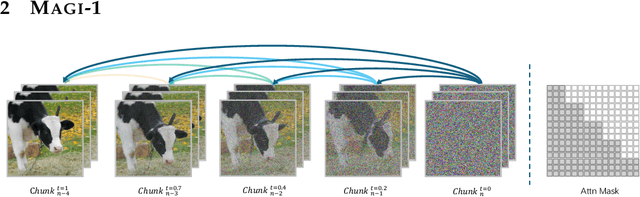
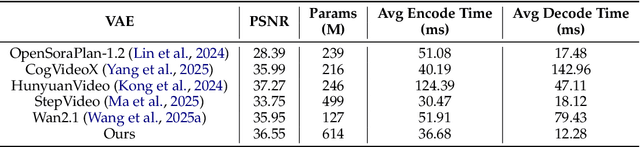
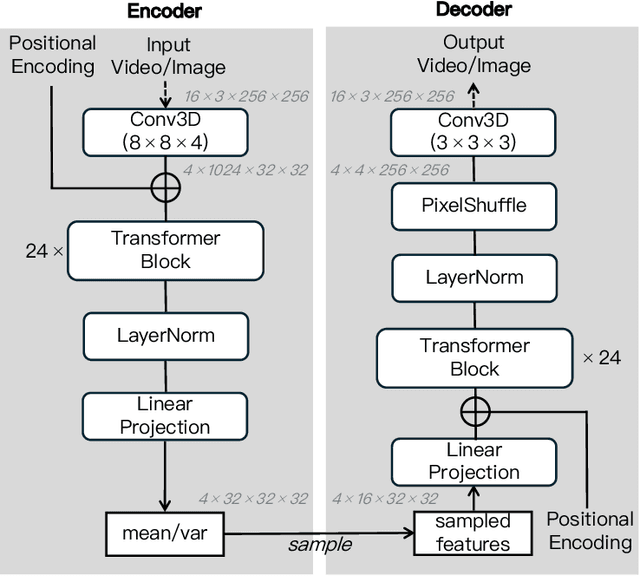
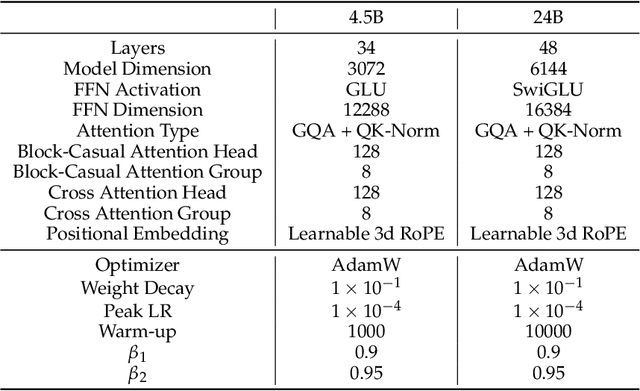
We present MAGI-1, a world model that generates videos by autoregressively predicting a sequence of video chunks, defined as fixed-length segments of consecutive frames. Trained to denoise per-chunk noise that increases monotonically over time, MAGI-1 enables causal temporal modeling and naturally supports streaming generation. It achieves strong performance on image-to-video (I2V) tasks conditioned on text instructions, providing high temporal consistency and scalability, which are made possible by several algorithmic innovations and a dedicated infrastructure stack. MAGI-1 facilitates controllable generation via chunk-wise prompting and supports real-time, memory-efficient deployment by maintaining constant peak inference cost, regardless of video length. The largest variant of MAGI-1 comprises 24 billion parameters and supports context lengths of up to 4 million tokens, demonstrating the scalability and robustness of our approach. The code and models are available at https://github.com/SandAI-org/MAGI-1 and https://github.com/SandAI-org/MagiAttention. The product can be accessed at https://sand.ai.
SoLoPO: Unlocking Long-Context Capabilities in LLMs via Short-to-Long Preference Optimization
May 16, 2025Despite advances in pretraining with extended context lengths, large language models (LLMs) still face challenges in effectively utilizing real-world long-context information, primarily due to insufficient long-context alignment caused by data quality issues, training inefficiencies, and the lack of well-designed optimization objectives. To address these limitations, we propose a framework named $\textbf{S}$h$\textbf{o}$rt-to-$\textbf{Lo}$ng $\textbf{P}$reference $\textbf{O}$ptimization ($\textbf{SoLoPO}$), decoupling long-context preference optimization (PO) into two components: short-context PO and short-to-long reward alignment (SoLo-RA), supported by both theoretical and empirical evidence. Specifically, short-context PO leverages preference pairs sampled from short contexts to enhance the model's contextual knowledge utilization ability. Meanwhile, SoLo-RA explicitly encourages reward score consistency utilization for the responses when conditioned on both short and long contexts that contain identical task-relevant information. This facilitates transferring the model's ability to handle short contexts into long-context scenarios. SoLoPO is compatible with mainstream preference optimization algorithms, while substantially improving the efficiency of data construction and training processes. Experimental results show that SoLoPO enhances all these algorithms with respect to stronger length and domain generalization abilities across various long-context benchmarks, while achieving notable improvements in both computational and memory efficiency.
Towards Efficient Online Tuning of VLM Agents via Counterfactual Soft Reinforcement Learning
May 01, 2025Online fine-tuning vision-language model (VLM) agents with reinforcement learning (RL) has shown promise for equipping agents with multi-step, goal-oriented capabilities in dynamic environments. However, their open-ended textual action space and non-end-to-end nature of action generation present significant challenges to effective online exploration in RL, e.g., explosion of the exploration space. We propose a novel online fine-tuning method, Counterfactual Soft Reinforcement Learning (CoSo), better suited to the textual output space of VLM agents. Compared to prior methods that assign uniform uncertainty to all tokens, CoSo leverages counterfactual reasoning to dynamically assess the causal influence of individual tokens on post-processed actions. By prioritizing the exploration of action-critical tokens while reducing the impact of semantically redundant or low-impact tokens, CoSo enables a more targeted and efficient online rollout process. We provide theoretical analysis proving CoSo's convergence and policy improvement guarantees, and extensive empirical evaluations supporting CoSo's effectiveness. Our results across a diverse set of agent tasks, including Android device control, card gaming, and embodied AI, highlight its remarkable ability to enhance exploration efficiency and deliver consistent performance gains. The code is available at https://github.com/langfengQ/CoSo.
DAE-KAN: A Kolmogorov-Arnold Network Model for High-Index Differential-Algebraic Equations
Apr 22, 2025Kolmogorov-Arnold Networks (KANs) have emerged as a promising alternative to Multi-Layer Perceptrons (MLPs) due to their superior function-fitting abilities in data-driven modeling. In this paper, we propose a novel framework, DAE-KAN, for solving high-index differential-algebraic equations (DAEs) by integrating KANs with Physics-Informed Neural Networks (PINNs). This framework not only preserves the ability of traditional PINNs to model complex systems governed by physical laws but also enhances their performance by leveraging the function-fitting strengths of KANs. Numerical experiments demonstrate that for DAE systems ranging from index-1 to index-3, DAE-KAN reduces the absolute errors of both differential and algebraic variables by 1 to 2 orders of magnitude compared to traditional PINNs. To assess the effectiveness of this approach, we analyze the drift-off error and find that both PINNs and DAE-KAN outperform classical numerical methods in controlling this phenomenon. Our results highlight the potential of neural network methods, particularly DAE-KAN, in solving high-index DAEs with substantial computational accuracy and generalization, offering a promising solution for challenging partial differential-algebraic equations.
AdaMMS: Model Merging for Heterogeneous Multimodal Large Language Models with Unsupervised Coefficient Optimization
Mar 31, 2025Recently, model merging methods have demonstrated powerful strengths in combining abilities on various tasks from multiple Large Language Models (LLMs). While previous model merging methods mainly focus on merging homogeneous models with identical architecture, they meet challenges when dealing with Multimodal Large Language Models (MLLMs) with inherent heterogeneous property, including differences in model architecture and the asymmetry in the parameter space. In this work, we propose AdaMMS, a novel model merging method tailored for heterogeneous MLLMs. Our method tackles the challenges in three steps: mapping, merging and searching. Specifically, we first design mapping function between models to apply model merging on MLLMs with different architecture. Then we apply linear interpolation on model weights to actively adapt the asymmetry in the heterogeneous MLLMs. Finally in the hyper-parameter searching step, we propose an unsupervised hyper-parameter selection method for model merging. As the first model merging method capable of merging heterogeneous MLLMs without labeled data, extensive experiments on various model combinations demonstrated that AdaMMS outperforms previous model merging methods on various vision-language benchmarks.