 Add to Chrome
 Add to Firefox
 Add to Edge
Improving Parallel Program Performance Through DSL-Driven Code Generation with LLM Optimizers
Oct 21, 2024
Mapping computations to processors and assigning data to memory are critical for maximizing performance in parallel programming. These mapping decisions are managed through the development of specialized low-level system code, called mappers, crafted by performance engineers. Each mapper is tailored to a specific application and optimized for the underlying machine architecture, a process that requires days of refinement and tuning from an expert. Despite advances in system research, automating mapper generation remains a challenge due to the complexity of making millions of decisions to find the optimal solution and generate the solution as code. We introduce an approach that leverages recent advances in LLM-based optimizers for mapper design. In under ten minutes, our method automatically discovers mappers that surpass human expert designs in scientific applications by up to 1.34X speedup. For parallel matrix multiplication algorithms, our mapper achieves up to 1.31X of the expert-designed solution. To achieve this, we simplify the complexity of low-level code generation by introducing a domain-specific language (DSL) that abstracts the low-level system programming details and defines a structured search space for LLMs to explore. To maximize the application performance, we use an LLM optimizer to improve an agentic system that generates the mapper code. As a result, this approach significantly reduces the workload for performance engineers while achieving substantial performance gains across diverse applications. Finally, our results demonstrate the effectiveness of LLM-based optimization in system design and suggest its potential for addressing other complex system challenges.

An Electoral Approach to Diversify LLM-based Multi-Agent Collective Decision-Making
Oct 19, 2024


Modern large language models (LLMs) have exhibited cooperative synergy on complex task-solving, and collective decision-making (CDM) is a pivotal component in LLM-based multi-agent collaboration frameworks. Our survey on 52 recent such systems uncovers a severe lack of diversity, with a heavy reliance on dictatorial and plurality voting for CDM. Through the lens of social choice theory, we scrutinize widely-adopted CDM methods and identify their limitations. To enrich current landscape of LLM-based CDM, we present GEDI, an electoral CDM module that incorporates various ordinal preferential voting mechanisms. Our empirical case study across three benchmarks shows that the integration of certain CDM methods can markedly improve the reasoning capabilities and robustness of some leading LLMs, all without requiring intricate system designs. Additionally, we find that some CDM mechanisms generate positive synergies even with as few as three agents. The voting-based methods also demonstrate robustness against single points of failure, as well as diversity in terms of hit-rate@k and subject-wise impacts.
ORCHID: A Chinese Debate Corpus for Target-Independent Stance Detection and Argumentative Dialogue Summarization
Oct 17, 2024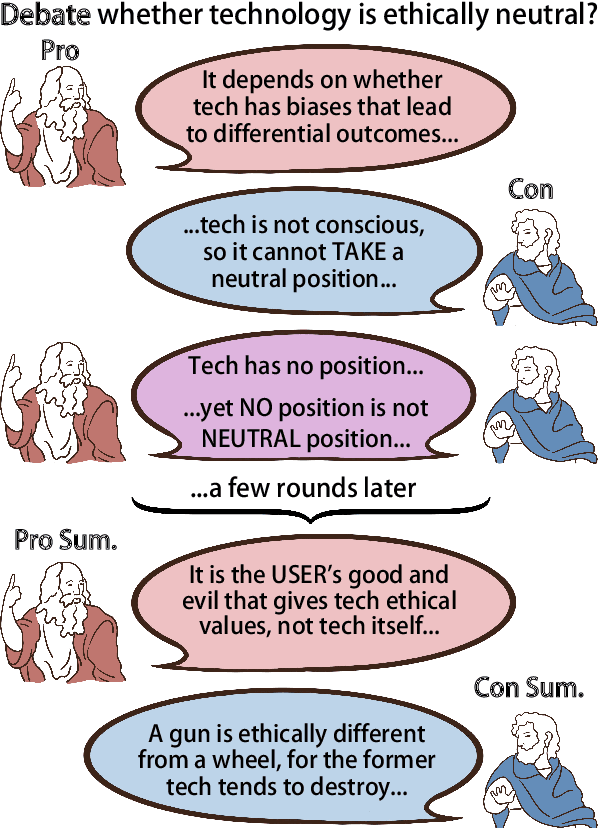


Dialogue agents have been receiving increasing attention for years, and this trend has been further boosted by the recent progress of large language models (LLMs). Stance detection and dialogue summarization are two core tasks of dialogue agents in application scenarios that involve argumentative dialogues. However, research on these tasks is limited by the insufficiency of public datasets, especially for non-English languages. To address this language resource gap in Chinese, we present ORCHID (Oral Chinese Debate), the first Chinese dataset for benchmarking target-independent stance detection and debate summarization. Our dataset consists of 1,218 real-world debates that were conducted in Chinese on 476 unique topics, containing 2,436 stance-specific summaries and 14,133 fully annotated utterances. Besides providing a versatile testbed for future research, we also conduct an empirical study on the dataset and propose an integrated task. The results show the challenging nature of the dataset and suggest a potential of incorporating stance detection in summarization for argumentative dialogue.
A Survey on Data Synthesis and Augmentation for Large Language Models
Oct 16, 2024The success of Large Language Models (LLMs) is inherently linked to the availability of vast, diverse, and high-quality data for training and evaluation. However, the growth rate of high-quality data is significantly outpaced by the expansion of training datasets, leading to a looming data exhaustion crisis. This underscores the urgent need to enhance data efficiency and explore new data sources. In this context, synthetic data has emerged as a promising solution. Currently, data generation primarily consists of two major approaches: data augmentation and synthesis. This paper comprehensively reviews and summarizes data generation techniques throughout the lifecycle of LLMs, including data preparation, pre-training, fine-tuning, instruction-tuning, preference alignment, and applications. Furthermore, We discuss the current constraints faced by these methods and investigate potential pathways for future development and research. Our aspiration is to equip researchers with a clear understanding of these methodologies, enabling them to swiftly identify appropriate data generation strategies in the construction of LLMs, while providing valuable insights for future exploration.
Adaptive Power Allocation in Spaceborne Assisted NOMA Systems for Integrated Terrestrial Communications
Oct 15, 2024


This study introduces an innovative approach for adaptive power allocation in Non-Orthogonal Multiple Access (NOMA) systems, enhanced by the integration of spaceborne and terrestrial signals through a Reconfigurable Intelligent Surface (RIS). We develop an adaptive mechanism to adjust the power distribution between spaceborne and terrestrial signals according to variations in environmental conditions and elevation angles. This mechanism employs a sophisticated transition model that combines Gaussian Mixture Models with Log-Normal distributions to adaptively counteract the detrimental impacts of atmospheric attenuation and urban shadowing. These adaptive power adjustments significantly enhance system capacity, particularly improving the Signal-to-Interference-plus-Noise Ratio under diverse operational scenarios. Simulation studies confirm the efficacy of our method within an RIS-enhanced framework, showing an approximate 20\% increase in system capacity through optimized power management between spaceborne and terrestrial signals.
Measuring the Inconsistency of Large Language Models in Preferential Ranking
Oct 11, 2024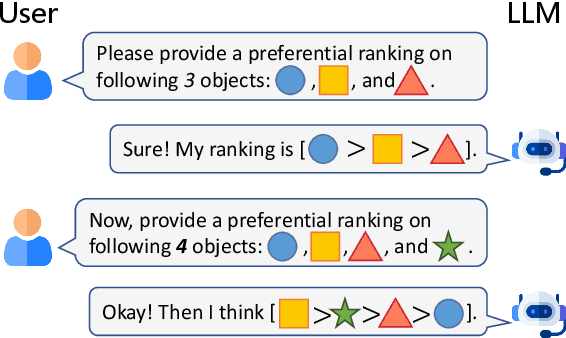
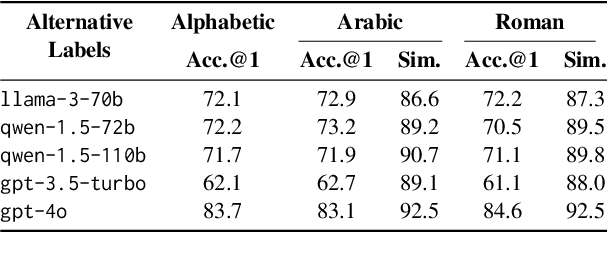
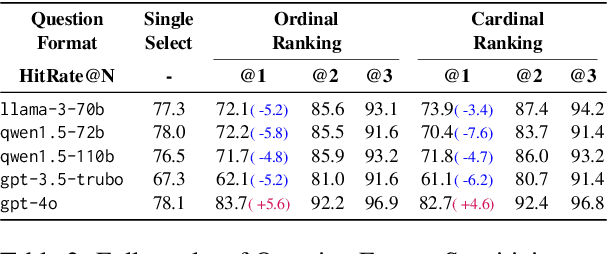
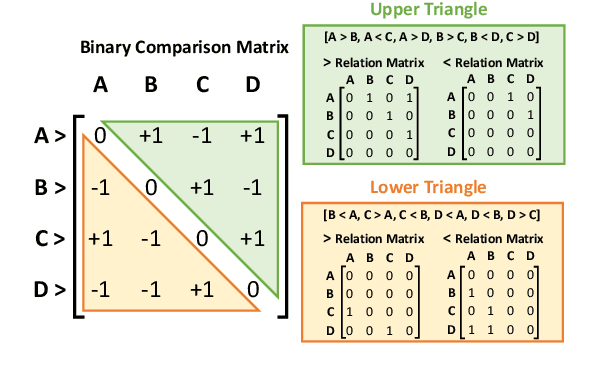
Despite large language models' (LLMs) recent advancements, their bias and hallucination issues persist, and their ability to offer consistent preferential rankings remains underexplored. This study investigates the capacity of LLMs to provide consistent ordinal preferences, a crucial aspect in scenarios with dense decision space or lacking absolute answers. We introduce a formalization of consistency based on order theory, outlining criteria such as transitivity, asymmetry, reversibility, and independence from irrelevant alternatives. Our diagnostic experiments on selected state-of-the-art LLMs reveal their inability to meet these criteria, indicating a strong positional bias and poor transitivity, with preferences easily swayed by irrelevant alternatives. These findings highlight a significant inconsistency in LLM-generated preferential rankings, underscoring the need for further research to address these limitations.
MathCoder2: Better Math Reasoning from Continued Pretraining on Model-translated Mathematical Code
Oct 10, 2024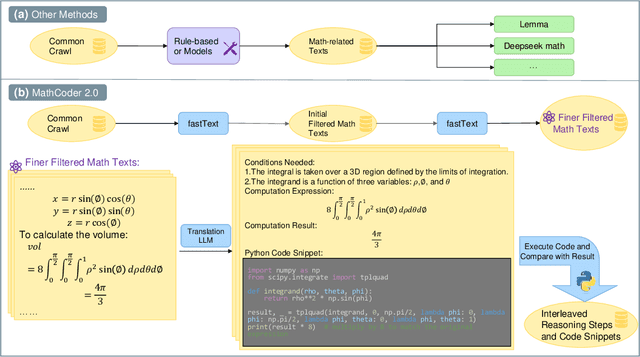

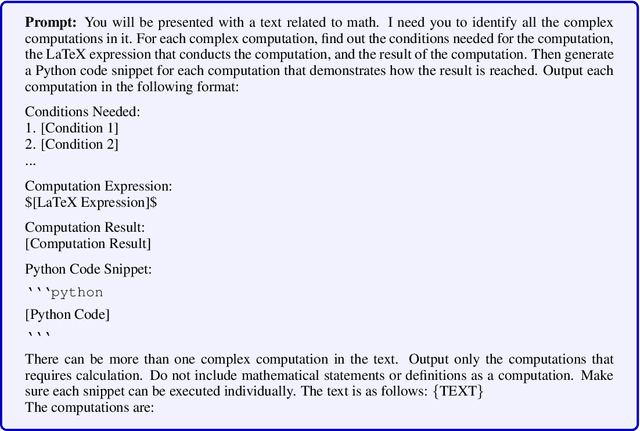
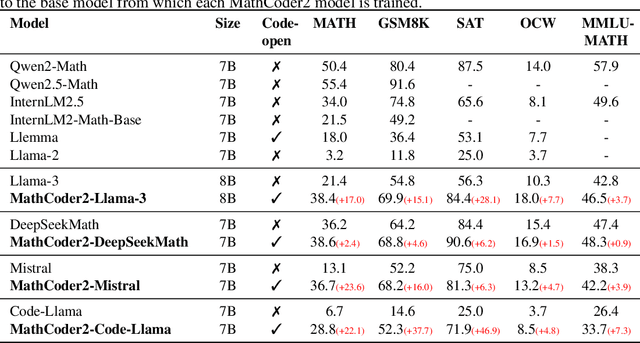
Code has been shown to be effective in enhancing the mathematical reasoning abilities of large language models due to its precision and accuracy. Previous works involving continued mathematical pretraining often include code that utilizes math-related packages, which are primarily designed for fields such as engineering, machine learning, signal processing, or module testing, rather than being directly focused on mathematical reasoning. In this paper, we introduce a novel method for generating mathematical code accompanied with corresponding reasoning steps for continued pretraining. Our approach begins with the construction of a high-quality mathematical continued pretraining dataset by incorporating math-related web data, code using mathematical packages, math textbooks, and synthetic data. Next, we construct reasoning steps by extracting LaTeX expressions, the conditions needed for the expressions, and the results of the expressions from the previously collected dataset. Based on this extracted information, we generate corresponding code to accurately capture the mathematical reasoning process. Appending the generated code to each reasoning step results in data consisting of paired natural language reasoning steps and their corresponding code. Combining this data with the original dataset results in a 19.2B-token high-performing mathematical pretraining corpus, which we name MathCode-Pile. Training several popular base models with this corpus significantly improves their mathematical abilities, leading to the creation of the MathCoder2 family of models. All of our data processing and training code is open-sourced, ensuring full transparency and easy reproducibility of the entire data collection and training pipeline. The code is released at https://github.com/mathllm/MathCoder2 .
AgentBank: Towards Generalized LLM Agents via Fine-Tuning on 50000+ Interaction Trajectories
Oct 10, 2024
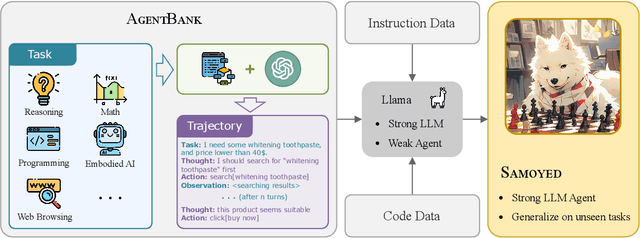


Fine-tuning on agent-environment interaction trajectory data holds significant promise for surfacing generalized agent capabilities in open-source large language models (LLMs). In this work, we introduce AgentBank, by far the largest trajectory tuning data collection featuring more than 50k diverse high-quality interaction trajectories which comprises 16 tasks covering five distinct agent skill dimensions. Leveraging a novel annotation pipeline, we are able to scale the annotated trajectories and generate a trajectory dataset with minimized difficulty bias. Furthermore, we fine-tune LLMs on AgentBank to get a series of agent models, Samoyed. Our comparative experiments demonstrate the effectiveness of scaling the interaction trajectory data to acquire generalized agent capabilities. Additional studies also reveal some key observations regarding trajectory tuning and agent skill generalization.
OPUS: Occupancy Prediction Using a Sparse Set
Sep 14, 2024


Occupancy prediction, aiming at predicting the occupancy status within voxelized 3D environment, is quickly gaining momentum within the autonomous driving community. Mainstream occupancy prediction works first discretize the 3D environment into voxels, then perform classification on such dense grids. However, inspection on sample data reveals that the vast majority of voxels is unoccupied. Performing classification on these empty voxels demands suboptimal computation resource allocation, and reducing such empty voxels necessitates complex algorithm designs. To this end, we present a novel perspective on the occupancy prediction task: formulating it as a streamlined set prediction paradigm without the need for explicit space modeling or complex sparsification procedures. Our proposed framework, called OPUS, utilizes a transformer encoder-decoder architecture to simultaneously predict occupied locations and classes using a set of learnable queries. Firstly, we employ the Chamfer distance loss to scale the set-to-set comparison problem to unprecedented magnitudes, making training such model end-to-end a reality. Subsequently, semantic classes are adaptively assigned using nearest neighbor search based on the learned locations. In addition, OPUS incorporates a suite of non-trivial strategies to enhance model performance, including coarse-to-fine learning, consistent point sampling, and adaptive re-weighting, etc. Finally, compared with current state-of-the-art methods, our lightest model achieves superior RayIoU on the Occ3D-nuScenes dataset at near 2x FPS, while our heaviest model surpasses previous best results by 6.1 RayIoU.
RAG-Optimized Tibetan Tourism LLMs: Enhancing Accuracy and Personalization
Aug 21, 2024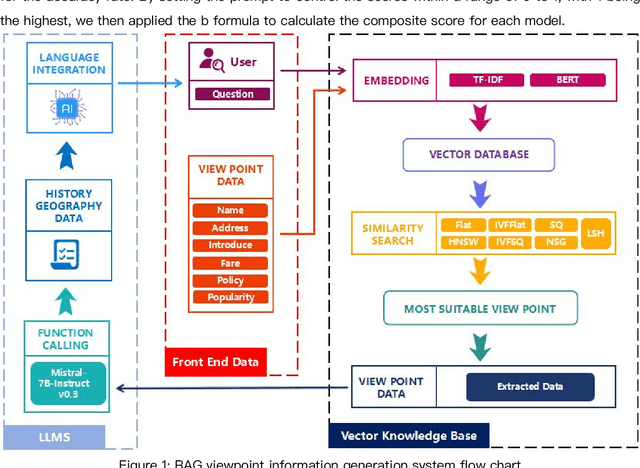
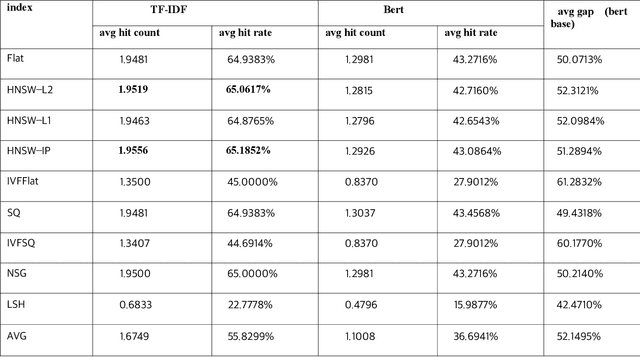
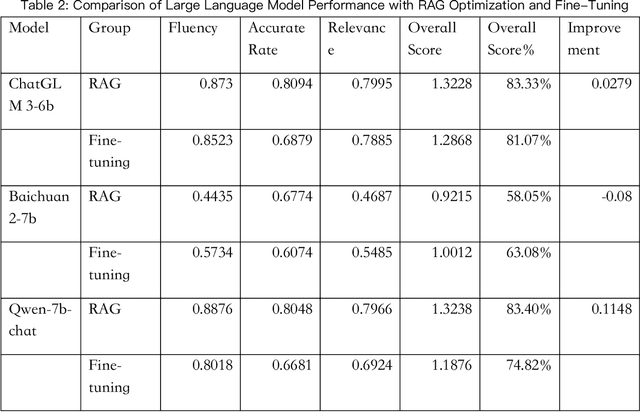
With the development of the modern social economy, tourism has become an important way to meet people's spiritual needs, bringing development opportunities to the tourism industry. However, existing large language models (LLMs) face challenges in personalized recommendation capabilities and the generation of content that can sometimes produce hallucinations. This study proposes an optimization scheme for Tibet tourism LLMs based on retrieval-augmented generation (RAG) technology. By constructing a database of tourist viewpoints and processing the data using vectorization techniques, we have significantly improved retrieval accuracy. The application of RAG technology effectively addresses the hallucination problem in content generation. The optimized model shows significant improvements in fluency, accuracy, and relevance of content generation. This research demonstrates the potential of RAG technology in the standardization of cultural tourism information and data analysis, providing theoretical and technical support for the development of intelligent cultural tourism service systems.