 Add to Chrome
 Add to Firefox
 Add to Edge
TREK: A Travel Reasoning and Evaluation Kit for LLM Agents in Complex Trip Planning
Jul 29, 2026
Travel planning is a demanding stress test for tool-using LLM agents: a usable itinerary is a single artifact that must be right along many axes at once - every flight, hotel, and attraction must exist and be bookable, the days must be physically traversable, the total must clear a budget, and the plan must serve a traveler whose needs are only partly stated. Existing agent benchmarks reward these properties one at a time and grade the final output with soft or LLM-judged rubrics, which cannot certify that a returned plan is executable and are neither reproducible nor auditable. We introduce TREK (Travel Reasoning and Evaluation Kit), a benchmark for feasible itinerary synthesis: producing a single plan that is jointly constraint-correct, hallucination-free, spatio-temporally executable, budget-valid, and responsive to the traveler's unstated persona needs. TREK comprises 800 multi-constraint tasks - 533 feasible and 267 provably infeasible with typed route/entity/budget causes - over a synthetic, internally consistent knowledge base of 212,530 records across 375 cities and 13 personas, served through a production-style tool sandbox of validated RESTful APIs. Every task is scored by a fully deterministic, rule-based evaluator with no LLM judge and ships a human-verified gold reference that scores a perfect 1.0 under that same evaluator, so the ceiling is demonstrably achievable and every remaining gap is an agent limitation rather than scorer strictness. Evaluating 15 LLM agents across nine constraint dimensions, we find that even the strongest (GPT-5.6) produces a fully-feasible plan on only 46.2% of solvable tasks, with a median of 6.6% and a floor of 0.0%; satisfying travelers' unstated needs emerges as the universal bottleneck, unsolved even at the frontier. We release the dataset, tool sandbox, deterministic evaluator, and agent code as a fully reproducible benchmark.

Geometric Collapse: When Vision Models Fail to Verify Physical Causality
Jul 08, 2026Recent progress in large-scale self-supervised learning has improved dense geometric prediction, but it remains unclear whether such scaling yields inference-time physical plausibility checks. We propose Scrambled Edges, a controlled counterfactual that injects salient edge-like cues while violating surface continuity, illumination coherence, and occlusion ordering. With energy-matched and structure-matched controls, we isolate the effect of unsupported edge evidence from high-frequency energy and edge sparsity. Across CNN/ViT/SSL depth predictors on NYU Depth v2 and KITTI, Scrambled Edges induce up to 3.2x larger deviation from clean predictions than energy-matched noise; additional diffusion and flow-matching depth estimators show attenuated but still significant collapse. The resulting Geometric Collapse propagates globally: even with oracle knowledge of the corrupted region, output-level repair recovers only 47%, with substantial error outside the mask. These findings provide controlled behavioral evidence that current dense predictors lack reliable mechanisms to quarantine physically unsupported edge cues, motivating explicit plausibility scoring and selective cue integration.
Beyond Benchmark Islands: Toward Representative Trustworthiness Evaluation for Agentic AI
Mar 16, 2026As agentic AI systems move beyond static question answering into open-ended, tool-augmented, and multi-step real-world workflows, their increased authority poses greater risks of system misuse and operational failures. However, current evaluation practices remain fragmented, measuring isolated capabilities such as coding, hallucination, jailbreak resistance, or tool use in narrowly defined settings. We argue that the central limitation is not merely insufficient coverage of evaluation dimensions, but the lack of a principled notion of representativeness: an agent's trustworthiness should be assessed over a representative socio-technical scenario distribution rather than a collection of disconnected benchmark instances. To this end, we propose the Holographic Agent Assessment Framework (HAAF), a systematic evaluation paradigm that characterizes agent trustworthiness over a scenario manifold spanning task types, tool interfaces, interaction dynamics, social contexts, and risk levels. The framework integrates four complementary components: (i) static cognitive and policy analysis, (ii) interactive sandbox simulation, (iii) social-ethical alignment assessment, and (iv) a distribution-aware representative sampling engine that jointly optimizes coverage and risk sensitivity -- particularly for rare but high-consequence tail risks that conventional benchmarks systematically overlook. These components are connected through an iterative Trustworthy Optimization Factory. Through cycles of red-team probing and blue-team hardening, this paradigm progressively narrows the vulnerabilities to meet deployment standards, shifting agent evaluation from benchmark islands toward representative, real-world trustworthiness. Code and data for the illustrative instantiation are available at https://github.com/TonyQJH/haaf-pilot.
Limited Effectiveness of LLM-based Data Augmentation for COVID-19 Misinformation Stance Detection
Mar 04, 2025Misinformation surrounding emerging outbreaks poses a serious societal threat, making robust countermeasures essential. One promising approach is stance detection (SD), which identifies whether social media posts support or oppose misleading claims. In this work, we finetune classifiers on COVID-19 misinformation SD datasets consisting of claims and corresponding tweets. Specifically, we test controllable misinformation generation (CMG) using large language models (LLMs) as a method for data augmentation. While CMG demonstrates the potential for expanding training datasets, our experiments reveal that performance gains over traditional augmentation methods are often minimal and inconsistent, primarily due to built-in safeguards within LLMs. We release our code and datasets to facilitate further research on misinformation detection and generation.
RAG-Optimized Tibetan Tourism LLMs: Enhancing Accuracy and Personalization
Aug 21, 2024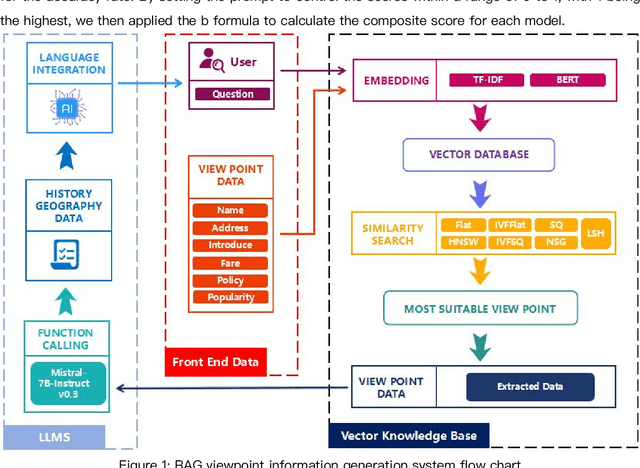
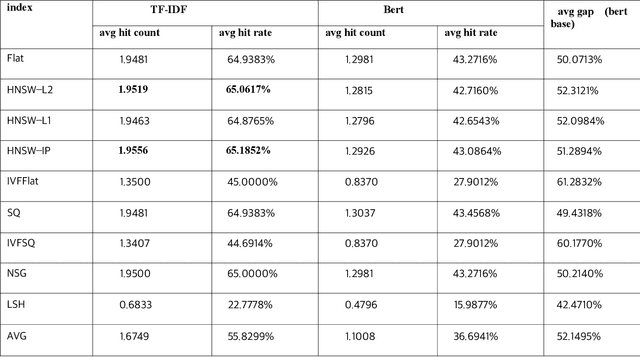
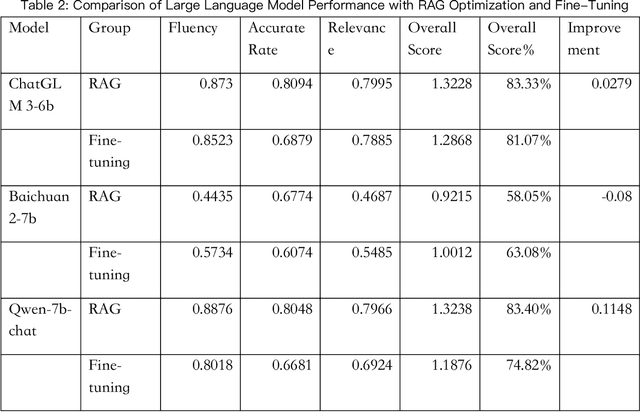
With the development of the modern social economy, tourism has become an important way to meet people's spiritual needs, bringing development opportunities to the tourism industry. However, existing large language models (LLMs) face challenges in personalized recommendation capabilities and the generation of content that can sometimes produce hallucinations. This study proposes an optimization scheme for Tibet tourism LLMs based on retrieval-augmented generation (RAG) technology. By constructing a database of tourist viewpoints and processing the data using vectorization techniques, we have significantly improved retrieval accuracy. The application of RAG technology effectively addresses the hallucination problem in content generation. The optimized model shows significant improvements in fluency, accuracy, and relevance of content generation. This research demonstrates the potential of RAG technology in the standardization of cultural tourism information and data analysis, providing theoretical and technical support for the development of intelligent cultural tourism service systems.
Research on Tibetan Tourism Viewpoints information generation system based on LLM
Jul 18, 2024


Tibet, ensconced within China's territorial expanse, is distinguished by its labyrinthine and heterogeneous topography, a testament to its profound historical heritage, and the cradle of a unique religious ethos. The very essence of these attributes, however, has impeded the advancement of Tibet's tourism service infrastructure, rendering existing smart tourism services inadequate for the region's visitors. This study delves into the ramifications of informational disparities at tourist sites on Tibetan tourism and addresses the challenge of establishing the Large Language Model (LLM) evaluation criteria. It introduces an innovative approach, the DualGen Bridge AI system, employing supervised fine-tuning techniques to bolster model functionality and enhance optimization processes. Furthermore, it pioneers a multi-structured generative results assessment framework. Empirical validation confirms the efficacy of this framework. The study also explores the application of the supervised fine-tuning method within the proprietary DualGen Bridge AI, aimed at refining the generation of tourist site information. The study's findings offer valuable insights for optimizing system performance and provide support and inspiration for the application of LLM technology in Tibet's tourism services and beyond, potentially revolutionizing the smart tourism industry with advanced, tailored information generation capabilities.