 Add to Chrome
 Add to Firefox
 Add to Edge
DuMo: Dual Encoder Modulation Network for Precise Concept Erasure
Jan 02, 2025
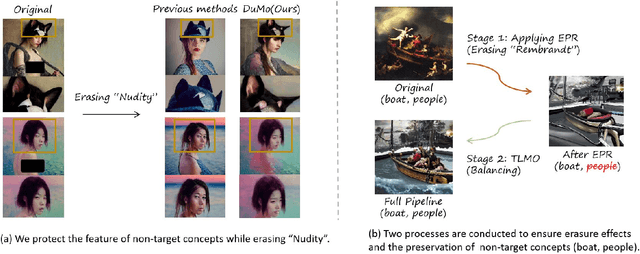
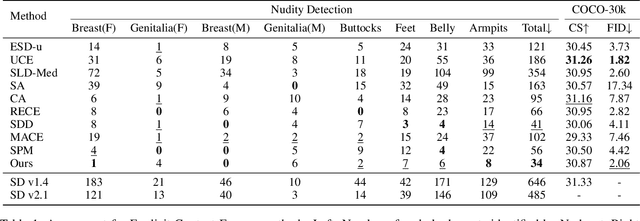
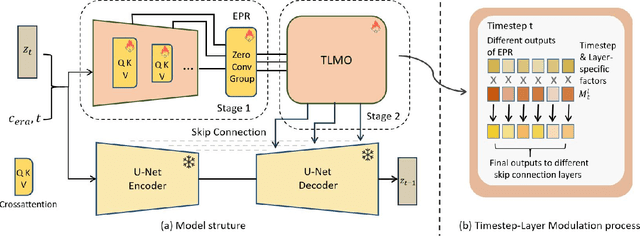
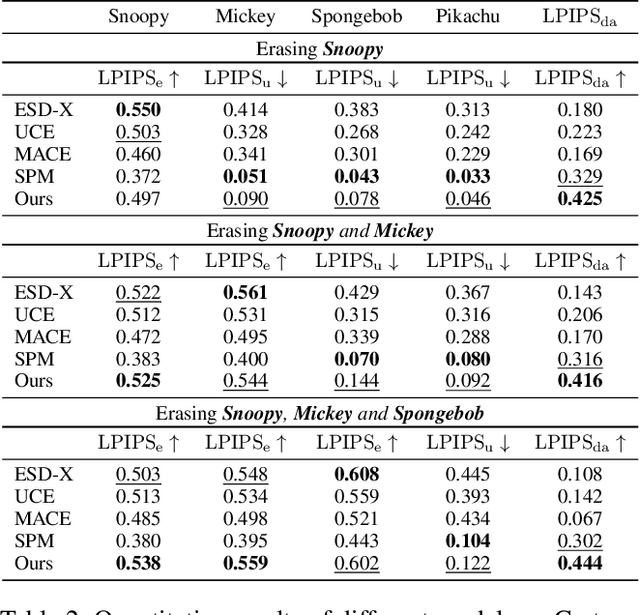
The exceptional generative capability of text-to-image models has raised substantial safety concerns regarding the generation of Not-Safe-For-Work (NSFW) content and potential copyright infringement. To address these concerns, previous methods safeguard the models by eliminating inappropriate concepts. Nonetheless, these models alter the parameters of the backbone network and exert considerable influences on the structural (low-frequency) components of the image, which undermines the model's ability to retain non-target concepts. In this work, we propose our Dual encoder Modulation network (DuMo), which achieves precise erasure of inappropriate target concepts with minimum impairment to non-target concepts. In contrast to previous methods, DuMo employs the Eraser with PRior Knowledge (EPR) module which modifies the skip connection features of the U-NET and primarily achieves concept erasure on details (high-frequency) components of the image. To minimize the damage to non-target concepts during erasure, the parameters of the backbone U-NET are frozen and the prior knowledge from the original skip connection features is introduced to the erasure process. Meanwhile, the phenomenon is observed that distinct erasing preferences for the image structure and details are demonstrated by the EPR at different timesteps and layers. Therefore, we adopt a novel Time-Layer MOdulation process (TLMO) that adjusts the erasure scale of EPR module's outputs across different layers and timesteps, automatically balancing the erasure effects and model's generative ability. Our method achieves state-of-the-art performance on Explicit Content Erasure, Cartoon Concept Removal and Artistic Style Erasure, clearly outperforming alternative methods. Code is available at https://github.com/Maplebb/DuMo

OpenAI o1 System Card
Dec 21, 2024


The o1 model series is trained with large-scale reinforcement learning to reason using chain of thought. These advanced reasoning capabilities provide new avenues for improving the safety and robustness of our models. In particular, our models can reason about our safety policies in context when responding to potentially unsafe prompts, through deliberative alignment. This leads to state-of-the-art performance on certain benchmarks for risks such as generating illicit advice, choosing stereotyped responses, and succumbing to known jailbreaks. Training models to incorporate a chain of thought before answering has the potential to unlock substantial benefits, while also increasing potential risks that stem from heightened intelligence. Our results underscore the need for building robust alignment methods, extensively stress-testing their efficacy, and maintaining meticulous risk management protocols. This report outlines the safety work carried out for the OpenAI o1 and OpenAI o1-mini models, including safety evaluations, external red teaming, and Preparedness Framework evaluations.
Federated Learning for Coronary Artery Plaque Detection in Atherosclerosis Using IVUS Imaging: A Multi-Hospital Collaboration
Dec 19, 2024The traditional interpretation of Intravascular Ultrasound (IVUS) images during Percutaneous Coronary Intervention (PCI) is time-intensive and inconsistent, relying heavily on physician expertise. Regulatory restrictions and privacy concerns further hinder data integration across hospital systems, complicating collaborative analysis. To address these challenges, a parallel 2D U-Net model with a multi-stage segmentation architecture has been developed, utilizing federated learning to enable secure data analysis across institutions while preserving privacy. The model segments plaques by identifying and subtracting the External Elastic Membrane (EEM) and lumen areas, with preprocessing converting Cartesian to polar coordinates for improved computational efficiency. Achieving a Dice Similarity Coefficient (DSC) of 0.706, the model effectively identifies plaques and detects circular boundaries in real-time. Collaborative efforts with domain experts enhance plaque burden interpretation through precise quantitative measurements. Future advancements may involve integrating advanced federated learning techniques and expanding datasets to further improve performance and applicability. This adaptable technology holds promise for environments handling sensitive, distributed data, offering potential to optimize outcomes in medical imaging and intervention.
Are Your LLMs Capable of Stable Reasoning?
Dec 17, 2024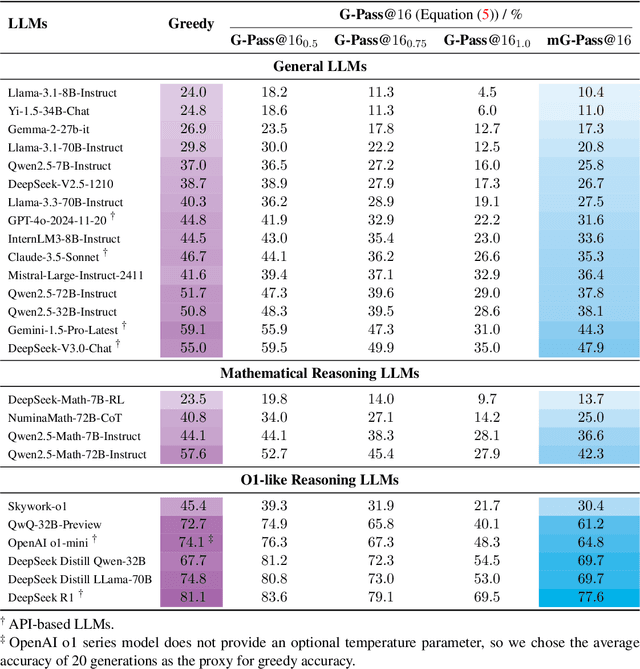
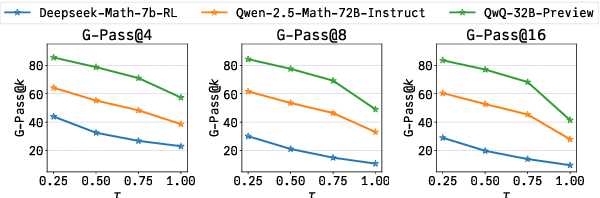
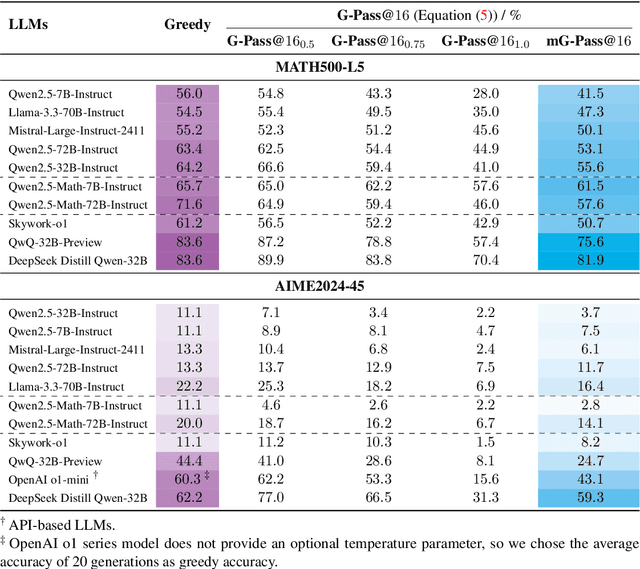
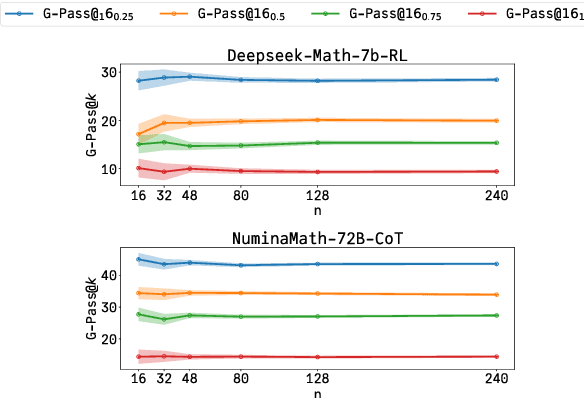
The rapid advancement of Large Language Models (LLMs) has demonstrated remarkable progress in complex reasoning tasks. However, a significant discrepancy persists between benchmark performances and real-world applications. We identify this gap as primarily stemming from current evaluation protocols and metrics, which inadequately capture the full spectrum of LLM capabilities, particularly in complex reasoning tasks where both accuracy and consistency are crucial. This work makes two key contributions. First, we introduce G-Pass@k, a novel evaluation metric that provides a continuous assessment of model performance across multiple sampling attempts, quantifying both the model's peak performance potential and its stability. Second, we present LiveMathBench, a dynamic benchmark comprising challenging, contemporary mathematical problems designed to minimize data leakage risks during evaluation. Through extensive experiments using G-Pass@k on state-of-the-art LLMs with LiveMathBench, we provide comprehensive insights into both their maximum capabilities and operational consistency. Our findings reveal substantial room for improvement in LLMs' "realistic" reasoning capabilities, highlighting the need for more robust evaluation methods. The benchmark and detailed results are available at: https://github.com/open-compass/GPassK.
InternLM-XComposer2.5-OmniLive: A Comprehensive Multimodal System for Long-term Streaming Video and Audio Interactions
Dec 12, 2024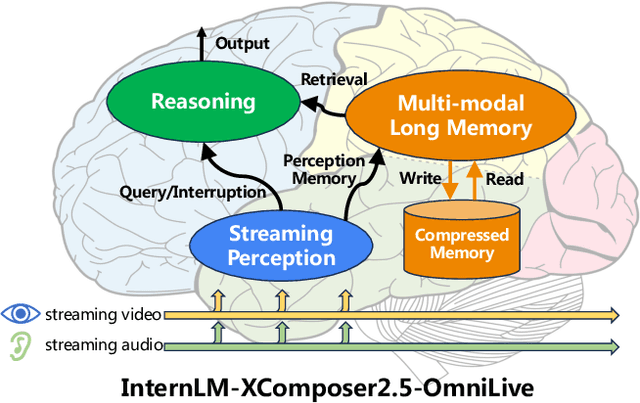


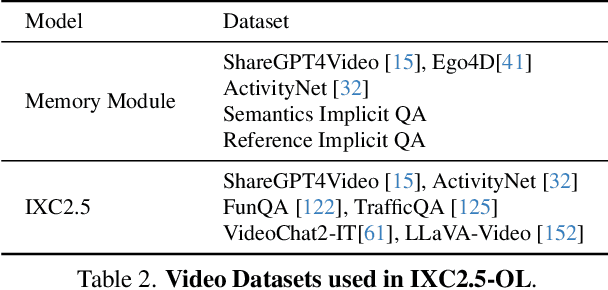
Creating AI systems that can interact with environments over long periods, similar to human cognition, has been a longstanding research goal. Recent advancements in multimodal large language models (MLLMs) have made significant strides in open-world understanding. However, the challenge of continuous and simultaneous streaming perception, memory, and reasoning remains largely unexplored. Current MLLMs are constrained by their sequence-to-sequence architecture, which limits their ability to process inputs and generate responses simultaneously, akin to being unable to think while perceiving. Furthermore, relying on long contexts to store historical data is impractical for long-term interactions, as retaining all information becomes costly and inefficient. Therefore, rather than relying on a single foundation model to perform all functions, this project draws inspiration from the concept of the Specialized Generalist AI and introduces disentangled streaming perception, reasoning, and memory mechanisms, enabling real-time interaction with streaming video and audio input. The proposed framework InternLM-XComposer2.5-OmniLive (IXC2.5-OL) consists of three key modules: (1) Streaming Perception Module: Processes multimodal information in real-time, storing key details in memory and triggering reasoning in response to user queries. (2) Multi-modal Long Memory Module: Integrates short-term and long-term memory, compressing short-term memories into long-term ones for efficient retrieval and improved accuracy. (3) Reasoning Module: Responds to queries and executes reasoning tasks, coordinating with the perception and memory modules. This project simulates human-like cognition, enabling multimodal large language models to provide continuous and adaptive service over time.
Expanding Performance Boundaries of Open-Source Multimodal Models with Model, Data, and Test-Time Scaling
Dec 06, 2024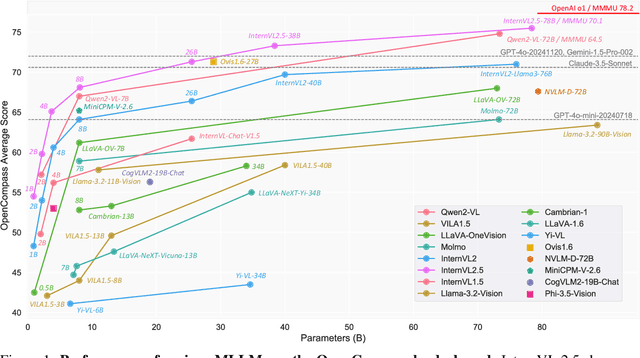

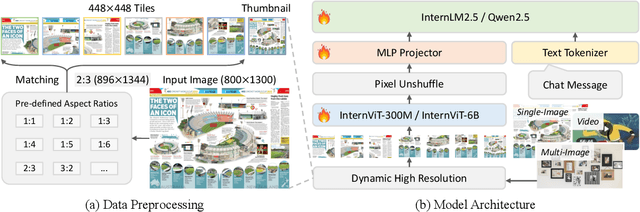

We introduce InternVL 2.5, an advanced multimodal large language model (MLLM) series that builds upon InternVL 2.0, maintaining its core model architecture while introducing significant enhancements in training and testing strategies as well as data quality. In this work, we delve into the relationship between model scaling and performance, systematically exploring the performance trends in vision encoders, language models, dataset sizes, and test-time configurations. Through extensive evaluations on a wide range of benchmarks, including multi-discipline reasoning, document understanding, multi-image / video understanding, real-world comprehension, multimodal hallucination detection, visual grounding, multilingual capabilities, and pure language processing, InternVL 2.5 exhibits competitive performance, rivaling leading commercial models such as GPT-4o and Claude-3.5-Sonnet. Notably, our model is the first open-source MLLMs to surpass 70% on the MMMU benchmark, achieving a 3.7-point improvement through Chain-of-Thought (CoT) reasoning and showcasing strong potential for test-time scaling. We hope this model contributes to the open-source community by setting new standards for developing and applying multimodal AI systems. HuggingFace demo see https://huggingface.co/spaces/OpenGVLab/InternVL
Deep Learning-Based Approach for Identification and Compensation of Nonlinear Distortions in Parametric Array Loudspeakers
Dec 02, 2024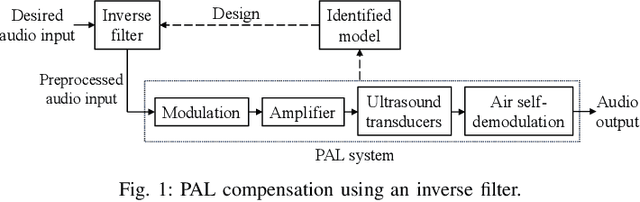
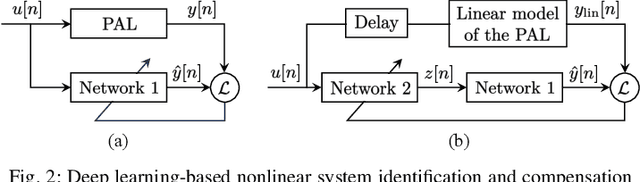
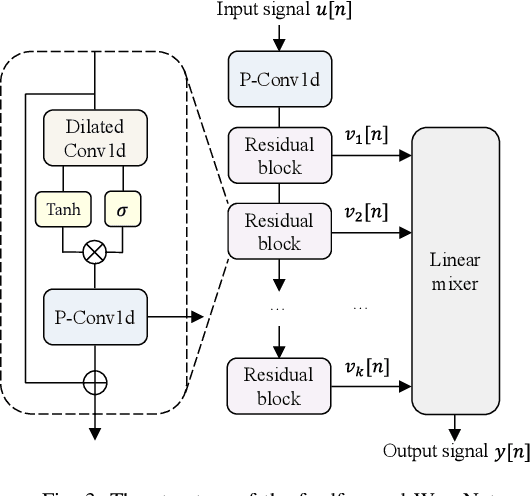
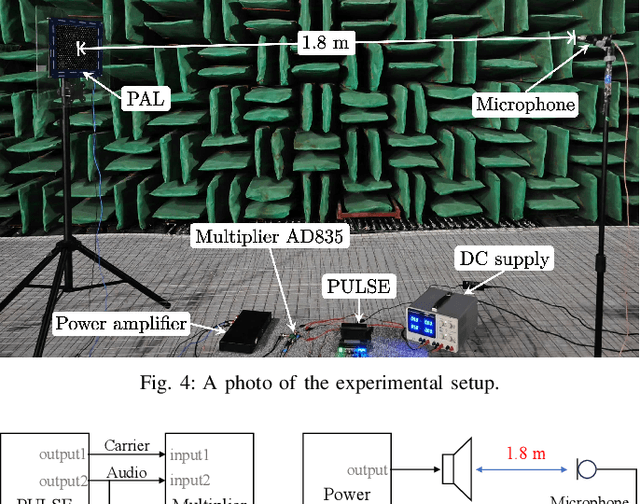
Compared to traditional electrodynamic loudspeakers, the parametric array loudspeaker (PAL) offers exceptional directivity for audio applications but suffers from significant nonlinear distortions due to its inherent intricate demodulation process. The Volterra filter-based approaches have been widely used to reduce these distortions, but the effectiveness is limited by its inverse filter's capability. Specifically, its pth-order inverse filter can only compensate for nonlinearities up to the pth order, while the higher-order nonlinearities it introduces continue to generate lower-order harmonics. In contrast, this paper introduces the modern deep learning methods for the first time to address nonlinear identification and compensation for PAL systems. Specifically, a feedforward variant of the WaveNet neural network, recognized for its success in audio nonlinear system modeling, is utilized to identify and compensate for distortions in a double sideband amplitude modulation-based PAL system. Experimental measurements from 250 Hz to 8 kHz demonstrate that our proposed approach significantly reduces both total harmonic distortion and intermodulation distortion of audio sound generated by PALs, achieving average reductions to 4.55% and 2.47%, respectively. This performance is notably superior to results obtained using the current state-of-the-art Volterra filter-based methods. Our work opens new possibilities for improving the sound reproduction performance of PALs.
Uhura: A Benchmark for Evaluating Scientific Question Answering and Truthfulness in Low-Resource African Languages
Dec 01, 2024
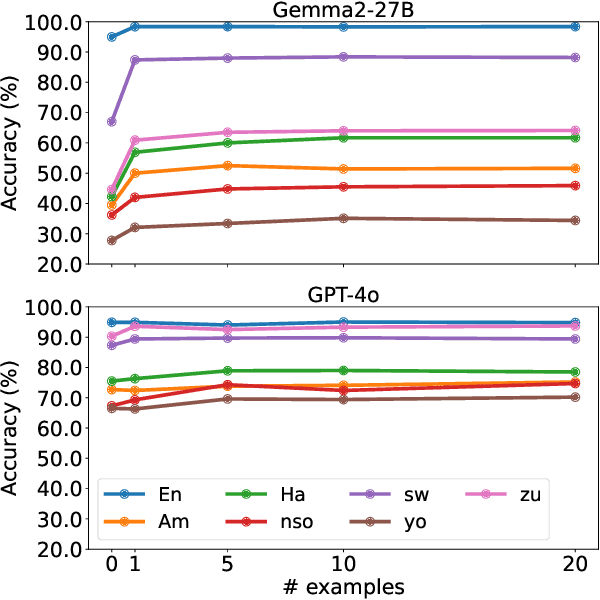
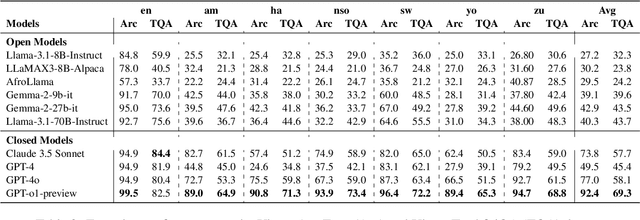

Evaluations of Large Language Models (LLMs) on knowledge-intensive tasks and factual accuracy often focus on high-resource languages primarily because datasets for low-resource languages (LRLs) are scarce. In this paper, we present Uhura -- a new benchmark that focuses on two tasks in six typologically-diverse African languages, created via human translation of existing English benchmarks. The first dataset, Uhura-ARC-Easy, is composed of multiple-choice science questions. The second, Uhura-TruthfulQA, is a safety benchmark testing the truthfulness of models on topics including health, law, finance, and politics. We highlight the challenges creating benchmarks with highly technical content for LRLs and outline mitigation strategies. Our evaluation reveals a significant performance gap between proprietary models such as GPT-4o and o1-preview, and Claude models, and open-source models like Meta's LLaMA and Google's Gemma. Additionally, all models perform better in English than in African languages. These results indicate that LMs struggle with answering scientific questions and are more prone to generating false claims in low-resource African languages. Our findings underscore the necessity for continuous improvement of multilingual LM capabilities in LRL settings to ensure safe and reliable use in real-world contexts. We open-source the Uhura Benchmark and Uhura Platform to foster further research and development in NLP for LRLs.
Promptable Anomaly Segmentation with SAM Through Self-Perception Tuning
Nov 26, 2024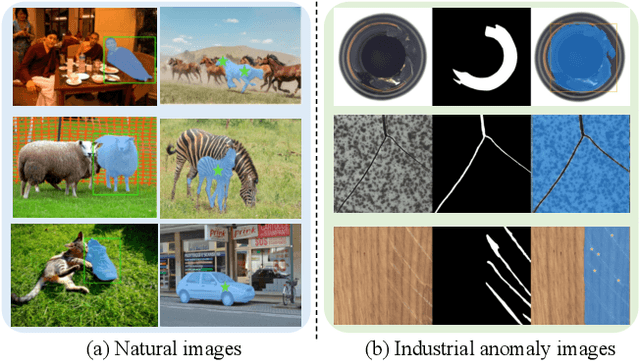
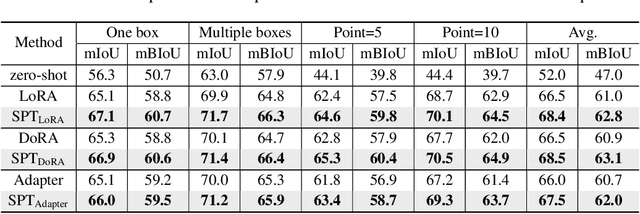
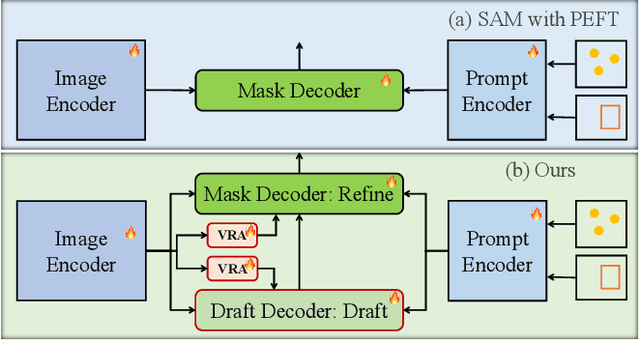
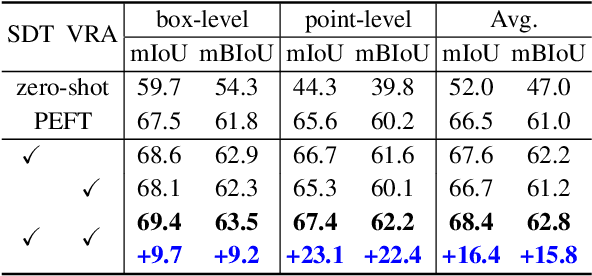
Segment Anything Model (SAM) has made great progress in anomaly segmentation tasks due to its impressive generalization ability. However, existing methods that directly apply SAM through prompting often overlook the domain shift issue, where SAM performs well on natural images but struggles in industrial scenarios. Parameter-Efficient Fine-Tuning (PEFT) offers a promising solution, but it may yield suboptimal performance by not adequately addressing the perception challenges during adaptation to anomaly images. In this paper, we propose a novel Self-Perceptinon Tuning (SPT) method, aiming to enhance SAM's perception capability for anomaly segmentation. The SPT method incorporates a self-drafting tuning strategy, which generates an initial coarse draft of the anomaly mask, followed by a refinement process. Additionally, a visual-relation-aware adapter is introduced to improve the perception of discriminative relational information for mask generation. Extensive experimental results on several benchmark datasets demonstrate that our SPT method can significantly outperform baseline methods, validating its effectiveness. Models and codes will be available online.
InstCache: A Predictive Cache for LLM Serving
Nov 21, 2024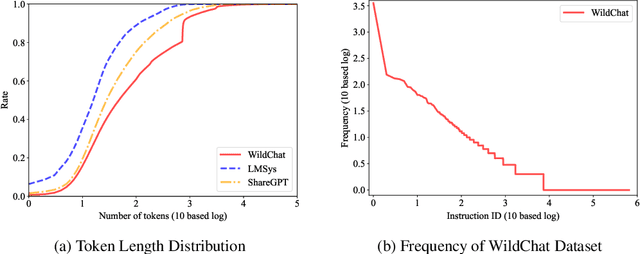
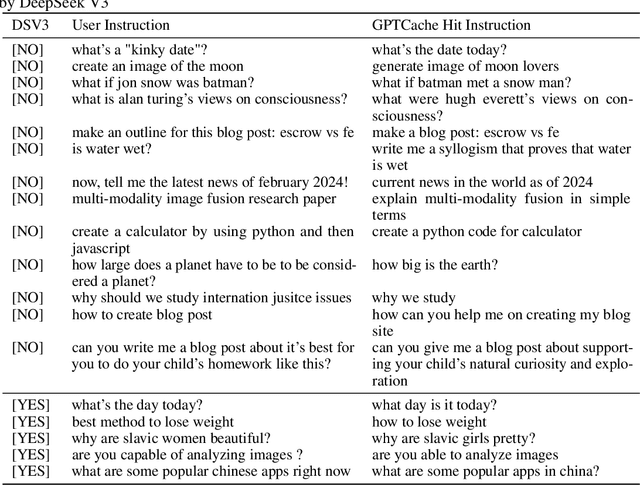
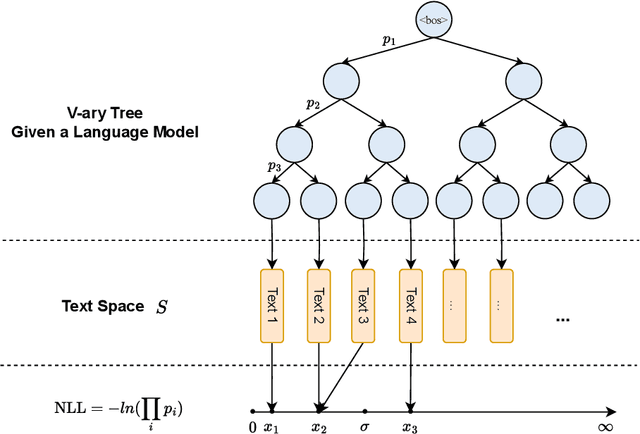
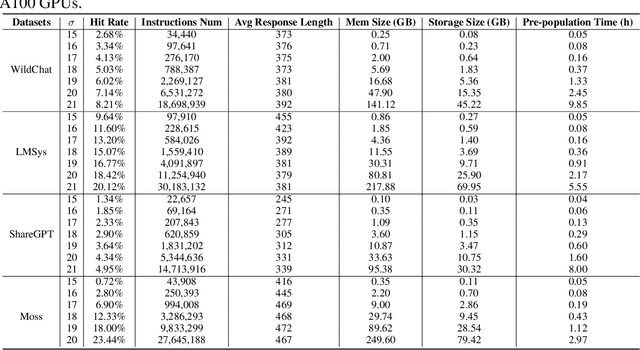
Large language models are revolutionizing every aspect of human life. However, the unprecedented power comes at the cost of significant computing intensity, suggesting long latency and large energy footprint. Key-Value Cache and Semantic Cache have been proposed as a solution to the above problem, but both suffer from limited scalability due to significant memory cost for each token or instruction embeddings. Motivated by the observations that most instructions are short, repetitive and predictable by LLMs, we propose to predict user-instructions by an instruction-aligned LLM and store them in a predictive cache, so-called InstCache. We introduce an instruction pre-population algorithm based on the negative log likelihood of instructions, determining the cache size with regard to the hit rate. The proposed InstCache is efficiently implemented as a hash table with minimal lookup latency for deployment. Experimental results show that InstCache can achieve up to 51.34% hit rate on LMSys dataset, which corresponds to a 2x speedup, at a memory cost of only 4.5GB.