 Add to Chrome
 Add to Firefox
 Add to Edge
KVBuffer: IO-aware Serving for Linear Attention
May 18, 2026
Linear attention has recently gained significant attention for long-context inference due to its constant decoding cost with respect to context length. However, existing serving systems typically serve linear attention by recurrently computing and updating a large linear attention state in every decoding step. Since the state is much larger than the per-token key and value, recurrent decoding incurs substantial memory access and becomes inefficient for serving linear attention. In this paper, we propose KVBuffer, an IO-aware serving mechanism for linear attention. By buffering recent keys and values, KVBuffer enables serving systems to compute linear attention outputs in more flexible and memory-efficient ways. For decoding, KVBuffer enables chunkwise computation, which reduces average memory access and decoding latency by deferring state updates and applying them in batch. For speculative decoding, KVBuffer verifies draft tokens in parallel and avoids storing temporary states. For short contexts, KVBuffer computes attention outputs directly from buffered keys and values, without creating or updating the linear attention state. We implement KVBuffer in SGLang for Qwen3-Next. Our evaluations show that KVBuffer can reduce linear attention decoding latency by up to 45.17% and increase the maximum number of serving requests by 5x for speculative decoding when verifying four draft tokens.

InstCache: A Predictive Cache for LLM Serving
Nov 21, 2024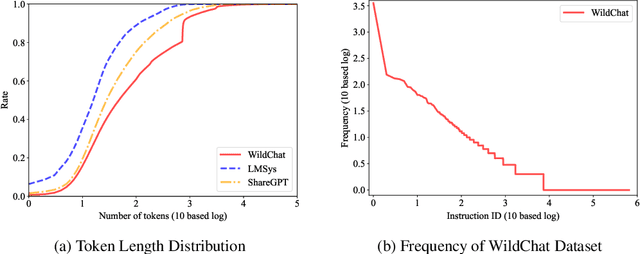
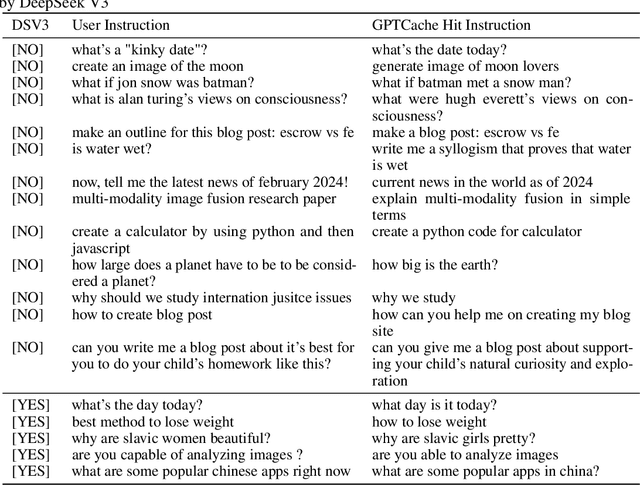
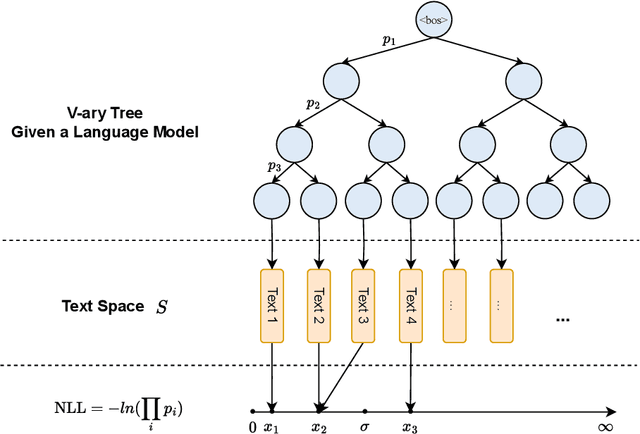
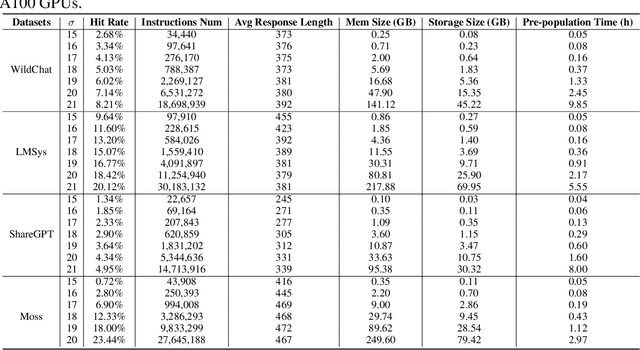
Large language models are revolutionizing every aspect of human life. However, the unprecedented power comes at the cost of significant computing intensity, suggesting long latency and large energy footprint. Key-Value Cache and Semantic Cache have been proposed as a solution to the above problem, but both suffer from limited scalability due to significant memory cost for each token or instruction embeddings. Motivated by the observations that most instructions are short, repetitive and predictable by LLMs, we propose to predict user-instructions by an instruction-aligned LLM and store them in a predictive cache, so-called InstCache. We introduce an instruction pre-population algorithm based on the negative log likelihood of instructions, determining the cache size with regard to the hit rate. The proposed InstCache is efficiently implemented as a hash table with minimal lookup latency for deployment. Experimental results show that InstCache can achieve up to 51.34% hit rate on LMSys dataset, which corresponds to a 2x speedup, at a memory cost of only 4.5GB.
CQIL: Inference Latency Optimization with Concurrent Computation of Quasi-Independent Layers
Apr 10, 2024The fast-growing large scale language models are delivering unprecedented performance on almost all natural language processing tasks. However, the effectiveness of large language models are reliant on an exponentially increasing number of parameters. The overwhelming computation complexity incurs a high inference latency that negatively affects user experience. Existing methods to improve inference efficiency, such as tensor parallelism and quantization, target to reduce per-layer computing latency, yet overlook the cumulative latency due to the number of layers. Recent works on reducing the cumulative latency through layer removing, however, lead to significant performance drop. Motivated by the similarity of inputs among adjacent layers, we propose to identify quasi-independent layers, which can be concurrently computed to significantly decrease inference latency. We also introduce a bypassing technique to mitigate the effect of information loss. Empirical experiments of the proposed approach on the LLaMA models confirm that Concurrent Computation of Quasi-Independent Layers (CQIL) can reduce latency by up to 48.3% on the LLaMA-33B model, while maintaining a close level of performance.
A Multi-Level Framework for Accelerating Training Transformer Models
Apr 07, 2024The fast growing capabilities of large-scale deep learning models, such as Bert, GPT and ViT, are revolutionizing the landscape of NLP, CV and many other domains. Training such models, however, poses an unprecedented demand for computing power, which incurs exponentially increasing energy cost and carbon dioxide emissions. It is thus critical to develop efficient training solutions to reduce the training costs. Motivated by a set of key observations of inter- and intra-layer similarities among feature maps and attentions that can be identified from typical training processes, we propose a multi-level framework for training acceleration. Specifically, the framework is based on three basic operators, Coalescing, De-coalescing and Interpolation, which can be orchestrated to build a multi-level training framework. The framework consists of a V-cycle training process, which progressively down- and up-scales the model size and projects the parameters between adjacent levels of models via coalescing and de-coalescing. The key idea is that a smaller model that can be trained for fast convergence and the trained parameters provides high-qualities intermediate solutions for the next level larger network. The interpolation operator is designed to break the symmetry of neurons incurred by de-coalescing for better convergence performance. Our experiments on transformer-based language models (e.g. Bert, GPT) as well as a vision model (e.g. DeiT) prove that the proposed framework reduces the computational cost by about 20% on training BERT/GPT-Base models and up to 51.6% on training the BERT-Large model while preserving the performance.