 Add to Chrome
 Add to Firefox
 Add to Edge
Seed-ASR: Understanding Diverse Speech and Contexts with LLM-based Speech Recognition
Jul 05, 2024
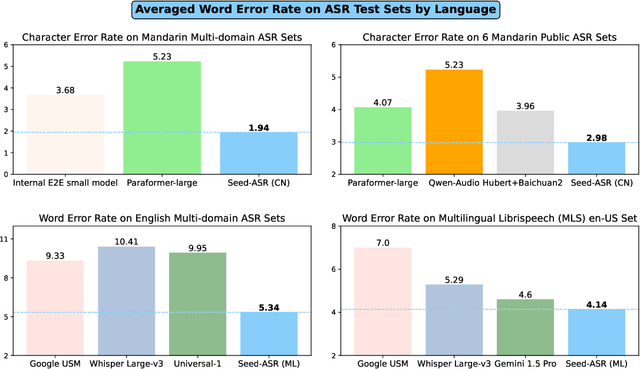
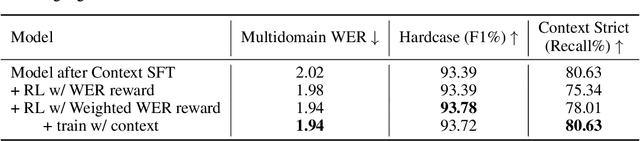
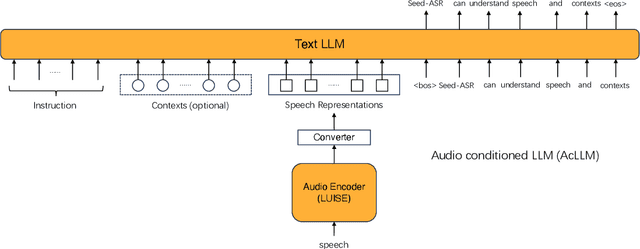

Modern automatic speech recognition (ASR) model is required to accurately transcribe diverse speech signals (from different domains, languages, accents, etc) given the specific contextual information in various application scenarios. Classic end-to-end models fused with extra language models perform well, but mainly in data matching scenarios and are gradually approaching a bottleneck. In this work, we introduce Seed-ASR, a large language model (LLM) based speech recognition model. Seed-ASR is developed based on the framework of audio conditioned LLM (AcLLM), leveraging the capabilities of LLMs by inputting continuous speech representations together with contextual information into the LLM. Through stage-wise large-scale training and the elicitation of context-aware capabilities in LLM, Seed-ASR demonstrates significant improvement over end-to-end models on comprehensive evaluation sets, including multiple domains, accents/dialects and languages. Additionally, Seed-ASR can be further deployed to support specific needs in various scenarios without requiring extra language models. Compared to recently released large ASR models, Seed-ASR achieves 10%-40% reduction in word (or character, for Chinese) error rates on Chinese and English public test sets, further demonstrating its powerful performance.

Let the Code LLM Edit Itself When You Edit the Code
Jul 03, 2024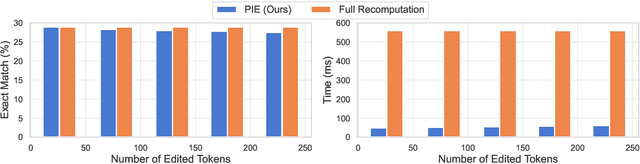
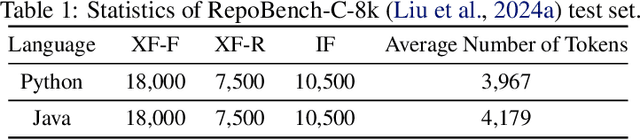
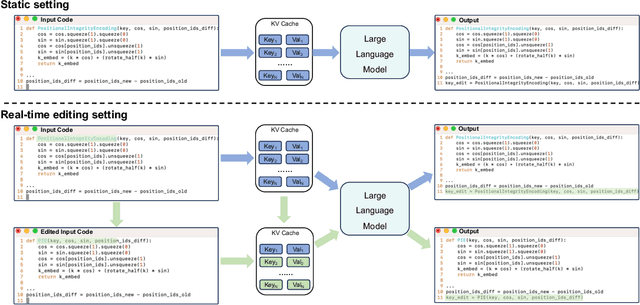
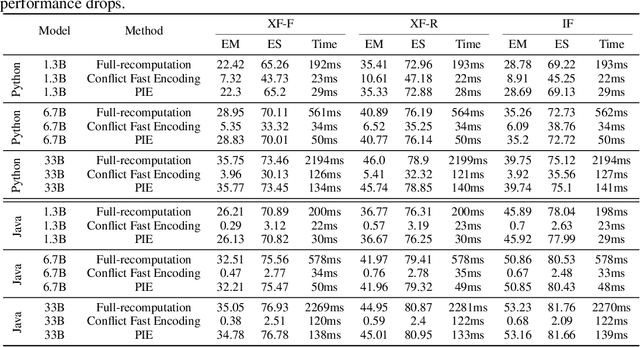
In this work, we investigate a typical scenario in code generation where a developer edits existing code in real time and requests a code assistant, e.g., a large language model, to re-predict the next token or next line on the fly. Naively, the LLM needs to re-encode the entire KV cache to provide an accurate prediction. However, this process is computationally expensive, especially when the sequence length is long. Simply encoding the edited subsequence and integrating it to the original KV cache meets the temporal confusion problem, leading to significantly worse performance. We address this efficiency and accuracy trade-off by introducing \underline{\textbf{Positional \textbf{I}ntegrity \textbf{E}ncoding} (PIE). Building upon the rotary positional encoding, PIE first removes the rotary matrices in the Key cache that introduce temporal confusion and then reapplies the correct rotary matrices. This process ensures that positional relationships between tokens are correct and requires only a single round of matrix multiplication. We validate the effectiveness of PIE through extensive experiments on the RepoBench-C-8k dataset, utilizing DeepSeek-Coder models with 1.3B, 6.7B, and 33B parameters. Our evaluation includes three real-world coding tasks: code insertion, code deletion, and multi-place code editing. Results demonstrate that PIE reduces computational overhead by over 85% compared to the standard full recomputation approach across all model sizes and tasks while well approximating the model performance.
Boosting Consistency in Story Visualization with Rich-Contextual Conditional Diffusion Models
Jul 02, 2024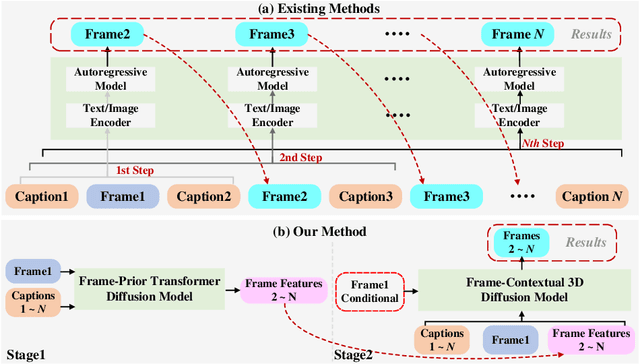

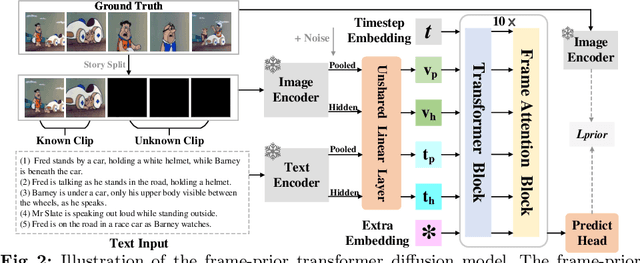
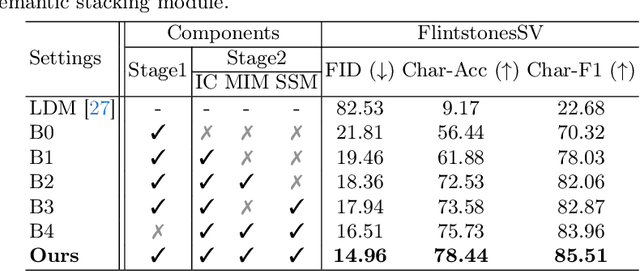
Recent research showcases the considerable potential of conditional diffusion models for generating consistent stories. However, current methods, which predominantly generate stories in an autoregressive and excessively caption-dependent manner, often underrate the contextual consistency and relevance of frames during sequential generation. To address this, we propose a novel Rich-contextual Conditional Diffusion Models (RCDMs), a two-stage approach designed to enhance story generation's semantic consistency and temporal consistency. Specifically, in the first stage, the frame-prior transformer diffusion model is presented to predict the frame semantic embedding of the unknown clip by aligning the semantic correlations between the captions and frames of the known clip. The second stage establishes a robust model with rich contextual conditions, including reference images of the known clip, the predicted frame semantic embedding of the unknown clip, and text embeddings of all captions. By jointly injecting these rich contextual conditions at the image and feature levels, RCDMs can generate semantic and temporal consistency stories. Moreover, RCDMs can generate consistent stories with a single forward inference compared to autoregressive models. Our qualitative and quantitative results demonstrate that our proposed RCDMs outperform in challenging scenarios. The code and model will be available at https://github.com/muzishen/RCDMs.
Reinforcement Learning with Intrinsically Motivated Feedback Graph for Lost-sales Inventory Control
Jun 26, 2024Reinforcement learning (RL) has proven to be well-performed and general-purpose in the inventory control (IC). However, further improvement of RL algorithms in the IC domain is impeded due to two limitations of online experience. First, online experience is expensive to acquire in real-world applications. With the low sample efficiency nature of RL algorithms, it would take extensive time to train the RL policy to convergence. Second, online experience may not reflect the true demand due to the lost sales phenomenon typical in IC, which makes the learning process more challenging. To address the above challenges, we propose a decision framework that combines reinforcement learning with feedback graph (RLFG) and intrinsically motivated exploration (IME) to boost sample efficiency. In particular, we first take advantage of the inherent properties of lost-sales IC problems and design the feedback graph (FG) specially for lost-sales IC problems to generate abundant side experiences aid RL updates. Then we conduct a rigorous theoretical analysis of how the designed FG reduces the sample complexity of RL methods. Based on the theoretical insights, we design an intrinsic reward to direct the RL agent to explore to the state-action space with more side experiences, further exploiting FG's power. Experimental results demonstrate that our method greatly improves the sample efficiency of applying RL in IC. Our code is available at https://anonymous.4open.science/r/RLIMFG4IC-811D/
A Comprehensive Solution to Connect Speech Encoder and Large Language Model for ASR
Jun 25, 2024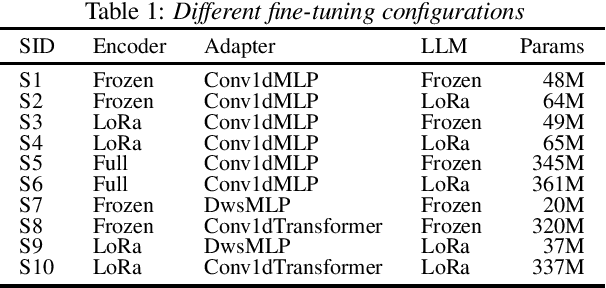

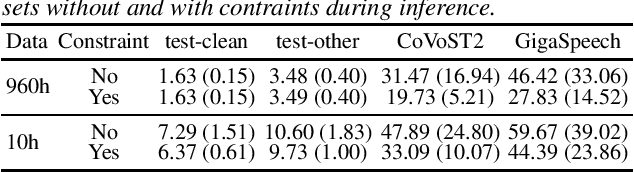
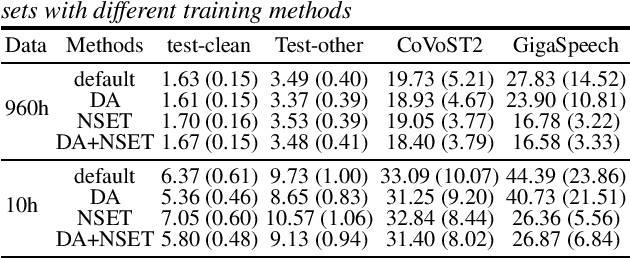
Recent works have shown promising results in connecting speech encoders to large language models (LLMs) for speech recognition. However, several limitations persist, including limited fine-tuning options, a lack of mechanisms to enforce speech-text alignment, and high insertion errors especially in domain mismatch conditions. This paper presents a comprehensive solution to address these issues. We begin by investigating more thoughtful fine-tuning schemes. Next, we propose a matching loss to enhance alignment between modalities. Finally, we explore training and inference methods to mitigate high insertion errors. Experimental results on the Librispeech corpus demonstrate that partially fine-tuning the encoder and LLM using parameter-efficient methods, such as LoRA, is the most cost-effective approach. Additionally, the matching loss improves modality alignment, enhancing performance. The proposed training and inference methods significantly reduce insertion errors.
Low-Complexity CSI Feedback for FDD Massive MIMO Systems via Learning to Optimize
Jun 24, 2024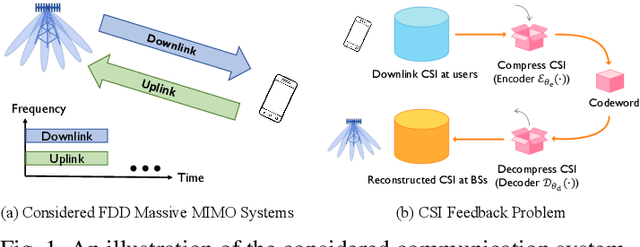
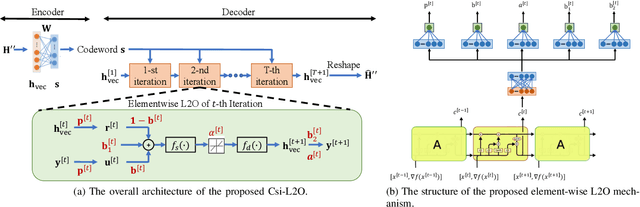
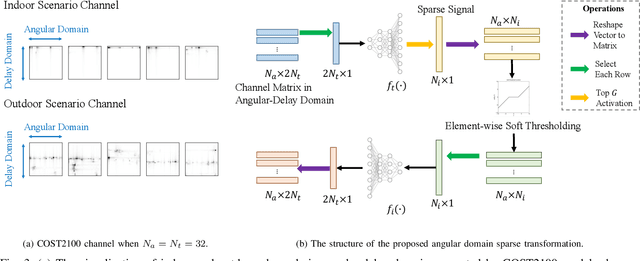
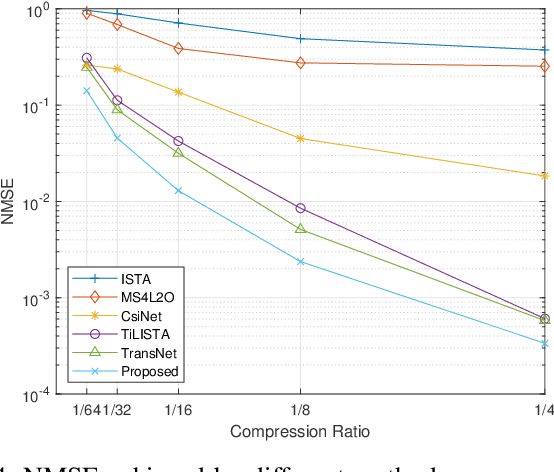
In frequency-division duplex (FDD) massive multiple-input multiple-output (MIMO) systems, the growing number of base station antennas leads to prohibitive feedback overhead for downlink channel state information (CSI). To address this challenge, state-of-the-art (SOTA) fully data-driven deep learning (DL)-based CSI feedback schemes have been proposed. However, the high computational complexity and memory requirements of these methods hinder their practical deployment on resource-constrained devices like mobile phones. To solve the problem, we propose a model-driven DL-based CSI feedback approach by integrating the wisdom of compressive sensing and learning to optimize (L2O). Specifically, only a linear learnable projection is adopted at the encoder side to compress the CSI matrix, thereby significantly cutting down the user-side complexity and memory expenditure. On the other hand, the decoder incorporates two specially designed components, i.e., a learnable sparse transformation and an element-wise L2O reconstruction module. The former is developed to learn a sparse basis for CSI within the angular domain, which explores channel sparsity effectively. The latter shares the same long short term memory (LSTM) network across all elements of the optimization variable, eliminating the retraining cost when problem scale changes. Simulation results show that the proposed method achieves a comparable performance with the SOTA CSI feedback scheme but with much-reduced complexity, and enables multiple-rate feedback.
Timo: Towards Better Temporal Reasoning for Language Models
Jun 20, 2024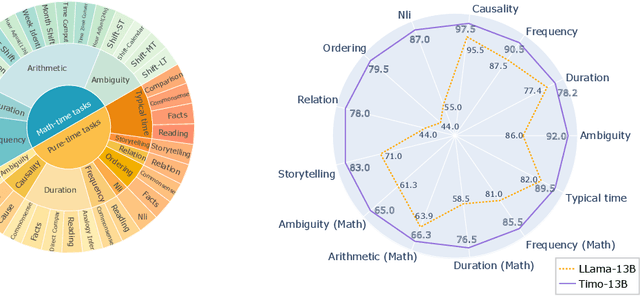
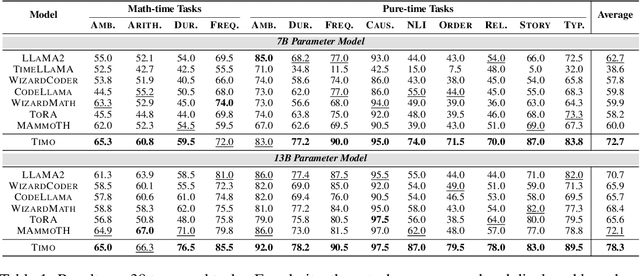
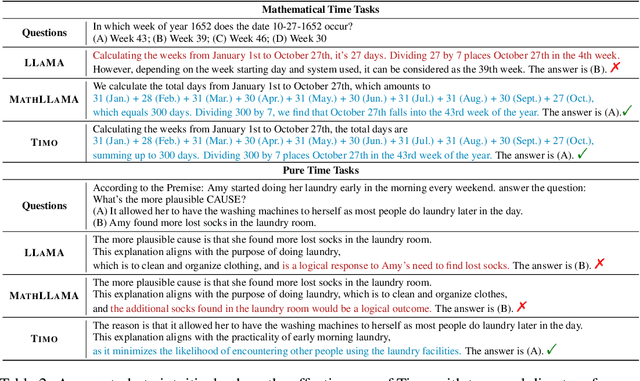
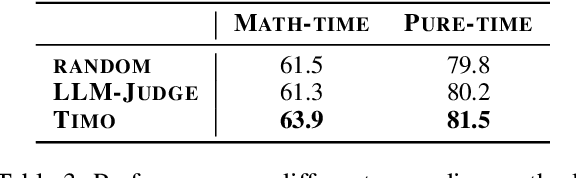
Reasoning about time is essential for Large Language Models (LLMs) to understand the world. Previous works focus on solving specific tasks, primarily on time-sensitive question answering. While these methods have proven effective, they cannot generalize to a wider spectrum of temporal reasoning tasks. Therefore, we propose a crucial question: Can we build a universal framework to handle a variety of temporal reasoning tasks? To that end, we systematically study 38 temporal reasoning tasks. Based on the observation that 19 tasks are directly related to mathematics, we first leverage the available mathematical dataset to set a solid foundation for temporal reasoning. However, the in-depth study indicates that focusing solely on mathematical enhancement falls short of addressing pure temporal reasoning tasks. To mitigate this limitation, we propose a simple but effective self-critic temporal optimization method to enhance the model's temporal reasoning capabilities without sacrificing general task abilities. Finally, we develop Timo, a model designed to excel in temporal reasoning at the 7B and 13B scales. Notably, Timo outperforms the counterpart LLMs by 10.0 and 7.6 in average accuracy scores and achieves the new state-of-the-art (SOTA) performance of comparable size. Extensive experiments further validate our framework's effectiveness and its generalization across diverse temporal tasks. The code is available at https://github.com/zhaochen0110/Timo.
CityBench: Evaluating the Capabilities of Large Language Model as World Model
Jun 20, 2024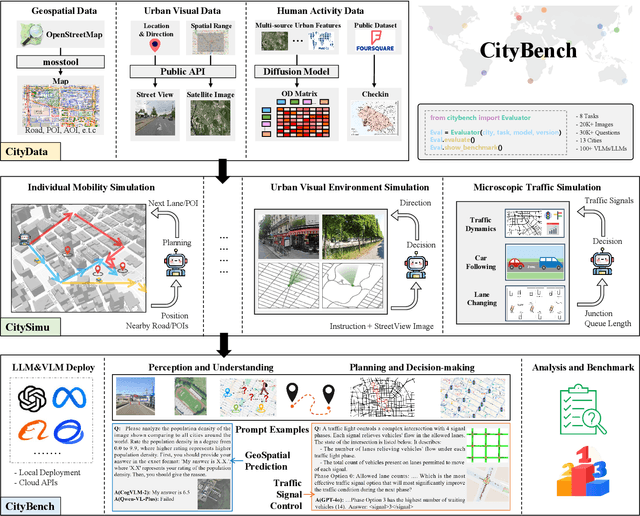
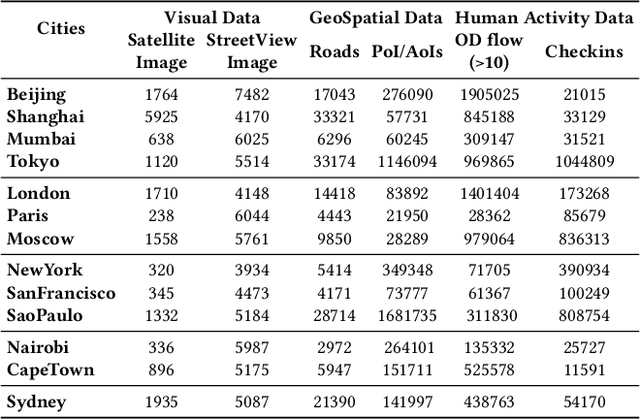


Large language models (LLMs) with powerful generalization ability has been widely used in many domains. A systematic and reliable evaluation of LLMs is a crucial step in their development and applications, especially for specific professional fields. In the urban domain, there have been some early explorations about the usability of LLMs, but a systematic and scalable evaluation benchmark is still lacking. The challenge in constructing a systematic evaluation benchmark for the urban domain lies in the diversity of data and scenarios, as well as the complex and dynamic nature of cities. In this paper, we propose CityBench, an interactive simulator based evaluation platform, as the first systematic evaluation benchmark for the capability of LLMs for urban domain. First, we build CitySim to integrate the multi-source data and simulate fine-grained urban dynamics. Based on CitySim, we design 7 tasks in 2 categories of perception-understanding and decision-making group to evaluate the capability of LLMs as city-scale world model for urban domain. Due to the flexibility and ease-of-use of CitySim, our evaluation platform CityBench can be easily extended to any city in the world. We evaluate 13 well-known LLMs including open source LLMs and commercial LLMs in 13 cities around the world. Extensive experiments demonstrate the scalability and effectiveness of proposed CityBench and shed lights for the future development of LLMs in urban domain. The dataset, benchmark and source codes are openly accessible to the research community via https://github.com/tsinghua-fib-lab/CityBench
SD-Eval: A Benchmark Dataset for Spoken Dialogue Understanding Beyond Words
Jun 19, 2024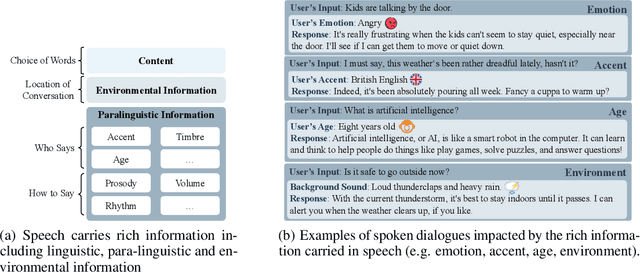
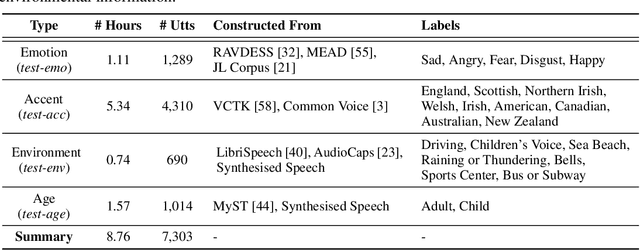
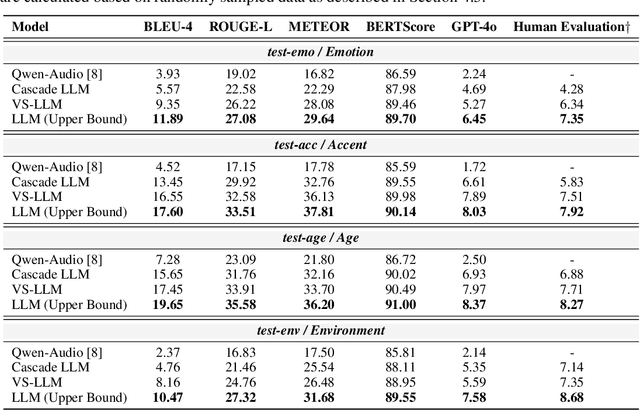
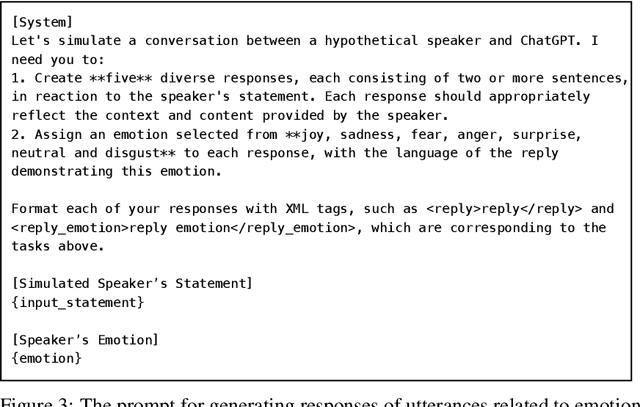
Speech encompasses a wealth of information, including but not limited to content, paralinguistic, and environmental information. This comprehensive nature of speech significantly impacts communication and is crucial for human-computer interaction. Chat-Oriented Large Language Models (LLMs), known for their general-purpose assistance capabilities, have evolved to handle multi-modal inputs, including speech. Although these models can be adept at recognizing and analyzing speech, they often fall short of generating appropriate responses. We argue that this is due to the lack of principles on task definition and model development, which requires open-source datasets and metrics suitable for model evaluation. To bridge the gap, we present SD-Eval, a benchmark dataset aimed at multidimensional evaluation of spoken dialogue understanding and generation. SD-Eval focuses on paralinguistic and environmental information and includes 7,303 utterances, amounting to 8.76 hours of speech data. The data is aggregated from eight public datasets, representing four perspectives: emotion, accent, age, and background sound. To assess the SD-Eval benchmark dataset, we implement three different models and construct a training set following a similar process as SD-Eval. The training set contains 1,052.72 hours of speech data and 724.4k utterances. We also conduct a comprehensive evaluation using objective evaluation methods (e.g. BLEU and ROUGE), subjective evaluations and LLM-based metrics for the generated responses. Models conditioned with paralinguistic and environmental information outperform their counterparts in both objective and subjective measures. Moreover, experiments demonstrate LLM-based metrics show a higher correlation with human evaluation compared to traditional metrics. We open-source SD-Eval at https://github.com/amphionspace/SD-Eval.
A GPU-accelerated Large-scale Simulator for Transportation System Optimization Benchmarking
Jun 15, 2024With the development of artificial intelligence techniques, transportation system optimization is evolving from traditional methods relying on expert experience to simulation and learning-based decision optimization methods. Learning-based optimization methods require extensive interaction with highly realistic microscopic traffic simulators for optimization. However, existing microscopic traffic simulators are computationally inefficient in large-scale scenarios and therefore significantly reduce the efficiency of the data sampling process of optimization algorithms. In addition, the optimization scenarios supported by existing simulators are limited, mainly focusing on the traffic signal control. To address these challenges and limitations, we propose the first open-source GPU-accelerated large-scale microscopic simulator for transportation system simulation. The simulator is able to iterate at 84.09Hz, which achieves 88.92 times computational acceleration in the large-scale scenario with more than a million vehicles compared to the best baseline. Based on the simulator, we implement a set of microscopic and macroscopic controllable objects and metrics to support most typical transportation system optimization scenarios. These controllable objects and metrics are all provided by Python API for ease of use. We choose five important and representative transportation system optimization scenarios and benchmark classical rule-based algorithms, reinforcement learning, and black-box optimization in four cities. The codes are available at \url{https://github.com/tsinghua-fib-lab/moss-benchmark} with the MIT License.