 Add to Chrome
 Add to Firefox
 Add to Edge
A Generative Model Enhanced Multi-Agent Reinforcement Learning Method for Electric Vehicle Charging Navigation
Feb 27, 2025
With the widespread adoption of electric vehicles (EVs), navigating for EV drivers to select a cost-effective charging station has become an important yet challenging issue due to dynamic traffic conditions, fluctuating electricity prices, and potential competition from other EVs. The state-of-the-art deep reinforcement learning (DRL) algorithms for solving this task still require global information about all EVs at the execution stage, which not only increases communication costs but also raises privacy issues among EV drivers. To overcome these drawbacks, we introduce a novel generative model-enhanced multi-agent DRL algorithm that utilizes only the EV's local information while achieving performance comparable to these state-of-the-art algorithms. Specifically, the policy network is implemented on the EV side, and a Conditional Variational Autoencoder-Long Short Term Memory (CVAE-LSTM)-based recommendation model is developed to provide recommendation information. Furthermore, a novel future charging competition encoder is designed to effectively compress global information, enhancing training performance. The multi-gradient descent algorithm (MGDA) is also utilized to adaptively balance the weight between the two parts of the training objective, resulting in a more stable training process. Simulations are conducted based on a practical area in Xi\'an, China. Experimental results show that our proposed algorithm, which relies on local information, outperforms existing local information-based methods and achieves less than 8\% performance loss compared to global information-based methods.

Exponential Topology-enabled Scalable Communication in Multi-agent Reinforcement Learning
Feb 27, 2025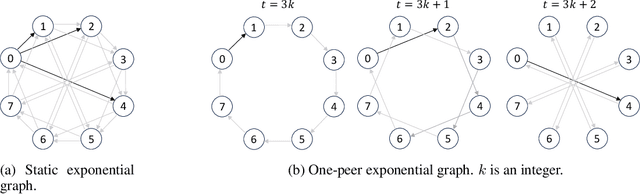
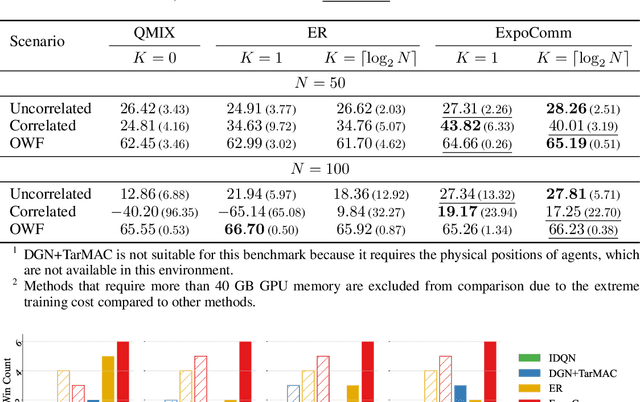
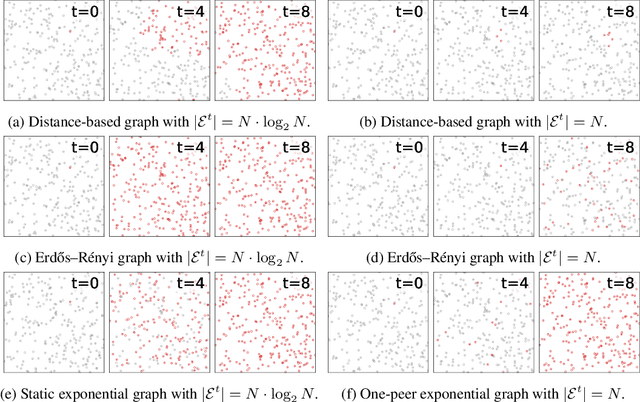
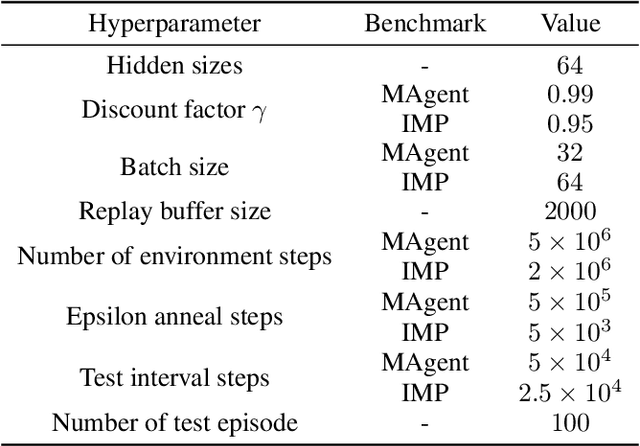
In cooperative multi-agent reinforcement learning (MARL), well-designed communication protocols can effectively facilitate consensus among agents, thereby enhancing task performance. Moreover, in large-scale multi-agent systems commonly found in real-world applications, effective communication plays an even more critical role due to the escalated challenge of partial observability compared to smaller-scale setups. In this work, we endeavor to develop a scalable communication protocol for MARL. Unlike previous methods that focus on selecting optimal pairwise communication links-a task that becomes increasingly complex as the number of agents grows-we adopt a global perspective on communication topology design. Specifically, we propose utilizing the exponential topology to enable rapid information dissemination among agents by leveraging its small-diameter and small-size properties. This approach leads to a scalable communication protocol, named ExpoComm. To fully unlock the potential of exponential graphs as communication topologies, we employ memory-based message processors and auxiliary tasks to ground messages, ensuring that they reflect global information and benefit decision-making. Extensive experiments on large-scale cooperative benchmarks, including MAgent and Infrastructure Management Planning, demonstrate the superior performance and robust zero-shot transferability of ExpoComm compared to existing communication strategies. The code is publicly available at https://github.com/LXXXXR/ExpoComm.
A Tutorial on Movable Antennas for Wireless Networks
Feb 25, 2025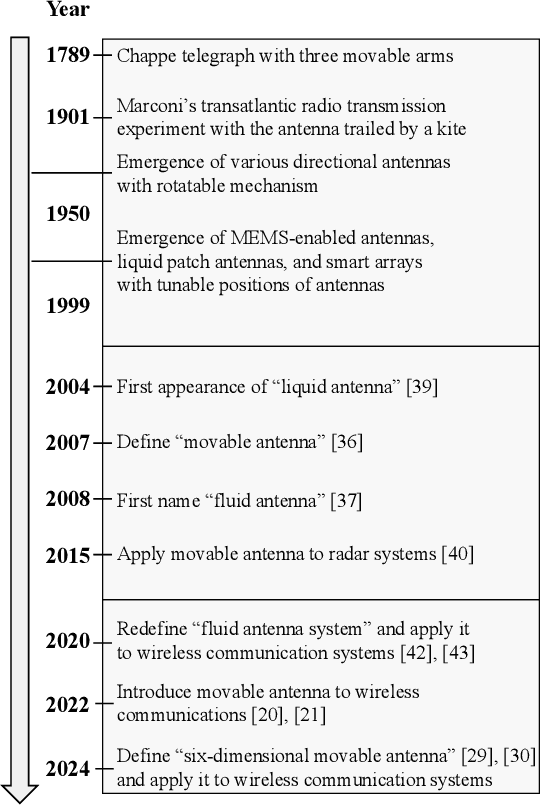
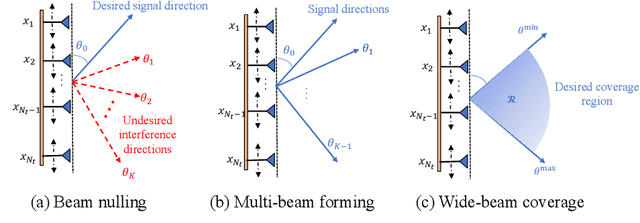
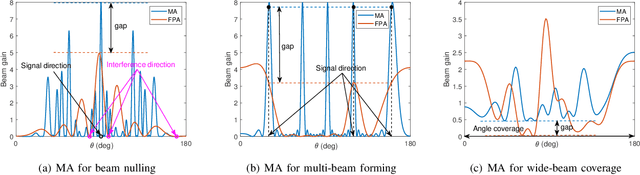
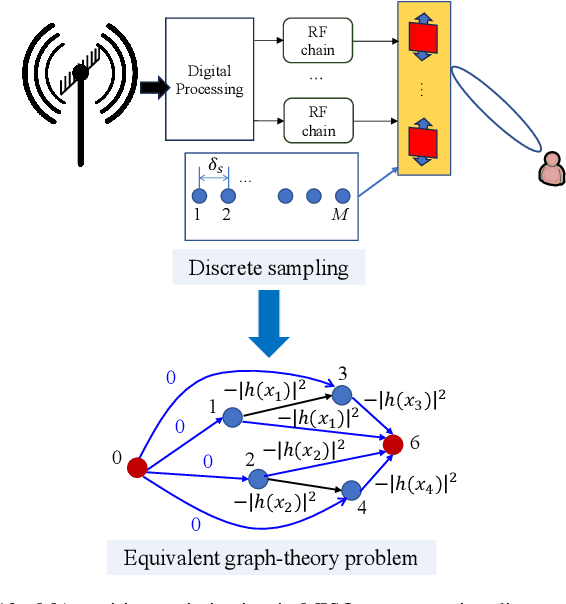
Movable antenna (MA) has been recognized as a promising technology to enhance the performance of wireless communication and sensing by enabling antenna movement. Such a significant paradigm shift from conventional fixed antennas (FAs) to MAs offers tremendous new opportunities towards realizing more versatile, adaptive and efficient next-generation wireless networks such as 6G. In this paper, we provide a comprehensive tutorial on the fundamentals and advancements in the area of MA-empowered wireless networks. First, we overview the historical development and contemporary applications of MA technologies. Next, to characterize the continuous variation in wireless channels with respect to antenna position and/or orientation, we present new field-response channel models tailored for MAs, which are applicable to narrowband and wideband systems as well as far-field and near-field propagation conditions. Subsequently, we review the state-of-the-art architectures for implementing MAs and discuss their practical constraints. A general optimization framework is then formulated to fully exploit the spatial degrees of freedom (DoFs) in antenna movement for performance enhancement in wireless systems. In particular, we delve into two major design issues for MA systems. First, we address the intricate antenna movement optimization problem for various communication and/or sensing systems to maximize the performance gains achievable by MAs. Second, we deal with the challenging channel acquisition issue in MA systems for reconstructing the channel mapping between arbitrary antenna positions inside the transmitter and receiver regions. Moreover, we show existing prototypes developed for MA-aided communication/sensing and the experimental results based on them. Finally, the extension of MA design to other wireless systems and its synergy with other emerging wireless technologies are discussed.
Remote Training in Task-Oriented Communication: Supervised or Self-Supervised with Fine-Tuning?
Feb 25, 2025Task-oriented communication focuses on extracting and transmitting only the information relevant to specific tasks, effectively minimizing communication overhead. Most existing methods prioritize reducing this overhead during inference, often assuming feasible local training or minimal training communication resources. However, in real-world wireless systems with dynamic connection topologies, training models locally for each new connection is impractical, and task-specific information is often unavailable before establishing connections. Therefore, minimizing training overhead and enabling label-free, task-agnostic pre-training before the connection establishment are essential for effective task-oriented communication. In this paper, we tackle these challenges by employing a mutual information maximization approach grounded in self-supervised learning and information-theoretic analysis. We propose an efficient strategy that pre-trains the transmitter in a task-agnostic and label-free manner, followed by joint fine-tuning of both the transmitter and receiver in a task-specific, label-aware manner. Simulation results show that our proposed method reduces training communication overhead to about half that of full-supervised methods using the SGD optimizer, demonstrating significant improvements in training efficiency.
Orchestrating Joint Offloading and Scheduling for Low-Latency Edge SLAM
Feb 23, 2025Visual Simultaneous Localization and Mapping (vSLAM) is a prevailing technology for many emerging robotic applications. Achieving real-time SLAM on mobile robotic systems with limited computational resources is challenging because the complexity of SLAM algorithms increases over time. This restriction can be lifted by offloading computations to edge servers, forming the emerging paradigm of edge-assisted SLAM. Nevertheless, the exogenous and stochastic input processes affect the dynamics of the edge-assisted SLAM system. Moreover, the requirements of clients on SLAM metrics change over time, exerting implicit and time-varying effects on the system. In this paper, we aim to push the limit beyond existing edge-assist SLAM by proposing a new architecture that can handle the input-driven processes and also satisfy clients' implicit and time-varying requirements. The key innovations of our work involve a regional feature prediction method for importance-aware local data processing, a configuration adaptation policy that integrates data compression/decompression and task offloading, and an input-dependent learning framework for task scheduling with constraint satisfaction. Extensive experiments prove that our architecture improves pose estimation accuracy and saves up to 47% of communication costs compared with a popular edge-assisted SLAM system, as well as effectively satisfies the clients' requirements.
Train Small, Infer Large: Memory-Efficient LoRA Training for Large Language Models
Feb 19, 2025Large Language Models (LLMs) have significantly advanced natural language processing with exceptional task generalization capabilities. Low-Rank Adaption (LoRA) offers a cost-effective fine-tuning solution, freezing the original model parameters and training only lightweight, low-rank adapter matrices. However, the memory footprint of LoRA is largely dominated by the original model parameters. To mitigate this, we propose LoRAM, a memory-efficient LoRA training scheme founded on the intuition that many neurons in over-parameterized LLMs have low training utility but are essential for inference. LoRAM presents a unique twist: it trains on a pruned (small) model to obtain pruned low-rank matrices, which are then recovered and utilized with the original (large) model for inference. Additionally, minimal-cost continual pre-training, performed by the model publishers in advance, aligns the knowledge discrepancy between pruned and original models. Our extensive experiments demonstrate the efficacy of LoRAM across various pruning strategies and downstream tasks. For a model with 70 billion parameters, LoRAM enables training on a GPU with only 20G HBM, replacing an A100-80G GPU for LoRA training and 15 GPUs for full fine-tuning. Specifically, QLoRAM implemented by structured pruning combined with 4-bit quantization, for LLaMA-3.1-70B (LLaMA-2-70B), reduces the parameter storage cost that dominates the memory usage in low-rank matrix training by 15.81$\times$ (16.95$\times$), while achieving dominant performance gains over both the original LLaMA-3.1-70B (LLaMA-2-70B) and LoRA-trained LLaMA-3.1-8B (LLaMA-2-13B).
Preventing the Popular Item Embedding Based Attack in Federated Recommendations
Feb 18, 2025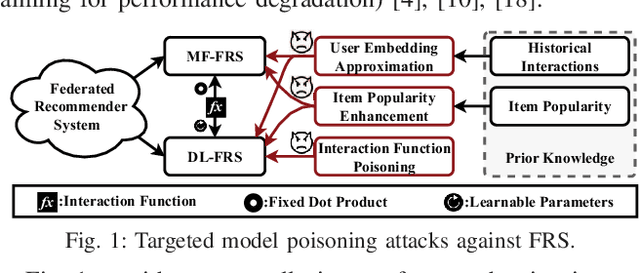
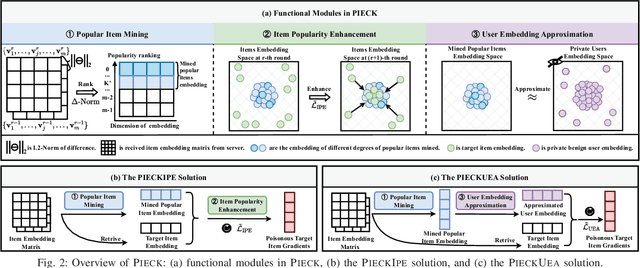
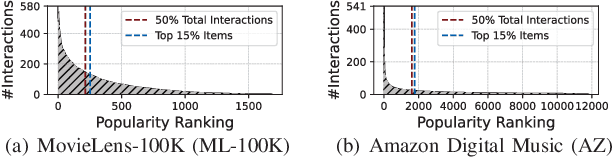
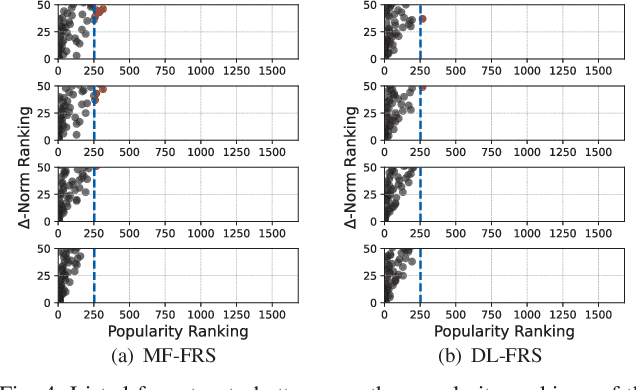
Privacy concerns have led to the rise of federated recommender systems (FRS), which can create personalized models across distributed clients. However, FRS is vulnerable to poisoning attacks, where malicious users manipulate gradients to promote their target items intentionally. Existing attacks against FRS have limitations, as they depend on specific models and prior knowledge, restricting their real-world applicability. In our exploration of practical FRS vulnerabilities, we devise a model-agnostic and prior-knowledge-free attack, named PIECK (Popular Item Embedding based Attack). The core module of PIECK is popular item mining, which leverages embedding changes during FRS training to effectively identify the popular items. Built upon the core module, PIECK branches into two diverse solutions: The PIECKIPE solution employs an item popularity enhancement module, which aligns the embeddings of targeted items with the mined popular items to increase item exposure. The PIECKUEA further enhances the robustness of the attack by using a user embedding approximation module, which approximates private user embeddings using mined popular items. Upon identifying PIECK, we evaluate existing federated defense methods and find them ineffective against PIECK, as poisonous gradients inevitably overwhelm the cold target items. We then propose a novel defense method by introducing two regularization terms during user training, which constrain item popularity enhancement and user embedding approximation while preserving FRS performance. We evaluate PIECK and its defense across two base models, three real datasets, four top-tier attacks, and six general defense methods, affirming the efficacy of both PIECK and its defense.
Cognitive-Aligned Document Selection for Retrieval-augmented Generation
Feb 17, 2025Large language models (LLMs) inherently display hallucinations since the precision of generated texts cannot be guaranteed purely by the parametric knowledge they include. Although retrieval-augmented generation (RAG) systems enhance the accuracy and reliability of generative models by incorporating external documents, these retrieved documents often fail to adequately support the model's responses in practical applications. To address this issue, we propose GGatrieval (Fine-\textbf{G}rained \textbf{G}rounded \textbf{A}lignment Re\textbf{trieval} for verifiable generation), which leverages an LLM to dynamically update queries and filter high-quality, reliable retrieval documents. Specifically, we parse the user query into its syntactic components and perform fine-grained grounded alignment with the retrieved documents. For query components that cannot be individually aligned, we propose a dynamic semantic compensation mechanism that iteratively refines and rewrites the query while continuously updating the retrieval results. This iterative process continues until the retrieved documents sufficiently support the query's response. Our approach introduces a novel criterion for filtering retrieved documents, closely emulating human strategies for acquiring targeted information. This ensures that the retrieved content effectively supports and verifies the generated outputs. On the ALCE benchmark, our method significantly surpasses a wide range of baselines, achieving state-of-the-art performance.
AgentSociety: Large-Scale Simulation of LLM-Driven Generative Agents Advances Understanding of Human Behaviors and Society
Feb 12, 2025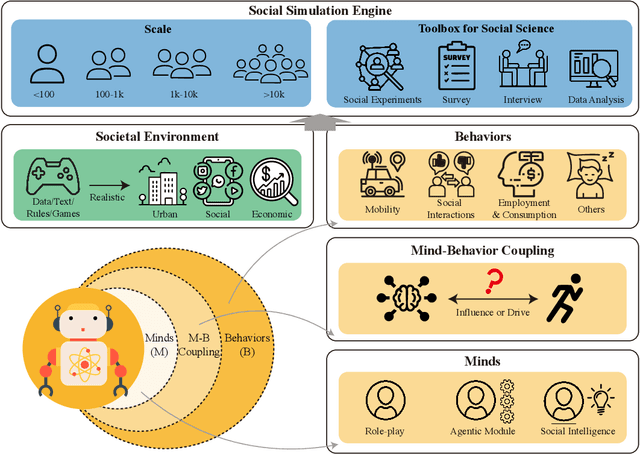
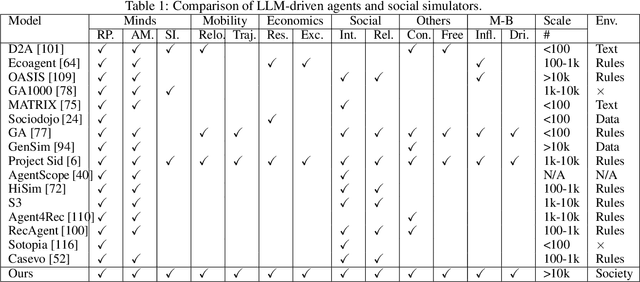
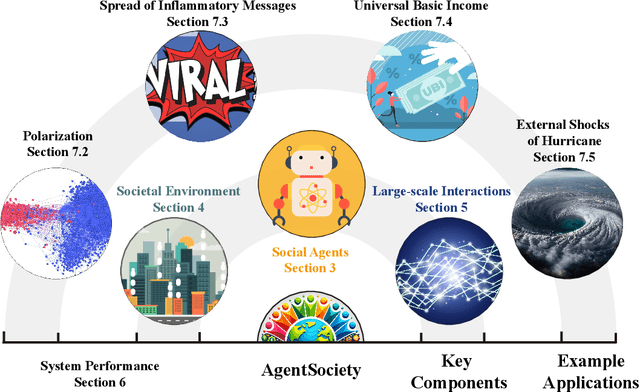
Understanding human behavior and society is a central focus in social sciences, with the rise of generative social science marking a significant paradigmatic shift. By leveraging bottom-up simulations, it replaces costly and logistically challenging traditional experiments with scalable, replicable, and systematic computational approaches for studying complex social dynamics. Recent advances in large language models (LLMs) have further transformed this research paradigm, enabling the creation of human-like generative social agents and realistic simulacra of society. In this paper, we propose AgentSociety, a large-scale social simulator that integrates LLM-driven agents, a realistic societal environment, and a powerful large-scale simulation engine. Based on the proposed simulator, we generate social lives for over 10k agents, simulating their 5 million interactions both among agents and between agents and their environment. Furthermore, we explore the potential of AgentSociety as a testbed for computational social experiments, focusing on four key social issues: polarization, the spread of inflammatory messages, the effects of universal basic income policies, and the impact of external shocks such as hurricanes. These four issues serve as valuable cases for assessing AgentSociety's support for typical research methods -- such as surveys, interviews, and interventions -- as well as for investigating the patterns, causes, and underlying mechanisms of social issues. The alignment between AgentSociety's outcomes and real-world experimental results not only demonstrates its ability to capture human behaviors and their underlying mechanisms, but also underscores its potential as an important platform for social scientists and policymakers.
Enhancing Auto-regressive Chain-of-Thought through Loop-Aligned Reasoning
Feb 12, 2025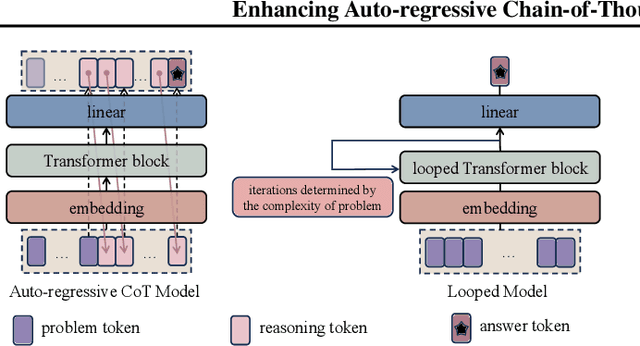
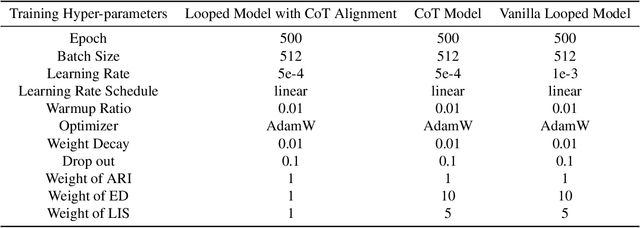
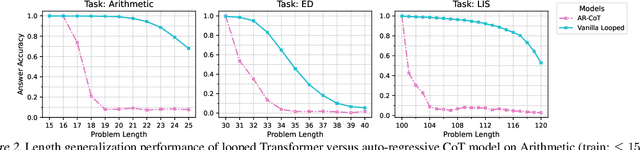
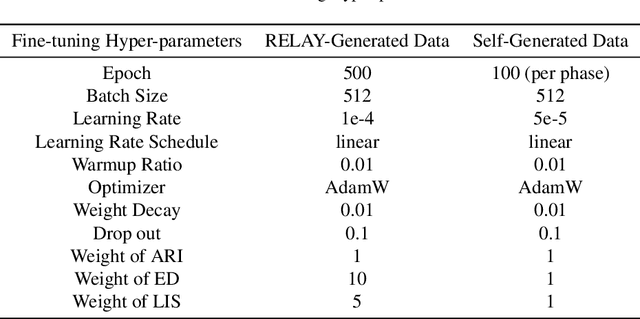
Chain-of-Thought (CoT) prompting has emerged as a powerful technique for enhancing language model's reasoning capabilities. However, generating long and correct CoT trajectories is challenging. Recent studies have demonstrated that Looped Transformers possess remarkable length generalization capabilities, but their limited generality and adaptability prevent them from serving as an alternative to auto-regressive solutions. To better leverage the strengths of Looped Transformers, we propose RELAY (REasoning through Loop Alignment iterativelY). Specifically, we align the steps of Chain-of-Thought (CoT) reasoning with loop iterations and apply intermediate supervision during the training of Looped Transformers. This additional iteration-wise supervision not only preserves the Looped Transformer's ability for length generalization but also enables it to predict CoT reasoning steps for unseen data. Therefore, we leverage this Looped Transformer to generate accurate reasoning chains for complex problems that exceed the training length, which will then be used to fine-tune an auto-regressive model. We conduct extensive experiments, and the results demonstrate the effectiveness of our approach, with significant improvements in the performance of the auto-regressive model. Code will be released at https://github.com/qifanyu/RELAY.