 Add to Chrome
 Add to Firefox
 Add to Edge
RhinoVLA Technical Report
Jun 05, 2026
Vision-Language-Action (VLA) models have shown strong potential for robotic manipulation, but real-time deployment on edge hardware remains challenging. In this work, we identify VLM visual and context tokens as a major source of deployment latency: for GEMM-dominated projection operators, computation grows linearly with the number of input tokens when model dimensions are fixed. Motivated by this observation, we propose RhinoVLA, a deployment-oriented VLA model co-designed with the Huixi R1 edge SoC. RhinoVLA adopts a token-efficient Qwen3-VL backbone and a continuous Action Expert, reducing the VLM-side token and computation burden while preserving pretrained multimodal capability. To support cross-robot learning, RhinoVLA further introduces a unified interface that combines View Registry, 72D physical state-action slot space, and robotinstance LoRA, allowing heterogeneous robot observations and action schemas to be aligned under a shared policy. On the deployment side, RhinoVLA is optimized through hardware-aware compilation, mixed-precision execution, and parallel visual encoding. Experiments show that RhinoVLA achieves downstream performance comparable to π0.5 at a similar parameter scale, while reaching 11.69 Hz end-to-end inference on Huixi R1, meeting the 10 Hz real-time closedloop control target. The project will be open-sourced at https://github.com/HuixiAI/RhinoVLA.

HIR-ALIGN: Enhancing Hyperspectral Image Restoration via Diffusion-Based Data Generation
May 13, 2026Hyperspectral image (HSI) restoration is crucial for reliable analysis, as real HSIs suffer from degradations like noise, blur, and resolution loss. However, existing models trained on source data often fail on target domains lacking clean references, a common occurrence in practice. To address this issue, we present HIR-ALIGN, a plug-and-play target-adaptive augmentation framework that enhances hyperspectral image restoration by augmenting limited training images with synthetic data that closely matches the target distribution using no extra data. It consists of three stages: (i) proxy generation, where off-the-shelf restoration models restore degraded target observations to produce semantics-preserving proxy HSIs that approximate target-domain clean images; (ii) distribution-adaptive synthesis, where a blur-robust unCLIP diffusion model generates target-aligned RGBs from proxy RGBs, with prompt conditioning and embedding-space noise initialization. Then, a warp-based spectral transfer module synthesizes HSIs by aligning each generated RGB with the proxy RGB, estimating soft patch-wise transport weights, and applying these weights and learnable local interpolation kernels to the proxy HSI; and (iii) aligned supervised finetuning, where restoration networks pretrained on the source distribution are finetuned using both the proxy HSIs and synthesized target-aligned HSIs, and are then deployed on degraded target images. We further provide theoretical analysis showing that augmentation-based finetuning can achieve lower target-domain restoration risk by jointly improving target distribution coverage and controlling spectral bias. Extensive experiments on simulated and real datasets across denoising and super-resolution tasks demonstrate that HIR-ALIGN consistently improves source-only supervised baselines, outperforming both source-only counterparts and representative unsupervised methods.
STEP: Warm-Started Visuomotor Policies with Spatiotemporal Consistency Prediction
Feb 09, 2026Diffusion policies have recently emerged as a powerful paradigm for visuomotor control in robotic manipulation due to their ability to model the distribution of action sequences and capture multimodality. However, iterative denoising leads to substantial inference latency, limiting control frequency in real-time closed-loop systems. Existing acceleration methods either reduce sampling steps, bypass diffusion through direct prediction, or reuse past actions, but often struggle to jointly preserve action quality and achieve consistently low latency. In this work, we propose STEP, a lightweight spatiotemporal consistency prediction mechanism to construct high-quality warm-start actions that are both distributionally close to the target action and temporally consistent, without compromising the generative capability of the original diffusion policy. Then, we propose a velocity-aware perturbation injection mechanism that adaptively modulates actuation excitation based on temporal action variation to prevent execution stall especially for real-world tasks. We further provide a theoretical analysis showing that the proposed prediction induces a locally contractive mapping, ensuring convergence of action errors during diffusion refinement. We conduct extensive evaluations on nine simulated benchmarks and two real-world tasks. Notably, STEP with 2 steps can achieve an average 21.6% and 27.5% higher success rate than BRIDGER and DDIM on the RoboMimic benchmark and real-world tasks, respectively. These results demonstrate that STEP consistently advances the Pareto frontier of inference latency and success rate over existing methods.
Peptide2Mol: A Diffusion Model for Generating Small Molecules as Peptide Mimics for Targeted Protein Binding
Nov 07, 2025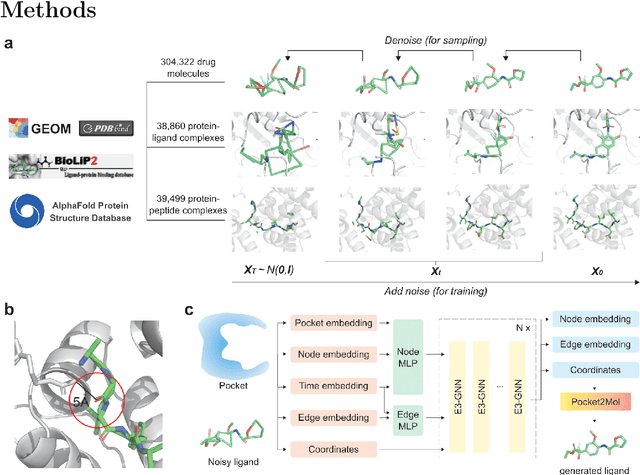
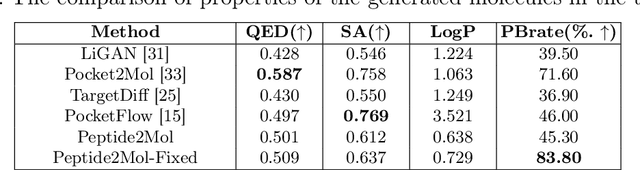
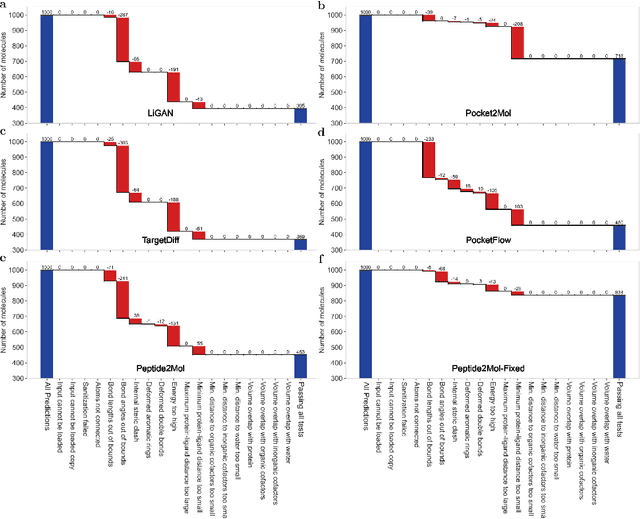
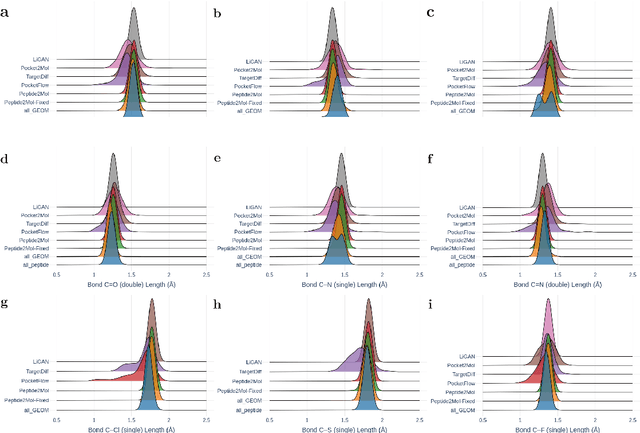
Structure-based drug design has seen significant advancements with the integration of artificial intelligence (AI), particularly in the generation of hit and lead compounds. However, most AI-driven approaches neglect the importance of endogenous protein interactions with peptides, which may result in suboptimal molecule designs. In this work, we present Peptide2Mol, an E(3)-equivariant graph neural network diffusion model that generates small molecules by referencing both the original peptide binders and their surrounding protein pocket environments. Trained on large datasets and leveraging sophisticated modeling techniques, Peptide2Mol not only achieves state-of-the-art performance in non-autoregressive generative tasks, but also produces molecules with similarity to the original peptide binder. Additionally, the model allows for molecule optimization and peptidomimetic design through a partial diffusion process. Our results highlight Peptide2Mol as an effective deep generative model for generating and optimizing bioactive small molecules from protein binding pockets.
CommonVoice-SpeechRE and RPG-MoGe: Advancing Speech Relation Extraction with a New Dataset and Multi-Order Generative Framework
Sep 10, 2025Speech Relation Extraction (SpeechRE) aims to extract relation triplets directly from speech. However, existing benchmark datasets rely heavily on synthetic data, lacking sufficient quantity and diversity of real human speech. Moreover, existing models also suffer from rigid single-order generation templates and weak semantic alignment, substantially limiting their performance. To address these challenges, we introduce CommonVoice-SpeechRE, a large-scale dataset comprising nearly 20,000 real-human speech samples from diverse speakers, establishing a new benchmark for SpeechRE research. Furthermore, we propose the Relation Prompt-Guided Multi-Order Generative Ensemble (RPG-MoGe), a novel framework that features: (1) a multi-order triplet generation ensemble strategy, leveraging data diversity through diverse element orders during both training and inference, and (2) CNN-based latent relation prediction heads that generate explicit relation prompts to guide cross-modal alignment and accurate triplet generation. Experiments show our approach outperforms state-of-the-art methods, providing both a benchmark dataset and an effective solution for real-world SpeechRE. The source code and dataset are publicly available at https://github.com/NingJinzhong/SpeechRE_RPG_MoGe.
ROMA: a Read-Only-Memory-based Accelerator for QLoRA-based On-Device LLM
Mar 17, 2025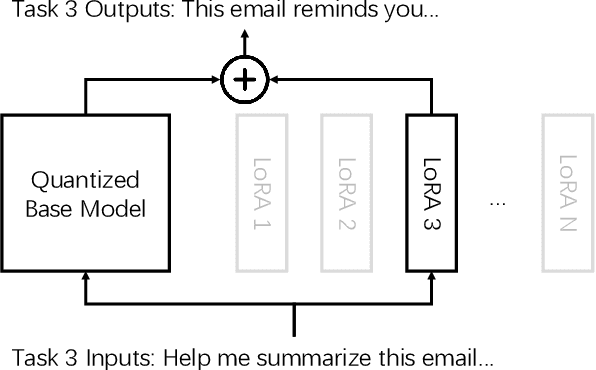
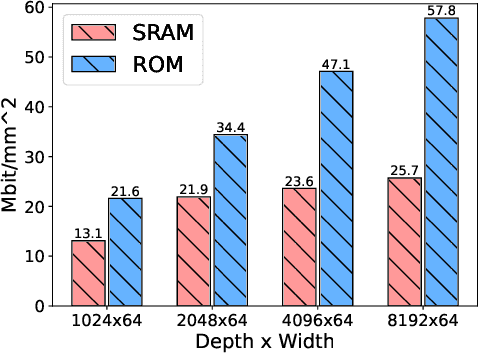
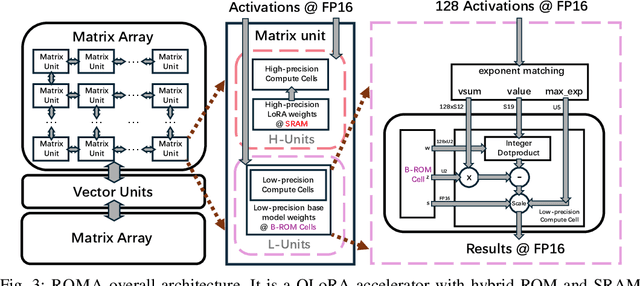
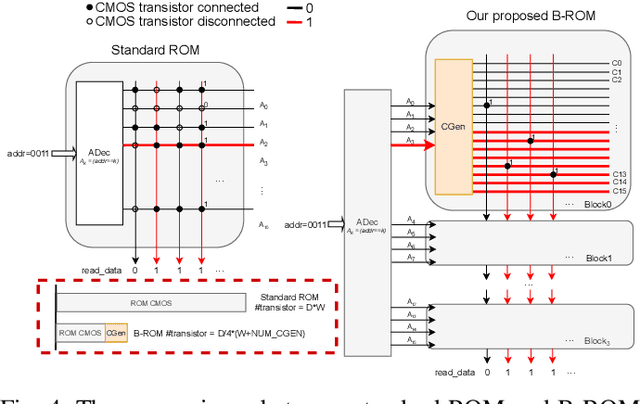
As large language models (LLMs) demonstrate powerful capabilities, deploying them on edge devices has become increasingly crucial, offering advantages in privacy and real-time interaction. QLoRA has emerged as the standard approach for on-device LLMs, leveraging quantized models to reduce memory and computational costs while utilizing LoRA for task-specific adaptability. In this work, we propose ROMA, a QLoRA accelerator with a hybrid storage architecture that uses ROM for quantized base models and SRAM for LoRA weights and KV cache. Our insight is that the quantized base model is stable and converged, making it well-suited for ROM storage. Meanwhile, LoRA modules offer the flexibility to adapt to new data without requiring updates to the base model. To further reduce the area cost of ROM, we introduce a novel B-ROM design and integrate it with the compute unit to form a fused cell for efficient use of chip resources. ROMA can effectively store both a 4-bit 3B and a 2-bit 8B LLaMA model entirely on-chip, achieving a notable generation speed exceeding 20,000 tokens/s without requiring external memory.
RFUAV: A Benchmark Dataset for Unmanned Aerial Vehicle Detection and Identification
Mar 12, 2025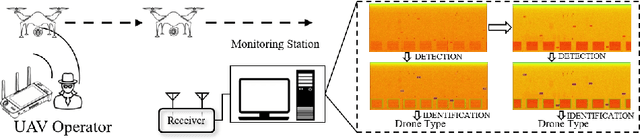
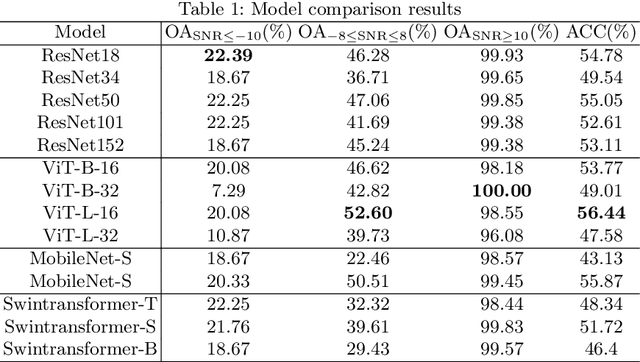
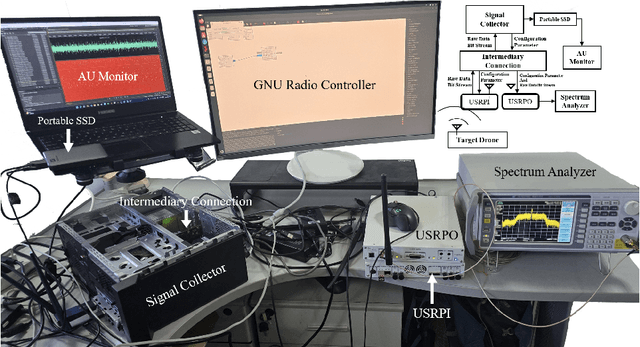
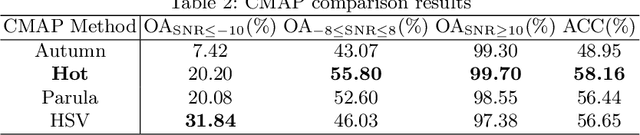
In this paper, we propose RFUAV as a new benchmark dataset for radio-frequency based (RF-based) unmanned aerial vehicle (UAV) identification and address the following challenges: Firstly, many existing datasets feature a restricted variety of drone types and insufficient volumes of raw data, which fail to meet the demands of practical applications. Secondly, existing datasets often lack raw data covering a broad range of signal-to-noise ratios (SNR), or do not provide tools for transforming raw data to different SNR levels. This limitation undermines the validity of model training and evaluation. Lastly, many existing datasets do not offer open-access evaluation tools, leading to a lack of unified evaluation standards in current research within this field. RFUAV comprises approximately 1.3 TB of raw frequency data collected from 37 distinct UAVs using the Universal Software Radio Peripheral (USRP) device in real-world environments. Through in-depth analysis of the RF data in RFUAV, we define a drone feature sequence called RF drone fingerprint, which aids in distinguishing drone signals. In addition to the dataset, RFUAV provides a baseline preprocessing method and model evaluation tools. Rigorous experiments demonstrate that these preprocessing methods achieve state-of-the-art (SOTA) performance using the provided evaluation tools. The RFUAV dataset and baseline implementation are publicly available at https://github.com/kitoweeknd/RFUAV/.
Cognitive-Aligned Document Selection for Retrieval-augmented Generation
Feb 17, 2025Large language models (LLMs) inherently display hallucinations since the precision of generated texts cannot be guaranteed purely by the parametric knowledge they include. Although retrieval-augmented generation (RAG) systems enhance the accuracy and reliability of generative models by incorporating external documents, these retrieved documents often fail to adequately support the model's responses in practical applications. To address this issue, we propose GGatrieval (Fine-\textbf{G}rained \textbf{G}rounded \textbf{A}lignment Re\textbf{trieval} for verifiable generation), which leverages an LLM to dynamically update queries and filter high-quality, reliable retrieval documents. Specifically, we parse the user query into its syntactic components and perform fine-grained grounded alignment with the retrieved documents. For query components that cannot be individually aligned, we propose a dynamic semantic compensation mechanism that iteratively refines and rewrites the query while continuously updating the retrieval results. This iterative process continues until the retrieved documents sufficiently support the query's response. Our approach introduces a novel criterion for filtering retrieved documents, closely emulating human strategies for acquiring targeted information. This ensures that the retrieved content effectively supports and verifies the generated outputs. On the ALCE benchmark, our method significantly surpasses a wide range of baselines, achieving state-of-the-art performance.
STAHGNet: Modeling Hybrid-grained Heterogenous Dependency Efficiently for Traffic Prediction
Dec 23, 2024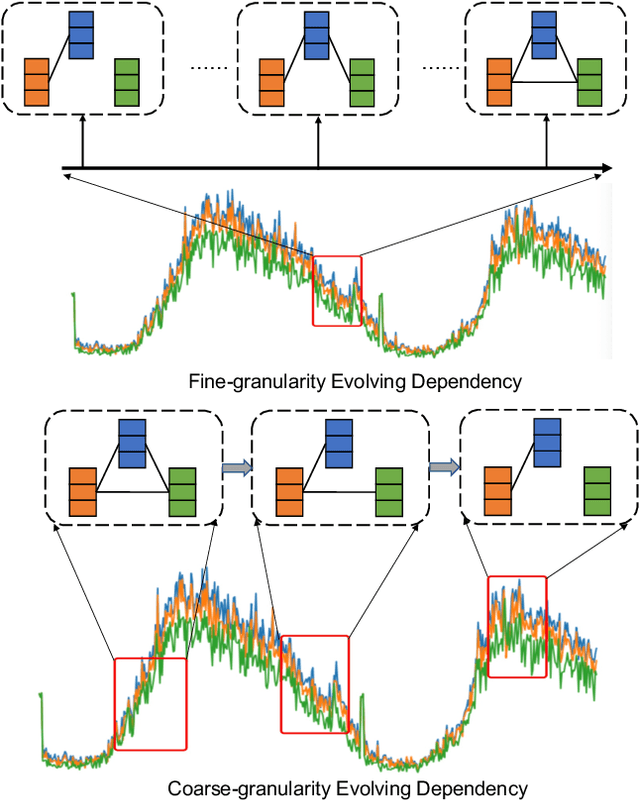
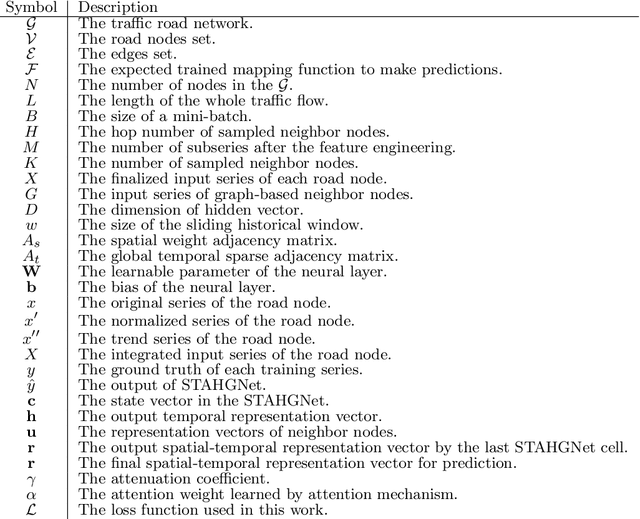
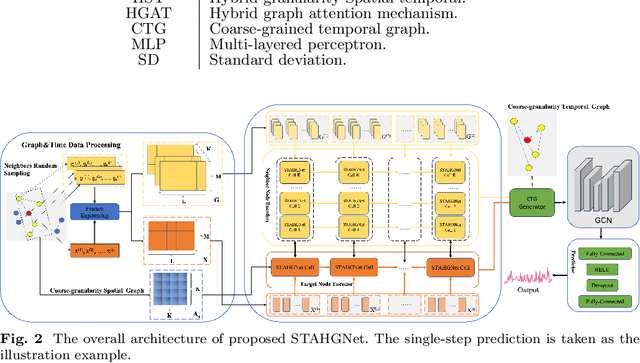
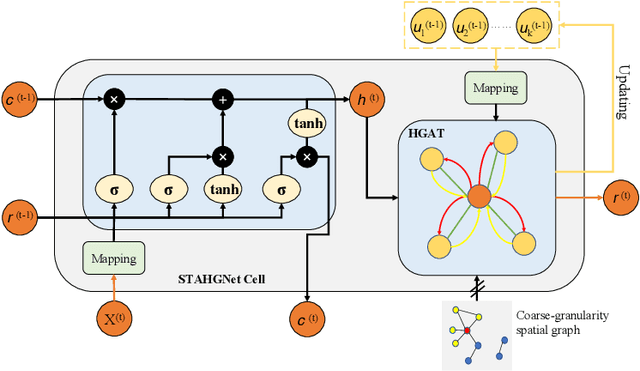
Traffic flow prediction plays a critical role in the intelligent transportation system, and it is also a challenging task because of the underlying complex Spatio-temporal patterns and heterogeneities evolving across time. However, most present works mostly concentrate on solely capturing Spatial-temporal dependency or extracting implicit similarity graphs, but the hybrid-granularity evolution is ignored in their modeling process. In this paper, we proposed a novel data-driven end-to-end framework, named Spatio-Temporal Aware Hybrid Graph Network (STAHGNet), to couple the hybrid-grained heterogeneous correlations in series simultaneously through an elaborately Hybrid Graph Attention Module (HGAT) and Coarse-granularity Temporal Graph (CTG) generator. Furthermore, an automotive feature engineering with domain knowledge and a random neighbor sampling strategy is utilized to improve efficiency and reduce computational complexity. The MAE, RMSE, and MAPE are used for evaluation metrics. Tested on four real-life datasets, our proposal outperforms eight classical baselines and four state-of-the-art (SOTA) methods (e.g., MAE 14.82 on PeMSD3; MAE 18.92 on PeMSD4). Besides, extensive experiments and visualizations verify the effectiveness of each component in STAHGNet. In terms of computational cost, STAHGNet saves at least four times the space compared to the previous SOTA models. The proposed model will be beneficial for more efficient TFP as well as intelligent transport system construction.
UMSPU: Universal Multi-Size Phase Unwrapping via Mutual Self-Distillation and Adaptive Boosting Ensemble Segmenters
Dec 07, 2024


Spatial phase unwrapping is a key technique for extracting phase information to obtain 3D morphology and other features. Modern industrial measurement scenarios demand high precision, large image sizes, and high speed. However, conventional methods struggle with noise resistance and processing speed. Current deep learning methods are limited by the receptive field size and sparse semantic information, making them ineffective for large size images. To address this issue, we propose a mutual self-distillation (MSD) mechanism and adaptive boosting ensemble segmenters to construct a universal multi-size phase unwrapping network (UMSPU). MSD performs hierarchical attention refinement and achieves cross-layer collaborative learning through bidirectional distillation, ensuring fine-grained semantic representation across image sizes. The adaptive boosting ensemble segmenters combine weak segmenters with different receptive fields into a strong one, ensuring stable segmentation across spatial frequencies. Experimental results show that UMSPU overcomes image size limitations, achieving high precision across image sizes ranging from 256*256 to 2048*2048 (an 8 times increase). It also outperforms existing methods in speed, robustness, and generalization. Its practicality is further validated in structured light imaging and InSAR. We believe that UMSPU offers a universal solution for phase unwrapping, with broad potential for industrial applications.