 Add to Chrome
 Add to Firefox
 Add to Edge
Reconstructing People, Places, and Cameras
Dec 23, 2024
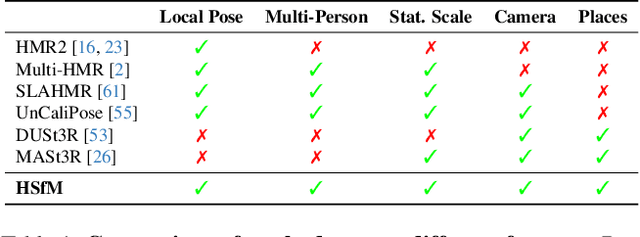
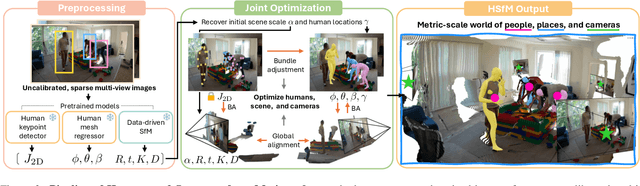
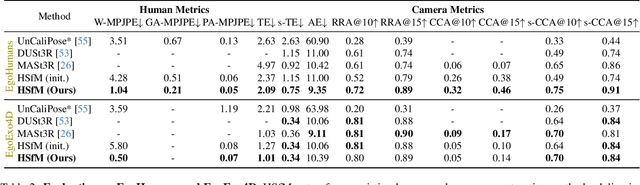
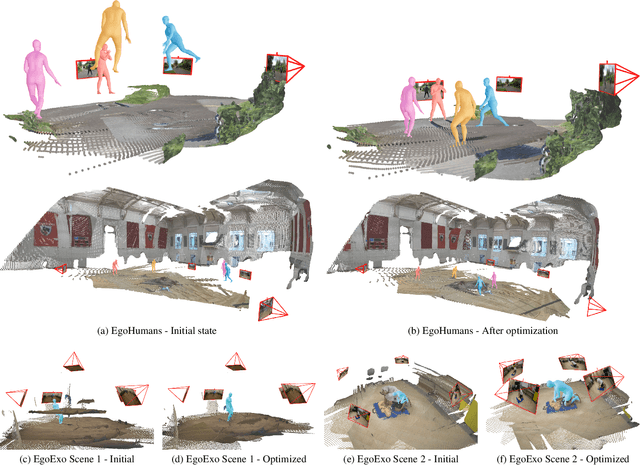
We present "Humans and Structure from Motion" (HSfM), a method for jointly reconstructing multiple human meshes, scene point clouds, and camera parameters in a metric world coordinate system from a sparse set of uncalibrated multi-view images featuring people. Our approach combines data-driven scene reconstruction with the traditional Structure-from-Motion (SfM) framework to achieve more accurate scene reconstruction and camera estimation, while simultaneously recovering human meshes. In contrast to existing scene reconstruction and SfM methods that lack metric scale information, our method estimates approximate metric scale by leveraging a human statistical model. Furthermore, it reconstructs multiple human meshes within the same world coordinate system alongside the scene point cloud, effectively capturing spatial relationships among individuals and their positions in the environment. We initialize the reconstruction of humans, scenes, and cameras using robust foundational models and jointly optimize these elements. This joint optimization synergistically improves the accuracy of each component. We compare our method to existing approaches on two challenging benchmarks, EgoHumans and EgoExo4D, demonstrating significant improvements in human localization accuracy within the world coordinate frame (reducing error from 3.51m to 1.04m in EgoHumans and from 2.9m to 0.56m in EgoExo4D). Notably, our results show that incorporating human data into the SfM pipeline improves camera pose estimation (e.g., increasing RRA@15 by 20.3% on EgoHumans). Additionally, qualitative results show that our approach improves overall scene reconstruction quality. Our code is available at: muelea.github.io/hsfm.

Learning from Massive Human Videos for Universal Humanoid Pose Control
Dec 18, 2024


Scalable learning of humanoid robots is crucial for their deployment in real-world applications. While traditional approaches primarily rely on reinforcement learning or teleoperation to achieve whole-body control, they are often limited by the diversity of simulated environments and the high costs of demonstration collection. In contrast, human videos are ubiquitous and present an untapped source of semantic and motion information that could significantly enhance the generalization capabilities of humanoid robots. This paper introduces Humanoid-X, a large-scale dataset of over 20 million humanoid robot poses with corresponding text-based motion descriptions, designed to leverage this abundant data. Humanoid-X is curated through a comprehensive pipeline: data mining from the Internet, video caption generation, motion retargeting of humans to humanoid robots, and policy learning for real-world deployment. With Humanoid-X, we further train a large humanoid model, UH-1, which takes text instructions as input and outputs corresponding actions to control a humanoid robot. Extensive simulated and real-world experiments validate that our scalable training approach leads to superior generalization in text-based humanoid control, marking a significant step toward adaptable, real-world-ready humanoid robots.
Maximizing Alignment with Minimal Feedback: Efficiently Learning Rewards for Visuomotor Robot Policy Alignment
Dec 06, 2024


Visuomotor robot policies, increasingly pre-trained on large-scale datasets, promise significant advancements across robotics domains. However, aligning these policies with end-user preferences remains a challenge, particularly when the preferences are hard to specify. While reinforcement learning from human feedback (RLHF) has become the predominant mechanism for alignment in non-embodied domains like large language models, it has not seen the same success in aligning visuomotor policies due to the prohibitive amount of human feedback required to learn visual reward functions. To address this limitation, we propose Representation-Aligned Preference-based Learning (RAPL), an observation-only method for learning visual rewards from significantly less human preference feedback. Unlike traditional RLHF, RAPL focuses human feedback on fine-tuning pre-trained vision encoders to align with the end-user's visual representation and then constructs a dense visual reward via feature matching in this aligned representation space. We first validate RAPL through simulation experiments in the X-Magical benchmark and Franka Panda robotic manipulation, demonstrating that it can learn rewards aligned with human preferences, more efficiently uses preference data, and generalizes across robot embodiments. Finally, our hardware experiments align pre-trained Diffusion Policies for three object manipulation tasks. We find that RAPL can fine-tune these policies with 5x less real human preference data, taking the first step towards minimizing human feedback while maximizing visuomotor robot policy alignment.
Scaling Properties of Diffusion Models for Perceptual Tasks
Nov 13, 2024


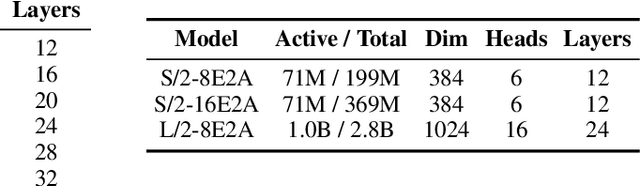
In this paper, we argue that iterative computation with diffusion models offers a powerful paradigm for not only generation but also visual perception tasks. We unify tasks such as depth estimation, optical flow, and amodal segmentation under the framework of image-to-image translation, and show how diffusion models benefit from scaling training and test-time compute for these perceptual tasks. Through a careful analysis of these scaling properties, we formulate compute-optimal training and inference recipes to scale diffusion models for visual perception tasks. Our models achieve competitive performance to state-of-the-art methods using significantly less data and compute. To access our code and models, see https://scaling-diffusion-perception.github.io .
Digitizing Touch with an Artificial Multimodal Fingertip
Nov 04, 2024

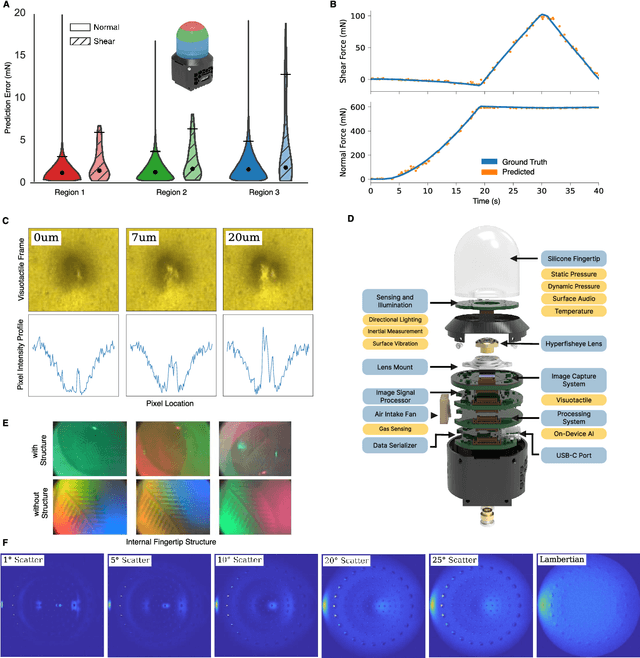
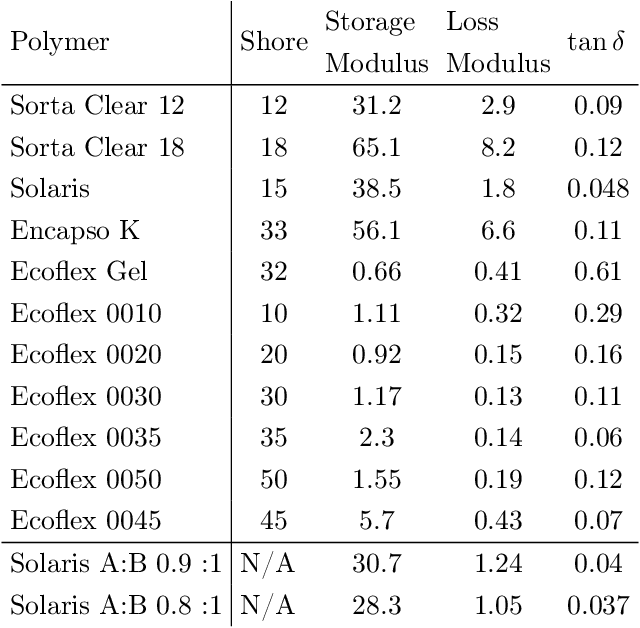
Touch is a crucial sensing modality that provides rich information about object properties and interactions with the physical environment. Humans and robots both benefit from using touch to perceive and interact with the surrounding environment (Johansson and Flanagan, 2009; Li et al., 2020; Calandra et al., 2017). However, no existing systems provide rich, multi-modal digital touch-sensing capabilities through a hemispherical compliant embodiment. Here, we describe several conceptual and technological innovations to improve the digitization of touch. These advances are embodied in an artificial finger-shaped sensor with advanced sensing capabilities. Significantly, this fingertip contains high-resolution sensors (~8.3 million taxels) that respond to omnidirectional touch, capture multi-modal signals, and use on-device artificial intelligence to process the data in real time. Evaluations show that the artificial fingertip can resolve spatial features as small as 7 um, sense normal and shear forces with a resolution of 1.01 mN and 1.27 mN, respectively, perceive vibrations up to 10 kHz, sense heat, and even sense odor. Furthermore, it embeds an on-device AI neural network accelerator that acts as a peripheral nervous system on a robot and mimics the reflex arc found in humans. These results demonstrate the possibility of digitizing touch with superhuman performance. The implications are profound, and we anticipate potential applications in robotics (industrial, medical, agricultural, and consumer-level), virtual reality and telepresence, prosthetics, and e-commerce. Toward digitizing touch at scale, we open-source a modular platform to facilitate future research on the nature of touch.
Learning Humanoid Locomotion over Challenging Terrain
Oct 04, 2024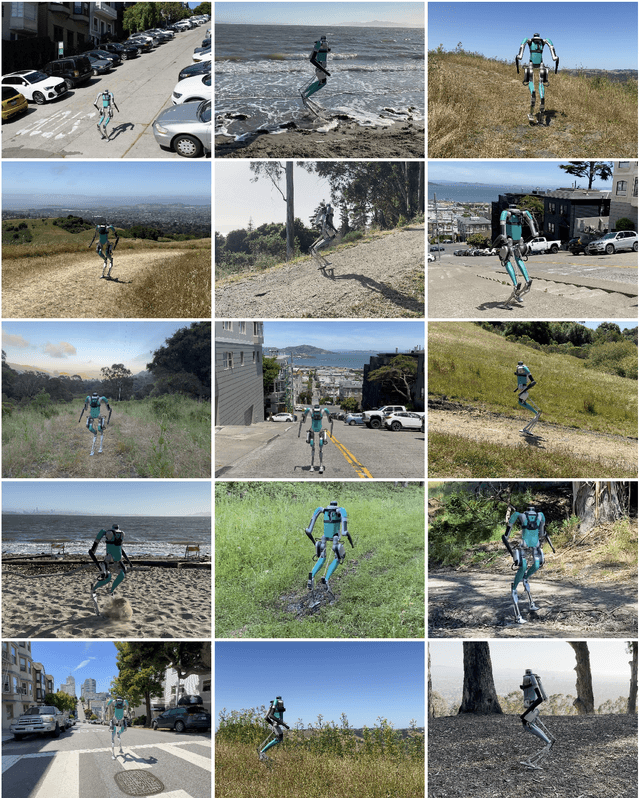
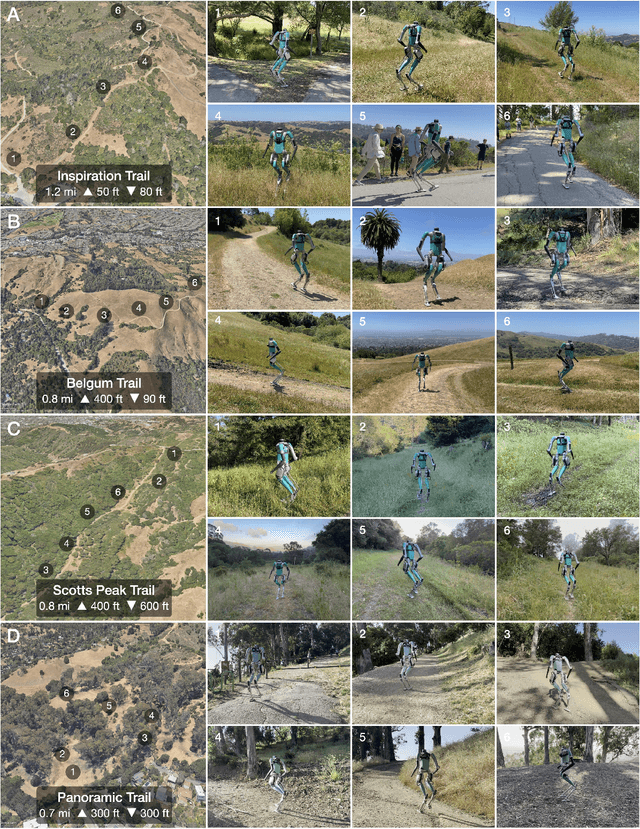

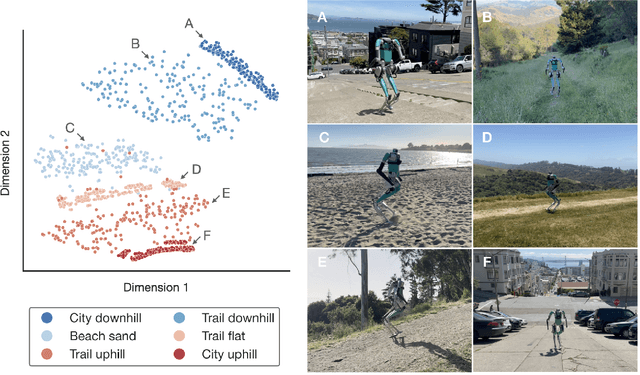
Humanoid robots can, in principle, use their legs to go almost anywhere. Developing controllers capable of traversing diverse terrains, however, remains a considerable challenge. Classical controllers are hard to generalize broadly while the learning-based methods have primarily focused on gentle terrains. Here, we present a learning-based approach for blind humanoid locomotion capable of traversing challenging natural and man-made terrain. Our method uses a transformer model to predict the next action based on the history of proprioceptive observations and actions. The model is first pre-trained on a dataset of flat-ground trajectories with sequence modeling, and then fine-tuned on uneven terrain using reinforcement learning. We evaluate our model on a real humanoid robot across a variety of terrains, including rough, deformable, and sloped surfaces. The model demonstrates robust performance, in-context adaptation, and emergent terrain representations. In real-world case studies, our humanoid robot successfully traversed over 4 miles of hiking trails in Berkeley and climbed some of the steepest streets in San Francisco.
Estimating Body and Hand Motion in an Ego-sensed World
Oct 04, 2024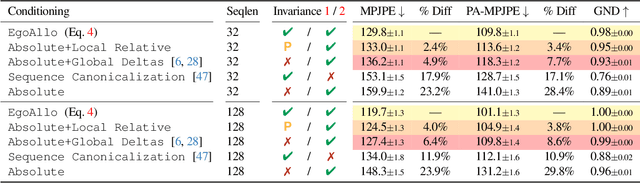
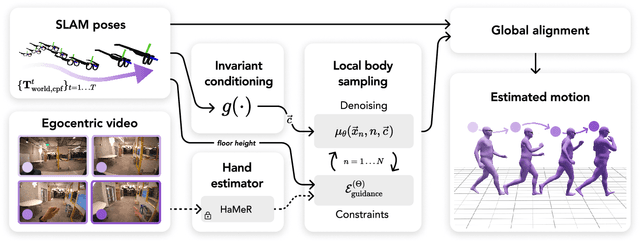
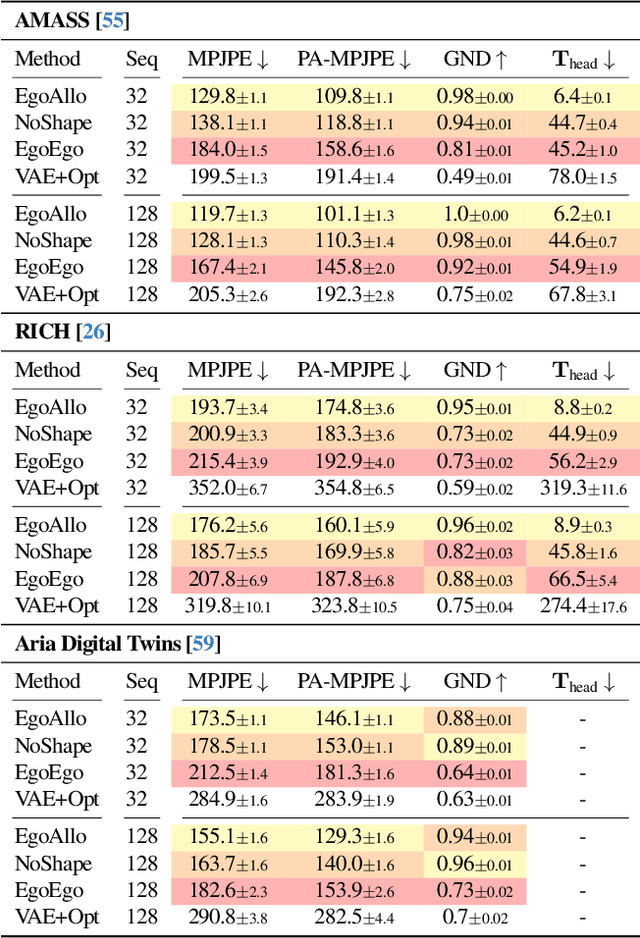

We present EgoAllo, a system for human motion estimation from a head-mounted device. Using only egocentric SLAM poses and images, EgoAllo guides sampling from a conditional diffusion model to estimate 3D body pose, height, and hand parameters that capture the wearer's actions in the allocentric coordinate frame of the scene. To achieve this, our key insight is in representation: we propose spatial and temporal invariance criteria for improving model performance, from which we derive a head motion conditioning parameterization that improves estimation by up to 18%. We also show how the bodies estimated by our system can improve the hands: the resulting kinematic and temporal constraints result in over 40% lower hand estimation errors compared to noisy monocular estimates. Project page: https://egoallo.github.io/
Hand-Object Interaction Pretraining from Videos
Sep 12, 2024


We present an approach to learn general robot manipulation priors from 3D hand-object interaction trajectories. We build a framework to use in-the-wild videos to generate sensorimotor robot trajectories. We do so by lifting both the human hand and the manipulated object in a shared 3D space and retargeting human motions to robot actions. Generative modeling on this data gives us a task-agnostic base policy. This policy captures a general yet flexible manipulation prior. We empirically demonstrate that finetuning this policy, with both reinforcement learning (RL) and behavior cloning (BC), enables sample-efficient adaptation to downstream tasks and simultaneously improves robustness and generalizability compared to prior approaches. Qualitative experiments are available at: \url{https://hgaurav2k.github.io/hop/}.
Synergy and Synchrony in Couple Dances
Sep 06, 2024

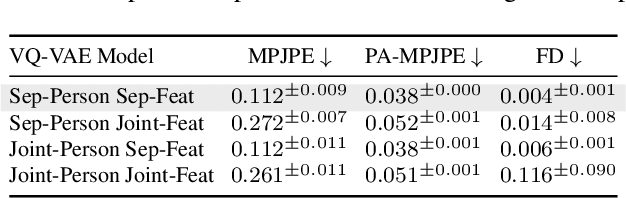

This paper asks to what extent social interaction influences one's behavior. We study this in the setting of two dancers dancing as a couple. We first consider a baseline in which we predict a dancer's future moves conditioned only on their past motion without regard to their partner. We then investigate the advantage of taking social information into account by conditioning also on the motion of their dancing partner. We focus our analysis on Swing, a dance genre with tight physical coupling for which we present an in-the-wild video dataset. We demonstrate that single-person future motion prediction in this context is challenging. Instead, we observe that prediction greatly benefits from considering the interaction partners' behavior, resulting in surprisingly compelling couple dance synthesis results (see supp. video). Our contributions are a demonstration of the advantages of socially conditioned future motion prediction and an in-the-wild, couple dance video dataset to enable future research in this direction. Video results are available on the project website: https://von31.github.io/synNsync
Wolf: Captioning Everything with a World Summarization Framework
Jul 26, 2024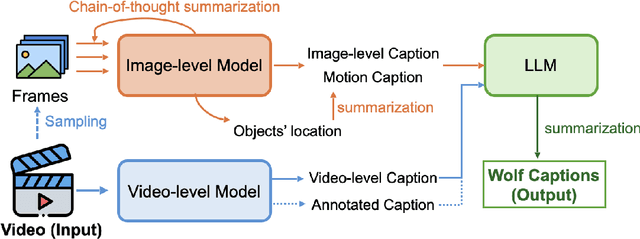
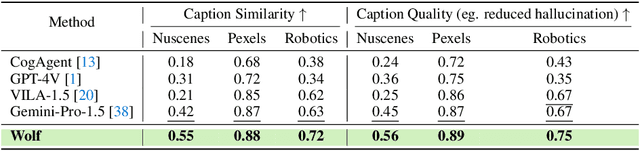
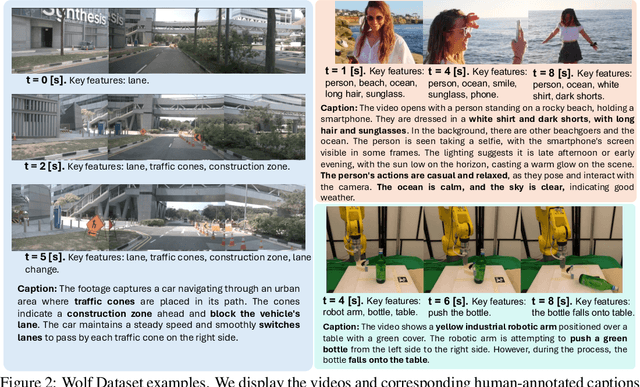
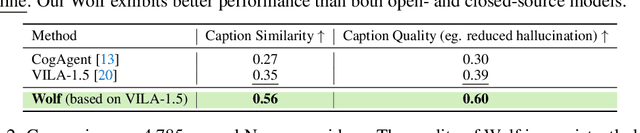
We propose Wolf, a WOrLd summarization Framework for accurate video captioning. Wolf is an automated captioning framework that adopts a mixture-of-experts approach, leveraging complementary strengths of Vision Language Models (VLMs). By utilizing both image and video models, our framework captures different levels of information and summarizes them efficiently. Our approach can be applied to enhance video understanding, auto-labeling, and captioning. To evaluate caption quality, we introduce CapScore, an LLM-based metric to assess the similarity and quality of generated captions compared to the ground truth captions. We further build four human-annotated datasets in three domains: autonomous driving, general scenes, and robotics, to facilitate comprehensive comparisons. We show that Wolf achieves superior captioning performance compared to state-of-the-art approaches from the research community (VILA1.5, CogAgent) and commercial solutions (Gemini-Pro-1.5, GPT-4V). For instance, in comparison with GPT-4V, Wolf improves CapScore both quality-wise by 55.6% and similarity-wise by 77.4% on challenging driving videos. Finally, we establish a benchmark for video captioning and introduce a leaderboard, aiming to accelerate advancements in video understanding, captioning, and data alignment. Leaderboard: https://wolfv0.github.io/leaderboard.html.