 Add to Chrome
 Add to Firefox
 Add to Edge
DREAM Technical Report
Aug 11, 2026
Industrial recommender systems commonly use cascaded retrieval, ranking, and re-ranking pipelines. Although efficient, these pipelines fragment information and objectives across modules, rely on rigid rules, and have limited awareness of real-time intent, leaving session-level shifts among browsing, comparison, and purchase insufficiently addressed. We present DREAM (Developing Recommender Engine with Agentic Methods), an autonomous optimization control architecture that adds a perception-aware, orchestrable, and auditable policy layer atop existing pipelines without replacing them. DREAM has two core components. First, a three-tier Intent Engine fuses on-device signals into structured L0/L1/L2 intent representations; its edge-cloud trigger chain reduces reporting volume to approximately 8.7%. Second, a Meta Engine uses a MetaModel for layered M1-to-M2-to-M3 reasoning: intent summarization, strategy planning informed by Strategy Memory, and parameter translation. It dispatches the resulting parameters through a unified outlet with safety guardrails. A Reward Dual Loop continuously optimizes both components by combining offline simulation for strategy-space exploration with online feedback for outcome calibration, forming a cycle of generation, execution, evaluation, and experience accumulation. Large-scale A/B tests on Taobao's homepage feed show that re-ranking control alone improves IPV by 2.06%, Core IPV by 2.39%, and GMV by 0.88%. Extending control to fine ranking raises these gains to 2.71%, 3.06%, and 1.31%, respectively, while consistently improving PV by more than 1%. These gains require neither replacement of pipeline models nor compromise of serving stability, supporting agentic meta-control as a viable paradigm for industrial recommendation.

MetaStrategy: Generative Ranking with Executable LLM Strategies
Aug 10, 2026Industrial recommender systems rank heterogeneous content under coupled user, business, commercial, and experience objectives. Existing generative ranking methods typically construct item sequences directly, making them difficult to integrate with mature predictive models, operational rules, and field-level guardrails. We present MetaStrategy, a framework that instead generates a structured, executable ranking strategy. Conditioned on request context, a large language model (LLM) policy emits a typed JSON bundle controlling objective weights, content and category preferences, experience constraints, and position policies. A deterministic validator and compiler instantiate an isolated Generator that competes atomically with incumbents under the list-level Evaluator of the Generator-Evaluator (GE) architecture. We train the policy in a production-path replay environment that re-executes logged requests through the current re-ranking stack without user exposure. The method combines selection, relative-rank, and baseline-lift rewards, a self-competitive curriculum that feeds frequent strategies back as competitors, and Evaluator-routed reward-augmented on-policy distillation that transfers complementary 4B-parameter Teachers into a compact 0.8B-parameter Student. We deploy MetaStrategy in Taobao Homepage Guess You Like through diff-triggered nearline generation; LLM inference remains outside synchronous ranking, with no observable increase in response time (RT). In a seven-day user-randomized online A/B test, MetaStrategy wins 27.93% of treatment-side GE calls and significantly improves click page views (click PV) by 2.11%, item-detail page views (IPV) by 3.12%, and transaction amount by 2.83%.
RecGPT-Mobile: On-Device Large Language Models for User Intent Understanding in Taobao Feed Recommendation
May 06, 2026Predicting a user's next search query from recent interaction behaviors is a critical problem in modern e-commerce systems, particularly in scenarios where user intent evolves rapidly. Large Language Models (LLMs) offer strong semantic reasoning capabilities and have recently been adopted to enhance training data construction for next-query prediction. However, due to resource constraints on mobile devices, existing applications are deployed on cloud servers, resulting in high inference costs. In this paper, we propose RecGPT-Mobile, a framework that designs a lightweight LLM-based intent understanding agent to improve recommendation quality in mobile e-commerce scenarios. By deploying LLMs directly on mobile devices, our approach can capture evolving interests of users more quickly and adjust the recommendation results in real time. Extensive offline analyses and online experiments demonstrate that our method significantly improves the accuracy of recommendation results, laying a practical path for LLM deployment in production-scale recommendation systems on mobile devices, as well as a scalable solution for integrating LLMs into real-world next-query prediction systems.
A Step to Decouple Optimization in 3DGS
Jan 26, 20263D Gaussian Splatting (3DGS) has emerged as a powerful technique for real-time novel view synthesis. As an explicit representation optimized through gradient propagation among primitives, optimization widely accepted in deep neural networks (DNNs) is actually adopted in 3DGS, such as synchronous weight updating and Adam with the adaptive gradient. However, considering the physical significance and specific design in 3DGS, there are two overlooked details in the optimization of 3DGS: (i) update step coupling, which induces optimizer state rescaling and costly attribute updates outside the viewpoints, and (ii) gradient coupling in the moment, which may lead to under- or over-effective regularization. Nevertheless, such a complex coupling is under-explored. After revisiting the optimization of 3DGS, we take a step to decouple it and recompose the process into: Sparse Adam, Re-State Regularization and Decoupled Attribute Regularization. Taking a large number of experiments under the 3DGS and 3DGS-MCMC frameworks, our work provides a deeper understanding of these components. Finally, based on the empirical analysis, we re-design the optimization and propose AdamW-GS by re-coupling the beneficial components, under which better optimization efficiency and representation effectiveness are achieved simultaneously.
CoNRec: Context-Discerning Negative Recommendation with LLMs
Jan 22, 2026Understanding what users like is relatively straightforward; understanding what users dislike, however, remains a challenging and underexplored problem. Research into users' negative preferences has gained increasing importance in modern recommendation systems. Numerous platforms have introduced explicit negative feedback mechanisms and leverage such signals to refine their recommendation models. Beyond traditional business metrics, user experience-driven metrics, such as negative feedback rates, have become critical indicators for evaluating system performance. However, most existing approaches primarily use negative feedback as an auxiliary signal to enhance positive recommendations, paying little attention to directly modeling negative interests, which can be highly valuable in offline applications. Moreover, due to the inherent sparsity of negative feedback data, models often suffer from context understanding biases induced by positive feedback dominance. To address these challenges, we propose the first large language model framework for negative feedback modeling with special designed context-discerning modules. We use semantic ID Representation to replace text-based item descriptions and introduce an item-level alignment task that enhances the LLM's understanding of the semantic context behind negative feedback. Furthermore, we design a Progressive GRPO training paradigm that enables the model to dynamically balance the positive and negative behavioral context utilization. Besides, our investigation further reveals a fundamental misalignment between the conventional next-negative-item prediction objective and users' true negative preferences, which is heavily influenced by the system's recommendation order. To mitigate this, we propose a novel reward function and evaluation metric grounded in multi-day future negative feedback and their collaborative signals.
ChoirRec: Semantic User Grouping via LLMs for Conversion Rate Prediction of Low-Activity Users
Oct 10, 2025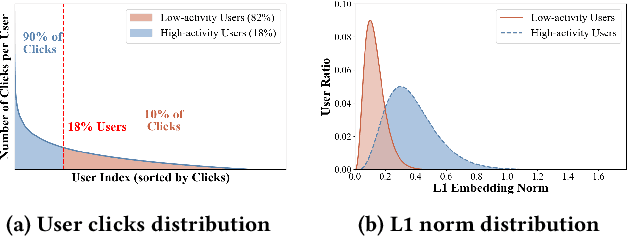

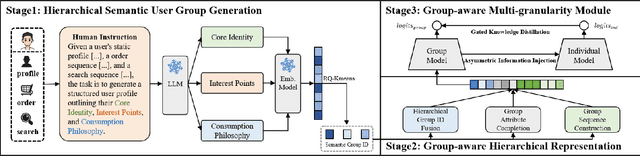
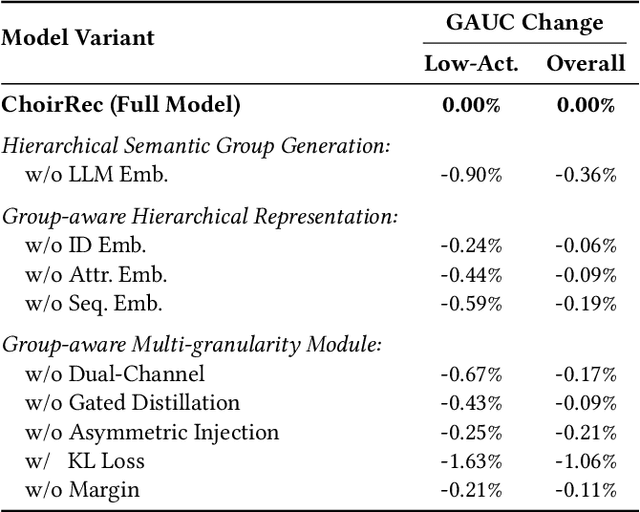
Accurately predicting conversion rates (CVR) for low-activity users remains a fundamental challenge in large-scale e-commerce recommender systems.Existing approaches face three critical limitations: (i) reliance on noisy and unreliable behavioral signals; (ii) insufficient user-level information due to the lack of diverse interaction data; and (iii) a systemic training bias toward high-activity users that overshadows the needs of low-activity users.To address these challenges, we propose ChoirRec, a novel framework that leverages the semantic capabilities of Large Language Models (LLMs) to construct semantic user groups and enhance CVR prediction for low-activity users.With a dual-channel architecture designed for robust cross-user knowledge transfer, ChoirRec comprises three components: (i) a Semantic Group Generation module that utilizes LLMs to form reliable, cross-activity user clusters, thereby filtering out noisy signals; (ii) a Group-aware Hierarchical Representation module that enriches sparse user embeddings with informative group-level priors to mitigate data insufficiency; and (iii) a Group-aware Multi-granularity Modual that employs a dual-channel architecture and adaptive fusion mechanism to ensure effective learning and utilization of group knowledge. We conduct extensive offline and online experiments on Taobao, a leading industrial-scale e-commerce platform.ChoirRec improves GAUC by 1.16\% in offline evaluations, while online A/B testing reveals a 7.24\% increase in order volume, highlighting its substantial practical value in real-world applications.
RecGPT Technical Report
Jul 30, 2025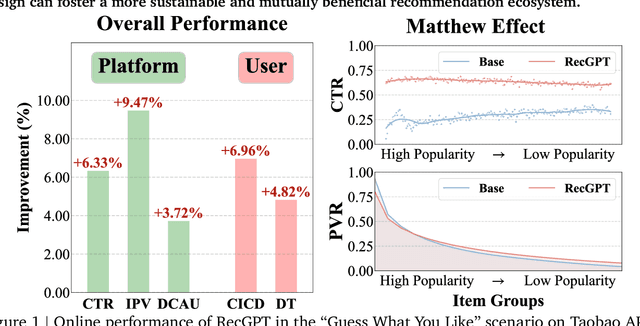
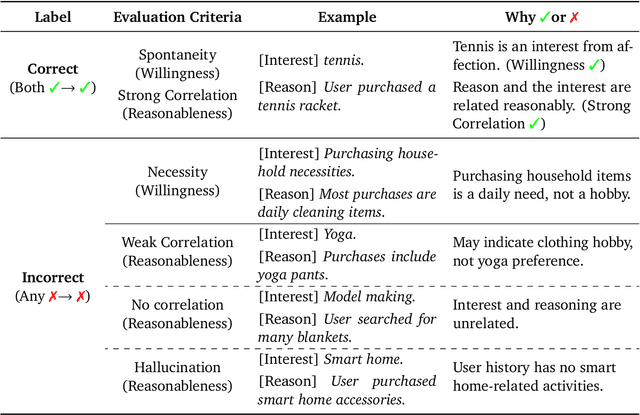
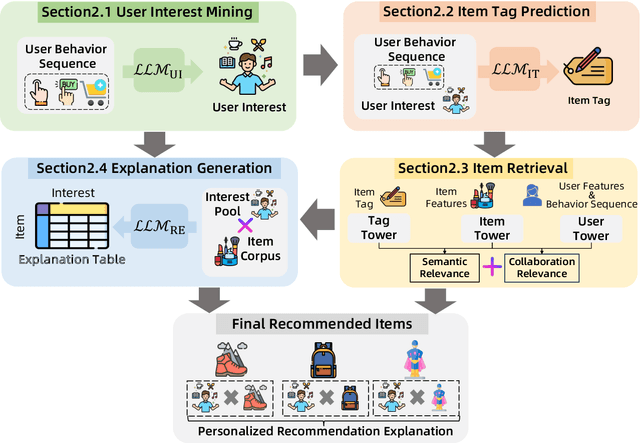

Recommender systems are among the most impactful applications of artificial intelligence, serving as critical infrastructure connecting users, merchants, and platforms. However, most current industrial systems remain heavily reliant on historical co-occurrence patterns and log-fitting objectives, i.e., optimizing for past user interactions without explicitly modeling user intent. This log-fitting approach often leads to overfitting to narrow historical preferences, failing to capture users' evolving and latent interests. As a result, it reinforces filter bubbles and long-tail phenomena, ultimately harming user experience and threatening the sustainability of the whole recommendation ecosystem. To address these challenges, we rethink the overall design paradigm of recommender systems and propose RecGPT, a next-generation framework that places user intent at the center of the recommendation pipeline. By integrating large language models (LLMs) into key stages of user interest mining, item retrieval, and explanation generation, RecGPT transforms log-fitting recommendation into an intent-centric process. To effectively align general-purpose LLMs to the above domain-specific recommendation tasks at scale, RecGPT incorporates a multi-stage training paradigm, which integrates reasoning-enhanced pre-alignment and self-training evolution, guided by a Human-LLM cooperative judge system. Currently, RecGPT has been fully deployed on the Taobao App. Online experiments demonstrate that RecGPT achieves consistent performance gains across stakeholders: users benefit from increased content diversity and satisfaction, merchants and the platform gain greater exposure and conversions. These comprehensive improvement results across all stakeholders validates that LLM-driven, intent-centric design can foster a more sustainable and mutually beneficial recommendation ecosystem.
Learning Extremely High Density Crowds as Active Matters
Mar 15, 2025
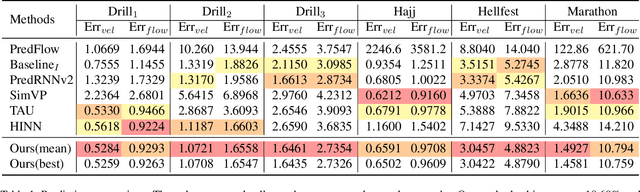
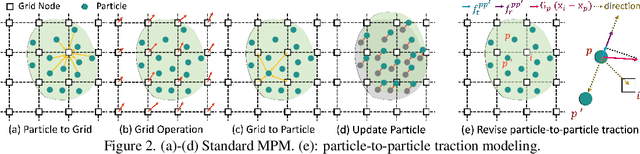

Video-based high-density crowd analysis and prediction has been a long-standing topic in computer vision. It is notoriously difficult due to, but not limited to, the lack of high-quality data and complex crowd dynamics. Consequently, it has been relatively under studied. In this paper, we propose a new approach that aims to learn from in-the-wild videos, often with low quality where it is difficult to track individuals or count heads. The key novelty is a new physics prior to model crowd dynamics. We model high-density crowds as active matter, a continumm with active particles subject to stochastic forces, named 'crowd material'. Our physics model is combined with neural networks, resulting in a neural stochastic differential equation system which can mimic the complex crowd dynamics. Due to the lack of similar research, we adapt a range of existing methods which are close to ours for comparison. Through exhaustive evaluation, we show our model outperforms existing methods in analyzing and forecasting extremely high-density crowds. Furthermore, since our model is a continuous-time physics model, it can be used for simulation and analysis, providing strong interpretability. This is categorically different from most deep learning methods, which are discrete-time models and black-boxes.
3D Student Splatting and Scooping
Mar 13, 2025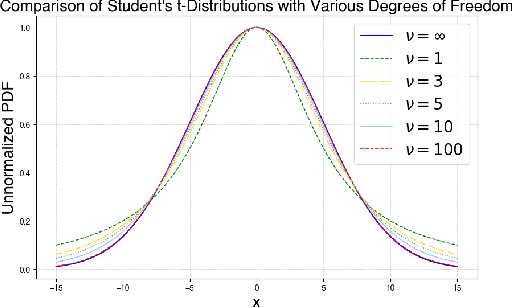
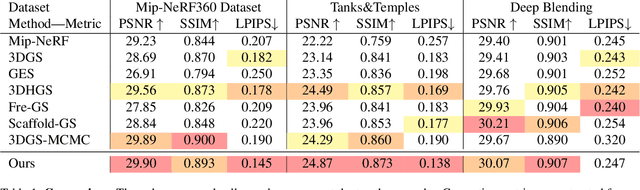
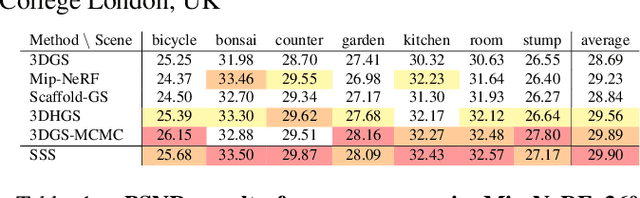

Recently, 3D Gaussian Splatting (3DGS) provides a new framework for novel view synthesis, and has spiked a new wave of research in neural rendering and related applications. As 3DGS is becoming a foundational component of many models, any improvement on 3DGS itself can bring huge benefits. To this end, we aim to improve the fundamental paradigm and formulation of 3DGS. We argue that as an unnormalized mixture model, it needs to be neither Gaussians nor splatting. We subsequently propose a new mixture model consisting of flexible Student's t distributions, with both positive (splatting) and negative (scooping) densities. We name our model Student Splatting and Scooping, or SSS. When providing better expressivity, SSS also poses new challenges in learning. Therefore, we also propose a new principled sampling approach for optimization. Through exhaustive evaluation and comparison, across multiple datasets, settings, and metrics, we demonstrate that SSS outperforms existing methods in terms of quality and parameter efficiency, e.g. achieving matching or better quality with similar numbers of components, and obtaining comparable results while reducing the component number by as much as 82%.
Ordered Genetic Algorithm for Entrance Dependent Vehicle Routing Problem in Farms
Feb 26, 2025Vehicle Routing Problems (VRP) are widely studied issues that play important roles in many production scenarios. We have noticed that in some practical scenarios of VRP, the size of cities and their entrances can significantly influence the optimization process. To address this, we have constructed the Entrance Dependent VRP (EDVRP) to describe such problems. We provide a mathematical formulation for the EDVRP in farms and propose an Ordered Genetic Algorithm (OGA) to solve it. The effectiveness of OGA is demonstrated through our experiments, which involve a multitude of randomly generated cases. The results indicate that OGA offers certain advantages compared to a random strategy baseline and a genetic algorithm without ordering. Furthermore, the novel operators introduced in this paper have been validated through ablation experiments, proving their effectiveness in enhancing the performance of the algorithm.