 Add to Chrome
 Add to Firefox
 Add to Edge
Hera: Learning Long-Horizon Coordination for Device-Cloud Collaborative LLM Agents
May 23, 2026
Large language model (LLM) agents excel at solving complex long-horizon tasks through autonomous interaction with environments. However, their real-world deployment faces a fundamental device--cloud dilemma: on-device models are efficient but often brittle, while cloud models are stronger but costly in computation. State-of-the-art LLM device--cloud routers usually make coarse task-level decisions, which cannot adapt to the changing difficulty of multi-step agent interactions. To address this issue, we present Hera, a step-level device--cloud LLM agent coordinator for long-horizon tasks achieving a strong performance--cost Pareto frontier. Hera adopts a novel two-stage training paradigm: (1) imitation learning for cold-start, followed by (2) reinforcement learning that jointly optimizes task success and cloud usage efficiency. The first stage casts step-level routing as a supervised classification problem: the device agent is replayed on cloud trajectories, with each state labeled by the agreement between device and cloud actions. In the second stage, we perform cost-aware reinforcement learning by grouping identical states across trajectories and updating Hera with labels favoring higher expected return and fewer future cloud calls. We evaluate Hera on ALFWorld, WebShop, and AppWorld, where it consistently outperforms prior methods, achieving 92.5% of the cloud-only success rate with cloud use in only 46.3% of steps.

RecGPT-Mobile: On-Device Large Language Models for User Intent Understanding in Taobao Feed Recommendation
May 06, 2026Predicting a user's next search query from recent interaction behaviors is a critical problem in modern e-commerce systems, particularly in scenarios where user intent evolves rapidly. Large Language Models (LLMs) offer strong semantic reasoning capabilities and have recently been adopted to enhance training data construction for next-query prediction. However, due to resource constraints on mobile devices, existing applications are deployed on cloud servers, resulting in high inference costs. In this paper, we propose RecGPT-Mobile, a framework that designs a lightweight LLM-based intent understanding agent to improve recommendation quality in mobile e-commerce scenarios. By deploying LLMs directly on mobile devices, our approach can capture evolving interests of users more quickly and adjust the recommendation results in real time. Extensive offline analyses and online experiments demonstrate that our method significantly improves the accuracy of recommendation results, laying a practical path for LLM deployment in production-scale recommendation systems on mobile devices, as well as a scalable solution for integrating LLMs into real-world next-query prediction systems.
Semantic Trimming and Auxiliary Multi-step Prediction for Generative Recommendation
Apr 07, 2026Generative Recommendation (GR) has recently transitioned from atomic item-indexing to Semantic ID (SID)-based frameworks to capture intrinsic item relationships and enhance generalization. However, the adoption of high-granularity SIDs leads to two critical challenges: prohibitive training overhead due to sequence expansion and unstable performance reliability characterized by non-monotonic accuracy fluctuations. We identify that these disparate issues are fundamentally rooted in the Semantic Dilution Effect, where redundant tokens waste massive computation and dilute the already sparse learning signals in recommendation. To counteract this, we propose STAMP (Semantic Trimming and Auxiliary Multi-step Prediction), a framework utilizing a dual-end optimization strategy. We argue that effective SID learning requires simultaneously addressing low input information density and sparse output supervision. On the input side, Semantic Adaptive Pruning (SAP) dynamically filters redundancy during the forward pass, converting noise-laden sequences into compact, information-rich representations. On the output side, Multi-step Auxiliary Prediction (MAP) employs a multi-token objective to densify feedback, strengthening long-range dependency capture and ensuring robust learning signals despite compressed inputs. Unifying input purification and signal amplification, STAMP enhances both training efficiency and representation capability. Experiments on public Amazon and large-scale industrial datasets show STAMP achieves 1.23--1.38$\times$ speedup and 17.2\%--54.7\% VRAM reduction while maintaining or improving performance across multiple architectures.
FHAvatar: Fast and High-Fidelity Reconstruction of Face-and-Hair Composable 3D Head Avatar from Few Casual Captures
Mar 24, 2026We present FHAvatar, a novel framework for reconstructing 3D Gaussian avatars with composable face and hair components from an arbitrary number of views. Unlike previous approaches that couple facial and hair representations within a unified modeling process, we explicitly decouple two components in texture space by representing the face with planar Gaussians and the hair with strand-based Gaussians. To overcome the limitations of existing methods that rely on dense multi-view captures or costly per-identity optimization, we propose an aggregated transformer backbone to learn geometry-aware cross-view priors and head-hair structural coherence from multi-view datasets, enabling effective and efficient feature extraction and fusion from few casual captures. Extensive quantitative and qualitative experiments demonstrate that FHAvatar achieves state-of-the-art reconstruction quality from only a few observations of new identities within minutes, while supporting real-time animation, convenient hairstyle transfer, and stylized editing, broadening the accessibility and applicability of digital avatar creation.
MobileKernelBench: Can LLMs Write Efficient Kernels for Mobile Devices?
Mar 12, 2026Large language models (LLMs) have demonstrated remarkable capabilities in code generation, yet their potential for generating kernels specifically for mobile de- vices remains largely unexplored. In this work, we extend the scope of automated kernel generation to the mobile domain to investigate the central question: Can LLMs write efficient kernels for mobile devices? To enable systematic investigation, we introduce MobileKernelBench, a comprehensive evaluation framework comprising a benchmark prioritizing operator diversity and cross-framework interoperability, coupled with an automated pipeline that bridges the host-device gap for on-device verification. Leveraging this framework, we conduct extensive evaluation on the CPU backend of Mobile Neural Network (MNN), revealing that current LLMs struggle with the engineering complexity and data scarcity inher-ent to mobile frameworks; standard models and even fine-tuned variants exhibit high compilation failure rates (over 54%) and negligible performance gains due to hallucinations and a lack of domain-specific grounding. To overcome these limitations, we propose the Mobile K ernel A gent (MoKA), a multi-agent system equipped with repository-aware reasoning and a plan-and-execute paradigm.Validated on MobileKernelBench, MoKA achieves state-of-the-art performance, boosting compilation success to 93.7% and enabling 27.4% of generated kernelsto deliver measurable speedups over native libraries.
AccKV: Towards Efficient Audio-Video LLMs Inference via Adaptive-Focusing and Cross-Calibration KV Cache Optimization
Nov 14, 2025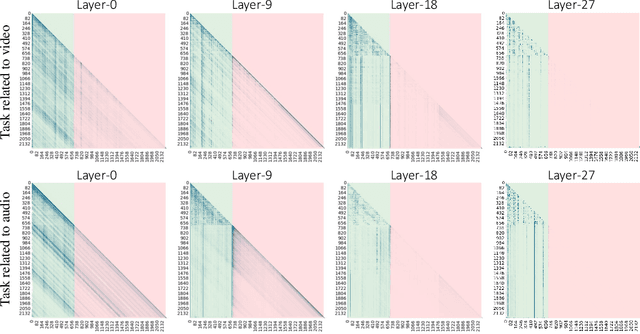
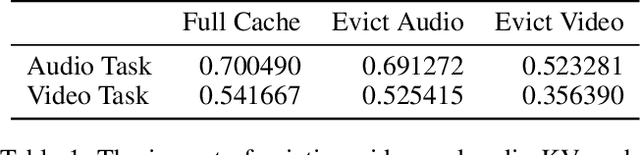
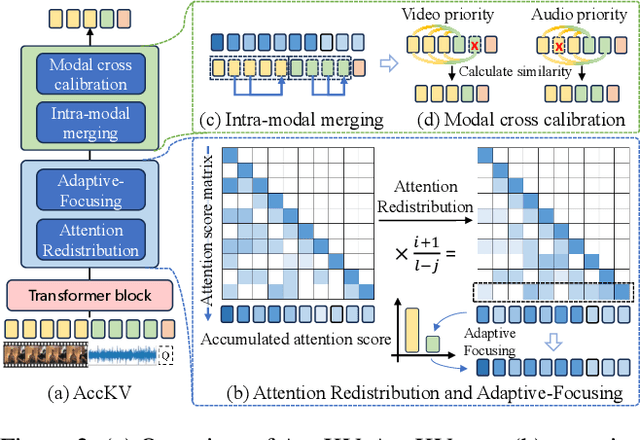
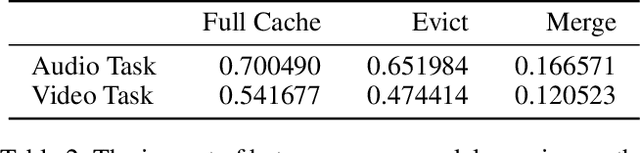
Recent advancements in Audio-Video Large Language Models (AV-LLMs) have enhanced their capabilities in tasks like audio-visual question answering and multimodal dialog systems. Video and audio introduce an extended temporal dimension, resulting in a larger key-value (KV) cache compared to static image embedding. A naive optimization strategy is to selectively focus on and retain KV caches of audio or video based on task. However, in the experiment, we observed that the attention of AV-LLMs to various modalities in the high layers is not strictly dependent on the task. In higher layers, the attention of AV-LLMs shifts more towards the video modality. In addition, we also found that directly integrating temporal KV of audio and spatial-temporal KV of video may lead to information confusion and significant performance degradation of AV-LLMs. If audio and video are processed indiscriminately, it may also lead to excessive compression or reservation of a certain modality, thereby disrupting the alignment between modalities. To address these challenges, we propose AccKV, an Adaptive-Focusing and Cross-Calibration KV cache optimization framework designed specifically for efficient AV-LLMs inference. Our method is based on layer adaptive focusing technology, selectively focusing on key modalities according to the characteristics of different layers, and enhances the recognition of heavy hitter tokens through attention redistribution. In addition, we propose a Cross-Calibration technique that first integrates inefficient KV caches within the audio and video modalities, and then aligns low-priority modalities with high-priority modalities to selectively evict KV cache of low-priority modalities. The experimental results show that AccKV can significantly improve the computational efficiency of AV-LLMs while maintaining accuracy.
MNN-LLM: A Generic Inference Engine for Fast Large Language Model Deployment on Mobile Devices
Jun 12, 2025Large language models (LLMs) have demonstrated exceptional performance across a variety of tasks. However, their substantial scale leads to significant computational resource consumption during inference, resulting in high costs. Consequently, edge device inference presents a promising solution. The primary challenges of edge inference include memory usage and inference speed. This paper introduces MNN-LLM, a framework specifically designed to accelerate the deployment of large language models on mobile devices. MNN-LLM addresses the runtime characteristics of LLMs through model quantization and DRAM-Flash hybrid storage, effectively reducing memory usage. It rearranges weights and inputs based on mobile CPU instruction sets and GPU characteristics while employing strategies such as multicore load balancing, mixed-precision floating-point operations, and geometric computations to enhance performance. Notably, MNN-LLM achieves up to a 8.6x speed increase compared to current mainstream LLM-specific frameworks.
Collaborative Learning of On-Device Small Model and Cloud-Based Large Model: Advances and Future Directions
Apr 17, 2025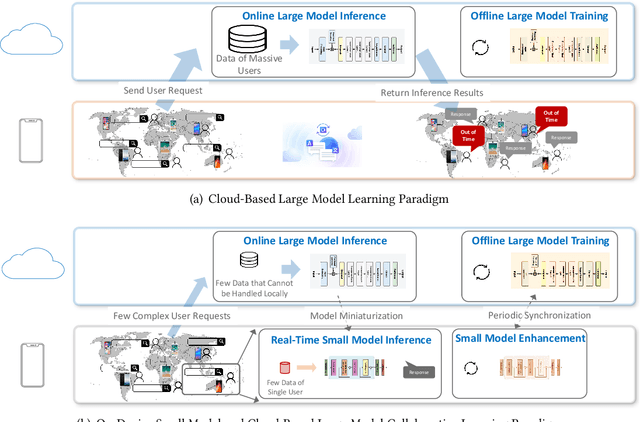
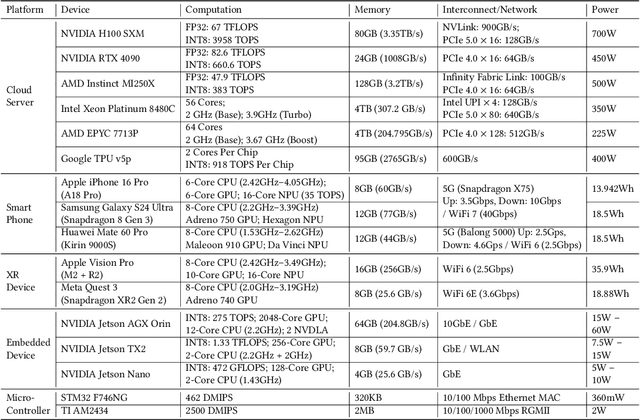
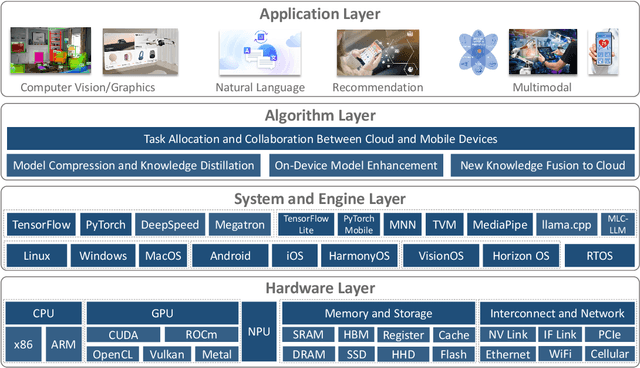
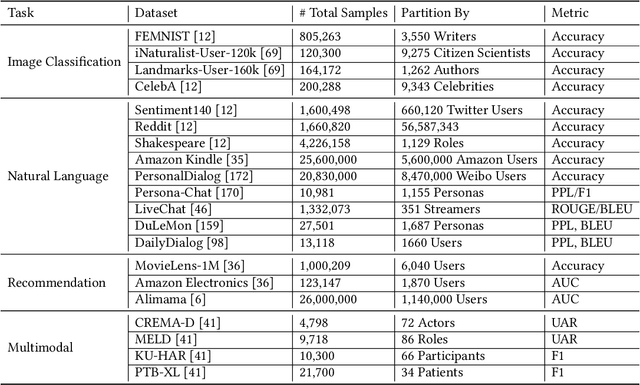
The conventional cloud-based large model learning framework is increasingly constrained by latency, cost, personalization, and privacy concerns. In this survey, we explore an emerging paradigm: collaborative learning between on-device small model and cloud-based large model, which promises low-latency, cost-efficient, and personalized intelligent services while preserving user privacy. We provide a comprehensive review across hardware, system, algorithm, and application layers. At each layer, we summarize key problems and recent advances from both academia and industry. In particular, we categorize collaboration algorithms into data-based, feature-based, and parameter-based frameworks. We also review publicly available datasets and evaluation metrics with user-level or device-level consideration tailored to collaborative learning settings. We further highlight real-world deployments, ranging from recommender systems and mobile livestreaming to personal intelligent assistants. We finally point out open research directions to guide future development in this rapidly evolving field.
Personalized LLM for Generating Customized Responses to the Same Query from Different Users
Dec 16, 2024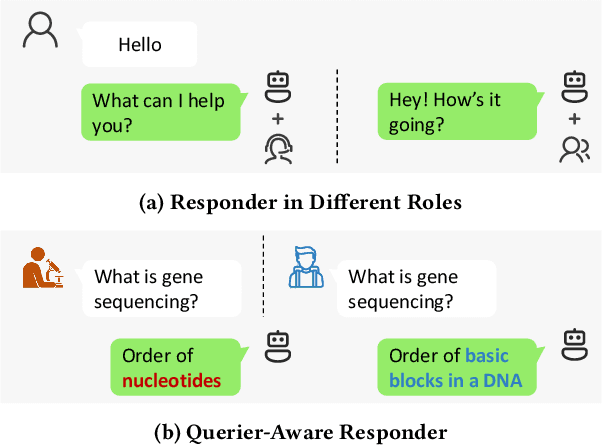
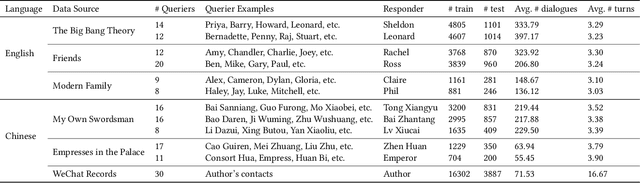
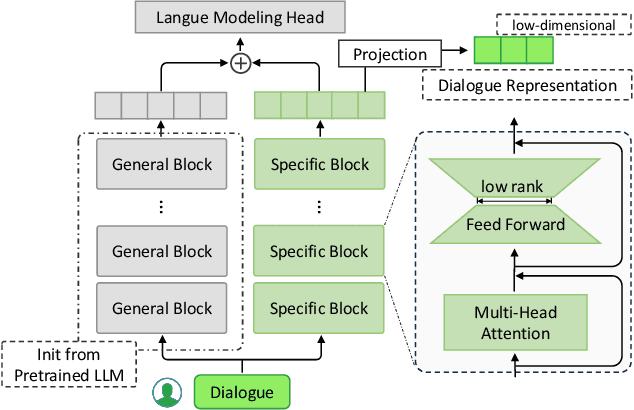
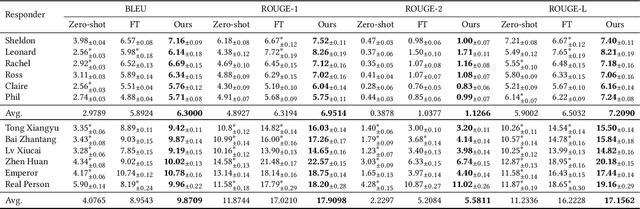
Existing work on large language model (LLM) personalization assigned different responding roles to LLM, but overlooked the diversity of questioners. In this work, we propose a new form of questioner-aware LLM personalization, generating different responses even for the same query from different questioners. We design a dual-tower model architecture with a cross-questioner general encoder and a questioner-specific encoder. We further apply contrastive learning with multi-view augmentation, pulling close the dialogue representations of the same questioner, while pulling apart those of different questioners. To mitigate the impact of question diversity on questioner-contrastive learning, we cluster the dialogues based on question similarity and restrict the scope of contrastive learning within each cluster. We also build a multi-questioner dataset from English and Chinese scripts and WeChat records, called MQDialog, containing 173 questioners and 12 responders. Extensive evaluation with different metrics shows a significant improvement in the quality of personalized response generation.
SpatialDreamer: Self-supervised Stereo Video Synthesis from Monocular Input
Nov 18, 2024Stereo video synthesis from a monocular input is a demanding task in the fields of spatial computing and virtual reality. The main challenges of this task lie on the insufficiency of high-quality paired stereo videos for training and the difficulty of maintaining the spatio-temporal consistency between frames. Existing methods primarily address these issues by directly applying novel view synthesis (NVS) techniques to video, while facing limitations such as the inability to effectively represent dynamic scenes and the requirement for large amounts of training data. In this paper, we introduce a novel self-supervised stereo video synthesis paradigm via a video diffusion model, termed SpatialDreamer, which meets the challenges head-on. Firstly, to address the stereo video data insufficiency, we propose a Depth based Video Generation module DVG, which employs a forward-backward rendering mechanism to generate paired videos with geometric and temporal priors. Leveraging data generated by DVG, we propose RefinerNet along with a self-supervised synthetic framework designed to facilitate efficient and dedicated training. More importantly, we devise a consistency control module, which consists of a metric of stereo deviation strength and a Temporal Interaction Learning module TIL for geometric and temporal consistency ensurance respectively. We evaluated the proposed method against various benchmark methods, with the results showcasing its superior performance.