 Add to Chrome
 Add to Firefox
 Add to Edge
Many-MobileNet: Multi-Model Augmentation for Robust Retinal Disease Classification
Dec 03, 2024

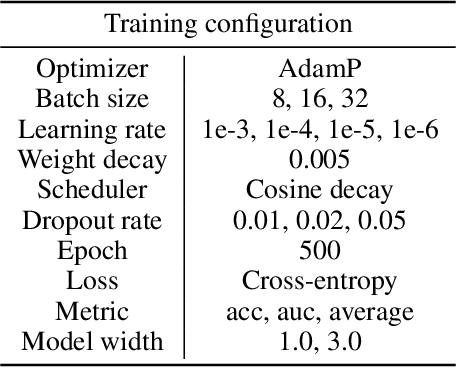


In this work, we propose Many-MobileNet, an efficient model fusion strategy for retinal disease classification using lightweight CNN architecture. Our method addresses key challenges such as overfitting and limited dataset variability by training multiple models with distinct data augmentation strategies and different model complexities. Through this fusion technique, we achieved robust generalization in data-scarce domains while balancing computational efficiency with feature extraction capabilities.

FSMLP: Modelling Channel Dependencies With Simplex Theory Based Multi-Layer Perceptions In Frequency Domain
Dec 03, 2024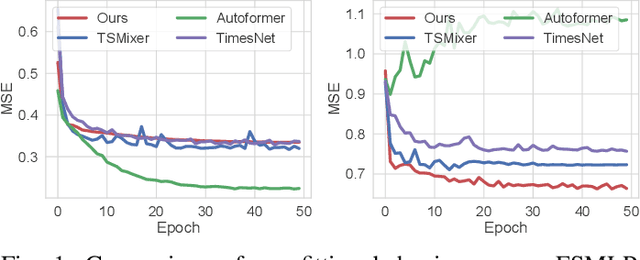
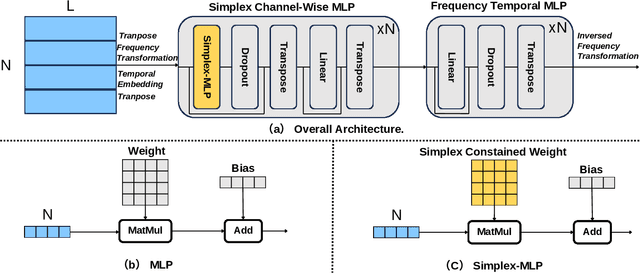


Time series forecasting (TSF) plays a crucial role in various domains, including web data analysis, energy consumption prediction, and weather forecasting. While Multi-Layer Perceptrons (MLPs) are lightweight and effective for capturing temporal dependencies, they are prone to overfitting when used to model inter-channel dependencies. In this paper, we investigate the overfitting problem in channel-wise MLPs using Rademacher complexity theory, revealing that extreme values in time series data exacerbate this issue. To mitigate this issue, we introduce a novel Simplex-MLP layer, where the weights are constrained within a standard simplex. This strategy encourages the model to learn simpler patterns and thereby reducing overfitting to extreme values. Based on the Simplex-MLP layer, we propose a novel \textbf{F}requency \textbf{S}implex \textbf{MLP} (FSMLP) framework for time series forecasting, comprising of two kinds of modules: \textbf{S}implex \textbf{C}hannel-\textbf{W}ise MLP (SCWM) and \textbf{F}requency \textbf{T}emporal \textbf{M}LP (FTM). The SCWM effectively leverages the Simplex-MLP to capture inter-channel dependencies, while the FTM is a simple yet efficient temporal MLP designed to extract temporal information from the data. Our theoretical analysis shows that the upper bound of the Rademacher Complexity for Simplex-MLP is lower than that for standard MLPs. Moreover, we validate our proposed method on seven benchmark datasets, demonstrating significant improvements in forecasting accuracy and efficiency, while also showcasing superior scalability. Additionally, we demonstrate that Simplex-MLP can improve other methods that use channel-wise MLP to achieve less overfitting and improved performance. Code are available \href{https://github.com/FMLYD/FSMLP}{\textcolor{red}{here}}.
Predictive Models in Sequential Recommendations: Bridging Performance Laws with Data Quality Insights
Dec 03, 2024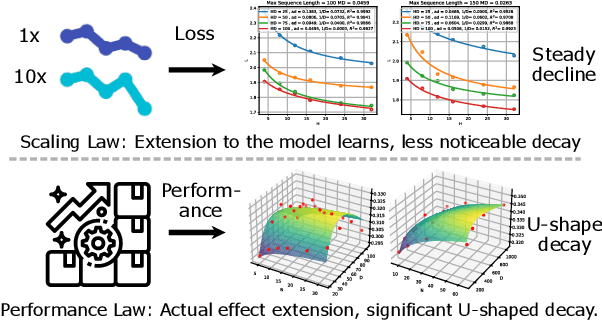

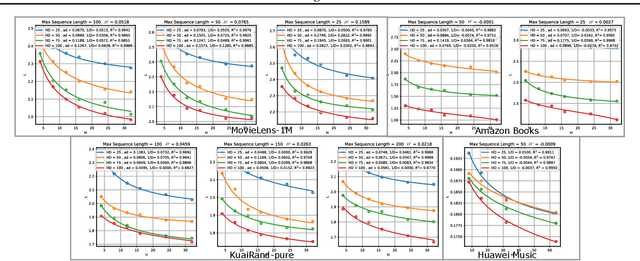
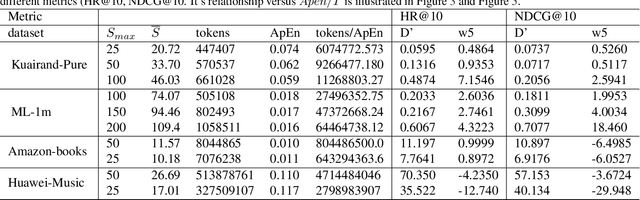
Sequential Recommendation (SR) plays a critical role in predicting users' sequential preferences. Despite its growing prominence in various industries, the increasing scale of SR models incurs substantial computational costs and unpredictability, challenging developers to manage resources efficiently. Under this predicament, Scaling Laws have achieved significant success by examining the loss as models scale up. However, there remains a disparity between loss and model performance, which is of greater concern in practical applications. Moreover, as data continues to expand, it incorporates repetitive and inefficient data. In response, we introduce the Performance Law for SR models, which aims to theoretically investigate and model the relationship between model performance and data quality. Specifically, we first fit the HR and NDCG metrics to transformer-based SR models. Subsequently, we propose Approximate Entropy (ApEn) to assess data quality, presenting a more nuanced approach compared to traditional data quantity metrics. Our method enables accurate predictions across various dataset scales and model sizes, demonstrating a strong correlation in large SR models and offering insights into achieving optimal performance for any given model configuration.
Scaling New Frontiers: Insights into Large Recommendation Models
Dec 01, 2024
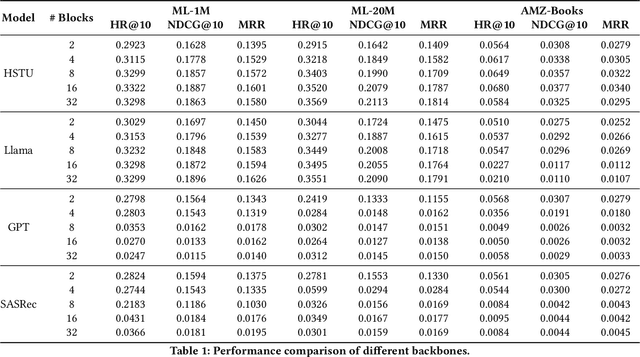
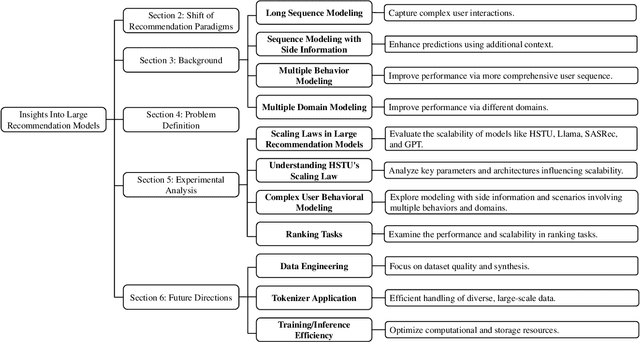
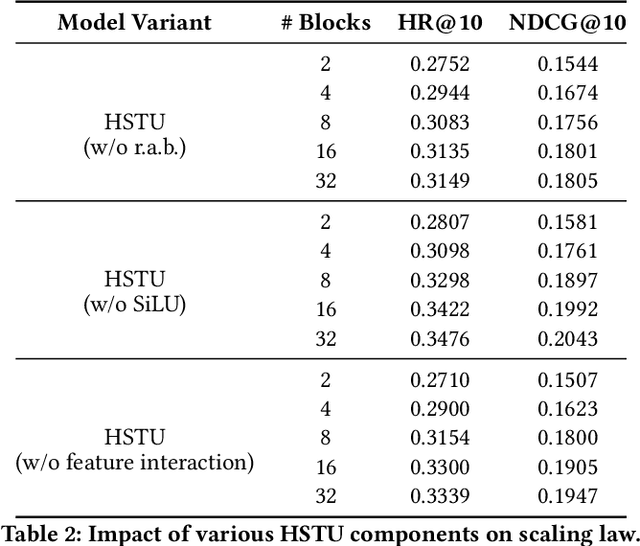
Recommendation systems are essential for filtering data and retrieving relevant information across various applications. Recent advancements have seen these systems incorporate increasingly large embedding tables, scaling up to tens of terabytes for industrial use. However, the expansion of network parameters in traditional recommendation models has plateaued at tens of millions, limiting further benefits from increased embedding parameters. Inspired by the success of large language models (LLMs), a new approach has emerged that scales network parameters using innovative structures, enabling continued performance improvements. A significant development in this area is Meta's generative recommendation model HSTU, which illustrates the scaling laws of recommendation systems by expanding parameters to thousands of billions. This new paradigm has achieved substantial performance gains in online experiments. In this paper, we aim to enhance the understanding of scaling laws by conducting comprehensive evaluations of large recommendation models. Firstly, we investigate the scaling laws across different backbone architectures of the large recommendation models. Secondly, we conduct comprehensive ablation studies to explore the origins of these scaling laws. We then further assess the performance of HSTU, as the representative of large recommendation models, on complex user behavior modeling tasks to evaluate its applicability. Notably, we also analyze its effectiveness in ranking tasks for the first time. Finally, we offer insights into future directions for large recommendation models. Supplementary materials for our research are available on GitHub at https://github.com/USTC-StarTeam/Large-Recommendation-Models.
Revealing Key Details to See Differences: A Novel Prototypical Perspective for Skeleton-based Action Recognition
Nov 28, 2024In skeleton-based action recognition, a key challenge is distinguishing between actions with similar trajectories of joints due to the lack of image-level details in skeletal representations. Recognizing that the differentiation of similar actions relies on subtle motion details in specific body parts, we direct our approach to focus on the fine-grained motion of local skeleton components. To this end, we introduce ProtoGCN, a Graph Convolutional Network (GCN)-based model that breaks down the dynamics of entire skeleton sequences into a combination of learnable prototypes representing core motion patterns of action units. By contrasting the reconstruction of prototypes, ProtoGCN can effectively identify and enhance the discriminative representation of similar actions. Without bells and whistles, ProtoGCN achieves state-of-the-art performance on multiple benchmark datasets, including NTU RGB+D, NTU RGB+D 120, Kinetics-Skeleton, and FineGYM, which demonstrates the effectiveness of the proposed method. The code is available at https://github.com/firework8/ProtoGCN.
Multi-granularity Interest Retrieval and Refinement Network for Long-Term User Behavior Modeling in CTR Prediction
Nov 22, 2024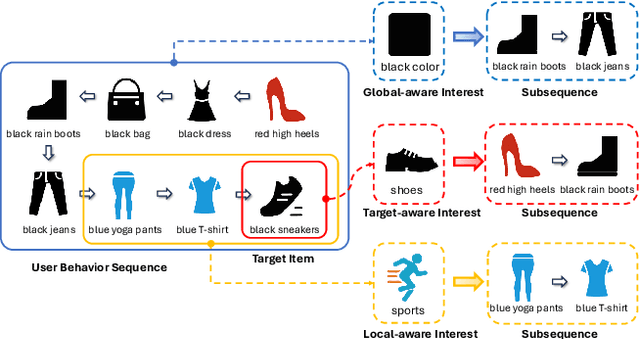
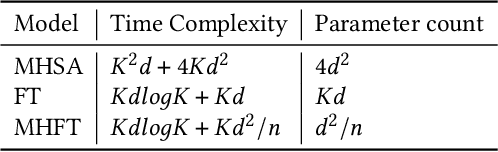
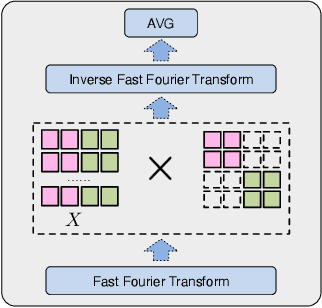
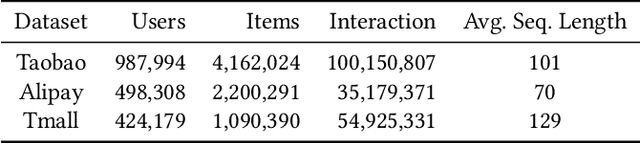
Click-through Rate (CTR) prediction is crucial for online personalization platforms. Recent advancements have shown that modeling rich user behaviors can significantly improve the performance of CTR prediction. Current long-term user behavior modeling algorithms predominantly follow two cascading stages. The first stage retrieves subsequence related to the target item from the long-term behavior sequence, while the second stage models the relationship between the subsequence and the target item. Despite significant progress, these methods have two critical flaws. First, the retrieval query typically includes only target item information, limiting the ability to capture the user's diverse interests. Second, relational information, such as sequential and interactive information within the subsequence, is frequently overlooked. Therefore, it requires to be further mined to more accurately model user interests. To this end, we propose Multi-granularity Interest Retrieval and Refinement Network (MIRRN). Specifically, we first construct queries based on behaviors observed at different time scales to obtain subsequences, each capturing users' interest at various granularities. We then introduce an noval multi-head Fourier transformer to efficiently learn sequential and interactive information within the subsequences, leading to more accurate modeling of user interests. Finally, we employ multi-head target attention to adaptively assess the impact of these multi-granularity interests on the target item. Extensive experiments have demonstrated that MIRRN significantly outperforms state-of-the-art baselines. Furthermore, an A/B test shows that MIRRN increases the average number of listening songs by 1.32% and the average time of listening songs by 0.55% on a popular music streaming app. The implementation code is publicly available at https://github.com/psycho-demon/MIRRN.
Marco-o1: Towards Open Reasoning Models for Open-Ended Solutions
Nov 21, 2024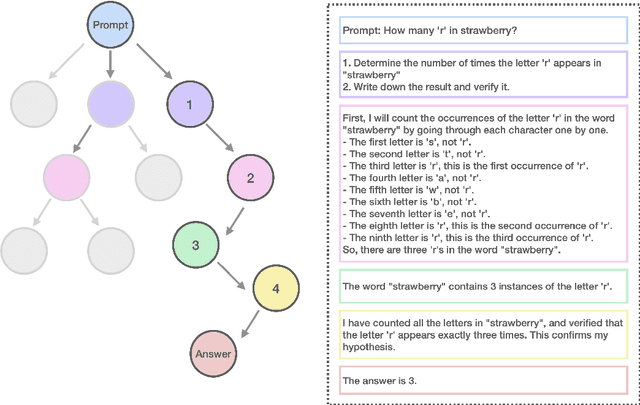
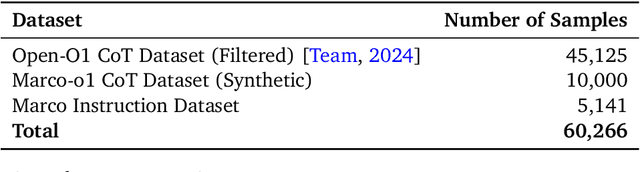
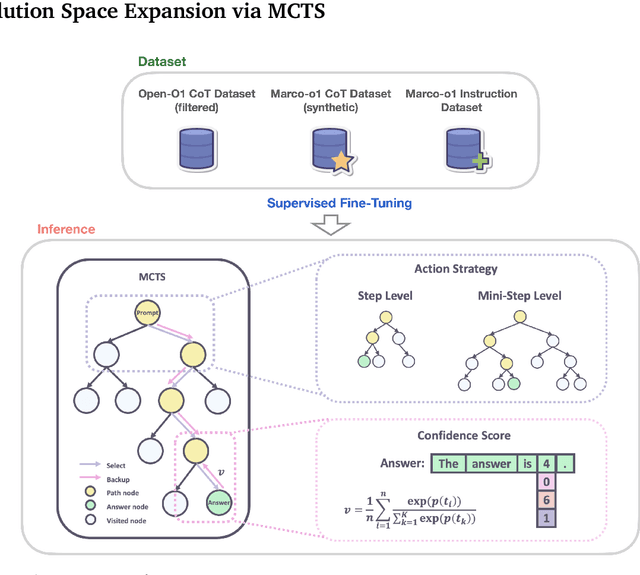
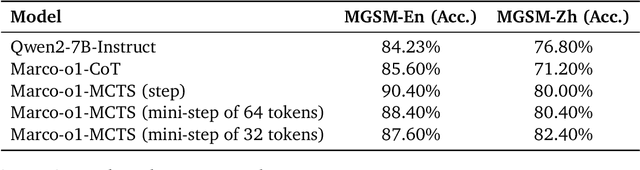
Currently OpenAI o1 has sparked a surge of interest in the study of large reasoning models (LRM). Building on this momentum, Marco-o1 not only focuses on disciplines with standard answers, such as mathematics, physics, and coding -- which are well-suited for reinforcement learning (RL) -- but also places greater emphasis on open-ended resolutions. We aim to address the question: "Can the o1 model effectively generalize to broader domains where clear standards are absent and rewards are challenging to quantify?" Marco-o1 is powered by Chain-of-Thought (CoT) fine-tuning, Monte Carlo Tree Search (MCTS), reflection mechanisms, and innovative reasoning strategies -- optimized for complex real-world problem-solving tasks.
SEMPose: A Single End-to-end Network for Multi-object Pose Estimation
Nov 21, 2024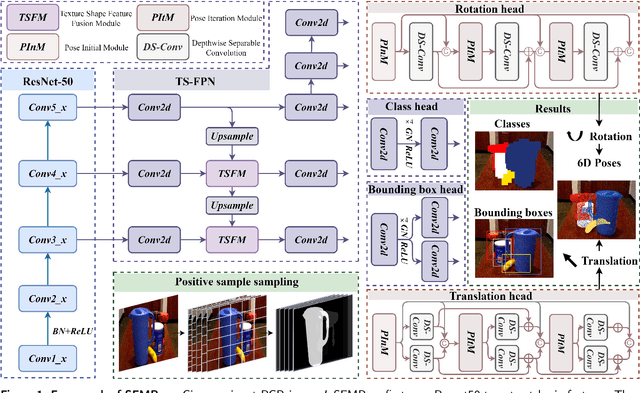
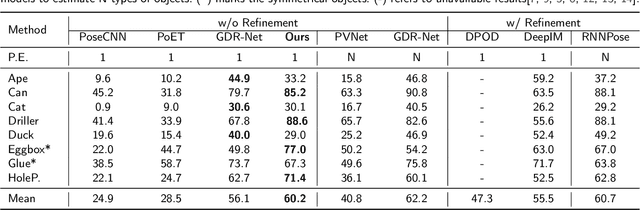
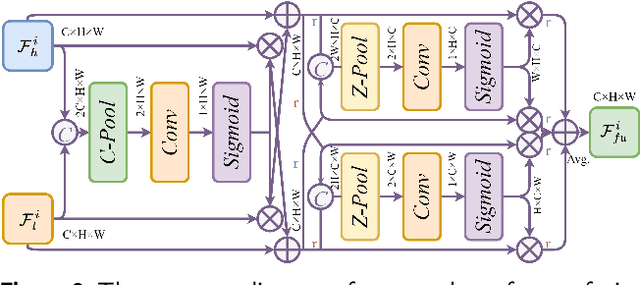
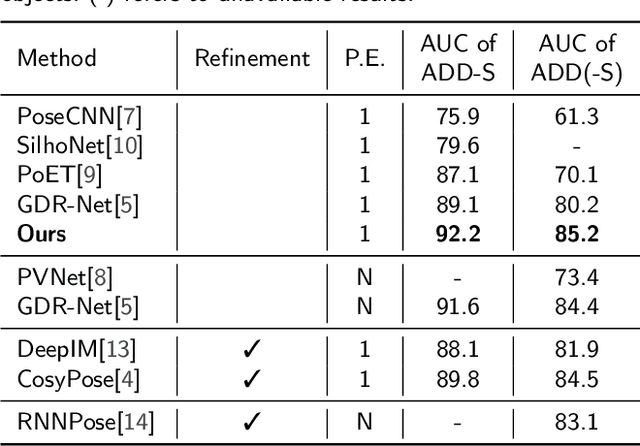
In computer vision, estimating the six-degree-of-freedom pose from an RGB image is a fundamental task. However, this task becomes highly challenging in multi-object scenes. Currently, the best methods typically employ an indirect strategy, which identifies 2D and 3D correspondences, and then solves with the Perspective-n-Points method. Yet, this approach cannot be trained end-to-end. Direct methods, on the other hand, suffer from lower accuracy due to challenges such as varying object sizes and occlusions. To address these issues, we propose SEMPose, an end-to-end multi-object pose estimation network. SEMPose utilizes a well-designed texture-shape guided feature pyramid network, effectively tackling the challenge of object size variations. Additionally, it employs an iterative refinement head structure, progressively regressing rotation and translation separately to enhance estimation accuracy. During training, we alleviate the impact of occlusion by selecting positive samples from visible parts. Experimental results demonstrate that SEMPose can perform inference at 32 FPS without requiring inputs other than the RGB image. It can accurately estimate the poses of multiple objects in real time, with inference time unaffected by the number of target objects. On the LM-O and YCB-V datasets, our method outperforms other RGB-based single-model methods, achieving higher accuracy. Even when compared with multi-model methods and approaches that use additional refinement, our results remain competitive.
RobustFormer: Noise-Robust Pre-training for images and videos
Nov 20, 2024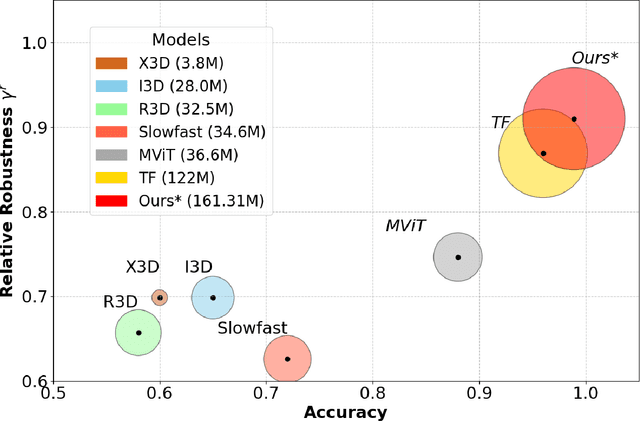

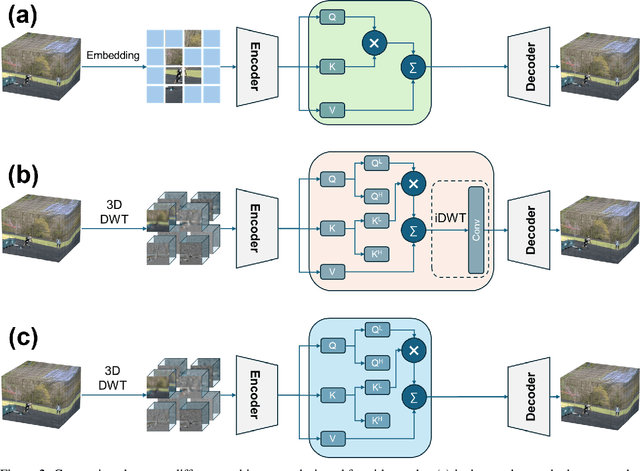
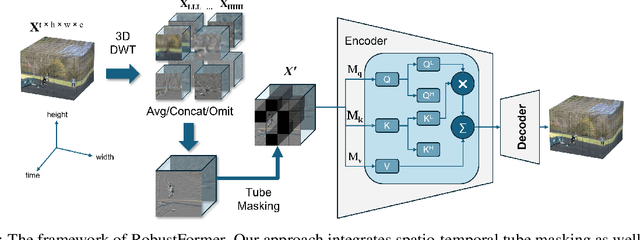
While deep learning models are powerful tools that revolutionized many areas, they are also vulnerable to noise as they rely heavily on learning patterns and features from the exact details of the clean data. Transformers, which have become the backbone of modern vision models, are no exception. Current Discrete Wavelet Transforms (DWT) based methods do not benefit from masked autoencoder (MAE) pre-training since the inverse DWT (iDWT) introduced in these approaches is computationally inefficient and lacks compatibility with video inputs in transformer architectures. In this work, we present RobustFormer, a method that overcomes these limitations by enabling noise-robust pre-training for both images and videos; improving the efficiency of DWT-based methods by removing the need for computationally iDWT steps and simplifying the attention mechanism. To our knowledge, the proposed method is the first DWT-based method compatible with video inputs and masked pre-training. Our experiments show that MAE-based pre-training allows us to bypass the iDWT step, greatly reducing computation. Through extensive tests on benchmark datasets, RobustFormer achieves state-of-the-art results for both image and video tasks.
Automated 3D Physical Simulation of Open-world Scene with Gaussian Splatting
Nov 19, 2024
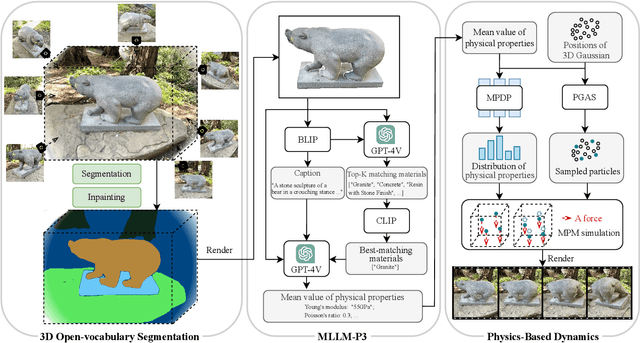


Recent advancements in 3D generation models have opened new possibilities for simulating dynamic 3D object movements and customizing behaviors, yet creating this content remains challenging. Current methods often require manual assignment of precise physical properties for simulations or rely on video generation models to predict them, which is computationally intensive. In this paper, we rethink the usage of multi-modal large language model (MLLM) in physics-based simulation, and present Sim Anything, a physics-based approach that endows static 3D objects with interactive dynamics. We begin with detailed scene reconstruction and object-level 3D open-vocabulary segmentation, progressing to multi-view image in-painting. Inspired by human visual reasoning, we propose MLLM-based Physical Property Perception (MLLM-P3) to predict mean physical properties of objects in a zero-shot manner. Based on the mean values and the object's geometry, the Material Property Distribution Prediction model (MPDP) model then estimates the full distribution, reformulating the problem as probability distribution estimation to reduce computational costs. Finally, we simulate objects in an open-world scene with particles sampled via the Physical-Geometric Adaptive Sampling (PGAS) strategy, efficiently capturing complex deformations and significantly reducing computational costs. Extensive experiments and user studies demonstrate our Sim Anything achieves more realistic motion than state-of-the-art methods within 2 minutes on a single GPU.