 Add to Chrome
 Add to Firefox
 Add to Edge
IPO: Iterative Preference Optimization for Text-to-Video Generation
Feb 05, 2025


Video foundation models have achieved significant advancement with the help of network upgrade as well as model scale-up. However, they are still hard to meet requirements of applications due to unsatisfied generation quality. To solve this problem, we propose to align video foundation models with human preferences from the perspective of post-training in this paper. Consequently, we introduce an Iterative Preference Optimization strategy to enhance generated video quality by incorporating human feedback. Specifically, IPO exploits a critic model to justify video generations for pairwise ranking as in Direct Preference Optimization or point-wise scoring as in Kahneman-Tversky Optimization. Given this, IPO optimizes video foundation models with guidance of signals from preference feedback, which helps improve generated video quality in subject consistency, motion smoothness and aesthetic quality, etc. In addition, IPO incorporates the critic model with the multi-modality large language model, which enables it to automatically assign preference labels without need of retraining or relabeling. In this way, IPO can efficiently perform multi-round preference optimization in an iterative manner, without the need of tediously manual labeling. Comprehensive experiments demonstrate that the proposed IPO can effectively improve the video generation quality of a pretrained model and help a model with only 2B parameters surpass the one with 5B parameters. Besides, IPO achieves new state-of-the-art performance on VBench benchmark. We will release our source codes, models as well as dataset to advance future research and applications.

Skewed Memorization in Large Language Models: Quantification and Decomposition
Feb 03, 2025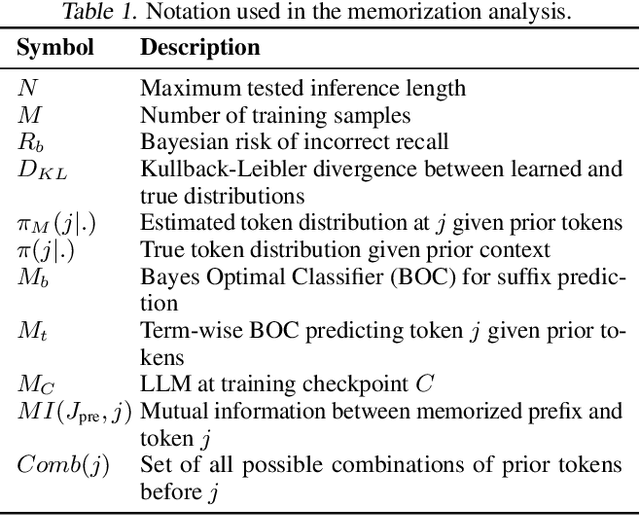
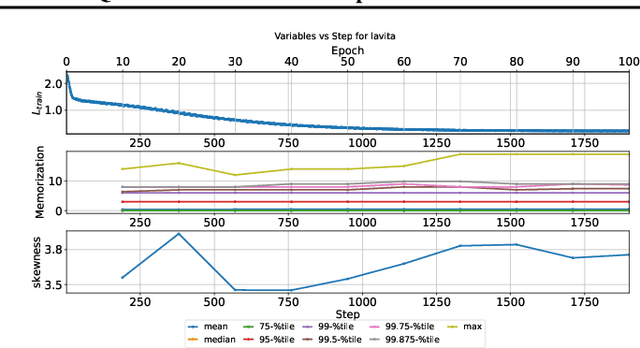
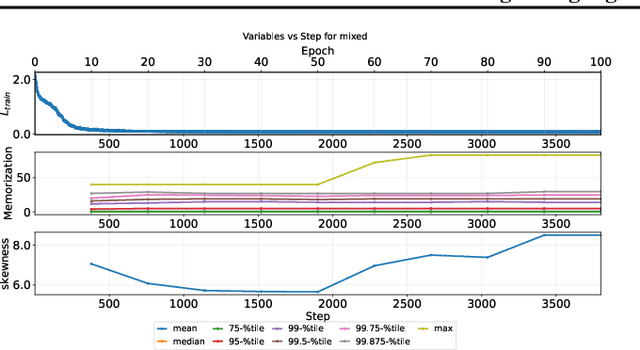
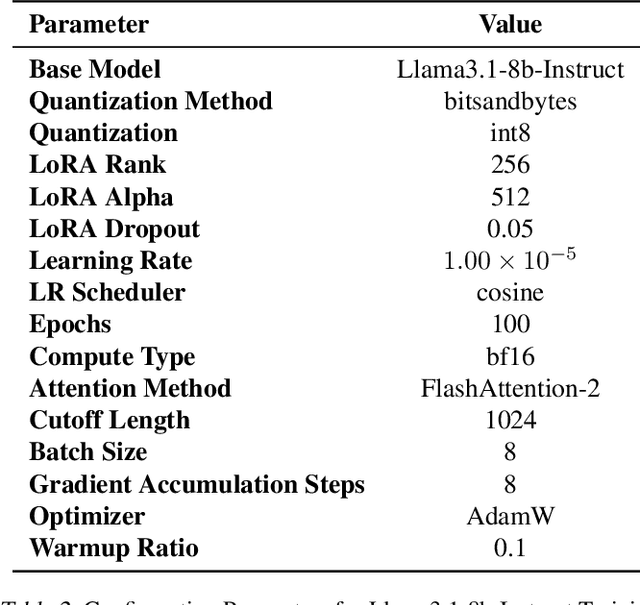
Memorization in Large Language Models (LLMs) poses privacy and security risks, as models may unintentionally reproduce sensitive or copyrighted data. Existing analyses focus on average-case scenarios, often neglecting the highly skewed distribution of memorization. This paper examines memorization in LLM supervised fine-tuning (SFT), exploring its relationships with training duration, dataset size, and inter-sample similarity. By analyzing memorization probabilities over sequence lengths, we link this skewness to the token generation process, offering insights for estimating memorization and comparing it to established metrics. Through theoretical analysis and empirical evaluation, we provide a comprehensive understanding of memorization behaviors and propose strategies to detect and mitigate risks, contributing to more privacy-preserving LLMs.
Omni-Mol: Exploring Universal Convergent Space for Omni-Molecular Tasks
Feb 03, 2025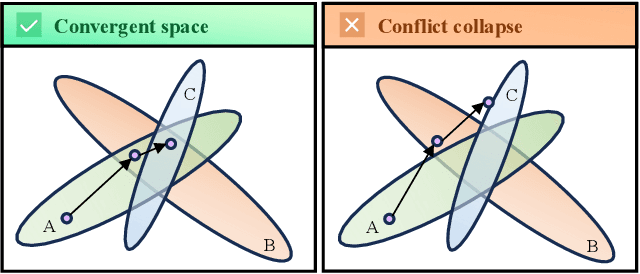
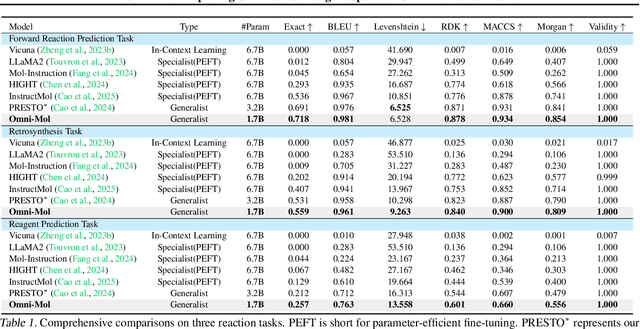
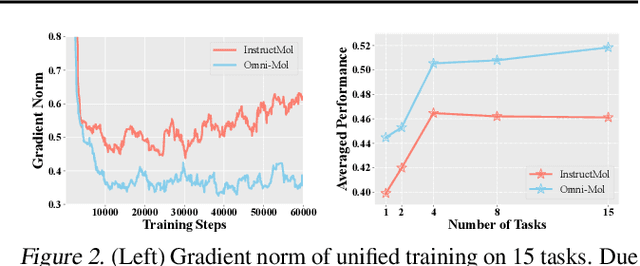
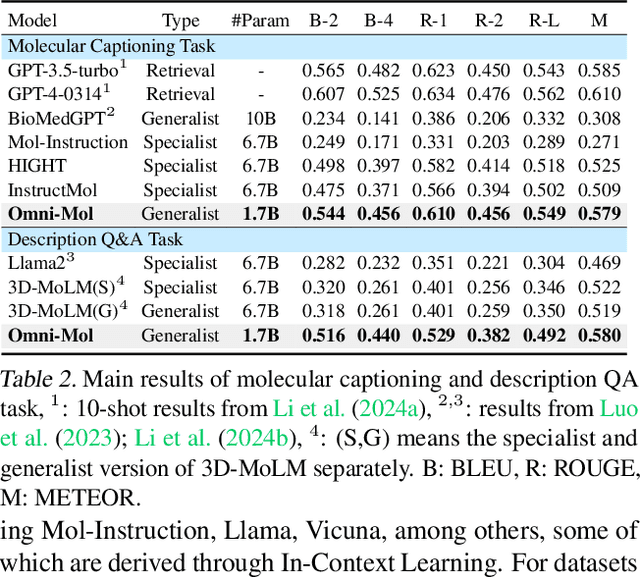
Building generalist models has recently demonstrated remarkable capabilities in diverse scientific domains. Within the realm of molecular learning, several studies have explored unifying diverse tasks across diverse domains. However, negative conflicts and interference between molecules and knowledge from different domain may have a worse impact in threefold. First, conflicting molecular representations can lead to optimization difficulties for the models. Second, mixing and scaling up training data across diverse tasks is inherently challenging. Third, the computational cost of refined pretraining is prohibitively high. To address these limitations, this paper presents Omni-Mol, a scalable and unified LLM-based framework for direct instruction tuning. Omni-Mol builds on three key components to tackles conflicts: (1) a unified encoding mechanism for any task input; (2) an active-learning-driven data selection strategy that significantly reduces dataset size; (3) a novel design of the adaptive gradient stabilization module and anchor-and-reconcile MoE framework that ensures stable convergence. Experimentally, Omni-Mol achieves state-of-the-art performance across 15 molecular tasks, demonstrates the presence of scaling laws in the molecular domain, and is supported by extensive ablation studies and analyses validating the effectiveness of its design. The code and weights of the powerful AI-driven chemistry generalist are open-sourced at: https://anonymous.4open.science/r/Omni-Mol-8EDB.
Test-Time Code-Switching for Cross-lingual Aspect Sentiment Triplet Extraction
Jan 24, 2025Aspect Sentiment Triplet Extraction (ASTE) is a thriving research area with impressive outcomes being achieved on high-resource languages. However, the application of cross-lingual transfer to the ASTE task has been relatively unexplored, and current code-switching methods still suffer from term boundary detection issues and out-of-dictionary problems. In this study, we introduce a novel Test-Time Code-SWitching (TT-CSW) framework, which bridges the gap between the bilingual training phase and the monolingual test-time prediction. During training, a generative model is developed based on bilingual code-switched training data and can produce bilingual ASTE triplets for bilingual inputs. In the testing stage, we employ an alignment-based code-switching technique for test-time augmentation. Extensive experiments on cross-lingual ASTE datasets validate the effectiveness of our proposed method. We achieve an average improvement of 3.7% in terms of weighted-averaged F1 in four datasets with different languages. Additionally, we set a benchmark using ChatGPT and GPT-4, and demonstrate that even smaller generative models fine-tuned with our proposed TT-CSW framework surpass ChatGPT and GPT-4 by 14.2% and 5.0% respectively.
LVPruning: An Effective yet Simple Language-Guided Vision Token Pruning Approach for Multi-modal Large Language Models
Jan 23, 2025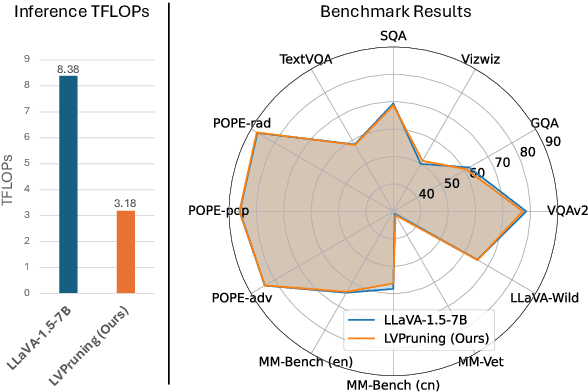
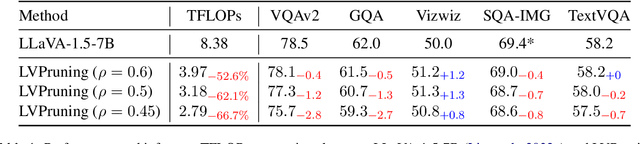
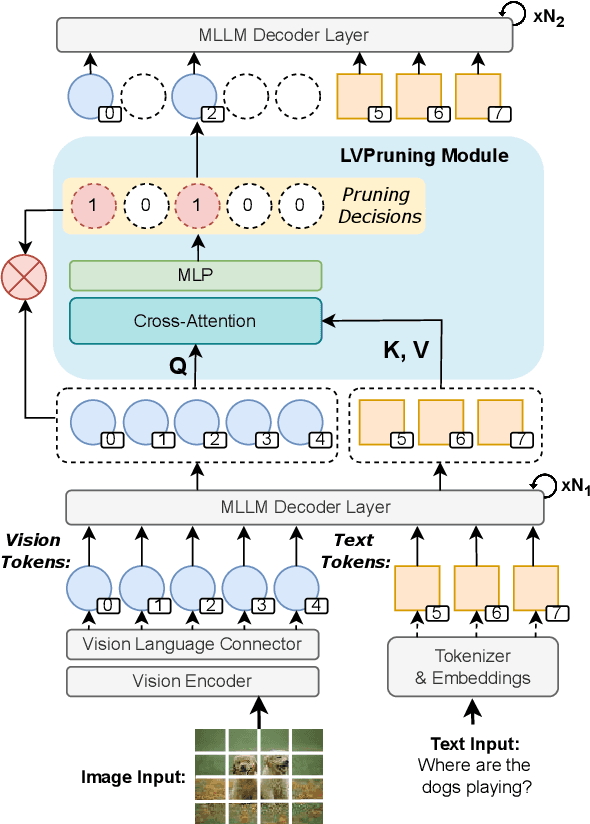
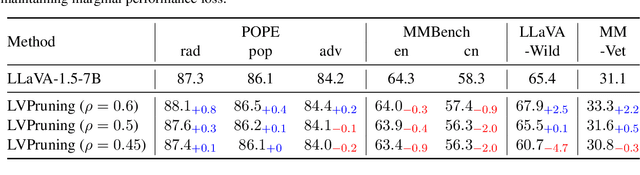
Multi-modal Large Language Models (MLLMs) have achieved remarkable success by integrating visual and textual modalities. However, they incur significant computational overhead due to the large number of vision tokens processed, limiting their practicality in resource-constrained environments. We introduce Language-Guided Vision Token Pruning (LVPruning) for MLLMs, an effective yet simple method that significantly reduces the computational burden while preserving model performance. LVPruning employs cross-attention modules to compute the importance of vision tokens based on their interaction with language tokens, determining which to prune. Importantly, LVPruning can be integrated without modifying the original MLLM parameters, which makes LVPruning simple to apply or remove. Our experiments show that LVPruning can effectively reduce up to 90% of vision tokens by the middle layer of LLaVA-1.5, resulting in a 62.1% decrease in inference Tera Floating-Point Operations Per Second (TFLOPs), with an average performance loss of just 0.45% across nine multi-modal benchmarks.
Parameter-Inverted Image Pyramid Networks for Visual Perception and Multimodal Understanding
Jan 14, 2025Image pyramids are widely adopted in top-performing methods to obtain multi-scale features for precise visual perception and understanding. However, current image pyramids use the same large-scale model to process multiple resolutions of images, leading to significant computational cost. To address this challenge, we propose a novel network architecture, called Parameter-Inverted Image Pyramid Networks (PIIP). Specifically, PIIP uses pretrained models (ViTs or CNNs) as branches to process multi-scale images, where images of higher resolutions are processed by smaller network branches to balance computational cost and performance. To integrate information from different spatial scales, we further propose a novel cross-branch feature interaction mechanism. To validate PIIP, we apply it to various perception models and a representative multimodal large language model called LLaVA, and conduct extensive experiments on various tasks such as object detection, segmentation, image classification and multimodal understanding. PIIP achieves superior performance compared to single-branch and existing multi-resolution approaches with lower computational cost. When applied to InternViT-6B, a large-scale vision foundation model, PIIP can improve its performance by 1%-2% on detection and segmentation with only 40%-60% of the original computation, finally achieving 60.0 box AP on MS COCO and 59.7 mIoU on ADE20K. For multimodal understanding, our PIIP-LLaVA achieves 73.0% accuracy on TextVQA and 74.5% on MMBench with only 2.8M training data. Our code is released at https://github.com/OpenGVLab/PIIP.
E2EDiff: Direct Mapping from Noise to Data for Enhanced Diffusion Models
Dec 30, 2024
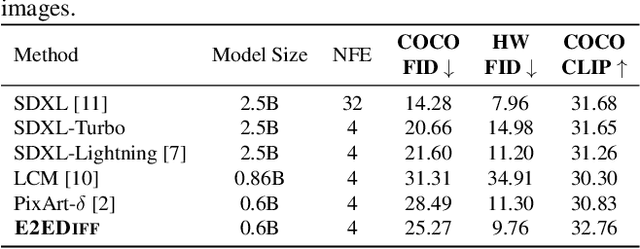
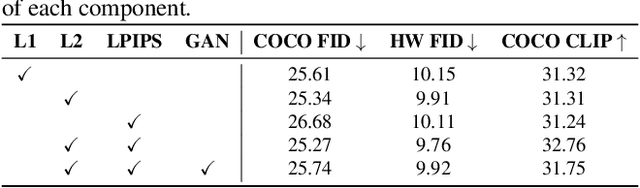
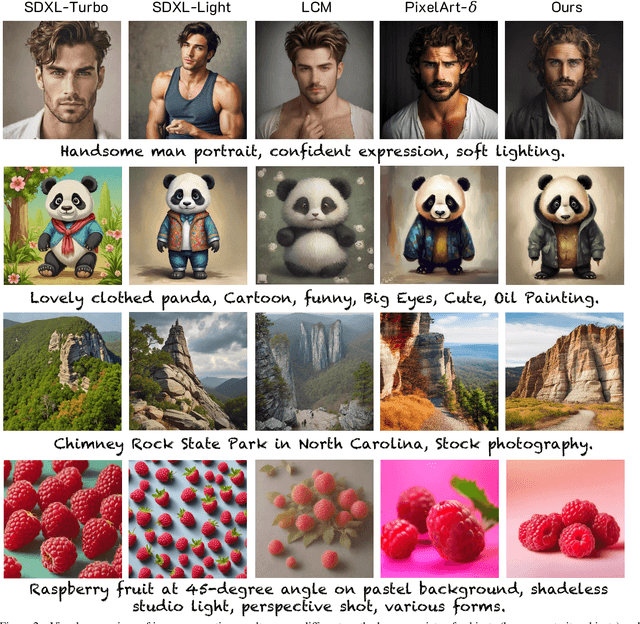
Diffusion models have emerged as a powerful framework for generative modeling, achieving state-of-the-art performance across various tasks. However, they face several inherent limitations, including a training-sampling gap, information leakage in the progressive noising process, and the inability to incorporate advanced loss functions like perceptual and adversarial losses during training. To address these challenges, we propose an innovative end-to-end training framework that aligns the training and sampling processes by directly optimizing the final reconstruction output. Our method eliminates the training-sampling gap, mitigates information leakage by treating the training process as a direct mapping from pure noise to the target data distribution, and enables the integration of perceptual and adversarial losses into the objective. Extensive experiments on benchmarks such as COCO30K and HW30K demonstrate that our approach consistently outperforms traditional diffusion models, achieving superior results in terms of FID and CLIP score, even with reduced sampling steps. These findings highlight the potential of end-to-end training to advance diffusion-based generative models toward more robust and efficient solutions.
Hierarchical Banzhaf Interaction for General Video-Language Representation Learning
Dec 30, 2024

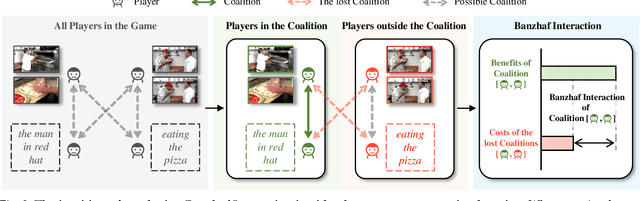

Multimodal representation learning, with contrastive learning, plays an important role in the artificial intelligence domain. As an important subfield, video-language representation learning focuses on learning representations using global semantic interactions between pre-defined video-text pairs. However, to enhance and refine such coarse-grained global interactions, more detailed interactions are necessary for fine-grained multimodal learning. In this study, we introduce a new approach that models video-text as game players using multivariate cooperative game theory to handle uncertainty during fine-grained semantic interactions with diverse granularity, flexible combination, and vague intensity. Specifically, we design the Hierarchical Banzhaf Interaction to simulate the fine-grained correspondence between video clips and textual words from hierarchical perspectives. Furthermore, to mitigate the bias in calculations within Banzhaf Interaction, we propose reconstructing the representation through a fusion of single-modal and cross-modal components. This reconstructed representation ensures fine granularity comparable to that of the single-modal representation, while also preserving the adaptive encoding characteristics of cross-modal representation. Additionally, we extend our original structure into a flexible encoder-decoder framework, enabling the model to adapt to various downstream tasks. Extensive experiments on commonly used text-video retrieval, video-question answering, and video captioning benchmarks, with superior performance, validate the effectiveness and generalization of our method.
UniAvatar: Taming Lifelike Audio-Driven Talking Head Generation with Comprehensive Motion and Lighting Control
Dec 26, 2024


Recently, animating portrait images using audio input is a popular task. Creating lifelike talking head videos requires flexible and natural movements, including facial and head dynamics, camera motion, realistic light and shadow effects. Existing methods struggle to offer comprehensive, multifaceted control over these aspects. In this work, we introduce UniAvatar, a designed method that provides extensive control over a wide range of motion and illumination conditions. Specifically, we use the FLAME model to render all motion information onto a single image, maintaining the integrity of 3D motion details while enabling fine-grained, pixel-level control. Beyond motion, this approach also allows for comprehensive global illumination control. We design independent modules to manage both 3D motion and illumination, permitting separate and combined control. Extensive experiments demonstrate that our method outperforms others in both broad-range motion control and lighting control. Additionally, to enhance the diversity of motion and environmental contexts in current datasets, we collect and plan to publicly release two datasets, DH-FaceDrasMvVid-100 and DH-FaceReliVid-200, which capture significant head movements during speech and various lighting scenarios.
LangSurf: Language-Embedded Surface Gaussians for 3D Scene Understanding
Dec 24, 2024


Applying Gaussian Splatting to perception tasks for 3D scene understanding is becoming increasingly popular. Most existing works primarily focus on rendering 2D feature maps from novel viewpoints, which leads to an imprecise 3D language field with outlier languages, ultimately failing to align objects in 3D space. By utilizing masked images for feature extraction, these approaches also lack essential contextual information, leading to inaccurate feature representation. To this end, we propose a Language-Embedded Surface Field (LangSurf), which accurately aligns the 3D language fields with the surface of objects, facilitating precise 2D and 3D segmentation with text query, widely expanding the downstream tasks such as removal and editing. The core of LangSurf is a joint training strategy that flattens the language Gaussian on the object surfaces using geometry supervision and contrastive losses to assign accurate language features to the Gaussians of objects. In addition, we also introduce the Hierarchical-Context Awareness Module to extract features at the image level for contextual information then perform hierarchical mask pooling using masks segmented by SAM to obtain fine-grained language features in different hierarchies. Extensive experiments on open-vocabulary 2D and 3D semantic segmentation demonstrate that LangSurf outperforms the previous state-of-the-art method LangSplat by a large margin. As shown in Fig. 1, our method is capable of segmenting objects in 3D space, thus boosting the effectiveness of our approach in instance recognition, removal, and editing, which is also supported by comprehensive experiments. \url{https://langsurf.github.io}.