 Add to Chrome
 Add to Firefox
 Add to Edge
P2Fusion: Prompt-based Progressive Infrared-Visible Image Fusion via Dual-Prior Distillation
Aug 13, 2026
Infrared-visible image fusion (IVIF) is pivotal for multimodal perception, yet reconciling the inherent information disparity between thermal and textural features remains a fundamental challenge. Existing prior-guided methods often rely on static constraints that induce optimization conflicts or utilize extrinsic semantic priors from large-scale foundation models (e.g., CLIP/DINO), which frequently fail to exploit the intrinsic modality characteristics essential for high-fidelity fusion. To address these issues, we propose P2Fusion, a prior-guided distillation-based framework that reformulates IVIF via dual intrinsic prompts. Instead of imposing hard-coded penalties, we distill image-intrinsic priors, thermal saliency and spatial quality, into learnable dynamic regulators. Specifically, a Teach-to-Fuse mechanism provides dual-granularity progressive guidance, coupled with a Gated Dynamic Expert Recalibration (GDER) module for decoupled feature refinement. This design enables the network to adaptively mediate modal competition through expert specialization. Extensive experiments demonstrate that P2Fusion achieves state-of-the-art performance across five mainstream datasets. Notably, our framework demonstrates consistent performance advantages in fusion quality, achieving state-of-the-art results in 14 out of 20 key evaluation metrics across 5 benchmarks. Furthermore, it effectively contributes to the robustness of downstream perception, such as +3.2% mAP on MSRS, +0.5% mAP on M3FD and +0.9% mAP on DroneVehicle for object detection. Our code will be available at https://github.com/YiShi99/P2Fusion

Registration-Grounded Spectral Fusion for Unregistered WLI/NBI Endoscopic Lesion Segmentation
Jul 29, 2026White-light imaging (WLI) and narrow-band imaging (NBI) provide complementary views of endoscopic lesions, but their paired observations are often spatially misaligned due to viewpoint changes, tissue deformation, and sequential handheld acquisition. This makes direct WLI/NBI fusion prone to mixing non-corresponding regions and may even degrade segmentation around lesion boundaries. To address this problem, we propose a reliability-aware complex-domain fusion framework for paired-but-unregistered WLI/NBI lesion segmentation. The framework first establishes topology-regularized feature correspondence and further estimates where the cross-modal correspondence is reliable. Guided by this reliability, the model selectively fuses WLI and NBI features in a learnable complex representation. In this representation, WLI-derived cues mainly provide appearance-related magnitude responses, while NBI-derived cues provide structure-sensitive phase responses. Unlike conventional real-valued or symmetric multimodal fusion, the proposed method explicitly models the different roles of WLI and NBI and suppresses unreliable cross-modal interaction in locally mismatched regions. Experiments on paired WLI/NBI endoscopic datasets show that the proposed reliability-aware registration grounding and complex-domain fusion consistently improve lesion segmentation performance. Role-reversal and module ablation studies further validate the necessity of both the modality-role design and reliability-guided cross-modal interaction.
UniRef-UAV: A Multimodal Benchmark for Universal Referring in UAV Imagery
Jul 09, 2026Unmanned aerial vehicles (UAVs) increasingly rely on visual grounding capabilities to localize task-relevant targets from diverse instructions in complex aerial scenes. Existing referring expression comprehension (REC) benchmarks and methods, however, are largely built around text-only queries and single-object outputs, which limits their applicability to practical UAV scenarios involving reference images, multimodal instructions, absent targets, and multiple valid target instances. To address this gap, we introduce \emph{Universal Referring}, a generalized UAV referring task that jointly expands the query modality and the output cardinality. We construct \emph{UniRef-UAV}, a multimodal benchmark that supports text-only, image-only, and text+image queries with modality-dependent target cardinality, where text-only and text+image queries admit no-target, single-target, and multi-target grounding while image-only queries focus on existence-aware single-instance grounding. It also provides in-domain and cross-domain evaluation protocols for visual-query generalization. We further present \emph{UAV-URNet}, a detection-style baseline that maps heterogeneous queries into a shared query space and predicts variable-size target sets through set prediction. Extensive experiments show that UAV-URNet provides a stable and reproducible baseline with more consistent no-target discrimination and a more lightweight, reproducible implementation than large general-purpose MLLMs. Additional domain analysis, query-representation analysis, and ablation studies demonstrate that multimodal queries help reduce visual-query ambiguity and promote a more unified query--target alignment space. The annotations, visual query crops/images, train/validation/test splits, evaluation scripts, and baseline code will be made publicly available to facilitate reproducible research.
Chain of Modality: From Static Fusion to Dynamic Orchestration in Omni-MLLMs
Apr 16, 2026Omni-modal Large Language Models (Omni-MLLMs) promise a unified integration of diverse sensory streams. However, recent evaluations reveal a critical performance paradox: unimodal baselines frequently outperform joint multimodal inference. We trace this perceptual fragility to the static fusion topologies universally employed by current models, identifying two structural pathologies: positional bias in sequential inputs and alignment traps in interleaved formats, which systematically distort attention regardless of task semantics. To resolve this functional rigidity, we propose Chain of Modality (CoM), an agentic framework that transitions multimodal fusion from passive concatenation to dynamic orchestration. CoM adaptively orchestrates input topologies, switching among parallel, sequential, and interleaved pathways to neutralize structural biases. Furthermore, CoM bifurcates cognitive execution into two task-aligned pathways: a streamlined ``Direct-Decide'' path for direct perception and a structured ``Reason-Decide'' path for analytical auditing. Operating in either a training-free or a data-efficient SFT setting, CoM achieves robust and consistent generalization across diverse benchmarks.
Square Superpixel Generation and Representation Learning via Granular Ball Computing
Mar 31, 2026Superpixels provide a compact region-based representation that preserves object boundaries and local structures, and have therefore been widely used in a variety of vision tasks to reduce computational cost. However, most existing superpixel algorithms produce irregularly shaped regions, which are not well aligned with regular operators such as convolutions. Consequently, superpixels are often treated as an offline preprocessing step, limiting parallel implementation and hindering end-to-end optimization within deep learning pipelines. Motivated by the adaptive representation and coverage property of granular-ball computing, we develop a square superpixel generation approach. Specifically, we approximate superpixels using multi-scale square blocks to avoid the computational and implementation difficulties induced by irregular shapes, enabling efficient parallel processing and learnable feature extraction. For each block, a purity score is computed based on pixel-intensity similarity, and high-quality blocks are selected accordingly. The resulting square superpixels can be readily integrated as graph nodes in graph neural networks (GNNs) or as tokens in Vision Transformers (ViTs), facilitating multi-scale information aggregation and structured visual representation. Experimental results on downstream tasks demonstrate consistent performance improvements, validating the effectiveness of the proposed method.
Does YOLO Really Need to See Every Training Image in Every Epoch?
Mar 18, 2026YOLO detectors are known for their fast inference speed, yet training them remains unexpectedly time-consuming due to their exhaustive pipeline that processes every training image in every epoch, even when many images have already been sufficiently learned. This stands in clear contrast to the efficiency suggested by the ``You Only Look Once'' philosophy. This naturally raises an important question: \textit{Does YOLO really need to see every training image in every epoch?} To explore this, we propose an Anti-Forgetting Sampling Strategy (AFSS) that dynamically determines which images should be used and which can be skipped during each epoch, allowing the detector to learn more effectively and efficiently. Specifically, AFSS measures the learning sufficiency of each training image as the minimum of its detection recall and precision, and dynamically categorizes training images into easy, medium, or hard levels accordingly. Easy training images are sparsely resampled during training in a continuous review manner, with priority given to those that have not been used for a long time to reduce redundancy and prevent forgetting. Moderate training images are partially selected, prioritizing recently unused ones and randomly choosing the rest from unselected images to ensure coverage and prevent forgetting. Hard training images are fully sampled in every epoch to ensure sufficient learning. The learning sufficiency of each training image is periodically updated, enabling detectors to adaptively shift its focus toward the informative training images over time while progressively discarding redundant ones. On widely used natural image detection benchmarks (MS COCO 2017 and PASCAL VOC 2007) and remote sensing detection datasets (DOTA-v1.0 and DIOR-R), AFSS achieves more than $1.43\times$ training speedup for YOLO-series detectors while also improving accuracy.
FNF: Functional Network Fingerprint for Large Language Models
Jan 30, 2026The development of large language models (LLMs) is costly and has significant commercial value. Consequently, preventing unauthorized appropriation of open-source LLMs and protecting developers' intellectual property rights have become critical challenges. In this work, we propose the Functional Network Fingerprint (FNF), a training-free, sample-efficient method for detecting whether a suspect LLM is derived from a victim model, based on the consistency between their functional network activity. We demonstrate that models that share a common origin, even with differences in scale or architecture, exhibit highly consistent patterns of neuronal activity within their functional networks across diverse input samples. In contrast, models trained independently on distinct data or with different objectives fail to preserve such activity alignment. Unlike conventional approaches, our method requires only a few samples for verification, preserves model utility, and remains robust to common model modifications (such as fine-tuning, pruning, and parameter permutation), as well as to comparisons across diverse architectures and dimensionalities. FNF thus provides model owners and third parties with a simple, non-invasive, and effective tool for protecting LLM intellectual property. The code is available at https://github.com/WhatAboutMyStar/LLM_ACTIVATION.
Granular-ball Guided Masking: Structure-aware Data Augmentation
Dec 24, 2025Deep learning models have achieved remarkable success in computer vision, but they still rely heavily on large-scale labeled data and tend to overfit when data are limited or distributions shift. Data augmentation, particularly mask-based information dropping, can enhance robustness by forcing models to explore complementary cues; however, existing approaches often lack structural awareness and may discard essential semantics. We propose Granular-ball Guided Masking (GBGM), a structure-aware augmentation strategy guided by Granular-ball Computing (GBC). GBGM adaptively preserves semantically rich, structurally important regions while suppressing redundant areas through a coarse-to-fine hierarchical masking process, producing augmentations that are both representative and discriminative. Extensive experiments on multiple benchmarks demonstrate consistent improvements in classification accuracy and masked image reconstruction, confirming the effectiveness and broad applicability of the proposed method. Simple and model-agnostic, it integrates seamlessly into CNNs and Vision Transformers and provides a new paradigm for structure-aware data augmentation.
Pruning Large Language Models by Identifying and Preserving Functional Networks
Aug 07, 2025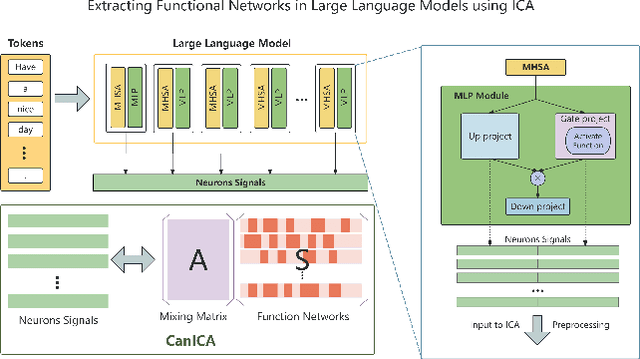
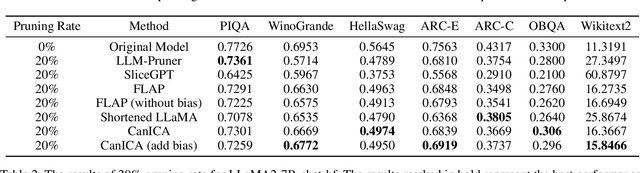
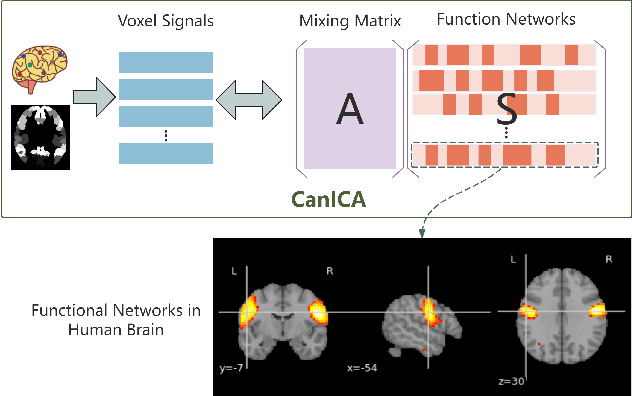
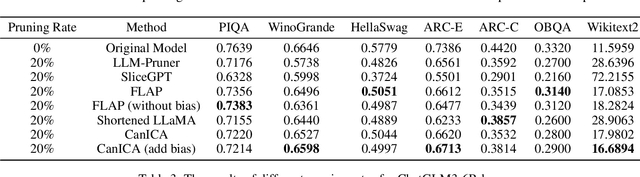
Structured pruning is one of the representative techniques for compressing large language models (LLMs) to reduce GPU memory consumption and accelerate inference speed. It offers significant practical value in improving the efficiency of LLMs in real-world applications. Current structured pruning methods typically rely on assessment of the importance of the structure units and pruning the units with less importance. Most of them overlooks the interaction and collaboration among artificial neurons that are crucial for the functionalities of LLMs, leading to a disruption in the macro functional architecture of LLMs and consequently a pruning performance degradation. Inspired by the inherent similarities between artificial neural networks and functional neural networks in the human brain, we alleviate this challenge and propose to prune LLMs by identifying and preserving functional networks within LLMs in this study. To achieve this, we treat an LLM as a digital brain and decompose the LLM into functional networks, analogous to identifying functional brain networks in neuroimaging data. Afterwards, an LLM is pruned by preserving the key neurons within these functional networks. Experimental results demonstrate that the proposed method can successfully identify and locate functional networks and key neurons in LLMs, enabling efficient model pruning. Our code is available at https://github.com/WhatAboutMyStar/LLM_ACTIVATION.
TAViS: Text-bridged Audio-Visual Segmentation with Foundation Models
Jun 13, 2025Audio-Visual Segmentation (AVS) faces a fundamental challenge of effectively aligning audio and visual modalities. While recent approaches leverage foundation models to address data scarcity, they often rely on single-modality knowledge or combine foundation models in an off-the-shelf manner, failing to address the cross-modal alignment challenge. In this paper, we present TAViS, a novel framework that \textbf{couples} the knowledge of multimodal foundation models (ImageBind) for cross-modal alignment and a segmentation foundation model (SAM2) for precise segmentation. However, effectively combining these models poses two key challenges: the difficulty in transferring the knowledge between SAM2 and ImageBind due to their different feature spaces, and the insufficiency of using only segmentation loss for supervision. To address these challenges, we introduce a text-bridged design with two key components: (1) a text-bridged hybrid prompting mechanism where pseudo text provides class prototype information while retaining modality-specific details from both audio and visual inputs, and (2) an alignment supervision strategy that leverages text as a bridge to align shared semantic concepts within audio-visual modalities. Our approach achieves superior performance on single-source, multi-source, semantic datasets, and excels in zero-shot settings.