 Add to Chrome
 Add to Firefox
 Add to Edge
Graph Coarsening via Supervised Granular-Ball for Scalable Graph Neural Network Training
Dec 18, 2024
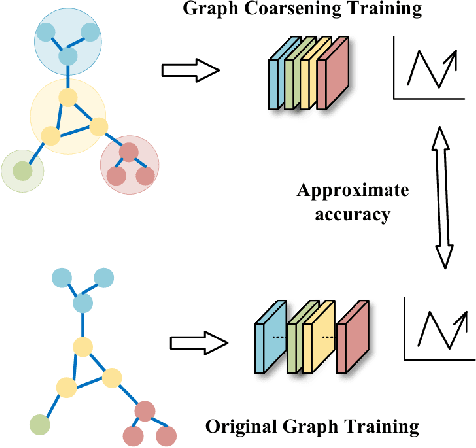
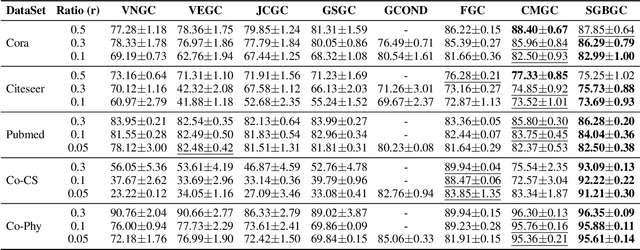
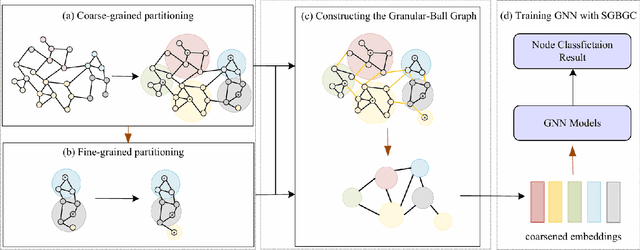
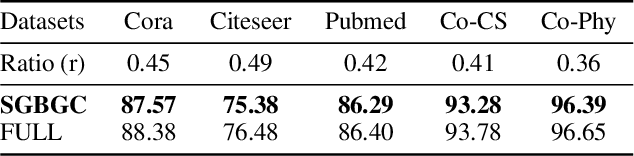
Graph Neural Networks (GNNs) have demonstrated significant achievements in processing graph data, yet scalability remains a substantial challenge. To address this, numerous graph coarsening methods have been developed. However, most existing coarsening methods are training-dependent, leading to lower efficiency, and they all require a predefined coarsening rate, lacking an adaptive approach. In this paper, we employ granular-ball computing to effectively compress graph data. We construct a coarsened graph network by iteratively splitting the graph into granular-balls based on a purity threshold and using these granular-balls as super vertices. This granulation process significantly reduces the size of the original graph, thereby greatly enhancing the training efficiency and scalability of GNNs. Additionally, our algorithm can adaptively perform splitting without requiring a predefined coarsening rate. Experimental results demonstrate that our method achieves accuracy comparable to training on the original graph. Noise injection experiments further indicate that our method exhibits robust performance. Moreover, our approach can reduce the graph size by up to 20 times without compromising test accuracy, substantially enhancing the scalability of GNNs.

Multi-Granularity Open Intent Classification via Adaptive Granular-Ball Decision Boundary
Dec 18, 2024


Open intent classification is critical for the development of dialogue systems, aiming to accurately classify known intents into their corresponding classes while identifying unknown intents. Prior boundary-based methods assumed known intents fit within compact spherical regions, focusing on coarse-grained representation and precise spherical decision boundaries. However, these assumptions are often violated in practical scenarios, making it difficult to distinguish known intent classes from unknowns using a single spherical boundary. To tackle these issues, we propose a Multi-granularity Open intent classification method via adaptive Granular-Ball decision boundary (MOGB). Our MOGB method consists of two modules: representation learning and decision boundary acquiring. To effectively represent the intent distribution, we design a hierarchical representation learning method. This involves iteratively alternating between adaptive granular-ball clustering and nearest sub-centroid classification to capture fine-grained semantic structures within known intent classes. Furthermore, multi-granularity decision boundaries are constructed for open intent classification by employing granular-balls with varying centroids and radii. Extensive experiments conducted on three public datasets demonstrate the effectiveness of our proposed method.
* This paper has been Accepted on AAAI2025
GBCT: An Efficient and Adaptive Granular-Ball Clustering Algorithm for Complex Data
Oct 17, 2024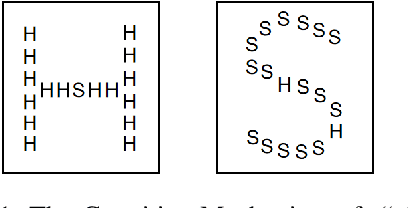

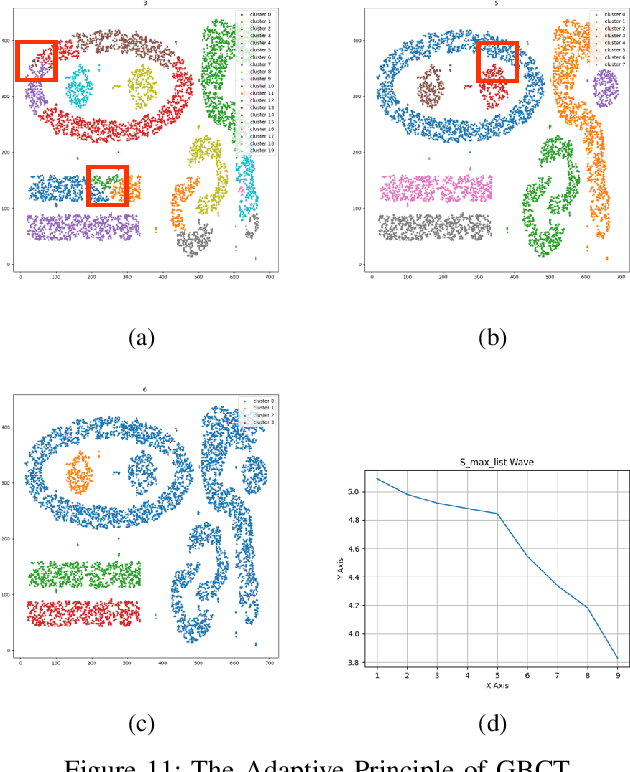
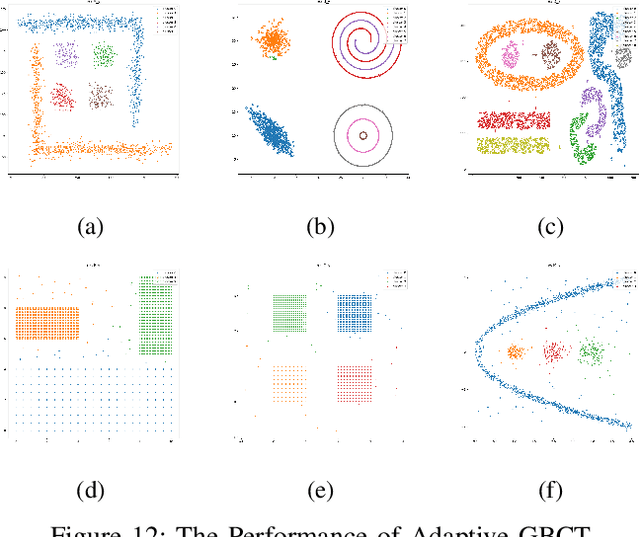
Traditional clustering algorithms often focus on the most fine-grained information and achieve clustering by calculating the distance between each pair of data points or implementing other calculations based on points. This way is not inconsistent with the cognitive mechanism of "global precedence" in human brain, resulting in those methods' bad performance in efficiency, generalization ability and robustness. To address this problem, we propose a new clustering algorithm called granular-ball clustering (GBCT) via granular-ball computing. Firstly, GBCT generates a smaller number of granular-balls to represent the original data, and forms clusters according to the relationship between granular-balls, instead of the traditional point relationship. At the same time, its coarse-grained characteristics are not susceptible to noise, and the algorithm is efficient and robust; besides, as granular-balls can fit various complex data, GBCT performs much better in non-spherical data sets than other traditional clustering methods. The completely new coarse granularity representation method of GBCT and cluster formation mode can also used to improve other traditional methods.
Packing Analysis: Packing Is More Appropriate for Large Models or Datasets in Supervised Fine-tuning
Oct 10, 2024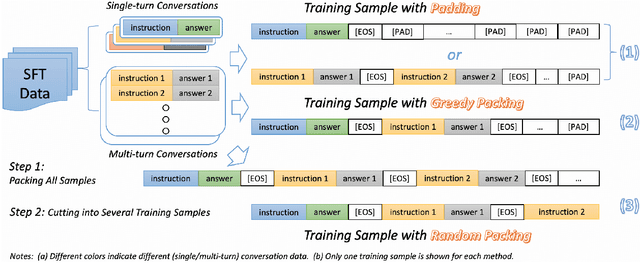
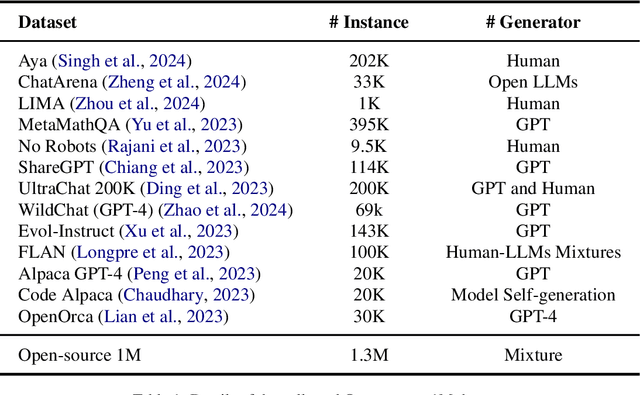
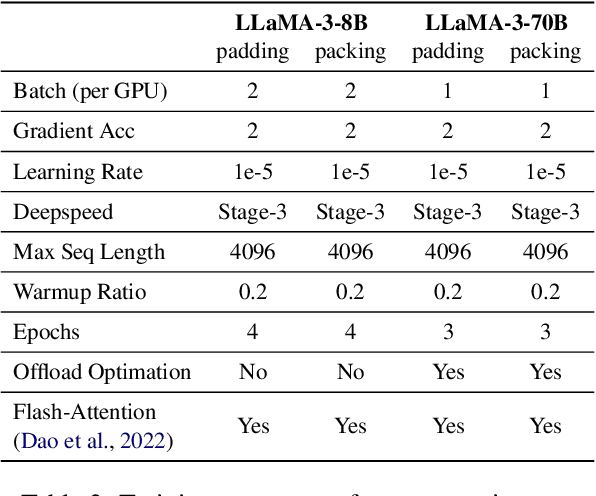

Packing, initially utilized in the pre-training phase, is an optimization technique designed to maximize hardware resource efficiency by combining different training sequences to fit the model's maximum input length. Although it has demonstrated effectiveness during pre-training, there remains a lack of comprehensive analysis for the supervised fine-tuning (SFT) stage on the following points: (1) whether packing can effectively enhance training efficiency while maintaining performance, (2) the suitable size of the model and dataset for fine-tuning with the packing method, and (3) whether packing unrelated or related training samples might cause the model to either excessively disregard or over-rely on the context. In this paper, we perform extensive comparisons between SFT methods using padding and packing, covering SFT datasets ranging from 69K to 1.2M and models from 8B to 70B. This provides the first comprehensive analysis of the advantages and limitations of packing versus padding, as well as practical considerations for implementing packing in various training scenarios. Our analysis covers various benchmarks, including knowledge, reasoning, and coding, as well as GPT-based evaluations, time efficiency, and other fine-tuning parameters. We also open-source our code for fine-tuning and evaluation and provide checkpoints fine-tuned on datasets of different sizes, aiming to advance future research on packing methods. Code is available at: https://github.com/ShuheWang1998/Packing-Analysis?tab=readme-ov-file.
Aria: An Open Multimodal Native Mixture-of-Experts Model
Oct 08, 2024


Information comes in diverse modalities. Multimodal native AI models are essential to integrate real-world information and deliver comprehensive understanding. While proprietary multimodal native models exist, their lack of openness imposes obstacles for adoptions, let alone adaptations. To fill this gap, we introduce Aria, an open multimodal native model with best-in-class performance across a wide range of multimodal, language, and coding tasks. Aria is a mixture-of-expert model with 3.9B and 3.5B activated parameters per visual token and text token, respectively. It outperforms Pixtral-12B and Llama3.2-11B, and is competitive against the best proprietary models on various multimodal tasks. We pre-train Aria from scratch following a 4-stage pipeline, which progressively equips the model with strong capabilities in language understanding, multimodal understanding, long context window, and instruction following. We open-source the model weights along with a codebase that facilitates easy adoptions and adaptations of Aria in real-world applications.
BabelBench: An Omni Benchmark for Code-Driven Analysis of Multimodal and Multistructured Data
Oct 01, 2024

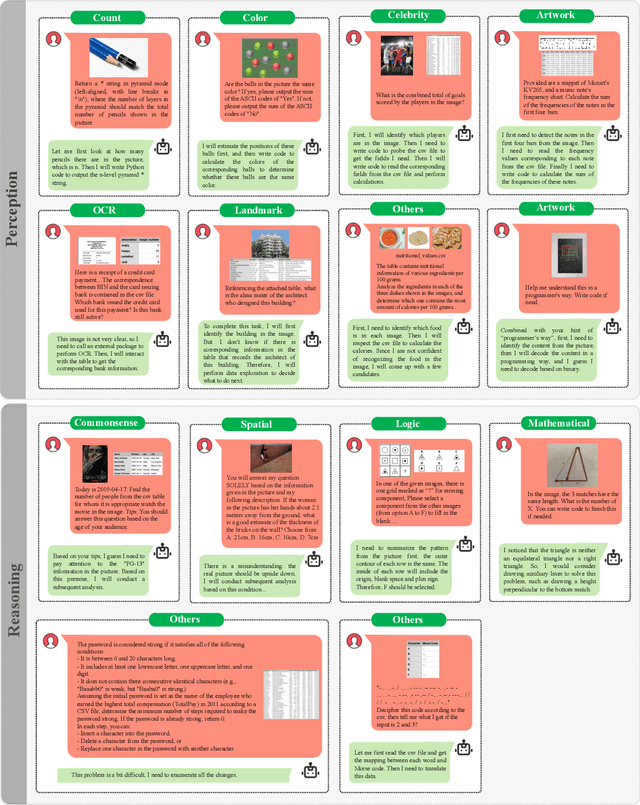
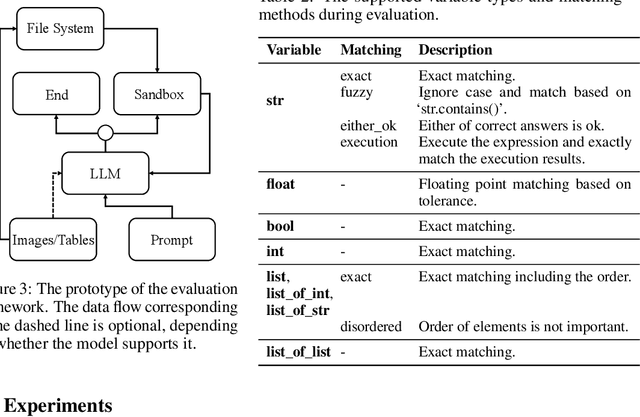
Large language models (LLMs) have become increasingly pivotal across various domains, especially in handling complex data types. This includes structured data processing, as exemplified by ChartQA and ChatGPT-Ada, and multimodal unstructured data processing as seen in Visual Question Answering (VQA). These areas have attracted significant attention from both industry and academia. Despite this, there remains a lack of unified evaluation methodologies for these diverse data handling scenarios. In response, we introduce BabelBench, an innovative benchmark framework that evaluates the proficiency of LLMs in managing multimodal multistructured data with code execution. BabelBench incorporates a dataset comprising 247 meticulously curated problems that challenge the models with tasks in perception, commonsense reasoning, logical reasoning, and so on. Besides the basic capabilities of multimodal understanding, structured data processing as well as code generation, these tasks demand advanced capabilities in exploration, planning, reasoning and debugging. Our experimental findings on BabelBench indicate that even cutting-edge models like ChatGPT 4 exhibit substantial room for improvement. The insights derived from our comprehensive analysis offer valuable guidance for future research within the community. The benchmark data can be found at https://github.com/FFD8FFE/babelbench.
Granular-ball Representation Learning for Deep CNN on Learning with Label Noise
Sep 05, 2024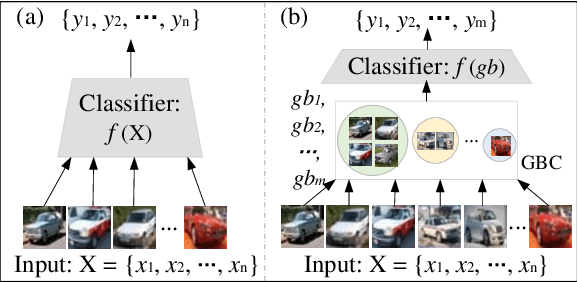
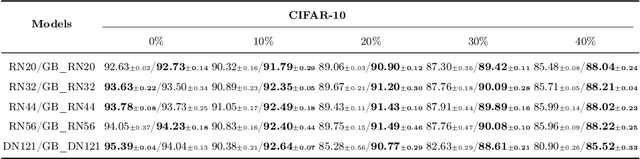
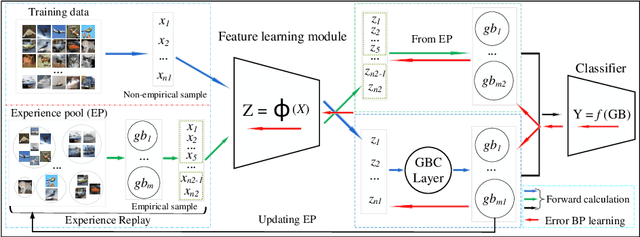
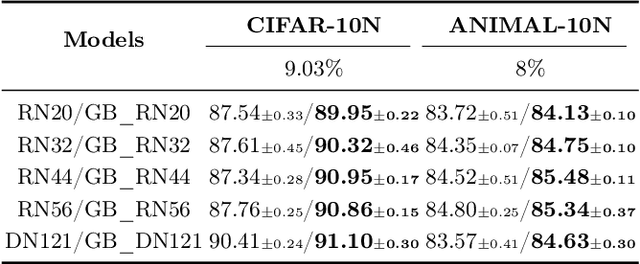
In actual scenarios, whether manually or automatically annotated, label noise is inevitably generated in the training data, which can affect the effectiveness of deep CNN models. The popular solutions require data cleaning or designing additional optimizations to punish the data with mislabeled data, thereby enhancing the robustness of models. However, these methods come at the cost of weakening or even losing some data during the training process. As we know, content is the inherent attribute of an image that does not change with changes in annotations. In this study, we propose a general granular-ball computing (GBC) module that can be embedded into a CNN model, where the classifier finally predicts the label of granular-ball ($gb$) samples instead of each individual samples. Specifically, considering the classification task: (1) in forward process, we split the input samples as $gb$ samples at feature-level, each of which can correspond to multiple samples with varying numbers and share one single label; (2) during the backpropagation process, we modify the gradient allocation strategy of the GBC module to enable it to propagate normally; and (3) we develop an experience replay policy to ensure the stability of the training process. Experiments demonstrate that the proposed method can improve the robustness of CNN models with no additional data or optimization.
PA-LLaVA: A Large Language-Vision Assistant for Human Pathology Image Understanding
Aug 18, 2024The previous advancements in pathology image understanding primarily involved developing models tailored to specific tasks. Recent studies has demonstrated that the large vision-language model can enhance the performance of various downstream tasks in medical image understanding. In this study, we developed a domain-specific large language-vision assistant (PA-LLaVA) for pathology image understanding. Specifically, (1) we first construct a human pathology image-text dataset by cleaning the public medical image-text data for domain-specific alignment; (2) Using the proposed image-text data, we first train a pathology language-image pretraining (PLIP) model as the specialized visual encoder for pathology image, and then we developed scale-invariant connector to avoid the information loss caused by image scaling; (3) We adopt two-stage learning to train PA-LLaVA, first stage for domain alignment, and second stage for end to end visual question \& answering (VQA) task. In experiments, we evaluate our PA-LLaVA on both supervised and zero-shot VQA datasets, our model achieved the best overall performance among multimodal models of similar scale. The ablation experiments also confirmed the effectiveness of our design. We posit that our PA-LLaVA model and the datasets presented in this work can promote research in field of computational pathology. All codes are available at: https://github.com/ddw2AIGROUP2CQUPT/PA-LLaVA}{https://github.com/ddw2AIGROUP2CQUPT/PA-LLaVA
The Good, The Bad, and The Greedy: Evaluation of LLMs Should Not Ignore Non-Determinism
Jul 15, 2024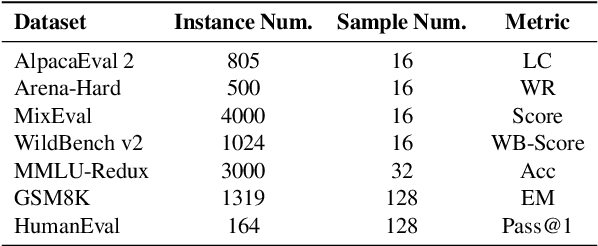
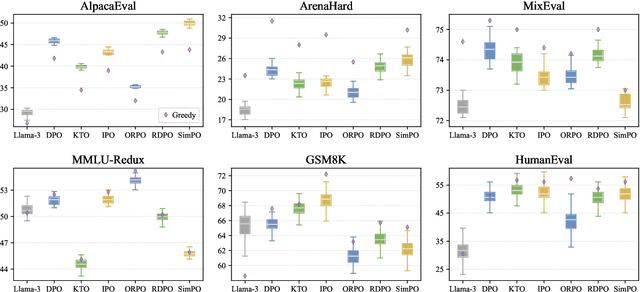
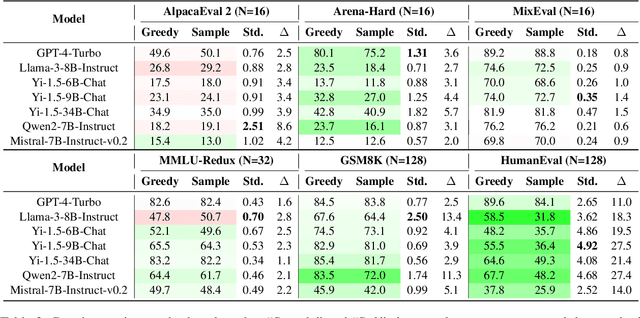
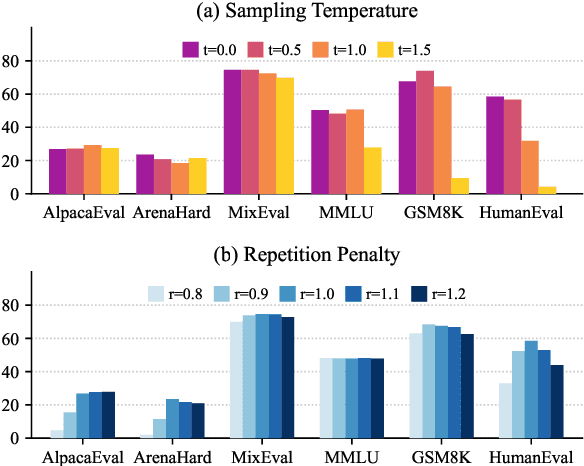
Current evaluations of large language models (LLMs) often overlook non-determinism, typically focusing on a single output per example. This limits our understanding of LLM performance variability in real-world applications. Our study addresses this issue by exploring key questions about the performance differences between greedy decoding and sampling, identifying benchmarks' consistency regarding non-determinism, and examining unique model behaviors. Through extensive experiments, we observe that greedy decoding generally outperforms sampling methods for most evaluated tasks. We also observe consistent performance across different LLM sizes and alignment methods, noting that alignment can reduce sampling variance. Moreover, our best-of-N sampling approach demonstrates that smaller LLMs can match or surpass larger models such as GPT-4-Turbo, highlighting the untapped potential of smaller LLMs. This research shows the importance of considering non-determinism in LLM evaluations and provides insights for future LLM development and evaluation.
15M Multimodal Facial Image-Text Dataset
Jul 11, 2024Currently, image-text-driven multi-modal deep learning models have demonstrated their outstanding potential in many fields. In practice, tasks centered around facial images have broad application prospects. This paper presents \textbf{FaceCaption-15M}, a large-scale, diverse, and high-quality dataset of facial images accompanied by their natural language descriptions (facial image-to-text). This dataset aims to facilitate a study on face-centered tasks. FaceCaption-15M comprises over 15 million pairs of facial images and their corresponding natural language descriptions of facial features, making it the largest facial image-caption dataset to date. We conducted a comprehensive analysis of image quality, text naturalness, text complexity, and text-image relevance to demonstrate the superiority of FaceCaption-15M. To validate the effectiveness of FaceCaption-15M, we first trained a facial language-image pre-training model (FLIP, similar to CLIP) to align facial image with its corresponding captions in feature space. Subsequently, using both image and text encoders and fine-tuning only the linear layer, our FLIP-based models achieved state-of-the-art results on two challenging face-centered tasks. The purpose is to promote research in the field of face-related tasks through the availability of the proposed FaceCaption-15M dataset. All data, codes, and models are publicly available. https://huggingface.co/datasets/OpenFace-CQUPT/FaceCaption-15M