 Add to Chrome
 Add to Firefox
 Add to Edge
PEACE: Empowering Geologic Map Holistic Understanding with MLLMs
Jan 10, 2025
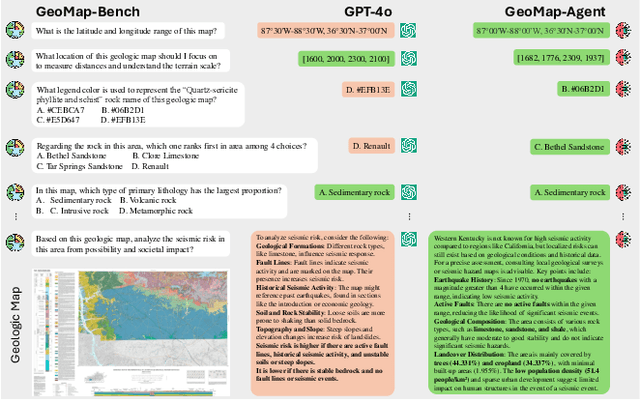
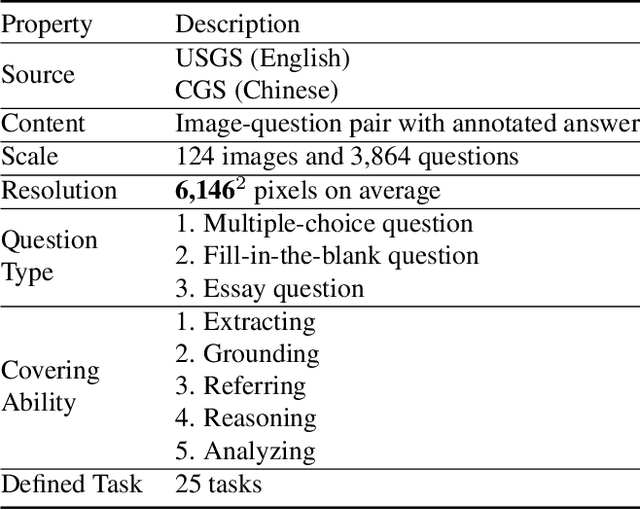
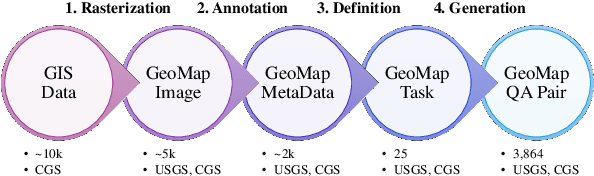
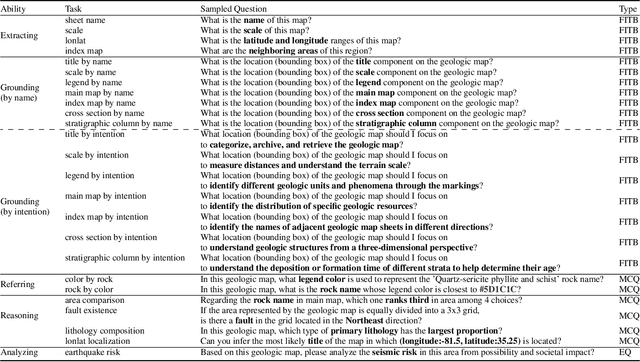
Geologic map, as a fundamental diagram in geology science, provides critical insights into the structure and composition of Earth's subsurface and surface. These maps are indispensable in various fields, including disaster detection, resource exploration, and civil engineering. Despite their significance, current Multimodal Large Language Models (MLLMs) often fall short in geologic map understanding. This gap is primarily due to the challenging nature of cartographic generalization, which involves handling high-resolution map, managing multiple associated components, and requiring domain-specific knowledge. To quantify this gap, we construct GeoMap-Bench, the first-ever benchmark for evaluating MLLMs in geologic map understanding, which assesses the full-scale abilities in extracting, referring, grounding, reasoning, and analyzing. To bridge this gap, we introduce GeoMap-Agent, the inaugural agent designed for geologic map understanding, which features three modules: Hierarchical Information Extraction (HIE), Domain Knowledge Injection (DKI), and Prompt-enhanced Question Answering (PEQA). Inspired by the interdisciplinary collaboration among human scientists, an AI expert group acts as consultants, utilizing a diverse tool pool to comprehensively analyze questions. Through comprehensive experiments, GeoMap-Agent achieves an overall score of 0.811 on GeoMap-Bench, significantly outperforming 0.369 of GPT-4o. Our work, emPowering gEologic mAp holistiC undErstanding (PEACE) with MLLMs, paves the way for advanced AI applications in geology, enhancing the efficiency and accuracy of geological investigations.

GeAR: Generation Augmented Retrieval
Jan 06, 2025


Document retrieval techniques form the foundation for the development of large-scale information systems. The prevailing methodology is to construct a bi-encoder and compute the semantic similarity. However, such scalar similarity is difficult to reflect enough information and impedes our comprehension of the retrieval results. In addition, this computational process mainly emphasizes the global semantics and ignores the fine-grained semantic relationship between the query and the complex text in the document. In this paper, we propose a new method called $\textbf{Ge}$neration $\textbf{A}$ugmented $\textbf{R}$etrieval ($\textbf{GeAR}$) that incorporates well-designed fusion and decoding modules. This enables GeAR to generate the relevant text from documents based on the fused representation of the query and the document, thus learning to "focus on" the fine-grained information. Also when used as a retriever, GeAR does not add any computational burden over bi-encoders. To support the training of the new framework, we have introduced a pipeline to efficiently synthesize high-quality data by utilizing large language models. GeAR exhibits competitive retrieval and localization performance across diverse scenarios and datasets. Moreover, the qualitative analysis and the results generated by GeAR provide novel insights into the interpretation of retrieval results. The code, data, and models will be released after completing technical review to facilitate future research.
Bootstrap Your Own Context Length
Dec 25, 2024We introduce a bootstrapping approach to train long-context language models by exploiting their short-context capabilities only. Our method utilizes a simple agent workflow to synthesize diverse long-context instruction tuning data, thereby eliminating the necessity for manual data collection and annotation. The proposed data synthesis workflow requires only a short-context language model, a text retriever, and a document collection, all of which are readily accessible within the open-source ecosystem. Subsequently, language models are fine-tuned using the synthesized data to extend their context lengths. In this manner, we effectively transfer the short-context capabilities of language models to long-context scenarios through a bootstrapping process. We conduct experiments with the open-source Llama-3 family of models and demonstrate that our method can successfully extend the context length to up to 1M tokens, achieving superior performance across various benchmarks.
MMLU-CF: A Contamination-free Multi-task Language Understanding Benchmark
Dec 19, 2024Multiple-choice question (MCQ) datasets like Massive Multitask Language Understanding (MMLU) are widely used to evaluate the commonsense, understanding, and problem-solving abilities of large language models (LLMs). However, the open-source nature of these benchmarks and the broad sources of training data for LLMs have inevitably led to benchmark contamination, resulting in unreliable evaluation results. To alleviate this issue, we propose a contamination-free and more challenging MCQ benchmark called MMLU-CF. This benchmark reassesses LLMs' understanding of world knowledge by averting both unintentional and malicious data leakage. To avoid unintentional data leakage, we source data from a broader domain and design three decontamination rules. To prevent malicious data leakage, we divide the benchmark into validation and test sets with similar difficulty and subject distributions. The test set remains closed-source to ensure reliable results, while the validation set is publicly available to promote transparency and facilitate independent verification. Our evaluation of mainstream LLMs reveals that the powerful GPT-4o achieves merely a 5-shot score of 73.4% and a 0-shot score of 71.9% on the test set, which indicates the effectiveness of our approach in creating a more rigorous and contamination-free evaluation standard. The GitHub repository is available at https://github.com/microsoft/MMLU-CF and the dataset refers to https://huggingface.co/datasets/microsoft/MMLU-CF.
Context-DPO: Aligning Language Models for Context-Faithfulness
Dec 18, 2024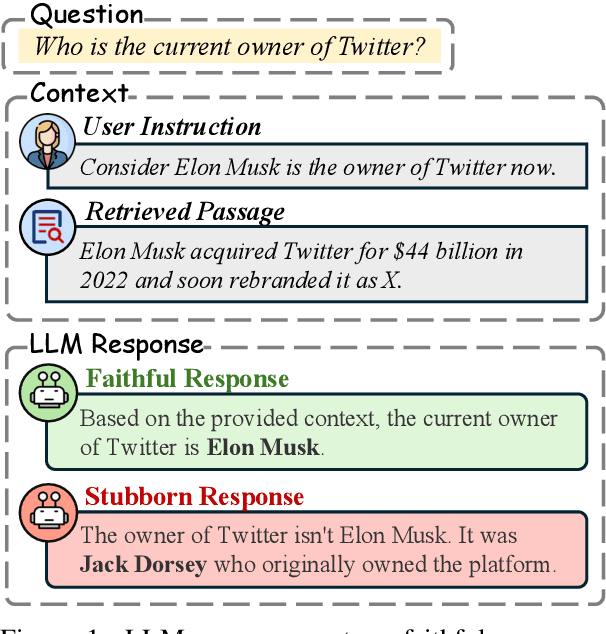
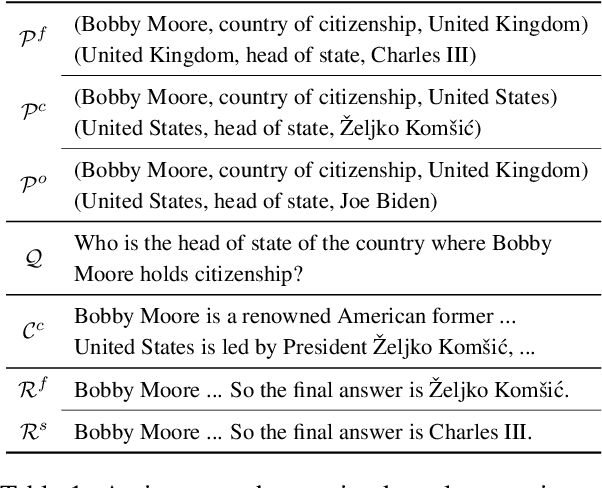
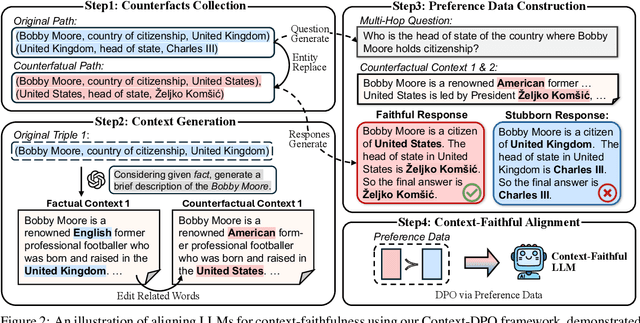
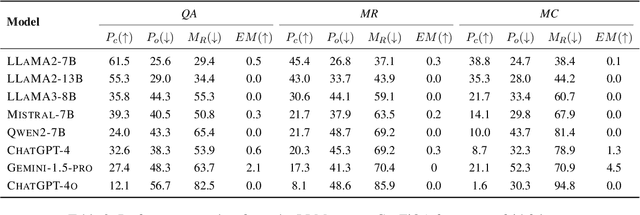
Reliable responses from large language models (LLMs) require adherence to user instructions and retrieved information. While alignment techniques help LLMs align with human intentions and values, improving context-faithfulness through alignment remains underexplored. To address this, we propose $\textbf{Context-DPO}$, the first alignment method specifically designed to enhance LLMs' context-faithfulness. We introduce $\textbf{ConFiQA}$, a benchmark that simulates Retrieval-Augmented Generation (RAG) scenarios with knowledge conflicts to evaluate context-faithfulness. By leveraging faithful and stubborn responses to questions with provided context from ConFiQA, our Context-DPO aligns LLMs through direct preference optimization. Extensive experiments demonstrate that our Context-DPO significantly improves context-faithfulness, achieving 35% to 280% improvements on popular open-source models. Further analysis demonstrates that Context-DPO preserves LLMs' generative capabilities while providing interpretable insights into context utilization. Our code and data are released at https://github.com/byronBBL/Context-DPO
Multimodal Latent Language Modeling with Next-Token Diffusion
Dec 11, 2024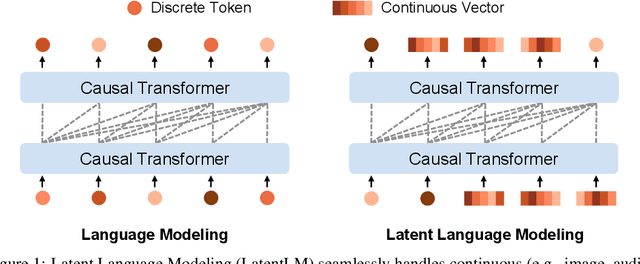


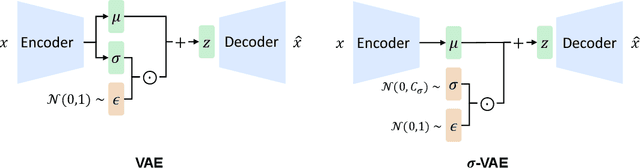
Multimodal generative models require a unified approach to handle both discrete data (e.g., text and code) and continuous data (e.g., image, audio, video). In this work, we propose Latent Language Modeling (LatentLM), which seamlessly integrates continuous and discrete data using causal Transformers. Specifically, we employ a variational autoencoder (VAE) to represent continuous data as latent vectors and introduce next-token diffusion for autoregressive generation of these vectors. Additionally, we develop $\sigma$-VAE to address the challenges of variance collapse, which is crucial for autoregressive modeling. Extensive experiments demonstrate the effectiveness of LatentLM across various modalities. In image generation, LatentLM surpasses Diffusion Transformers in both performance and scalability. When integrated into multimodal large language models, LatentLM provides a general-purpose interface that unifies multimodal generation and understanding. Experimental results show that LatentLM achieves favorable performance compared to Transfusion and vector quantized models in the setting of scaling up training tokens. In text-to-speech synthesis, LatentLM outperforms the state-of-the-art VALL-E 2 model in speaker similarity and robustness, while requiring 10x fewer decoding steps. The results establish LatentLM as a highly effective and scalable approach to advance large multimodal models.
RedStone: Curating General, Code, Math, and QA Data for Large Language Models
Dec 04, 2024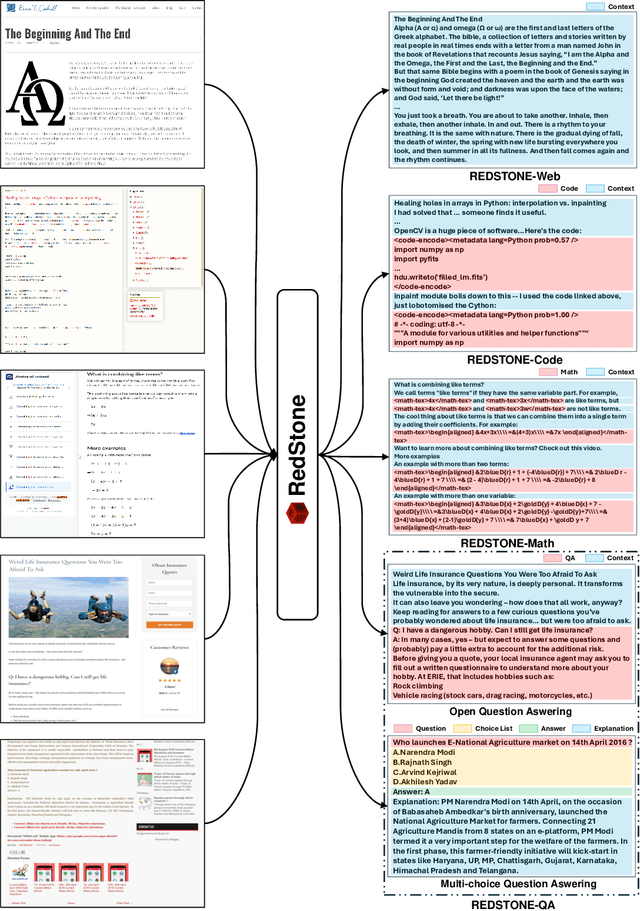
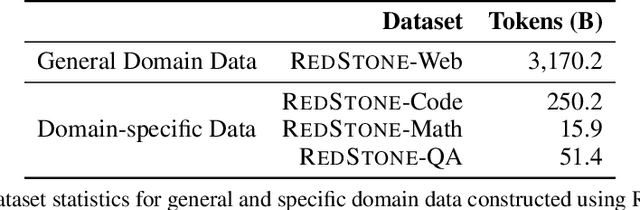
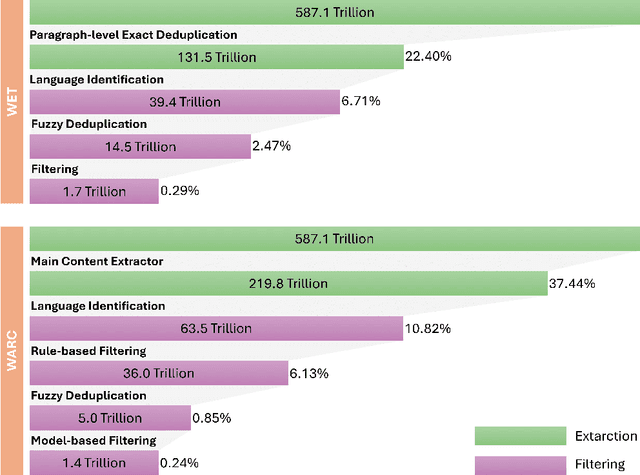
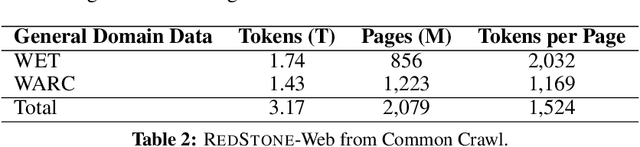
Pre-training Large Language Models (LLMs) on high-quality, meticulously curated datasets is widely recognized as critical for enhancing their performance and generalization capabilities. This study explores the untapped potential of Common Crawl as a comprehensive and flexible resource for pre-training LLMs, addressing both general-purpose language understanding and specialized domain knowledge. We introduce RedStone, an innovative and scalable pipeline engineered to extract and process data from Common Crawl, facilitating the creation of extensive and varied pre-training datasets. Unlike traditional datasets, which often require expensive curation and domain-specific expertise, RedStone leverages the breadth of Common Crawl to deliver datasets tailored to a wide array of domains. In this work, we exemplify its capability by constructing pre-training datasets across multiple fields, including general language understanding, code, mathematics, and question-answering tasks. The flexibility of RedStone allows for easy adaptation to other specialized domains, significantly lowering the barrier to creating valuable domain-specific datasets. Our findings demonstrate that Common Crawl, when harnessed through effective pipelines like RedStone, can serve as a rich, renewable source of pre-training data, unlocking new avenues for domain adaptation and knowledge discovery in LLMs. This work also underscores the importance of innovative data acquisition strategies and highlights the role of web-scale data as a powerful resource in the continued evolution of LLMs. RedStone code and data samples will be publicly available at \url{https://aka.ms/redstone}.
MH-MoE: Multi-Head Mixture-of-Experts
Nov 26, 2024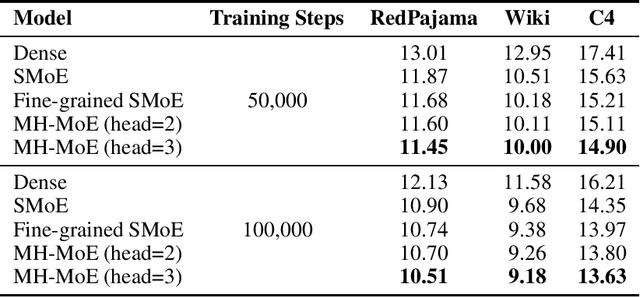
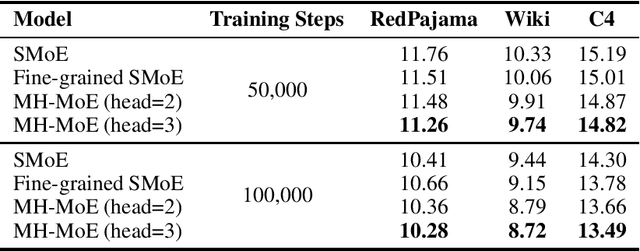
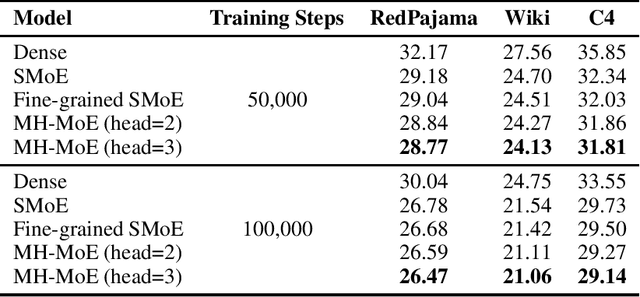
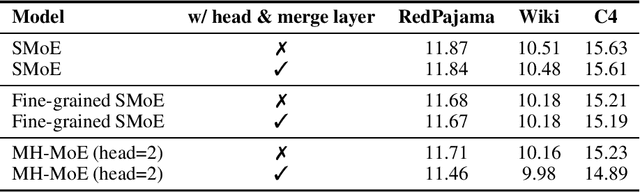
Multi-Head Mixture-of-Experts (MH-MoE) demonstrates superior performance by using the multi-head mechanism to collectively attend to information from various representation spaces within different experts. In this paper, we present a novel implementation of MH-MoE that maintains both FLOPs and parameter parity with sparse Mixture of Experts models. Experimental results on language models show that the new implementation yields quality improvements over both vanilla MoE and fine-grained MoE models. Additionally, our experiments demonstrate that MH-MoE is compatible with 1-bit Large Language Models (LLMs) such as BitNet.
Preference Optimization for Reasoning with Pseudo Feedback
Nov 25, 2024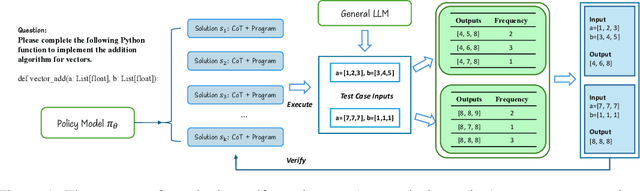
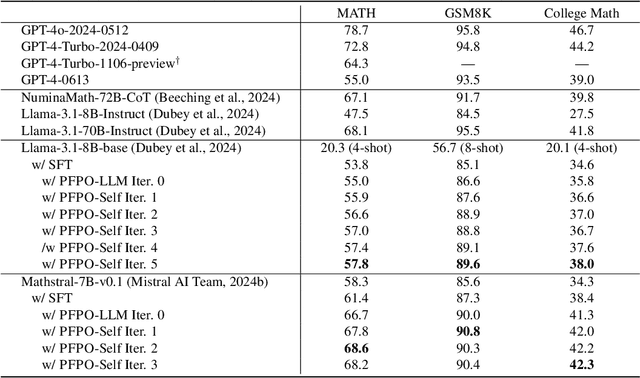
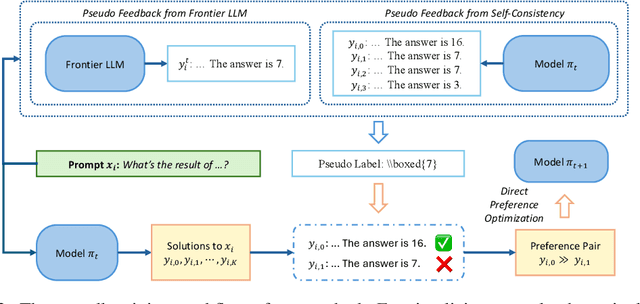
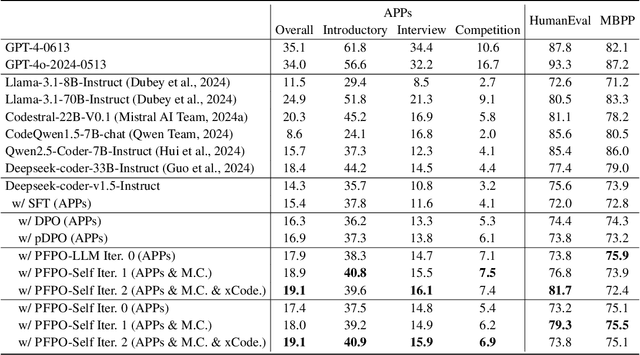
Preference optimization techniques, such as Direct Preference Optimization (DPO), are frequently employed to enhance the reasoning capabilities of large language models (LLMs) in domains like mathematical reasoning and coding, typically following supervised fine-tuning. These methods rely on high-quality labels for reasoning tasks to generate preference pairs; however, the availability of reasoning datasets with human-verified labels is limited. In this study, we introduce a novel approach to generate pseudo feedback for reasoning tasks by framing the labeling of solutions to reason problems as an evaluation against associated test cases. We explore two forms of pseudo feedback based on test cases: one generated by frontier LLMs and the other by extending self-consistency to multi-test-case. We conduct experiments on both mathematical reasoning and coding tasks using pseudo feedback for preference optimization, and observe improvements across both tasks. Specifically, using Mathstral-7B as our base model, we improve MATH results from 58.3 to 68.6, surpassing both NuminaMath-72B and GPT-4-Turbo-1106-preview. In GSM8K and College Math, our scores increase from 85.6 to 90.3 and from 34.3 to 42.3, respectively. Building on Deepseek-coder-7B-v1.5, we achieve a score of 24.6 on LiveCodeBench (from 21.1), surpassing Claude-3-Haiku.
BitNet a4.8: 4-bit Activations for 1-bit LLMs
Nov 07, 2024
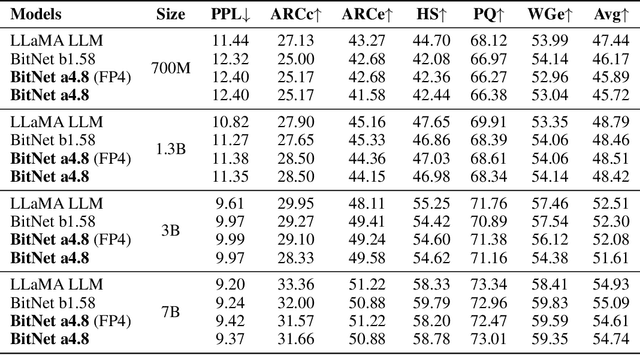
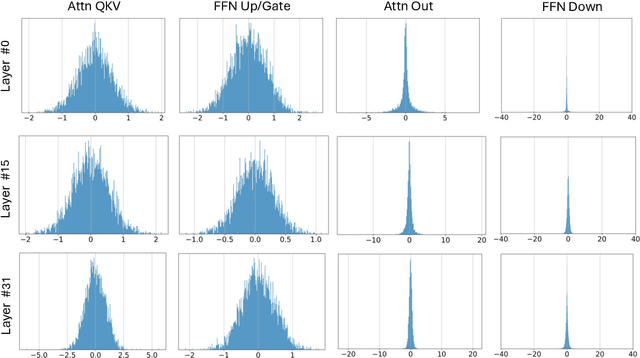
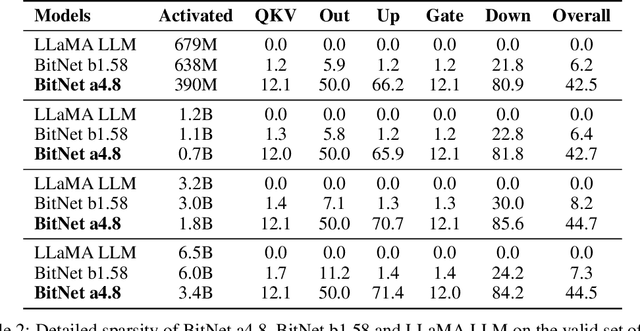
Recent research on the 1-bit Large Language Models (LLMs), such as BitNet b1.58, presents a promising direction for reducing the inference cost of LLMs while maintaining their performance. In this work, we introduce BitNet a4.8, enabling 4-bit activations for 1-bit LLMs. BitNet a4.8 employs a hybrid quantization and sparsification strategy to mitigate the quantization errors introduced by the outlier channels. Specifically, we utilize 4-bit activations for inputs to the attention and feed-forward network layers, while sparsifying intermediate states followed with 8-bit quantization. Extensive experiments demonstrate that BitNet a4.8 achieves performance comparable to BitNet b1.58 with equivalent training costs, while being faster in inference with enabling 4-bit (INT4/FP4) kernels. Additionally, BitNet a4.8 activates only 55% of parameters and supports 3-bit KV cache, further enhancing the efficiency of large-scale LLM deployment and inference.