 Add to Chrome
 Add to Firefox
 Add to Edge
Rethinking Out-of-Distribution Detection on Imbalanced Data Distribution
Jul 23, 2024
Detecting and rejecting unknown out-of-distribution (OOD) samples is critical for deployed neural networks to void unreliable predictions. In real-world scenarios, however, the efficacy of existing OOD detection methods is often impeded by the inherent imbalance of in-distribution (ID) data, which causes significant performance decline. Through statistical observations, we have identified two common challenges faced by different OOD detectors: misidentifying tail class ID samples as OOD, while erroneously predicting OOD samples as head class from ID. To explain this phenomenon, we introduce a generalized statistical framework, termed ImOOD, to formulate the OOD detection problem on imbalanced data distribution. Consequently, the theoretical analysis reveals that there exists a class-aware bias item between balanced and imbalanced OOD detection, which contributes to the performance gap. Building upon this finding, we present a unified training-time regularization technique to mitigate the bias and boost imbalanced OOD detectors across architecture designs. Our theoretically grounded method translates into consistent improvements on the representative CIFAR10-LT, CIFAR100-LT, and ImageNet-LT benchmarks against several state-of-the-art OOD detection approaches. Code will be made public soon.

Category-Extensible Out-of-Distribution Detection via Hierarchical Context Descriptions
Jul 23, 2024The key to OOD detection has two aspects: generalized feature representation and precise category description. Recently, vision-language models such as CLIP provide significant advances in both two issues, but constructing precise category descriptions is still in its infancy due to the absence of unseen categories. This work introduces two hierarchical contexts, namely perceptual context and spurious context, to carefully describe the precise category boundary through automatic prompt tuning. Specifically, perceptual contexts perceive the inter-category difference (e.g., cats vs apples) for current classification tasks, while spurious contexts further identify spurious (similar but exactly not) OOD samples for every single category (e.g., cats vs panthers, apples vs peaches). The two contexts hierarchically construct the precise description for a certain category, which is, first roughly classifying a sample to the predicted category and then delicately identifying whether it is truly an ID sample or actually OOD. Moreover, the precise descriptions for those categories within the vision-language framework present a novel application: CATegory-EXtensible OOD detection (CATEX). One can efficiently extend the set of recognizable categories by simply merging the hierarchical contexts learned under different sub-task settings. And extensive experiments are conducted to demonstrate CATEX's effectiveness, robustness, and category-extensibility. For instance, CATEX consistently surpasses the rivals by a large margin with several protocols on the challenging ImageNet-1K dataset. In addition, we offer new insights on how to efficiently scale up the prompt engineering in vision-language models to recognize thousands of object categories, as well as how to incorporate large language models (like GPT-3) to boost zero-shot applications. Code will be made public soon.
Enhancing LLM's Cognition via Structurization
Jul 23, 2024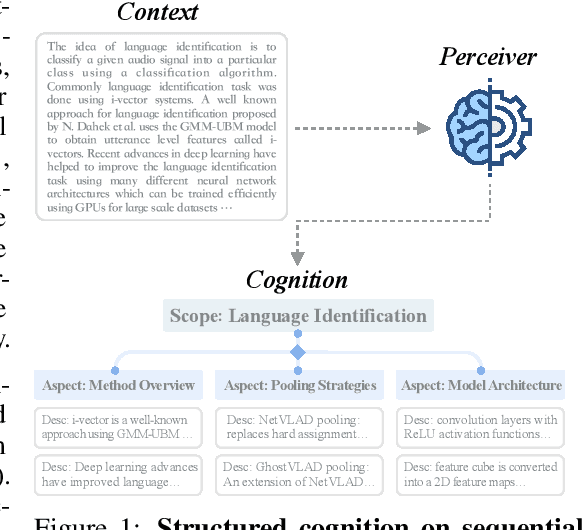
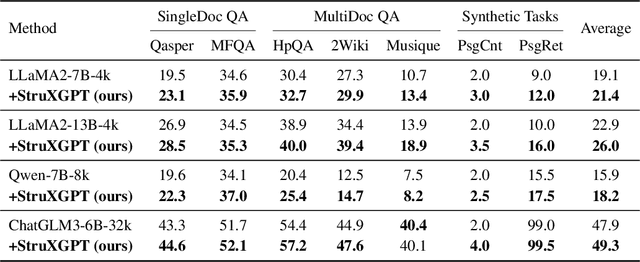
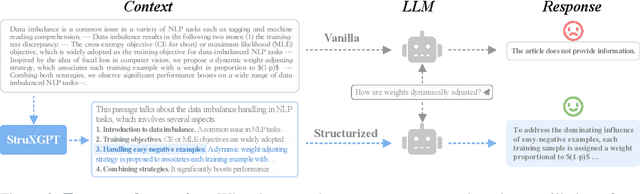
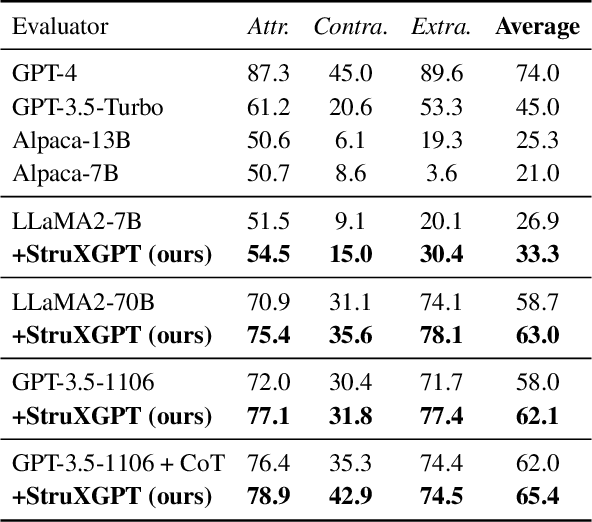
When reading long-form text, human cognition is complex and structurized. While large language models (LLMs) process input contexts through a causal and sequential perspective, this approach can potentially limit their ability to handle intricate and complex inputs effectively. To enhance LLM's cognition capability, this paper presents a novel concept of context structurization. Specifically, we transform the plain, unordered contextual sentences into well-ordered and hierarchically structurized elements. By doing so, LLMs can better grasp intricate and extended contexts through precise attention and information-seeking along the organized structures. Extensive evaluations are conducted across various model architectures and sizes (including several 7B- to 72B-size auto-regressive LLMs as well as BERT-like masking models) on a diverse set of NLP tasks (e.g., context-based question-answering, exhaustive hallucination evaluation, and passage-level dense retrieval). Empirical results show consistent and significant performance gains afforded by a single-round structurization. In particular, we boost a 72B-parameter open-source model to achieve comparable performance against GPT-3.5-Turbo as the hallucination evaluator. Besides, we show the feasibility of distilling advanced LLMs' language processing abilities to a smaller yet effective StruXGPT-7B to execute structurization, addressing the practicality of our approach. Code will be made public soon.
BadCLM: Backdoor Attack in Clinical Language Models for Electronic Health Records
Jul 06, 2024The advent of clinical language models integrated into electronic health records (EHR) for clinical decision support has marked a significant advancement, leveraging the depth of clinical notes for improved decision-making. Despite their success, the potential vulnerabilities of these models remain largely unexplored. This paper delves into the realm of backdoor attacks on clinical language models, introducing an innovative attention-based backdoor attack method, BadCLM (Bad Clinical Language Models). This technique clandestinely embeds a backdoor within the models, causing them to produce incorrect predictions when a pre-defined trigger is present in inputs, while functioning accurately otherwise. We demonstrate the efficacy of BadCLM through an in-hospital mortality prediction task with MIMIC III dataset, showcasing its potential to compromise model integrity. Our findings illuminate a significant security risk in clinical decision support systems and pave the way for future endeavors in fortifying clinical language models against such vulnerabilities.
HUWSOD: Holistic Self-training for Unified Weakly Supervised Object Detection
Jun 27, 2024
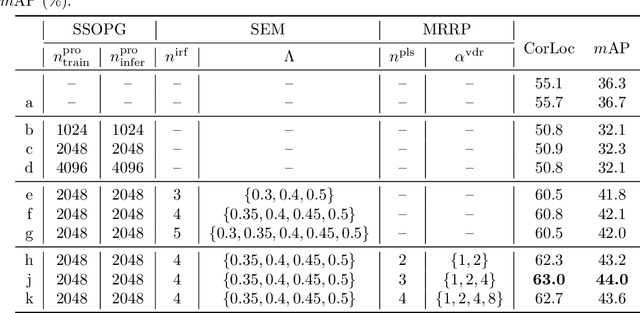
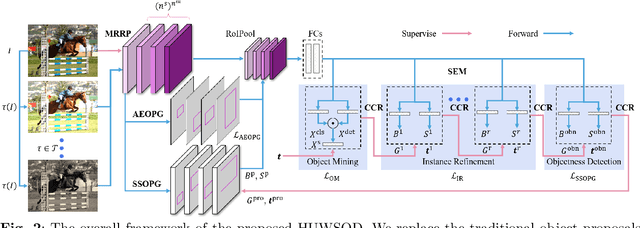
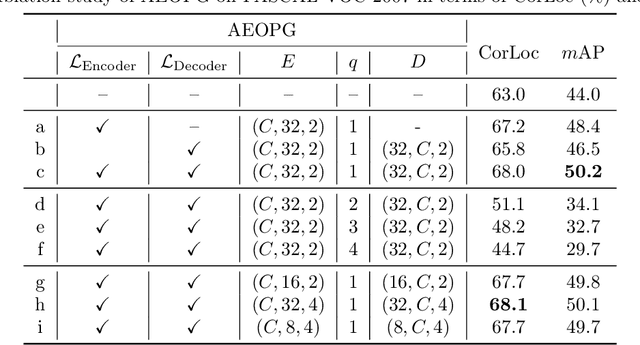
Most WSOD methods rely on traditional object proposals to generate candidate regions and are confronted with unstable training, which easily gets stuck in a poor local optimum. In this paper, we introduce a unified, high-capacity weakly supervised object detection (WSOD) network called HUWSOD, which utilizes a comprehensive self-training framework without needing external modules or additional supervision. HUWSOD innovatively incorporates a self-supervised proposal generator and an autoencoder proposal generator with a multi-rate resampling pyramid to replace traditional object proposals, enabling end-to-end WSOD training and inference. Additionally, we implement a holistic self-training scheme that refines detection scores and coordinates through step-wise entropy minimization and consistency-constraint regularization, ensuring consistent predictions across stochastic augmentations of the same image. Extensive experiments on PASCAL VOC and MS COCO demonstrate that HUWSOD competes with state-of-the-art WSOD methods, eliminating the need for offline proposals and additional data. The peak performance of HUWSOD approaches that of fully-supervised Faster R-CNN. Our findings also indicate that randomly initialized boxes, although significantly different from well-designed offline object proposals, are effective for WSOD training.
Memorization in deep learning: A survey
Jun 06, 2024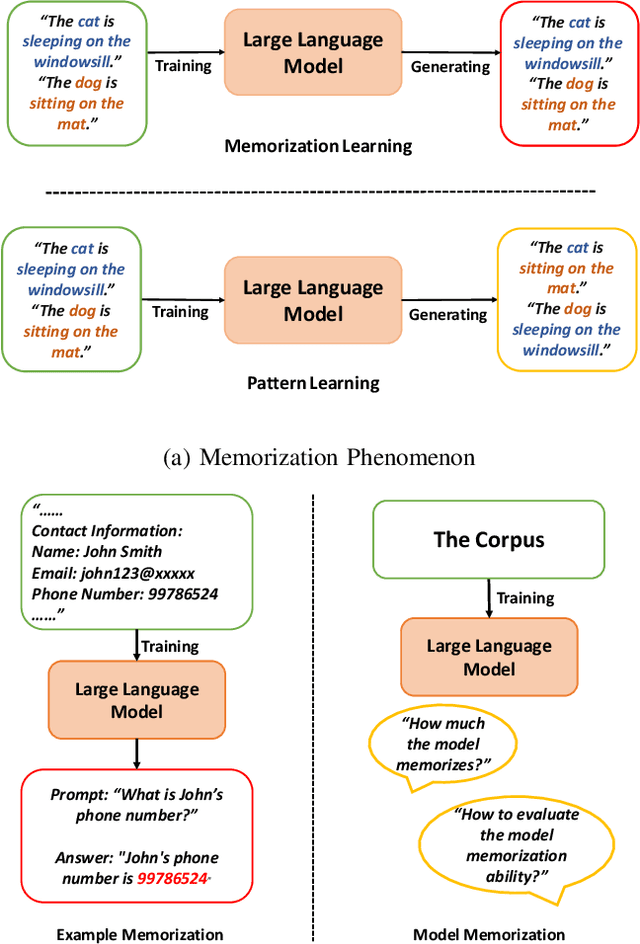
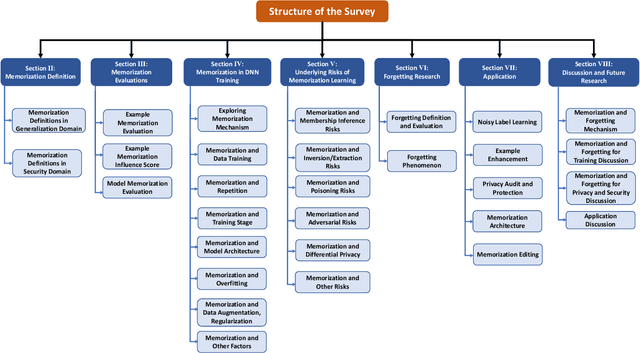
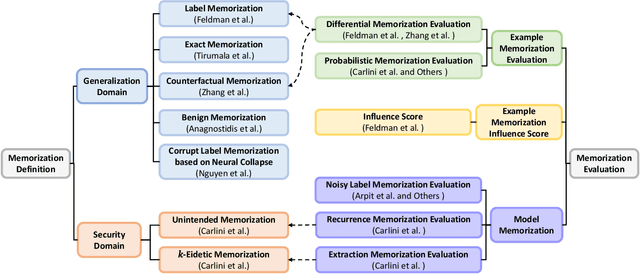

Deep Learning (DL) powered by Deep Neural Networks (DNNs) has revolutionized various domains, yet understanding the intricacies of DNN decision-making and learning processes remains a significant challenge. Recent investigations have uncovered an interesting memorization phenomenon in which DNNs tend to memorize specific details from examples rather than learning general patterns, affecting model generalization, security, and privacy. This raises critical questions about the nature of generalization in DNNs and their susceptibility to security breaches. In this survey, we present a systematic framework to organize memorization definitions based on the generalization and security/privacy domains and summarize memorization evaluation methods at both the example and model levels. Through a comprehensive literature review, we explore DNN memorization behaviors and their impacts on security and privacy. We also introduce privacy vulnerabilities caused by memorization and the phenomenon of forgetting and explore its connection with memorization. Furthermore, we spotlight various applications leveraging memorization and forgetting mechanisms, including noisy label learning, privacy preservation, and model enhancement. This survey offers the first-in-kind understanding of memorization in DNNs, providing insights into its challenges and opportunities for enhancing AI development while addressing critical ethical concerns.
E-ICL: Enhancing Fine-Grained Emotion Recognition through the Lens of Prototype Theory
Jun 04, 2024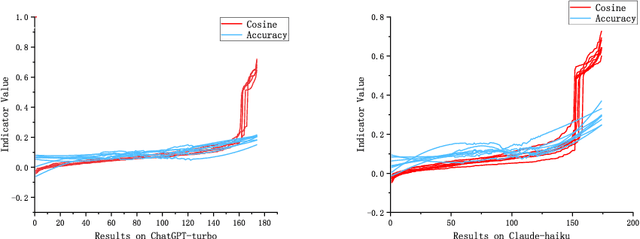
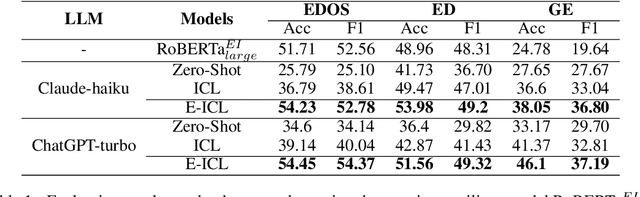
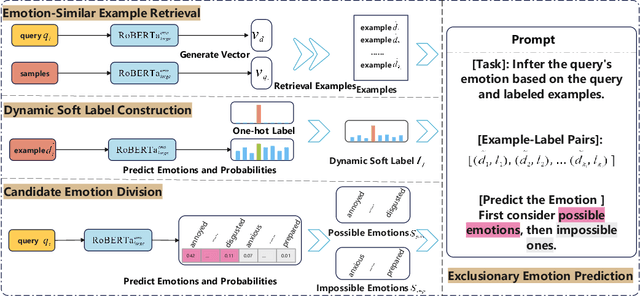
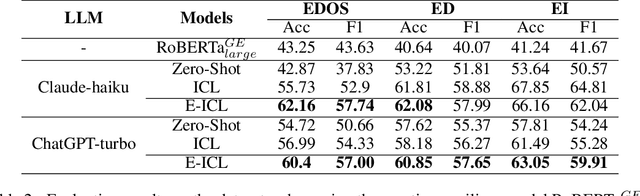
In-context learning (ICL) achieves remarkable performance in various domains such as knowledge acquisition, commonsense reasoning, and semantic understanding. However, its performance significantly deteriorates for emotion detection tasks, especially fine-grained emotion recognition. The underlying reasons for this remain unclear. In this paper, we identify the reasons behind ICL's poor performance from the perspective of prototype theory and propose a method to address this issue. Specifically, we conduct extensive pilot experiments and find that ICL conforms to the prototype theory on fine-grained emotion recognition. Based on this theory, we uncover the following deficiencies in ICL: (1) It relies on prototypes (example-label pairs) that are semantically similar but emotionally inaccurate to predict emotions. (2) It is prone to interference from irrelevant categories, affecting the accuracy and robustness of the predictions. To address these issues, we propose an Emotion Context Learning method (E-ICL) on fine-grained emotion recognition. E-ICL relies on more emotionally accurate prototypes to predict categories by referring to emotionally similar examples with dynamic labels. Simultaneously, E-ICL employs an exclusionary emotion prediction strategy to avoid interference from irrelevant categories, thereby increasing its accuracy and robustness. Note that the entire process is accomplished with the assistance of a plug-and-play emotion auxiliary model, without additional training. Experiments on the fine-grained emotion datasets EDOS, Empathetic-Dialogues, EmpatheticIntent, and GoEmotions show that E-ICL achieves superior emotion prediction performance. Furthermore, even when the emotion auxiliary model used is lower than 10% of the LLMs, E-ICL can still boost the performance of LLMs by over 4% on multiple datasets.
Large Language Model Watermark Stealing With Mixed Integer Programming
May 30, 2024The Large Language Model (LLM) watermark is a newly emerging technique that shows promise in addressing concerns surrounding LLM copyright, monitoring AI-generated text, and preventing its misuse. The LLM watermark scheme commonly includes generating secret keys to partition the vocabulary into green and red lists, applying a perturbation to the logits of tokens in the green list to increase their sampling likelihood, thus facilitating watermark detection to identify AI-generated text if the proportion of green tokens exceeds a threshold. However, recent research indicates that watermarking methods using numerous keys are susceptible to removal attacks, such as token editing, synonym substitution, and paraphrasing, with robustness declining as the number of keys increases. Therefore, the state-of-the-art watermark schemes that employ fewer or single keys have been demonstrated to be more robust against text editing and paraphrasing. In this paper, we propose a novel green list stealing attack against the state-of-the-art LLM watermark scheme and systematically examine its vulnerability to this attack. We formalize the attack as a mixed integer programming problem with constraints. We evaluate our attack under a comprehensive threat model, including an extreme scenario where the attacker has no prior knowledge, lacks access to the watermark detector API, and possesses no information about the LLM's parameter settings or watermark injection/detection scheme. Extensive experiments on LLMs, such as OPT and LLaMA, demonstrate that our attack can successfully steal the green list and remove the watermark across all settings.
A Novel Wide-Area Multiobject Detection System with High-Probability Region Searching
May 07, 2024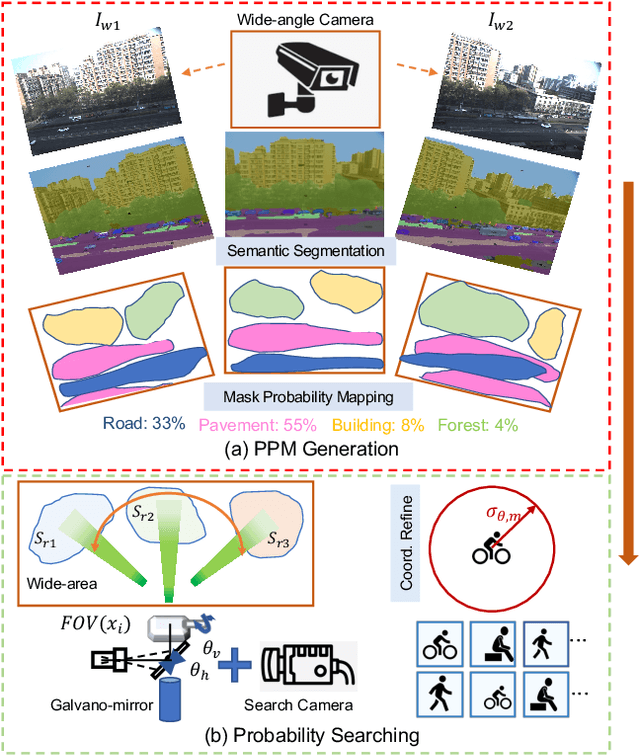
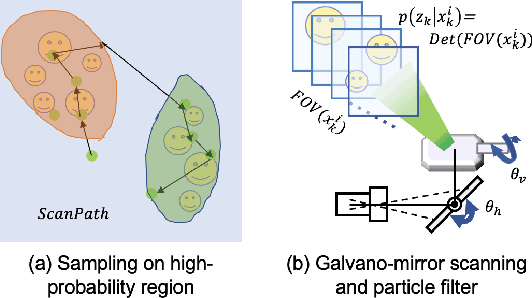
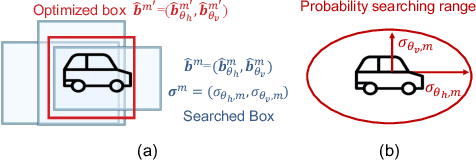
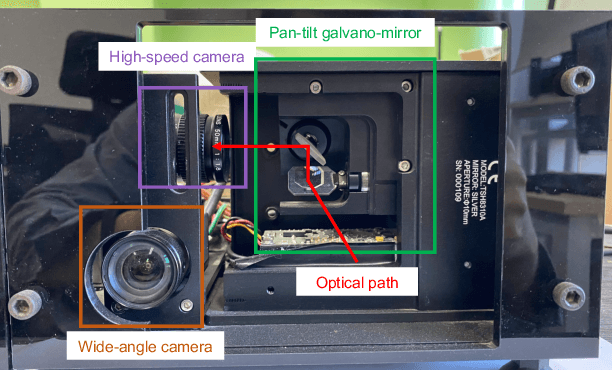
In recent years, wide-area visual surveillance systems have been widely applied in various industrial and transportation scenarios. These systems, however, face significant challenges when implementing multi-object detection due to conflicts arising from the need for high-resolution imaging, efficient object searching, and accurate localization. To address these challenges, this paper presents a hybrid system that incorporates a wide-angle camera, a high-speed search camera, and a galvano-mirror. In this system, the wide-angle camera offers panoramic images as prior information, which helps the search camera capture detailed images of the targeted objects. This integrated approach enhances the overall efficiency and effectiveness of wide-area visual detection systems. Specifically, in this study, we introduce a wide-angle camera-based method to generate a panoramic probability map (PPM) for estimating high-probability regions of target object presence. Then, we propose a probability searching module that uses the PPM-generated prior information to dynamically adjust the sampling range and refine target coordinates based on uncertainty variance computed by the object detector. Finally, the integration of PPM and the probability searching module yields an efficient hybrid vision system capable of achieving 120 fps multi-object search and detection. Extensive experiments are conducted to verify the system's effectiveness and robustness.
* Accepted by ICRA 2024
Uncertainty Quantification on Graph Learning: A Survey
Apr 23, 2024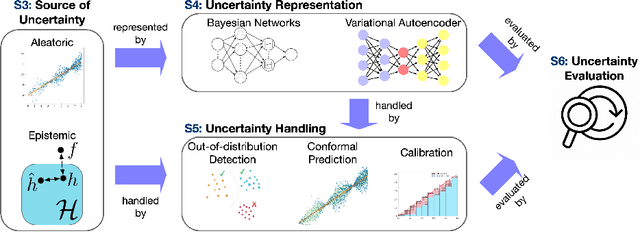
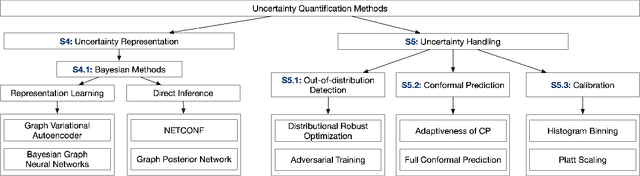
Graphical models, including Graph Neural Networks (GNNs) and Probabilistic Graphical Models (PGMs), have demonstrated their exceptional capabilities across numerous fields. These models necessitate effective uncertainty quantification to ensure reliable decision-making amid the challenges posed by model training discrepancies and unpredictable testing scenarios. This survey examines recent works that address uncertainty quantification within the model architectures, training, and inference of GNNs and PGMs. We aim to provide an overview of the current landscape of uncertainty in graphical models by organizing the recent methods into uncertainty representation and handling. By summarizing state-of-the-art methods, this survey seeks to deepen the understanding of uncertainty quantification in graphical models, thereby increasing their effectiveness and safety in critical applications.