 Add to Chrome
 Add to Firefox
 Add to Edge
Multi-Granularity Sentiment Integration for LLM-Based Multimodal Sentiment Analysis
Aug 17, 2026
Multimodal sentiment analysis (MSA) aims to predict sentiment polarity and intensity from heterogeneous inputs such as text, audio, and vision. While large language models (LLMs) offer strong semantic priors for MSA, effectively incorporating audio and visual signals effectively remains challenging. A key challenge is that audio and visual sentiment cues evolve over different temporal scales, yet many LLM-based methods compress these signals through shallow projection or coarse pooling before fusing them with text, which can weaken cross-modal alignment and erase fine-grained affective information. We propose MGSI, a multi-granularity sentiment integration framework for LLM-based MSA. MGSI first encodes audio and visual streams at short-, medium-, and long-range temporal scales, preserving both local variations and global affective trends. It then refines non-text features through text-guided alignment, and applies polarity- and intensity-aware enhancement to better handle ambiguous and near-neutral samples. The resulting multimodal representation is finally compressed into a small set of pseudo-tokens for efficient conditioning of a frozen LLM. Experiments on four public benchmarks show that MGSI substantially outperforms frozen-LLM baselines and remains competitive with strong multimodal methods. Further ablation and sensitivity analyses support the effectiveness of multi-granularity temporal modeling, text-guided refinement, and adaptive sentiment calibration.

Towards Faithful Sentimental Image Captioning via Evidence-Aware Multi-Agent Reasoning
Jul 28, 2026Sentimental Image Captioning (SIC) requires balancing emotional expression with visual fidelity. Existing methods often struggle with this trade-off, leading to hallucinations due to insufficient local grounding and the lack of sentimental verification mechanisms. To address these limitations, we propose SEA-Cap, a Sentiment-Evidence-Aware Multi-Agent System for faithful and evidence-grounded sentimental image captioning. SEA-Cap incorporates a Sentiment Evidence Miner that extracts structured, local affective cues to shift sentiment control from global attributes to verifiable object-level evidence. Leveraging this evidence, our framework orchestrates a collaborative workflow where a Generator, Hallucination Checker, and Arbitrator iteratively refine captions via a shared blackboard. By explicitly auditing generated content against mined visual evidence, SEA-Cap ensures both sentiment accuracy and factual consistency. Extensive experiments on two benchmark datasets demonstrate that SEA-Cap effectively mitigates hallucinations and achieves state-of-the-art performance.
Constrained Paraphrase Consistency for LLM Hallucination Detection
Jun 06, 2026Large language models (LLMs) can generate factually inconsistent claims, motivating accurate and scalable hallucination detectors. Prior work largely enlarges training sets via synthesis or new annotations, introducing increasing cost and potential bias while underusing the consistency implied by semantically equivalent paraphrases. We propose Consistency-Constrained Hallucination Detector (CCHD), which formulates training as a constrained optimization problem. The standard cross-entropy on original document-claim pairs is complemented by (i) paraphrase-consistency constraints bounding divergence across paraphrased views, and (ii) label-preservation constraints tying paraphrases to ground truth. We solve the problem by gradient descent-ascent over model parameters and per-view Lagrange multipliers, adding only a few scalar dual variables and no inference-time overhead. With DeBERTa and Flan-T5 backbones, CCHD consistently outperforms strong baselines (FactCG, MiniCheck, and AlignScore) on standard factuality benchmarks, demonstrating its superiority on hallucination detection.
Cross Paraphrastic Invariance Learning for Hallucination Detection
Jun 06, 2026Large language models (LLMs) frequently generate hallucinations, which are unsupported by a source document. To avoid costly LLM-as-evaluator pipelines and the heavy annotation demands of existing classifiers, we propose CPIL (Cross Paraphrastic Invariance Learning), a two-stage Siamese framework that maximizes the utility of existing labeled data. Concretely, CPIL constructs informative training pairs by: (i) generating paraphrastic views of each document-claim example as positives, and explicitly aligning their representations to enforce invariance to surface form; and (ii) mining same-document, opposite-label pairs as hard negatives to sharpen document-sensitive decision boundaries. Then CPIL conduct a two-stage model training: Stage 1 performs contrastive pretraining to learn a paraphrase-invariant, grounding-aware embedding space; and Stage 2 attaches a lightweight classifier for binary groundedness. On the LLM-AggreFact benchmark (11 tasks), CPIL surpasses strong baselines concerning F1 scores with only ~1% labeled data, showing its prediction superiority and label efficiency.
BAED: a New Paradigm for Few-shot Graph Learning with Explanation in the Loop
Mar 02, 2026The challenges of training and inference in few-shot environments persist in the area of graph representation learning. The quality and quantity of labels are often insufficient due to the extensive expert knowledge required to annotate graph data. In this context, Few-Shot Graph Learning (FSGL) approaches have been developed over the years. Through sophisticated neural architectures and customized training pipelines, these approaches enhance model adaptability to new label distributions. However, compromises in \textcolor{black}{the model's} robustness and interpretability can result in overfitting to noise in labeled data and degraded performance. This paper introduces the first explanation-in-the-loop framework for the FSGL problem, called BAED. We novelly employ the belief propagation algorithm to facilitate label augmentation on graphs. Then, leveraging an auxiliary graph neural network and the gradient backpropagation method, our framework effectively extracts explanatory subgraphs surrounding target nodes. The final predictions are based on these informative subgraphs while mitigating the influence of redundant information from neighboring nodes. Extensive experiments on seven benchmark datasets demonstrate superior prediction accuracy, training efficiency, and explanation quality of BAED. As a pioneer, this work highlights the potential of the explanation-based research paradigm in FSGL.
Explanation-Guided Adversarial Training for Robust and Interpretable Models
Mar 02, 2026Deep neural networks (DNNs) have achieved remarkable performance in many tasks, yet they often behave as opaque black boxes. Explanation-guided learning (EGL) methods steer DNNs using human-provided explanations or supervision on model attributions. These approaches improve interpretability but typically assume benign inputs and incur heavy annotation costs. In contrast, both predictions and saliency maps of DNNs could dramatically alter facing imperceptible perturbations or unseen patterns. Adversarial training (AT) can substantially improve robustness, but it does not guarantee that model decisions rely on semantically meaningful features. In response, we propose Explanation-Guided Adversarial Training (EGAT), a unified framework that integrates the strength of AT and EGL to simultaneously improve prediction performance, robustness, and explanation quality. EGAT generates adversarial examples on the fly while imposing explanation-based constraints on the model. By jointly optimizing classification performance, adversarial robustness, and attributional stability, EGAT is not only more resistant to unexpected cases, including adversarial attacks and out-of-distribution (OOD) scenarios, but also offer human-interpretable justifications for the decisions. We further formalize EGAT within the Probably Approximately Correct learning framework, demonstrating theoretically that it yields more stable predictions under unexpected situations compared to standard AT. Empirical evaluations on OOD benchmark datasets show that EGAT consistently outperforms competitive baselines in both clean accuracy and adversarial accuracy +37% while producing more semantically meaningful explanations, and requiring only a limited increase +16% in training time.
Learning How to Remember: A Meta-Cognitive Management Method for Structured and Transferable Agent Memory
Jan 12, 2026Large language model (LLM) agents increasingly rely on accumulated memory to solve long-horizon decision-making tasks. However, most existing approaches store memory in fixed representations and reuse it at a single or implicit level of abstraction, which limits generalization and often leads to negative transfer when distribution shift. This paper proposes the Meta-Cognitive Memory Abstraction method (MCMA), which treats memory abstraction as a learnable cognitive skill rather than a fixed design choice. MCMA decouples task execution from memory management by combining a frozen task model with a learned memory copilot. The memory copilot is trained using direct preference optimization, it determines how memories should be structured, abstracted, and reused. Memories are further organized into a hierarchy of abstraction levels, enabling selective reuse based on task similarity. When no memory is transferable, MCMA transfers the ability to abstract and manage memory by transferring the memory copilot. Experiments on ALFWorld, ScienceWorld, and BabyAI demonstrate substantial improvements in performance, out-of-distribution generalization, and cross-task transfer over several baselines.
From Attribution to Action: Jointly ALIGNing Predictions and Explanations
Nov 10, 2025Explanation-guided learning (EGL) has shown promise in aligning model predictions with interpretable reasoning, particularly in computer vision tasks. However, most approaches rely on external annotations or heuristic-based segmentation to supervise model explanations, which can be noisy, imprecise and difficult to scale. In this work, we provide both empirical and theoretical evidence that low-quality supervision signals can degrade model performance rather than improve it. In response, we propose ALIGN, a novel framework that jointly trains a classifier and a masker in an iterative manner. The masker learns to produce soft, task-relevant masks that highlight informative regions, while the classifier is optimized for both prediction accuracy and alignment between its saliency maps and the learned masks. By leveraging high-quality masks as guidance, ALIGN improves both interpretability and generalizability, showing its superiority across various settings. Experiments on the two domain generalization benchmarks, VLCS and Terra Incognita, show that ALIGN consistently outperforms six strong baselines in both in-distribution and out-of-distribution settings. Besides, ALIGN also yields superior explanation quality concerning sufficiency and comprehensiveness, highlighting its effectiveness in producing accurate and interpretable models.
GMAI-VL-R1: Harnessing Reinforcement Learning for Multimodal Medical Reasoning
Apr 02, 2025Recent advances in general medical AI have made significant strides, but existing models often lack the reasoning capabilities needed for complex medical decision-making. This paper presents GMAI-VL-R1, a multimodal medical reasoning model enhanced by reinforcement learning (RL) to improve its reasoning abilities. Through iterative training, GMAI-VL-R1 optimizes decision-making, significantly boosting diagnostic accuracy and clinical support. We also develop a reasoning data synthesis method, generating step-by-step reasoning data via rejection sampling, which further enhances the model's generalization. Experimental results show that after RL training, GMAI-VL-R1 excels in tasks such as medical image diagnosis and visual question answering. While the model demonstrates basic memorization with supervised fine-tuning, RL is crucial for true generalization. Our work establishes new evaluation benchmarks and paves the way for future advancements in medical reasoning models. Code, data, and model will be released at \href{https://github.com/uni-medical/GMAI-VL-R1}{this link}.
Exploring Information Processing in Large Language Models: Insights from Information Bottleneck Theory
Jan 06, 2025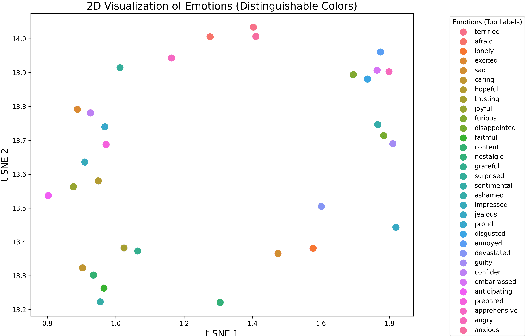
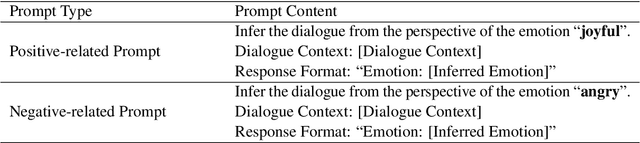
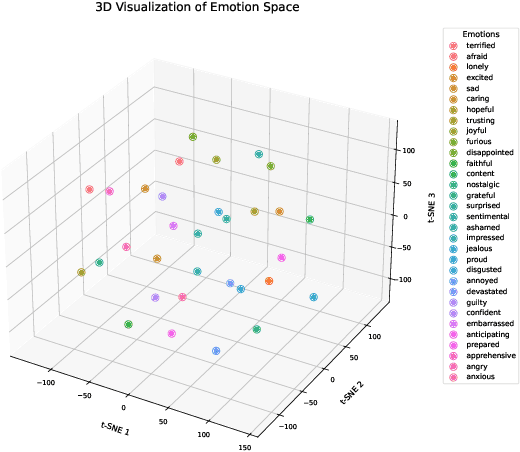
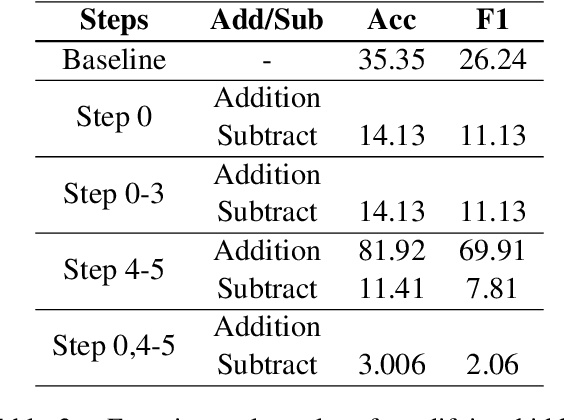
Large Language Models (LLMs) have demonstrated remarkable performance across a wide range of tasks by understanding input information and predicting corresponding outputs. However, the internal mechanisms by which LLMs comprehend input and make effective predictions remain poorly understood. In this paper, we explore the working mechanism of LLMs in information processing from the perspective of Information Bottleneck Theory. We propose a non-training construction strategy to define a task space and identify the following key findings: (1) LLMs compress input information into specific task spaces (e.g., sentiment space, topic space) to facilitate task understanding; (2) they then extract and utilize relevant information from the task space at critical moments to generate accurate predictions. Based on these insights, we introduce two novel approaches: an Information Compression-based Context Learning (IC-ICL) and a Task-Space-guided Fine-Tuning (TS-FT). IC-ICL enhances reasoning performance and inference efficiency by compressing retrieved example information into the task space. TS-FT employs a space-guided loss to fine-tune LLMs, encouraging the learning of more effective compression and selection mechanisms. Experiments across multiple datasets validate the effectiveness of task space construction. Additionally, IC-ICL not only improves performance but also accelerates inference speed by over 40\%, while TS-FT achieves superior results with a minimal strategy adjustment.