 Add to Chrome
 Add to Firefox
 Add to Edge
SVS-GAN: Leveraging GANs for Semantic Video Synthesis
Sep 09, 2024
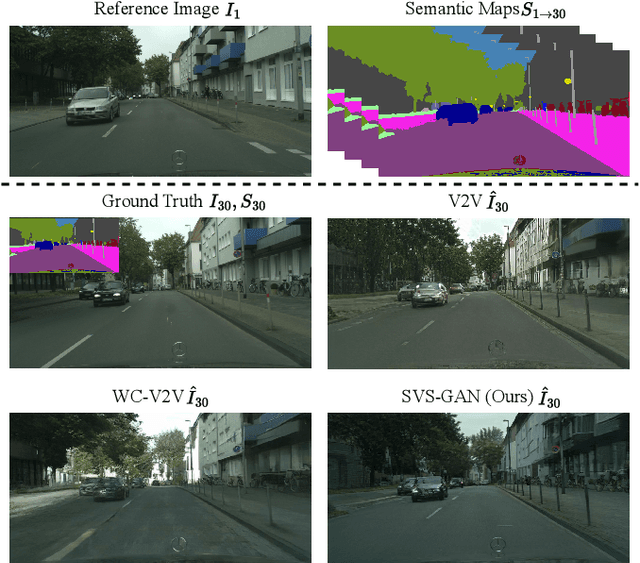
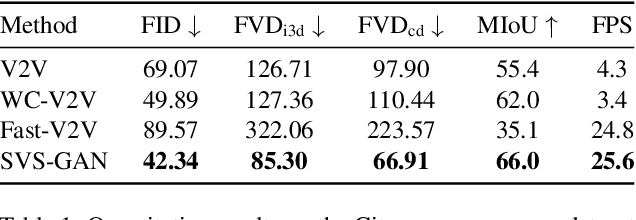

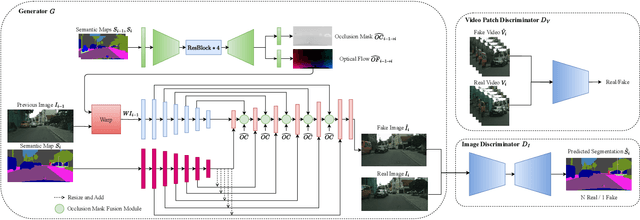
In recent years, there has been a growing interest in Semantic Image Synthesis (SIS) through the use of Generative Adversarial Networks (GANs) and diffusion models. This field has seen innovations such as the implementation of specialized loss functions tailored for this task, diverging from the more general approaches in Image-to-Image (I2I) translation. While the concept of Semantic Video Synthesis (SVS)$\unicode{x2013}$the generation of temporally coherent, realistic sequences of images from semantic maps$\unicode{x2013}$is newly formalized in this paper, some existing methods have already explored aspects of this field. Most of these approaches rely on generic loss functions designed for video-to-video translation or require additional data to achieve temporal coherence. In this paper, we introduce the SVS-GAN, a framework specifically designed for SVS, featuring a custom architecture and loss functions. Our approach includes a triple-pyramid generator that utilizes SPADE blocks. Additionally, we employ a U-Net-based network for the image discriminator, which performs semantic segmentation for the OASIS loss. Through this combination of tailored architecture and objective engineering, our framework aims to bridge the existing gap between SIS and SVS, outperforming current state-of-the-art models on datasets like Cityscapes and KITTI-360.

Exploring Domain Shift on Radar-Based 3D Object Detection Amidst Diverse Environmental Conditions
Aug 13, 2024


The rapid evolution of deep learning and its integration with autonomous driving systems have led to substantial advancements in 3D perception using multimodal sensors. Notably, radar sensors show greater robustness compared to cameras and lidar under adverse weather and varying illumination conditions. This study delves into the often-overlooked yet crucial issue of domain shift in 4D radar-based object detection, examining how varying environmental conditions, such as different weather patterns and road types, impact 3D object detection performance. Our findings highlight distinct domain shifts across various weather scenarios, revealing unique dataset sensitivities that underscore the critical role of radar point cloud generation. Additionally, we demonstrate that transitioning between different road types, especially from highways to urban settings, introduces notable domain shifts, emphasizing the necessity for diverse data collection across varied road environments. To the best of our knowledge, this is the first comprehensive analysis of domain shift effects on 4D radar-based object detection. We believe this empirical study contributes to understanding the complex nature of domain shifts in radar data and suggests paths forward for data collection strategy in the face of environmental variability.
Orca: Ocean Significant Wave Height Estimation with Spatio-temporally Aware Large Language Models
Jul 29, 2024Significant wave height (SWH) is a vital metric in marine science, and accurate SWH estimation is crucial for various applications, e.g., marine energy development, fishery, early warning systems for potential risks, etc. Traditional SWH estimation methods that are based on numerical models and physical theories are hindered by computational inefficiencies. Recently, machine learning has emerged as an appealing alternative to improve accuracy and reduce computational time. However, due to limited observational technology and high costs, the scarcity of real-world data restricts the potential of machine learning models. To overcome these limitations, we propose an ocean SWH estimation framework, namely Orca. Specifically, Orca enhances the limited spatio-temporal reasoning abilities of classic LLMs with a novel spatiotemporal aware encoding module. By segmenting the limited buoy observational data temporally, encoding the buoys' locations spatially, and designing prompt templates, Orca capitalizes on the robust generalization ability of LLMs to estimate significant wave height effectively with limited data. Experimental results on the Gulf of Mexico demonstrate that Orca achieves state-of-the-art performance in SWH estimation.
Memory-Efficient Pseudo-Labeling for Online Source-Free Universal Domain Adaptation using a Gaussian Mixture Model
Jul 19, 2024In practice, domain shifts are likely to occur between training and test data, necessitating domain adaptation (DA) to adjust the pre-trained source model to the target domain. Recently, universal domain adaptation (UniDA) has gained attention for addressing the possibility of an additional category (label) shift between the source and target domain. This means new classes can appear in the target data, some source classes may no longer be present, or both at the same time. For practical applicability, UniDA methods must handle both source-free and online scenarios, enabling adaptation without access to the source data and performing batch-wise updates in parallel with prediction. In an online setting, preserving knowledge across batches is crucial. However, existing methods often require substantial memory, e.g. by using memory queues, which is impractical because memory is limited and valuable, in particular on embedded systems. Therefore, we consider memory-efficiency as an additional constraint in this paper. To achieve memory-efficient online source-free universal domain adaptation (SF-UniDA), we propose a novel method that continuously captures the distribution of known classes in the feature space using a Gaussian mixture model (GMM). This approach, combined with entropy-based out-of-distribution detection, allows for the generation of reliable pseudo-labels. Finally, we combine a contrastive loss with a KL divergence loss to perform the adaptation. Our approach not only achieves state-of-the-art results in all experiments on the DomainNet dataset but also significantly outperforms the existing methods on the challenging VisDA-C dataset, setting a new benchmark for online SF-UniDA. Our code is available at https://github.com/pascalschlachter/GMM.
Part2Object: Hierarchical Unsupervised 3D Instance Segmentation
Jul 14, 2024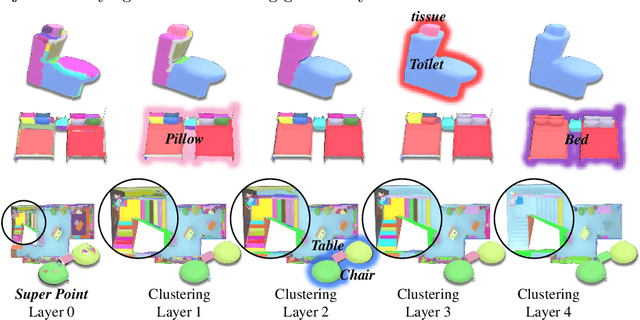
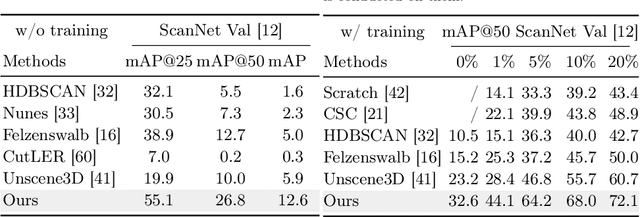
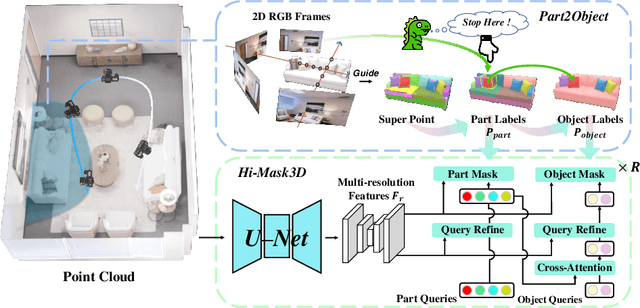
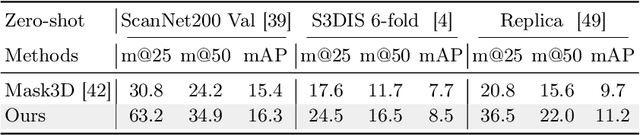
Unsupervised 3D instance segmentation aims to segment objects from a 3D point cloud without any annotations. Existing methods face the challenge of either too loose or too tight clustering, leading to under-segmentation or over-segmentation. To address this issue, we propose Part2Object, hierarchical clustering with object guidance. Part2Object employs multi-layer clustering from points to object parts and objects, allowing objects to manifest at any layer. Additionally, it extracts and utilizes 3D objectness priors from temporally consecutive 2D RGB frames to guide the clustering process. Moreover, we propose Hi-Mask3D to support hierarchical 3D object part and instance segmentation. By training Hi-Mask3D on the objects and object parts extracted from Part2Object, we achieve consistent and superior performance compared to state-of-the-art models in various settings, including unsupervised instance segmentation, data-efficient fine-tuning, and cross-dataset generalization. Code is release at https://github.com/ChengShiest/Part2Object
Modeling User Retention through Generative Flow Networks
Jun 10, 2024
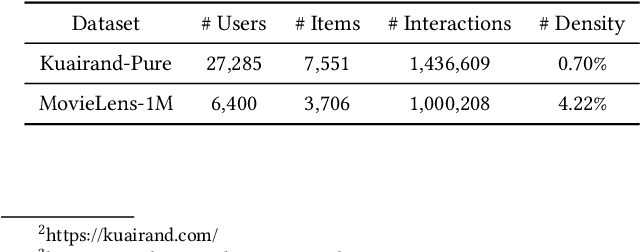
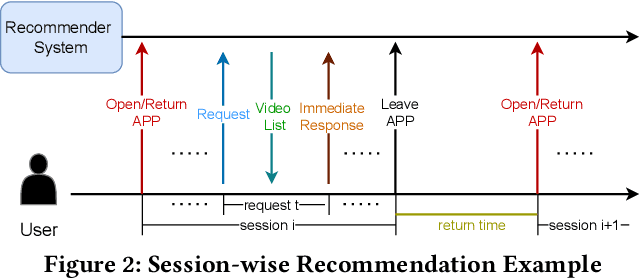
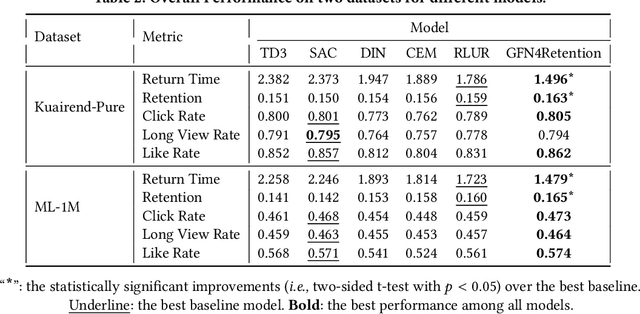
Recommender systems aim to fulfill the user's daily demands. While most existing research focuses on maximizing the user's engagement with the system, it has recently been pointed out that how frequently the users come back for the service also reflects the quality and stability of recommendations. However, optimizing this user retention behavior is non-trivial and poses several challenges including the intractable leave-and-return user activities, the sparse and delayed signal, and the uncertain relations between users' retention and their immediate feedback towards each item in the recommendation list. In this work, we regard the retention signal as an overall estimation of the user's end-of-session satisfaction and propose to estimate this signal through a probabilistic flow. This flow-based modeling technique can back-propagate the retention reward towards each recommended item in the user session, and we show that the flow combined with traditional learning-to-rank objectives eventually optimizes a non-discounted cumulative reward for both immediate user feedback and user retention. We verify the effectiveness of our method through both offline empirical studies on two public datasets and online A/B tests in an industrial platform.
Towards a General Time Series Anomaly Detector with Adaptive Bottlenecks and Dual Adversarial Decoders
May 24, 2024


Time series anomaly detection plays a vital role in a wide range of applications. Existing methods require training one specific model for each dataset, which exhibits limited generalization capability across different target datasets, hindering anomaly detection performance in various scenarios with scarce training data. Aiming at this problem, we propose constructing a general time series anomaly detection model, which is pre-trained on extensive multi-domain datasets and can subsequently apply to a multitude of downstream scenarios. The significant divergence of time series data across different domains presents two primary challenges in building such a general model: (1) meeting the diverse requirements of appropriate information bottlenecks tailored to different datasets in one unified model, and (2) enabling distinguishment between multiple normal and abnormal patterns, both are crucial for effective anomaly detection in various target scenarios. To tackle these two challenges, we propose a General time series anomaly Detector with Adaptive Bottlenecks and Dual Adversarial Decoders (DADA), which enables flexible selection of bottlenecks based on different data and explicitly enhances clear differentiation between normal and abnormal series. We conduct extensive experiments on nine target datasets from different domains. After pre-training on multi-domain data, DADA, serving as a zero-shot anomaly detector for these datasets, still achieves competitive or even superior results compared to those models tailored to each specific dataset.
ROSE: Register Assisted General Time Series Forecasting with Decomposed Frequency Learning
May 24, 2024With the increasing collection of time series data from various domains, there arises a strong demand for general time series forecasting models pre-trained on a large number of time-series datasets to support a variety of downstream prediction tasks. Enabling general time series forecasting faces two challenges: how to obtain unified representations from multi-domian time series data, and how to capture domain-specific features from time series data across various domains for adaptive transfer in downstream tasks. To address these challenges, we propose a Register Assisted General Time Series Forecasting Model with Decomposed Frequency Learning (ROSE), a novel pre-trained model for time series forecasting. ROSE employs Decomposed Frequency Learning for the pre-training task, which decomposes coupled semantic and periodic information in time series with frequency-based masking and reconstruction to obtain unified representations across domains. We also equip ROSE with a Time Series Register, which learns to generate a register codebook to capture domain-specific representations during pre-training and enhances domain-adaptive transfer by selecting related register tokens on downstream tasks. After pre-training on large-scale time series data, ROSE achieves state-of-the-art forecasting performance on 8 real-world benchmarks. Remarkably, even in few-shot scenarios, it demonstrates competitive or superior performance compared to existing methods trained with full data.
A Lost Opportunity for Vision-Language Models: A Comparative Study of Online Test-time Adaptation for Vision-Language Models
May 23, 2024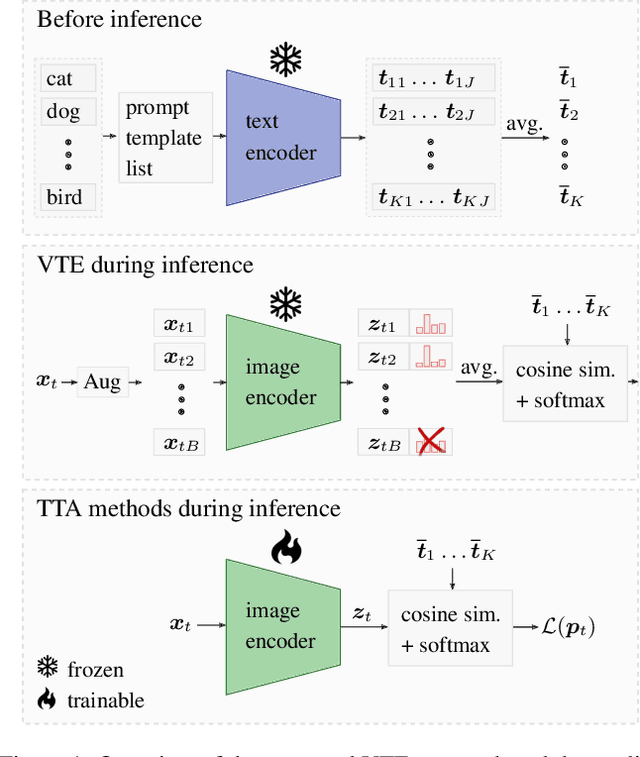
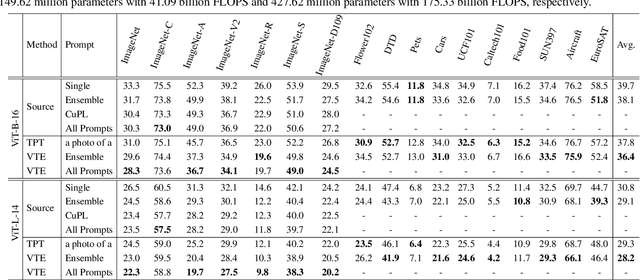
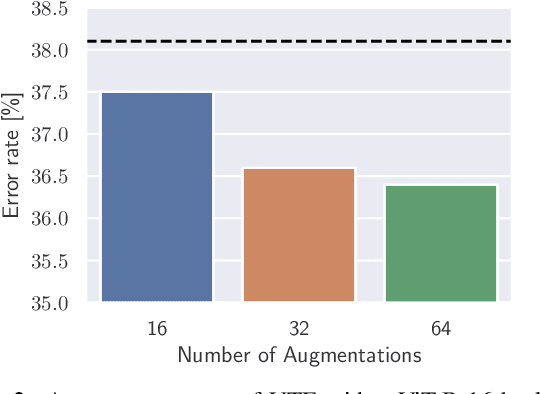
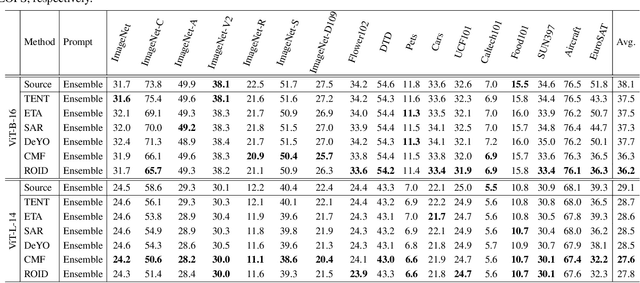
In the realm of deep learning, maintaining model robustness against distribution shifts is critical. This paper investigates test-time adaptation strategies for vision-language models, with a specific focus on CLIP and its variants. Through a systematic exploration of prompt-based techniques and existing test-time adaptation methods, the study aims to enhance the adaptability and robustness of vision-language models in diverse real-world scenarios. The investigation includes an analysis of prompt engineering strategies, such as hand-crafted prompts, prompt ensembles, and prompt learning techniques. We introduce a vision-text-space ensemble that significantly boosts the average performance compared to a text-space-only ensemble. Additionally, our comparative study delves into leveraging existing test-time adaptation methods originally designed for image classification tasks. Experimental evaluations conducted across various datasets and model architectures demonstrate the efficacy of different adaptation strategies. We further give insights into the importance of updating the vision encoder and whether it is beneficial to update the text encoder. Code is available at https://github.com/mariodoebler/test-time-adaptation
A Survey on Diffusion Models for Time Series and Spatio-Temporal Data
Apr 29, 2024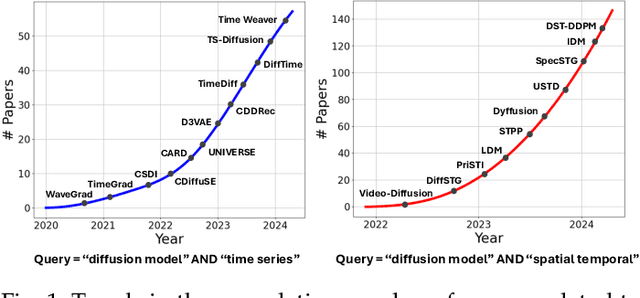
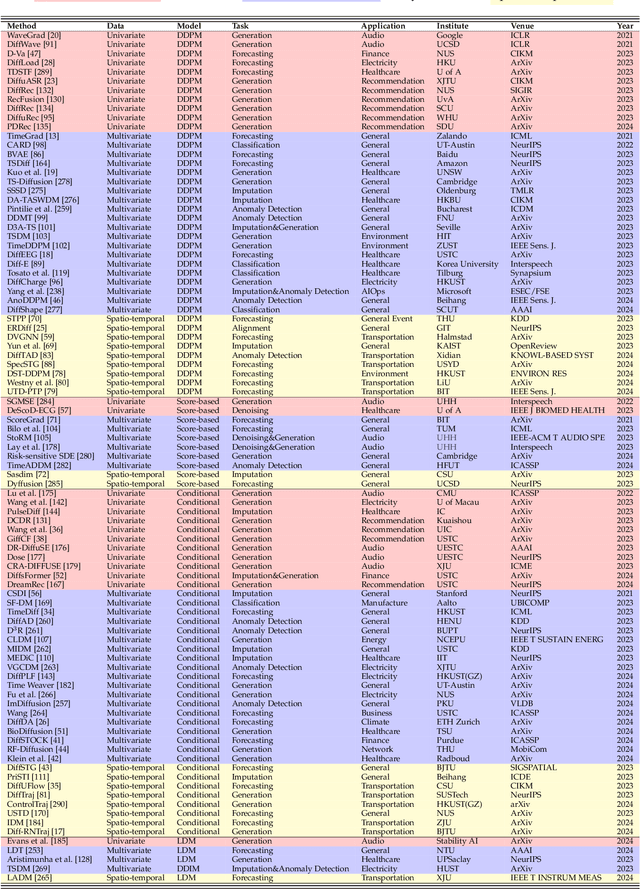
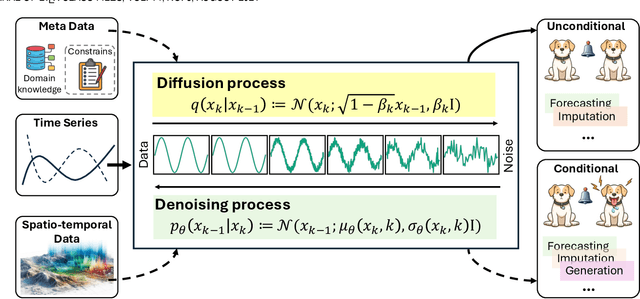
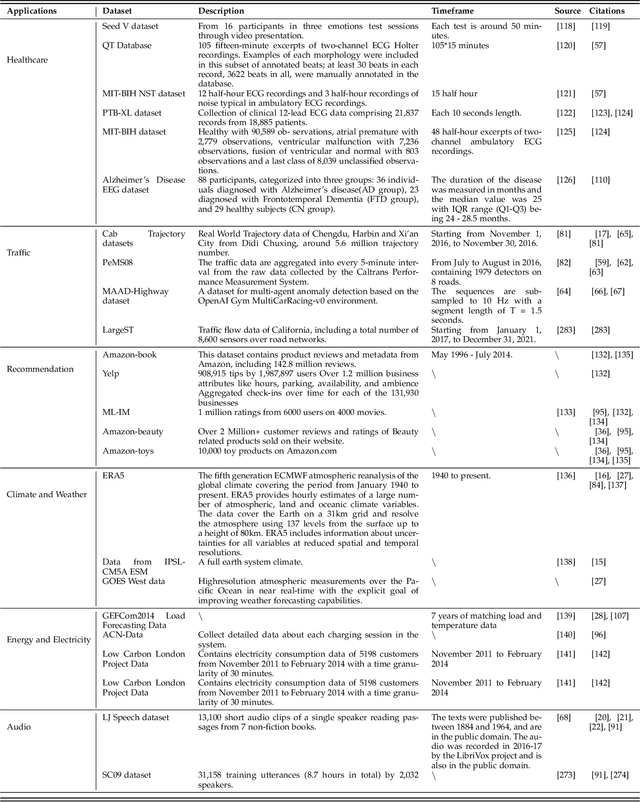
The study of time series data is crucial for understanding trends and anomalies over time, enabling predictive insights across various sectors. Spatio-temporal data, on the other hand, is vital for analyzing phenomena in both space and time, providing a dynamic perspective on complex system interactions. Recently, diffusion models have seen widespread application in time series and spatio-temporal data mining. Not only do they enhance the generative and inferential capabilities for sequential and temporal data, but they also extend to other downstream tasks. In this survey, we comprehensively and thoroughly review the use of diffusion models in time series and spatio-temporal data, categorizing them by model category, task type, data modality, and practical application domain. In detail, we categorize diffusion models into unconditioned and conditioned types and discuss time series data and spatio-temporal data separately. Unconditioned models, which operate unsupervised, are subdivided into probability-based and score-based models, serving predictive and generative tasks such as forecasting, anomaly detection, classification, and imputation. Conditioned models, on the other hand, utilize extra information to enhance performance and are similarly divided for both predictive and generative tasks. Our survey extensively covers their application in various fields, including healthcare, recommendation, climate, energy, audio, and transportation, providing a foundational understanding of how these models analyze and generate data. Through this structured overview, we aim to provide researchers and practitioners with a comprehensive understanding of diffusion models for time series and spatio-temporal data analysis, aiming to direct future innovations and applications by addressing traditional challenges and exploring innovative solutions within the diffusion model framework.