 Add to Chrome
 Add to Firefox
 Add to Edge
ConStruct: Structural Distillation of Foundation Models for Prototype-Based Weakly Supervised Histopathology Segmentation
Dec 11, 2025
Weakly supervised semantic segmentation (WSSS) in histopathology relies heavily on classification backbones, yet these models often localize only the most discriminative regions and struggle to capture the full spatial extent of tissue structures. Vision-language models such as CONCH offer rich semantic alignment and morphology-aware representations, while modern segmentation backbones like SegFormer preserve fine-grained spatial cues. However, combining these complementary strengths remains challenging, especially under weak supervision and without dense annotations. We propose a prototype learning framework for WSSS in histopathological images that integrates morphology-aware representations from CONCH, multi-scale structural cues from SegFormer, and text-guided semantic alignment to produce prototypes that are simultaneously semantically discriminative and spatially coherent. To effectively leverage these heterogeneous sources, we introduce text-guided prototype initialization that incorporates pathology descriptions to generate more complete and semantically accurate pseudo-masks. A structural distillation mechanism transfers spatial knowledge from SegFormer to preserve fine-grained morphological patterns and local tissue boundaries during prototype learning. Our approach produces high-quality pseudo masks without pixel-level annotations, improves localization completeness, and enhances semantic consistency across tissue types. Experiments on BCSS-WSSS datasets demonstrate that our prototype learning framework outperforms existing WSSS methods while remaining computationally efficient through frozen foundation model backbones and lightweight trainable adapters.

Contrastive Integrated Gradients: A Feature Attribution-Based Method for Explaining Whole Slide Image Classification
Nov 14, 2025Interpretability is essential in Whole Slide Image (WSI) analysis for computational pathology, where understanding model predictions helps build trust in AI-assisted diagnostics. While Integrated Gradients (IG) and related attribution methods have shown promise, applying them directly to WSIs introduces challenges due to their high-resolution nature. These methods capture model decision patterns but may overlook class-discriminative signals that are crucial for distinguishing between tumor subtypes. In this work, we introduce Contrastive Integrated Gradients (CIG), a novel attribution method that enhances interpretability by computing contrastive gradients in logit space. First, CIG highlights class-discriminative regions by comparing feature importance relative to a reference class, offering sharper differentiation between tumor and non-tumor areas. Second, CIG satisfies the axioms of integrated attribution, ensuring consistency and theoretical soundness. Third, we propose two attribution quality metrics, MIL-AIC and MIL-SIC, which measure how predictive information and model confidence evolve with access to salient regions, particularly under weak supervision. We validate CIG across three datasets spanning distinct cancer types: CAMELYON16 (breast cancer metastasis in lymph nodes), TCGA-RCC (renal cell carcinoma), and TCGA-Lung (lung cancer). Experimental results demonstrate that CIG yields more informative attributions both quantitatively, using MIL-AIC and MIL-SIC, and qualitatively, through visualizations that align closely with ground truth tumor regions, underscoring its potential for interpretable and trustworthy WSI-based diagnostics
Strategic Decision-Making Under Uncertainty through Bi-Level Game Theory and Distributionally Robust Optimization
Nov 07, 2025In strategic scenarios where decision-makers operate at different hierarchical levels, traditional optimization methods are often inadequate for handling uncertainties from incomplete information or unpredictable external factors. To fill this gap, we introduce a mathematical framework that integrates bi-level game theory with distributionally robust optimization (DRO), particularly suited for complex network systems. Our approach leverages the hierarchical structure of bi-level games to model leader-follower interactions while incorporating distributional robustness to guard against worst-case probability distributions. To ensure computational tractability, the Karush-Kuhn-Tucker (KKT) conditions are used to transform the bi-level challenge into a more manageable single-level model, and the infinite-dimensional DRO problem is reformulated into a finite equivalent. We propose a generalized algorithm to solve this integrated model. Simulation results validate our framework's efficacy, demonstrating that under high uncertainty, the proposed model achieves up to a 22\% cost reduction compared to traditional stochastic methods while maintaining a service level of over 90\%. This highlights its potential to significantly improve decision quality and robustness in networked systems such as transportation and communication networks.
Joint Visible Light and Backscatter Communications for Proximity-Based Indoor Asset Tracking Enabled by Energy-Neutral Devices
Oct 31, 2025In next-generation wireless systems, providing location-based mobile computing services for energy-neutral devices has become a crucial objective for the provision of sustainable Internet of Things (IoT). Visible light positioning (VLP) has gained great research attention as a complementary method to radio frequency (RF) solutions since it can leverage ubiquitous lighting infrastructure. However, conventional VLP receivers often rely on photodetectors or cameras that are power-hungry, complex, and expensive. To address this challenge, we propose a hybrid indoor asset tracking system that integrates visible light communication (VLC) and backscatter communication (BC) within a simultaneous lightwave information and power transfer (SLIPT) framework. We design a low-complexity and energy-neutral IoT node, namely backscatter device (BD) which harvests energy from light-emitting diode (LED) access points, and then modulates and reflects ambient RF carriers to indicate its location within particular VLC cells. We present a multi-cell VLC deployment with frequency division multiplexing (FDM) method that mitigates interference among LED access points by assigning them distinct frequency pairs based on a four-color map scheduling principle. We develop a lightweight particle filter (PF) tracking algorithm at an edge RF reader, where the fusion of proximity reports and the received backscatter signal strength are employed to track the BD. Experimental results show that this approach achieves the positioning error of 0.318 m at 50th percentile and 0.634 m at 90th percentile, while avoiding the use of complex photodetectors and active RF synthesizing components at the energy-neutral IoT node. By demonstrating robust performance in multiple indoor trajectories, the proposed solution enables scalable, cost-effective, and energy-neutral indoor tracking for pervasive and edge-assisted IoT applications.
Cost Minimization for Space-Air-Ground Integrated Multi-Access Edge Computing Systems
Oct 24, 2025Space-air-ground integrated multi-access edge computing (SAGIN-MEC) provides a promising solution for the rapidly developing low-altitude economy (LAE) to deliver flexible and wide-area computing services. However, fully realizing the potential of SAGIN-MEC in the LAE presents significant challenges, including coordinating decisions across heterogeneous nodes with different roles, modeling complex factors such as mobility and network variability, and handling real-time decision-making under partially observable environment with hybrid variables. To address these challenges, we first present a hierarchical SAGIN-MEC architecture that enables the coordination between user devices (UDs), uncrewed aerial vehicles (UAVs), and satellites. Then, we formulate a UD cost minimization optimization problem (UCMOP) to minimize the UD cost by jointly optimizing the task offloading ratio, UAV trajectory planning, computing resource allocation, and UD association. We show that the UCMOP is an NP-hard problem. To overcome this challenge, we propose a multi-agent deep deterministic policy gradient (MADDPG)-convex optimization and coalitional game (MADDPG-COCG) algorithm. Specifically, we employ the MADDPG algorithm to optimize the continuous temporal decisions for heterogeneous nodes in the partially observable SAGIN-MEC system. Moreover, we propose a convex optimization and coalitional game (COCG) method to enhance the conventional MADDPG by deterministically handling the hybrid and varying-dimensional decisions. Simulation results demonstrate that the proposed MADDPG-COCG algorithm significantly enhances the user-centric performances in terms of the aggregated UD cost, task completion delay, and UD energy consumption, with a slight increase in UAV energy consumption, compared to the benchmark algorithms. Moreover, the MADDPG-COCG algorithm shows superior convergence stability and scalability.
Multilayer Non-Terrestrial Networks with Spectrum Access aided by Beyond-Diagonal RIS
Oct 06, 2025In this work, we study a multi-user NTN in which a satellite serves as the primary network and a high-altitude platform station (HAPS) operates as the secondary network, acting as a cognitive radio. To reduce the cost, complexity, and power consumption of conventional antenna arrays, we equip the HAPS with a transmissive BD-RIS antenna front end. We then formulate a joint optimization problem for the BD-RIS phase response and the HAPS transmit power allocation under strict per-user interference temperature constraints. To tackle the resulting highly nonconvex problem, we propose an alternating-optimization framework: the power-allocation subproblem admits a closed-form, water-filling-type solution derived from the Karush-Kuhn-Tucker (KKT) conditions, while the BD-RIS configuration is refined via Riemannian manifold optimization. Simulation results show significant gains in data rate and interference suppression over diagonal RIS-assisted benchmarks, establishing BD-RIS as a promising enabler for future multilayer NTNs.
The Role of ISAC in 6G Networks: Enabling Next-Generation Wireless Systems
Oct 06, 2025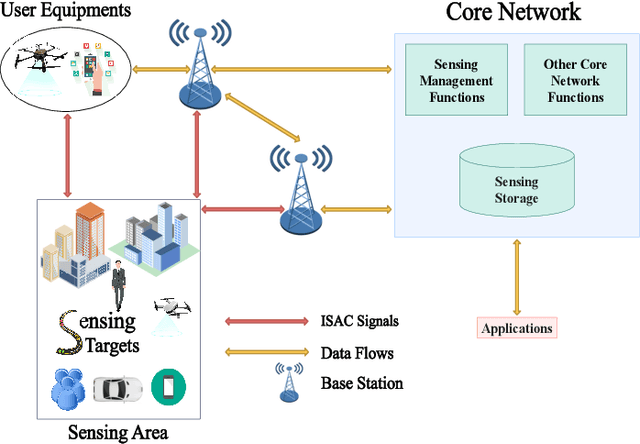
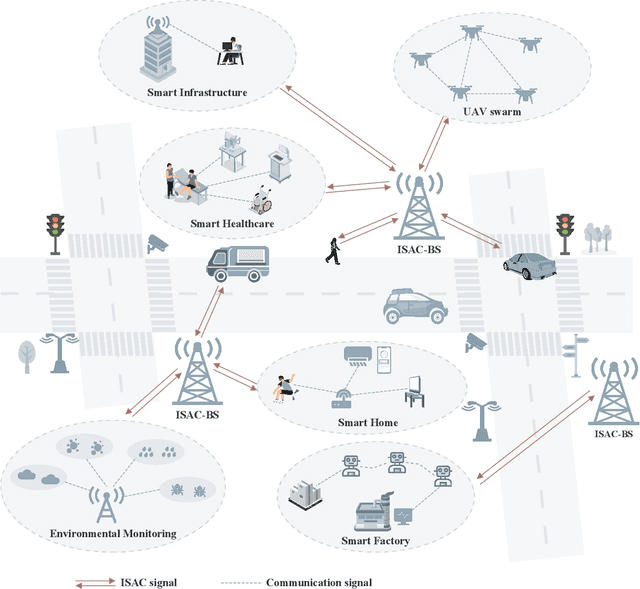
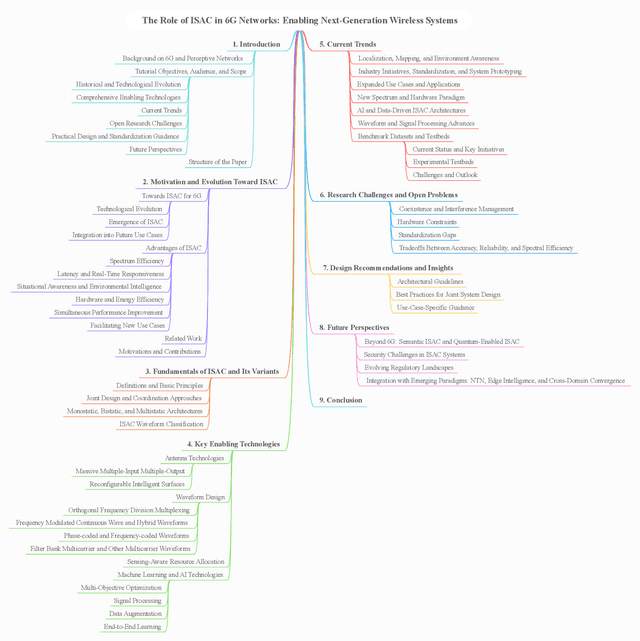
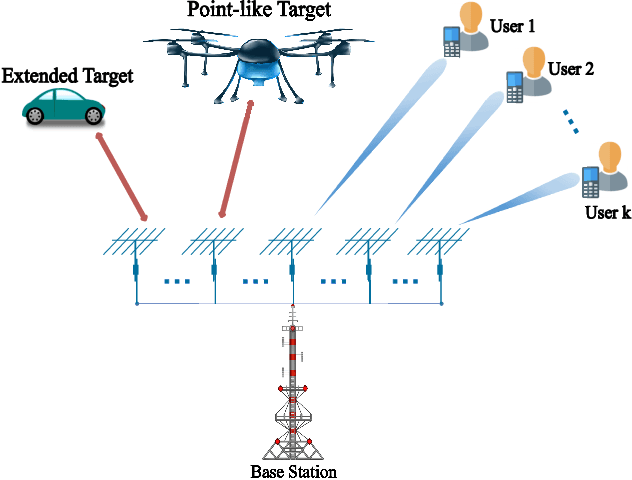
The commencement of the sixth-generation (6G) wireless networks represents a fundamental shift in the integration of communication and sensing technologies to support next-generation applications. Integrated sensing and communication (ISAC) is a key concept in this evolution, enabling end-to-end support for both communication and sensing within a unified framework. It enhances spectrum efficiency, reduces latency, and supports diverse use cases, including smart cities, autonomous systems, and perceptive environments. This tutorial provides a comprehensive overview of ISAC's role in 6G networks, beginning with its evolution since 5G and the technical drivers behind its adoption. Core principles and system variations of ISAC are introduced, followed by an in-depth discussion of the enabling technologies that facilitate its practical deployment. The paper further analyzes current research directions to highlight key challenges, open issues, and emerging trends. Design insights and recommendations are also presented to support future development and implementation. This work ultimately try to address three central questions: Why is ISAC essential for 6G? What innovations does it bring? How will it shape the future of wireless communication?
Dynamic Trajectory Optimization and Power Control for Hierarchical UAV Swarms in 6G Aerial Access Network
Aug 26, 2025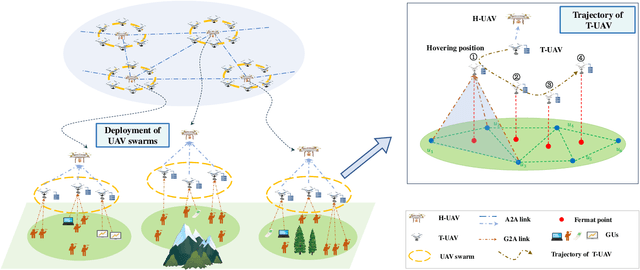
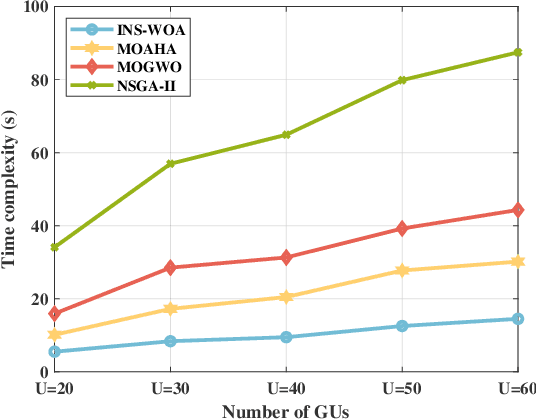
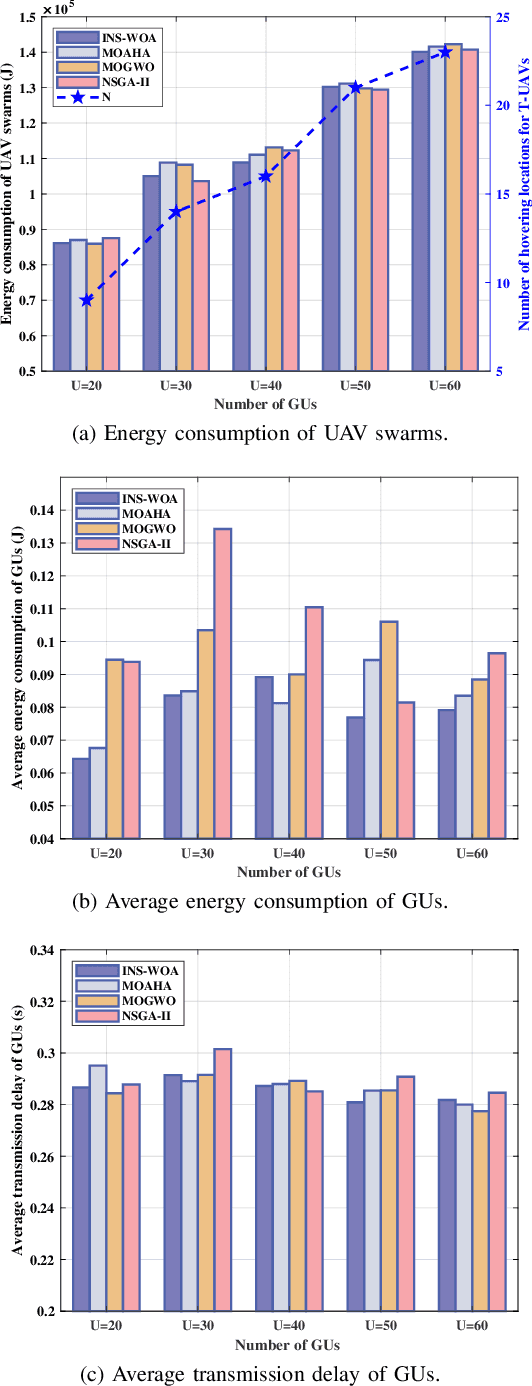
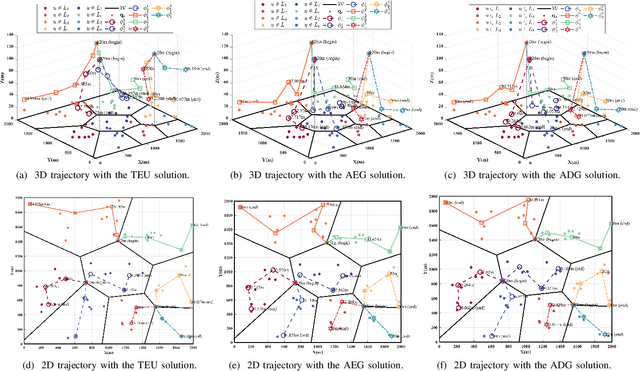
Unmanned aerial vehicles (UAVs) can serve as aerial base stations (BSs) to extend the ubiquitous connectivity for ground users (GUs) in the sixth-generation (6G) era. However, it is challenging to cooperatively deploy multiple UAV swarms in large-scale remote areas. Hence, in this paper, we propose a hierarchical UAV swarms structure for 6G aerial access networks, where the head UAVs serve as aerial BSs, and tail UAVs (T-UAVs) are responsible for relay. In detail, we jointly optimize the dynamic deployment and trajectory of UAV swarms, which is formulated as a multi-objective optimization problem (MOP) to concurrently minimize the energy consumption of UAV swarms and GUs, as well as the delay of GUs. However, the proposed MOP is a mixed integer nonlinear programming and NP-hard to solve. Therefore, we develop a K-means and Voronoi diagram based area division method, and construct Fermat points to establish connections between GUs and T-UAVs. Then, an improved non-dominated sorting whale optimization algorithm is proposed to seek Pareto optimal solutions for the transformed MOP. Finally, extensive simulations are conducted to verify the performance of proposed algorithms by comparing with baseline mechanisms, resulting in a 50% complexity reduction.
Remote ID Based UAV Collision Avoidance Optimization for Low-Altitude Airspace Safety
Aug 11, 2025With the rapid development of unmanned aerial vehicles (UAVs), it is paramount to ensure safe and efficient operations in open airspaces. The remote identification (Remote ID) is deemed an effective real-time UAV monitoring system by the federal aviation administration, which holds potentials for enabling inter-UAV communications. This paper deeply investigates the application of Remote ID for UAV collision avoidance while minimizing communication delays. First, we propose a Remote ID based distributed multi-UAV collision avoidance (DMUCA) framework to support the collision detection, avoidance decision-making, and trajectory recovery. Next, the average transmission delays for Remote ID messages are analyzed, incorporating the packet reception mechanisms and packet loss due to interference. The optimization problem is formulated to minimize the long-term average communication delay, where UAVs can flexibly select the Remote ID protocol to enhance the collision avoidance performance. To tackle the problem, we design a multi-agent deep Q-network based adaptive communication configuration algorithm, allowing UAVs to autonomously learn the optimal protocol configurations in dynamic environments. Finally, numerical results verify the feasibility of the proposed DMUCA framework, and the proposed mechanism can reduce the average delay by 32% compared to the fixed protocol configuration.
Joint Computation Offloading and Resource Allocation for Uncertain Maritime MEC via Cooperation of UAVs and Vessels
Jun 18, 2025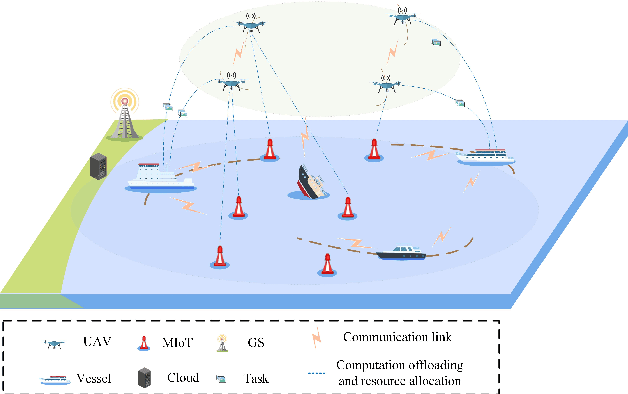
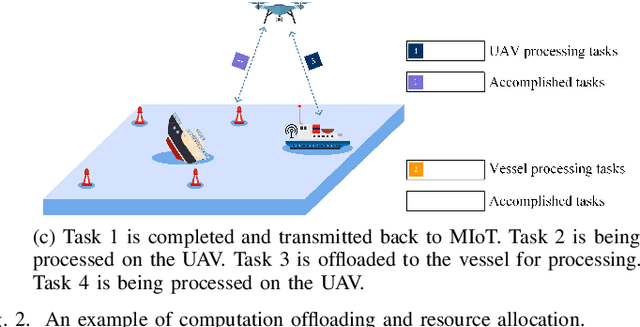
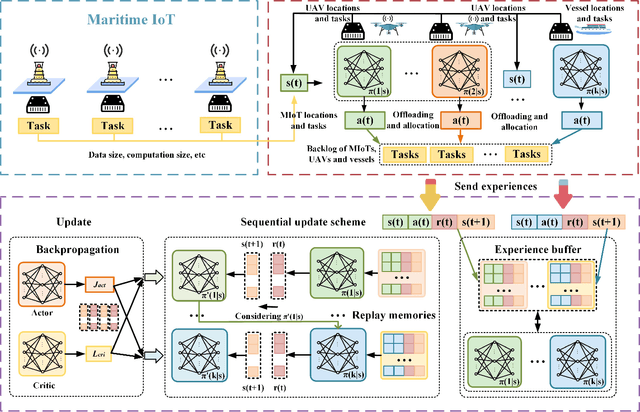

The computation demands from the maritime Internet of Things (MIoT) increase rapidly in recent years, and the unmanned aerial vehicles (UAVs) and vessels based multi-access edge computing (MEC) can fulfill these MIoT requirements. However, the uncertain maritime tasks present significant challenges of inefficient computation offloading and resource allocation. In this paper, we focus on the maritime computation offloading and resource allocation through the cooperation of UAVs and vessels, with consideration of uncertain tasks. Specifically, we propose a cooperative MEC framework for computation offloading and resource allocation, including MIoT devices, UAVs and vessels. Then, we formulate the optimization problem to minimize the total execution time. As for the uncertain MIoT tasks, we leverage Lyapunov optimization to tackle the unpredictable task arrivals and varying computational resource availability. By converting the long-term constraints into short-term constraints, we obtain a set of small-scale optimization problems. Further, considering the heterogeneity of actions and resources of UAVs and vessels, we reformulate the small-scale optimization problem into a Markov game (MG). Moreover, a heterogeneous-agent soft actor-critic is proposed to sequentially update various neural networks and effectively solve the MG problem. Finally, simulations are conducted to verify the effectiveness in addressing computational offloading and resource allocation.