 Add to Chrome
 Add to Firefox
 Add to Edge
DFGNN: Dual-frequency Graph Neural Network for Sign-aware Feedback
May 24, 2024
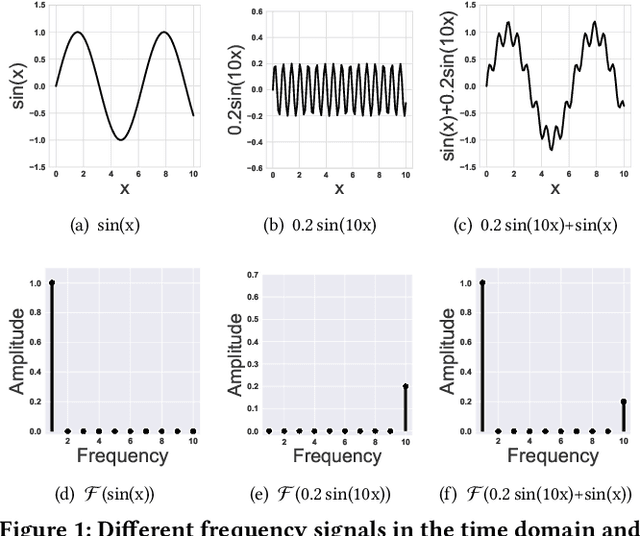
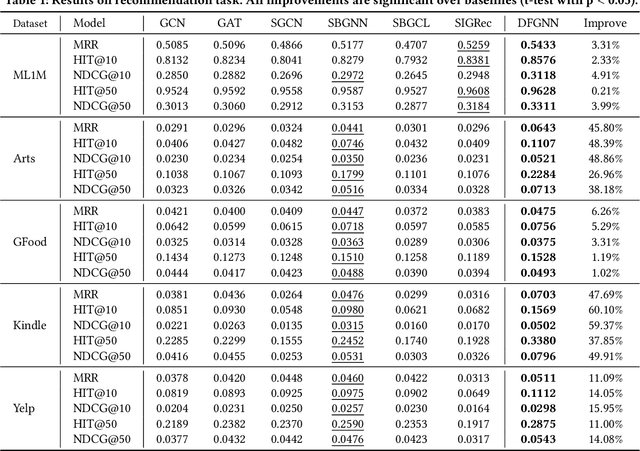
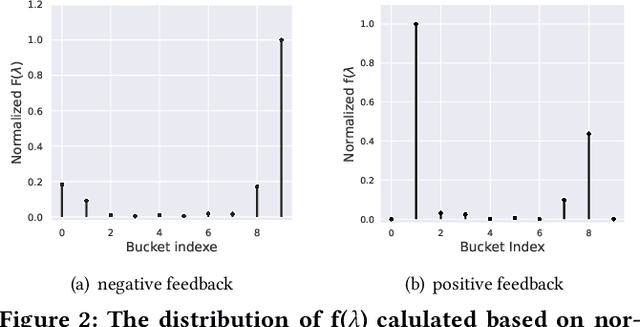
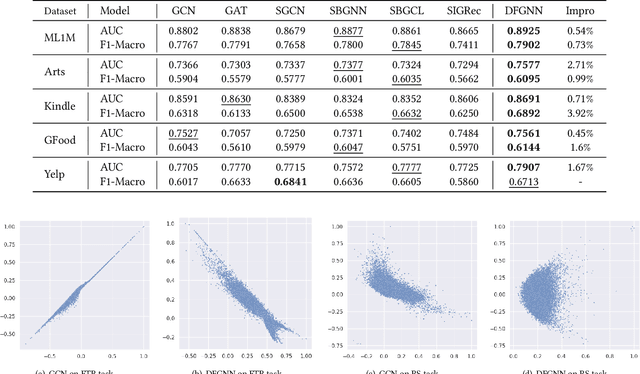
The graph-based recommendation has achieved great success in recent years. However, most existing graph-based recommendations focus on capturing user preference based on positive edges/feedback, while ignoring negative edges/feedback (e.g., dislike, low rating) that widely exist in real-world recommender systems. How to utilize negative feedback in graph-based recommendations still remains underexplored. In this study, we first conducted a comprehensive experimental analysis and found that (1) existing graph neural networks are not well-suited for modeling negative feedback, which acts as a high-frequency signal in a user-item graph. (2) The graph-based recommendation suffers from the representation degeneration problem. Based on the two observations, we propose a novel model that models positive and negative feedback from a frequency filter perspective called Dual-frequency Graph Neural Network for Sign-aware Recommendation (DFGNN). Specifically, in DFGNN, the designed dual-frequency graph filter (DGF) captures both low-frequency and high-frequency signals that contain positive and negative feedback. Furthermore, the proposed signed graph regularization is applied to maintain the user/item embedding uniform in the embedding space to alleviate the representation degeneration problem. Additionally, we conduct extensive experiments on real-world datasets and demonstrate the effectiveness of the proposed model. Codes of our model will be released upon acceptance.

Cross-Domain Knowledge Distillation for Low-Resolution Human Pose Estimation
May 19, 2024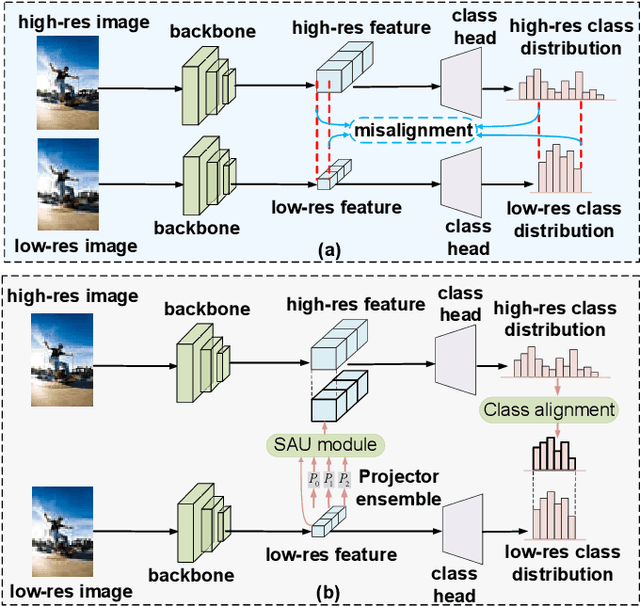
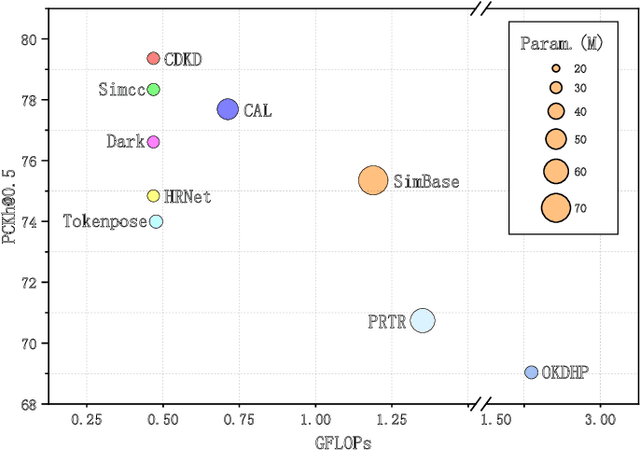
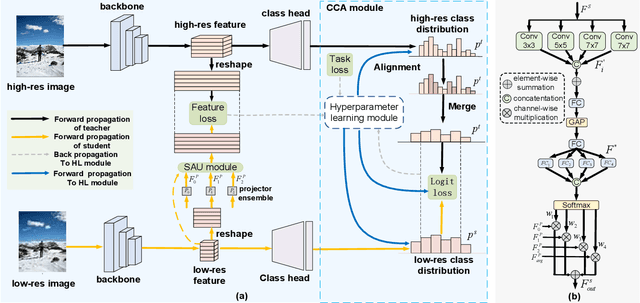
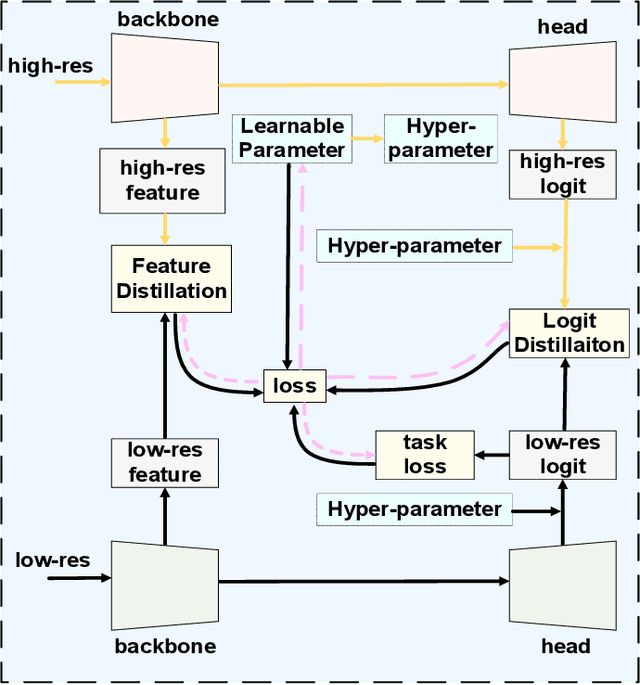
In practical applications of human pose estimation, low-resolution inputs frequently occur, and existing state-of-the-art models perform poorly with low-resolution images. This work focuses on boosting the performance of low-resolution models by distilling knowledge from a high-resolution model. However, we face the challenge of feature size mismatch and class number mismatch when applying knowledge distillation to networks with different input resolutions. To address this issue, we propose a novel cross-domain knowledge distillation (CDKD) framework. In this framework, we construct a scale-adaptive projector ensemble (SAPE) module to spatially align feature maps between models of varying input resolutions. It adopts a projector ensemble to map low-resolution features into multiple common spaces and adaptively merges them based on multi-scale information to match high-resolution features. Additionally, we construct a cross-class alignment (CCA) module to solve the problem of the mismatch of class numbers. By combining an easy-to-hard training (ETHT) strategy, the CCA module further enhances the distillation performance. The effectiveness and efficiency of our approach are demonstrated by extensive experiments on two common benchmark datasets: MPII and COCO. The code is made available in supplementary material.
Focus on Low-Resolution Information: Multi-Granular Information-Lossless Model for Low-Resolution Human Pose Estimation
May 19, 2024In real-world applications of human pose estimation, low-resolution input images are frequently encountered when the performance of the image acquisition equipment is limited or the shooting distance is too far. However, existing state-of-the-art models for human pose estimation perform poorly on low-resolution images. One key reason is the presence of downsampling layers in these models, e.g., strided convolutions and pooling layers. It further reduces the already insufficient image information. Another key reason is that the body skeleton and human kinematic information are not fully utilized. In this work, we propose a Multi-Granular Information-Lossless (MGIL) model to replace the downsampling layers to address the above issues. Specifically, MGIL employs a Fine-grained Lossless Information Extraction (FLIE) module, which can prevent the loss of local information. Furthermore, we design a Coarse-grained Information Interaction (CII) module to adequately leverage human body structural information. To efficiently fuse cross-granular information and thoroughly exploit the relationships among keypoints, we further introduce a Multi-Granular Adaptive Fusion (MGAF) mechanism. The mechanism assigns weights to features of different granularities based on the content of the image. The model is effective, flexible, and universal. We show its potential in various vision tasks with comprehensive experiments. It outperforms the SOTA methods by 7.7 mAP on COCO and performs well with different input resolutions, different backbones, and different vision tasks. The code is provided in supplementary material.
GinAR: An End-To-End Multivariate Time Series Forecasting Model Suitable for Variable Missing
May 18, 2024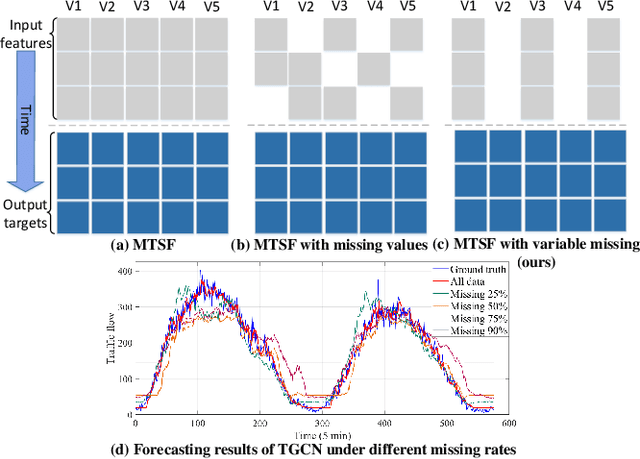
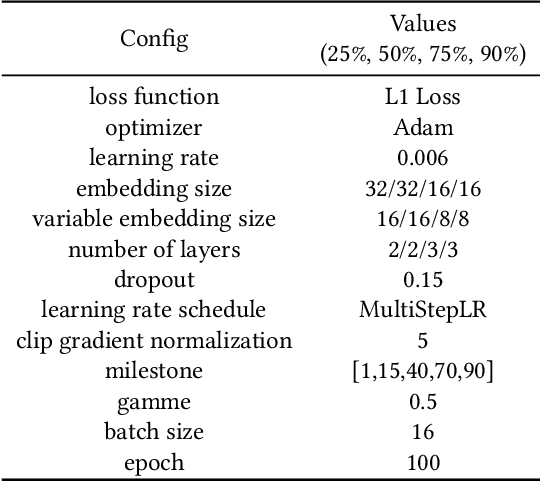
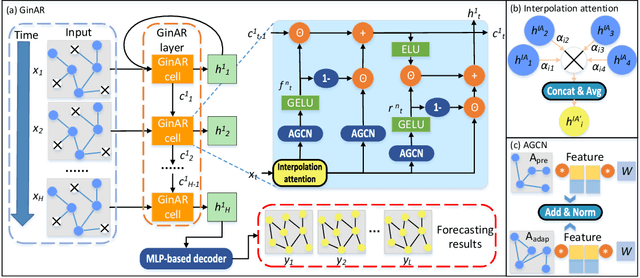
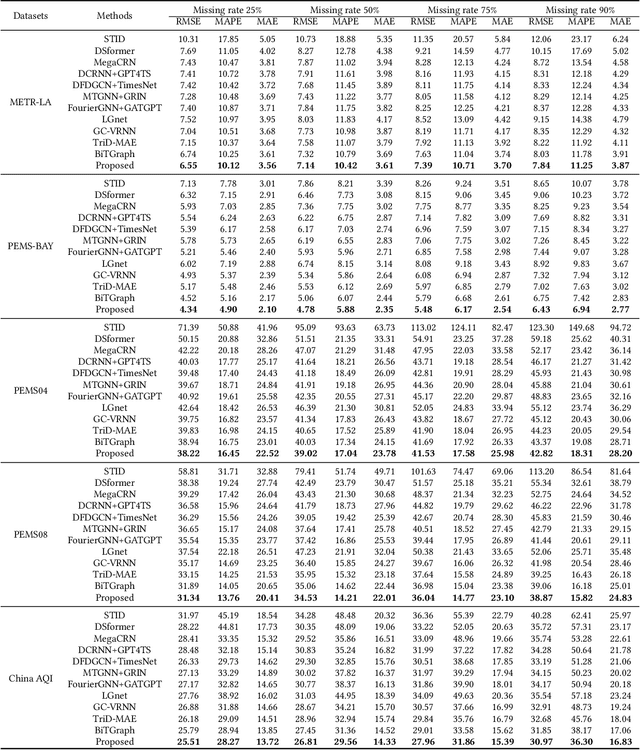
Multivariate time series forecasting (MTSF) is crucial for decision-making to precisely forecast the future values/trends, based on the complex relationships identified from historical observations of multiple sequences. Recently, Spatial-Temporal Graph Neural Networks (STGNNs) have gradually become the theme of MTSF model as their powerful capability in mining spatial-temporal dependencies, but almost of them heavily rely on the assumption of historical data integrity. In reality, due to factors such as data collector failures and time-consuming repairment, it is extremely challenging to collect the whole historical observations without missing any variable. In this case, STGNNs can only utilize a subset of normal variables and easily suffer from the incorrect spatial-temporal dependency modeling issue, resulting in the degradation of their forecasting performance. To address the problem, in this paper, we propose a novel Graph Interpolation Attention Recursive Network (named GinAR) to precisely model the spatial-temporal dependencies over the limited collected data for forecasting. In GinAR, it consists of two key components, that is, interpolation attention and adaptive graph convolution to take place of the fully connected layer of simple recursive units, and thus are capable of recovering all missing variables and reconstructing the correct spatial-temporal dependencies for recursively modeling of multivariate time series data, respectively. Extensive experiments conducted on five real-world datasets demonstrate that GinAR outperforms 11 SOTA baselines, and even when 90% of variables are missing, it can still accurately predict the future values of all variables.
ID-centric Pre-training for Recommendation
May 07, 2024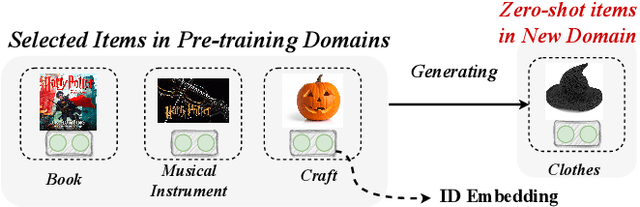
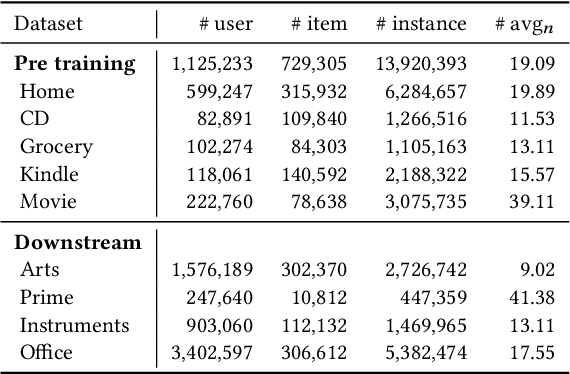
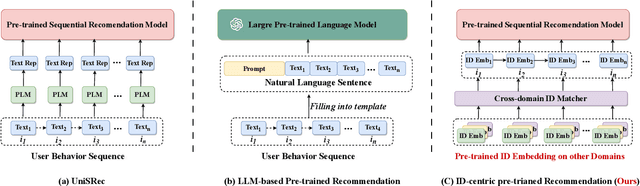
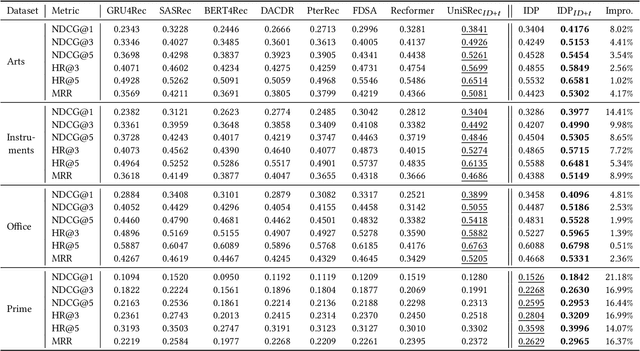
Classical sequential recommendation models generally adopt ID embeddings to store knowledge learned from user historical behaviors and represent items. However, these unique IDs are challenging to be transferred to new domains. With the thriving of pre-trained language model (PLM), some pioneer works adopt PLM for pre-trained recommendation, where modality information (e.g., text) is considered universal across domains via PLM. Unfortunately, the behavioral information in ID embeddings is still verified to be dominating in PLM-based recommendation models compared to modality information and thus limits these models' performance. In this work, we propose a novel ID-centric recommendation pre-training paradigm (IDP), which directly transfers informative ID embeddings learned in pre-training domains to item representations in new domains. Specifically, in pre-training stage, besides the ID-based sequential model for recommendation, we also build a Cross-domain ID-matcher (CDIM) learned by both behavioral and modality information. In the tuning stage, modality information of new domain items is regarded as a cross-domain bridge built by CDIM. We first leverage the textual information of downstream domain items to retrieve behaviorally and semantically similar items from pre-training domains using CDIM. Next, these retrieved pre-trained ID embeddings, rather than certain textual embeddings, are directly adopted to generate downstream new items' embeddings. Through extensive experiments on real-world datasets, both in cold and warm settings, we demonstrate that our proposed model significantly outperforms all baselines. Codes will be released upon acceptance.
MIPI 2024 Challenge on Nighttime Flare Removal: Methods and Results
Apr 30, 2024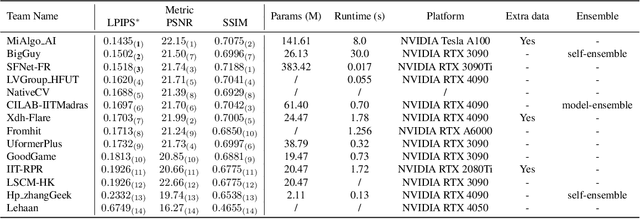
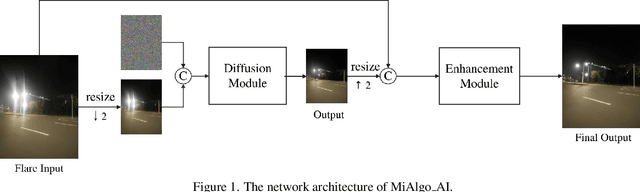
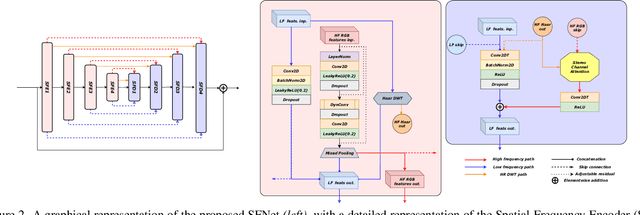

The increasing demand for computational photography and imaging on mobile platforms has led to the widespread development and integration of advanced image sensors with novel algorithms in camera systems. However, the scarcity of high-quality data for research and the rare opportunity for in-depth exchange of views from industry and academia constrain the development of mobile intelligent photography and imaging (MIPI). Building on the achievements of the previous MIPI Workshops held at ECCV 2022 and CVPR 2023, we introduce our third MIPI challenge including three tracks focusing on novel image sensors and imaging algorithms. In this paper, we summarize and review the Nighttime Flare Removal track on MIPI 2024. In total, 170 participants were successfully registered, and 14 teams submitted results in the final testing phase. The developed solutions in this challenge achieved state-of-the-art performance on Nighttime Flare Removal. More details of this challenge and the link to the dataset can be found at https://mipi-challenge.org/MIPI2024/.
Graphic Design with Large Multimodal Model
Apr 22, 2024In the field of graphic design, automating the integration of design elements into a cohesive multi-layered artwork not only boosts productivity but also paves the way for the democratization of graphic design. One existing practice is Graphic Layout Generation (GLG), which aims to layout sequential design elements. It has been constrained by the necessity for a predefined correct sequence of layers, thus limiting creative potential and increasing user workload. In this paper, we present Hierarchical Layout Generation (HLG) as a more flexible and pragmatic setup, which creates graphic composition from unordered sets of design elements. To tackle the HLG task, we introduce Graphist, the first layout generation model based on large multimodal models. Graphist efficiently reframes the HLG as a sequence generation problem, utilizing RGB-A images as input, outputs a JSON draft protocol, indicating the coordinates, size, and order of each element. We develop new evaluation metrics for HLG. Graphist outperforms prior arts and establishes a strong baseline for this field. Project homepage: https://github.com/graphic-design-ai/graphist
NTIRE 2024 Challenge on Low Light Image Enhancement: Methods and Results
Apr 22, 2024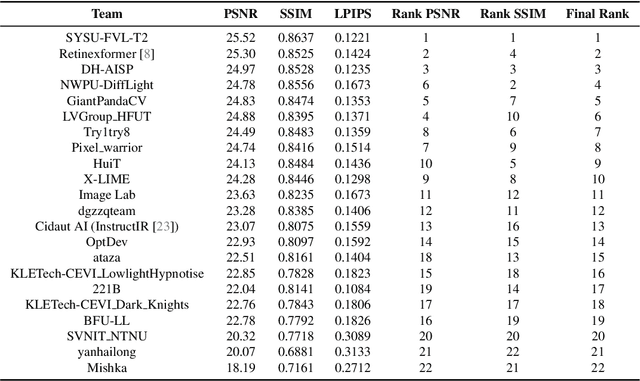
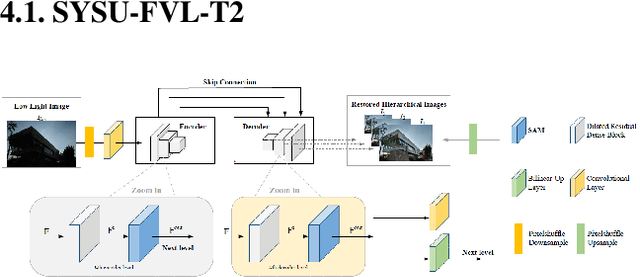
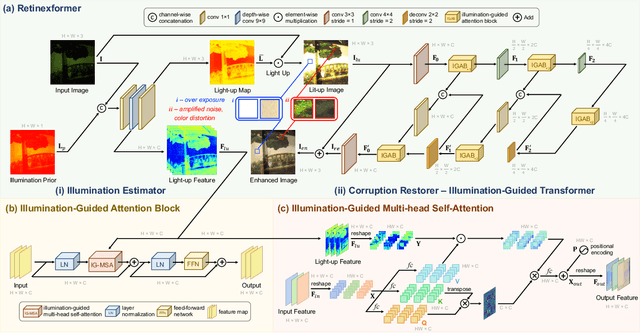
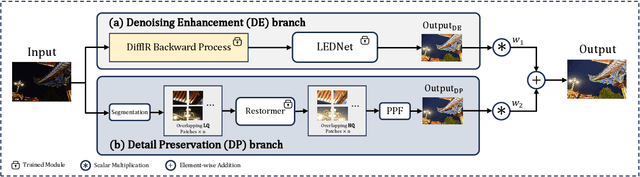
This paper reviews the NTIRE 2024 low light image enhancement challenge, highlighting the proposed solutions and results. The aim of this challenge is to discover an effective network design or solution capable of generating brighter, clearer, and visually appealing results when dealing with a variety of conditions, including ultra-high resolution (4K and beyond), non-uniform illumination, backlighting, extreme darkness, and night scenes. A notable total of 428 participants registered for the challenge, with 22 teams ultimately making valid submissions. This paper meticulously evaluates the state-of-the-art advancements in enhancing low-light images, reflecting the significant progress and creativity in this field.
AdvLoRA: Adversarial Low-Rank Adaptation of Vision-Language Models
Apr 20, 2024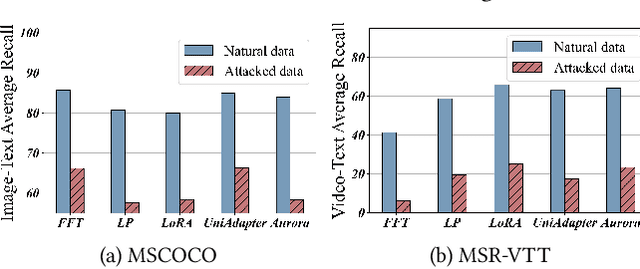
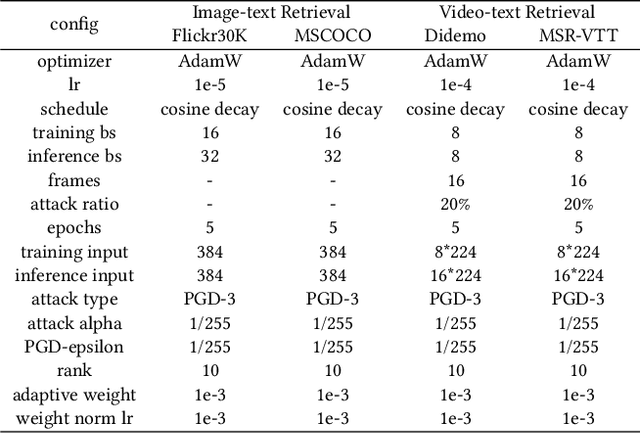
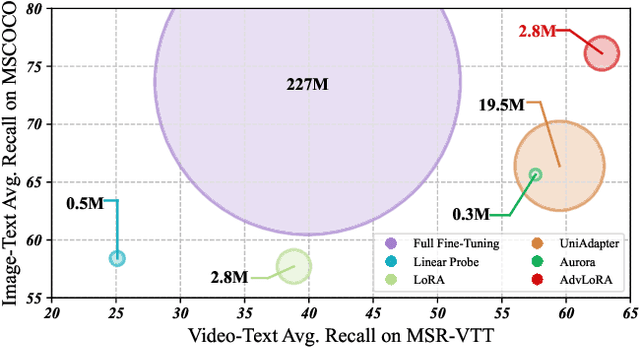
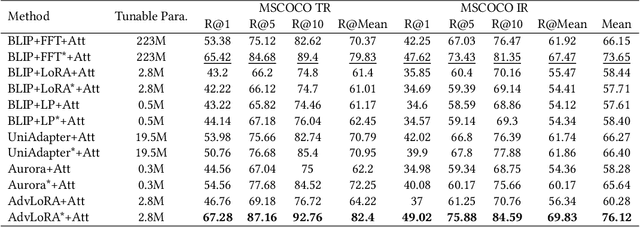
Vision-Language Models (VLMs) are a significant technique for Artificial General Intelligence (AGI). With the fast growth of AGI, the security problem become one of the most important challenges for VLMs. In this paper, through extensive experiments, we demonstrate the vulnerability of the conventional adaptation methods for VLMs, which may bring significant security risks. In addition, as the size of the VLMs increases, performing conventional adversarial adaptation techniques on VLMs results in high computational costs. To solve these problems, we propose a parameter-efficient \underline{Adv}ersarial adaptation method named \underline{AdvLoRA} by \underline{Lo}w-\underline{R}ank \underline{A}daptation. At first, we investigate and reveal the intrinsic low-rank property during the adversarial adaptation for VLMs. Different from LoRA, we improve the efficiency and robustness of adversarial adaptation by designing a novel reparameterizing method based on parameter clustering and parameter alignment. In addition, an adaptive parameter update strategy is proposed to further improve the robustness. By these settings, our proposed AdvLoRA alleviates the model security and high resource waste problems. Extensive experiments demonstrate the effectiveness and efficiency of the AdvLoRA.
The Ninth NTIRE 2024 Efficient Super-Resolution Challenge Report
Apr 16, 2024

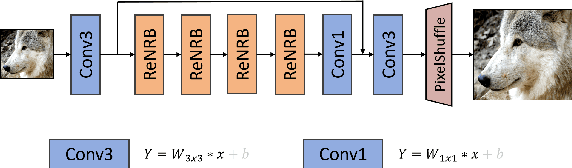

This paper provides a comprehensive review of the NTIRE 2024 challenge, focusing on efficient single-image super-resolution (ESR) solutions and their outcomes. The task of this challenge is to super-resolve an input image with a magnification factor of x4 based on pairs of low and corresponding high-resolution images. The primary objective is to develop networks that optimize various aspects such as runtime, parameters, and FLOPs, while still maintaining a peak signal-to-noise ratio (PSNR) of approximately 26.90 dB on the DIV2K_LSDIR_valid dataset and 26.99 dB on the DIV2K_LSDIR_test dataset. In addition, this challenge has 4 tracks including the main track (overall performance), sub-track 1 (runtime), sub-track 2 (FLOPs), and sub-track 3 (parameters). In the main track, all three metrics (ie runtime, FLOPs, and parameter count) were considered. The ranking of the main track is calculated based on a weighted sum-up of the scores of all other sub-tracks. In sub-track 1, the practical runtime performance of the submissions was evaluated, and the corresponding score was used to determine the ranking. In sub-track 2, the number of FLOPs was considered. The score calculated based on the corresponding FLOPs was used to determine the ranking. In sub-track 3, the number of parameters was considered. The score calculated based on the corresponding parameters was used to determine the ranking. RLFN is set as the baseline for efficiency measurement. The challenge had 262 registered participants, and 34 teams made valid submissions. They gauge the state-of-the-art in efficient single-image super-resolution. To facilitate the reproducibility of the challenge and enable other researchers to build upon these findings, the code and the pre-trained model of validated solutions are made publicly available at https://github.com/Amazingren/NTIRE2024_ESR/.