 Add to Chrome
 Add to Firefox
 Add to Edge
SEE: Continual Fine-tuning with Sequential Ensemble of Experts
Apr 09, 2025
Continual fine-tuning of large language models (LLMs) suffers from catastrophic forgetting. Rehearsal-based methods mitigate this problem by retaining a small set of old data. Nevertheless, they still suffer inevitable performance loss. Although training separate experts for each task can help prevent forgetting, effectively assembling them remains a challenge. Some approaches use routers to assign tasks to experts, but in continual learning, they often require retraining for optimal performance. To address these challenges, we introduce the Sequential Ensemble of Experts (SEE) framework. SEE removes the need for an additional router, allowing each expert to independently decide whether a query should be handled. The framework employs distributed routing, and during continual fine-tuning, SEE only requires the training of new experts for incoming tasks rather than retraining the entire system. Experiments reveal that the SEE outperforms prior approaches, including multi-task learning, in continual fine-tuning. It also demonstrates remarkable generalization ability, as the expert can effectively identify out-of-distribution queries, which can then be directed to a more generalized model for resolution. This work highlights the promising potential of integrating routing and response mechanisms within each expert, paving the way for the future of distributed model ensembling.

TransMamba: Flexibly Switching between Transformer and Mamba
Mar 31, 2025Transformers are the cornerstone of modern large language models, but their quadratic computational complexity limits efficiency in long-sequence processing. Recent advancements in Mamba, a state space model (SSM) with linear complexity, offer promising efficiency gains but suffer from unstable contextual learning and multitask generalization. This paper proposes TransMamba, a novel framework that unifies Transformer and Mamba through shared parameter matrices (e.g., QKV and CBx), and thus could dynamically switch between attention and SSM mechanisms at different token lengths and layers. We design the Memory converter to bridge Transformer and Mamba by converting attention outputs into SSM-compatible states, ensuring seamless information flow at TransPoints where the transformation happens. The TransPoint scheduling is also thoroughly explored for further improvements. We conducted extensive experiments demonstrating that TransMamba achieves superior training efficiency and performance compared to baselines, and validated the deeper consistency between Transformer and Mamba paradigms, offering a scalable solution for next-generation sequence modeling.
A Survey of Efficient Reasoning for Large Reasoning Models: Language, Multimodality, and Beyond
Mar 27, 2025Recent Large Reasoning Models (LRMs), such as DeepSeek-R1 and OpenAI o1, have demonstrated strong performance gains by scaling up the length of Chain-of-Thought (CoT) reasoning during inference. However, a growing concern lies in their tendency to produce excessively long reasoning traces, which are often filled with redundant content (e.g., repeated definitions), over-analysis of simple problems, and superficial exploration of multiple reasoning paths for harder tasks. This inefficiency introduces significant challenges for training, inference, and real-world deployment (e.g., in agent-based systems), where token economy is critical. In this survey, we provide a comprehensive overview of recent efforts aimed at improving reasoning efficiency in LRMs, with a particular focus on the unique challenges that arise in this new paradigm. We identify common patterns of inefficiency, examine methods proposed across the LRM lifecycle, i.e., from pretraining to inference, and discuss promising future directions for research. To support ongoing development, we also maintain a real-time GitHub repository tracking recent progress in the field. We hope this survey serves as a foundation for further exploration and inspires innovation in this rapidly evolving area.
Strategies for decentralised UAV-based collisions monitoring in rugby
Mar 27, 2025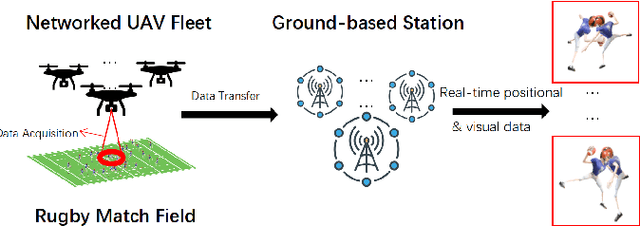
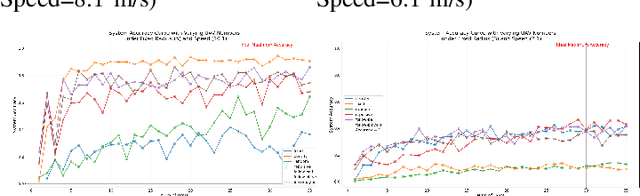
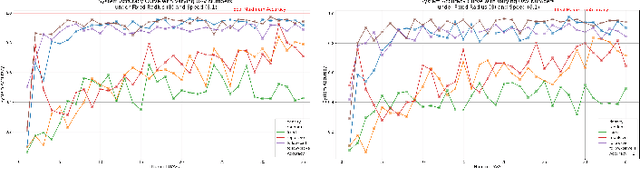
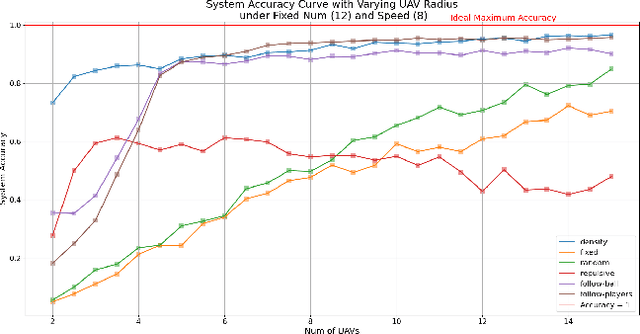
Recent advancements in unmanned aerial vehicle (UAV) technology have opened new avenues for dynamic data collection in challenging environments, such as sports fields during fast-paced sports action. For the purposes of monitoring sport events for dangerous injuries, we envision a coordinated UAV fleet designed to capture high-quality, multi-view video footage of collision events in real-time. The extracted video data is crucial for analyzing athletes' motions and investigating the probability of sports-related traumatic brain injuries (TBI) during impacts. This research implemented a UAV fleet system on the NetLogo platform, utilizing custom collision detection algorithms to compare against traditional TV-coverage strategies. Our system supports decentralized data capture and autonomous processing, providing resilience in the rapidly evolving dynamics of sports collisions. The collaboration algorithm integrates both shared and local data to generate multi-step analyses aimed at determining the efficacy of custom methods in enhancing the accuracy of TBI prediction models. Missions are simulated in real-time within a two-dimensional model, focusing on the strategic capture of collision events that could lead to TBI, while considering operational constraints such as rapid UAV maneuvering and optimal positioning. Preliminary results from the NetLogo simulations suggest that custom collision detection methods offer superior performance over standard TV-coverage strategies by enabling more precise and timely data capture. This comparative analysis highlights the advantages of tailored algorithmic approaches in critical sports safety applications.
LangBridge: Interpreting Image as a Combination of Language Embeddings
Mar 26, 2025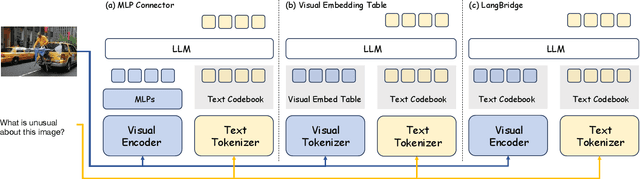
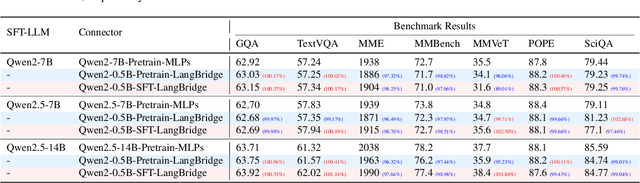
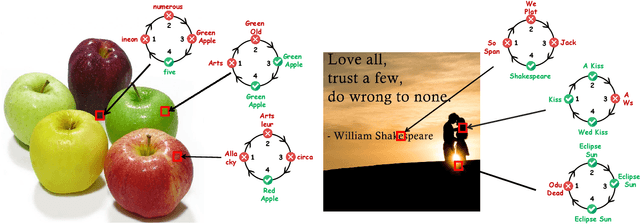
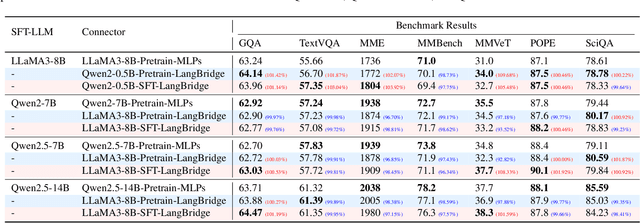
Recent years have witnessed remarkable advances in Large Vision-Language Models (LVLMs), which have achieved human-level performance across various complex vision-language tasks. Following LLaVA's paradigm, mainstream LVLMs typically employ a shallow MLP for visual-language alignment through a two-stage training process: pretraining for cross-modal alignment followed by instruction tuning. While this approach has proven effective, the underlying mechanisms of how MLPs bridge the modality gap remain poorly understood. Although some research has explored how LLMs process transformed visual tokens, few studies have investigated the fundamental alignment mechanism. Furthermore, the MLP adapter requires retraining whenever switching LLM backbones. To address these limitations, we first investigate the working principles of MLP adapters and discover that they learn to project visual embeddings into subspaces spanned by corresponding text embeddings progressively. Based on this insight, we propose LangBridge, a novel adapter that explicitly maps visual tokens to linear combinations of LLM vocabulary embeddings. This innovative design enables pretraining-free adapter transfer across different LLMs while maintaining performance. Our experimental results demonstrate that a LangBridge adapter pre-trained on Qwen2-0.5B can be directly applied to larger models such as LLaMA3-8B or Qwen2.5-14B while maintaining competitive performance. Overall, LangBridge enables interpretable vision-language alignment by grounding visual representations in LLM vocab embedding, while its plug-and-play design ensures efficient reuse across multiple LLMs with nearly no performance degradation. See our project page at https://jiaqiliao77.github.io/LangBridge.github.io/
ImageGen-CoT: Enhancing Text-to-Image In-context Learning with Chain-of-Thought Reasoning
Mar 25, 2025In this work, we study the problem of Text-to-Image In-Context Learning (T2I-ICL). While Unified Multimodal LLMs (MLLMs) have advanced rapidly in recent years, they struggle with contextual reasoning in T2I-ICL scenarios. To address this limitation, we propose a novel framework that incorporates a thought process called ImageGen-CoT prior to image generation. To avoid generating unstructured ineffective reasoning steps, we develop an automatic pipeline to curate a high-quality ImageGen-CoT dataset. We then fine-tune MLLMs using this dataset to enhance their contextual reasoning capabilities. To further enhance performance, we explore test-time scale-up strategies and propose a novel hybrid scaling approach. This approach first generates multiple ImageGen-CoT chains and then produces multiple images for each chain via sampling. Extensive experiments demonstrate the effectiveness of our proposed method. Notably, fine-tuning with the ImageGen-CoT dataset leads to a substantial 80\% performance gain for SEED-X on T2I-ICL tasks. See our project page at https://ImageGen-CoT.github.io/. Code and model weights will be open-sourced.
LeanVAE: An Ultra-Efficient Reconstruction VAE for Video Diffusion Models
Mar 18, 2025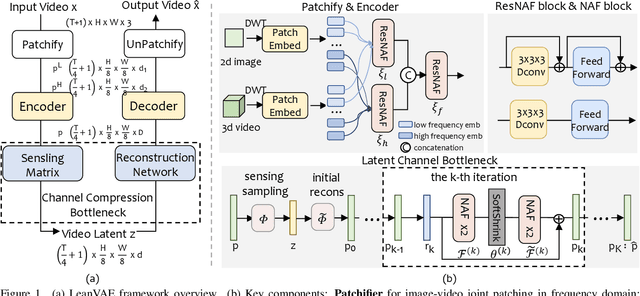
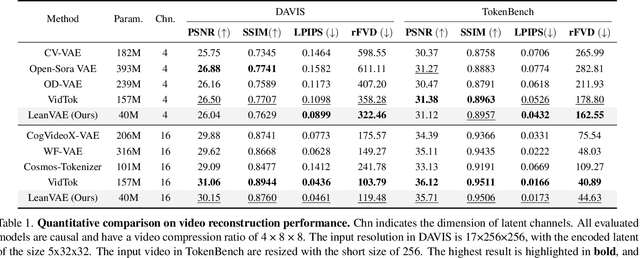
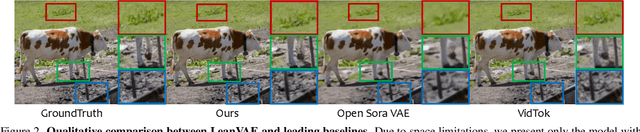
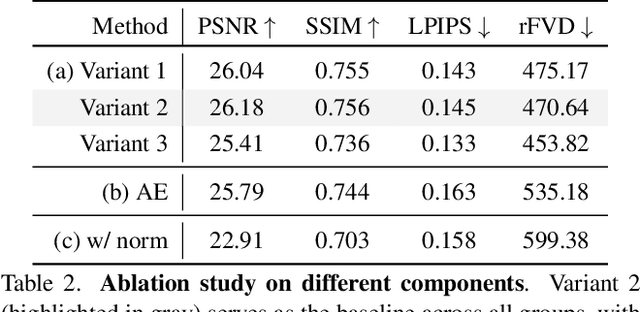
Recent advances in Latent Video Diffusion Models (LVDMs) have revolutionized video generation by leveraging Video Variational Autoencoders (Video VAEs) to compress intricate video data into a compact latent space. However, as LVDM training scales, the computational overhead of Video VAEs becomes a critical bottleneck, particularly for encoding high-resolution videos. To address this, we propose LeanVAE, a novel and ultra-efficient Video VAE framework that introduces two key innovations: (1) a lightweight architecture based on a Neighborhood-Aware Feedforward (NAF) module and non-overlapping patch operations, drastically reducing computational cost, and (2) the integration of wavelet transforms and compressed sensing techniques to enhance reconstruction quality. Extensive experiments validate LeanVAE's superiority in video reconstruction and generation, particularly in enhancing efficiency over existing Video VAEs. Our model offers up to 50x fewer FLOPs and 44x faster inference speed while maintaining competitive reconstruction quality, providing insights for scalable, efficient video generation. Our models and code are available at https://github.com/westlake-repl/LeanVAE
From Head to Tail: Towards Balanced Representation in Large Vision-Language Models through Adaptive Data Calibration
Mar 17, 2025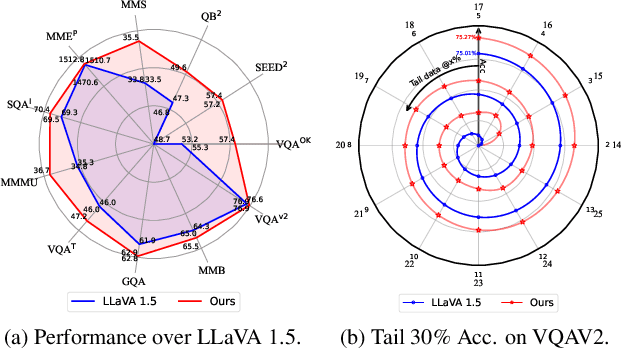
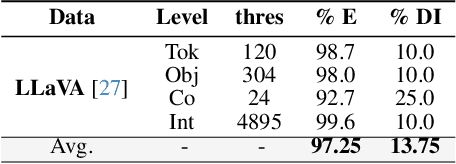
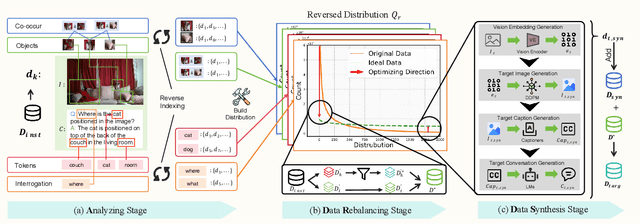
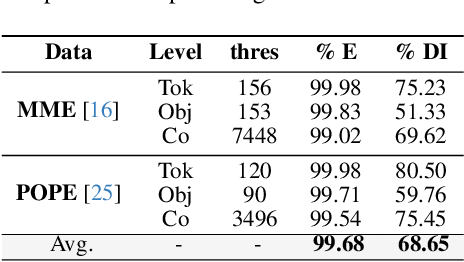
Large Vision-Language Models (LVLMs) have achieved significant progress in combining visual comprehension with language generation. Despite this success, the training data of LVLMs still suffers from Long-Tail (LT) problems, where the data distribution is highly imbalanced. Previous works have mainly focused on traditional VLM architectures, i.e., CLIP or ViT, and specific tasks such as recognition and classification. Nevertheless, the exploration of LVLM (e.g. LLaVA) and more general tasks (e.g. Visual Question Answering and Visual Reasoning) remains under-explored. In this paper, we first conduct an in-depth analysis of the LT issues in LVLMs and identify two core causes: the overrepresentation of head concepts and the underrepresentation of tail concepts. Based on the above observation, we propose an $\textbf{A}$daptive $\textbf{D}$ata $\textbf{R}$efinement Framework ($\textbf{ADR}$), which consists of two stages: $\textbf{D}$ata $\textbf{R}$ebalancing ($\textbf{DR}$) and $\textbf{D}$ata $\textbf{S}$ynthesis ($\textbf{DS}$). In the DR stage, we adaptively rebalance the redundant data based on entity distributions, while in the DS stage, we leverage Denoising Diffusion Probabilistic Models (DDPMs) and scarce images to supplement underrepresented portions. Through comprehensive evaluations across eleven benchmarks, our proposed ADR effectively mitigates the long-tail problem in the training data, improving the average performance of LLaVA 1.5 relatively by 4.36%, without increasing the training data volume.
BREEN: Bridge Data-Efficient Encoder-Free Multimodal Learning with Learnable Queries
Mar 16, 2025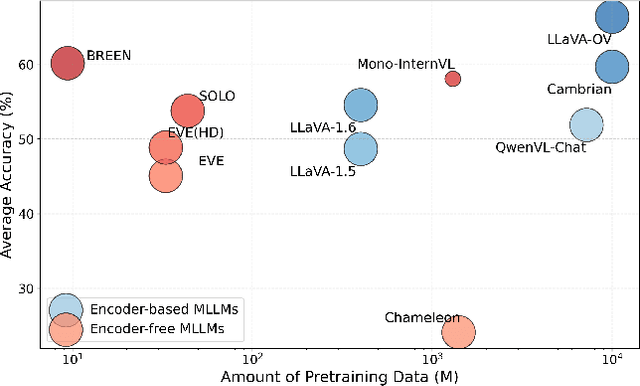
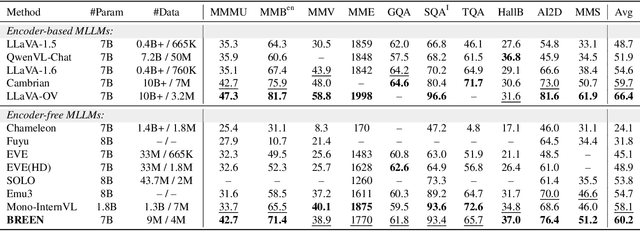
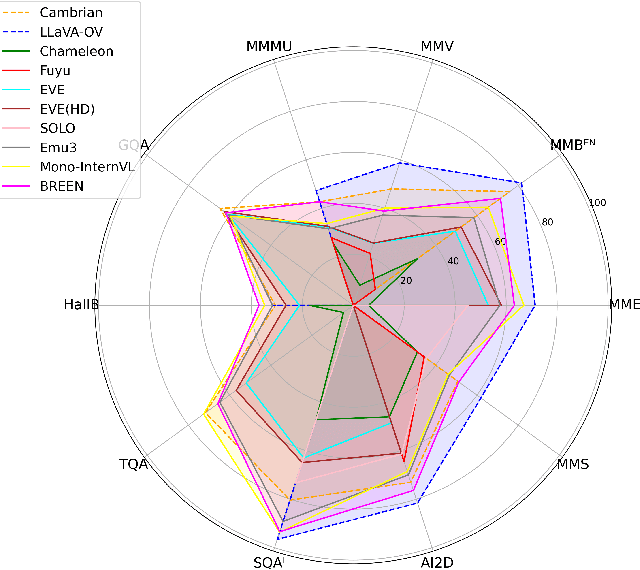
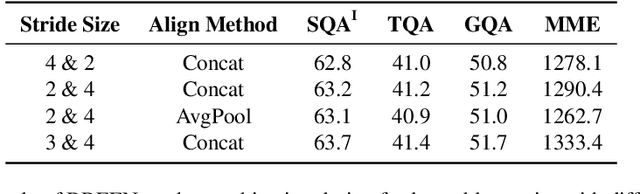
Encoder-free multimodal large language models(MLLMs) eliminate the need for a well-trained vision encoder by directly processing image tokens before the language model. While this approach reduces computational overhead and model complexity, it often requires large amounts of training data to effectively capture the visual knowledge typically encoded by vision models like CLIP. The absence of a vision encoder implies that the model is likely to rely on substantial data to learn the necessary visual-semantic alignments. In this work, we present BREEN, a data-efficient encoder-free multimodal architecture that mitigates this issue. BREEN leverages a learnable query and image experts to achieve comparable performance with significantly less training data. The learnable query, positioned between image and text tokens, is supervised by the output of a pretrained CLIP model to distill visual knowledge, bridging the gap between visual and textual modalities. Additionally, the image expert processes image tokens and learnable queries independently, improving efficiency and reducing interference with the LLM's textual capabilities. BREEN achieves comparable performance to prior encoder-free state-of-the-art models like Mono-InternVL, using only 13 million text-image pairs in training about one percent of the data required by existing methods. Our work highlights a promising direction for data-efficient encoder-free multimodal learning, offering an alternative to traditional encoder-based approaches.
Linear-MoE: Linear Sequence Modeling Meets Mixture-of-Experts
Mar 07, 2025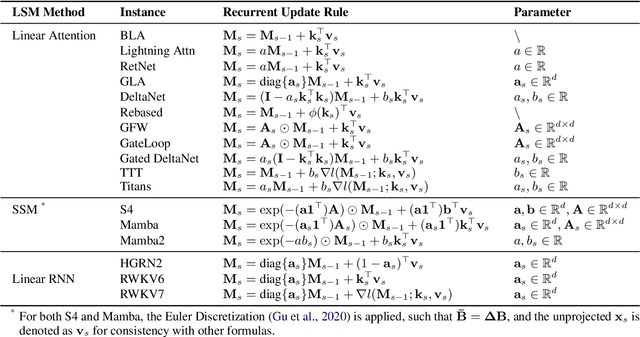
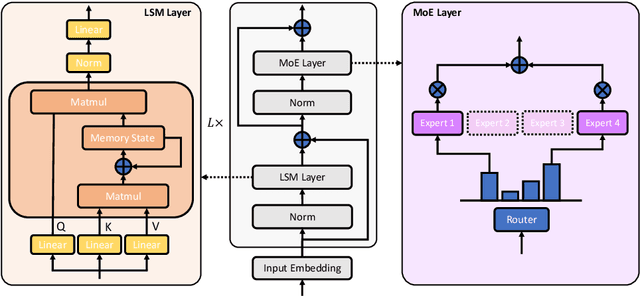
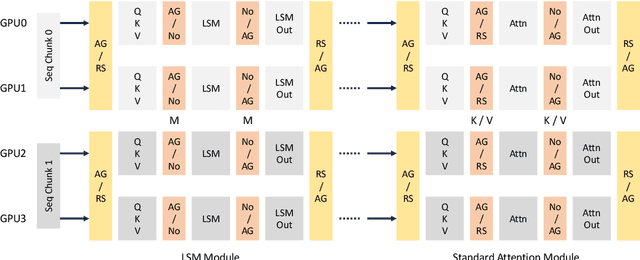
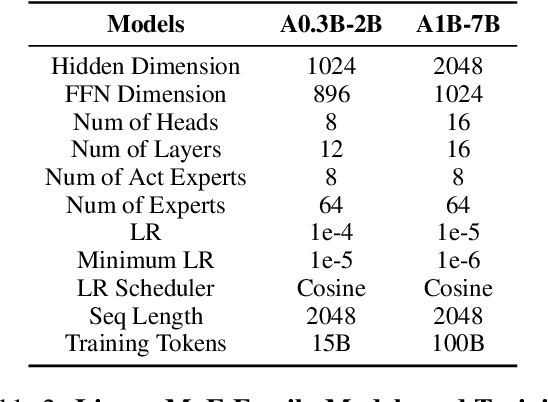
Linear Sequence Modeling (LSM) like linear attention, state space models and linear RNNs, and Mixture-of-Experts (MoE) have recently emerged as significant architectural improvements. In this paper, we introduce Linear-MoE, a production-level system for modeling and training large-scale models that integrate LSM with MoE. Linear-MoE leverages the advantages of both LSM modules for linear-complexity sequence modeling and MoE layers for sparsely activation, aiming to offer high performance with efficient training. The Linear-MoE system comprises: 1) Modeling subsystem, which provides a unified framework supporting all instances of LSM. and 2) Training subsystem, which facilitates efficient training by incorporating various advanced parallelism technologies, particularly Sequence Parallelism designed for Linear-MoE models. Additionally, we explore hybrid models that combine Linear-MoE layers with standard Transformer-MoE layers with its Sequence Parallelism to further enhance model flexibility and performance. Evaluations on two model series, A0.3B-2B and A1B-7B, demonstrate Linear-MoE achieves efficiency gains while maintaining competitive performance on various benchmarks, showcasing its potential as a next-generation foundational model architecture. Code: https://github.com/OpenSparseLLMs/Linear-MoE.