 Add to Chrome
 Add to Firefox
 Add to Edge
Probing Scientific General Intelligence of LLMs with Scientist-Aligned Workflows
Dec 18, 2025
Despite advances in scientific AI, a coherent framework for Scientific General Intelligence (SGI)-the ability to autonomously conceive, investigate, and reason across scientific domains-remains lacking. We present an operational SGI definition grounded in the Practical Inquiry Model (PIM: Deliberation, Conception, Action, Perception) and operationalize it via four scientist-aligned tasks: deep research, idea generation, dry/wet experiments, and experimental reasoning. SGI-Bench comprises over 1,000 expert-curated, cross-disciplinary samples inspired by Science's 125 Big Questions, enabling systematic evaluation of state-of-the-art LLMs. Results reveal gaps: low exact match (10--20%) in deep research despite step-level alignment; ideas lacking feasibility and detail; high code executability but low execution result accuracy in dry experiments; low sequence fidelity in wet protocols; and persistent multimodal comparative-reasoning challenges. We further introduce Test-Time Reinforcement Learning (TTRL), which optimizes retrieval-augmented novelty rewards at inference, enhancing hypothesis novelty without reference answer. Together, our PIM-grounded definition, workflow-centric benchmark, and empirical insights establish a foundation for AI systems that genuinely participate in scientific discovery.

UniSER: A Foundation Model for Unified Soft Effects Removal
Nov 18, 2025Digital images are often degraded by soft effects such as lens flare, haze, shadows, and reflections, which reduce aesthetics even though the underlying pixels remain partially visible. The prevailing works address these degradations in isolation, developing highly specialized, specialist models that lack scalability and fail to exploit the shared underlying essences of these restoration problems. While specialist models are limited, recent large-scale pretrained generalist models offer powerful, text-driven image editing capabilities. while recent general-purpose systems (e.g., GPT-4o, Flux Kontext, Nano Banana) require detailed prompts and often fail to achieve robust removal on these fine-grained tasks or preserve identity of the scene. Leveraging the common essence of soft effects, i.e., semi-transparent occlusions, we introduce a foundational versatile model UniSER, capable of addressing diverse degradations caused by soft effects within a single framework. Our methodology centers on curating a massive 3.8M-pair dataset to ensure robustness and generalization, which includes novel, physically-plausible data to fill critical gaps in public benchmarks, and a tailored training pipeline that fine-tunes a Diffusion Transformer to learn robust restoration priors from this diverse data, integrating fine-grained mask and strength controls. This synergistic approach allows UniSER to significantly outperform both specialist and generalist models, achieving robust, high-fidelity restoration in the wild.
A Survey of Scientific Large Language Models: From Data Foundations to Agent Frontiers
Aug 28, 2025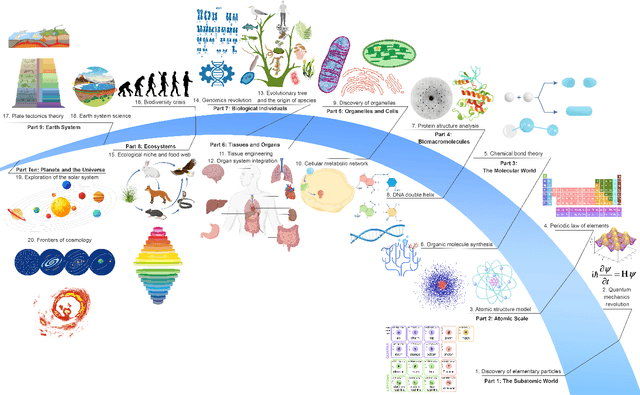
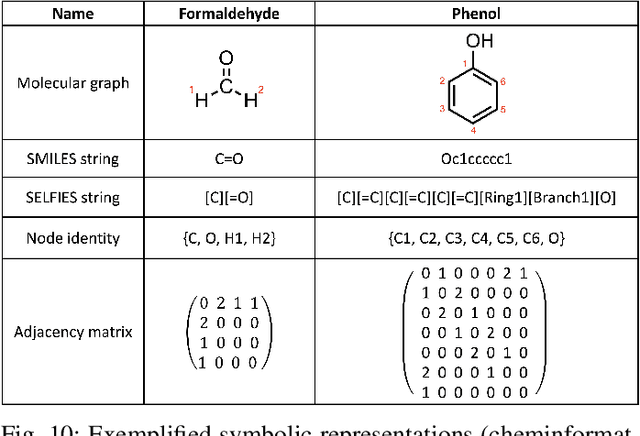
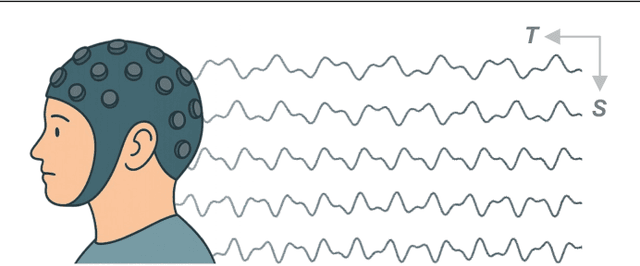
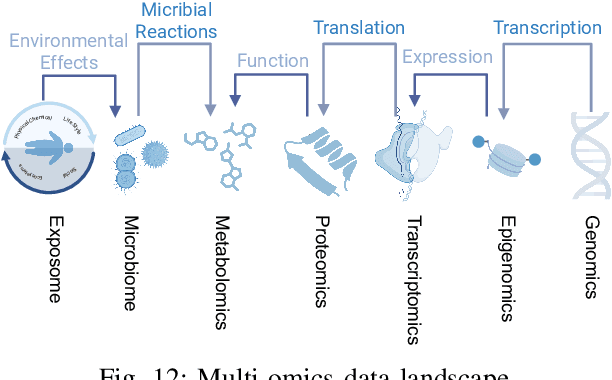
Scientific Large Language Models (Sci-LLMs) are transforming how knowledge is represented, integrated, and applied in scientific research, yet their progress is shaped by the complex nature of scientific data. This survey presents a comprehensive, data-centric synthesis that reframes the development of Sci-LLMs as a co-evolution between models and their underlying data substrate. We formulate a unified taxonomy of scientific data and a hierarchical model of scientific knowledge, emphasizing the multimodal, cross-scale, and domain-specific challenges that differentiate scientific corpora from general natural language processing datasets. We systematically review recent Sci-LLMs, from general-purpose foundations to specialized models across diverse scientific disciplines, alongside an extensive analysis of over 270 pre-/post-training datasets, showing why Sci-LLMs pose distinct demands -- heterogeneous, multi-scale, uncertainty-laden corpora that require representations preserving domain invariance and enabling cross-modal reasoning. On evaluation, we examine over 190 benchmark datasets and trace a shift from static exams toward process- and discovery-oriented assessments with advanced evaluation protocols. These data-centric analyses highlight persistent issues in scientific data development and discuss emerging solutions involving semi-automated annotation pipelines and expert validation. Finally, we outline a paradigm shift toward closed-loop systems where autonomous agents based on Sci-LLMs actively experiment, validate, and contribute to a living, evolving knowledge base. Collectively, this work provides a roadmap for building trustworthy, continually evolving artificial intelligence (AI) systems that function as a true partner in accelerating scientific discovery.
RichControl: Structure- and Appearance-Rich Training-Free Spatial Control for Text-to-Image Generation
Jul 03, 2025Text-to-image (T2I) diffusion models have shown remarkable success in generating high-quality images from text prompts. Recent efforts extend these models to incorporate conditional images (e.g., depth or pose maps) for fine-grained spatial control. Among them, feature injection methods have emerged as a training-free alternative to traditional fine-tuning approaches. However, they often suffer from structural misalignment, condition leakage, and visual artifacts, especially when the condition image diverges significantly from natural RGB distributions. By revisiting existing methods, we identify a core limitation: the synchronous injection of condition features fails to account for the trade-off between domain alignment and structural preservation during denoising. Inspired by this observation, we propose a flexible feature injection framework that decouples the injection timestep from the denoising process. At its core is a structure-rich injection module, which enables the model to better adapt to the evolving interplay between alignment and structure preservation throughout the diffusion steps, resulting in more faithful structural generation. In addition, we introduce appearance-rich prompting and a restart refinement strategy to further enhance appearance control and visual quality. Together, these designs enable training-free generation that is both structure-rich and appearance-rich. Extensive experiments show that our approach achieves state-of-the-art performance across diverse zero-shot conditioning scenarios.
Generalizable Neural Electromagnetic Inverse Scattering
Jun 26, 2025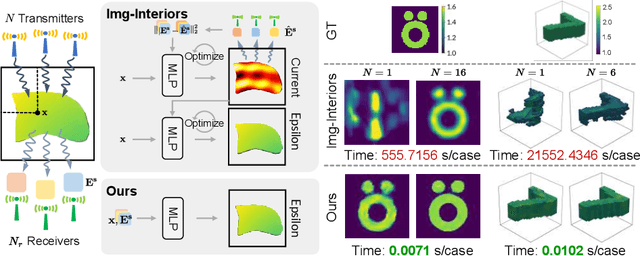
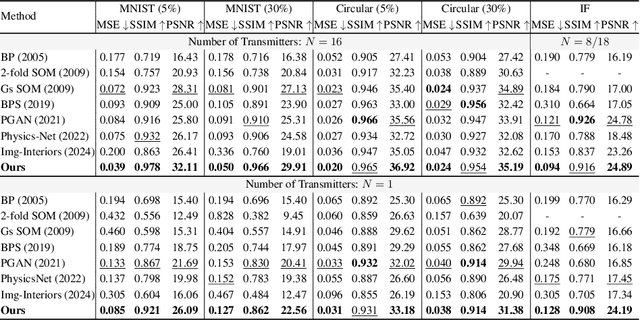
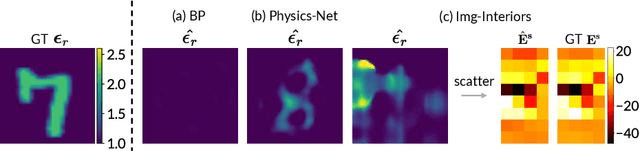
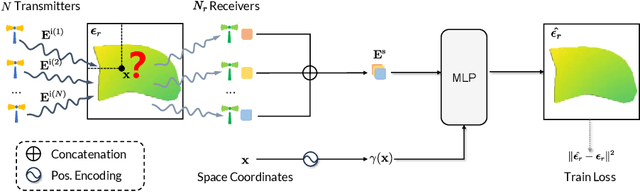
Solving Electromagnetic Inverse Scattering Problems (EISP) is fundamental in applications such as medical imaging, where the goal is to reconstruct the relative permittivity from scattered electromagnetic field. This inverse process is inherently ill-posed and highly nonlinear, making it particularly challenging. A recent machine learning-based approach, Img-Interiors, shows promising results by leveraging continuous implicit functions. However, it requires case-specific optimization, lacks generalization to unseen data, and fails under sparse transmitter setups (e.g., with only one transmitter). To address these limitations, we revisit EISP from a physics-informed perspective, reformulating it as a two stage inverse transmission-scattering process. This formulation reveals the induced current as a generalizable intermediate representation, effectively decoupling the nonlinear scattering process from the ill-posed inverse problem. Built on this insight, we propose the first generalizable physics-driven framework for EISP, comprising a current estimator and a permittivity solver, working in an end-to-end manner. The current estimator explicitly learns the induced current as a physical bridge between the incident and scattered field, while the permittivity solver computes the relative permittivity directly from the estimated induced current. This design enables data-driven training and generalizable feed-forward prediction of relative permittivity on unseen data while maintaining strong robustness to transmitter sparsity. Extensive experiments show that our method outperforms state-of-the-art approaches in reconstruction accuracy, generalization, and robustness. This work offers a fundamentally new perspective on electromagnetic inverse scattering and represents a major step toward cost-effective practical solutions for electromagnetic imaging.
OpenDance: Multimodal Controllable 3D Dance Generation Using Large-scale Internet Data
Jun 09, 2025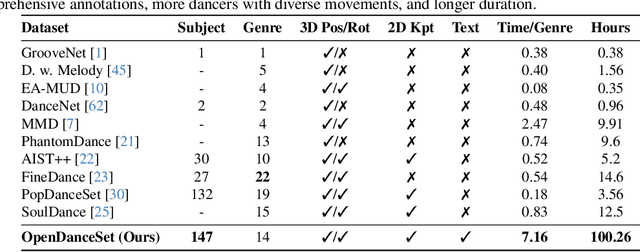
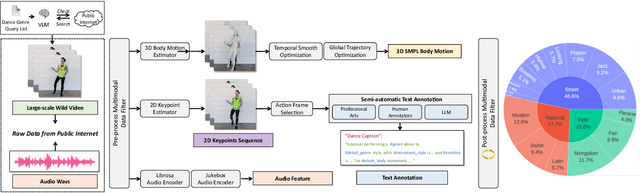
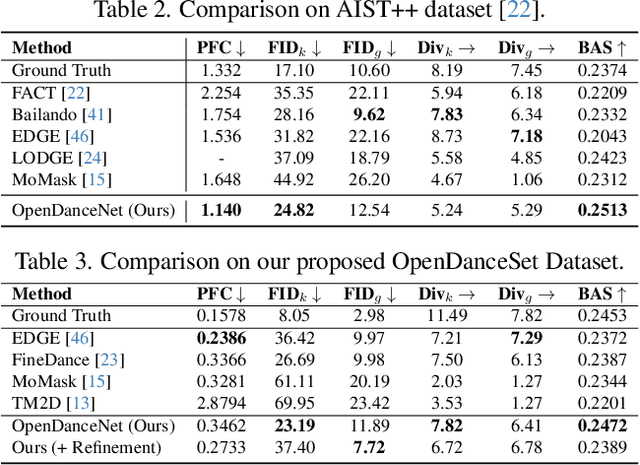
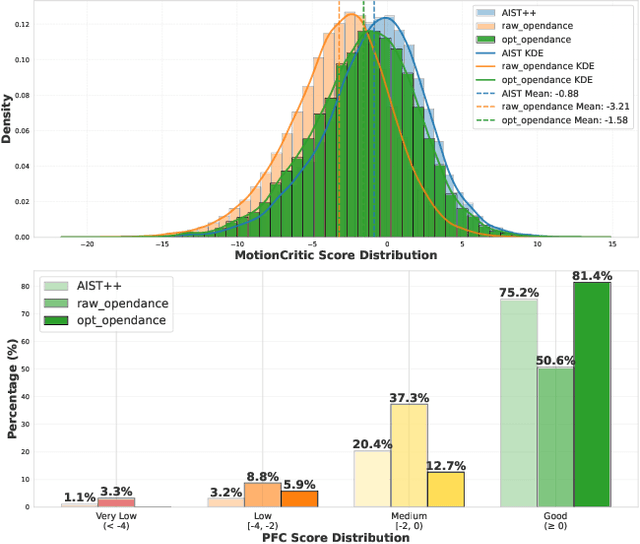
Music-driven dance generation offers significant creative potential yet faces considerable challenges. The absence of fine-grained multimodal data and the difficulty of flexible multi-conditional generation limit previous works on generation controllability and diversity in practice. In this paper, we build OpenDance5D, an extensive human dance dataset comprising over 101 hours across 14 distinct genres. Each sample has five modalities to facilitate robust cross-modal learning: RGB video, audio, 2D keypoints, 3D motion, and fine-grained textual descriptions from human arts. Furthermore, we propose OpenDanceNet, a unified masked modeling framework for controllable dance generation conditioned on music and arbitrary combinations of text prompts, keypoints, or character positioning. Comprehensive experiments demonstrate that OpenDanceNet achieves high-fidelity and flexible controllability.
Conditional Local Independence Testing with Application to Dynamic Causal Discovery
Jun 09, 2025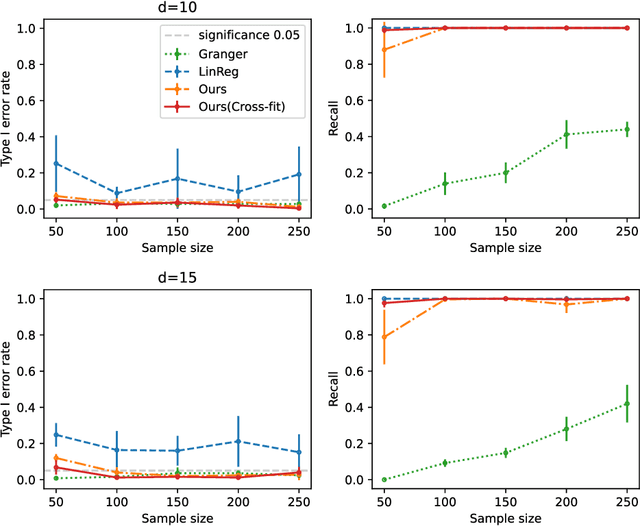
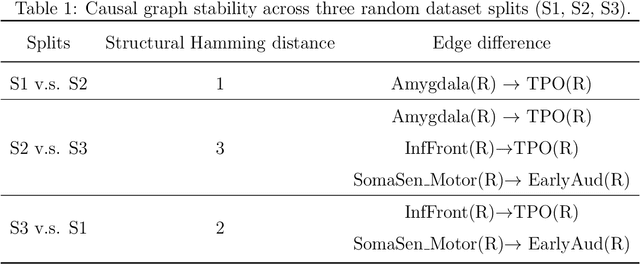
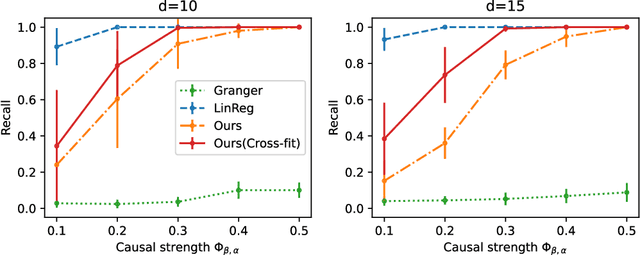
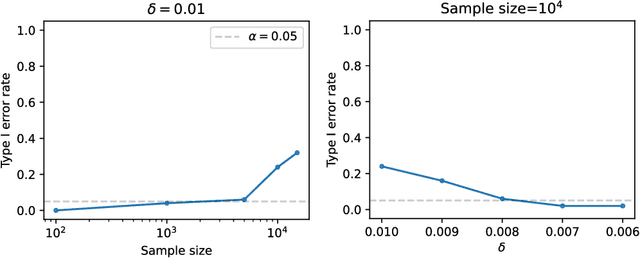
In this note, we extend the conditional local independence testing theory developed in Christgau et al. (2024) to Ito processes. The result can be applied to causal discovery in dynamic systems.
InteractAnything: Zero-shot Human Object Interaction Synthesis via LLM Feedback and Object Affordance Parsing
May 30, 2025
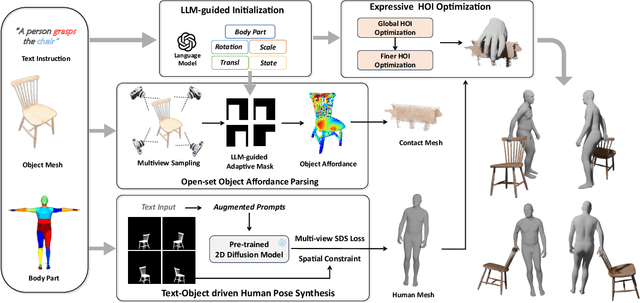
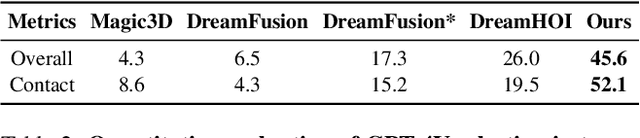
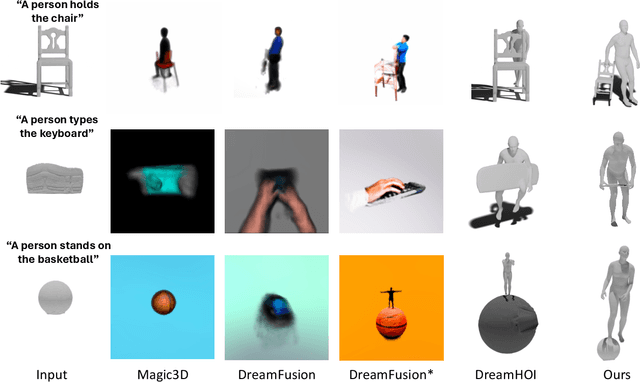
Recent advances in 3D human-aware generation have made significant progress. However, existing methods still struggle with generating novel Human Object Interaction (HOI) from text, particularly for open-set objects. We identify three main challenges of this task: precise human-object relation reasoning, affordance parsing for any object, and detailed human interaction pose synthesis aligning description and object geometry. In this work, we propose a novel zero-shot 3D HOI generation framework without training on specific datasets, leveraging the knowledge from large-scale pre-trained models. Specifically, the human-object relations are inferred from large language models (LLMs) to initialize object properties and guide the optimization process. Then we utilize a pre-trained 2D image diffusion model to parse unseen objects and extract contact points, avoiding the limitations imposed by existing 3D asset knowledge. The initial human pose is generated by sampling multiple hypotheses through multi-view SDS based on the input text and object geometry. Finally, we introduce a detailed optimization to generate fine-grained, precise, and natural interaction, enforcing realistic 3D contact between the 3D object and the involved body parts, including hands in grasping. This is achieved by distilling human-level feedback from LLMs to capture detailed human-object relations from the text instruction. Extensive experiments validate the effectiveness of our approach compared to prior works, particularly in terms of the fine-grained nature of interactions and the ability to handle open-set 3D objects.
From Strangers to Assistants: Fast Desire Alignment for Embodied Agent-User Adaptation
May 28, 2025While embodied agents have made significant progress in performing complex physical tasks, real-world applications demand more than pure task execution. The agents must collaborate with unfamiliar agents and human users, whose goals are often vague and implicit. In such settings, interpreting ambiguous instructions and uncovering underlying desires is essential for effective assistance. Therefore, fast and accurate desire alignment becomes a critical capability for embodied agents. In this work, we first develop a home assistance simulation environment HA-Desire that integrates an LLM-driven human user agent exhibiting realistic value-driven goal selection and communication. The ego agent must interact with this proxy user to infer and adapt to the user's latent desires. To achieve this, we present a novel framework FAMER for fast desire alignment, which introduces a desire-based mental reasoning mechanism to identify user intent and filter desire-irrelevant actions. We further design a reflection-based communication module that reduces redundant inquiries, and incorporate goal-relevant information extraction with memory persistence to improve information reuse and reduce unnecessary exploration. Extensive experiments demonstrate that our framework significantly enhances both task execution and communication efficiency, enabling embodied agents to quickly adapt to user-specific desires in complex embodied environments.
VLM Can Be a Good Assistant: Enhancing Embodied Visual Tracking with Self-Improving Vision-Language Models
May 28, 2025We introduce a novel self-improving framework that enhances Embodied Visual Tracking (EVT) with Vision-Language Models (VLMs) to address the limitations of current active visual tracking systems in recovering from tracking failure. Our approach combines the off-the-shelf active tracking methods with VLMs' reasoning capabilities, deploying a fast visual policy for normal tracking and activating VLM reasoning only upon failure detection. The framework features a memory-augmented self-reflection mechanism that enables the VLM to progressively improve by learning from past experiences, effectively addressing VLMs' limitations in 3D spatial reasoning. Experimental results demonstrate significant performance improvements, with our framework boosting success rates by $72\%$ with state-of-the-art RL-based approaches and $220\%$ with PID-based methods in challenging environments. This work represents the first integration of VLM-based reasoning to assist EVT agents in proactive failure recovery, offering substantial advances for real-world robotic applications that require continuous target monitoring in dynamic, unstructured environments. Project website: https://sites.google.com/view/evt-recovery-assistant.