 Add to Chrome
 Add to Firefox
 Add to Edge
MultiPDENet: PDE-embedded Learning with Multi-time-stepping for Accelerated Flow Simulation
Jan 27, 2025
Solving partial differential equations (PDEs) by numerical methods meet computational cost challenge for getting the accurate solution since fine grids and small time steps are required. Machine learning can accelerate this process, but struggle with weak generalizability, interpretability, and data dependency, as well as suffer in long-term prediction. To this end, we propose a PDE-embedded network with multiscale time stepping (MultiPDENet), which fuses the scheme of numerical methods and machine learning, for accelerated simulation of flows. In particular, we design a convolutional filter based on the structure of finite difference stencils with a small number of parameters to optimize, which estimates the equivalent form of spatial derivative on a coarse grid to minimize the equation's residual. A Physics Block with a 4th-order Runge-Kutta integrator at the fine time scale is established that embeds the structure of PDEs to guide the prediction. To alleviate the curse of temporal error accumulation in long-term prediction, we introduce a multiscale time integration approach, where a neural network is used to correct the prediction error at a coarse time scale. Experiments across various PDE systems, including the Navier-Stokes equations, demonstrate that MultiPDENet can accurately predict long-term spatiotemporal dynamics, even given small and incomplete training data, e.g., spatiotemporally down-sampled datasets. MultiPDENet achieves the state-of-the-art performance compared with other neural baseline models, also with clear speedup compared to classical numerical methods.

Radiologist-in-the-Loop Self-Training for Generalizable CT Metal Artifact Reduction
Jan 26, 2025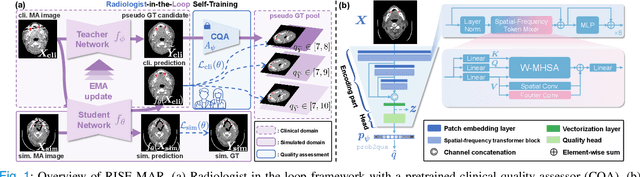
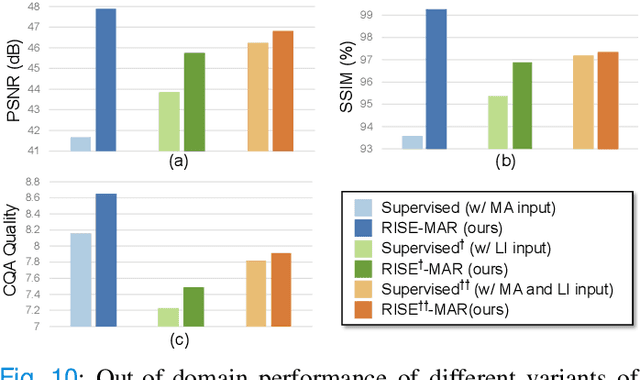
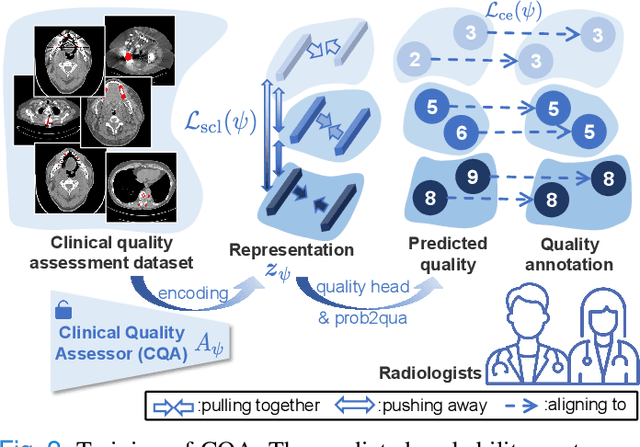
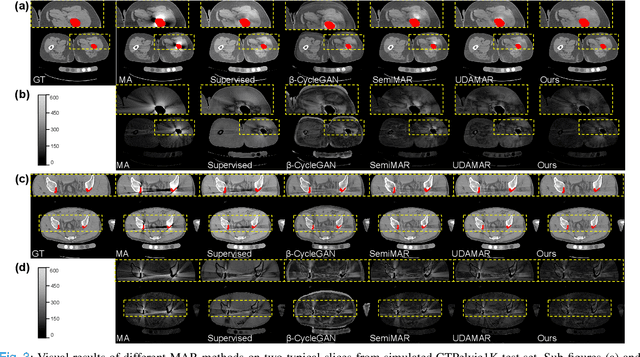
Metal artifacts in computed tomography (CT) images can significantly degrade image quality and impede accurate diagnosis. Supervised metal artifact reduction (MAR) methods, trained using simulated datasets, often struggle to perform well on real clinical CT images due to a substantial domain gap. Although state-of-the-art semi-supervised methods use pseudo ground-truths generated by a prior network to mitigate this issue, their reliance on a fixed prior limits both the quality and quantity of these pseudo ground-truths, introducing confirmation bias and reducing clinical applicability. To address these limitations, we propose a novel Radiologist-In-the-loop SElf-training framework for MAR, termed RISE-MAR, which can integrate radiologists' feedback into the semi-supervised learning process, progressively improving the quality and quantity of pseudo ground-truths for enhanced generalization on real clinical CT images. For quality assurance, we introduce a clinical quality assessor model that emulates radiologist evaluations, effectively selecting high-quality pseudo ground-truths for semi-supervised training. For quantity assurance, our self-training framework iteratively generates additional high-quality pseudo ground-truths, expanding the clinical dataset and further improving model generalization. Extensive experimental results on multiple clinical datasets demonstrate the superior generalization performance of our RISE-MAR over state-of-the-art methods, advancing the development of MAR models for practical application. Code is available at https://github.com/Masaaki-75/rise-mar.
Improving Retrieval-Augmented Generation through Multi-Agent Reinforcement Learning
Jan 25, 2025
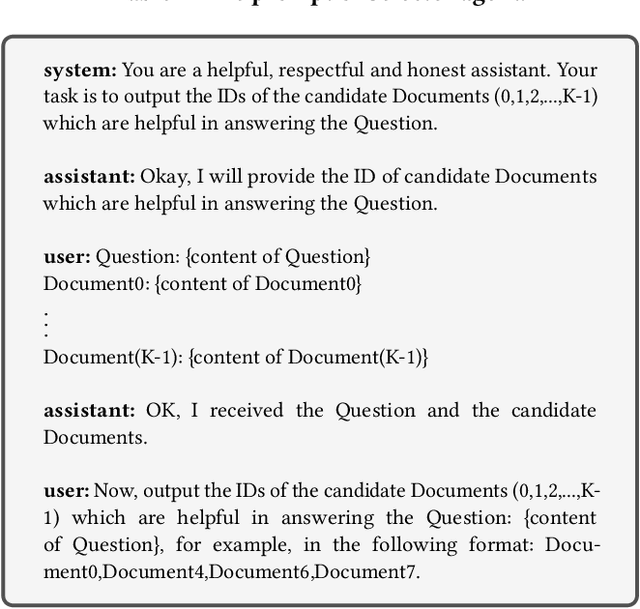
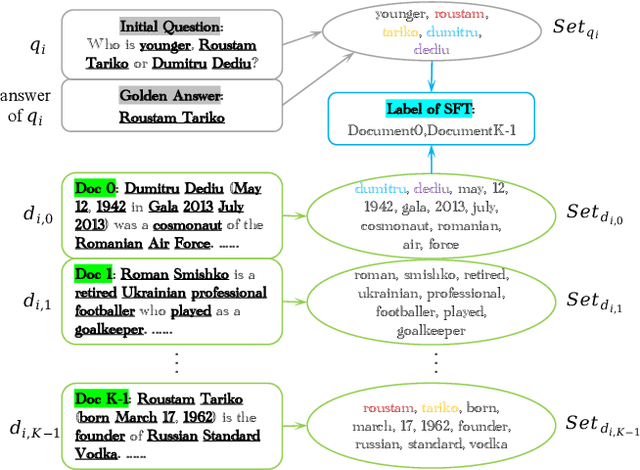
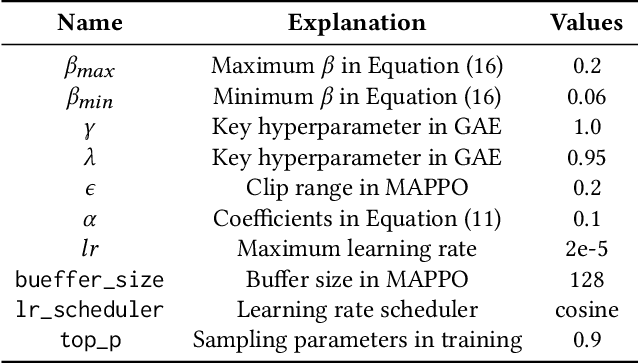
Retrieval-augmented generation (RAG) is extensively utilized to incorporate external, current knowledge into large language models, thereby minimizing hallucinations. A standard RAG pipeline may comprise several components, such as query rewriting, document retrieval, document filtering, and answer generation. However, these components are typically optimized separately through supervised fine-tuning, which can lead to misalignments between the objectives of individual modules and the overarching aim of generating accurate answers in question-answering (QA) tasks. Although recent efforts have explored reinforcement learning (RL) to optimize specific RAG components, these approaches often focus on overly simplistic pipelines with only two components or do not adequately address the complex interdependencies and collaborative interactions among the modules. To overcome these challenges, we propose treating the RAG pipeline as a multi-agent cooperative task, with each component regarded as an RL agent. Specifically, we present MMOA-RAG, a Multi-Module joint Optimization Algorithm for RAG, which employs multi-agent reinforcement learning to harmonize all agents' goals towards a unified reward, such as the F1 score of the final answer. Experiments conducted on various QA datasets demonstrate that MMOA-RAG improves the overall pipeline performance and outperforms existing baselines. Furthermore, comprehensive ablation studies validate the contributions of individual components and the adaptability of MMOA-RAG across different RAG components and datasets. The code of MMOA-RAG is on https://github.com/chenyiqun/MMOA-RAG.
MSCViT: A Small-size ViT architecture with Multi-Scale Self-Attention Mechanism for Tiny Datasets
Jan 14, 2025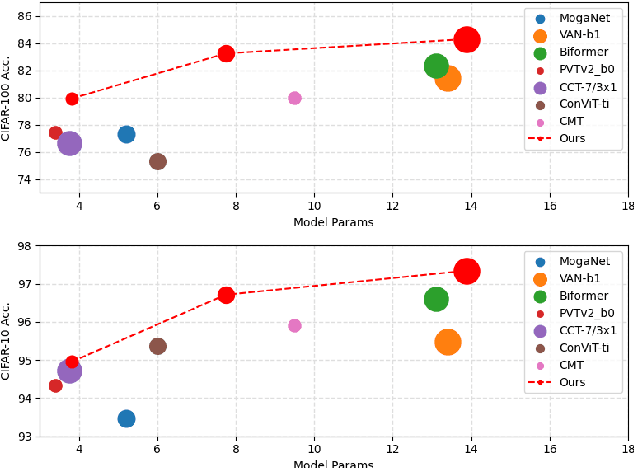
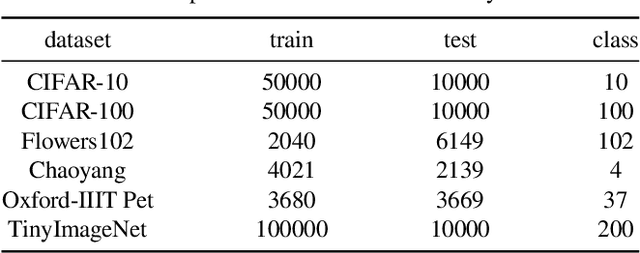
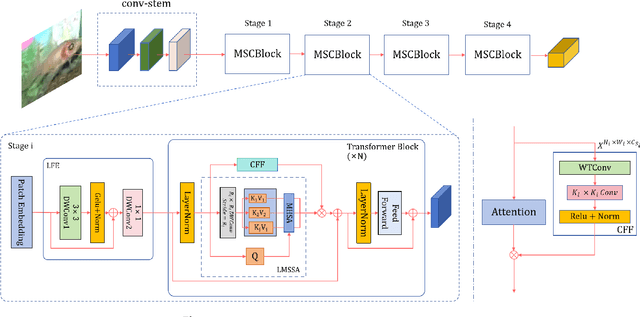
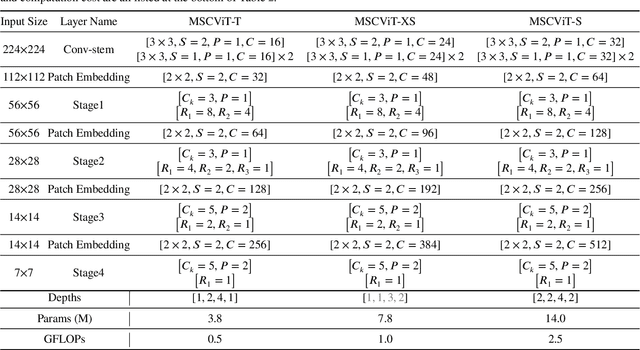
Vision Transformer (ViT) has demonstrated significant potential in various vision tasks due to its strong ability in modelling long-range dependencies. However, such success is largely fueled by training on massive samples. In real applications, the large-scale datasets are not always available, and ViT performs worse than Convolutional Neural Networks (CNNs) if it is only trained on small scale dataset (called tiny dataset), since it requires large amount of training data to ensure its representational capacity. In this paper, a small-size ViT architecture with multi-scale self-attention mechanism and convolution blocks is presented (dubbed MSCViT) to model different scales of attention at each layer. Firstly, we introduced wavelet convolution, which selectively combines the high-frequency components obtained by frequency division with our convolution channel to extract local features. Then, a lightweight multi-head attention module is developed to reduce the number of tokens and computational costs. Finally, the positional encoding (PE) in the backbone is replaced by a local feature extraction module. Compared with the original ViT, it is parameter-efficient and is particularly suitable for tiny datasets. Extensive experiments have been conducted on tiny datasets, in which our model achieves an accuracy of 84.68% on CIFAR-100 with 14.0M parameters and 2.5 GFLOPs, without pre-training on large datasets.
A Diversity-Enhanced Knowledge Distillation Model for Practical Math Word Problem Solving
Jan 07, 2025Math Word Problem (MWP) solving is a critical task in natural language processing, has garnered significant research interest in recent years. Various recent studies heavily rely on Seq2Seq models and their extensions (e.g., Seq2Tree and Graph2Tree) to generate mathematical equations. While effective, these models struggle to generate diverse but counterpart solution equations, limiting their generalization across various math problem scenarios. In this paper, we introduce a novel Diversity-enhanced Knowledge Distillation (DivKD) model for practical MWP solving. Our approach proposes an adaptive diversity distillation method, in which a student model learns diverse equations by selectively transferring high-quality knowledge from a teacher model. Additionally, we design a diversity prior-enhanced student model to better capture the diversity distribution of equations by incorporating a conditional variational auto-encoder. Extensive experiments on {four} MWP benchmark datasets demonstrate that our approach achieves higher answer accuracy than strong baselines while maintaining high efficiency for practical applications.
Reinforcing Thinking through Reasoning-Enhanced Reward Models
Dec 31, 2024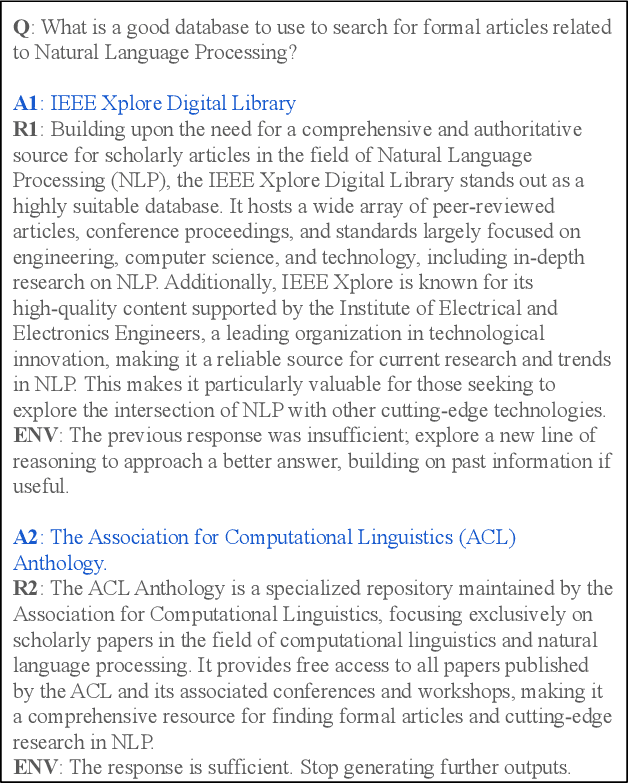
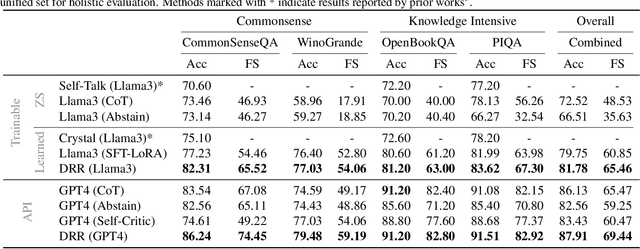
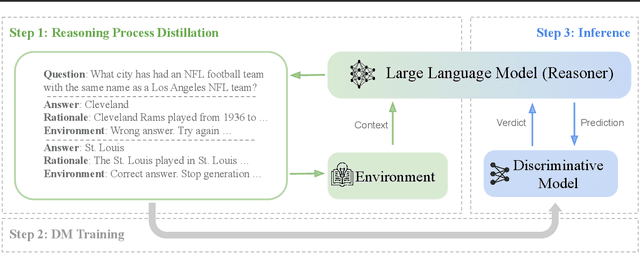

Large Language Models (LLMs) exhibit great potential in complex multi-step reasoning through inference-time thinking but still struggle with deciding when to stop thinking due to limited self-awareness about their knowledge boundaries. While human preference alignment has shown extraordinary opportunities, expensive labeling challenges adherence to scaling law. Language model self-critique, as an alternative to using human-labeled reasoning data, is questioned with its inherited biases. This work addresses these challenges by distilling the LLM's own reasoning processes into synthetic behavioral data, eliminating the need for manual labeling of intermediate steps. Building on this concept, we propose Distillation-Reinforcement-Reasoning (DRR), a three-step framework that leverages the LLM's inherent behaviors as external feedback by first generating behavioral data using the Reasoner (LLM) to reflect its reasoning capabilities, then training a lightweight discriminative reward model (DM) on behavioral data, and finally deploying the DM at inference time to assist the Reasoner's decision-making. Experiments on multiple benchmarks show that the DRR framework outperforms self-critique approaches without relying on additional complex data annotation. Benefiting from lightweight design, ease of replication, and adaptability, DRR is applicable to a wide range of LLM-centric tasks.
Two Birds with One Stone: Improving Rumor Detection by Addressing the Unfairness Issue
Dec 30, 2024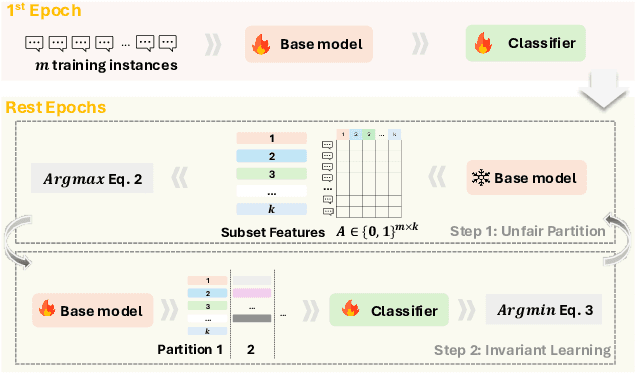

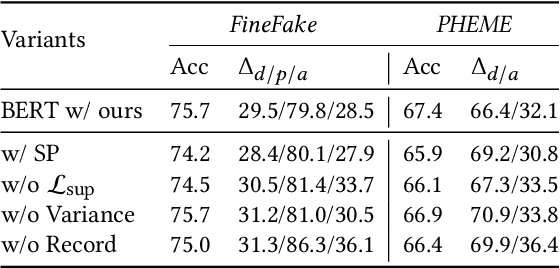

The degraded performance and group unfairness caused by confounding sensitive attributes in rumor detection remains relatively unexplored. To address this, we propose a two-step framework. Initially, it identifies confounding sensitive attributes that limit rumor detection performance and cause unfairness across groups. Subsequently, we aim to learn equally informative representations through invariant learning. Our method considers diverse sets of groups without sensitive attribute annotations. Experiments show our method easily integrates with existing rumor detectors, significantly improving both their detection performance and fairness.
Inclusion 2024 Global Multimedia Deepfake Detection: Towards Multi-dimensional Facial Forgery Detection
Dec 30, 2024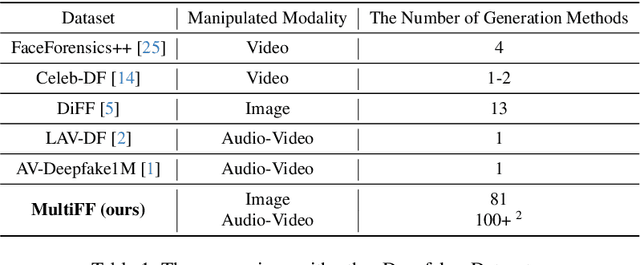
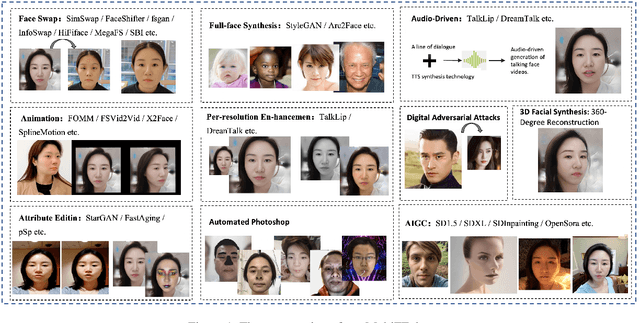
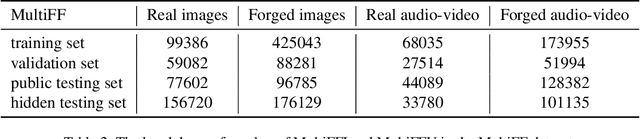
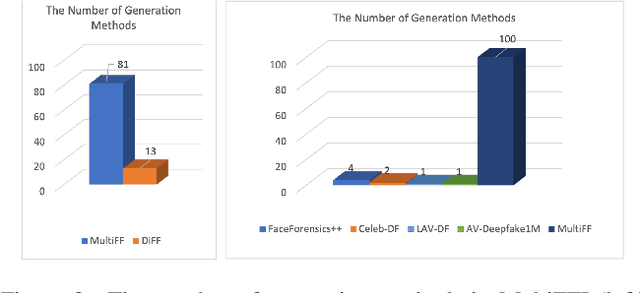
In this paper, we present the Global Multimedia Deepfake Detection held concurrently with the Inclusion 2024. Our Multimedia Deepfake Detection aims to detect automatic image and audio-video manipulations including but not limited to editing, synthesis, generation, Photoshop,etc. Our challenge has attracted 1500 teams from all over the world, with about 5000 valid result submission counts. We invite the top 20 teams to present their solutions to the challenge, from which the top 3 teams are awarded prizes in the grand finale. In this paper, we present the solutions from the top 3 teams of the two tracks, to boost the research work in the field of image and audio-video forgery detection. The methodologies developed through the challenge will contribute to the development of next-generation deepfake detection systems and we encourage participants to open source their methods.
Explainable Multi-Modal Data Exploration in Natural Language via LLM Agent
Dec 24, 2024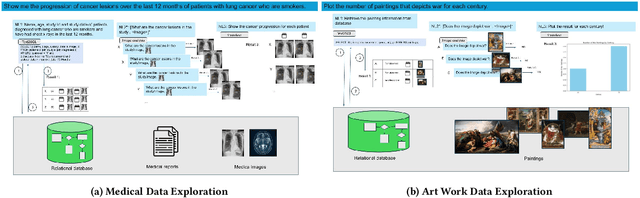

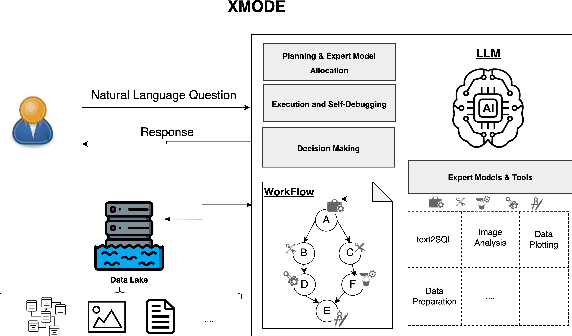

International enterprises, organizations, or hospitals collect large amounts of multi-modal data stored in databases, text documents, images, and videos. While there has been recent progress in the separate fields of multi-modal data exploration as well as in database systems that automatically translate natural language questions to database query languages, the research challenge of querying database systems combined with other unstructured modalities such as images in natural language is widely unexplored. In this paper, we propose XMODE - a system that enables explainable, multi-modal data exploration in natural language. Our approach is based on the following research contributions: (1) Our system is inspired by a real-world use case that enables users to explore multi-modal information systems. (2) XMODE leverages a LLM-based agentic AI framework to decompose a natural language question into subtasks such as text-to-SQL generation and image analysis. (3) Experimental results on multi-modal datasets over relational data and images demonstrate that our system outperforms state-of-the-art multi-modal exploration systems, excelling not only in accuracy but also in various performance metrics such as query latency, API costs, planning efficiency, and explanation quality, thanks to the more effective utilization of the reasoning capabilities of LLMs.
Correcting Large Language Model Behavior via Influence Function
Dec 21, 2024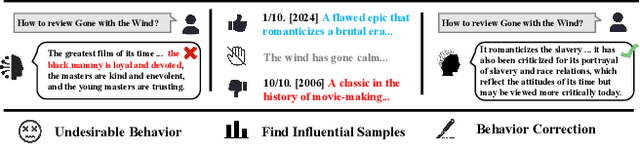
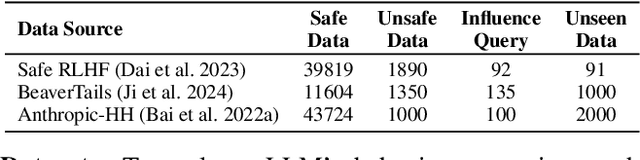
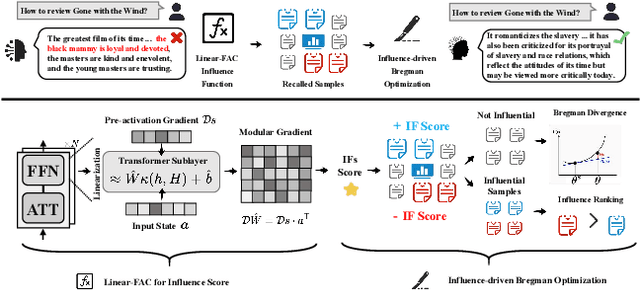
Recent advancements in AI alignment techniques have significantly improved the alignment of large language models (LLMs) with static human preferences. However, the dynamic nature of human preferences can render some prior training data outdated or even erroneous, ultimately causing LLMs to deviate from contemporary human preferences and societal norms. Existing methodologies, whether they involve the curation of new data for continual alignment or the manual correction of outdated data for re-alignment, demand costly human resources. To address this challenge, we propose a novel approach, Large Language Model Behavior Correction with Influence Function Recall and Post-Training (LANCET), which requires no human involvement. LANCET consists of two phases: (1) using influence functions to identify the training data that significantly impact undesirable model outputs, and (2) applying an Influence function-driven Bregman Optimization (IBO) technique to adjust the model's behavior based on these influence distributions. Our experiments demonstrate that LANCET effectively and efficiently correct inappropriate behaviors of LLMs. Furthermore, LANCET can outperform methods that rely on collecting human preferences, and it enhances the interpretability of learning human preferences within LLMs.