 Add to Chrome
 Add to Firefox
 Add to Edge
Forget Less, Generalize More: Unifying Temporal and Structural Adaptation for Dynamic Graphs
May 28, 2026
Representation learning on dynamic graphs requires capturing complex dependencies that evolve across both time and structure. Existing approaches typically adopt fixed temporal decay schemes or predetermined structural propagation depths, limiting their ability to generalize across graphs with diverse interaction frequencies and topological characteristics. We propose Dual-Scale Retentive Dynamics (DSRD), a unified framework that maintains a retentive representation state encoding both temporal memory and structural context. DSRD introduces two key components: (i) a retentive state with dual-scale adaptation that jointly models temporal dynamics and structural propagation within a single recurrent formulation, and (ii) adaptive decay kernels with learnable time-sensitivity parameters that automatically balance short-term responsiveness and long-term retention based on the underlying interaction patterns. We provide theoretical analysis establishing the equivalence between event-wise parallel aggregation and efficient recurrent state updates, as well as stability and boundedness guarantees for the learned dynamics. Extensive experiments on 14 real-world benchmarks demonstrate that DSRD consistently achieves state-of-the-art performance on both link prediction and node classification tasks, with strong generalization across transductive and inductive settings.

From Query to Counsel: Structured Reasoning with a Multi-Agent Framework and Dataset for Legal Consultation
Apr 12, 2026Legal consultation question answering (Legal CQA) presents unique challenges compared to traditional legal QA tasks, including the scarcity of high-quality training data, complex task composition, and strong contextual dependencies. To address these, we construct JurisCQAD, a large-scale dataset of over 43,000 real-world Chinese legal queries annotated with expert-validated positive and negative responses, and design a structured task decomposition that converts each query into a legal element graph integrating entities, events, intents, and legal issues. We further propose JurisMA, a modular multi-agent framework supporting dynamic routing, statutory grounding, and stylistic optimization. Combined with the element graph, the framework enables strong context-aware reasoning, effectively capturing dependencies across legal facts, norms, and procedural logic. Trained on JurisCQAD and evaluated on a refined LawBench, our system significantly outperforms both general-purpose and legal-domain LLMs across multiple lexical and semantic metrics, demonstrating the benefits of interpretable decomposition and modular collaboration in Legal CQA.
Choosing How to Remember: Adaptive Memory Structures for LLM Agents
Feb 15, 2026Memory is critical for enabling large language model (LLM) based agents to maintain coherent behavior over long-horizon interactions. However, existing agent memory systems suffer from two key gaps: they rely on a one-size-fits-all memory structure and do not model memory structure selection as a context-adaptive decision, limiting their ability to handle heterogeneous interaction patterns and resulting in suboptimal performance. We propose a unified framework, FluxMem, that enables adaptive memory organization for LLM agents. Our framework equips agents with multiple complementary memory structures. It explicitly learns to select among these structures based on interaction-level features, using offline supervision derived from downstream response quality and memory utilization. To support robust long-horizon memory evolution, we further introduce a three-level memory hierarchy and a Beta Mixture Model-based probabilistic gate for distribution-aware memory fusion, replacing brittle similarity thresholds. Experiments on two long-horizon benchmarks, PERSONAMEM and LoCoMo, demonstrate that our method achieves average improvements of 9.18% and 6.14%.
Two Birds with One Stone: Improving Rumor Detection by Addressing the Unfairness Issue
Dec 30, 2024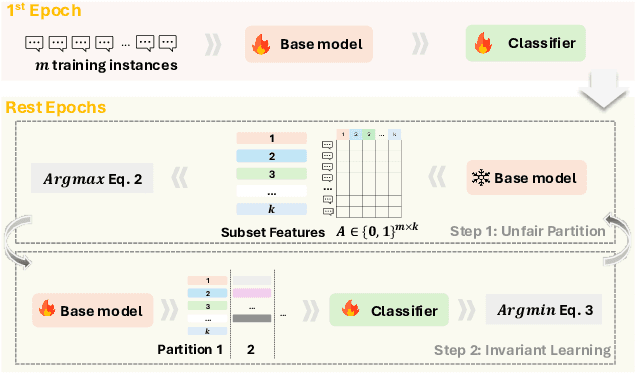


The degraded performance and group unfairness caused by confounding sensitive attributes in rumor detection remains relatively unexplored. To address this, we propose a two-step framework. Initially, it identifies confounding sensitive attributes that limit rumor detection performance and cause unfairness across groups. Subsequently, we aim to learn equally informative representations through invariant learning. Our method considers diverse sets of groups without sensitive attribute annotations. Experiments show our method easily integrates with existing rumor detectors, significantly improving both their detection performance and fairness.
Responsible AI: Portraits with Intelligent Bibliometrics
May 05, 2024Shifting the focus from principles to practical implementation, responsible artificial intelligence (AI) has garnered considerable attention across academia, industry, and society at large. Despite being in its nascent stages, this emerging field grapples with nebulous concepts and intricate knowledge frameworks. By analyzing three prevailing concepts - explainable AI, trustworthy AI, and ethical AI, this study defined responsible AI and identified its core principles. Methodologically, this study successfully demonstrated the implementation of leveraging AI's capabilities into bibliometrics for enhanced knowledge discovery and the cross-validation of experimentally examined models with domain insights. Empirically, this study investigated 17,799 research articles contributed by the AI community since 2015. This involves recognizing key technological players and their relationships, unveiling the topical landscape and hierarchy of responsible AI, charting its evolution, and elucidating the interplay between the responsibility principles and primary AI techniques. An analysis of a core cohort comprising 380 articles from multiple disciplines captures the most recent advancements in responsible AI. As one of the pioneering bibliometric studies dedicated to exploring responsible AI, this study will provide comprehensive macro-level insights, enhancing the understanding of responsible AI while furnishing valuable knowledge support for AI regulation and governance initiatives.