 Add to Chrome
 Add to Firefox
 Add to Edge
Wearable Foundation Models Should Go Beyond Static Encoders
Mar 20, 2026
Wearable foundation models (WFMs), trained on large volumes of data collected by affordable, always-on devices, have demonstrated strong performance on short-term, well-defined health monitoring tasks, including activity recognition, fitness tracking, and cardiovascular signal assessment. However, most existing WFMs primarily map short temporal windows to predefined labels via static encoders, emphasizing retrospective prediction rather than reasoning over evolving personal history, context, and future risk trajectories. As a result, they are poorly suited for modeling chronic, progressive, or episodic health conditions that unfold over weeks, months or years. Hence, we argue that WFMs must move beyond static encoders and be explicitly designed for longitudinal, anticipatory health reasoning. We identify three foundational shifts required to enable this transition: (1) Structurally rich data, which goes beyond isolated datasets or outcome-conditioned collection to integrated multimodal, long-term personal trajectories, and contextual metadata, ideally supported by open and interoperable data ecosystems; (2) Longitudinal-aware multimodal modeling, which prioritizes long-context inference, temporal abstraction, and personalization over cross-sectional or population-level prediction; and (3) Agentic inference systems, which move beyond static prediction to support planning, decision-making, and clinically grounded intervention under uncertainty. Together, these shifts reframe wearable health monitoring from retrospective signal interpretation toward continuous, anticipatory, and human-aligned health support.

Tyee: A Unified, Modular, and Fully-Integrated Configurable Toolkit for Intelligent Physiological Health Care
Dec 27, 2025Deep learning has shown great promise in physiological signal analysis, yet its progress is hindered by heterogeneous data formats, inconsistent preprocessing strategies, fragmented model pipelines, and non-reproducible experimental setups. To address these limitations, we present Tyee, a unified, modular, and fully-integrated configurable toolkit designed for intelligent physiological healthcare. Tyee introduces three key innovations: (1) a unified data interface and configurable preprocessing pipeline for 12 kinds of signal modalities; (2) a modular and extensible architecture enabling flexible integration and rapid prototyping across tasks; and (3) end-to-end workflow configuration, promoting reproducible and scalable experimentation. Tyee demonstrates consistent practical effectiveness and generalizability, outperforming or matching baselines across all evaluated tasks (with state-of-the-art results on 12 of 13 datasets). The Tyee toolkit is released at https://github.com/SmileHnu/Tyee and actively maintained.
Structured Prompting and LLM Ensembling for Multimodal Conversational Aspect-based Sentiment Analysis
Dec 27, 2025Understanding sentiment in multimodal conversations is a complex yet crucial challenge toward building emotionally intelligent AI systems. The Multimodal Conversational Aspect-based Sentiment Analysis (MCABSA) Challenge invited participants to tackle two demanding subtasks: (1) extracting a comprehensive sentiment sextuple, including holder, target, aspect, opinion, sentiment, and rationale from multi-speaker dialogues, and (2) detecting sentiment flipping, which detects dynamic sentiment shifts and their underlying triggers. For Subtask-I, in the present paper, we designed a structured prompting pipeline that guided large language models (LLMs) to sequentially extract sentiment components with refined contextual understanding. For Subtask-II, we further leveraged the complementary strengths of three LLMs through ensembling to robustly identify sentiment transitions and their triggers. Our system achieved a 47.38% average score on Subtask-I and a 74.12% exact match F1 on Subtask-II, showing the effectiveness of step-wise refinement and ensemble strategies in rich, multimodal sentiment analysis tasks.
MoRAgent: Parameter Efficient Agent Tuning with Mixture-of-Roles
Dec 25, 2025Despite recent advancements of fine-tuning large language models (LLMs) to facilitate agent tasks, parameter-efficient fine-tuning (PEFT) methodologies for agent remain largely unexplored. In this paper, we introduce three key strategies for PEFT in agent tasks: 1) Inspired by the increasingly dominant Reason+Action paradigm, we first decompose the capabilities necessary for the agent tasks into three distinct roles: reasoner, executor, and summarizer. The reasoner is responsible for comprehending the user's query and determining the next role based on the execution trajectory. The executor is tasked with identifying the appropriate functions and parameters to invoke. The summarizer conveys the distilled information from conversations back to the user. 2) We then propose the Mixture-of-Roles (MoR) framework, which comprises three specialized Low-Rank Adaptation (LoRA) groups, each designated to fulfill a distinct role. By focusing on their respective specialized capabilities and engaging in collaborative interactions, these LoRAs collectively accomplish the agent task. 3) To effectively fine-tune the framework, we develop a multi-role data generation pipeline based on publicly available datasets, incorporating role-specific content completion and reliability verification. We conduct extensive experiments and thorough ablation studies on various LLMs and agent benchmarks, demonstrating the effectiveness of the proposed method. This project is publicly available at https://mor-agent.github.io.
TimeSense:Making Large Language Models Proficient in Time-Series Analysis
Nov 09, 2025In the time-series domain, an increasing number of works combine text with temporal data to leverage the reasoning capabilities of large language models (LLMs) for various downstream time-series understanding tasks. This enables a single model to flexibly perform tasks that previously required specialized models for each domain. However, these methods typically rely on text labels for supervision during training, biasing the model toward textual cues while potentially neglecting the full temporal features. Such a bias can lead to outputs that contradict the underlying time-series context. To address this issue, we construct the EvalTS benchmark, comprising 10 tasks across three difficulty levels, from fundamental temporal pattern recognition to complex real-world reasoning, to evaluate models under more challenging and realistic scenarios. We also propose TimeSense, a multimodal framework that makes LLMs proficient in time-series analysis by balancing textual reasoning with a preserved temporal sense. TimeSense incorporates a Temporal Sense module that reconstructs the input time-series within the model's context, ensuring that textual reasoning is grounded in the time-series dynamics. Moreover, to enhance spatial understanding of time-series data, we explicitly incorporate coordinate-based positional embeddings, which provide each time point with spatial context and enable the model to capture structural dependencies more effectively. Experimental results demonstrate that TimeSense achieves state-of-the-art performance across multiple tasks, and it particularly outperforms existing methods on complex multi-dimensional time-series reasoning tasks.
DEBATE: A Dataset for Disentangling Textual Ambiguity in Mandarin Through Speech
Jun 09, 2025Despite extensive research on textual and visual disambiguation, disambiguation through speech (DTS) remains underexplored. This is largely due to the lack of high-quality datasets that pair spoken sentences with richly ambiguous text. To address this gap, we present DEBATE, a unique public Chinese speech-text dataset designed to study how speech cues and patterns-pronunciation, pause, stress and intonation-can help resolve textual ambiguity and reveal a speaker's true intent. DEBATE contains 1,001 carefully selected ambiguous utterances, each recorded by 10 native speakers, capturing diverse linguistic ambiguities and their disambiguation through speech. We detail the data collection pipeline and provide rigorous quality analysis. Additionally, we benchmark three state-of-the-art large speech and audio-language models, illustrating clear and huge performance gaps between machine and human understanding of spoken intent. DEBATE represents the first effort of its kind and offers a foundation for building similar DTS datasets across languages and cultures. The dataset and associated code are available at: https://github.com/SmileHnu/DEBATE.
A Physics-guided Multimodal Transformer Path to Weather and Climate Sciences
Apr 19, 2025With the rapid development of machine learning in recent years, many problems in meteorology can now be addressed using AI models. In particular, data-driven algorithms have significantly improved accuracy compared to traditional methods. Meteorological data is often transformed into 2D images or 3D videos, which are then fed into AI models for learning. Additionally, these models often incorporate physical signals, such as temperature, pressure, and wind speed, to further enhance accuracy and interpretability. In this paper, we review several representative AI + Weather/Climate algorithms and propose a new paradigm where observational data from different perspectives, each with distinct physical meanings, are treated as multimodal data and integrated via transformers. Furthermore, key weather and climate knowledge can be incorporated through regularization techniques to further strengthen the model's capabilities. This new paradigm is versatile and can address a variety of tasks, offering strong generalizability. We also discuss future directions for improving model accuracy and interpretability.
SpeCache: Speculative Key-Value Caching for Efficient Generation of LLMs
Mar 20, 2025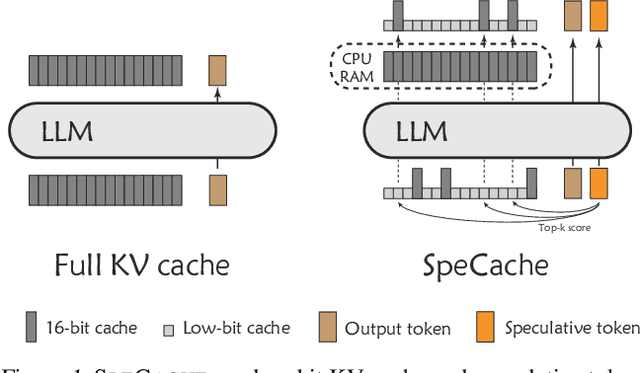
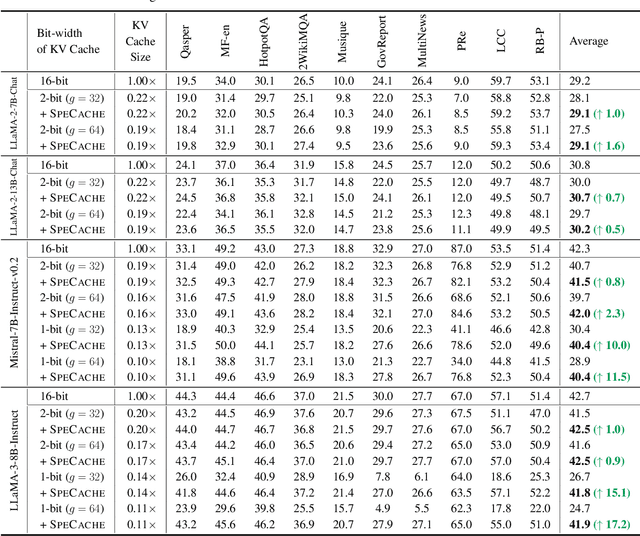
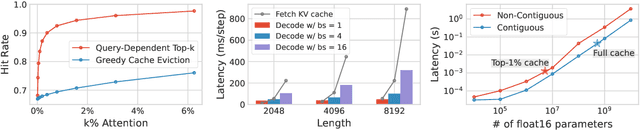
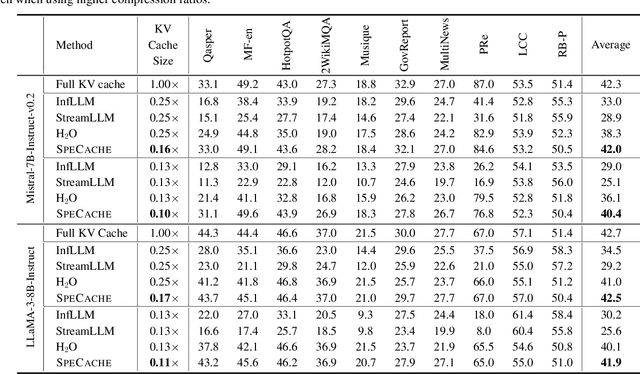
Transformer-based large language models (LLMs) have already achieved remarkable results on long-text tasks, but the limited GPU memory (VRAM) resources struggle to accommodate the linearly growing demand for key-value (KV) cache as the sequence length increases, which has become a bottleneck for the application of LLMs on long sequences. Existing KV cache compression methods include eviction, merging, or quantization of the KV cache to reduce its size. However, compression results in irreversible information forgetting, potentially affecting the accuracy of subsequent decoding. In this paper, we propose SpeCache, which takes full advantage of the large and easily expandable CPU memory to offload the complete KV cache, and dynamically fetches KV pairs back in each decoding step based on their importance measured by low-bit KV cache copy in VRAM. To avoid inference latency caused by CPU-GPU communication, SpeCache speculatively predicts the KV pairs that the next token might attend to, allowing us to prefetch them before the next decoding step which enables parallelization of prefetching and computation. Experiments on LongBench and Needle-in-a-Haystack benchmarks verify that SpeCache effectively reduces VRAM usage while avoiding information forgetting for long sequences without re-training, even with a 10x high KV cache compression ratio.
Post-Training Quantization for Diffusion Transformer via Hierarchical Timestep Grouping
Mar 10, 2025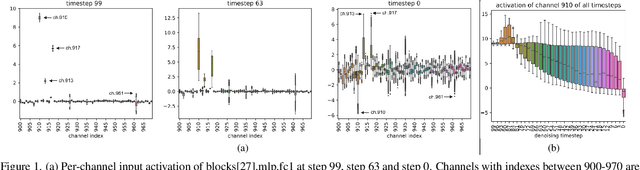
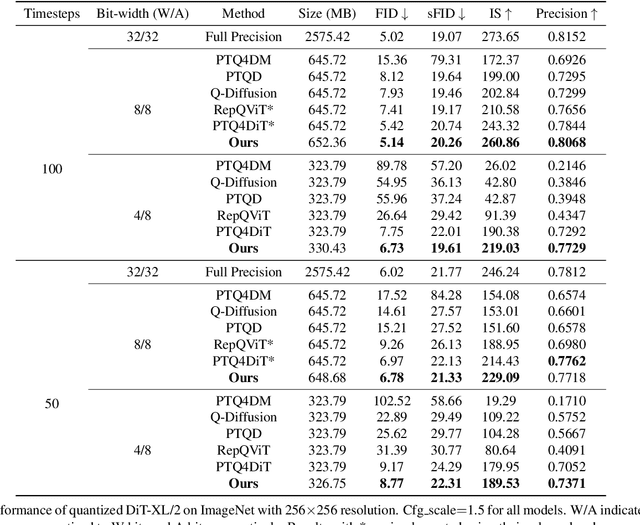
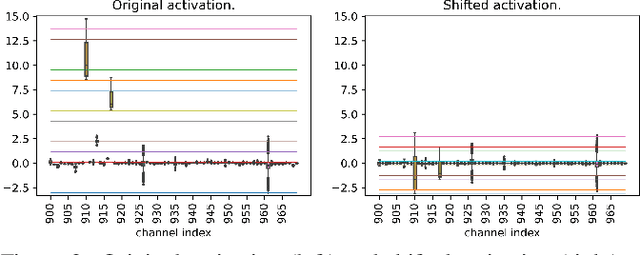
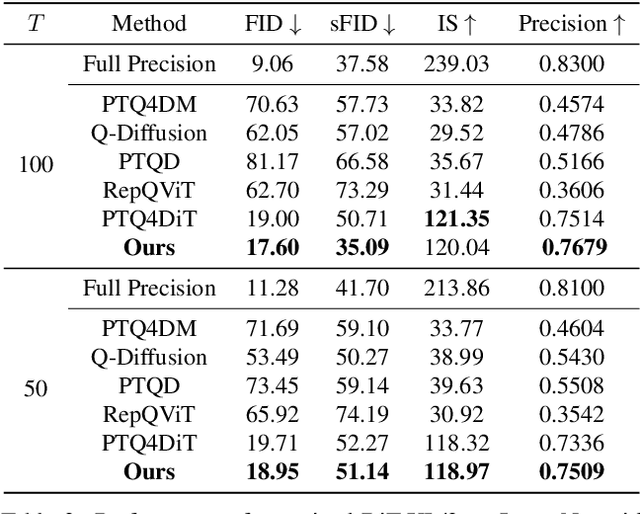
Diffusion Transformer (DiT) has now become the preferred choice for building image generation models due to its great generation capability. Unlike previous convolution-based UNet models, DiT is purely composed of a stack of transformer blocks, which renders DiT excellent in scalability like large language models. However, the growing model size and multi-step sampling paradigm bring about considerable pressure on deployment and inference. In this work, we propose a post-training quantization framework tailored for Diffusion Transforms to tackle these challenges. We firstly locate that the quantization difficulty of DiT mainly originates from the time-dependent channel-specific outliers. We propose a timestep-aware shift-and-scale strategy to smooth the activation distribution to reduce the quantization error. Secondly, based on the observation that activations of adjacent timesteps have similar distributions, we utilize a hierarchical clustering scheme to divide the denoising timesteps into multiple groups. We further design a re-parameterization scheme which absorbs the quantization parameters into nearby module to avoid redundant computations. Comprehensive experiments demonstrate that out PTQ method successfully quantize the Diffusion Transformer into 8-bit weight and 8-bit activation (W8A8) with state-of-the-art FiD score. And our method can further quantize DiT model into 4-bit weight and 8-bit activation (W4A8) without sacrificing generation quality.
Near-infrared Image Deblurring and Event Denoising with Synergistic Neuromorphic Imaging
Mar 05, 2025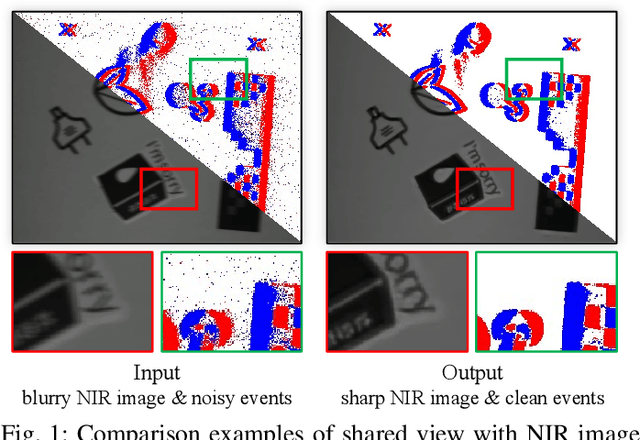
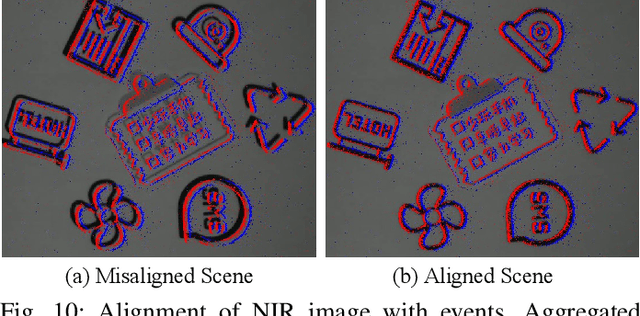
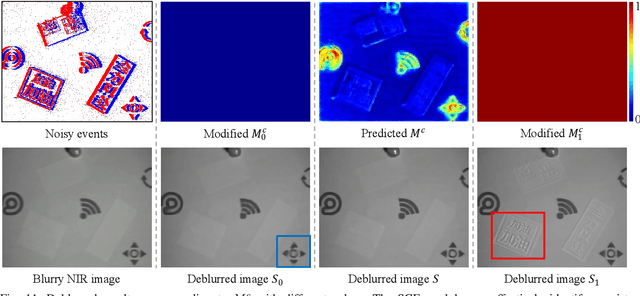
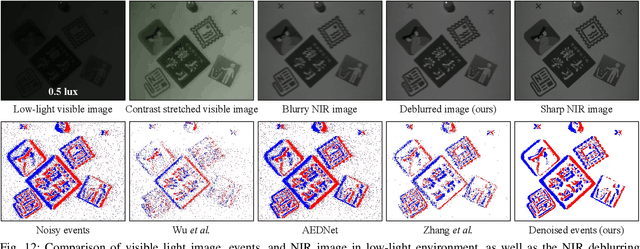
The fields of imaging in the nighttime dynamic and other extremely dark conditions have seen impressive and transformative advancements in recent years, partly driven by the rise of novel sensing approaches, e.g., near-infrared (NIR) cameras with high sensitivity and event cameras with minimal blur. However, inappropriate exposure ratios of near-infrared cameras make them susceptible to distortion and blur. Event cameras are also highly sensitive to weak signals at night yet prone to interference, often generating substantial noise and significantly degrading observations and analysis. Herein, we develop a new framework for low-light imaging combined with NIR imaging and event-based techniques, named synergistic neuromorphic imaging, which can jointly achieve NIR image deblurring and event denoising. Harnessing cross-modal features of NIR images and visible events via spectral consistency and higher-order interaction, the NIR images and events are simultaneously fused, enhanced, and bootstrapped. Experiments on real and realistically simulated sequences demonstrate the effectiveness of our method and indicate better accuracy and robustness than other methods in practical scenarios. This study gives impetus to enhance both NIR images and events, which paves the way for high-fidelity low-light imaging and neuromorphic reasoning.