 Add to Chrome
 Add to Firefox
 Add to Edge
FM-Bench: A Benchmark for Long-Horizon Management with Competing Agents
Aug 19, 2026
Language model agents now execute bounded tasks reliably. Whether they can sustain effective decision-making over long horizons, where actions have cumulative consequences and the environment responds to their choices, remains largely unmeasured. FM-Bench (Football Management Benchmark) measures this. An LLM agent runs a football club for 20 in-game years through 26 tools and roughly 340 to 400 decision stops. It drafts a squad on the same budget as every rival, trades players, negotiates contracts, invests in facilities and youth, sets lineups, and answers to a board that can fire it, while a deterministic engine accumulates every year into one final score with no LLM judge or human rater. The solo track plays each of 15 frontier models against a frozen scripted world, and the Arena places the same models plus a scripted anchor in one shared 20-year world; to our knowledge, the first head-to-head evaluation at this scale. We measure six behavioral capabilities behind the score. Across three seeds, all 15 models complete every horizon while the blind scripted baselines die out in most of theirs, and claude-fable-5 tops the solo board on mean score and the Arena, where the title nonetheless rotates among ten models. Neither scale, price, nor vendor predicts the order; the order settles only late in the horizon, and the best first-play human lands only at the bottom of the model board. What separates the models is managerial behavior rather than computation. Higher-scoring models reduce slow-payoff investment near the end, keep cash invested rather than idle, and open renewals well before the deadline, while token spend predicts nothing. No model learns the market's hidden prices from hundreds of rejected bids, and self-managed memory fails in two opposite modes: an archive that only grows or a plan rewritten every season. Code is available at https://github.com/Analogy-AI/fm-bench.

Equitable System-Prompt Selection via Constrained Mixed-Strategy GroupDRO
Aug 05, 2026Large language models are increasingly used for information seeking, yet semantically equivalent questions phrased in different ways can receive answers of considerably different quality. System prompts are widely employed to steer response behavior, but they are typically optimized for average-case quality, so some question phrasings may still receive incomplete or low-quality answers. To address this, we formulate a constrained mixed-strategy GroupDRO framework for system-prompt selection. Instead of optimizing the system-prompt text, the framework assigns weights to system prompts in an existing pool to minimize the worst-case information-quality loss across evaluation metrics and groups, while constraining the mean loss to stay close to that of average-based selection. Because pool generation and selection are decoupled, the method applies to any system-prompt pool and can leverage an ensemble of complementary system prompts rather than a single one. Across five LLMs on two bilingual medical and consumer-finance benchmarks, the constrained method reduces the Overall Mean, Worst 25% Mean, and Worst by 13.1%, 13.2%, and 13.7% on average relative to no mitigation while keeping overall quality close to Average selection. Its multi-prompt weights reveal complementarity across metric-group pairs. Code and data are available at https://github.com/Rainxu09/equitable-system-prompt-selection.
Grid2Matrix: Revealing Digital Agnosia in Vision-Language Models
Apr 14, 2026Vision-Language Models (VLMs) excel on many multimodal reasoning benchmarks, but these evaluations often do not require an exhaustive readout of the image and can therefore obscure failures in faithfully capturing all visual details. We introduce Grid2Matrix (G2M), a controlled benchmark in which a model is shown a color grid and a color-to-number mapping, and must output the corresponding matrix. By varying grid size and the number of colors, G2M provides a simple way to increase visual complexity while minimizing semantic confounds. We find that VLMs exhibit a sharp early collapse in zero-shot end-to-end evaluation, failing on surprisingly small grids rather than degrading gradually as the task becomes denser. We probe the visual encoders of VLMs from two representative families and find that they preserve substantially more of the grid information than the corresponding end-to-end outputs. This suggests that the failure is not explained by visual encoding alone, but also reflects a gap between what remains recoverable from visual features and what is ultimately expressed in language. We term this gap \textit{Digital Agnosia}. Further analyses show that these errors are highly structured and depend strongly on how grid cells overlap with visual patch boundaries. We also find that common strategies such as model scaling and multimodal alignment do not fully eliminate this failure mode. We expect G2M to serve as a useful testbed for understanding where and how VLMs lose fine visual details, and for evaluating tasks where missing even small visual details can matter, such as tables, charts, forms, and GUIs.
Classroom Final Exam: An Instructor-Tested Reasoning Benchmark
Feb 23, 2026We introduce \CFE{} (\textbf{C}lassroom \textbf{F}inal \textbf{E}xam), a multimodal benchmark for evaluating the reasoning capabilities of large language models across more than 20 STEM domains. \CFE{} is curated from repeatedly used, authentic university homework and exam problems, together with reference solutions provided by course instructors. \CFE{} presents a significant challenge even for frontier models: the newly released Gemini-3.1-pro-preview achieves an overall accuracy of 59.69\%, while the second-best model, Gemini-3-flash-preview, reaches 55.46\%, leaving considerable room for improvement. Beyond leaderboard results, we perform a diagnostic analysis by decomposing reference solutions into reasoning flows. We find that although frontier models can often answer intermediate sub-questions correctly, they struggle to reliably derive and maintain correct intermediate states throughout multi-step solutions. We further observe that model-generated solutions typically have more reasoning steps than those provided by the instructor, indicating suboptimal step efficiency and a higher risk of error accumulation. The data and code are available at https://github.com/Analogy-AI/CFE_Bench.
The Llama 4 Herd: Architecture, Training, Evaluation, and Deployment Notes
Jan 15, 2026This document consolidates publicly reported technical details about Metas Llama 4 model family. It summarizes (i) released variants (Scout and Maverick) and the broader herd context including the previewed Behemoth teacher model, (ii) architectural characteristics beyond a high-level MoE description covering routed/shared-expert structure, early-fusion multimodality, and long-context design elements reported for Scout (iRoPE and length generalization strategies), (iii) training disclosures spanning pre-training, mid-training for long-context extension, and post-training methodology (lightweight SFT, online RL, and lightweight DPO) as described in release materials, (iv) developer-reported benchmark results for both base and instruction-tuned checkpoints, and (v) practical deployment constraints observed across major serving environments, including provider-specific context limits and quantization packaging. The manuscript also summarizes licensing obligations relevant to redistribution and derivative naming, and reviews publicly described safeguards and evaluation practices. The goal is to provide a compact technical reference for researchers and practitioners who need precise, source-backed facts about Llama 4.
Insight Miner: A Time Series Analysis Dataset for Cross-Domain Alignment with Natural Language
Dec 12, 2025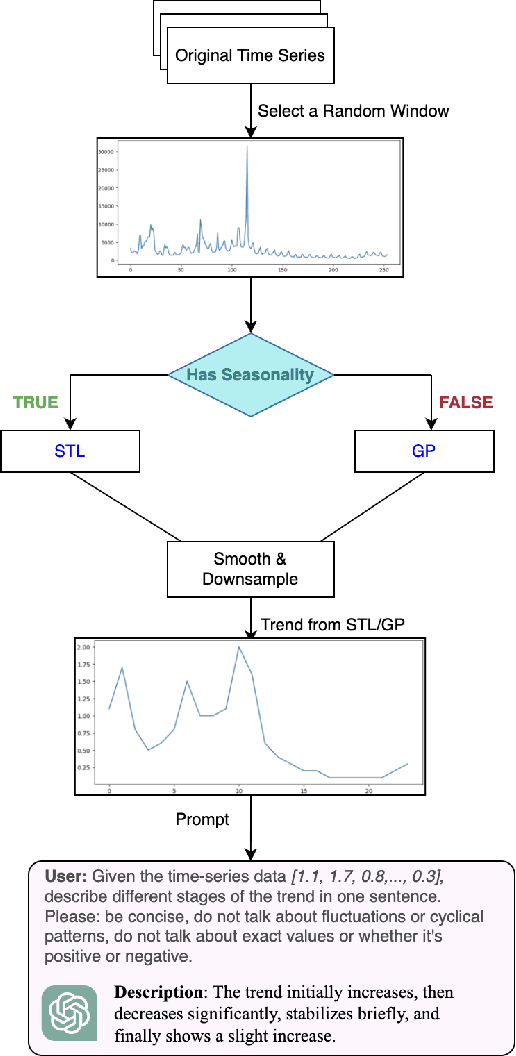
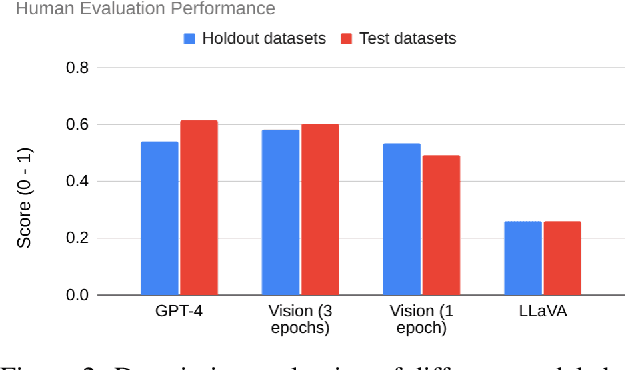
Time-series data is critical across many scientific and industrial domains, including environmental analysis, agriculture, transportation, and finance. However, mining insights from this data typically requires deep domain expertise, a process that is both time-consuming and labor-intensive. In this paper, we propose \textbf{Insight Miner}, a large-scale multimodal model (LMM) designed to generate high-quality, comprehensive time-series descriptions enriched with domain-specific knowledge. To facilitate this, we introduce \textbf{TS-Insights}\footnote{Available at \href{https://huggingface.co/datasets/zhykoties/time-series-language-alignment}{https://huggingface.co/datasets/zhykoties/time-series-language-alignment}.}, the first general-domain dataset for time series and language alignment. TS-Insights contains 100k time-series windows sampled from 20 forecasting datasets. We construct this dataset using a novel \textbf{agentic workflow}, where we use statistical tools to extract features from raw time series before synthesizing them into coherent trend descriptions with GPT-4. Following instruction tuning on TS-Insights, Insight Miner outperforms state-of-the-art multimodal models, such as LLaVA \citep{liu2023llava} and GPT-4, in generating time-series descriptions and insights. Our findings suggest a promising direction for leveraging LMMs in time series analysis, and serve as a foundational step toward enabling LLMs to interpret time series as a native input modality.
SMIR: Efficient Synthetic Data Pipeline To Improve Multi-Image Reasoning
Jan 07, 2025Vision-Language Models (VLMs) have shown strong performance in understanding single images, aided by numerous high-quality instruction datasets. However, multi-image reasoning tasks are still under-explored in the open-source community due to two main challenges: (1) scaling datasets with multiple correlated images and complex reasoning instructions is resource-intensive and maintaining quality is difficult, and (2) there is a lack of robust evaluation benchmarks for multi-image tasks. To address these issues, we introduce SMIR, an efficient synthetic data-generation pipeline for multi-image reasoning, and a high-quality dataset generated using this pipeline. Our pipeline efficiently extracts highly correlated images using multimodal embeddings, combining visual and descriptive information and leverages open-source LLMs to generate quality instructions. Using this pipeline, we generated 160K synthetic training samples, offering a cost-effective alternative to expensive closed-source solutions. Additionally, we present SMIR-BENCH, a novel multi-image reasoning evaluation benchmark comprising 200 diverse examples across 7 complex multi-image reasoning tasks. SMIR-BENCH is multi-turn and utilizes a VLM judge to evaluate free-form responses, providing a comprehensive assessment of model expressiveness and reasoning capability across modalities. We demonstrate the effectiveness of SMIR dataset by fine-tuning several open-source VLMs and evaluating their performance on SMIR-BENCH. Our results show that models trained on our dataset outperform baseline models in multi-image reasoning tasks up to 8% with a much more scalable data pipeline.
Reinforcing Thinking through Reasoning-Enhanced Reward Models
Dec 31, 2024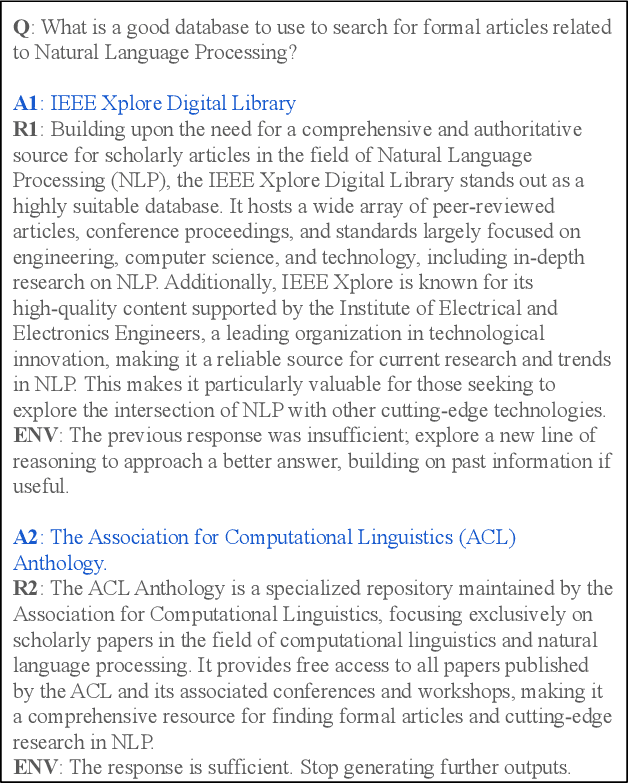
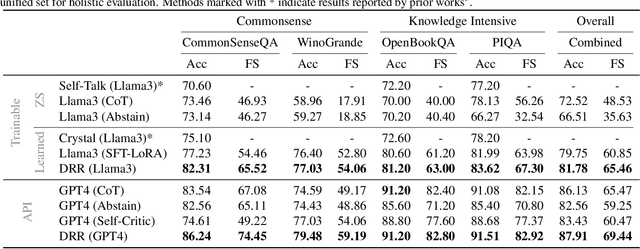
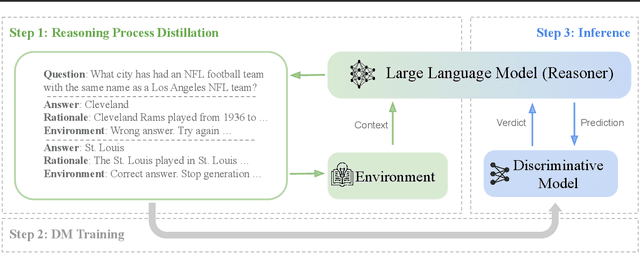

Large Language Models (LLMs) exhibit great potential in complex multi-step reasoning through inference-time thinking but still struggle with deciding when to stop thinking due to limited self-awareness about their knowledge boundaries. While human preference alignment has shown extraordinary opportunities, expensive labeling challenges adherence to scaling law. Language model self-critique, as an alternative to using human-labeled reasoning data, is questioned with its inherited biases. This work addresses these challenges by distilling the LLM's own reasoning processes into synthetic behavioral data, eliminating the need for manual labeling of intermediate steps. Building on this concept, we propose Distillation-Reinforcement-Reasoning (DRR), a three-step framework that leverages the LLM's inherent behaviors as external feedback by first generating behavioral data using the Reasoner (LLM) to reflect its reasoning capabilities, then training a lightweight discriminative reward model (DM) on behavioral data, and finally deploying the DM at inference time to assist the Reasoner's decision-making. Experiments on multiple benchmarks show that the DRR framework outperforms self-critique approaches without relying on additional complex data annotation. Benefiting from lightweight design, ease of replication, and adaptability, DRR is applicable to a wide range of LLM-centric tasks.
RedPajama: an Open Dataset for Training Large Language Models
Nov 19, 2024Large language models are increasingly becoming a cornerstone technology in artificial intelligence, the sciences, and society as a whole, yet the optimal strategies for dataset composition and filtering remain largely elusive. Many of the top-performing models lack transparency in their dataset curation and model development processes, posing an obstacle to the development of fully open language models. In this paper, we identify three core data-related challenges that must be addressed to advance open-source language models. These include (1) transparency in model development, including the data curation process, (2) access to large quantities of high-quality data, and (3) availability of artifacts and metadata for dataset curation and analysis. To address these challenges, we release RedPajama-V1, an open reproduction of the LLaMA training dataset. In addition, we release RedPajama-V2, a massive web-only dataset consisting of raw, unfiltered text data together with quality signals and metadata. Together, the RedPajama datasets comprise over 100 trillion tokens spanning multiple domains and with their quality signals facilitate the filtering of data, aiming to inspire the development of numerous new datasets. To date, these datasets have already been used in the training of strong language models used in production, such as Snowflake Arctic, Salesforce's XGen and AI2's OLMo. To provide insight into the quality of RedPajama, we present a series of analyses and ablation studies with decoder-only language models with up to 1.6B parameters. Our findings demonstrate how quality signals for web data can be effectively leveraged to curate high-quality subsets of the dataset, underscoring the potential of RedPajama to advance the development of transparent and high-performing language models at scale.
Hybrid Primal Sketch: Combining Analogy, Qualitative Representations, and Computer Vision for Scene Understanding
Jul 05, 2024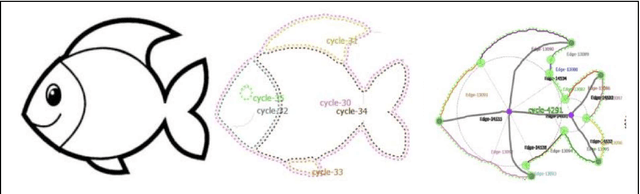
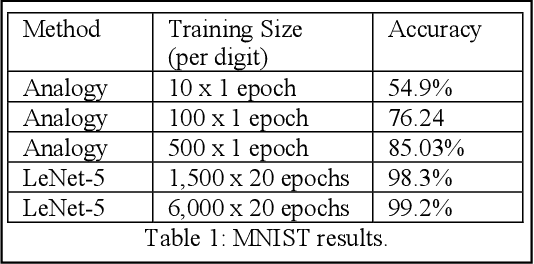
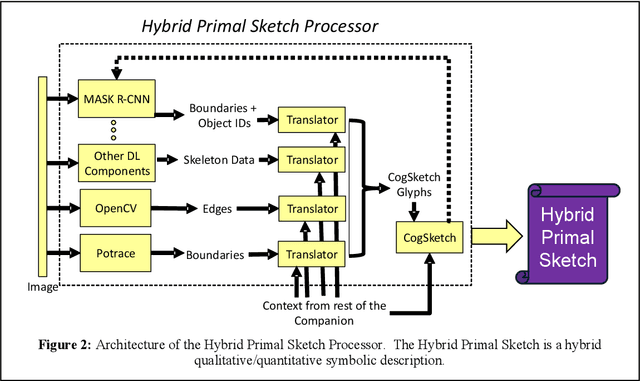
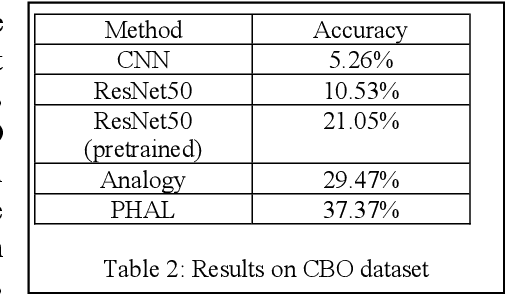
One of the purposes of perception is to bridge between sensors and conceptual understanding. Marr's Primal Sketch combined initial edge-finding with multiple downstream processes to capture aspects of visual perception such as grouping and stereopsis. Given the progress made in multiple areas of AI since then, we have developed a new framework inspired by Marr's work, the Hybrid Primal Sketch, which combines computer vision components into an ensemble to produce sketch-like entities which are then further processed by CogSketch, our model of high-level human vision, to produce both more detailed shape representations and scene representations which can be used for data-efficient learning via analogical generalization. This paper describes our theoretical framework, summarizes several previous experiments, and outlines a new experiment in progress on diagram understanding.